Browsed by
Category: Books

A Look at the Latest Incarnation: Dungeons & Dragons 5.0
A Look at the Latest Incarnation: Dungeons & Dragons 5.0

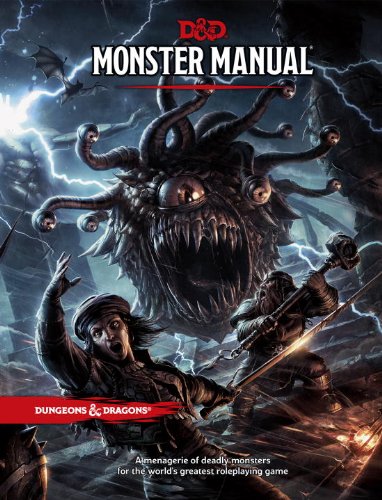
D&D Monster Manual Fifth Edition-smallWith Wizards of the Coast gearing up to release their latest incarnation of Dungeons and Dragons, it took me back to 1978, when I first encountered the game.

I was eight years old, browsing a hobby shop in Ohio with my family, when I saw this blue box with a picture of a dragon sitting on a pile of gold and jewels on the front cover. A warrior and a wizard were preparing to attack. What was this???

I took a better look and then promptly asked my father to buy it for me. His first reaction was a bit negative, telling my brother (who now wanted the game, too) and me that Dungeons and Dragons was for college students and we wouldn’t understand it. But the more he explained the concept, the more I wanted to play. Finally, he agreed, and we went home with it.

Shortly afterward, we ran our very first D&D session. My brother and I were the players, and Dad was our first dungeon master. I remember I played a fighter named Brandon the Bold, and my brother played a magic-user. (No fancy titles like Wizard or Mage for us!)

Together, we delved into the crumbling catacombs under a sorcerer’s tower, where we encountered goblins, animated skeletons, and a clan of pirates operating out of the ruins. Much evil was conquered and a bit of treasure won, and finally we emerged from the catacombs victorious.

We were hooked.

It wasn’t long before I had recruited my friends and was DMing games for them. Over the next few years, I created new worlds, original dungeons, and complete campaign storylines with which to entertain my victims…. er, players. And it’s continued for more than thirty years to today.
Read More Read More

New Treasures: Midnight Thief by Livia Blackburne

New Treasures: Midnight Thief by Livia Blackburne

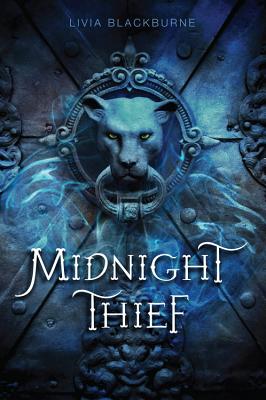
Midnight_thiefMy friend Livia has recently released her first novel, Midnight Thief, with Disney’s Hyperion imprint. I first met Livia at MIT, where she was studying the brain science of reading. She blogs on the topic at her blog, A Brain Scientist’s Take on Writing.

I’ve always been impressed with how much effort she makes to understand the how and why of what makes stories work (see, for example, this post on the anatomy of a death scene), and to use that in her own writing, so it doesn’t surprise me that she’s gone on to sign with a major publisher.

Midnight Thief is a YA novel set in a secondary world of assassins, barbarians, and demon cats:

Growing up on Forge’s streets has taught Kyra how to stretch a coin. And when that’s not enough, her uncanny ability to scale walls and bypass guards helps her take what she needs.

But when the leader of the Assassins Guild offers Kyra a lucrative job, she hesitates. She knows how to get by on her own, and she’s not sure she wants to play by his rules. But he is persistent — and darkly attractive — and Kyra can’t quite resist his pull.

Midnight Thief is available now at Amazon ($13 hard cover and $9.99 ebook), Barnes & Noble (at an identical price), and independent book sellers.

Future Treasures: Falling Sky by Rajan Khanna

Future Treasures: Falling Sky by Rajan Khanna

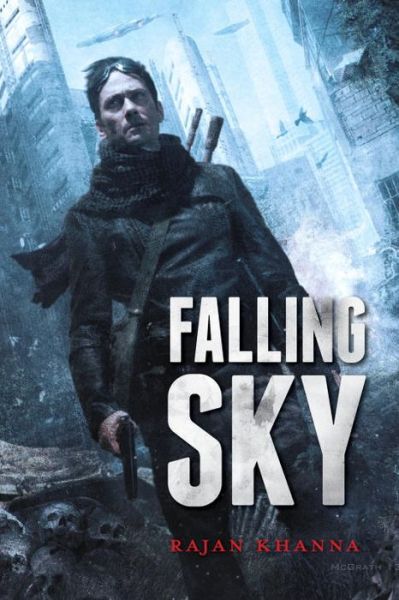
Falling Sky Rajan Khanna-smallRajan Khanna has had a pretty impressive career as a short story writer, with appearances in anthologies like The Way of the Wizard and Dead Man’s Hand, and in magazines such as Beneath Ceaseless Skies, GUD, and Shimmer. If his name is familiar, it could also be because he’s a blogger for Tor. com and has done podcasts for Podcastle, Lightspeed, and Pseudopod.

For his first novel, he spins a tale of a post-apocalyptic North America filled with zeppelins, a plague-ravaged populace, and an air city ruled by pirates. I don’t know about you, but he had me at “pirate air city.” I put my advance order in today.

Ben Gold lives in dangerous times. Two generations ago, a virulent disease turned the population of most of North America into little more than beasts called Ferals. Some of those who survived took to the air, scratching out a living on airships and dirigibles soaring over the dangerous ground.

Ben has his own airship, a family heirloom, and has signed up to help a group of scientists looking for a cure. But that’s not as easy as it sounds, especially with a power-hungry air city looking to raid any nearby settlements. To make matters worse, his airship, the only home he’s ever known, is stolen. Ben must try to survive on the ground while trying to get his ship back.

This brings him to Gastown, a city in the air recently conquered by belligerent and expansionist pirates. When events turn deadly, Ben must decide what really matters — whether to risk it all on a desperate chance for a better future or to truly remain on his own.

Falling Sky will be published by Pyr Books on October 7, 2014. It is 259 pages, priced at $17 in trade paperback and $11.99 for the digital edition. The cover is by Chris McGrath. Learn more at Rajan Khanna’s website here.

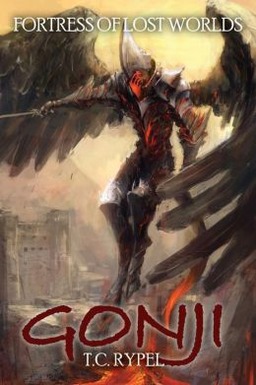
Gonji: Fortress of Lost Worlds by T. C. Rypel

Gonji: Fortress of Lost Worlds by T. C. Rypel

oie_2924853GW8NECCJBack in January, I reviewed the first three books of T. C. Rypel’s Gonji series. Though thirty-odd years old, the books are exemplars of what heroic fantasy should be: exciting, wildly inventive, well-written, and — above all — starring a heroic protagonist. Exiled half-caste samurai Gonji Sabatake, try as he might, is unable to avoid fighting evil or behaving courageously. This stuff is why I still read S&S.

While the first three books (actually, one big book chopped into three parts by the original publisher, Zebra) are a complete story, they are also the introduction to a much wider and wilder tale. Gonji’s adventures start anew in Fortress of Lost Worlds (1985), republished this past May by Wildside Press. The fifth book, A Hungering of Wolves, should be rereleased pretty soon by Wildside as well.

At the end of the previous book, Deathwind of Vedun, Gonji left his surviving companions in order to pursue the werewolf, Simon Sardonis. He had been told years before by a Shinto priest that his destiny lay with something or someone called the Deathwind, which he discovered to be Simon. But driven by his own fears and burdens, Simon wants little to do with the Easterner and cares even less for their supposed entwined fate, so he keeps moving to prevent Gonji from finding him.

Fortress of Lost Worlds’ main story picks up two years into Gonji’s trek to find Simon. He and his party of soldiers have been savaged and chased to the feet of the Pyrenees by an unknown band he calls the Dark Company. As his last companion is lost in the frigid night, the samurai makes his escape into caverns in the mountainside. While the caves possess magical properties that both warm the nearly frozen warrior and his horse and fill their bellies, they turn out also to have occupants: ogres.

That sets the stage for Gonji’s monster-filled journey from the mountains to the town of Barbaso. He’d been warned that evil was loose in the valley, but having decided to travel to Toledo to settle an old debt, the straightest route lay through the valley, and Barbaso.

Read More Read More

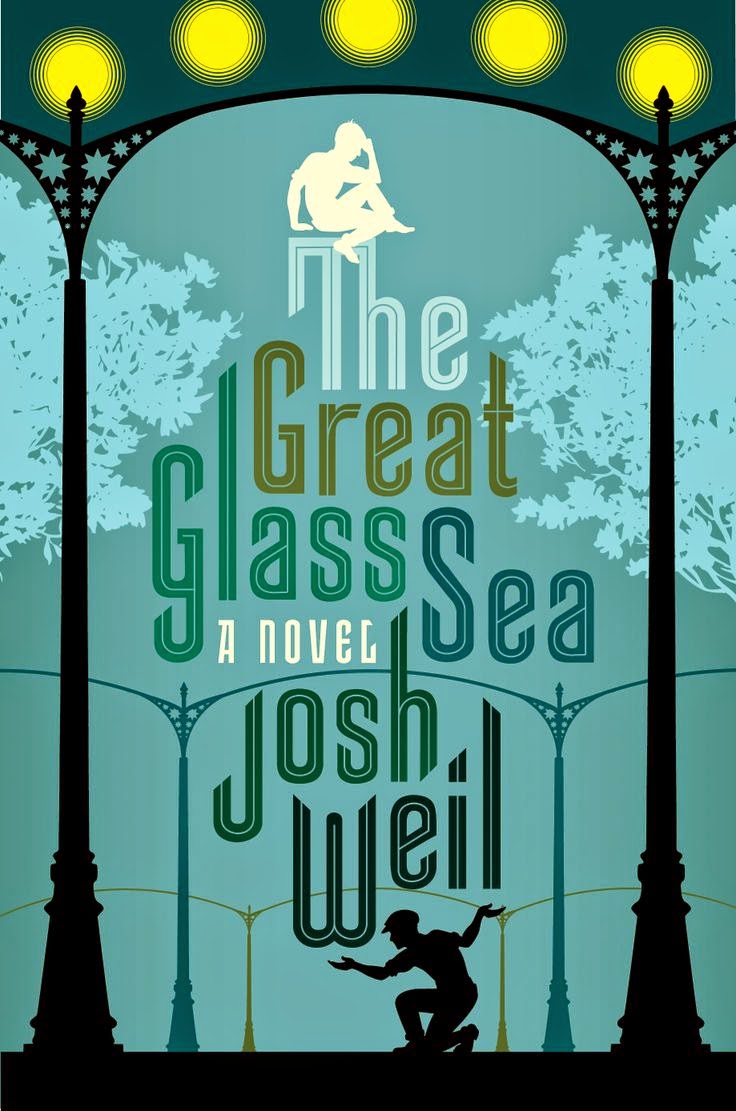
New Treasures: The Great Glass Sea by Josh Weil

New Treasures: The Great Glass Sea by Josh Weil

The Great Glass Sea Josh Weil-smallIn his first novel, acclaimed short story writer Josh Weil draws on tales of Slavic folklore to tell the story of two brothers in a near-future dystopian Russia. Lauren Groff, author of The Monsters of Templeton, said “The Great Glass Sea is our world made uncanny; the Russian countryside of folktale and literature turned darkly luminous, menacing, and brittle.” Sounds promising to me.

Twins Yarik and Dima have been inseparable since childhood. Living on their uncle’s farm after the death of their father, the boys once spent their days helping farmers in fields, their nights spellbound by their uncle’s tales. Years later, they labor together at the Oranzheria, a sea of glass erected over acres of cropland and lit by space mirrors that ensnare the denizens of Petroplavilsk in perpetual daylight. Now the twins have only work in common — stalwart Yarik married with children, oppressed by the burden of responsibility; dreamer Dima living alone with his mother, wistfully planning the brothers’ return to their uncle’s land.

But an encounter with the Oranzerhia’s billionaire owner changes their lives forever and soon both men find themselves poster boys for opposing ideologies that threaten to destroy not only the lives of those they love but the love that has bonded them since birth.

Josh Weil is the author of the the novella collection The New Valley, which won the Sue Kaufman Prize for First Fiction and a “5 Under 35” Award from the National Book Foundation. His fiction has appeared in Granta, Esquire, Agni and One Story. He lives in the foothills of the Sierra Nevadas.

The Great Glass Sea was published by Grove Press on July 1, 2014. It is 474 pages, priced at $27 in hardcover and $14.99 for the digital edition.

A Dark Fantasy and Horror Giveaway on Goodreads and Kindle

A Dark Fantasy and Horror Giveaway on Goodreads and Kindle

Hello, Black Gate readers. You folks showed a lot of love for my dark, dark, dark fantasy novel The Black Fire Concerto when it was excerpted here last year, and so I thought you might want to know about my debut collection of horror stories, Unseaming, due out this October.

Luckily for me, I don’t have to struggle for words to describe Unseaming. Instead, I can pluck excerpts from the introduction to my book by horror master Laird Barron:

There are images within these pages that once glimpsed will imprint themselves upon your consciousness, etch themselves into your soft brain matter. … His darkest fascinations rival anything committed to paper by the likes of contemporary masters such as Clive Barker, Ramsey Campbell, or Caitlín Kiernan. This is raw, visceral, and sometimes bloody stuff. Primal stuff.

Laird said it, not me! But boy am I honored. To whet folks’ appetite, I’m holding a Goodreads giveaway of Unseaming: twenty paperback advance reading copies are up for grabs. And to promote that giveaway, I thought I would expand it with a few more.

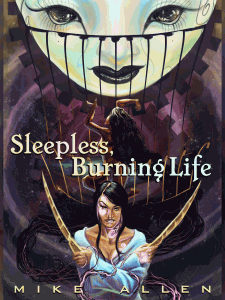
Through July 31, to coincide with the end of the Unseaming giveaway, five of my titles will be free on Kindle: my new poetry collection, Hungry Constellations; my sf novelette Stolen Souls; my dark fantasy tales She Who Runs and Sleepless, Burning Life; and, courtesy of the generosity of John O’Neill and of Haunted Stars Publishing, The Black Fire Concerto.

Unseaming_MD_web black_fire_concerto_front_cover Hungry Cover Mockup 0
cover She_Who_Runs Steamexp

That’s a whole lot of literary darkness for you to savor. Click on the covers to scarf them up!

Vintage Treasures: Runyon First and Last by Damon Runyon

Vintage Treasures: Runyon First and Last by Damon Runyon

Runyon First and Last-smallIt was Chicago writer Steven Silver who introduced me to Damon Runyon, with his hilarious Cthulhu-Runyon mash-up “In the Shadows of Broadway,” published as a podcast in StarShipSofa #236 in May, 2012. Since then, I’ve been acquainting myself with Runyon’s comedic short stories, several of which were the basis for the famous Broadway musical Guys and Dolls.

Runyon First and Last is a fine sampling of his earliest and later stories, including his last, “Blonde Mink,” published in Collier’s Magazine in August, 1945, the tale of a ghost who cannot rest until his fiancé buys the headstone she promised with the $23,000 he left her… and the strange fate of the blonde mink coat she bought with the money instead. Hilarious and sad, it’s unlike any other fantasy you’ve ever read.

Here’s the blurb from the back of the book.

This is a collection of 25 short stories by one of the truly great writers of American fiction. Six of the stories presented here were written during Runyon’s earliest phase. They are technically expert and have a non-Broadway background.

Among his later stories, his last, titled “Blonde Mink,” sets a new high in the art of short story writing. It displays the full flower of that Runyonese which perfectly conveys the flavor of Manhattan’s high-flying guys and dolls.

“The Informal Execution of Soupbone Pew” is the story of the revenge wreaked upon a vile vicious character who killed a kid who had been popular with a gang of tramps and hobos.

The kind of writing included in this collection clearly shows the reasons for Damon Runyon’s world-wide reputation.

Runyon First and Last was published in paperback by Graphic Publications in 1951. It contains 27 stories of the 39 stories included in the 1949 hardcover edition. It is 189 pages; there is no cover price. The cover is uncredited. I bought my copy on eBay last month as part of a collection for just under one dollar.

New Treasures: The Year’s Best Science Fiction & Fantasy 2014, edited by Rich Horton

New Treasures: The Year’s Best Science Fiction & Fantasy 2014, edited by Rich Horton

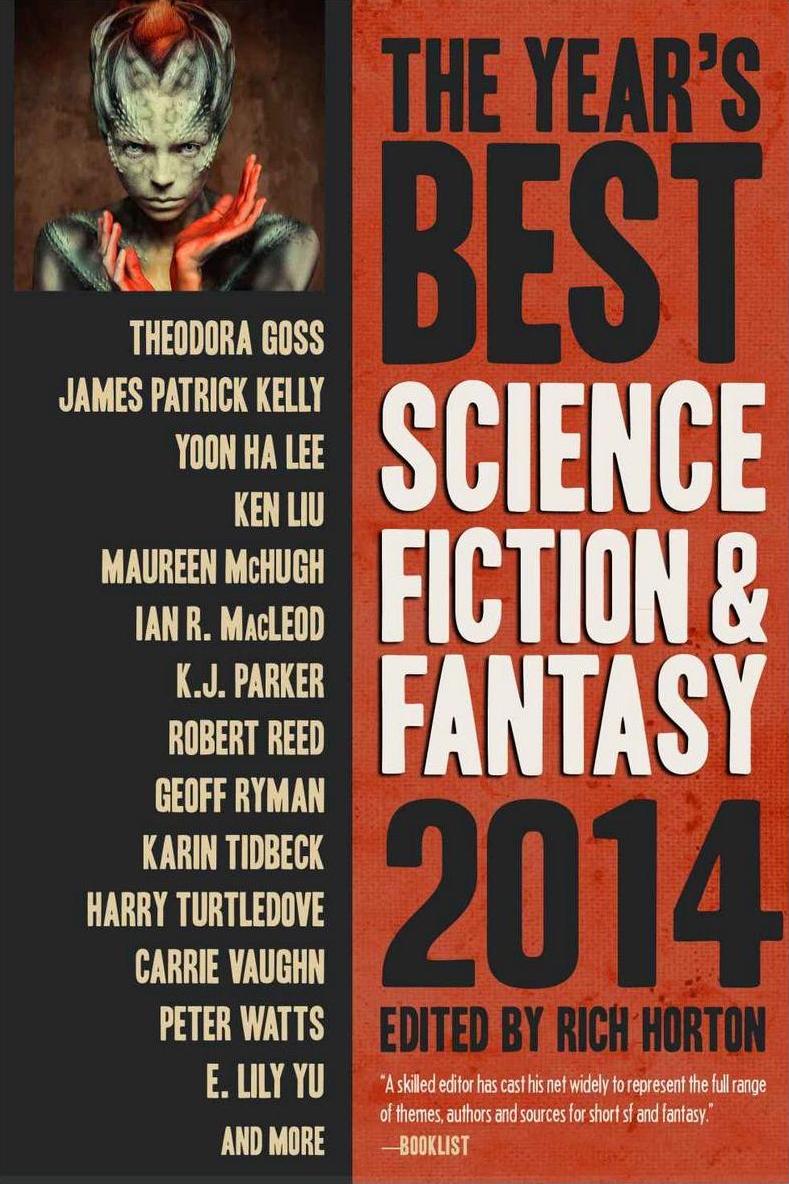
The Year's Best Science Fiction & Fantasy 2014-smallIt’s been so busy around here for the past few months that I haven’t had time to read my favorite Year’s Best book — Rich Horton’s The Year’s Best Science Fiction & Fantasy 2014.

This is the sixth volume and it collects a whopping 35 stories, including C. S. E. Cooney’s “Martyr’s Gem” (originally published in Giganotosaurus) and fiction from Alex Dally MacFarlane, Howard Waldrop, James Patrick Kelly, Ken Liu, Robert Reed, Lavie Tidhar, Carrie Vaughn, and many others. Rich has collected stories from a wide range of top-notch publications, including Asimov’s, Clarkesworld, F&SF, Lightspeed, and Beneath Ceaseless Skies, and anthologies like Fearsome Journeys and Old Mars.

Here’s the complete table of contents.

“Social Services” by Madeline Ash (An Aura of Familiarity)
“Out in the Dark” by Linda Nagata (Analog)
“The End of the World as We Know It, and We Feel Fine” by Harry Turtledove (Analog)
“The Oracle” by Lavie Tidhar (Analog)
“Call Girl” by Tang Fei (Apex)
“Ilse, Who Saw Clearly” by E. Lily Yu (Apex)
“They Shall Salt the Earth With Seeds of Glass” by Alaya Dawn Johnson (Asimov’s)
“The Wildfires of Antarctica” by Alan De Niro (Asimov’s)
“The Discovered Country” by Ian R. MacLeod (Asimov’s)
“A Stranger from a Foreign Ship” by Tom Purdom (Asimov’s)

Read More Read More

Not A Visit From The Suck Fairy

Not A Visit From The Suck Fairy

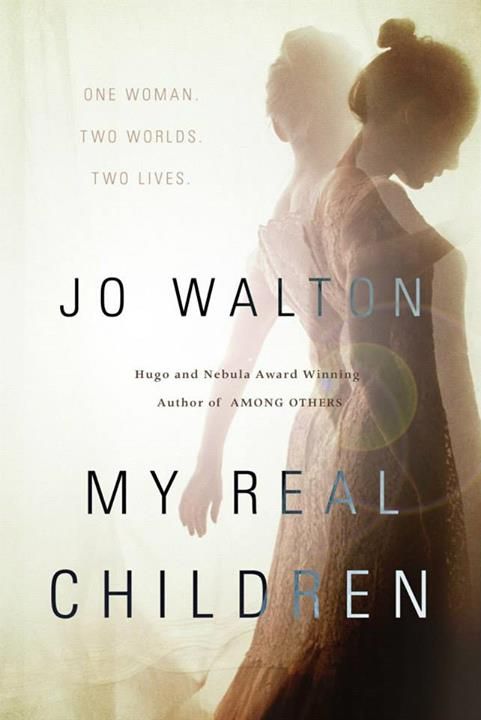
My Real Children Jo Walton-smallA while ago, I was reminded of Jo Walton’s post on the “Suck Fairy.”

You should look at the whole post yourself, here, but let me give you a quick recap: when you reread something you once loved, that had a significant impact on you, you sometimes find that it has deteriorated considerably from what you recall.

Don’t worry, says Walton, it’s not you, it’s just that the book has been visited by the Suck Fairy, who has endowed it with… well, you get the idea.

This is an experience we’ve all had, I’m sure, but being reminded of it started me thinking about why we reread books in the first place, and, if we do, what books do we re-read?

Of course, the Suck Fairy can only affect beloved books which haven’t been revisited in some time, though they may have been read and reread often in the past. For example, I read LOTR at least fourteen times between the ages of eleven and twenty-one, but I haven’t reread it in its entirety since. I’m not afraid of the Suck Fairy – I’ve written papers on LOTR, and if that doesn’t bring on the Suck Fairy, nothing will – I’ve just been a bit busy.

No, I’m talking about books you might reread or re-visit maybe only once, maybe twice, as well as those you might regularly reread. I reread the novels of Jane Austen every year or so, for example, and the Sherlock Holmes Canon every two or three years.

Read More Read More

Blogging Sapper’s Bulldog Drummond, Part Five – “The Final Count”

Blogging Sapper’s Bulldog Drummond, Part Five – “The Final Count”

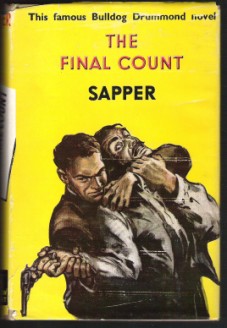
1189621421509Sapper’s The Final Count (1926) saw the Bulldog Drummond formula being shaken and stirred yet again. The first four books in the series are the most popular because they chronicle Drummond’s ongoing battle with criminal mastermind Carl Peterson. The interesting factor is how different the four books are from one another. Sapper seemed determined to cast aside the idea of the series following a template and the result kept the long-running series fresh, as well as atypical.

The most striking feature this time is the decision to opt for a first person narrator in the form of John Stockton, the newest member of Drummond’s gang. While Drummond’s wife, Phyllis, played a crucial role in the first book, she barely registers in the early sequels. One would have expected Sapper to have continued the damsel in distress formula with Phyllis in peril, but he really only exploits this angle in the second book in the series, The Black Gang (1922).

The Black Gang reappear here, if only briefly, and are quickly dispatched by the more competent and deadly foe they face. This befits the more serious tone of this book, which has very few humorous passages. The reason for the somber tone is the focus is on a scientific discovery of devastating consequence that threatens to either revolutionize war or end its threat forever. Robin Gaunt is the tragic genius whose invention of a deadly poison that could wipe out a city the size of London by being released into the air proves eerily prescient.

Read More Read More