Browsed by
Category: Books

New Treasures: The Big Book of Rogues and Villains edited by Otto Penzler
New Treasures: The Big Book of Rogues and Villains edited by Otto Penzler

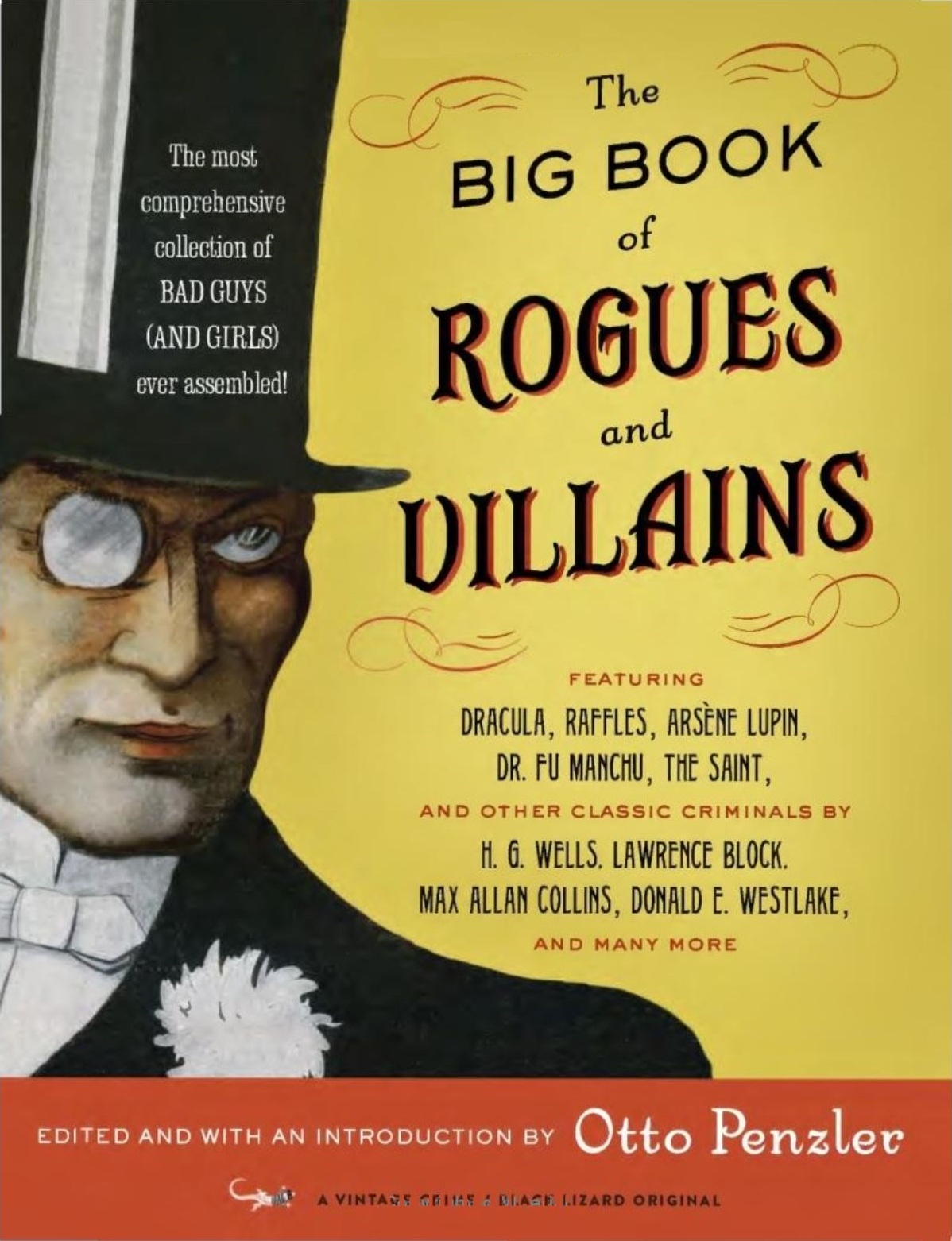
The Big Book of Rogues and Villains-smallOtto Penzler’s Big Books series include some of the most substantial anthologies I’ve ever held in two hands. Big oversized volumes that clock in at nearly a thousand pages each, they’re virtually a graduate level course in American 20th Century genre fiction. His latest, The Big Book of Rogues and Villains, weighs in “at a svelte 928 pages… [and] is equally impossible to pick up and put down” (Kirkus Reviews).

Edgar Award-winning editor Otto Penzler’s new anthology brings together the most cunning, ruthless, and brilliant criminals in mystery fiction, for the biggest compendium of bad guys (and girls) ever assembled.

The best mysteries — whether detective, historical, police procedural, cozy, or comedy — have one thing in common: a memorable perpetrator. For every Sherlock Holmes or Sam Spade in noble pursuit, there’s a Count Dracula, a Lester Leith, or a Jimmy Valentine. These are the rogues and villains who haunt our imaginations — and who often have more in common with their heroic counterparts than we might expect. Now, for the first time ever, Otto Penzler gathers the iconic traitors, thieves, con men, sociopaths, and killers who have crept through the mystery canon over the past 150 years, captivating and horrifying readers in equal measure. The 72 handpicked stories in this collection introduce us to the most depraved of psyches, from iconic antiheroes like Maurice Leblanc’s Arsène Lupin and Sax Rohmer’s Dr. Fu Manchu to contemporary delinquents like Lawrence Block’s Ehrengraf and Donald Westlake’s Dortmunder, and include unforgettable tales by Robert Louis Stevenson, Bram Stoker, Washington Irving, Jack London, H.G. Wells, Sinclair Lewis, O. Henry, Edgar Wallace, Leslie Charteris, Erle Stanley Gardner, Edward D. Hoch, Max Allan Collins, Loren D. Estleman, and many more.

I’m looking for a complete TOC, and will post it here when I find one. In the meantime, check out our previous coverage of Penzler’s massive anthologies.
Read More Read More

Party Of The First Part

Party Of The First Part

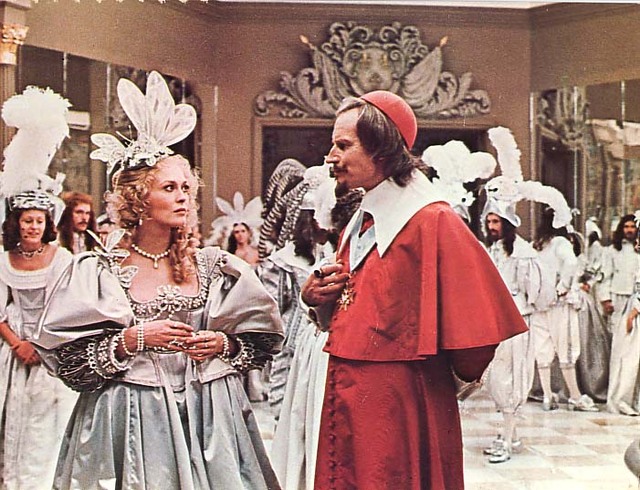
3 musketeers ballEveryone likes a party. Many of us even like to plan parties, especially writers (who, if they didn’t like process, wouldn’t be writers.) But do we like to write about them? Maybe not so much

Of course there are some memorable parties to be found in Fantasy and SF literature. The two that immediately come to mind are the birthday party that opens LOTR, and the high tea that opens The Hobbit. Is it significant that both of these involve not only the same author, but the same character?  I think so. I also think it’s significant that Bilbo doesn’t plan the party in The Hobbit (it’s Gandalf’s do), but he does plan the one in LOTR. Seems like it might take a little age and experience to organize a big affair.

MatrixFor the most part parties in literature seem to be limited to pre-WWII novels where omniscient narrators can give us interesting overviews, occasionally zooming in to present important detail. Look at Jane Austen: with or without zombies these people spend a lot of time at balls, dances, tea parties, supper parties and the like. Otherwise, how would the characters, particularly the women, meet one another? Even Cinderella meets the prince at a ball.
A party is also a great way to allow your characters to interact in public, and reveal all kinds of details about themselves that you might otherwise have to take chapters to show. Still, unless you are using an omniscient narrator, a party scene can be deadly both to read and to write. Think of the last big party you attended. If the narrative of the story was told from your point of view only, the reader would get a very limited understanding of what happened.

Do parties have any other narrative use? Do they forward the plot? I’d say they do, but only by what we’ve seen already: introducing characters to the reader and allowing characters to meet each other. By the way, however planned they might be, I don’t think we can include ceremonies in our definition of parties. Maybe the reception, for example, but not the wedding itself.

Read More Read More

Vintage Treasures: The Folk of the Air by Peter S. Beagle

Vintage Treasures: The Folk of the Air by Peter S. Beagle

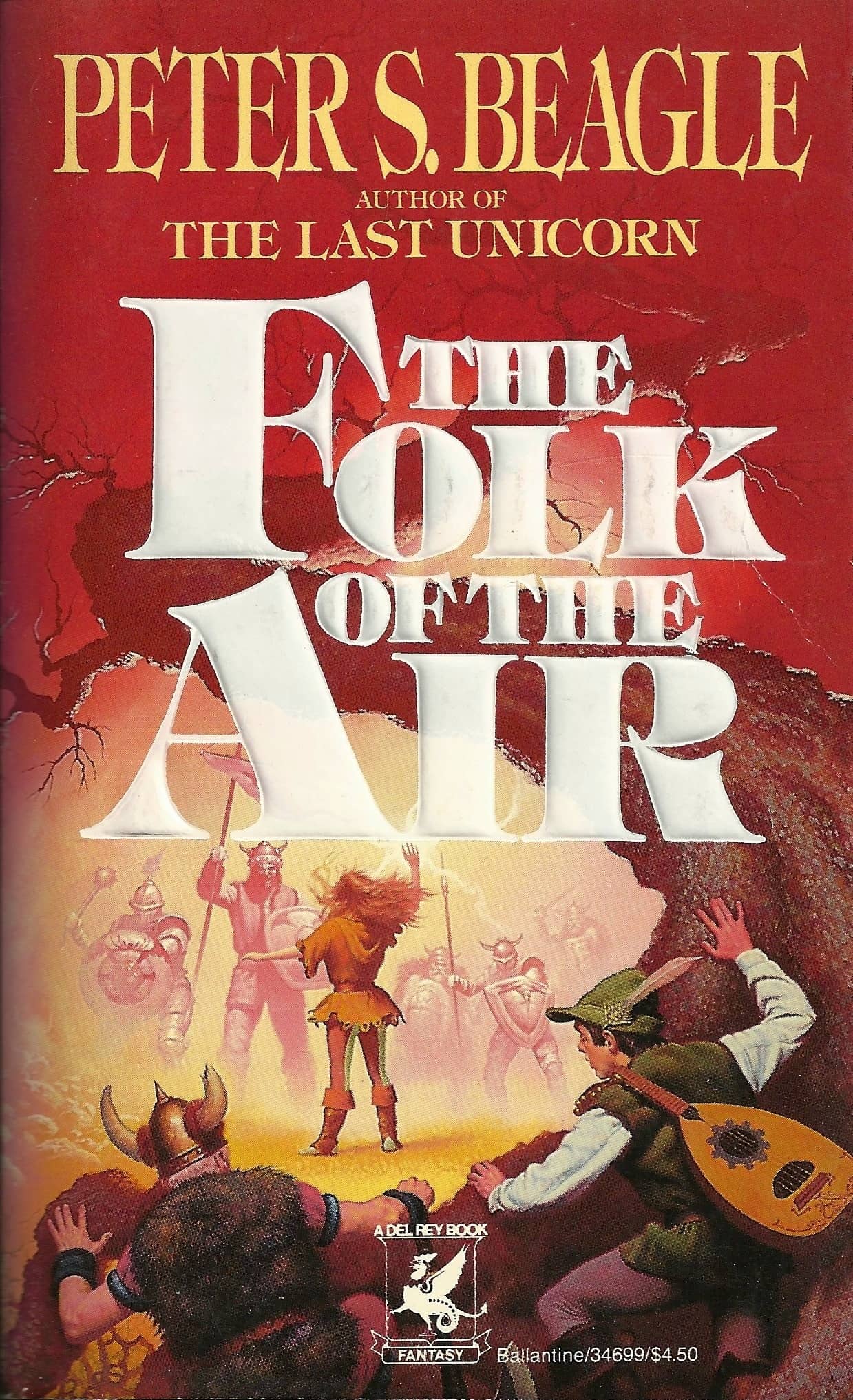
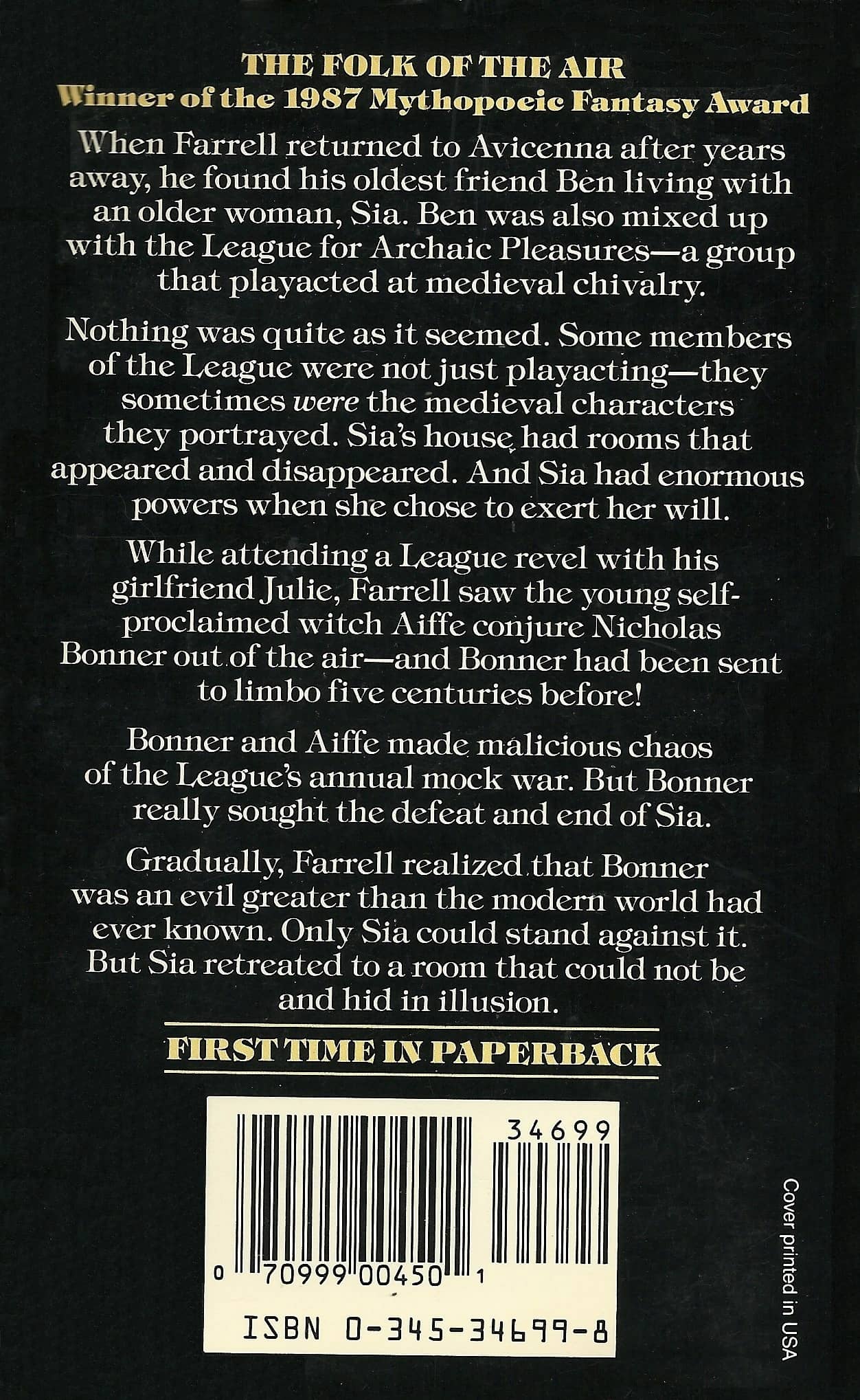
The Folk of the Air-small The Folk of the Air-back-small

Peter S. Beagle burst on the scene in 1960 with A Fine and Private Place, the tale of a man quietly living in a cemetery for decades. Written while he was still a teenager, the novel established Beagle immediately as a major American fantasist. He followed it with The Last Unicorn (1968), which placed fifth in the 1987 Locus Poll for All-Time Best Fantasy Novel, sold more than five million copies, and was made into a popular animated film by Rankin/Bass in 1982.

In 1969 Beagle wrote one of his most popular short stories, “Lila the Werewolf” (first published in Guabi #1, and in Terry Carr’s New Worlds of Fantasy #3), featuring the character Sam Farrell. Two decades later Farrell returned in Beagle’s third novel The Folk of the Air, which won the Mythopoeic Fantasy Award and was called “Peter Beagle’s Silmarillion” in the Mythopoeic Society review.

The publication of The Folk of the Air is an Event, no doubt about it… it is easily the best new fantasy novel I read last year… The main character is Joe Farrell, who first appeared as the hero of a short story called “Lila the Werewolf” (which may be found in the omnibus volume The Fantasy Worlds of Peter S. Beagle). It’s several years after “Lila”, and Farrell is making his first visit in a long time to his old stomping grounds in Avicenna, California…

If The Folk of the Air had been published five years ago, it would by now be seen as a foundation stone in the currently flourishing subgenre of contemporary urban fantasy — books like Moonheart by Charles de Lint, Tea with the Black Dragon by R.A. MacAvoy, and Brisingamen by Diana Paxson… Beagle has captured the style of the subgenre perfectly. From the beginning, where the sense of something magical and uncanny is in the air nearly from the start, long before the supernatural actually rears its head, to the end, which features a bang-up magical battle between two of the principal characters while the others look on in dazed wonder, this book has everything to capture the interest of fantasy readers who like a magical tale in the here and now.

The book has held up very well over the decades (SF Reviews recently called it “top-drawer, comparable to the best of Tim Powers”), although Beagle has reportedly been working on a revised edition, to be called Avicenna, for some time. Whatever the case, the book has been out of print in the US since the 1988 Del Rey paperback, pictured above. I found this copy at the Windy City Pulp and Paper show here in Chicago earlier this year, where I paid $2 for it. It is 375 pages, with a cover price of $4.50. The cover is by Romas. There is no digital edition. See our previous coverage of Peter Beagle here.

Nothing Gets Belly Laughs Like Cthulhu: The Cackle of Cthulhu, edited by Alex Shvartsman

Nothing Gets Belly Laughs Like Cthulhu: The Cackle of Cthulhu, edited by Alex Shvartsman

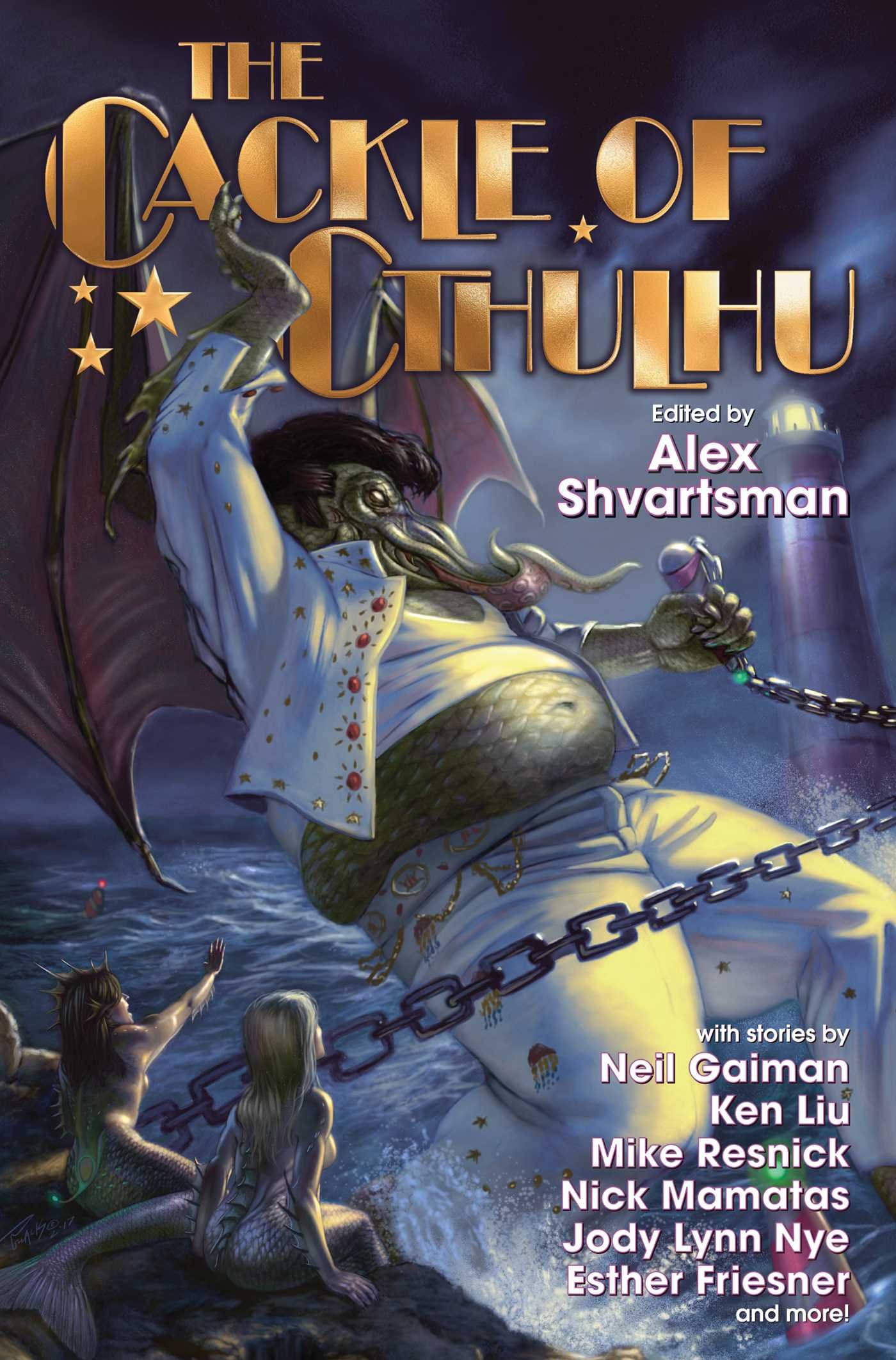
The Cackle of Cthulhu-smallAlex Shvartsman is best known for his Unidentified Funny Objects annual anthology series from UFO Publishing, and his recent humorous anthologies Funny Horror, Funny Fantasy and Funny Science Fiction. He’s also a noted short story writer, and his first collection, Explaining Cthulhu to Grandma and Other Stories, was released in 2015.

It seems inevitable that he would combine his love of Lovecraftian horror with his passion for humorous short fiction. His first book for Baen, The Cackle of Cthulhu, is an anthology of Lovecraftian humor coming in January 2018.

Knock, knock!
Who’s there?
Cthul.
Cthul who?
Exactly! I’ve come to tickle your funnybone.
Oh, and also to eat your soul.

In 1928, Weird Tales debuted “The Call of Cthulhu” by H.P. Lovecraft, and the Cthulhu Mythos was born. In the 90 years since, dozens of writers have dared play within HPL’s mind-blowing creation — but never with such terrifyingly funny results. Now top authors lampoon, parody, and subvert Lovecraft’s Mythos. See Cthulhu cut short his nap at the bottom of the Pacific Ocean to invade North Korea! Watch the Unspeakable Eater of Souls solve crimes on the pulpy streets of Innsmouth! And speaking of largish Elder Gods, listen to a plastic Elvis doll dispense folksy advice straight from the heart of the Emperor of Dread! Again Ol’ Tentacle-Face is confronted by frail humans who dare defy the Incarnation of Ultimate Evil — but this time not by brave monster hunters and terrified villagers, but by fan fiction writers, clueless college students, and corporate lawyers (okay, we realize it’s hard to know who to root for in that confrontation).

Twenty-three mirthful manifestations within the Cthulhu Mythos from best-selling and award-winning authors Neil Gaiman, Mike Resnick, Esther Friesner, Ken Liu, Jody Lynn Nye, Laura Resnick, Nick Mamatas, and many more!

Guaranteed to leave you howling. Because if you look at it just right, there’s nothing funnier than a soul writhing in cosmic horror before a tentacled maw of malevolence. As HPL himself saith: “From even the greatest of horrors irony is seldom absent.”

The Cackle of Cthulhu is a mix of original fiction and reprints, it includes some of the best known examples of Lovecraftian mirth, including “The Shunned Trailer” by Esther Friesner (from Asimov’s SF, February 2000, and adapted as a podcast at Escape Pod here), and Neil Gaiman’s “Shoggoth’s Old Peculiar,” originally published in Mike Ashley’s The Mammoth Book of Comic Fantasy in 1998 (and discussed at Tor.com here, and read by Neil Gaiman here.)

Read More Read More

Postapocalyptic Adventure on the Gulf Coast: The Ship Breaker Trilogy by Paolo Bacigalupi

Postapocalyptic Adventure on the Gulf Coast: The Ship Breaker Trilogy by Paolo Bacigalupi

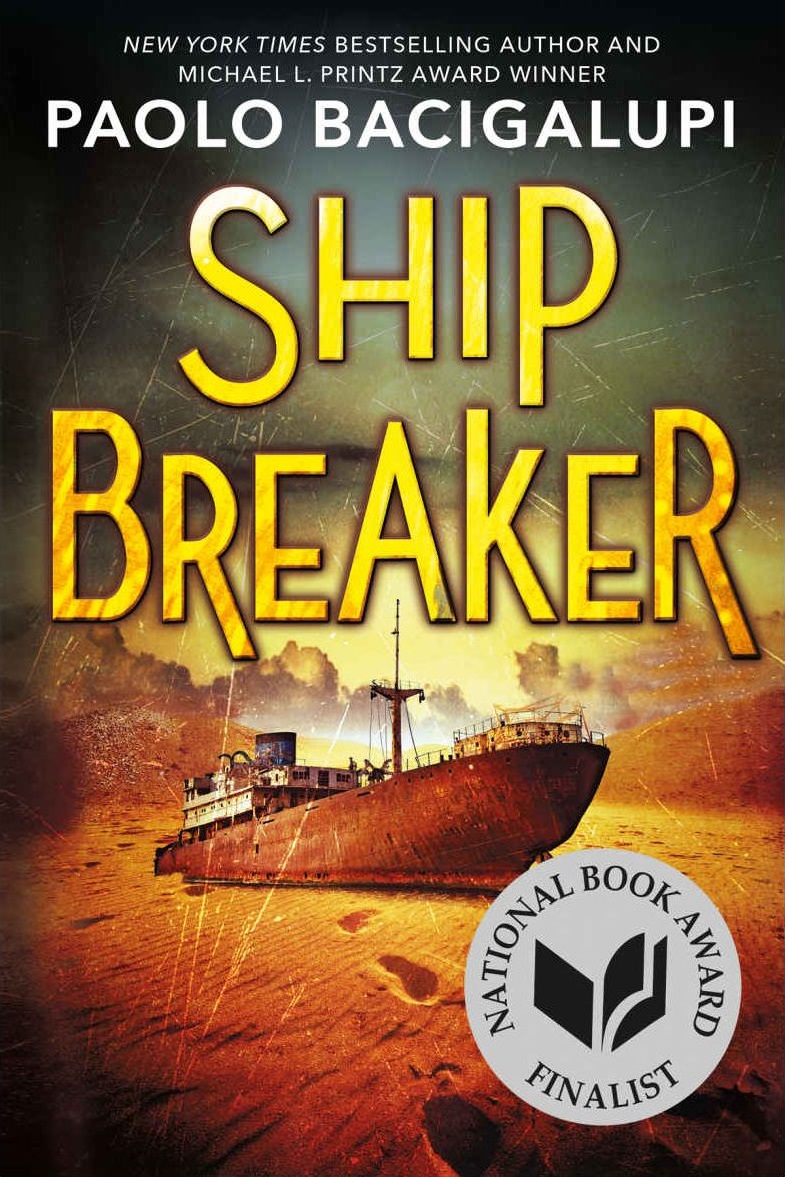
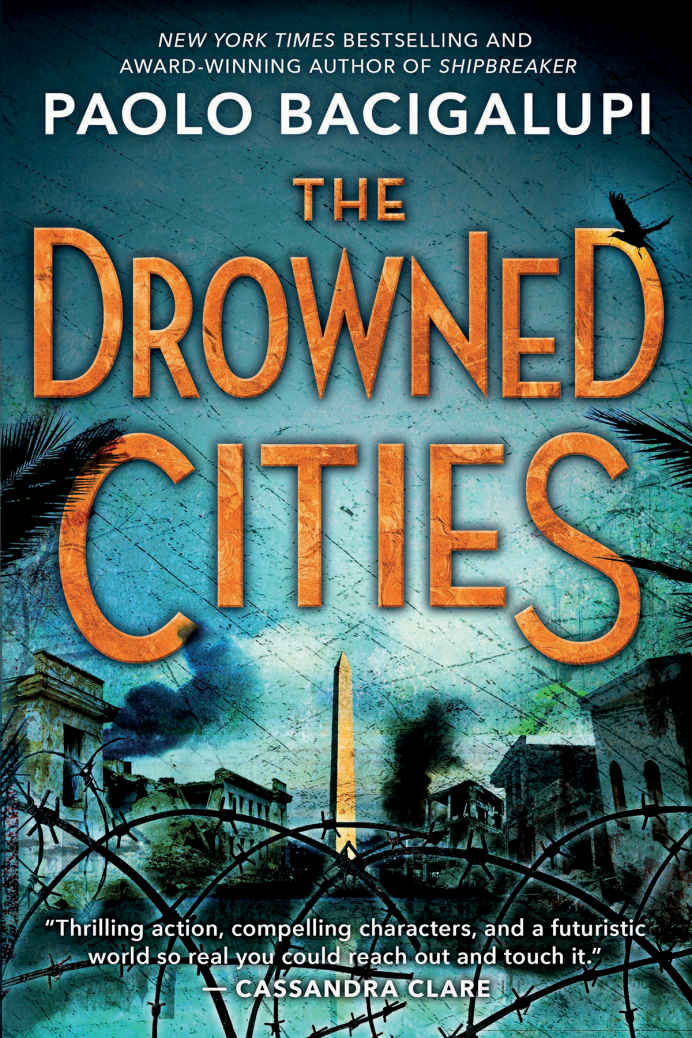
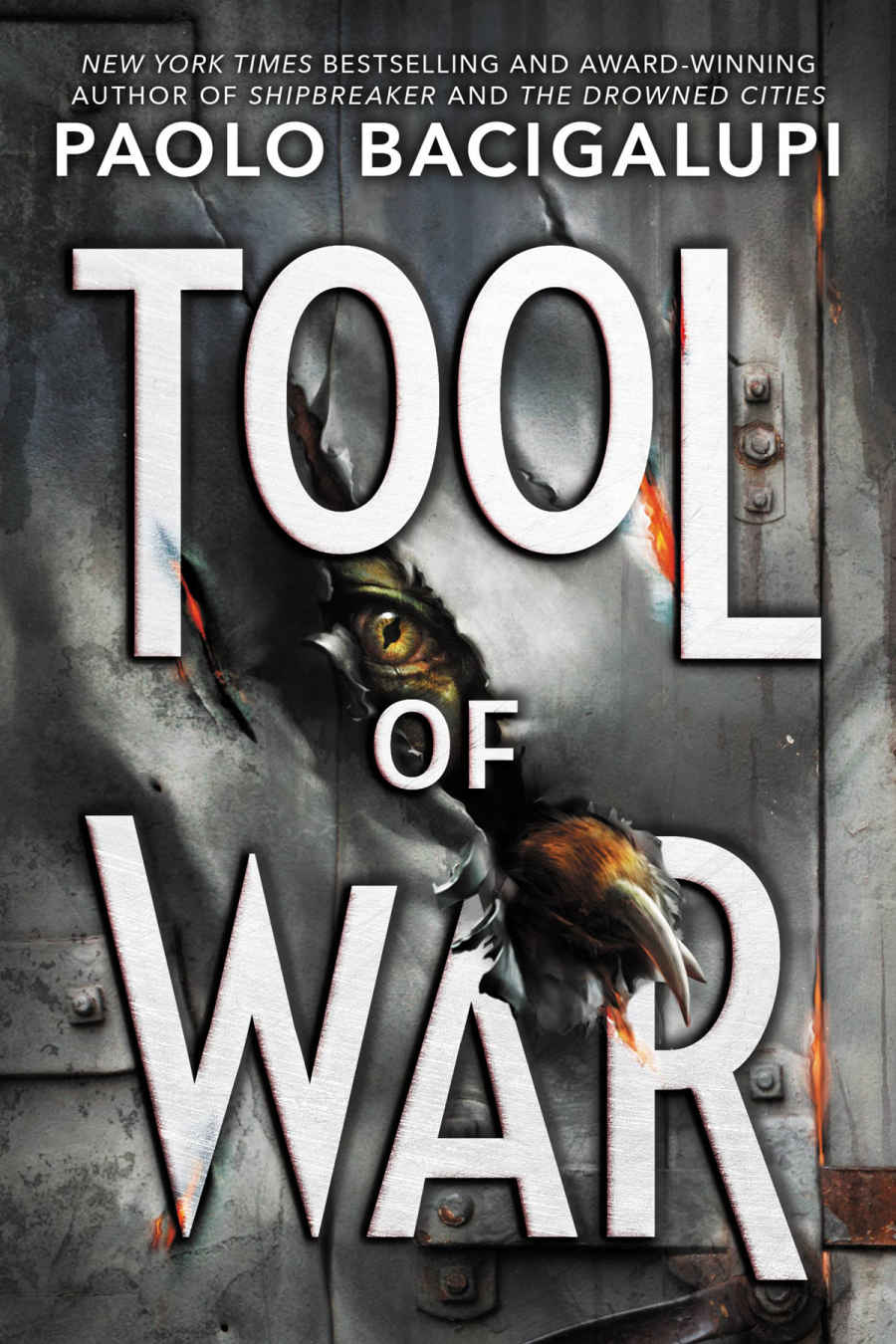
Ship Breaker Paolo Bacigalupi-small The Drowned CIties Paolo Bacigalupi-small Tool of War Paolo Bacigalupi-small

Paolo Bacigalupi’s breakout book was The Windup Girl (2009), which won the Hugo and Nebula Awards for Best Novel. He followed that triumph with his first New York Times bestseller, the National Book Award Finalist Ship Breaker (2010), the tale of a teenage boy in a future Gulf Coast devastated by the forces of climate change. Here’s the description.

In America’s flooded Gulf Coast region, oil is scarce, but loyalty is scarcer. Grounded oil tankers are being broken down for parts by crews of young people. Nailer, a teenage boy, works the light crew, scavenging for copper wiring just to make quota–and hopefully live to see another day. But when, by luck or by chance, he discovers an exquisite clipper ship beached during a recent hurricane, Nailer faces the most important decision of his life: Strip the ship for all it’s worth or rescue its lone survivor, a beautiful and wealthy girl who could lead him to a better life….

He followed Ship Breaker with The Drowned Cities, a 2012 Los Angeles Public Library Best Teen Book.

Read More Read More

The Road of Azrael by Robert E. Howard

The Road of Azrael by Robert E. Howard

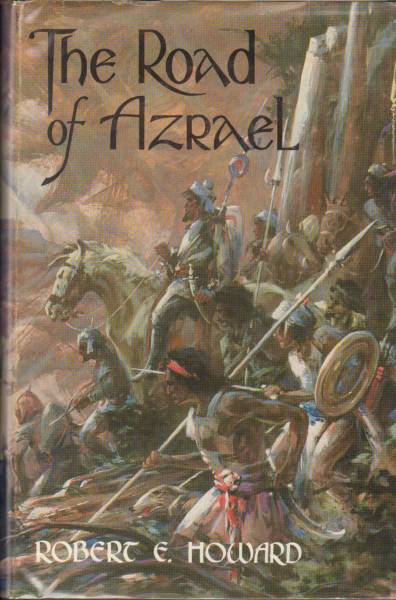
TRDOZRL1979I can remember when my dad brought home The Road of Azrael (1979) and Sowers of the Thunder (1980), collections of Robert E. Howard’s historical adventure tales. My reading tastes were so exclusively fantasy and science fiction then, I couldn’t imagine wasting any time on boring, mundane stories. No wizards, no demons? What the heck was anybody thinking?

I grew out of that attitude a few years later and read both volumes. I remember liking them, but if you asked me for details on either one, I couldn’t have told you a thing. I read them once and never again. In fact, until recently I hadn’t read any other historical adventure even though, theoretically at least, I was a fan. I mean, it’s one of the primary root sources of swords & sorcery. At a very basic level, Robert E. Howard took the historical adventures of writers like Harold Lamb and Talbot Mundy and added magic and monsters.

It wasn’t until I started blogging about swords & sorcery and started getting all sorts of recommendations for the stuff that I looked into the genre again. With my review of Henry Treece’s The Great Captains four years ago, I started including some novels in my writing for Black Gate. I’ve been including a taste every month or so (most recently Purity of Blood by Arturo Pérez-Reverte), and it’s gone over well.

One of the pledges I made to myself at the start of my Black Gate tenure four years ago, was to avoid the big names of swords & sorcery. No one, I felt, needed another article about Michael Moorcock, or Fritz Leiber, or especially Robert E. Howard. Considering I wrote about Karl Edward Wagner’s Night Winds for my very first full review, THAT promise didn’t last very long, but I have tried to keep my focus on lesser-known or forgotten authors in my reviews of older works. Since then, I’ve reviewed a Moorcock book, a new one by Charles Saunders, and several more Wagner books, but until now I’ve steered clear of REH (especially because Bob Byrne has done a terrific job writing about him here at BG in his ongoing Discovering Robert E. Howard columns). It’s too hard to completely avoid the foundational figures of swords & sorcery when writing as often as I do, but I try to keep it to a minimum.

All this is a complicated way to say I’m reviewing The Road of Azrael by Robert E. Howard, and feel fully justified in doing so. It collects five historical tales of varying quality.

The paperback edition I read has execrable cover art, which did nothing to add appeal for me. Fortunately, the first thing in the book is a laudatory introduction by Gordon Dickson, no slouch of a storyteller himself, praising REH’s storytelling talents. Not that I need reminding of just how good Howard could be, but it’s always nice to see him get the praise he deserves. Unfortunately, I did not like the opening story, “Hawks Over Egypt.”

Read More Read More

Vintage Treasures: Sword & Sorceress, edited by Marion Zimmer Bradley

Vintage Treasures: Sword & Sorceress, edited by Marion Zimmer Bradley

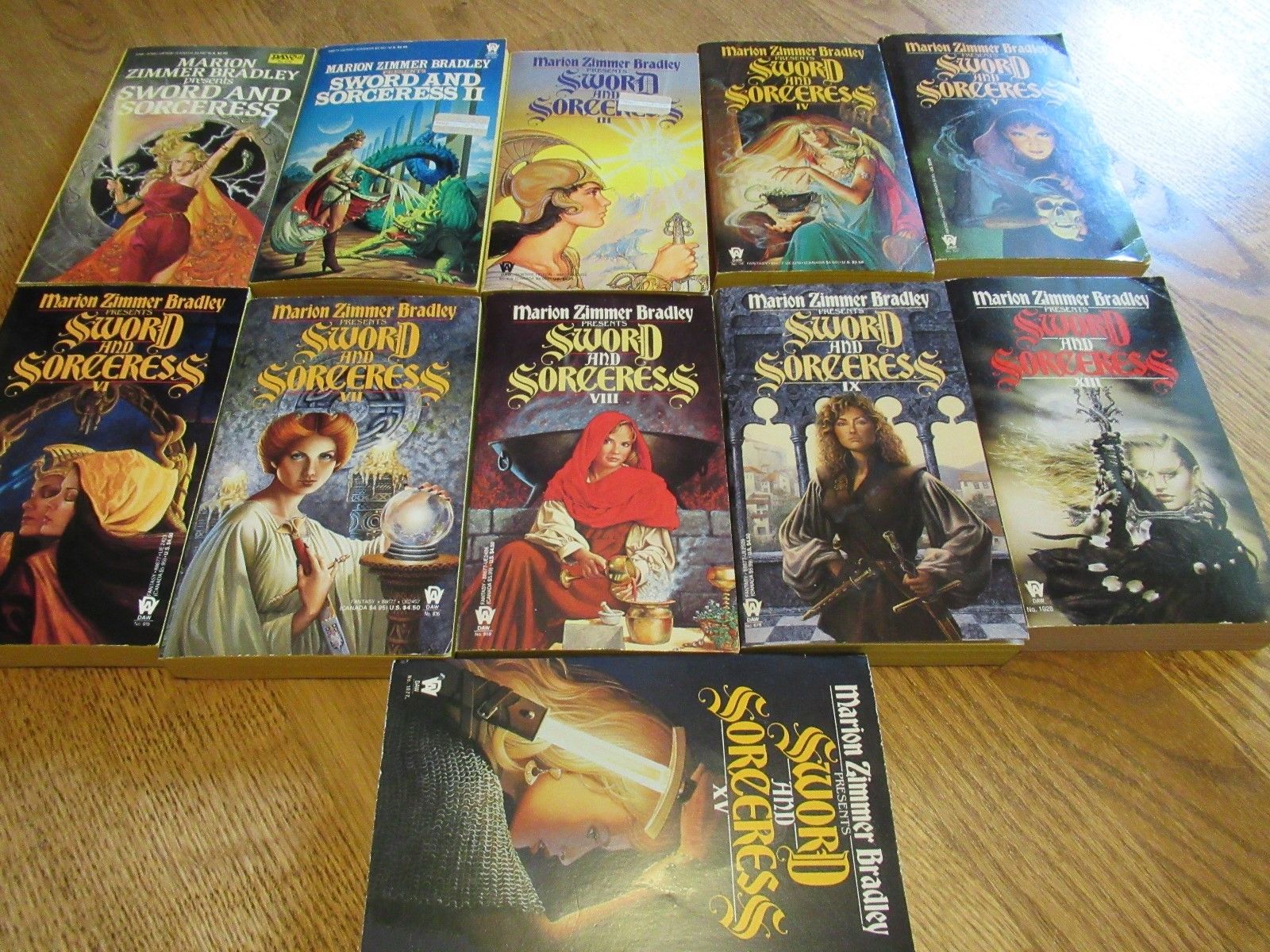
Sword & Sorceress Anthologies-small

Sword and Sorcery has a rich history of anthology series. Lin Carter’s seminal Flashing Swords and Andy Offutt’s Swords Against Darkness are probably the most famous examples, but in terms of longevity and influence on the field I think they’re both eclipsed by Marion Zimmer Bradley’s Sword & Sorceress anthologies. The first one appeared from DAW Books in 1984, and there’s been a new volume every year since, with a single three-year gap between 2004-07. Last year’s Marion Zimmer Bradley’s Sword and Sorceress, edited by Elisabeth Waters, was #31.

The series is critical to the history of the field for more than its longevity, however. Unlike Carter and Offutt, who invited established authors to fill their pages, Bradley and her fellow editors opened their volumes up to submissions, and the results were pretty extraordinary. Numerous young writers who would go on to great things, many of them women, were discovered or promoted very early in their career in the pages of S&S, including Emma Bull, Mercedes Lackey, Jennifer Roberson, Diana L. Paxson, Laurell K. Hamilton, Phyllis Ann Karr, Rachel Pollack, Vera Nazarian, Deborah J. Ross, Elizabeth Moon, Janet Fox, Laura J. Underwood, Rosemary Edghill, Syne Mitchell, Devon Monk, Carrie Vaughn, and many, many others. You could make a pretty compelling case that Sword & Sorceress (together with its sister publication, Marion Zimmer Bradley’s Fantasy Magazine) dramatically remade modern fantasy, and may be the single greatest influence on 21st Century American fantasy so far.

The first volumes of S&S came out just as I entered grad school and my reading time dropped precipitously. So I missed out on al the excitement, but it’s not too late to catch up. I found the above collection of the first nine volumes (plus VIII and XV) in great shape on eBay, and bought it for $20, about two bucks per book — about half the original cover price. That’s a heck of a bargain for a lot of great reading.

Read More Read More

Future Treasures: Persepolis Rising by James S. A. Corey

Future Treasures: Persepolis Rising by James S. A. Corey

Persepolis Rising-smallJames S. A. Corey is the pen name of fantasy author Daniel Abraham (the Long Price Quartet) and writer Ty Franck. Their Expanse series, a New York Times bestseller, is one of the most popular SF series on the shelves at the moment. It has been filmed as The Expanse, a breakout hit for the SyFy channel, which was just renewed for a third season.

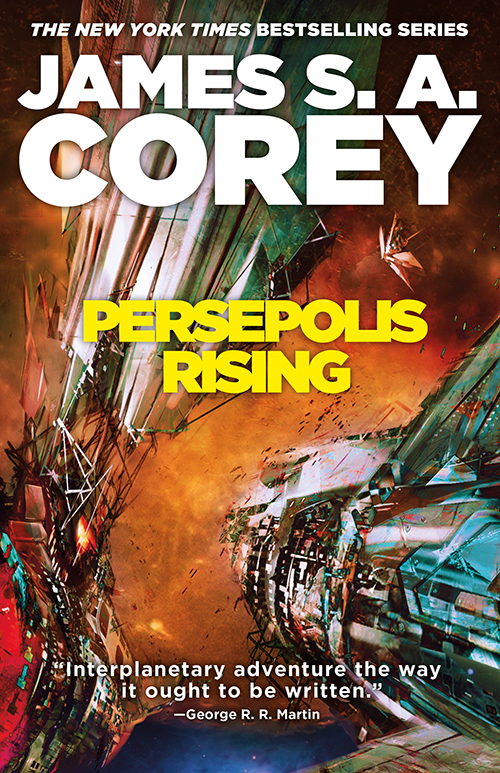
At six volumes this is a substantial reading project already. The seventh novel, Persepolis Rising, arrives in hardcover next month from Orbit.

AN OLD ENEMY RETURNS

In the thousand-sun network of humanity’s expansion, new colony worlds are struggling to find their way. Every new planet lives on a knife edge between collapse and wonder, and the crew of the aging gunship Rocinante have their hands more than full keeping the fragile peace.

In the vast space between Earth and Jupiter, the inner planets and belt have formed a tentative and uncertain alliance still haunted by a history of wars and prejudices. On the lost colony world of Laconia, a hidden enemy has a new vision for all of humanity and the power to enforce it.

New technologies clash with old as the history of human conflict returns to its ancient patterns of war and subjugation. But human nature is not the only enemy, and the forces being unleashed have their own price. A price that will change the shape of humanity — and of the Rocinante — unexpectedly and forever…

Here’s the complete list of novels.

The Expanse
Leviathan Wakes
Caliban’s War
Abaddon’s Gate
Cibola Burn
Nemesis Games
Babylon’s Ashes
Persepolis Rising

Persepolis Rising will be published by Orbit on December 5, 2017. It is 560 pages, priced at $28 on hardcover and $14.99 for the digital edition. The cover is by Daniel Dociu. See all of our recent coverage of the best upcoming SF and Fantasy here.

I Was Paper Trained by Philip K. Dick

I Was Paper Trained by Philip K. Dick

Blade-Runner-2049-Hero-small

My oldest son Sam loves the movie Blade Runner above almost any other, and so he was at least provisionally interested when the recent and long-delayed sequel, Blade Runner 2049 hit the theaters. Myself, I didn’t care much one way or the other. I like the original movie well enough (though it’s not the touchstone for me that it seems to be for many others) but as for the sequel, well… the two hours that will forever go down in infamy as Prometheus did a lot to damage my moviegoing relationship with Ridley Scott, which was never that warm to begin with. (I know Scott was “just” the executive producer on 2049, but still. Once someone has charged you twelve dollars for the privilege of farting in your face, you don’t forget it.)

In any case, the merits of the movies are beside the point. It has long irked me, as a science fiction fan and as a father, that Sam’s enthusiasm for Blade Runner has always been untempered by any encounter with Philip K. Dick’s actual novel, Do Androids Dream of Electric Sheep? or indeed, with anything by the man who I regard as the greatest of all science fiction writers. Before you call Child Protective Services, please know that I didn’t fail in every way as a parent — Sam has a wife and a home and a job, he can tie his shoes and put together a coherent English sentence, he’s kind to animals and considerate to everyone he meets, at least until he finds out who they voted for, and he’s a hell of a cook. He’s a fine and productive person and my pride in him is unbounded… but really, c’mon — Phillip K. Dick!

Read More Read More

Ragnarok Publications Cancels Forthcoming Books

Ragnarok Publications Cancels Forthcoming Books

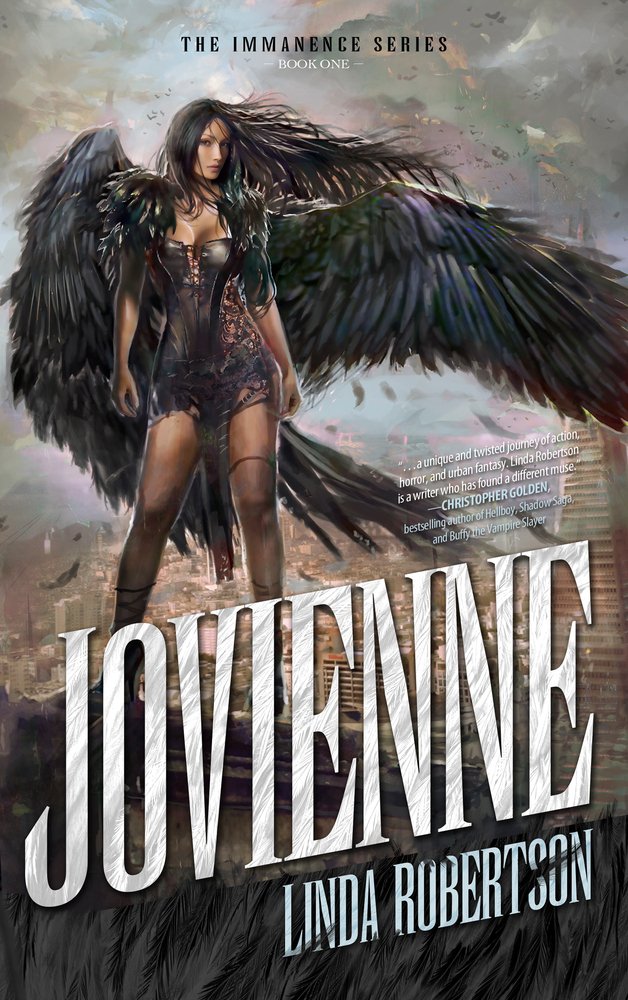
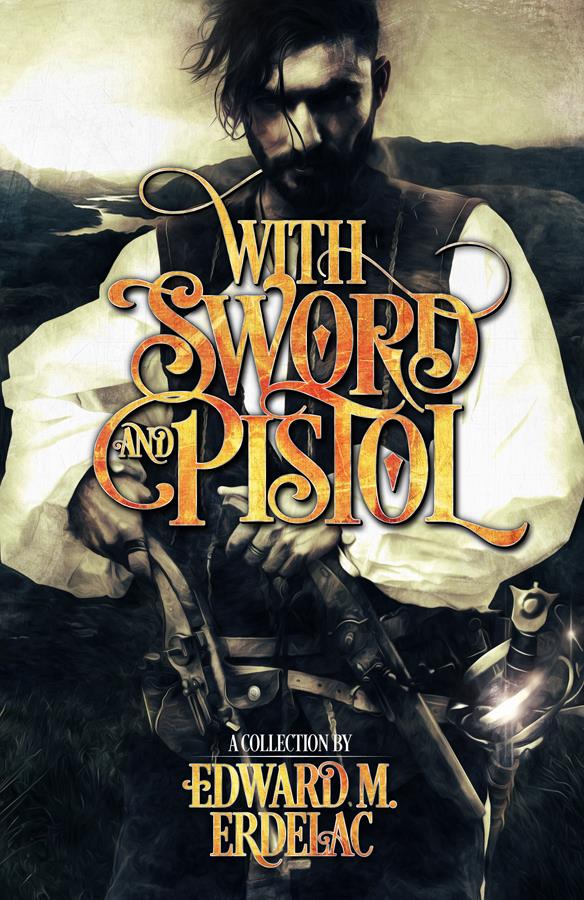
Blackguards-small Jovienne-small With Sword and Pistol-small

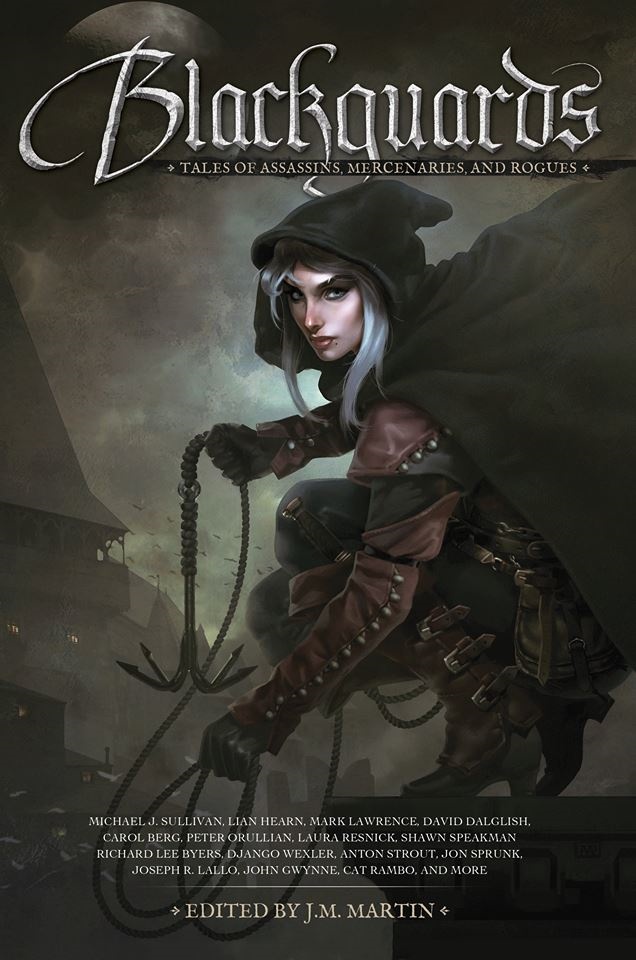
John R. Fultz recently alerted us to some unfortunate news: Ragnarok Publications, the independent small press behind the acclaimed anthologies Blackguards and Kaiju Rising: Rise of Monsters, has officially canceled their slate of upcoming novels. This affects several books we were really looking forward to, including John’s upcoming Son of Tall Eagle, the sequel to The Testament of Tall Eagle. Here’s part of the announcement posted on the Ragnarok website yesterday:

It’s time for a hard decision.

In order for us to get our feet under us again, we have to reboot in a way. It’s extremely unfortunate and we wrestled with this decision, but for now, we’re closing down the majority of our novel contracts. We feel like the authors we work with are family and this is the last thing we wanted to do — hurt our family. We love and believe in all the novels we’ve published, but we simply cannot afford to keep them in print, nor can we afford to put out new novels at the level of quality that we are known for.

Here’s the complete text of the announcement from publisher Jeremy Mohler.

Read More Read More