Browsed by
Category: Books

Future Treasures: The King of Bones and Ashes by J.D. Horn

Future Treasures: The King of Bones and Ashes by J.D. Horn

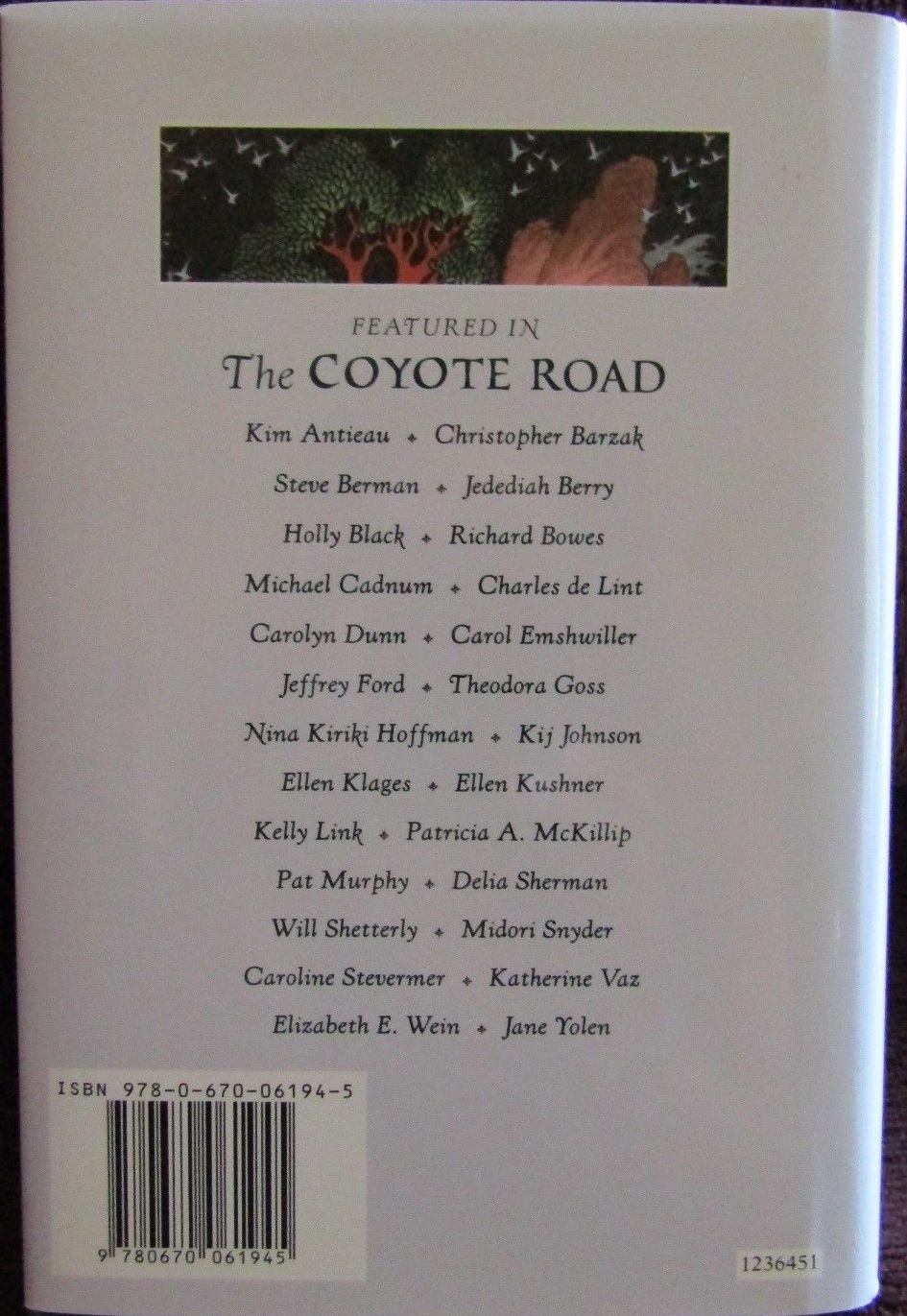
The King of Bones and Ashes-small The King of Bones and Ashes-back-small

J.D. Horn is the bestselling author of the Witching Savannah series (The Line, The Source, etc.) His newest is the tale of a young witch’s quest to uncover her family’s terrifying history. It arrives next month from 47 North, Amazon’s publishing imprint, which has jumped into genre fiction in a big way but has yet to make a significant splash. It does tend to take chances with new and emerging authors, however, which I heartily approve.

The King of Bones and Ashes is the first volume of a new series, Witches of New Orleans. Publishers Weekly says “Sparkling magic and creepy villains bolster the narrative… The terrifying conclusion will have readers looking forward to the next installment.”

The King of Bones and Ashes will be published by 47North on January 23, 2018. It is 354 pages, priced at $24.95 in hardcover, $14.95 in trade paperback, and $4.99 for the digital edition. No sample chapters online that I can find, but I’ll keep looking.

Don’t Mess with Mary: P.L Travers’ Mary Poppins

Don’t Mess with Mary: P.L Travers’ Mary Poppins

Saving Mr. Banks poster-small

Saving Mr. Banks (2013)

I don’t know what this year’s big Christmas movie will be, but a few years ago, the unavoidable holiday hit that was in every theater was Disney’s Saving Mr. Banks, which told the heartwarming story of how Walt Disney (Tom Hanks) pulled out all the stops in persuading Patricia L. Travers (Emma Thompson) to permit him to make a movie featuring her creation, Mary Poppins. I didn’t see the movie, though from everything I heard it was both a thoroughly professional entertainment and a disgraceful whitewash of the events it purports to dramatize. (If you haven’t seen Harlan Ellison’s hilarious takedown of the film, it’s ready and waiting on YouTube, anytime you can make sure that the children are safely out of the house.)

Travers always regretted the necessity of giving in to Disney, but necessity it was; she badly needed the money, and Walt knew it. Considering the circumstances, she drove as hard a bargain as she could, fighting tirelessly to preserve the essence of her creation, even as she knew that she was doomed to fail, as fail she did.

Nevertheless, the movie that resulted from Walt’s blandishments, 1964’s Mary Poppins, is reckoned one of Disney’s greatest accomplishments, both artistically and commercially, winning five Oscars (including a best actress statuette for Julie Andrews’ portrayal of Mary) and grossing close to one hundred million dollars on a six million dollar budget. When Walt was right, he was right.

Read More Read More

Vintage Treasures: Soldier Boy by Michael Shaara

Vintage Treasures: Soldier Boy by Michael Shaara

The Killer Angels Michael Shaara-small Soldier Boy Michael Shaara-small Soldier Boy Michael Shaara-back-small

Michael Shaara won the Pulitzer Prize for his 1974 Civil War novel The Killer Angels. It was a huge bestseller, selling more than 2 million copies worldwide, and became the basis for the 1993 film Gettysburg.

Most of Shaara’s legion of fans don’t know that he began his career as as a science fiction writer. His first publication was “Orphans of the Void” in the June 1952 issue of Galaxy Science Fiction. Matthew Wuertz has been reviewing the entire back catalog of Galaxy since its first issue; he described the story thusly.

Captain Steffens and his crew explore the Tyban solar system. They find the third planet populated by millions of robots. The robots are telepathic, in the likeness of their makers, who are nowhere to be found. Yet the robots continue to await the return of their makers, for their longing to serve is their primary function. This was a marvelous tale of first encounters. It plays out well, with a touch of sadness that leads to great hope.

Over the next 30 years Shaara’s short fiction appeared in genre magazines like F&SF, Astounding, Fantastic Universe, and Galaxy. In 1982 he issued a single collection gathering most of his finest short fiction, Soldier Boy, published through David Hartwell’s legendary Timescape imprint at Pocket Books.

Read More Read More

New Treasures: The Trials of Solomon Parker by Eric Scott Fischl

New Treasures: The Trials of Solomon Parker by Eric Scott Fischl

The Trials of Solomon Parker-small The Trials of Solomon Parker-back-small

The Trials of Solomon Parker doesn’t look it, but it’s part of a series. A loose series maybe, but still a series. The first novel, Dr Potter’s Medicine Show, was published by Angry Robot back in March. At least you don’t have to wait long between installments.

John Shirley called the first novel “A powerful alchemical elixir concocted of post Civil War historical fiction, dark fantasy, and Felliniesque flavoring.” And the Barnes & Noble Sci-Fi & Fantasy Blog labeled it a “gritty, down-and-dirty debut.” In her feature review at Tor.com, Arianne Thompson described it as:

An Enthusiastic Carnival of Horrors… even though Dr. Potter rightly belongs on the “horror/occult” side of the Weird Western spectrum, it cleaves apart from the sensational grimdark vogue that so heavily tints our view of the past. Fischl’s command of his characters’ world is grotesque, vivid, joyful, and sublime — an uncommon realism that honors the human side of history, and a reminder that a carnival of horrors is still a carnival, after all, with miracles and spectacles awaiting anyone brave enough to venture into the sideshow tent.

The B&N Sci-Fi Blog says “compelling and broken characters, and damn good storytelling elevates The Trials of Solomon Parker to whole new level of weird western. Two excellent books in a calendar year – Fischl is definitely a writer to watch.”

The Trials of Solomon Parker was published by Angry Robot on October 3, 2017. It is 384 pages, priced at $7.99 in paperback and $6.99 for the digital edition. The cover is by Steven Meyer-Rassow.

Wings, Wind, and World-Wreckers: The Best of Edmond Hamilton

Wings, Wind, and World-Wreckers: The Best of Edmond Hamilton

Best-of-Edmond-Hamilton-SFBCJames McGlothin has been providing excellent continuing coverage on Black Gate of Del Rey’s famous “The Best Of…” anthologies that shaped many SF readers in the 1970s. He was kind enough to allow me to take a pile of notes I’d assembled for Del Rey’s The Best of Edmond Hamilton (1976) and do an entry in the series. I also sought the blessing of our editor John O’Neill because Edmond Hamilton is his favorite pulp author and I wanted to feel sure I wasn’t intruding too far into another’s territory. Both James and John are welcome to trash Edgar Rice Burroughs and Godzilla as much as they want after this.

I’ll admit to having absorbed less Edmond Hamilton than I should. I’ve read some of his short fiction, but only one of his novels, The Star Kings (1947), a science-fiction variant on The Prisoner of Zenda that’s about as thrilling as Golden Age space opera gets. (Because John O’Neill will ask, I read the original magazine version of The Star Kings, not the later book revision with the sequel-friendly ending.) I’m more familiar with the work of Hamilton’s wife, Leigh Brackett, one of the great science-fiction writers and one of my favorite authors of all time. Their marriage didn’t lead to frequent collaborations, as the marriage of C. L. Moore and Henry Kuttner did. I’m glad Hamilton and Brackett maintained separate writer identities, and the feeling became sharper after reading this selection of what Brackett thought was her husband’s finest short fiction.

I’ve read many of the Del Rey “Best Of…” volumes, but few that I’ve enjoyed as consistently as this one. It’s not only because Hamilton was a superb writer — all the authors in the series were first-rank SF masters — but because of two specific factors.

Read More Read More

Vintage Treasures: Farewell Fantastic Venus! edited by Brian W. Aldiss with Harry Harrison

Vintage Treasures: Farewell Fantastic Venus! edited by Brian W. Aldiss with Harry Harrison

Farewell Fantastic Venus!-small Farewell Fantastic Venus!-back-small

One of the things I love about pulp SF is its romanticized view of our solar system. The ancient canals and lost cities of Mars, the steaming dinosaur-ridden swamps of Venus. I can still remember the bitter disappointment I felt when I first learned that science had proven Venus completely inhospitable to life. It felt like the solar system had been robbed of its greatest potential for extra-planetary adventure.

Many SF writers felt very much the same way. Two recent anthologies from Gardner Dozois and George R.R. Martin, Old Mars and Old Venus, have done a splendid job re-capturing some of that old pulp magic with a generous sampling of modern tales set in retro-versions of both planets.

But they weren’t the first books to celebrate a cherished (and now obsolete) vision of our solar system. That honor probably goes to Farewell Fantastic Venus!, a 1968 anthology released shortly after the first probes reached Venus, and the hard truth was revealed. The book contains classic Venusian fiction by Arthur C. Clarke and John & Dorothy de Courcy, and two novellas by Poul Anderson, including a Psychotechnic League tale. There’s also a rich sampling of novel excerpts by Olaf Stapledon, Edgar Rice Burroughs, C. S. Lewis, and others. All that plus science articles by Frank R. Paul, Carl Sagan, Sir Bernard Lovell, Willy Ley, and others.

Read More Read More

Ride Your Own Pet Sea Monster: The Abyss Surrounds Us by Emily Skrutskie

Ride Your Own Pet Sea Monster: The Abyss Surrounds Us by Emily Skrutskie

The-Abyss-Surrounds-Us-smallWhat Anne McCaffrey did for dragons, Emily Skrutskie does for sea monsters.

In The Abyss Surrounds Us, first-person present-tense narration sweeps readers into the world of Cassandra “Cas” Leung. Since Cas is a trainer of Reckoners, genetically engineered giants of the ocean, her perspective gives us the joy of having our own pet sea monster. As Cas, you’ll strap on your scuba gear and swim alongside a massive tortoise, running your hands over and between its keratin plates. You’ll climb on its back and sit on its head. You’ll hitch a ride as it dives. You’ll command it in battle, sending it to charge, ravage, and destroy.

At the age of seventeen, Cas has worked her whole life to become a full-fledged Reckoner trainer. The day has finally come for her to go on her first solo mission, accompanying the legendary monster Durga as she protects a cruise ship in the lawless Neo Pacific. Cas’s first mistake is assuming that any escort duty in pirate-infested waters is going to be a cakewalk. Her second is deciding to go through with the mission despite signs that Durga’s sick. Her third mistake, after pirates have succeeded in killing Durga and overtaking the ship, is failing to take the suicide pill that would guarantee her a swift and painless death.

Defenseless in enemy hands, Cas has a brain full of information the pirates must never discover. But instead of torturing it out of her, the vicious pirate queen has other plans. She has acquired a Reckoner fetus on the verge of hatching. To avoid execution, Cas must birth the thing, raise it, and train it to kill the very people who would come to rescue her.

Once she’s got a lethal beast on her side, though, she can turn it on the pirates and escape. Or at least, this is what Cas thinks. Which is her final mistake.

Read More Read More

A Return to Terry Carr’s Best Science Fiction of the Year

A Return to Terry Carr’s Best Science Fiction of the Year

Terry Carr Best Science Fiction of the Year-small

My taste in science fiction — like my taste in music and film — was shaped early. What I learned to love as a teen I largely still enjoy… with some exceptions. One of those exceptions is Terry Carr’s Best Science Fiction of the Year. I picked up my first one in 1977, at the age of 13, and I discovered pretty quickly that they weren’t for me. I went back to reading pulp SF in books like Before the Golden Age, and was blissfully happy to do so for many years.

I’ve returned to Carr’s Best Science Fiction of the Year recently, and discovered why I didn’t connect with them four decades ago: unlike many of his contemporaries, Carr brought an adult eye to SF, and the fiction he selected spoke to adults. It still speaks to adults today, clearly and with no loss of voice, and I now consider Carr’s Best volumes — especially the ones he did in the mid-70s — to be some some of the best SF anthologies ever printed. Here’s what I said last year about #3, published in 1973.

How incredible was The Best Science Fiction of the Year #3? It contains some of the finest science fiction stories of all time, packed into one slender volume. Like “The Women Men Don’t See” by James Tiptree, Jr… perhaps her most famous story, and that’s saying something. And Vonda N. McIntyre’s Nebula Award-winning “Of Mist, and Grass, and Sand,” which became the basis of her 1978 novel Dreamsnake (which swept the Hugo, Nebula, and Locus Awards the following year.) And Harlan Ellison’s classic “The Deathbird,” the Hugo and Locus Award-winning title story of his celebrated 1975 collection Deathbird Stories. Plus Gene Wolfe’s famous “The Death of Dr. Island,” winner of the Locus and Nebula awards for Best Novella.

And an unassuming little story by a young writer named Ursula K. Le Guin, “The Ones Who Walk Away from Omelas,” which won the Hugo Award for Best Short Story, and is considered by many (me included) to be one of the finest short stories ever written. And lots more — including a Jack Vance novella, plus stories by Philip José Farmer, Alfred Bester, R. A. Lafferty, Robert Silverberg, and F. M. Busby. All for $1.50!

Last month I purchased a fine collection of six Best Science Fiction of the Year volumes (pictured above) on eBay for the criminally low price of $7. They arrived a few weeks ago, and I’ve stolen a few minutes here and there to dip into them. It’s been an enormously rewarding experience.

Read More Read More

New Treasures: The Witches of New York by Ami McKay

New Treasures: The Witches of New York by Ami McKay

The Witches of New York-small The Witches of New York-back-small

When a book loudly proclaims “International Bestseller” on the cover, that’s usually code for “Translated from French,” or some equally strange language. A little digging on the copyright page of The Witches of New York reveals that it was, indeed, originally published in a foreign land in 2016… in this case, Canada. Well, that means I can be reasonably sure the author has at least been to New York. You can see why this kind of literary detective work is so important.

Ami McKay lives in Nova Scotia (the greatest land on Earth), and her debut novel The Birth House was a # 1 bestseller in Canada. Her second, The Virgin Cure, was inspired by her great- great grandmother, Dr. Sarah Fonda Mackintosh, a female doctor in nineteenth century New York. McKay was born and raised in Indiana, which is actually farther from New York than Nova Scotia. But we won’t hold that against her.

Publishers Weekly calls The Witches of New York “Wonderful… a sidelong glance at misogyny through a veil of witches, ghosts, and other mystical entities in 1880 New York.” And The Globe and Mail says “Society types straight out of Edith Wharton pursue spiritualism for fun… but McKay widens her scope with grimier episodes… She has a nose for the Dickensian.” It is a Buzzfeed Best Gift Book of the Year.

The Witches of New York was published by Harper Perennial on July 11, 2017. It is 560 pages, priced at $15.99 in paperback, and $9.99 for the digital edition. The cover is by Stephen MacKey. Read an excerpt here.

Helen’s Daimones by S.E. Lindberg

Helen’s Daimones by S.E. Lindberg

51rwuiXOUeL._SX331_BO1,204,203,200_There are strange territories in the wilds of swords & sorcery that have been visited successfully by only a handful of writers. They are places where, aside from some actual swords and sorcery, few of the common trappings of the genre are found. Magic may be phatasmagorical, the world — both physically and culturally — has no echoes of our own, and the hero is more likely to be a golem, a resurrected nobleman, or a little girl than an axe-swinging warrior.

Some of C.L. Moore’s Jirel stories and most of Clark Ashton Smith’s oeuvre mapped portions of these realms. In Throne of Bones, Brian McNaughton (reviewed by me here) brought back a detailed study of one nation. Michael Shea and Darrell Schweitzer mapped whole continents. They’re dangerous places, permeated by darkness and decay, and the scent of death is rarely absent from the thick, curdled air.

S.E. Lindberg’s short novel, Helen’s Daimones (2017), is one such tale of this diseased stretch of the world of swords & sorcery. I can’t say this book quite attains the same heights as Shea’s Nifft the Lean or Schweitzer’s The Mask of the Sorcerer (reviewed here), but much of the time it comes tantalizingly close. It’s always exciting to find an author hunting out the stranger reaches of fantasy instead of re-exploring places we’ve all been many times before. This is the third published (second chronologically) novel in Lindberg’s Dyscrasia series. The word dyscrasia is from the Greek, and refers to a bad mixing of the four Classical humors: phlegm, blood, black bile, and yellow bile. In these books, there is no actual magic, only the disease Dyscrasia and corrupted souls.

Lindberg’s novel opens on his young protagonist, the daughter of a furrier, playing in the countryside.

Lithe, ivory-haired Helen crouched in the meadow. She spied the emerging fireflies, ready to play. A storm brewed on the distant, western horizon. Remote, thunderless lightning seemed to communicate to the fireflies with pulsing flashes. She wished she could interpret such magic.

“One day, I will understand your secret language,” Helen vowed.

She was accustomed to being apart from people, immersed in her own reality. Cloaked in a cougar pelt splotched with green dye, she was empowered by her feline familiar’s aura: Angie.

Read More Read More