Browsed by
Category: Blog Entry

Representations of the Amazon in Poul Anderson’s Virgin Planet and in DC’s Wonder Woman

Representations of the Amazon in Poul Anderson’s Virgin Planet and in DC’s Wonder Woman

Legolas_portrait_-_EmpireMagBut first, I’d like to ask readers a very important question:

Do Tolkien’s Elves have pointy ears?

This came up after my last post, in which I wondered why Anderson and Tolkien (and many other fantasy writers) agree that elves are tall and have pointy ears. After reading this, Frederic S. Durbin contacted me to say,

Does Tolkien ever say that the elves have pointed ears? To my knowledge, he never does. Please correct me if I’m wrong! This is a bone I had to pick a few years back, when some writer somewhere described hobbits as having “hairy toes and pointed ears.” I think this misconception about Tolkien’s elves and hobbits has come from artwork. Artists need to have a way of making magical races look different from humans, so they go for the ears. We need Spock to look different from humans in a cheap and easily-reproducible way from day to day in the studio, so we give him pointed ears. People have been seeing illustrations of pointy-eared elves and hobbits for so long that they’ve begun to believe Tolkien described them that way. I don’t think it’s true. (Again, I’m willing to stand corrected if someone shows me a passage!)

So there you have it, folks! Please help! Is there a passage anywhere in Tolkien’s writings that suggest that Elves (or even Hobbits) have pointy ears?

And now let’s turn our attention to Poul Anderson’s Virgin Planet.
Read More Read More

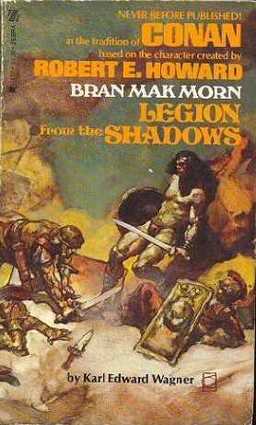
Legion from the Shadows by Karl Edward Wagner

Legion from the Shadows by Karl Edward Wagner

oie_9192021nLnODdJxFor those raised in this day of pure unadulterated Robert E. Howard texts, it may interest you to learn that once upon a time a flourishing industry of pastiche publication existed. There were only so many Howard stories to satisfy hordes of swords & sorcery fans, so the powers that were created more. Sprague de Camp and Lin Carter, the masterminds as it were, behind the pastiche industry were either greedy exploiters of Howard’s legacy or passionate fans who saw the need for further Howardian adventures. As a fan myself at the time, I was quite happy to buy and read a lot of them. Most weren’t better than alright but they scratched an itch.

De Camp (who fiddled mercilessly with Howard’s own short stories) and Carter wrote some of the weakest pastiches. For all his involvement with Howard’s fiction, de Camp never seemed to understand its nuance and why it worked. By education he was an engineer, and the need for things to be logical and systematic undermines his fiction. Carter, sadly, just didn’t have the talent to mimic the writer whose work he loved so dearly.

Unknown Swedish author, Bjorn Nyberg wrote The Return of Conan (1957). Decades later famous authors such as Poul Anderson and Andrew Offut tried their hands at the game. Howard Andrew Jones wrote a good piece on the pasticheurs a while back. Eventually a critical mass of fans and academics rose up, rightly so, to decry the inferior copies — and really, most were — of Howard’s creations.

There’s one Conan pastiche novel I remember truly liking: The Road of Kings (1979) by Karl Edward Wagner. It was good; equal parts dark and exciting. You can read Charles Rutledge’s review from a few years back here.

Read More Read More

How Dinosaur Soaky Bubble Bath Bottles Got Me Thinking About Neuroscience

How Dinosaur Soaky Bubble Bath Bottles Got Me Thinking About Neuroscience

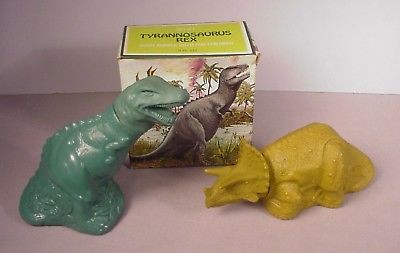
These are currently available on eBay for $15 plus $10 shipping.

I’m filing this report from my Microtel suite in Mankato, Minnesota.

Even if you’ve never heard of this city of 39,000, maybe you’re one of the nearly 2 million people who have visited the notorious web site dedicated to it, which has been online for around twenty years (I often used the site for illustrative purposes in the research portion of my composition classes — for reasons that will be immediately apparent when you consider how cleverly it raises the issue of reliability of Internet sources). If you haven’t visited http://city-mankato.us, do so right now (or after you finish reading this).

There you’ll learn about Mankato’s hidden underwater city, the ancient pyramids, and the incredible geological feature here that defies the northern weather. Here’s the opening paragraph of the web site’s home page, just to give you a taste:

Mankato, Minnesota is truly a wonderland. Tucked into the Emerald Green Valley in Southern Minnesota, it is the hidden vacation Mecca of scores of knowing Midwesterners. Mankato has everything thanks to a freak of nature: the Sclare/Far Fissure. This fissure in the earth’s crust takes water seeping through the earth, heats it to well over 165 degrees, and sends it back up to the surface in steam pits and boil holes. The heat from these pits and holes heats the valley air to such an extent that the winter temperature in many Mankato neighborhoods has never dropped below a balmy 70 degrees!!!! Come enjoy our winters! Let’s “Make It Mankato”!!!

I spent the afternoon driving up here, which is why this blog is posting so late at night (in fact, the dateline says it’s the next day). I’m here not to visit LufsaHoma, the “original fictional ‘Castle Dracula’ from Bram Stoker’s novel,” nor to investigate the “great Stoddard/Milet expeditionary digs of 1907 and the mysterious Silver Disks.” Over the next couple days I’ll be a presenter at a Young Writers’ Conference, teaching tricks of the monster-story trade to fifth through ninth graders. So, other than writing this post, how do I occupy these lonely hours in my hotel room?
Read More Read More

Adventures In History: George MacDonald Fraser’s Flashman

Adventures In History: George MacDonald Fraser’s Flashman

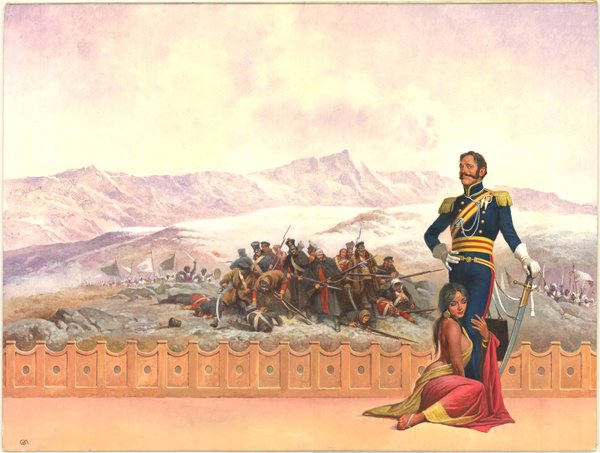
First FlashmanA few months back, I was (ever so gently) castigated for not giving proper credit to the screenwriter of the Michael York / Oliver Reed rendition of The Three Musketeers. That man was George MacDonald Fraser, he who wrote the Flashman books, a series into which I had never delved.

That has now been corrected, and just in time, too: no lesser a light than Ridley Scott (Alien; Blade Runner) is developing a reboot of Flashman with 20th Century Fox. As the fool on the hill once opined, everything old is new.

So let’s set aside fantasy for just a moment and allow for historical action-adventure as a sideline of the vast cultural behemoth that is now Black Gate. Swords, after all, form a big part of heroic fantasy, and in Flashman (first published in 1969, never out of print), swords of many types are on display and put to use. Lances, too. Plus primitive rifles, dueling pistols, and cannons.

The only thing missing? The heroism of our anti-hero, Harry Paget Flashman. He’s a survivor, and an accurate judge of other people’s character and abilities, but beyond that, he’s the very definition of reprehensible. He’s a cad, a coward, and an unrepentant racist; he’s treacherous, larcenous, and vindictive besides. Let’s leave off his appalling treatment of women, at least for now, and accept him for what he’s best at: looking sharp in military regalia. Ah, if only looks could kill…

Read More Read More

Art of the Genre: The Art of the Iconic Character

Art of the Genre: The Art of the Iconic Character

Predating Paizo by a decade and a half...
Predating Paizo by a decade and a half…

By Webster’s definition, Iconic means ‘of, relating to, or having the characteristics of an icon’, which in essence reminds me of looking for the Wizard’s 1E D&D Protection from Evil spell only to be told to ‘see Cleric spell of the same name’, unless, of course, you know the word Icon means ‘a person who is very successful and admired’.

Now, having established the meaning, I intend to look at the evolution of ‘Iconic Characters’ [thus Iconic Character Classes] in the RPG setting.

It can be universally accepted that Paizo coined the phrase ‘Iconics’ with the release of its Pathfinder Adventure Paths [and their beta versions from Paizo’s Dungeon Magazine], but that is simple semantics.  In reality, the first true ‘Iconics’ were from the Wizard of the Coast release of D&D 3rd Edition, namely Krusk, Jozan Vadania, Tordek, etc.

These characters were really the first to take players through the game by repeating their exploits in both artwork and description.  Created by artists Todd Lockwood and Sam Wood, players from a whole new D20 generation were introduced to this new system and cut their teeth with the WotC Iconics.

However, I would contend that perhaps the definition of Iconic doesn’t have to depend on players of RPGs actually knowing the character’s name, but rather recognizing their image.  If that is the case, then the role of character class Iconics goes back much further.

Read More Read More

The Public Life of Sherlock Holmes: Post Index #2

The Public Life of Sherlock Holmes: Post Index #2

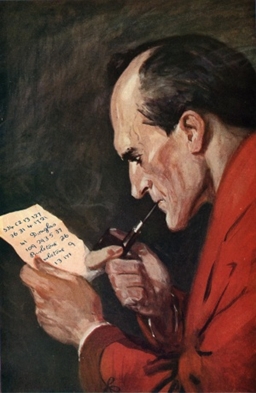
VAlley_wilesCipherBack on September 29th of last year, I created a linked index of all The Public Life of Sherlock Holmes posts up to that date, plus a few extras that I’d written here at Black Gate. Well, since this column debuted on March 10, 2014 (yep, a year ago tomorrow!), I figured I’d create an index of all the posts written since that first index.

As the past year has shown, I’m not just about Holmes. I’ve looked at other mystery topics, including my love of hard boiled private eyes. And I’ve touched on fantasy, science fiction, true crime and gaming.

There’s lots more to come (Robert E. Howard’s Steve Harrison is currently in the research stage). Hopefully you’ll keep checking in on Monday mornings. Thanks!

Sherlock Holmes/Arthur Conan Doyle

William Gillette – The first great Holmes on stage or screen.

The List of Seven – Mark Frost’s Conan Doyle pastiche.

Elementary – America’s modern-day version of Holmes returns to televisions.

The Abbey Grange Examined – Did Holmes get played in this story?

Solar Pons – The greatest Holmes successor and pastiche of them all.

Read More Read More

Self-published Book Review: Transgressions by Phillip Berrie

Self-published Book Review: Transgressions by Phillip Berrie

If you have a book you’d like me to review, please see the submission guidelines here. I’ve run short on books that I’ve received in the past year, so anything new has a good chance of being reviewed.

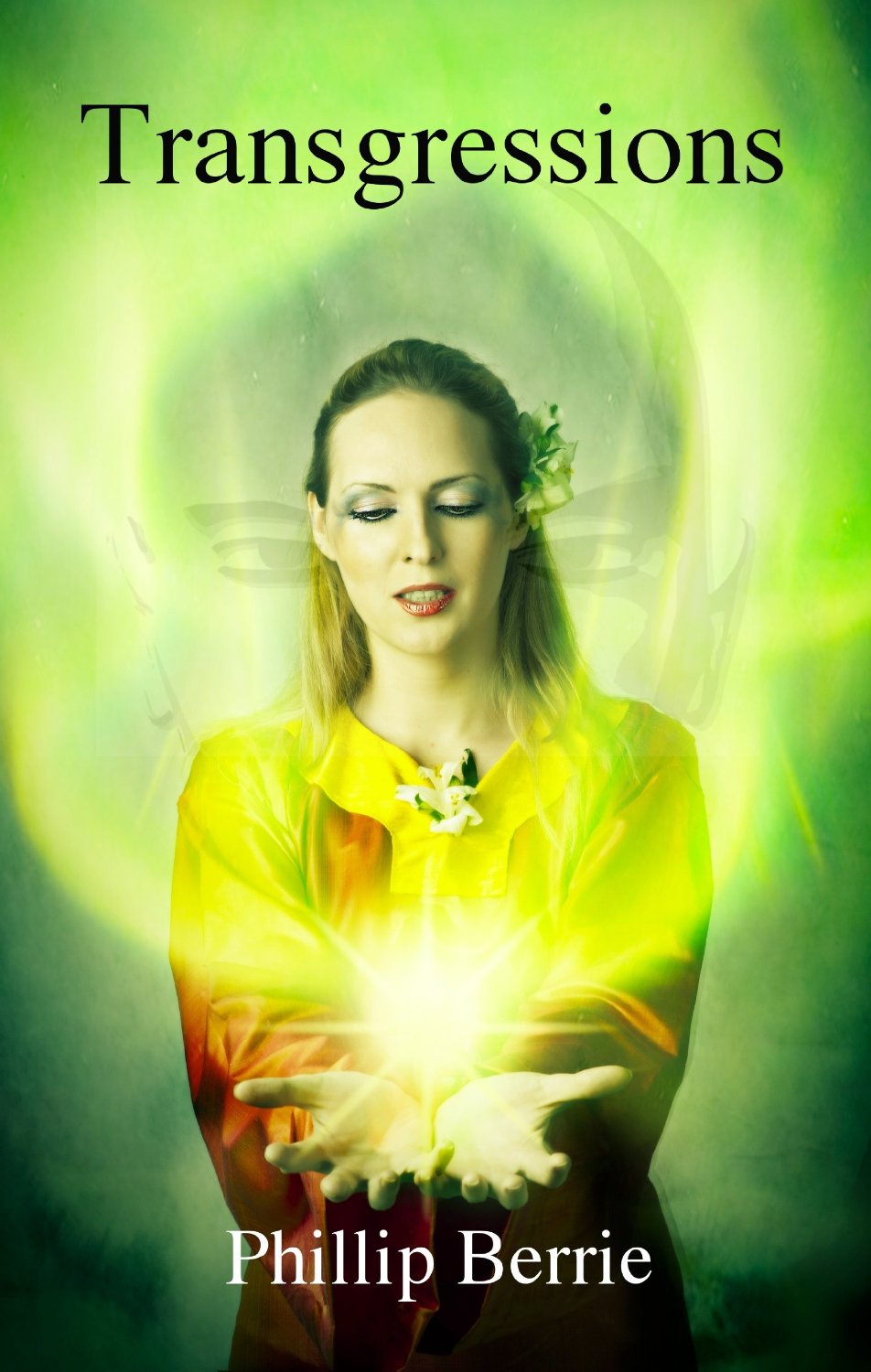
TransgressionsTransgressions by Phillip Berrie introduces us to the elderly wizard Wamzut, who has a problem. His body was destroyed in a mysterious attack in the Golden Void, the space between worlds, and the only thing that’s kept him tethered to his world is his psychic refuge. He’s in need of a body, and the only one available is that of a young half-Alfaren woman named Attina, whose soul has vanished. With limited options, Wamzut takes the opportunity afforded him and starts a new life, calling herself Sarina.

The fact that Attina’s body is half-Alfaren is in some ways more important than it being female. While Wamzut tries to adapt to being female, she hides the fact that she is Alfaren using magic. Alfaren, who are sometimes, but rarely, called elves in the book, are not common, and while there doesn’t seem to be a specific prejudice against them, they’re considered an oddity. Attina’s half-Alfaren nature is particularly well suited to magic, though, as she collects particles of it in her skin. It’s implied that this may give Alfaren enhanced physical abilities, but Wamzut is mostly interested in using it as a reservoir of magic. I was disappointed that Attina’s history wasn’t explored further. What was she doing in Ilbarsis, the city where Wamzut has been the court wizard for decades? What estranged her from her Alfaren father? The novel raised those questions, but never pursued them.

Read More Read More

March/April Magazine of Fantasy & Science Fiction now on Sale

March/April Magazine of Fantasy & Science Fiction now on Sale

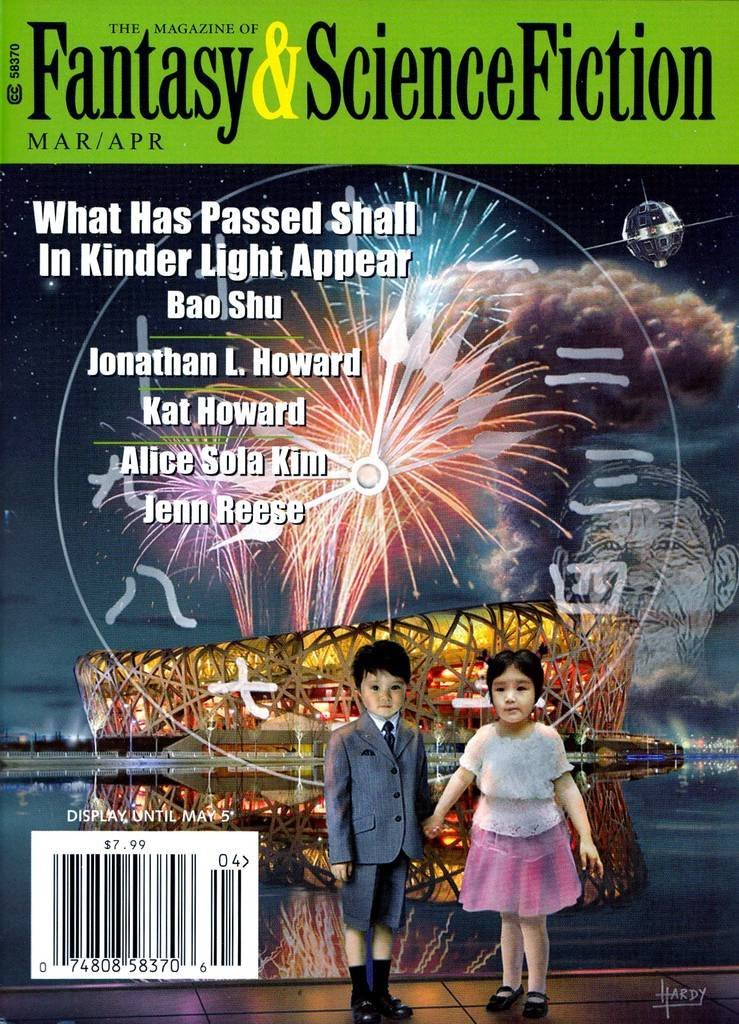
The Magazine of Fantasy & Science Fiction March April 2015-smallGordon van Gelder, who has been editing The Magazine of Fantasy & Science Fiction since June 1997 when he took over from Kristine Kathryn Rusch, steps down this issue. As we announced in January, he is being replaced by C.C. Finlay, author of  “The Nursemaid’s Suitor” in Black Gate 8. In his Publisher’s Note this issue, Gordon had this to say:

AFTER eighteen years of reading submissions, my eyes need a break. I’ve hired C. C. Finlay as the new editor of F&SF, effective with this issue.

When I first started editing the magazine back in 1997, I likened the role of editor to that of managing a baseball team. That analogy still works well for me. I think I’ve had a lot of good seasons, but now it’s time to move to the back office and let someone else kick dirt on the umpire when he gets a call wrong.

You got a good sample of our new editor’s skills in our July/August issue last year, and you can see more of his taste in action in this issue. I think you’ll like what you see.

I’ll take this moment to thank all you readers and artists who have put your trust in me. I’ve done my best to bring you the best magazine I can, and I’ll continue to do so as publisher. To that end, I’m very happy to have Charlie replacing me.

Mr. Finlay begins his first issue as regular editor with a diverse range of fiction — including two Black Gate regulars, Jonathan L. Howard (author of the Kyth the Taker stories, “The Shuttered Temple” and “The Beautiful Corridor”), and Brian Dolton (“What Chains Bind Us”), both of whom I’m very pleased to see in F&SF. There’s also fiction from Bao Shu, Alice Sola Kim, Paul M. Berger, Jay O’Connell, Kat Howard, and many others.

Read More Read More

Top 50 Black Gate Posts in February

Top 50 Black Gate Posts in February

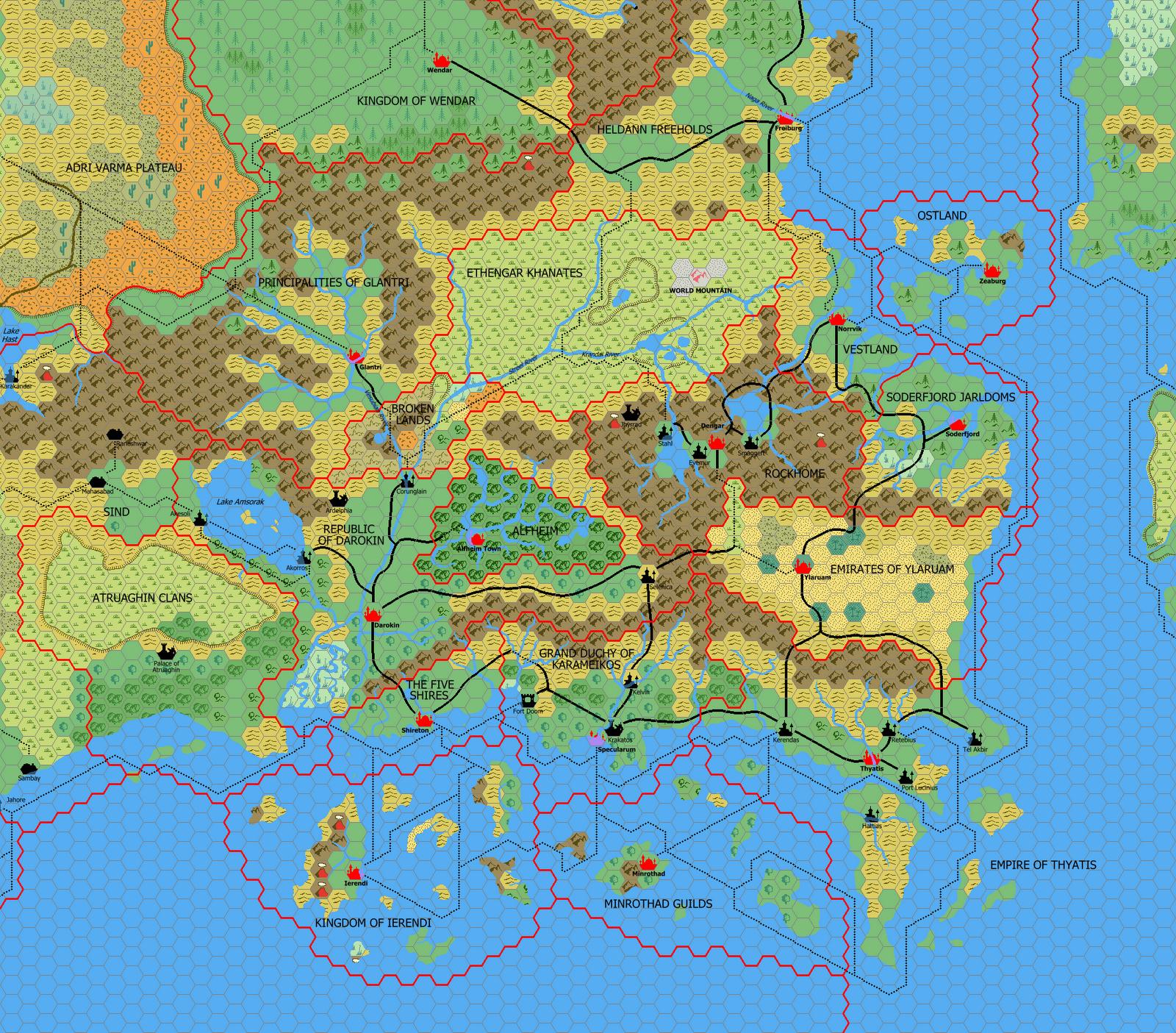
TSR's Known World
TSR’s Known World

Last month we had a look at the Top 80 Black Gate Posts of 2014, our most popular articles for all of last year.

The most popular blog posts from February include several that are guaranteed to make the Top 80 Black Gate Posts of 2015, as they garnered enough traffic last month alone to rival those near the top of our 2014 list. At the top of the heap was “The Known World D&D Setting: A Secret History,” Lawrence Schick’s fascinating reminiscence of the early fantasy world he created with Tom Moldvay that became the basis for TSR’s famed Known World campaign setting.

Second on the February list was Howard Andrew Jones’ report on the Star Trek Continues Kickstarter, “Star Trek Kickstarter Warps Ahead,” which more than doubled its $100,000 goal and secured enough funding to make two more episodes of this excellent fan-made series.

Third on the list was M Harold Page’s advice for aspiring novelists, “Writing: Why You Shouldn’t Tinker With the Beginning Until You’ve Written to the End.”

The distinguished Mr. Page had a good month, also claiming the fourth spot with “Hitchhiker’s Guide to Edmond Hamilton: Who did Douglas Adams Really Read?” And rounding out the Top Five for February was Marie Bilodeau, with her look back at classic video games like Final Fantasy II and Dragon Warrior, “Seven Lessons I Learned from RPG Games of Yore.”

The complete list of Top Articles for February follows. Below that , I’ve also broken out the most popular blog categories for the month.

Read More Read More

Great Pathfinder Discounts at Paizo’s GM Day Sale

Great Pathfinder Discounts at Paizo’s GM Day Sale

Pathfinder Ultimate Campaign

Game Masters are getting a lot of appreciation these days. According to Wizards of the Coast, all of February was Dungeon Master Appreciation Month, a fact that they celebrated with a hilarious series of videos of a “Dungeon Master Support Group.” These are clearly intended to promote the recent 5th edition Dungeon Master’s Guide, but I’m a sucker for a brilliant viral promotional campaign. If you you’ve ever played a tabletop RPG, definitely check them out.

That being said, I’m not sure that the work we do as as Dungeon Masters (or Game Masters) quite warrants a full month. Turns out that we also have a day, which seems a bit more proportional!

March 4 was the “official” GM day, to celebrate Gamemasters everywhere. Some digging shows that this sacred gaming holiday dates back to 2002, when it was proposed on the EN World forums.

Paizo LLC, the makers of the Pathfinder Roleplaying Game, are celebrating the event by having a massive GM’s Day sale that runs through March 10. It’s a great time to buy the Core Rulebook, Bestiaries, GameMastery Guide, and other books to begin playing Pathfinder, but for those who already play Pathfinder RPG, here’s my tip of the top 5 books may not yet have but definitely want.

Read More Read More