Browsed by
Category: Blog Entry

Kickstarter Alert: Vault Wars Card Game

Kickstarter Alert: Vault Wars Card Game

VaultWarsFloodgate Games has a successful track record of Kickstarter projects, starting with their fun time-travel technology-creation game Legacy: Gears of Time. After Legacy and its expansion, Floodgate Games created Epic Resort (Amazon), an unorthodox game set within a traditional fantasy world. In Epic Resort, you run a resort vacation spot where adventurers spend their time to recuperate and heal between adventures. You accumulate gold and hire workers, and then win with victory points gained by building attractions at your resort and having heroes heal up to full health. The twist of the game is that occasionally monsters attack your resort, and the heroes must stop them, which can result in new injuries or even death.

Something of a thematic (and artistic) sequel to Epic Resort, Floodgate Games’ new Kickstarter Vault Wars  asks what happens when heroes die and their vaults of equipment go up for auction, so that other heroes can gain the benefits of a fallen heroes’ previous efforts. You can find out more about the game and its related stretch goals on Kickstarter, but one of the best ways to get a feel for the game (if you have about a half hour) is by watching this video of a walkthrough play of the game. It features a lot of strategic choices and, as it mimics an auction, is built around the idea of bidding and bluffing. One of the stretch goals that’s coming up is a Worker Expansion, which allows players to hire workers that give special one-time bonuses within the game.

The Kickstarter project has passed its funding goal of $10,000, and the opportunity to back the project ends on March 27. The game is slated for delivery in August 2015. Kickstarting price for the basic game is $20, while $45 will get you a deluxe edition with metal coins. Higher cost tiers include copies of Epic Resort and Legacy: Gears of Time, for those who are interested in those games as well.
Wild West Outlaws of the Silent Screen: When Hollywood Hired Real Bandits

Wild West Outlaws of the Silent Screen: When Hollywood Hired Real Bandits

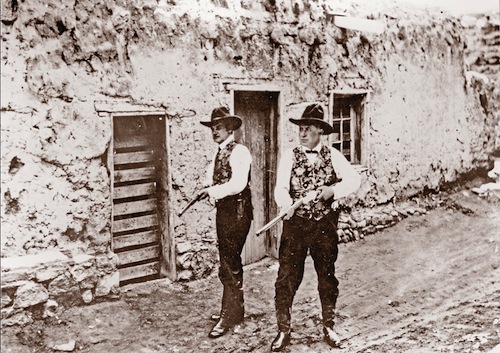
Jesse James Jr. (left) in a promotional still from Jesse James Under the Black Flag.

When movies first became popular at the beginning of the twentieth century, the world was already captivated with tales of the Wild West. Dime novels, plays, and traveling shows entertained millions in the U.S. and abroad. Movie directors were quick to pick up on this and Westerns were a popular film genre right from the start.

The first years of film overlapped with the last years of the Wild West. The last corners of the frontier were being settled, and some towns still had the shoot-em-up reputation movie viewers craved. Directors often went on location and hired real cowboys to do their stuff in front of the camera. One of them, Tom Mix, became one of the genre’s enduring stars.

But movie directors wanted bad men too, and they didn’t have to look far. Several real Western outlaws reenacted their crimes on camera.

Read More Read More

Dungeons & Dragons Releases Free Elemental Evil Player’s Companion

Dungeons & Dragons Releases Free Elemental Evil Player’s Companion

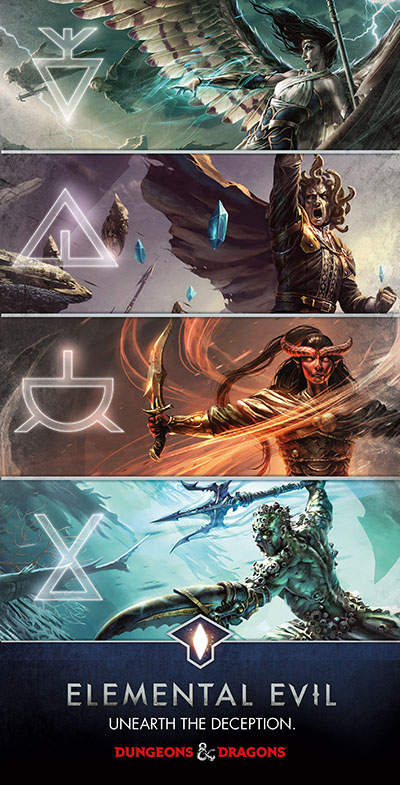
D&D Elemental EvilThe Dungeons & Dragons world is ramping up for their major event for 2015, which is the Elemental Evil storyline. I previously discussed this when it was first announced, but it’s worth mentioning again for one important reason: they’ve put out some free gaming materials!

Recently, Dungeons & Dragons released the Elemental Evil Player’s Companion as a free supplement, available through both their website and DriveThruRPG. This 25-page digital supplement contains some good material, a set of new races and spells designed specifically for use with 5th edition Dungeons and Dragons. The 9 of the pages are devoted to descriptions, details, and character creation information for 4 races:

  • The avian species Aarakocra
  • The subrace of Deep Gnome
  • The element-linked Genasi, in air, earth, fire, and water varieties
  • The mountain-dwelling Goliath

There are also 13 pages of spell lists and descriptions, featuring a total of 43 spells, almost all of them linked to the four elements (or their related damage type, such as the acid-based spell Vitriolic Sphere).

Read More Read More

February Short Story Roundup

February Short Story Roundup

oie_174947HoPAYr1cHere we are again, people. It’s that time when I let you know what’s going on in genre magazines that might possibly appeal to fans of heroic fantasy. Whatever lack of love swords & sorcery gets from the big publishers, it’s doing quite well at the short story length in the ‘zines.

Swords and Sorcery Magazine Issue 37 kicks off its fourth year of publication with two decent enough stories. The first is “Old Bear and the Grey Bird” by Nathan Elwood. It’s narrated by Old Bear, a non-human native of a land increasingly dominated by human colonists. He’s almost nine feet tall, covered in thick gray fur, and two short horns rise out of his head. His people have retreated into the remote, hidden places of the land and most humans consider them legendary.

Despite his own efforts to escape interaction with humans, Old Bear feels moved to intervene when he comes across a burned and pillaged human settlement. When he spots several raiders about to kill the only survivor, a young girl, the hunter steps in to rescue her. The rest of the story is about him deciding what he should do with her.

Read More Read More

Manning’s Manly Movies: Beast of the Yellow Night

Manning’s Manly Movies: Beast of the Yellow Night

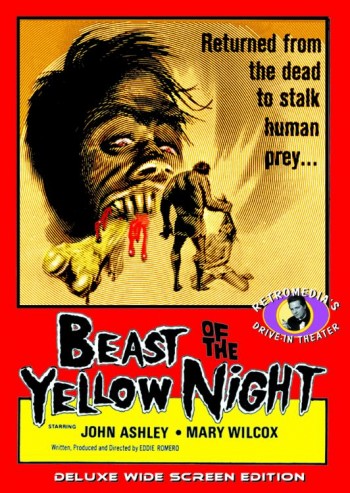
Beast_of_the_Yellow_NightThis week Nick Ozment and David Manning team up to track down the Beast of the Yellow Night (1971) in another installment of Manning’s Manly Movies

[MANNING] Look what I’ve got.

[OZ] Another Mill Creek Entertainment 20-movie pack, huh? “Beyond the Grave.” Why? Why do you keep buying these things?

Why? Why not, my friend? Twenty movies for seven bucks on sale at Shopko — think of all the monsters and mayhem and manliness for a measly 35 cents a movie!

Or, looked at from a slightly different angle, you paid seven dollars to squander away approximately thirty hours of your life.

Not alone.

No! You don’t expect me to sit through those crappy movies, do you?

What do you think I’m paying you for?

You don’t pay me anything.

How much of my beer and whisky do you drink?

I have to tranquilize myself for these cinematic torture sessions.

Read More Read More

The Public Life of Sherlock Holmes: REH Goes Hard Boiled

The Public Life of Sherlock Holmes: REH Goes Hard Boiled

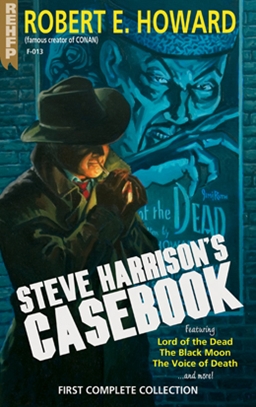
Steve Harrison's CasebookYou know how people say “No offense intended,” and then offend like it’s an Olympic sport? I’m a major Robert E. Howard fan. In fact, I think his writing in the Conan stories is the best you’ll find in the entire genre.

However, he was not much of a hardboiled writer. The pulpster did (half-heartedly) give it a try, with nine completed Steve Harrison stories, as well as one unfinished tale and a synopsis.

In February of 1934, Strange Detective Stories introduced Steve Harrison in “Fangs of Gold.” It also included another Harrison story, “Teeth of Doom:” except that it didn’t. Not wanting to include two stories from the same author in one issue, the magazine renamed the hero Brock Rollins, changed the title to “The Tomb’s Secret” and used a Howard pseudonym, Patrick Ervin!

The next month, “Lords of the Dead” (retitled “Dead Man’s Doom”) was going to appear in Strange Detective, but alas, the publication folded. That story remained unprinted until 1978. Though, oddly enough, its sequel, “Names in the Black Book,” was included in the May, 1934 issue of Super Detective Stories. Those readers were probably looking for some history on Erlik Khan, the villain in both stories.

The fourth and final story to see publication during Howard’s lifetime was “Graveyard Rats,” appearing only four months before the writer committed suicide in 1936.

“The House of Suspicion” was printed in 1976. In that one, Fred Blosser completed Howard’s “The Mystery of Tannernoe Lodge” and added Khan in to make it a trilogy with Harrison’s antagonist. “The Black Moon,” “The Silver Heel” and the untitled synopsis all saw first printings in the nineteen eighties.

Read More Read More

West of January, Probably Near the Middle of Wednesday

West of January, Probably Near the Middle of Wednesday

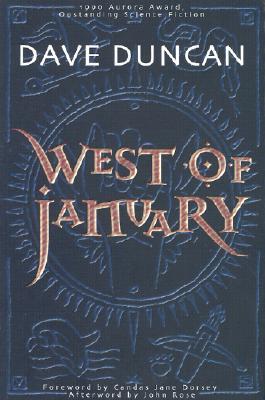
Duncan WestA few weeks ago I was talking about Dave Duncan’s series The Great Game, and that led me to reread his brilliant 2002 novel West of January.

West of January is science fiction that doesn’t, at first, seem to have any science in it. The story is an odyssey, narrated in first person by the main character, Knobil , who tells the tale of his life, from his childhood as part of a herdmaster’s family on the great plains, through to his days as an old man, teaching the young.

Knobil is expelled from his family at puberty and vows revenge on the intruder who murdered his father and mother. While he never completely loses sight of this objective, circumstances take him on a journey through most of the other societies on the world of Vernier, from the Sea People, the Miners, the Traders, and even the Angels in Heaven. It becomes apparent that this world is not Earth, and that while it is suitable for human habitation, its rotation and relationship with its sun causes a cyclical and catastrophic climate change which necessitates the virtual rebuilding of civilization each time.

West of January is a testament to just how important point of view can be. As in the best fiction of any kind, Knobil doesn’t explain anything to the reader that he takes for granted himself – though he might explain things that he knows to his young listeners:

The angels define the world by strips – twelves strips running north and south, seven east and west. The names of these are very old, given by the firstfolk. It is a sensible arrangement with only nineteen words to be learned. Any place can be located by reference to this grid. The west of January is but one example. Geographical features can be named also, like the March Ocean or the Wednesday Desert. This is much easier than remembering an endless arbitrary list, and much more practical when a forest may soon become a desert, or a desert ocean.

Read More Read More

An Astounding Science Fiction Testimonial

An Astounding Science Fiction Testimonial

Astounding Science Fiction February 1958-smallI started reading Astounding with the February 1958 issue. 1958 was the last good year under editor John W. Campbell.

Consider the short fiction:

L. Sprague de Camp’s “Aristotle and the Gun”
Charles V. de Vet and Katherine MacLean’s “Second Game”
Fritz Leiber’s “Try and Change the Past”
Jack Vance’s “The Miracle Workers”
Clifford D. Simak’s “The Big Front Yard”
Rog Phillips’s “The Yellow Pill”
Katherine MacLean’s “Unhuman Sacrifice”
J.F. Bone’s “Triggerman”

(Also Randall Garrett’s “The Queen Bee,” but we won’t think about that right now.)

The serials: two substantial ones by Poul Anderson, “The Man Who Counts” (a/k/a War of the Wing Men) and “We Have Fed Our Sea” (a/k/a The Enemy Stars), Hal Clement’s admirable if clumsy Close to Critical, and another Anderson, very lightweight but appealing to a 10-year-old, “A Bicycle Built for Brew” (The Makeshift Rocket).

Then the bottom dropped out. The only short fiction in 1959 on a level with the 1958 items cited were Ralph Williams’ “Cat and Mouse,” Chad Oliver’s “Transfusion,” A. Bertram Chandler’s “Familiar Pattern” (undeservedly obscure), and Theodore L. Thomas’s “Day of Succession” — and that’s being generous.

Read More Read More

Software Review: A look at Campaign Cartographer 3 Plus

Software Review: A look at Campaign Cartographer 3 Plus

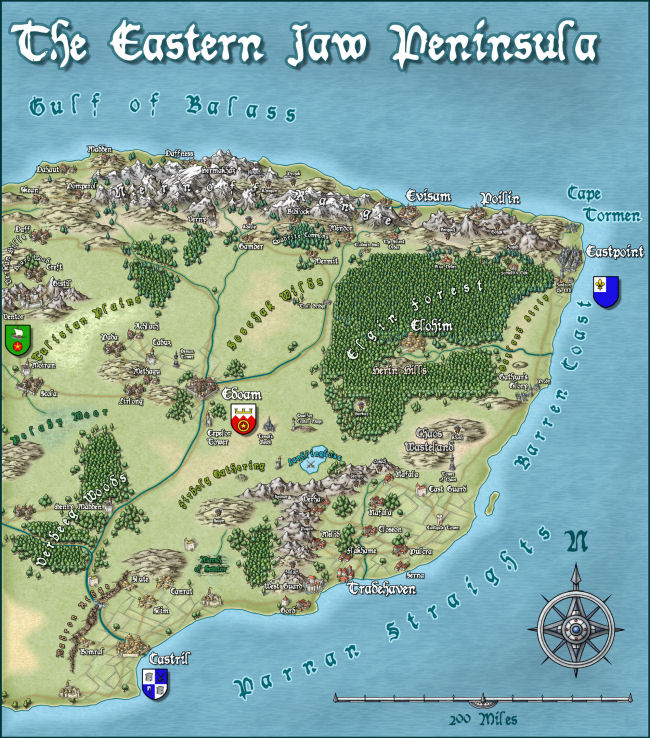
Jaw-Peninsula-East-Close
Their output is beautiful. Just looking at it takes you places (click for bigger version).

When I snagged a pre-release review copy of Profantasy Campaign Cartographer 3 Plus, smugness quickly turned to irritation… then to understanding and respect.

Let me tell you about it.

Though just a 3-person company, Profantasy are the behemoths of Fantasy cartography.

They’ve been around since 1993 (so far back that I think Richard III was still on the throne) which says a lot. They have a massive suite of programs for designing things like dungeons, cities, star systems and starship.

Their output is beautiful. Just glancing at what people can do with is enough to take you to otherwhen places .

So as I downloaded their not-inexpensive software, I was grinning happily to myself…. just like one of the dark lord’s minions walking into an ambush.

The new version is certainly an improvement on the old (which, however, did as advertised).

It’s more stable, makes full use of the power  of modern PCs, has a prettier, less confusing interface, a really very useful “verbose” tooltip that pops up when you use any tool, and smoother navigation.

I had the power to create beauty. I was mesmerized!

Then the ambush sprung.

Read More Read More

What to Read Next?

What to Read Next?

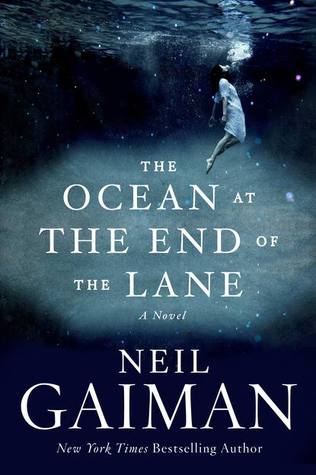
Ocean_at_the_End_of_the_Lane_US_CoverHow do you choose what to read next?

That’s not a rhetorical question. I’m genuinely curious, for a number of reasons.

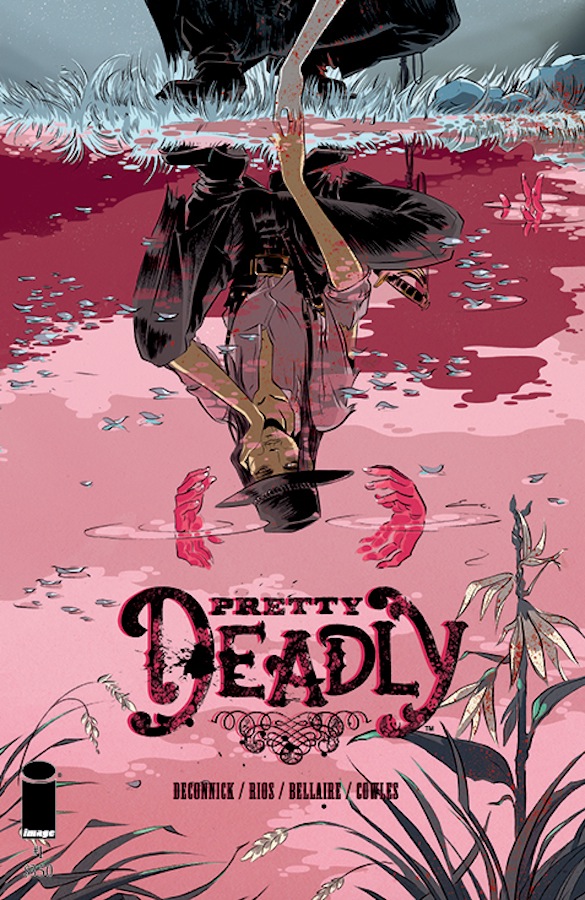
I tend to have a set list of authors whose work I will pre-order the instant I hear about it. Neil Gaiman, Sarah MacLean, Kate Elliot. I have authors I forget about for a few years and then dive in to read everything they’ve put out in the meantime (Stephen Brust tops that list: I can’t quit Vlad Taltos). I have graphic novel series I follow closely (Pretty Deadly, Ody-C, Rat Queens) and others I dabble in when the mood strikes.

Pretty_Deadly-01I am deeply blessed to have friends who throw books at me, as well. One of my oldest and dearest friends recently sent me an entire box full of books, including Trudy Canavan’s Traitor Spy trilogy; another hounded me until I read Cold Magic (thank goodness!).

But it’s easy to find oneself in a reading rut. Which is a shame, given the wealth of material out there. Self-publishing and digital publishing can make it easier to be published, but that isn’t always a good thing. Finding quality work in those muddy waters is its own trick. So how do you find something new?

Sites like our own here are helpful. I discovered Saladin Ahmed because of a review here, and that has been an absolute delight. (And if I’m dropping names and titles left and right, it’s because I’m returning the favor.) But even comprehensive sites can’t cover everything.

So how do you find new stuff to read? And how do you find new stuff to read when you realize you’ve gotten in a rut? When you discover that everything you’ve read in the last year is, say, fantasy by white women, or all space sci-fi? What are your favorite resources, and what was your favorite surprise find lately?