Browsed by
Category: Blog Entry

A Gateway to Fantasy for Young Readers: Amulet by Kazu Kibuishi
A Gateway to Fantasy for Young Readers: Amulet by Kazu Kibuishi

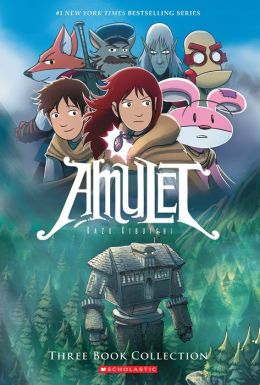
amulet coverWith the height of the “Harry Potter phenomenon” nearly a decade past, we now have a new generation of seven- and eight-year-olds who were born after the final book in that series came out. A perennial question comes up: What will be the next “gateway” work that ushers young readers into a lifelong love of fantasy and speculative fiction?

Well, some may rightly ask, why can’t it be Harry Potter? Or A Wrinkle in Time, or The Dark is Rising sequence, or The Chronicles of Prydain, or The Chronicles of Narnia, or The Hobbit, or The Wonderful Wizard of Oz, or…?

Many do still find their first taste of enchantment in books that are decades or even a century old, but there is no denying that — at least in the publishing and bookselling world — there has to be a “latest model.” Librarians still push those beloved older books faithfully, but their sales pitch is a lot stronger when it comes as a follow-up to a young reader who, having just read something that is currently “all the rage,” asks, “What else out there is like this?”

I’m here today to suggest that if you want a contemporary work that will introduce 3rd to 7th graders to the pleasures of epic fantasy, steampunk, people with animal heads, and wise-cracking robots, you could do a lot worse than hand them the graphic novel Amulet Book One: The Stonekeeper (2008) by Kazu Kibuishi. But be prepared: odds are good that they will immediately be demanding books 2 through 6. And then they will be waiting with bated breath for book 7 and cursing that there is now a two-year interval between volumes (welcome, Young Reader, to the Pains of Following a Series that is Ongoing. To better understand what you are in for, see any conversations referencing George R.R. Martin or Patrick Rothfuss).

But I’m also here to recommend them to anyone who likes this sort of stuff, regardless your age. I mentioned “3rd to 7th graders” in the last paragraph because those are the perimeters the publisher, Scholastic, says they are written toward. As someone who does not fit that demographic, I can vouch for them being worthwhile reads even if you are middle-aged.


Read More Read More

The Public Life of Sherlock Holmes: Magnifying Glass, Pipe and Deerstalker

The Public Life of Sherlock Holmes: Magnifying Glass, Pipe and Deerstalker

Pipe_RathboneThe curved pipe. The magnifying glass. The deerstalker cap. These three objects are intimately associated with the enduring image of Sherlock Holmes. Sir Arthur Conan Doyle was quite astute to use these rather uncommon devices for his singularly uncommon detective.

Well, not quite. In addition to Doyle, we should also credit three other men for creating the picture we see of Sherlock Holmes, over a century later.

Along with Doyle, we must tip our deerstalker (and puff on our pipe in honor of) illustrators Sidney Paget and Frederic Dorr Steele, a well as the great stage performer, William Gillette.

It is the contributions of the latter three upon which Eille Norwood, Arthur Wontner, Basil Rathbone, Jeremy Brett and others based their portrayals. Of course, since Rathbone’s Universal films were set in the 1940’s, his wardrobe was contemporary to the times. But his two films for Twentieth-Century Fox fit the classic image.

Let’s take a look at three “props” that have been commonly associated with Holmes for over a century.

Read More Read More

Eight Barbarian Body Building (3B) Tips

Eight Barbarian Body Building (3B) Tips

Luke would be more buff if he wasn't such a tauntaun riding wuss.
Luke would be more buff if he weren’t such a tauntaun riding wuss.

It’s beach season! In the frozen north where I live, we’re currently shedding our polar bear and Sasquatch skins to show off our tummies once again!  Except, after six months of trudging through snowdrifts and blizzards, our thighs may be tree trunks of victory, but our abs have lost that chainmail bikini flattering glory.

Fear not, there is hope. Here are some tips for fighting off that winter bulge!

Chase Down a Pack of Wild Wolves

Nothing will get you sweating faster than chasing down wild canines, especially when they turn on you and you have to fight them off with nothing but your wit and might. Make sure to pack your wit or, failing that, lots of sharp steeled might.

Read More Read More

A Modest Proposal to Improve the Hugos

A Modest Proposal to Improve the Hugos

The Hugo AwardIn thinking about the recent unpleasantness (regarding the Hugo ballot, I mean), it occurred to me that one source of the issues with the Hugos right now has nothing much to do with slates or bloc voting or Sad Puppies or Social Justice Warriors or even taste (that much). It is simply this: there are a lot more SF stories published now than there were in the past. That makes it really hard for any reader to even come close to reading them all – something that was quite possible, I am told, back in the 1960s. I can testify: I used to try very hard to read every SF story that came my way, and there were years I read over 2000 stories. And every year I missed hundreds, at least, and some of those very good.

In a way this is one function of ballots and shortlists (and, indeed, recommendation lists): to try to condense the mass of stories published each year to a manageable set of the “the best.” My Best of the Year anthology every year serves that function (secondarily – the main function is to give readers a great book to read). So does, for instance, the Locus Recommended Reading list. But even there, note that our lists are by no means inclusive. Indeed, I signal that (as do other Best of the Year editors like Gardner Dozois and Ellen Datlow) by including a long list or recommended stories in addition to those in my book. And the Locus list is painstakingly cut from a much longer list of recommendations by all the contributors – a list that highlights the problem I cite, as all of us realize that our fellow recommenders have seen outstanding stories we have missed.

Though, I ask myself, why do I use the word “problem?” Surely it is a feature, not a bug, that there are so many stories published each year that are worthy of our attention? Indeed it is, but a result of that, I feel, is that if we want the Hugos to represent the very best stories of the year, we are failing, in the sense that it’s easier than before for a great story to slip under the radar.

Read More Read More

Ancient Worlds: Medusa and the Viral Impact of Sexual Assault

Ancient Worlds: Medusa and the Viral Impact of Sexual Assault

restoration_of_the_bust_of_medusa_by_gian_lorenzo_bernini_largeI may ramble on a bit this week, and I apologise in advance. You see, I have a deep attachment to Medusa. She’s the center feature of the aegis tattoo I have on my right arm. My doctoral dissertation (which I do not recommend anyone read) was entitled Medusa’s Blood because of its discussion of a lot of what I’ll cover today. And, fittingly, a review of Clash of the Titans was the first thing I ever wrote for Black Gate, a handful of years back.

Most of us know Medusa from Clash of the Titans. Hopefully the 1970s version because the newer one is pretty terrible. In any case: she’s easily recognized. Scary looking woman, snakes for hair. Turns people into stone when they look at her. Came to bloody, hero-induced end. But what we learn from Ovid is that Medusa was not always a Gorgon. In her youth, she was one of the most beautiful human women alive.

Until she was raped by Neptune.

Read More Read More

Paolo Bacigalupi on Black Swans, Crashing a Drought Conference, and Being in a Weird Place

Paolo Bacigalupi on Black Swans, Crashing a Drought Conference, and Being in a Weird Place

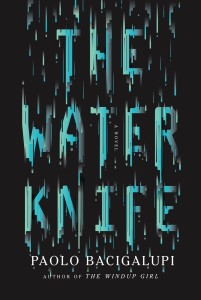
headshotTheWaterKnife-PaoloBacigalupi-201x300Paolo Bacigalupi’s first novel, The Windup Girl, was named one of Time magazine’s top ten novels of the year, and yet he still talks to people like me, which makes him either very strange or very cool (probably a little of both.)

On May 25th his latest, The Water Knife, will be out, and this near future science fiction novel is set in a mega-drought-stricken, American southwest. The story explores issues of water rights, climate change, and the gratuitous destruction of the state of Texas, all of which we discuss in the interview.

He also takes the time to talk about his long and winding path towards a writing career. Anyone who’s ever reached the point of despair (in other words, all aspiring writers) will want to give this a listen.

After getting off Skype with me, he had another interview with NPR. So, without further ado: Paolo Bacigalupi’s warmup interview on the day he spoke to NPR.

Read More Read More

Memories of Palmyra Before ISIS

Memories of Palmyra Before ISIS

Landscape view of colonnaded path and temples at Palmyra, Syria. Courtesy Institute for the Study of the Ancient World.

The Islamic State is erasing my memories again.

I’ve written here before about how they wrecked the Assyrian sites around Mosul and destroyed the unique desert city of Hatra, both in Iraq. Many of the photos I took there can never be taken again. Now they’re turning their sights on Syria’s heritage.

Losing territory to the Kurds in the northeast, and realizing they can’t easily push into the Shia areas of Iraq after vowing to kill them all for apostasy, Islamic State is making a renewed offensive to the west into Syria, a divided and mostly Sunni region where they have a better chance to gaining ground. It was in Syria, in 1993 and 1994, where I first got a deep appreciation for many aspects of Arab culture and gained fond memories of visiting the country’s matchless archaeological sites.

Read More Read More

Dragon’s Rook (The Lost Sword, Book 1) by Keanan Brand

Dragon’s Rook (The Lost Sword, Book 1) by Keanan Brand

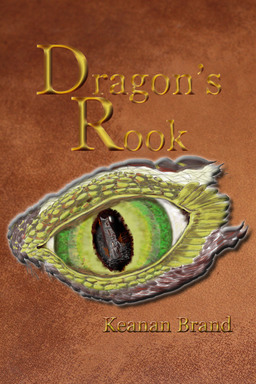
oie_26031584LVummnLet me start by stating that I am an inconsistent person with inconsistent tastes and opinions. I tend to get overly emphatic and dramatic when discussing things I like or dislike. In the light of what I’m about to write about Keanan Brand’s epic fantasy novel, Dragon’s Rook, I need to look back and see how many times I disparaged thick books and those set in European-styled worlds. Because that’s exactly what Brand’s book is and I really enjoyed it.

I actually like novels set in pseudo-European worlds. Tolkien, King Arthur, and much of the earliest fantasy reading I did was set in such places. The best included Lloyd Alexander’s Chronicles of Prydain and Poul Anderson’s various excursions in fantasy.

Brave farm boys, daring princesses, wise old women, and wicked kings (plus dragons!) are endemic to the fairy tales read to me by my dad. Mysterious huts in dark forests, dire castles towering over the countrysides, and dank, fetid caves were common locales for those characters’ exploits. This is good stuff that speaks deeply to me for nostalgic and cultural reasons (about 99% of my ethnic heritage originates north of the Rhine River) and it all makes its way into Brand’s novel.

It’s just that often I feel like it has been done to death. Prior to the late 1970s, fantasy was a pretty diverse field. While Tolkien loomed above the genre, he spawned few direct imitators. In the first part of the decade, fantasy writing was all over the place. Sure, there was plenty of swords & sorcery, but there was also Roger Zelazany’s wild romp, The Chronicles of Amber, Ursula K. LeGuin’s very non-European Earthsea trilogy, and Tanith Lee’s phatasmagorical Tales from the Flat Earth (books I need to reread and review).

And then came Terry Brook’s The Sword of Shannara. For the unitiated, many of Shannara‘s events parallel those of the Lord of the Rings closely, and it was a monster success. That was enough to convince publishers and authors that the key to sales lay in the same sort of mimicry. In the years that followed, dozens of quest stories set in very familiar Euro-style worlds appeared. The worst were slavish imitations of Tolkien’s masterpiece, while the best took advantage of the familiarity of quest and fantasy tropes and used them to explore original ideas. Either way, though, Dark Ages and Medieval Europe came to be the default setting for fantasy fiction.

Read More Read More

Adventures In Gaming: The Temple Of the Sea Gods

Adventures In Gaming: The Temple Of the Sea Gods

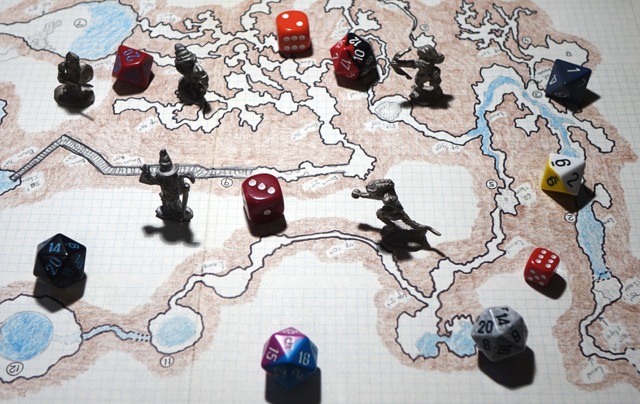
DSC05298I first created this adventure back in 1986, as a discrete part of a longer cycle in which the characters involved were questing for several potent artifacts intended to aid them in defeating their world’s largest dragon. One of those items was hidden here, in this temple.

For purposes of exhuming this module, I’ve made a number of things generic (both for the sake of easy translation to your gaming world, and to avoid any possible AD&D copyright issues). Even the particular “sea gods” to whom this temple system is consecrated can be adapted to fit your specific mythos. In fact, you can adapt pretty much any part of this; it’s for you, after all. For you to enjoy and hopefully put to use.

Character Motivation

If the player characters aren’t in pursuit of some massive relic (see above), then one fine reason to explore these halls is the usual mix of adventure seeking and treasure hunting. The bear went over the mountain, after all, and that OCD chicken keeps right on crossing the road. As a backup incentive structure, there’s always altruism. As you’ll see from the setting, the locals are beset by dangerous winged beasties, and it could be up to your particular band of heroes to free them from this (truly lethal) scourge.

Setting

A windy, treacherous tidal river. Dark, choppy water. Deep. Cold. Steep bordering cliffs, with multiple ravines and gorges forking off the main channel. What steadings there are bar their doors at night and keep a watch around the clock. Out of one of those ravines, often at dusk but not always, predatory bat-like creatures fly, and while you can fend off one or two, if they catch you in your boat or on the road, alone, and they come in a flock…

Read More Read More

The Public Life of Sherlock Holmes: TCM’s Summer of Darkness

The Public Life of Sherlock Holmes: TCM’s Summer of Darkness

TCM_LogoHard boiled and noir are often discussed together. And while a film or story could fit in both categories, they are two distinct genres. Hard boiled is typified by the stories of Dashiell Hammett and Raymond Chandler, and others from Black Mask and Dime Detective magazines.

Noir is usually (but not always) thought of in terms of film: black and white, shadowy movies with dark characters. Much hard boiled is noir, and vice versa. Far more expert folks have discussed the definitions of the two terms for decades.

One example, to me, are the works of Cornell Woolrich, whose “It Had to Be Murder” became the masterful suspense flick, Rear Window. Woolrich’s stories are noir, but not hard boiled.

Many of Humphrey Bogart’s films were hard boiled, including The Maltese Falcon (also noir), The Roaring Twenties and Bullets or Ballots. One of his later films, In a Lonely Place (based on the novel by Dorothy Hughes) is a noir classic but isn’t hard boiled.

So, just know that many films (usually crime related) from the thirties through the fifties and into the sixties, were hard boiled, noir, or both.

Read More Read More