Browsed by
Category: Blog Entry

Raya Golden on Building a Career as a Hugo Nominated Illustrator, Putting Up with Demanding Author Clients, and Her Talent for Gay Pinups
Raya Golden on Building a Career as a Hugo Nominated Illustrator, Putting Up with Demanding Author Clients, and Her Talent for Gay Pinups

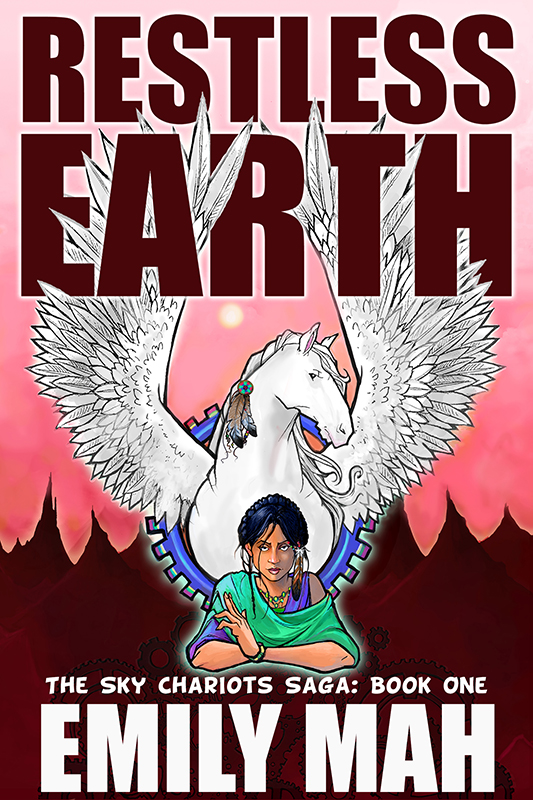
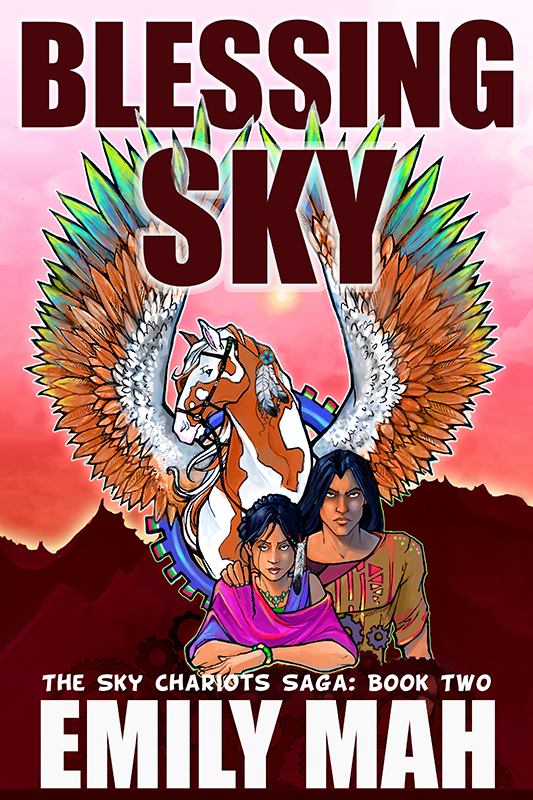
RestlessEarthSmallBlessingSkySmallIt is cover reveal day for my two upcoming novels, Restless Earth and Blessing Sky, and so these beautiful covers are being posted all around the internet. What better excuse to interview Raya Golden, the illustrator? Raya lives here in Santa Fe, New Mexico, and has been working as a professional artist for ten years.

Recently, she and I sat down to discuss a wide range of topics (hence the interview has a detailed guide below it that tells you where to click to hear about the topics that interest you.) First we discussed how to build a career as an artist; it isn’t easy. Then we got into the particulars of different kinds of art, from her Hugo Nominated work on George RR Martin’s Meathouse Man comic, to the graphic novel she is working on now. She was kind enough to explain the process of creating a graphic novel or comic step by step.

Then there are book covers, which present a plethora of challenges. She and I talked about everything from the design basics of an effective book cover to the challenges of portraying minority cultures. During this time I also explained the milieu and setting of these novels, which are essentially fantasy steampunk westerns.
Read More Read More

Report from the Field: Three Small Children Tell Us How to Warrior Right

Report from the Field: Three Small Children Tell Us How to Warrior Right

That moment when you realize that the memes spoke truth...
That moment when you realize that the memes spoke truth…

Last week, I was surrounded by three young children that I did not in fact know, for reasons that are slightly unclear to me. I usually try to avoid these situations, much like I avoid being trapped in a snake pit. Anyhow, seeing that I was the adult in charge, I took it upon myself to get them to help me craft a perfect barbarian conqueror. Because kids have insight and their disorganized play terrifies me.

Me: Okay, kids. Let’s talk about barbarian conquerors.
Kid 1 (blonde boy, maybe 5 years old): What’s a barbarian warrior?
Me: Um, someone who comes and takes stuff from you and makes you do what you they want you to do.
Kid 2 (little girl, maybe 4, brown hair): Like my mom?
Me (looking around for adultier adult. No luck): What the he.. hey. Hey. Yes. Like your mom.
Kid 1: My mom likes special grape juice. 

Read More Read More

May Short Story Roundup

May Short Story Roundup

oie_6212435zQMwrmTD (1)I’m sorry that I let April pass without a short story roundup. The outpouring of new heroic fiction continues unabated on the pages of numerous magazines the genre is lucky to have. I’m back on track and here to tell you about last month’s must-reads.

I have never left any doubt in my reviews about which is my favorite fantasy magazine, so let me start by singing the praises of Adrian Simmons and his cohorts at Heroic Fantasy Quarterly. Each issue has terrific cover art, two or three stories and a number of poems, and in the three years I’ve been reading and reviewing the magazine it has always been at least satisfactory and usually splendid. What makes HFQ so strong is the editors’ love for and knowledge of the genre, which is obvious by their singular ability to select and edit stories. Always true to the traditions of heroic fiction, they yet manage to publish tales that push the genre in new directions.

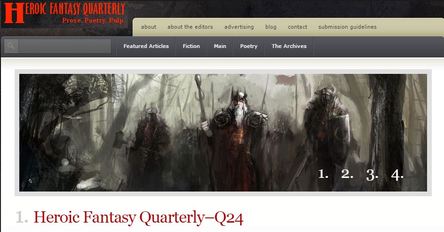
Issue 24 is maybe their best yet. This quarter’s artwork is a dark, brooding piece titled “Wizard With Army” by Vuk Kostic. Click this link to see the painting in its full glory.

The issue opens with Cullen Groves’ first published story, “The Madness of the Mansa,” a tale of a capricious monarch with a peculiar penchant for poetry.

Following a night in which “a great storm arose over the western ocean, and many citizens and sailors in the port of Asongai told how they had seen the demons of madness walking the black winds in the darkness.”, the ruler, the Mansa, is struck by a curious madness. From that point on he allows people to address him only poetically, using “the old meters” of songs and legends.

In the wake of the Mansa’s madness, the merchants of Asongai find themselves unable to successfully compete for his attention against the skilled singers of his tribal subjects. When a merchant named Bukra overhears the ex-gladiator, Draba, singing in a tavern, he hires him to petition the Mansa on his behalf.

Read More Read More

The Camera Can Lie: FairyTale: A True Story

The Camera Can Lie: FairyTale: A True Story

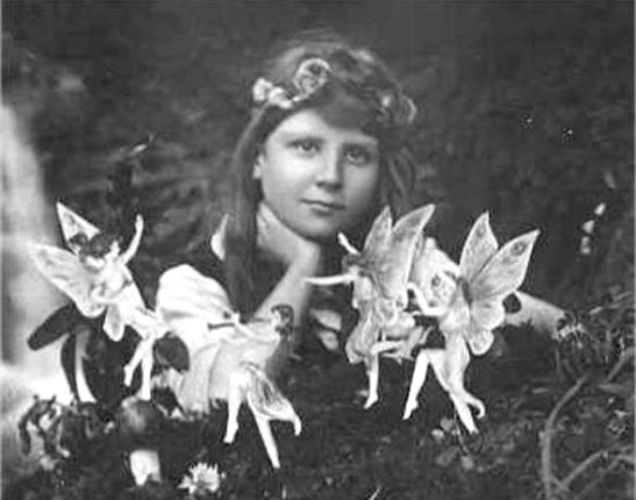
Cottingley FairiesNews flash: Sir Arthur Conan Doyle, having created literature’s greatest rationalist in the form of Sherlock Holmes, spent his later years heavily invested in the occult, the supernatural, and the possible existence of (yes) fairies.

Of course, people have always evinced a desire to believe — sometimes in this, sometimes in that — and so it is perhaps not so surprising that Conan Doyle played a large role in one of history’s great photographic deceptions, that of the so-called Cottingley Fairies.

In fact, he was one of those most willing to champion the trumped-up, cheap-looking fakes (black and white stills of young girls posing in shrubbery with paper cut-outs of highly Romanticized winged fairies) His role in this debacle (the girls only recanted decades later) is the subject of a FairyTale: A True Story (1997), a film well worth revisiting given our drone-happy, GPS-driven, target-rich world.

You see where I’m going with this, yes? Given our present era of photo manipulation and computer generated graphics, our collective ability to dupe the unwary has never been greater, and just like statistics, images lie.

Read More Read More

The Public Life of Sherlock Holmes: Looking at The Bruce Partington Plans

The Public Life of Sherlock Holmes: Looking at The Bruce Partington Plans

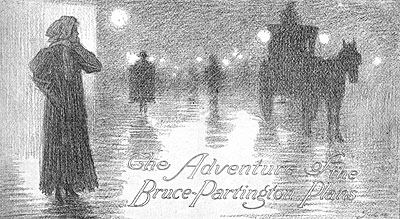
BruceP_FDSSolar Pons is, of course, the next best thing to Sherlock Holmes (which you know because you read THIS post, right?). I’m a Pons fan and I run www.SolarPons.com, the only website dedicated to The Sherlock Holmes of Praed Street.

Along with my two free, electronic newsletters (The Solar Pons Gazette and Baker Street Essays), the heart of the site is a collection of (non-spoiler) case commentaries for August Derleth’s stories. Some day, it will also host commentaries for the Basil Copper pastiches.

One of the many projects on my ‘To Do’ list (which might as well be Wish list) is to write case commentaries for the sixty Holmes stories written by Sir Arthur Conan Doyle. I’ve done one (woohoo!!!). First, if you haven’t done so, you really, really, really (I mean, really) need to read “The Bruce Partington Plans.” It’s a short story; won’t take long. And the rest of this post will actually mean something to you.

Each case commentary includes a non-spoiler preview of the story, some notable quotes, and a plethora of miscellaneous observations and comments. I’m probably in the minority, but I think there is some good stuff below and you’ll know a bit more about the story after you read it. So, come, the game is afoot!

Read More Read More

Self-published Book Review: The Age of Heroes by Scott Robinson

Self-published Book Review: The Age of Heroes by Scott Robinson

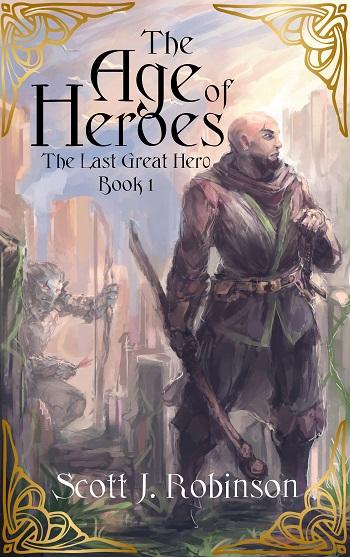
The Age of Heroes Robinson-smallThis month I’m reviewing The Age of Heroes by Scott Robinson. I’ve reviewed one of Scott’s books before, The Brightest Light, a self-described crystal-punk story. This time around, Scott’s story is straight up sword and sorcery.

Rawk is the last of the great heroes.  Famed for his great deeds, everyone in the city of Katamood knows him, he has a crowd of fans following him everywhere he goes, and women decades younger throw themselves at him.  He could easily retire — his friend Weaver declared himself Prince and took charge of Katamood thirty years ago — but despite the fact that he’s well past his prime, he refuses to. It’s a matter of pride, of preserving his reputation: he’s a hero, not a former hero.  But there just isn’t a lot for a hero to do these days.  Since Weaver banned sorcery, and the nearby city-states started to do the same, there’s been a distinct lack of exots — the weird and horrible creatures that require a hero to deal with.  Anyone else who wants to get into the heroism business has to travel far and wide to do so, leaving Rawk as the last active hero whose deeds are still known in Katamood.  So when an oversized wolf shows up one day, he’s the person that everyone calls on.

Heroism is a young man’s game — not just in the Age of Heroes, but in heroic fantasy in general.  People complain about the man part, but you’re more likely to see a woman as the protagonist in heroic fantasy than anyone over forty.  I couldn’t find Rawk’s exact age, but he’s at least in his fifties. He gets aches and pains even when he’s not particularly active, and his first fight almost ends badly when his knee nearly gives out. He spends the rest of the novel in a perpetual state of pain, unwilling to back down and let the soldiers whose job it is to deal with such threats steal his glory. Rawk’s age is a significant factor, and is the main reason this book is such a change of pace from most books in the genre. His point of view feels like that of a mature, older man, but he doesn’t necessarily act like one.

Read More Read More

Blogging from the Nebulas Weekend

Blogging from the Nebulas Weekend

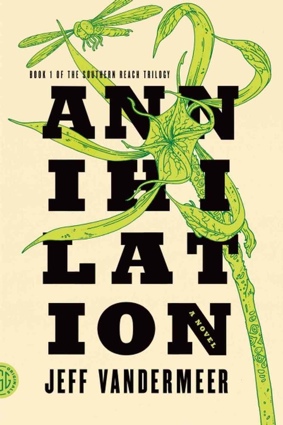
I’m in Chicago, at the 50th Annual Nebula Awards Weekend, and so far, it’s all pretty amazing. For Annihilation_by_jeff_vandermeerthose who don’t know, the Science Fiction and Fantasy Writers of America hold an annual Nebula Awards weekend that feels kind of like a very small fan con, except most of the attendees are SFWA members and networking and casual business discussion dominates.

My first Nebulas Weekend was in San José two years ago. Chicago is pretty impressive and the hotel, the Palmer House in downtown Chicago, is even moreso. And like at World Fantasy, attendees got loot bags upon arrival, provided by publishers. A small selection of by book bag contains: Tobias Buckell’s Sly Mongoose, an advance proof of Aliette de Bodard’s House of Shattered Wings, Daryl Gregory’s Afterparty, Ken Liu’s Grace of Kings, Nick Cutter’s The Acolyte and many more.

I don’t tend to go to as much programming as I used to at cons; I go more to meet editors, agents, publishers, and other writers, because hey, common interests. This weekend is an exception because the speakers are pretty uniformly the people who are steering the field itself.

I checked out a panel with Sheila Williams (Asimov’s) and Jacob Wiesman (Tachyon Press) about what editors are looking for. This is a bit in the same theme as Neil Clarke’s recent and excellent and data-based post about what he’s looking for at Clarkesworld. Based on the conversation, it struck me how much building Asimov’s each month is like building an anthology, where tone and editorial vision and story offering have to balance.

Read More Read More

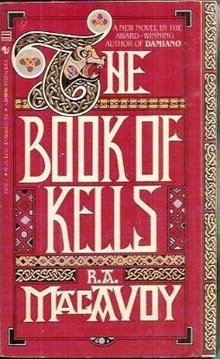
R.A. MacAvoy’s The Book of Kells

R.A. MacAvoy’s The Book of Kells

MacAvoy KellsLately I’ve been exploring portal fantasies, and last time I talked about Charles de Lint’s The Little Country. This week I’d like to take a look at R.A. MacAvoy’s The Book of Kells.

John Thornburn is a Canadian artist living and teaching in Dublin. He’s a bit of a klutz socially and emotionally, and has a tendency to focus on his work to the exclusion of everything else. His friend and sometime lover Derval O’Keane is an academic historian. The story begins when a young, injured girl suddenly appears in  John’s bathroom, having come through a portal  he inadvertently opened while working on the tracing of an old Gaelic pattern. It takes a bit of doing, but John and Derval finally figure out that Ailesh is the survivor of a Viking attack on her village in the Ireland of 985, saved by her father’s throwing her through the portal.

John and Derval take Ailesh back to her own time, and find the injured poet Labres MacCullen among the dead. John doesn’t know how to open the portal from this side, or even if it can be opened, so they accompany Ailesh and Labres to Dublin, where they hope to get help and justice from the King. Though the King in Dublin is himself a Dane at this point in history, they also want to warn him that the Vikings seem to have come as invaders, not as mere raiders who, having struck, will now go away.

Unknown to them, however, these same Vikings offered the lives of all the villagers to Odin, and the fact that Ailesh and Labres escaped puts them in a bit of a quandary. The leader decides that they must find and kill those who escaped, or forfeit their own lives – and the success of their expedition – to Odin’s displeasure.

Read More Read More

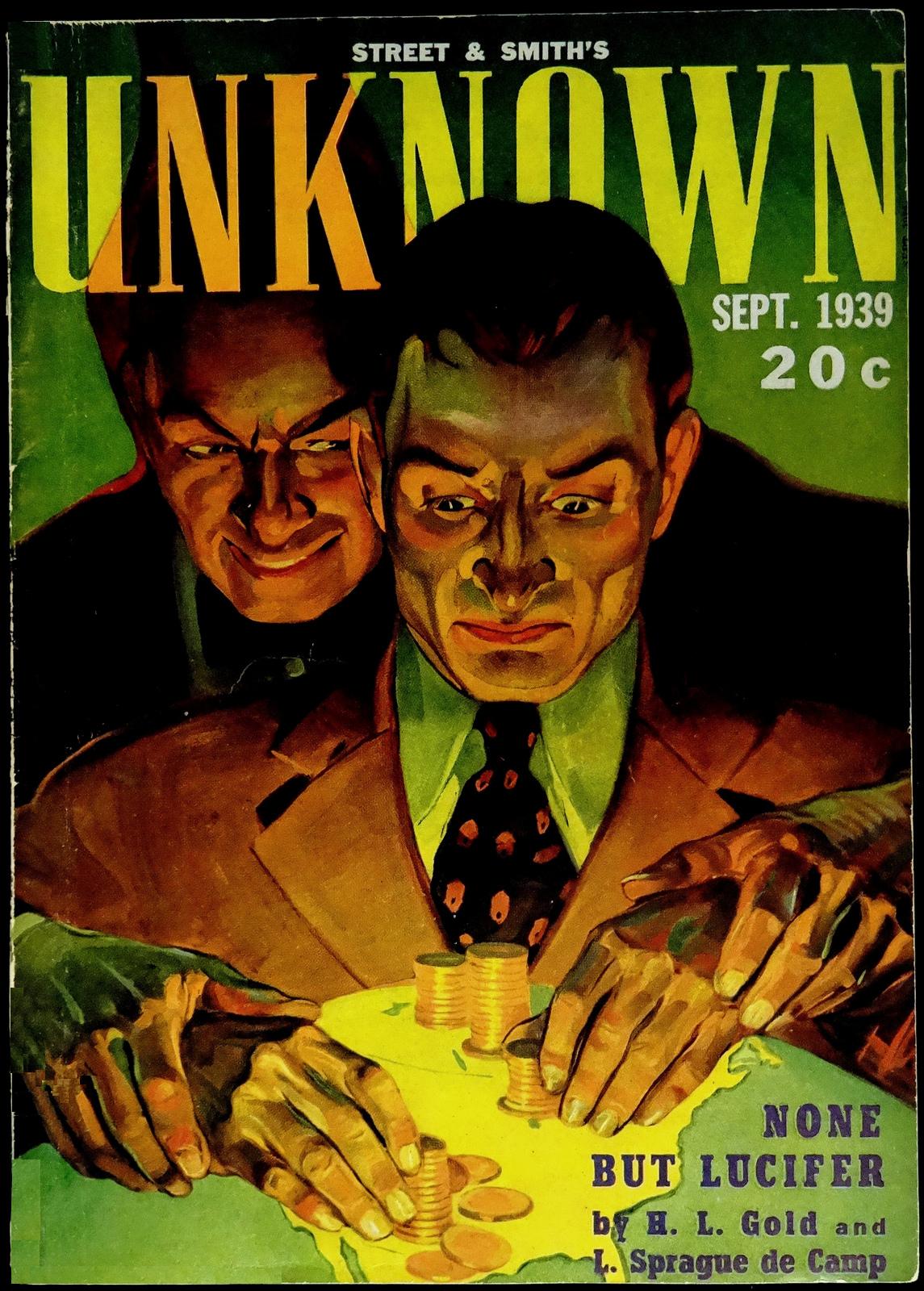
Unknown, September 1939: A Retro-Review

Unknown, September 1939: A Retro-Review

Unknown September 1939 None But Lucifer-smallMy last post was a review of Galaxy’s September 1952 issue. So I’m jumping back more than a decade to an issue of another magazine I’ve wanted to get into for a few years.

At last year’s World Fantasy Convention, while John O’Neill was trying to set a world record for the number of books carried in a single stack (seriously, if you had seen it, you would have been impressed), I came across a dealer selling old issues of Unknown. Actually, I told my wife I was trying to find some, and she actually found a bin of them. While not impossible to come by, collecting issues of Unknown is somewhat more cost prohibitive than collecting issues of Galaxy.

Unknown (later retitled Unknown Worlds) was a speculative fiction magazine that ran from 1939 to 1942. It was published by Street & Smith, who also published Astounding. It was edited by John W. Campbell, Jr., who also edited Astounding. The early issues have art on the cover, like the September 1952 issue. These are also the more expensive ones. But if you don’t care too much about quality because you’re just going to rip it while reading it, you can find some inexpensive copies. Mine was $15.

What I find perhaps most interesting about this particular issue is that it contains a novel written by H. L. Gold and L. Sprague de Camp. Not only that, but I think (prove me wrong or right, Rich Horton) that this may have been the first time Gold used this particular pseudonym. He’d had stories published as Horace L. Gold but not the familiar H. L. Gold that he continued to use as his soubriquet at Galaxy. Am I the only one geeking out about this? Please tell me I’m cool in a Galaxy/Unknown/pulp sort of way.

None But Lucifer by H. L. Gold and L. Sprague de Camp — William Hale has realized the truth about Earth. It isn’t Earth, at least not in the sense people think of it. Everyone on Earth is actually living in Hell.

Read More Read More

Faces of Iraq

Faces of Iraq

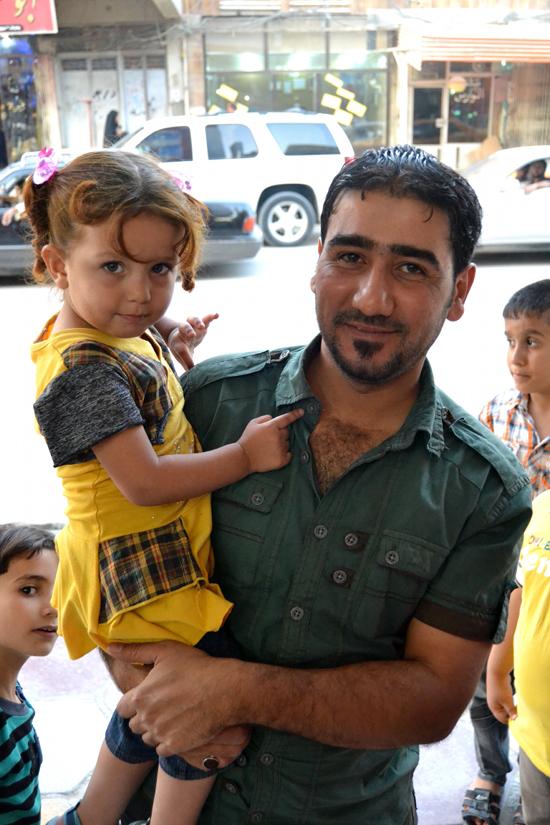
Proud dad in Nasiriyah

The Iraqis we see in the news almost always fall into three types–The Evil Fundamentalist, The Useless Official, and The Wailing Victim. The media have a hard time dealing with a broad range of characters, so they tend to fall back on these types again and again.

Of course the reality is more complex. While there’s no shortage of bloodshed and corruption, most of Iraq’s 33 million people go about their day-to-day affairs trying to live a normal life.

Back in 2012 I traveled to Iraq to write about it for the now-moribund travel blog Gadling. Click the link to read the series. Sadly, the photo galleries have been taken offline, but you can still read the articles for the moment.

Read More Read More