Browsed by
Category: Blog Entry

Charles de Lint and The Little Country
Charles de Lint and The Little Country

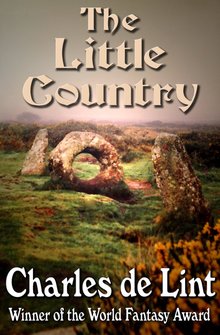
The Little CountryIn talking about portal fantasies last time, I was moved to reread one of the more unusual examples of the sub-genre, Charles de Lint’s The Little Country (1991).

The book is in a very real sense two books, but it isn’t a simple play-within-a-play, story-within-a-story thing: Each book is being read by the protagonist of the other. The now-overused self-referential concept known as “meta” wasn’t so common when The Little Country was written, but it might have been invented to describe the novel. The book is extremely self-aware, something which even the protagonists are forced to recognize.

The two stories do run parallel to one another, but this isn’t a case of success in one world reflecting or depending on success in the other world, as we see in King and Straub’s The Talisman, for example. The characters don’t overlap, the settings aren’t the same, though you might say that the outcomes are. There is a physical object common to both worlds, a standing stone with an opening through which objects and people can pass. Both worlds have the tradition that passing through the stone nine times at moonrise effects some magical change – entrance into the land of the faerie, a cure for sickness or barrenness, etc.

In the thread which most resembles our world, Janey Little, a twenty-something traditional musician, finds a book in her grandfather’s attic – a one-of-a-kind hitherto unknown work left in her grandfather’s keeping by the author, an old and eccentric friend. The book is called “The Little Country.”
Read More Read More

How To Write a Good Fight Scene

How To Write a Good Fight Scene

Marshall Versus the Assassins-small
…my fight scenes trigger your mirror neurons (apparently).

You can’t. Not a generically good fight scene. Just like a good love scene, “good” for a fight scene depends on the literary purpose and the audience.

Let’s assume, though, that you are writing some kind of action adventure yarn — I’m qualified to advise on this because this is what I write professionally, and my fight scenes trigger your mirror neurons (apparently) — here’s what I’d tell you over a beer.

Have a Model of How the Relevant Martial Art Works

By “model” I mean that you can describe to yourself how this kind of fighting works. E.g. is it all “cut parry cut”, or about crossing blades then working on the blade, or wrestling or what?

It helps if your model is based on reality or at least experimental reconstructions — if you’re using any European weapons, check out Youtube using the search term “HEMA”. You can of course make everything up, however more and more people are becoming HEMA-literate, so there is a good chance your book will date horribly.

The model should account for all the equipment used by your combatants, e.g. What is a shield for? What weapons break the armour? This ties the combat scene into the rest of the world story and brings to life the military culture and technology. For example, if combat requires a shield, then losing a shield can drive part of the plot. Oh, and, whatever you do, don’t treat armour as set dressing or costume. If it doesn’t stop weapons, nobody would wear it.

Read More Read More

Ancient Worlds: Caenis, Caeneus, and the Aftermath of Rape

Ancient Worlds: Caenis, Caeneus, and the Aftermath of Rape

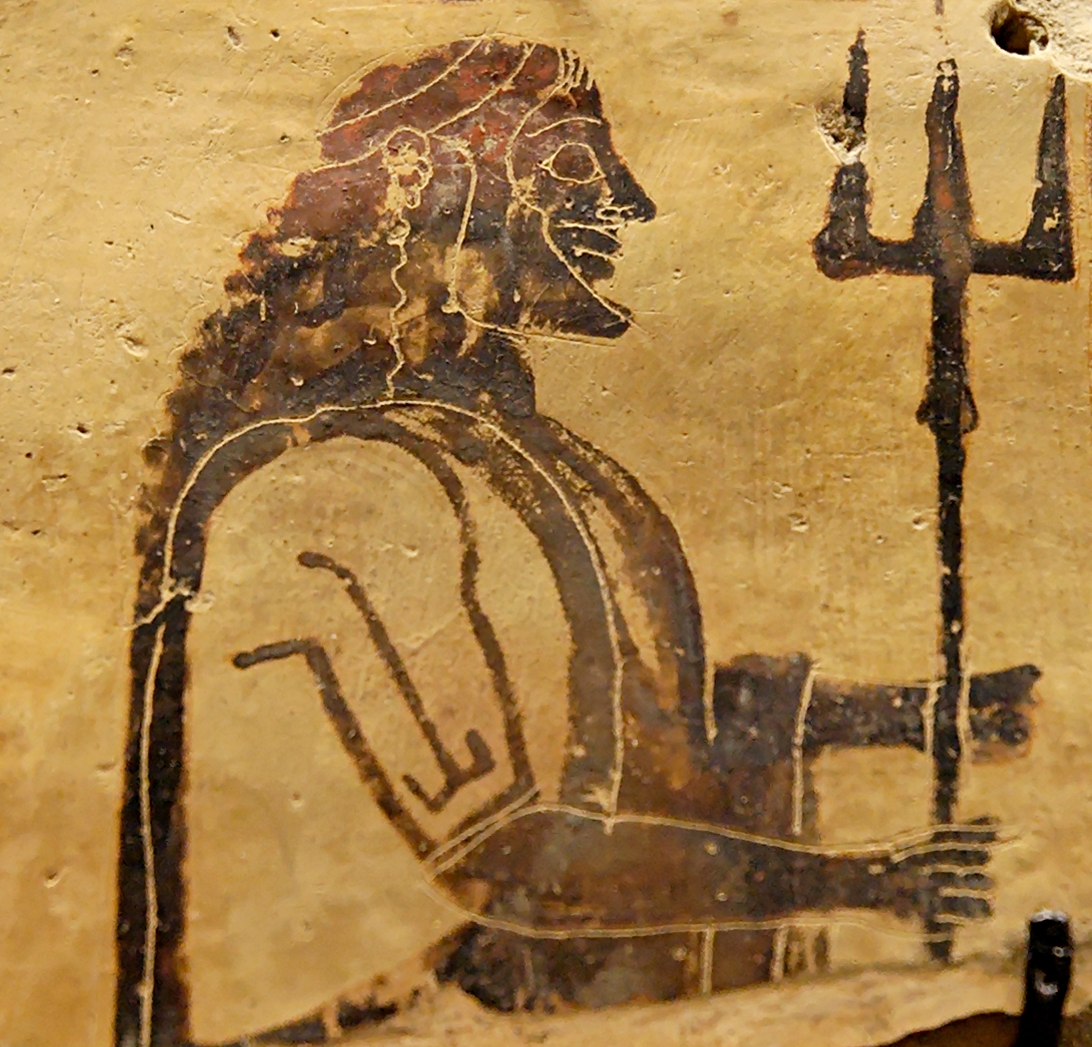
Poseidon_Penteskouphia_Louvre_CA452Sometimes a planned topic and the news intersect in unexpected ways. I had planned for some time to cover this particular episode in Ovid, but this week’s decision by The Mary Sue to discontinue active promotion of Game of Thrones gives it a relevance that we in the Classics don’t usually get to experience. I’ll link to The Mary Sue’s explanation of their decision here, but the short version is that they were no longer interested in promoting a show that made such regular use of rape as a storytelling device. A heated debate has ensued in several quarters, over The Mary Sue’s decision, the show in question, and over the portrayal of sexual assault in fiction.

This is by no means a new debate. Rape has been, sadly, part of human experience for as long as we have had storytelling. Its presence in the earliest works we have in the canon attests this fact. What has varied is how it is portrayed, both in terms of the act itself and its lasting effect on both its victims and society at large. The myth of the Rape of Persephone is used to explain the seasons; the Roman Historian Livy tells us that the expulsion of the kings of Rome was triggered by the devastating aftermath of the rape of Lucretia.

But no artist spent as much time investigating the lingering effects of rape like Ovid. The Metamorphoses is filled with stories of rape and familial sexual abuse, and the author doesn’t shy away from any of it. But that doesn’t mean he lingers over it, either: he depictions of assaults are vivid but never graphic. And unlike many modern depictions he doesn’t spend much time on the assaults themselves. What Ovid chooses to focus on is the long term ramifications of sexual violence, the way it shapes lives, families, destinies, and the landscape itself (remember Apollo and the Laurel tree?).

Read More Read More

Fletcher Vredenburgh’s Simakpalooza!

Fletcher Vredenburgh’s Simakpalooza!

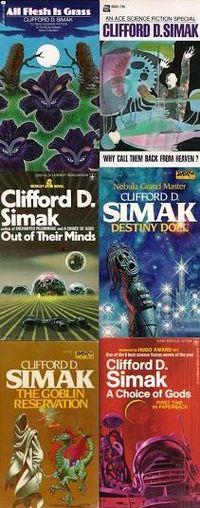
SimakpaloozaI don’t have time to read many other blogs. I barely have time to read this one, what with all the time I spend reading, and writing, and telling my wife how awesome Mad Max: Fury Road is. Seriously honey, sooo awesome. I wish I got to ride  in the desert, and take a giant chain elevator to work every day. Is there a word for when you envy the baddass folks who live in an apocalyptic dystopia? There should be such a word. And I bet that word would be awesome.

Anyway, I appreciate those moments when I get to read blogs written by other folks. Especially when they’re folks like Fletcher Vredenburgh, and especially especially when they look at one of my favorite writers, as Fletcher did this week with his Simakpalooza! (Is there a word for when you envy a writer who makes up a word? There should be such a word.) Here’s a sample:

I’m not sure what the first story I read by Clifford Simak was, but the first I remember is “Desertion.” It’s part of the book he’s probably most famous for, City. The novel is a mournful farewell to humanity and Earth and stars robot butlers and talking dogs… There’s a tremendous sense of wonder in the tale as the nature of what’s going on is revealed. I think of it as the story that showed me the true potential of sci-fi…

Sadly, Clifford Simak seems to have slipped into the ranks of the unjustly forgotten sci-fi writers of the past. Growing up, he was just part of the general fabric of sci-fi [for me], and most fellow sci-fi fans I knew had read at least something by him…

It’s been a long time since I’ve read anything by Simak. John O’Neill’s post about The Goblin Reservation and the comments reminded me how much I loved his work. There’s a warmth and comfortableness to his stories that I love.

Fletcher created an impressive tapestry of images from 17 Simak paperbacks to accompany his article (a tiny snippet is at right). Read the whole thing here.

Psychical Violence and Beckoning Beauties: The Dead of Night: The Ghost Stories of Oliver Onions

Psychical Violence and Beckoning Beauties: The Dead of Night: The Ghost Stories of Oliver Onions

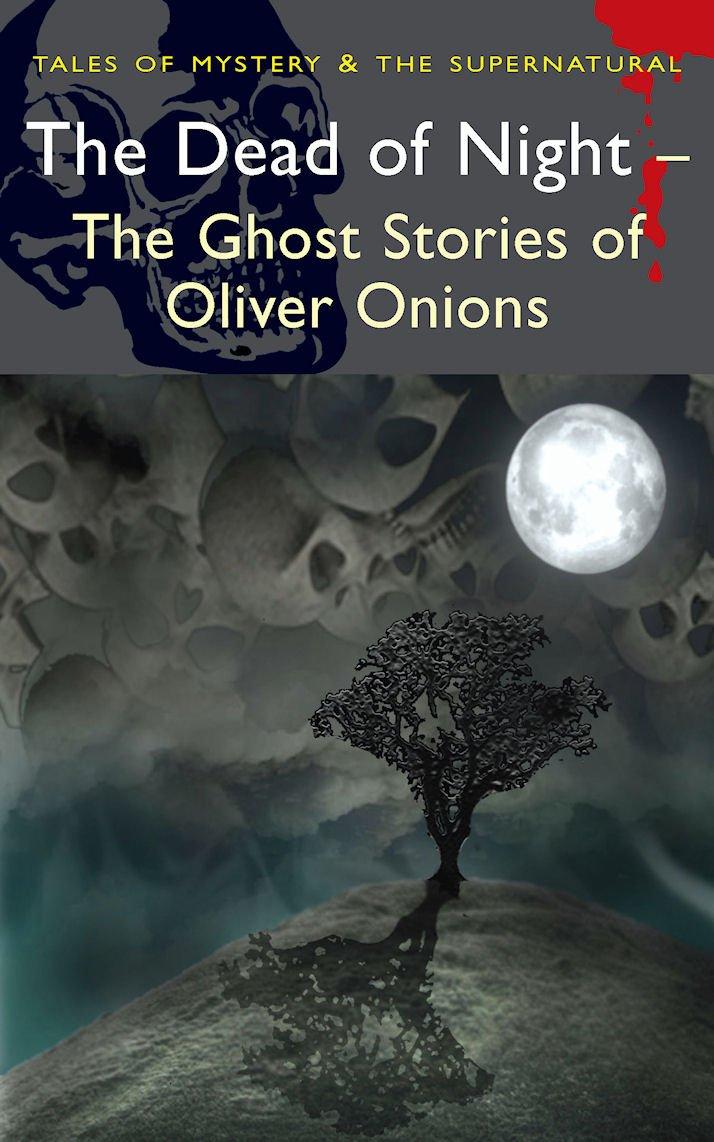
The Dead of Night The Ghost Stories of Oliver Onions-smallWhile I was at the World Fantasy Convention last November, I sat in on a panel called “Ghost Stories Without Ghosts.” Truth to tell, I was only there because of the delightful Patty Templeton, who was a guest on the panel, talking about her popular debut novel There Is No Lovely End.

However, the other panelists — S. T. Joshi, Jonathan Oliver, and Darrell Schweitzer — had interesting things to say as well, and several times the conversation came around to Oliver Onions, who was held up as an exemplar of the form.

All very interesting, but who the heck is Oliver Onions?

When faced with a situation such as this (an embarrassing lack of knowledge about a revered figure in 19th Century Supernatural Fiction — which happens a lot more often than you might think), I invariably turn to the same resource: the always reliable Tales of Mystery and the Supernatural. Or, as we like to call them, TOMAToS.

Sure enough, the Wordsworth Tales line includes a huge Oliver Onions volume: The Dead of Night: The Ghost Stories of Oliver Onions. 627 pages of creepy fiction featuring werewolves, haunted houses, a dream shared down through history, living ghosts, an obsessed sculptor, characters in a romance novel who come to life, a temptress who’s doomed countless men through the centuries until she falls in love for the first time, a haunted meadow, a cheery Christmas ghost who disobeys the Special Committee on Ethereal Traffic and Right of Way to save lives, and many others.

Read More Read More

Into the Wastelands: Enchanted Pilgrimage by Clifford D. Simak

Into the Wastelands: Enchanted Pilgrimage by Clifford D. Simak

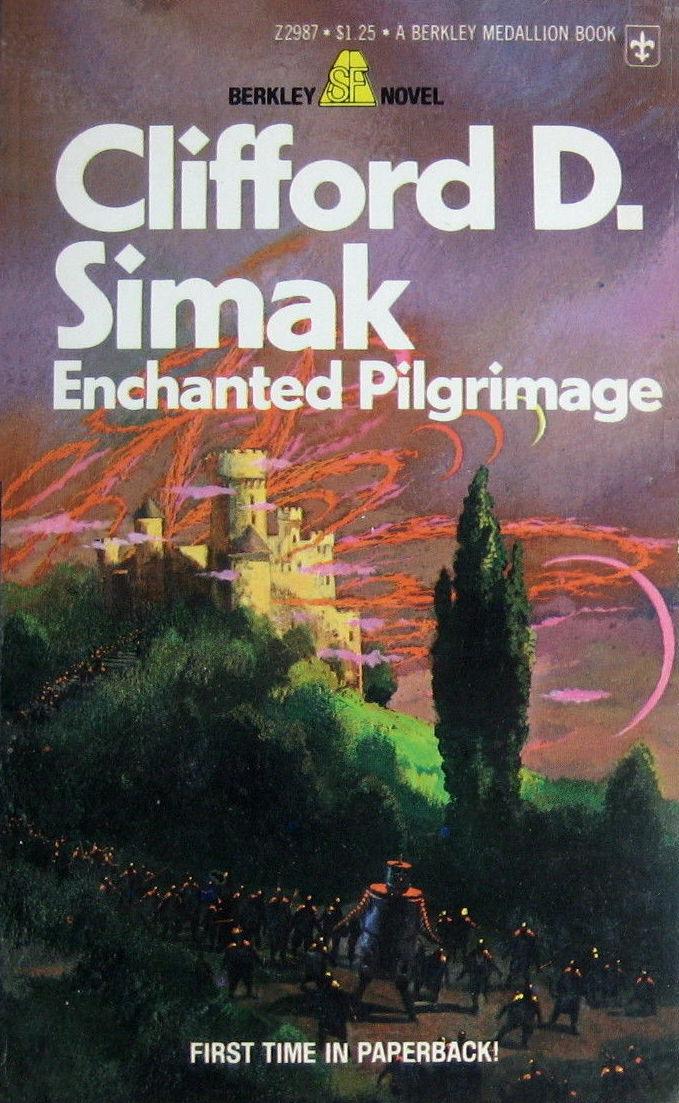
Enchanted Pilgrimage-smallClifford Simak is often described as a pastoralist, his sci-fi stories set in rural Wisconsin or some reasonable facsimile thereof. Kindly robots as well as smart and faithful dogs feature in many of his books. Scholars are more likely than soldiers to figure as his heroes. There’s more kindness and sense of wonder than violence in most of his stories.

If you haven’t read him (which wouldn’t be surprising since most of his twenty-six novels and multitude of story collections are out of print in the US), snag a battered old copy of City or Way Station to start. City holds a place in my heart as one of my favorite books. Simak brought a gentle humanity to his writing. Love of an unhurried life and respect for common decency run through many of his stories.

Inspired by John O’Neill’s post about The Goblin Reservation, I dug out the first of Simak’s three fantasy novels, Enchanted Pilgrimage (1975). In it, a disparate party of travelers leave the safety of humanity’s lands to explore the dangerous, magical Wasteland. He would revisit this theme twice more before his death in 1986, in the structurally similar The Fellowship of the Talisman (1978) and Where the Evil Dwells (1982).

I remember liking the book thirty years ago and thirty years later, I still like it. It’s fully fantasy and science fiction, both. While there are goblins, gnomes, witches, and trolls, there are also UFOs, a robot, and a traveler from an alternate Earth.

Read More Read More

The Public Life of Sherlock Holmes: Wrapping up Jeremy Brett’s Adventures

The Public Life of Sherlock Holmes: Wrapping up Jeremy Brett’s Adventures

Brett3_RucastleClick here for parts one and two of this look at Jeremy Brett’s The Adventures of Sherlock Holmes.

The second installment of Granada’s The Adventures of Sherlock Holmes kicked off on August 25, 1985 with The Copper Beeches. Tapped for the role of one of the Canon’s most dastardly villains, Jephro Rucastle, was veteran actor Joss Ackland. Back in 1965 he had starred opposite Douglas Wilmer’s Holmes in The Disappearance of Lady Frances Carfax, playing her former suitor, Philip Green.

Other tangential Holmes-related efforts had included John Cleese’s disastrous parody, The Strange Case of the End of Civilization as We Know It and an episode of the BBC series, The Rivals of Sherlock Holmes, based on the anthologies edited by Hugh Greene.

And in 1989 he would play the King of Sweden in Christopher Lee’s Sherlock Holmes & The Incident at Victoria Falls. Ackland’s Rucastle is one of the most memorable evildoers in the entire Granada series; menacing in a creepy but understated way.

Read More Read More

Professor Patrice Caldwell on Exploding Cows, Peanut Buster Parfaits, and Why Grand Masters Flock to Portales, New Mexico

Professor Patrice Caldwell on Exploding Cows, Peanut Buster Parfaits, and Why Grand Masters Flock to Portales, New Mexico

JackW1photo patrice 600The Jack Williamson Lectureship is a little known, hidden gem of science fiction. Taking place every April in Portales, New Mexico, it always attracts an impressive list of authors, who gather in an unnaturally high concentration in places such as the local Dairy Queen.

I’ve attended the Lectureship for over a decade, so I remember the days when Jack was alive and we held events in his house. He was a brilliant, unassuming man who was one of the founding fathers of science fiction. Words such as “psionics,” “terraform,” and “genetic engineering” had their first appearance in his fiction, and he also coined concepts such as The Prime Directive and androids. He was the second ever SFWA Grand Master and holds the record for publishing stories in more consecutive decades than any other author (nine decades in total!)

This year I sat down with Professor Patrice Caldwell (far right in the picture above, next to Connie Willis and Betty Williamson, Jack’s niece). Patrice coordinates the Lectureship every year, and we took a moment to discuss Jack’s legacy, and this annual event that honors him. If you’ve never heard of the Jack Williamson Lectureship, listen up! It’s an event you won’t want to miss.

Read More Read More

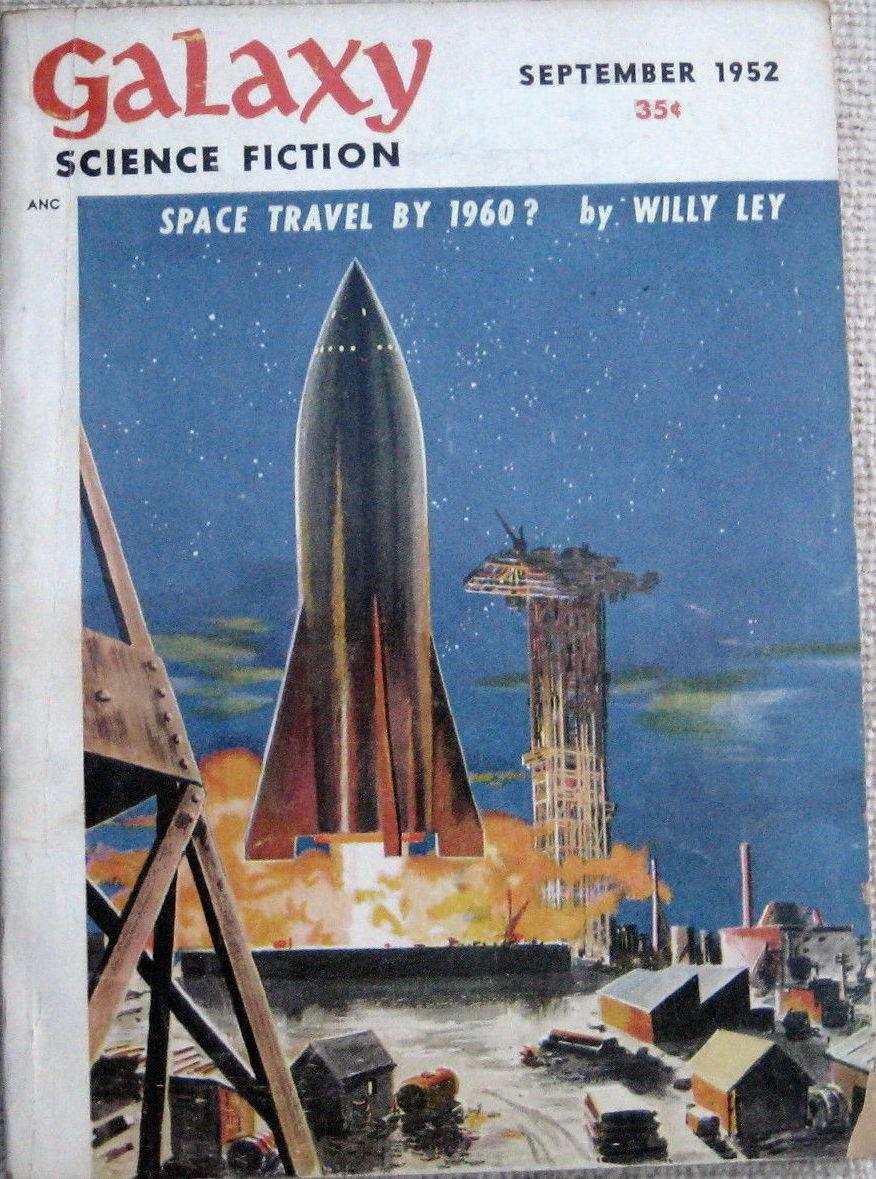
Galaxy Science Fiction, September 1952: A Retro-Review

Galaxy Science Fiction, September 1952: A Retro-Review

Galaxy Science Fiction September 1952-smallWith this issue, Galaxy completed its second year of publication. That’s 24 issues of top-notch science fiction. It’s tough to match that stamina, and I applaud H.L. Gold, his staff, the authors, and the artists for staying the course.

“Delay in Transit” by F. L. Wallace — Denton Cassal is a sales engineer, traveling toward the center of the galaxy to solicit a top scientist to work for his company on an instant communication device. His journey takes him through Tunney 21, a planet inhabited mostly by Goldophians, who look somewhat like seals. Equipped with an AI device named Dimanche, Cassal is able to read people based on their body chemistry and temperature. He’s being pursued, but Dimanche’s intelligence and advice give Cassal confidence, provided he’s willing to listen.

This piece was reprinted in Bodyguard and Four Other Short Science Fiction Novels From Galaxy edited by H. L. Gold in 1962. In this issue, however, it was credited as a novella. I liked the use of the AI as well as the setting of Tunney 21. Wallace also does a nice job with the pacing.

“The Snowball Efect” by Katherine MacLean — To prove the value of sociology (and his own department), Wilton Caswell meets with the university president to create a list of rules for an organization to employ in order to grow membership. If an organization adopts the rules and shows growth, then the president has quantitative proof of the depatment’s value; the underlying principles of philosophy can promote success to all graduates. Caswell and the president choose the Watashaw Sewing Circle for their experiment and then withdraw to see what happens. It turns out that the rules work. They work so well, in fact, that the sewing group expands into a broader organization — one focused on civic welfare and politics.

Read More Read More

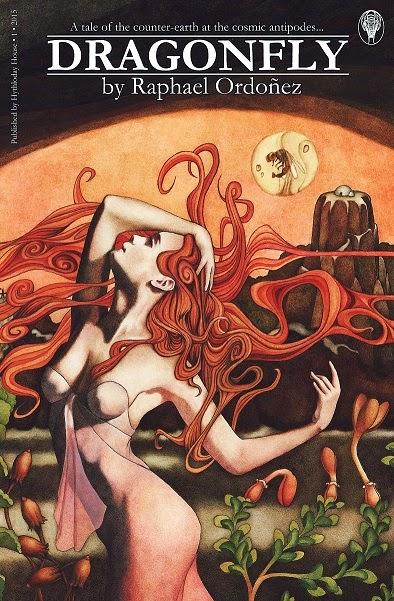
Dragonfly: A Tale of the Counter-Earth at the Cosmic Antipodes by Raphael Ordoñez

Dragonfly: A Tale of the Counter-Earth at the Cosmic Antipodes by Raphael Ordoñez

oie_113524h6c8tSPCMuch of my reading is for sheer entertainment. It’s like a carnival ride: you pay your money, get whipped around a little, then deposited back on the ground. The next day a fond memory of the overall experience lingers on but the details have faded away. And that’s cool. I have never regretted the time or money spent on an Agatha Christie or Stephen King novel. I’ve passed many an enjoyable hour reading (or watching) a decent bit of fiction for a transient thrill. But sometimes, there’s something so compelling about about a book that I’m drawn to it again and again over the years.

There are certain books on my shelf that have an aura around them. Three that leap to mind are The Master and Margarita by Mikhail Bulgakov, The Last Coin by James Blaylock, and Faces in the Crowd by William Marshall. In each, the combination of prose, plot, and character drew me in so deeply that I feel the desire, for various reasons, to revisit them from time to time.

With the first, I’m looking each time to absorb and understand a bit more of Bulgakov’s dense work. It’s a great story, rich with ideas on art, politics, love, and religion. With the second two I recapture a bit of the sheer joy I felt the first time I encountered the vivid characters and utterly bonkers plots. When it comes to books in this class, I can remember when I first read them, under what circumstances, and where I got them (Science Fiction Book Club, The Forbidden Planet (NYC), and borrowed from the St. George Public Library, Staten Island). I suspect Raphael Ordoñez’ Dragonfly will get added to this list.

Dragonfly is the first of a planned tetralogy. In this day of calculated, mass-marketed, trend-following books, here is a self-published adventure, practically handcrafted, with cover, map, and interior art all done by Ordoñez himself. It tells of a young prince let loose in a world of steam engines, complacent aristocrats, and tunnel-dwelling workers, and a social order on the verge of being overthrown. Ordoñez’ style hearkens back to the likes of A. E. van Vogt and Jack Vance, as well as Edgar Rice Burroughs. Heck, as you can see from the cover, Dragonfly would look right at home on a shelf full of volumes from the Ballantine Adult Fantasy series.

Read More Read More