RBE returns with a WWE-style SmackDown: Challenge! Discovery
Ahem. It’s been a tad longer than realized: almost exactly 4 years later, RBE reignites. What better way to light the conflagration then with Battle Royale?
Once upon a time…
Ahem. It’s been a tad longer than realized: almost exactly 4 years later, RBE reignites. What better way to light the conflagration then with Battle Royale?
Once upon a time…
 |
 |
 |
 |
We bow to no one in our appreciation of Arthur Conan Doyle here at Black Gate. Bob Byrne’s long-running Monday column The Public Life of Sherlock Holmes explored all facets of the career of his most famous creation, and over the years William Patrick Maynard, Mark Rigney, Ryan Harvey and other folks have written here about Doyle’s work and its many adaptations.
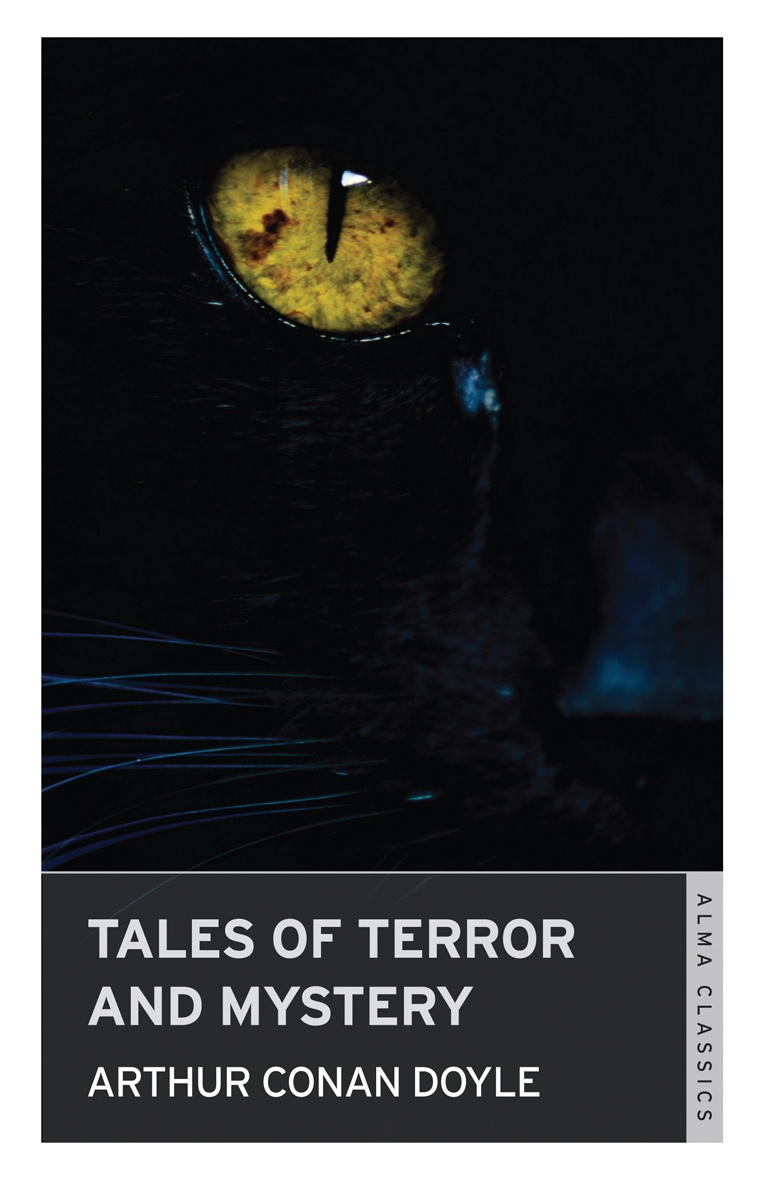
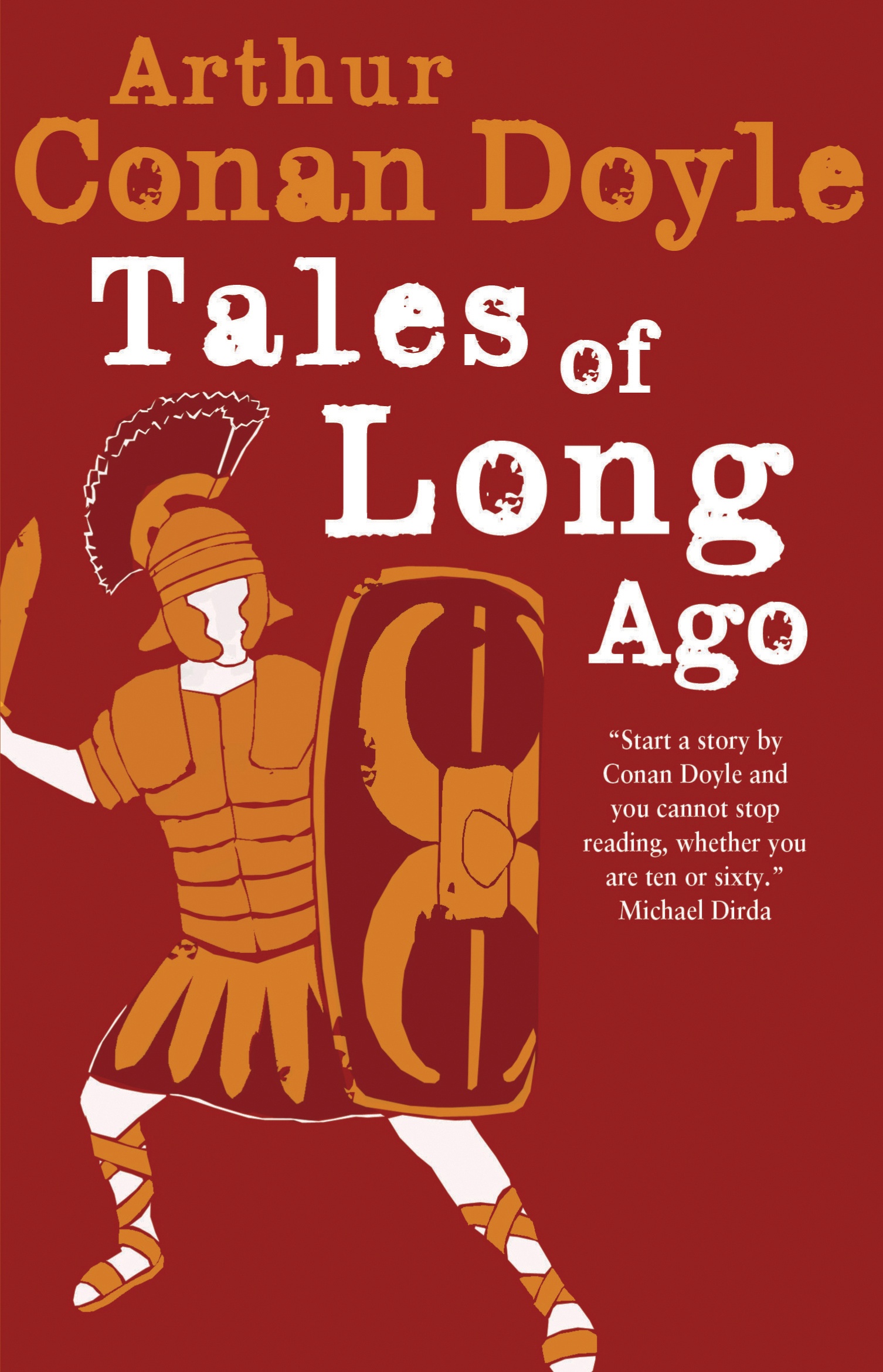
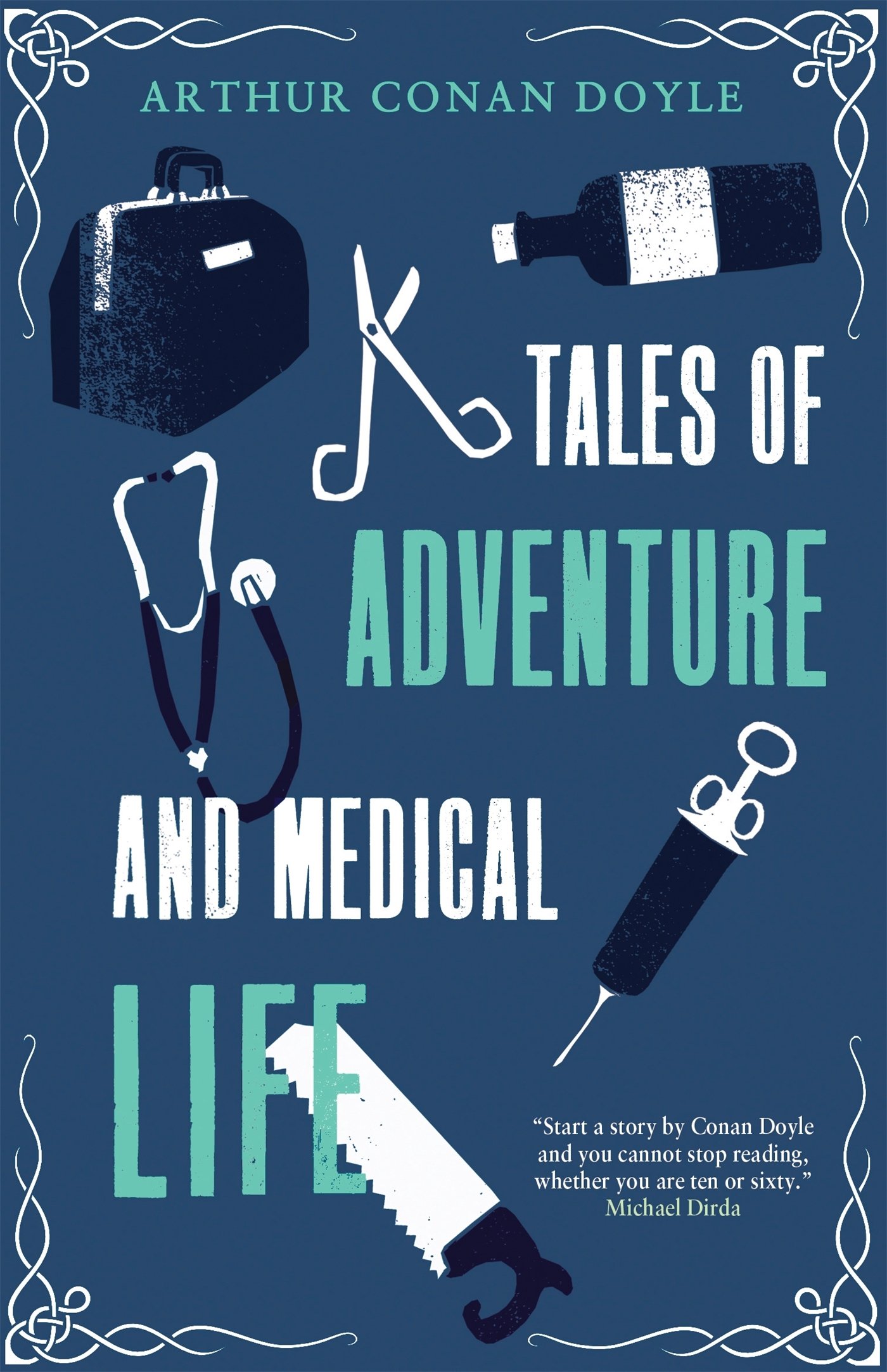
But Doyle made many contributions to the fantasy, detective and horror genres during his long career, and over the decades his work has been reprinted in numerous anthologies like Horrors in Hiding (1973), Famous Fantastic Mysteries (1991), Ancient Egyptian Supernatural Tales (2016), and many others. From 2014-2015 British publisher Alma Classics gathered dozens of his tales into four collections, all of which are still available, and all of which are worth tracking down.
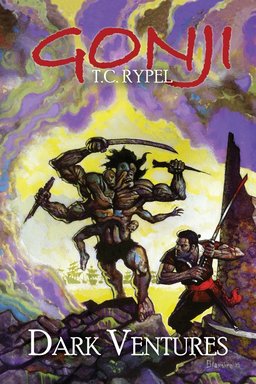 Aside from his own terrific swords & sorcery tales, the thing I’m most grateful to Joe Bonadonna for is hipping me to the Gonji stories of T.C. Rypel. For those unfamiliar with him, Gonji is a half Viking, half Japanese warrior, cast out of Japan and in search of his destiny across a monster- and sorcery-ravaged Europe. His epic struggle against malign magical powers are told in a series of five novels: Red Blade from the East (2012), The Soul Within the Steel (2013), Deathwind of Vedun (2013), Fortress of Lost Worlds (2014), and A Hungering of Wolves (2014). The novels (reviewed by me at the links) are dense works of remarkable storytelling, filled with deeply memorable characters and complex worldbuilding. Now, appearing for the first time, is a collection of shorter works called Dark Ventures (2017).
Before I start telling you about the book, let me be up front: I consider Ted Rypel a friend, and I was privileged to read a pre-publication version of the new book’s central novella, “Dark Venture.” Ted loved my description of the story so much he used it as a blurb on the back cover:
People will not know what hit them when they read “Dark Venture.” It’s one of the most exciting (and gruesomely bonkers) swords & sorcery stories I’ve had the pleasure of reading.
I meant those words when I first wrote them a couple of years ago, and I stand by them today.
Dark Ventures opens with the short story “Reflections in Ice.” It’s an expanded and revised version of the first chapter of the novel Fortress of Lost Worlds. In it, Gonji and his companions, having survived the events of the first three books, are making their way across the Pyrenees Mountains in response to a summons for their aid. Slowly they are being killed, stalked by unseen and supernatural hunters:
The ghostly army comes again the next night, and the next, pursuing when we flee, retreating when we advance. Two more men are savagely slain by unerring bowshot, despite all caution and hastily fashioned defensive shielding. To wheel and engage them is to encounter mocking laughter from that effulgent bank of nothingness they inhabit. To run or take a stand is to be subjected to more casual slaughter, as if we are mere game; more sudden chilling eruptions of screaming and gouting blood, under the assassins’ uncanny aim.
As his party is whittled down to fewer and fewer members, Gonji is forced higher and higher into the mountains in search of refuge, but finding only more horrors. “Reflections” is a dark tale that is suffused with a sense of impending death, and becomes increasingly despair-filled and claustrophobic with each step forward.

Nancy Kilpatrick is an award-winning writer and editor. She has published 22 novels, 1 non-fiction book, over 220 short stories and 6 collections of her short fiction, comic books, a graphic novel, and she has edited 15 anthologies. Her work has been translated into 7 languages. Although not all vampire-themed, it’s all focused on the dark realm.
I noticed on your Amazon Author’s Page you did a non-fiction book about the Gothic movement.
I wrote one non-fiction book, The Goth Bible: A Compendium for the Darkly Inclined. At the time I did that I was pretty much smack in the middle of the Goth world. The agent I had at the time approached me and said there was a publisher looking for a book on goth. When I contacted the publisher, he and I had a conversation, but he was looking for something with the slant of discouraging people from getting involved in the goth culture. This wasn’t what I wanted to write so my agent shopped it around, and there was a bit of a bidding war. Finally there was an editor at St. Martin’s Press who used to be into goth when he was younger, so he bought it, but unfortunately just at 9/11, which was a paralyzing time for the publishing industry.

You may recall that my first trip to New York *ever* was in April, and I blogged about it in A Babe in the Woods: Derek’s Literary Adventures in New York! Well, the training wheels are off and I went on a full grail quest this time around, at New York Comic Con!
I had two major reasons to go to NYCC. First, I enjoy blogging about comics, and interviewing comic creators. So, as a blogger for Black Gate, there were a lot of people I wanted to meet. Second, my prose writing career (short stories and novels) has been going well, but I’ve also wanted to write comic books since I was 10 years old. I’m working on a comic story for a small press anthology right now, but also I went to see what other opportunities there might be.
Yes, you read that right!
Elite Dangerous, the current incarnation of the granddaddy of all immersive video games, now has its own tabletop roleplaying game, and I’m sitting here with a review copy.
The problem with the video game is that, even with the new ability to land on airless worlds and trundle around in AFVs, it’s essentially space exploration on the radio. You don’t get to land on the worlds with interesting cultures and brawl with gangsters or tread the mean streets, or avoid being the main course at a barbaric religious ceremony. A tabletop roleplaying game has the potential to supply those missing experiences. But does the franchise really need its own game? (As you’ll see, “Yes, actually.”)
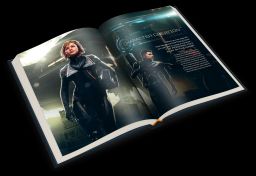
Frankly, I half-expected Elite Dangerous Role Playing Game (EDRPG) to be a cynically put together I can’t believe it’s not Traveller-lite (please don’t send round lawyers with pulse lasers) with a detailed trade mini-game. Instead I found myself reading what’s clearly a labor of love that emulates a different corner of the Star Punk genre, and does so with an emphasis — in the core rules — on what you do when you’re not trading. It’s also loaded with material pitched for beginner GM’s, but — again in the core rules — assumes some familiarity with the computer game; not disastrous, but confusing if you haven’t played Elite seriously in four decades (I’m told there will be free material on the website to help with this).
Given Elite Dangerous has 2-3 million players, and a cult of enthusiasts who enjoy the “shared” part of “shared escapism,” Elite Dangerous Roleplaying Game promises to be an instant modern classic. It’s a good thing, then, that the game mechanics are elegant, but more refined than innovative, which is what you want in something obviously intended as a workhorse to support happy years of sandbox gaming.
Let me unpack some of that.
 Last week I attended the funeral for my friend Densel’s wife, Sheryl. As these things tend to, it spawned a reunion of friends who don’t see each other anymore. Densel was a major hub of roleplaying on Staten Island, and our love for our friend, and each other, grew from our meeting together to play Dungeons and Dragons. Only in recent years have I learned that while he was gaming with me and my group, he was moonlighting with other groups all across the Island. He is single-handedly responsible for more people playing D&D on Staten Island than any other person I know.
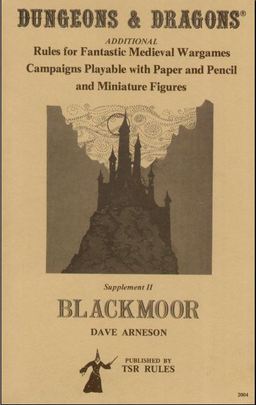
The first time I met Densel was when his friend, Desmond, brought him to Boy Scouts to play violin for us and join our troop. He was a six-foot-four, sixteen-year-old black kid and I was a five-foot-four, eleven-year-old white kid. Though five years older than I, we hit it off. What really connected us were the three wildly illustrated pamphlets he brought on a camping trip: Dungeons & Dragons, Greyhawk, and Blackmoor. One of his older brothers had gone to school in Wisconsin and brought the game back to Staten Island with him. When we saw Densel reading them, a couple of us younger guys asked him what they were. When he asked if we had read Moorcock or Tolkien and we said yes, he then asked if we would like to play a game where we could be knights and rangers. Without hesitation, we said yes.
We didn’t play the game properly. Mostly, it was just us talking about the characters we wanted to play and then Densel talking us through adventures. It didn’t matter that I wasn’t really learning the game; I was hooked by the idea of roleplaying. The illustrations from those original books are a major part of what I believe fantasy should look like. The thought of getting caught up in playing someone like Elric or Aragorn blew my eleven-year-old mind.
Densel aged out of scouts and I didn’t see him again for a couple of years. I was still finishing grade school and he was getting ready to enter college. It was then that I started playing D&D for real with my immediate circle of friends. Both my neighbor and I got the boxed Basic Set for Christmas. For two years we played relentlessly; and I mean relentlessly. For anyone who played the game in that first flush of its popularity in the late 1970s, you know what I mean. Every free weekend was spent playing, and the days between designing dungeons and drawing maps. Soon I was building up a shelf of hardcover Advanced D&D manuals. Almost any money I earned or got as a gift was plowed into the game.
 The September/October Analog has a diverse mix of tales, of time travel, uplifted animals, ghostmail, siege engines on Mars, cryo-prisons, space elevators, crash landings on hostile worlds, mysterious alien invaders, and Norman Spinrad’s tale of the Order of the Galactic Eye. Here’s Nicky Magas at Tangent Online to give us the highlights.
An exciting new world that is hostile to technology awaits Mbasi in “Orphans” by Craig DeLancey. No probes sent to the planet teeming with vegetation have survived through to their full life expectancy. It’s up to Mbasi and the rest of the research crew to figure out why. But when an unexplainable accident forces them into an emergency crash landing from their planned orbit, Mbasi finds herself a little closer to the conundrum than she first anticipated. To make matters worse, whatever has been destroying their probes is making short work of their ship as well.
The mystery in “Orphans” is what truly makes this story shine. The sense of urgency DeLancey puts into every word is palpable to the reader, making every decision seem like life or death. DeLancey cultivates a deep curiosity in readers, and though he peppers the narrative with speculation between his characters, the open ended nature of the conclusion leaves readers on the edge of the cliff of what is knowable, both satisfied and deeply wanting more.
In “The Old Man” by Rich Larsen, Ezekiel wants nothing more than to kill his father and have him know who did it. Lucky for him the Old Man escaped his cryo-prison. Luckier still, the government thawed Zeke for the task of taking him out. The Old Man has much to atone for and Zeke means to see the debt settled down to the last drop of blood.
Larson tells a fascinating story of revenge and humanity in “The Old Man.” As the narrative unravels itself in a non-linear way set to the backdrop of the swampy bayou, readers find their sympathies torn between politics, family, and human rights in a technologically advanced future. There are layers to this story that make it exquisitely complex and an ethically thoughtful read. Readers expecting a story whirling with technology might be surprised by how intricately and tragically organic it is, however this does not detract from the brilliant piece of futuristic science fiction that it is.
Read Nicky’s complete review here.
The September/October issue contains fiction by Edward M. Lerner, Lettie Prell, Jerry Oltion, Rich Larsen, Michael F. Flynn, James Van Pelt, Stanley Schmidt, Norman Spinrad, Bud Sparhawk, and many others. The cover is by Eldar Zakirov, for “My Fifth and Most Exotic Voyage,” by Edward M. Lerner.
 Utter Fabrications: Historical Accounts of Unusual Buildings and Structures
Edited by Dawn Vogel and Jeremy Zimmerman
Mad Scientist Journal Presents, DefCon One Publishing (354 pages, $14.99 paperback, $4.99 eBook, Sept 2017)
“No one understands strange places like the people who have been there,” opens the description for Utter Fabrications: Historical Accounts of Unusual Buildings and Structures, calling out the fact that everyone knows a place that gives them a funny feeling. For me, it was a stretch of residential street partway between the grocery store where I worked as a teenager and the home where my mom and stepdad lived. Walking that way wouldn’t always make my skin crawl… but enough that I started to avoid it.
The idea behind this anthology, I think, is to evoke that familiar feeling of the uncanny. And some of the stories in Utter Fabrications manage to do that. “Every House, A Home” by Evan Dicken focuses on a freelancer who tries to suss out the negative energy around buildings – not because of bad feng shui or poltergeists, but because the building is actually unhappy. In “Kingsport Asylum” by Diana Hauer, a woman returns to the asylum where she spent her youth and faces the very tangible memories of the crimes committed there.
Each story takes the idea of a place being inhabited by energies beyond our understanding and plays with it, and one of the strengths of this anthology is the different ways this idea is shaped, whether it’s through a roving bike rack, a house that dreams of exotic locales or a city district that sometimes takes people but also sometimes protects them. There are also a number of diverse characters on display; my favorite was the non-binary groundskeeper in “Asylum,” with a close second being Nat in “Every House,” who struggles with reading human emotions but can become totally in tune with a building.
If I’m being entirely honest, though, none of the stories really drew me in or gave me that “aha” moment I look for in short fiction. In some cases the stories are predictable, and in many cases things work out well in almost prosaic or Lifetime movie sort of way, which has never been my cup of tea. The roving bike rack that becomes attached to Alanna McFall’s protagonist in “Can’t Be Locked Down” is the one story that struck me with its quirky originality, but none of the others really did the same.
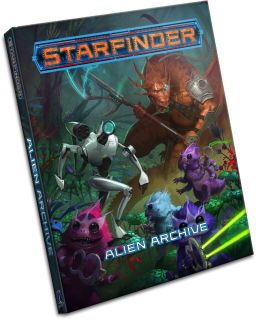

Though writers are notoriously not always the best parents, I’m a Good Dad right now. I got us a preview copy of the forthcoming Starfinder Alien Archive — it’s due out October 18th.
Kurtzhau, my 13 year old son who’s currently GMing the game for his mates, rates it as “Awesome.”
I concur.
80+ new aliens (depends on how you count), 20 playable races (some delightfully nuts ), lots of alien tech, each entry a rich adventure seed in its own right and rules for building your own NPC aliens.
Lovely illustrations. Good writing. And it’s got a sort of creative gravitas. Nothing here is throwaway.
Take the Void Hag.