Roar for Victory! The Godzilla ’14 Trailer Is Here and Life Is Good
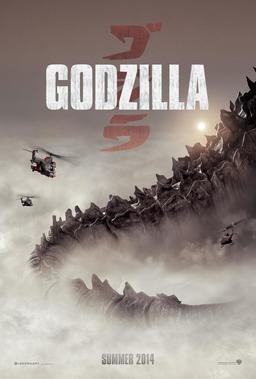 THE TRAILER IS HERE AND YOU SHOULD BE WATCHING IT.
You might not have noticed it, because I’ve only had a few opportunities to discuss it at Black Gate (here and here), but Godzilla is sort of a huge big damn bloody deal to me.
Well, Godzilla is just plain huge to anybody, especially if you are in its way.
That’s why I hovered over my keyboard today at 10 a.m., hands palsied, awaiting the premiere of the first teaser trailer for the new Hollywood Godzilla from director Gareth Edwards. And… when the camera at last found the great lengths of the Japanese leviathan looming through the rubble of its devastation, and the beast let loose the legendary roar… I also roared out loud with him at the top of my lungs.
I was at work, mind you. Some impulses cannot be stopped. We’re a loose workplace, fortunately. They expect weird actions from their writers.
There’s no need to describe the trailer further — you can behold it for yourself — except to say that using György Ligeti’s “Requiem for Soprano, Mezzo-Soprano, 2 Mixed Choirs and Orchestra” for the HALO-drop opening is perfect. This music is best known for its use as the “monolith theme” in 2001: A Space Odyssey, and is anything more monolithic than Godzilla? (As a hardcore Stanley Kubrick fan as well, this slammed my geek-meter up to “Do Not Pull This Lever Again.”)
Although the trailer leaves many open questions, as any early teaser trailer should (will Walter White have to move the cook now that a monster has stomped it?), it does show that Gareth Edwards and company have created a genuine interpretation of the figure of Godzilla.
This is crucial: there are many different Godzilla interpretations since the beast first crashed onto Japanese screens in 1954. Godzilla has served as a nuclear metaphor, a force of nature, a butt-kicking anti-hero, a child friendly superhero, and a near-demonic force. All of these are legitimate interpretations of Godzilla, who can absorb many concepts and channel many human emotions. I prefer some versions to others, but as a dedicated G-fan, I can find some enjoyment in all of them.

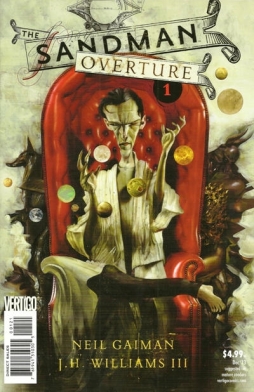 Late last October, the first issue of Sandman: Overture reached comic store shelves. The start of a new bimonthly six-part story, with art by J.H. Williams III, it’s a prologue to writer Neil Gaiman’s widely-acclaimed Sandman series, which ran for 75 issues (plus a special, some spin-off miniseries, a novella, and a collection of short comics stories) from 1988 to 1996. The series built in popularity as it went on and seems to have continued to find an audience in the years since its conclusion. It’s sustained a level of commercial appeal — perhaps as much as any single comic series, it helped to create the contemporary market for trade paperbacks — while also drawing critical praise, both inside and outside of comics. Issues or storylines of the main series were repeatedly nominated for the British Fantasy Awards, and once for the Stoker, while one issue won the 1991 World Fantasy Award.