Sherlock Holmes Tiptoes into the Public Domain
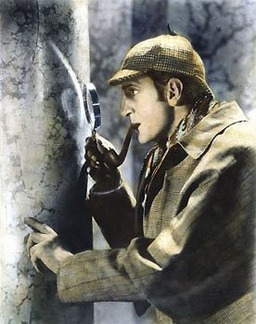 An American judge has ruled that Sherlock Holmes is in the Public Domain.
Say what? If you’re like me, you’ve had some trouble wrapping your head around the fact that Arthur Conan Doyle’s famous detective wasn’t already in the public domain. His first appearance, in the short novel A Study in Scarlet, was in 1887, and he appeared in a total of four novels and 56 short stories between then and 1927. To my mind that’s the pre-pulp era, roughly contemporary with the Old Testament and the Dead Sea Scrolls.
Let’s review. If most of Robert E. Howard Conan tales, published between 1932 -1936, are in the public domain — and in fact, virtually all literary works published before January 1, 1923 are no longer covered by United States copyright law — what’s the deal with Sherlock Holmes?
Well. Near as I understand it, the Conan Doyle Estate bases their claim on the fact that the last Holmes story was published in 1927, and the characters of Sherlock Holmes, Dr. Watson, Irene Adler, etc. were not truly completed until then. The Estate has challenged any production that tried to make use of the characters — and indeed, popular TV series like the BBC’s Sherlock, and CBS’s Elementary, have paid a license.
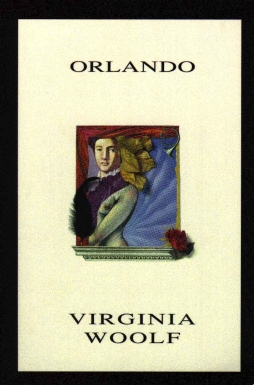 For some years now I’ve been wanting to reread Virginia Woolf’s Orlando. I first read the book about twenty years ago, and though I enjoyed it I came away confused. I felt as though on some level I really hadn’t understood the book. As though I hadn’t grasped how to read it. So, time having passed and me having (maybe) come to understand a bit more about books and reading, I sat down with Orlando again. And, as I’d hoped, I enjoyed it more thoroughly this time around, and felt as though I’d understood it a little better than I had. What surprised me was the reason for that understanding. I felt as though I’d worked out how to approach the book not because of any greater knowledge of modernism, or even because I’d read other books by Woolf, but because I now had a greater experience of early fantasy. More than I’d remembered or understood when I first read the book, Orlando is of a piece with the fantastic fiction of its time.