Browsed by
Category: Vintage Treasures

Ghosts, Strange Science, and Trains That Vanish: The Tales of Arthur Conan Doyle

Ghosts, Strange Science, and Trains That Vanish: The Tales of Arthur Conan Doyle

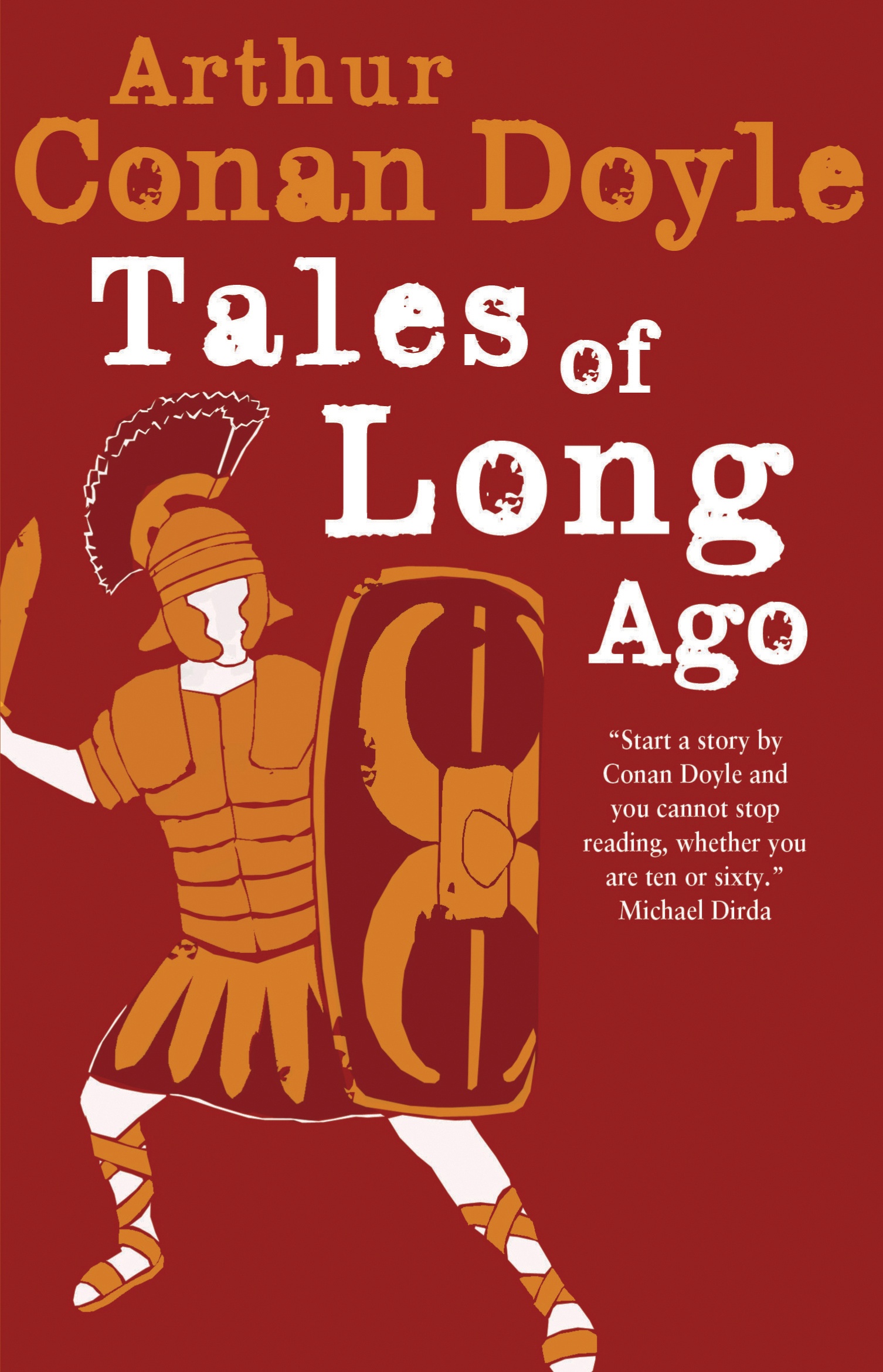
Tales of Twilight and the Unseen Arthur Conan Doyle-small Tales of Terror and Mystery Arthur Conan Doyle-small Tales of Long Ago Arthur Conan Doyle-small Tales of Adventures and Medical Life Arthur Conan Doyle-small

We bow to no one in our appreciation of Arthur Conan Doyle here at Black Gate. Bob Byrne’s long-running Monday column The Public Life of Sherlock Holmes explored all facets of the career of his most famous creation, and over the years William Patrick Maynard, Mark Rigney, Ryan Harvey and other folks have written here about Doyle’s work and its many adaptations.

But Doyle made many contributions to the fantasy, detective and horror genres during his long career, and over the decades his work has been reprinted in numerous anthologies like Horrors in Hiding (1973), Famous Fantastic Mysteries (1991), Ancient Egyptian Supernatural Tales (2016), and many others. From 2014-2015 British publisher Alma Classics gathered dozens of his tales into four collections, all of which are still available, and all of which are worth tracking down.

Read More Read More

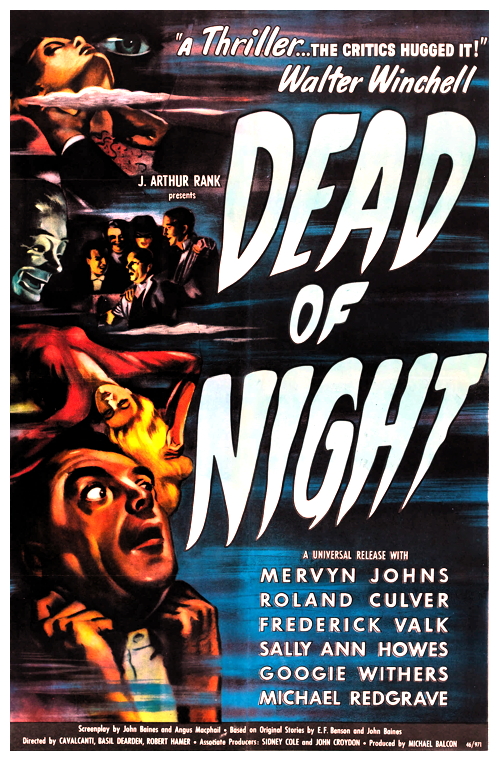
Three Fifths of a Great Horror Movie: Dead of Night

Three Fifths of a Great Horror Movie: Dead of Night

Dead of Night Poster

Well kiddies, it’s October and we’re now well launched into what John Keats called the season of mists and mellow fruitfulness and AMC calls Monsterfest Month. There’s no reason it can’t be both, is there? The whole point, you see, regardless of whether the weather is misty or not, is to read as many horror stories and watch as many horror movies as you can before midnight on the 31st while still holding onto your job (to say nothing of your marriage or other significant relationships).

The stories are no problem — as Black Gaters in good standing, I’m sure you all have shelves that are sagging under the weight of countless horror anthologies, so chilling choices abound. The movies pose a different problem, however. While you can read a good story in twenty or thirty minutes, a movie requires a commitment of an hour and a half or more. So at this overbusy time of year, why not increase your fright efficiency and watch a movie that gives you three, four, or five stories in one sitting?

Horror anthology movies used to be quite common. American International Pictures did some in the early sixties featuring Vincent Price (of course — I think AIP must have had the poor man chained in the basement) — 1962’s Tales of Terror (Poe stories, because studios like nothing so much as an out of copyright author) and 1963’s Twice Told Tales (this time Nathaniel Hawthorne was the writer receiving no royalties), and Amicus Productions (a kind of poor man’s Hammer, if you can imagine such a thing) specialized in them in the late sixties and early seventies, cranking out Dr. Terror’s House of Horrors (1965), Torture Garden (1967), The House that Dripped Blood (1970), Tales from the Crypt (1972), Asylum (1972), and The Vault of Horror (1973). You don’t see this kind of film so much anymore, though their memory is kept alive by the umpteenth yearly iteration of The Simpson’s Treehouse of Horror.

Read More Read More

Fantastic Stories of Imagination, January and February 1964: A Retro-Review

Fantastic Stories of Imagination, January and February 1964: A Retro-Review

Fantastic Stories of Imagination January 1964-small Fantastic Stories of Imagination February 1964-small

These issues are significant in that they include the serialization of a Fafhrd and the Gray Mouser novella — but not just any novella: this includes the first and nearly only contribution to the series from Leiber’s original collaborator, and supposed model for the Mouser, Harry Fischer.

Each cover is by Ed Emshwiller, and they both illustrate the serial. The interiors in January are by Emsh, Lutjens (first name perhaps Peter?), Dan Adkins, Lee Brown Coye, and Virgil Finlay. In February they are from the same folks except for Coye.

The editorials concern, in January, Harry Fischer’s role in the creation of Fafhrd and the Grey Mouser, and in February, serious research in both the US and the Soviet Union into telepathy. There is a brief book review column in January, by S. E. Cotts, in which she praises Shirley Jackson’s The Sundial very highly, and is somewhat more reserved on R. DeWitt Miller’s Stranger Than Life, one of those books about “unexplainable events.” The February issue includes a lettercol, According to You, with letters from Bill Wolfenbarger (praise for Schomburg, and for the more horrific side of fantasy), E. E. Evers (much disdain for the November 1961 issue, even for the Le Guin story), and Norman Masters (hated Sharkey’s “The Aftertime,” likes Le Guin).

Read More Read More

Old School Steampunk: Reading The Steam Man of the Plains (1883)

Old School Steampunk: Reading The Steam Man of the Plains (1883)

39088017896721_0001_edit

In the days before television, movies, or even pulp magazines, readers who wanted exciting fantastic fare read dime novels. This style of popular literature lasted from about 1860 to 1930, before the pulps finally killed them off. In those 70 years, countless series and titles were published — mysteries, Westerns, historical dramas, romances, and even steampunk.

Yes, steampunk goes right back to the age of steam. I recently read one of the most popular titles, the 1883 edition of The Steam Man of the Plains, published by the Five Cent Wide-Awake Library, a series directed specifically at adolescent boys. You can read it online at Northern Illinois University’s excellent online collection of dime novels.

Warning: spoilers follow!

Read More Read More

Tempus Takes Manhattan: Janet and Chris Morris’ Tempus Unbound

Tempus Takes Manhattan: Janet and Chris Morris’ Tempus Unbound

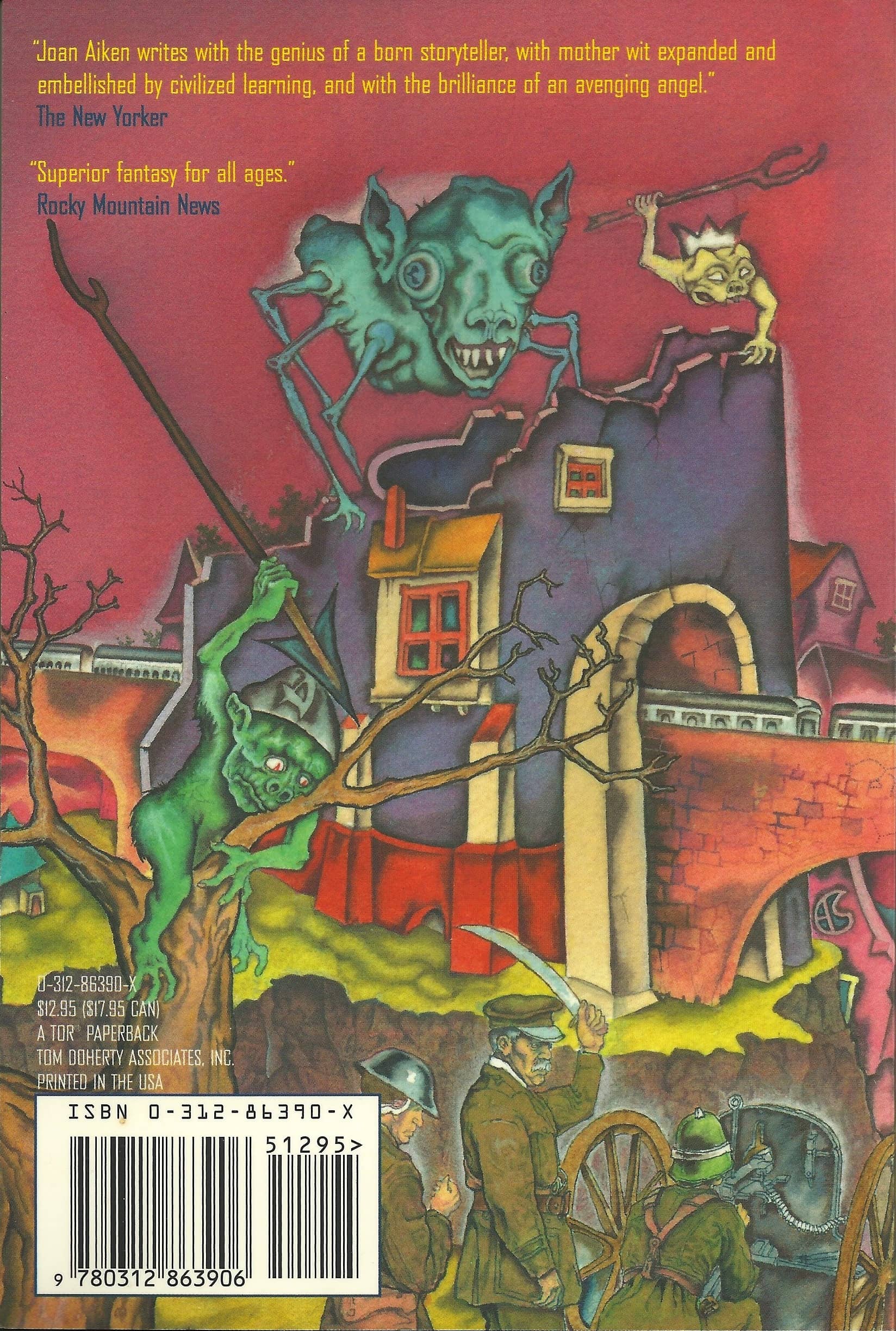
Tempus Unbound-small Tempus Unbound-back-small

“Was this the Lemuria of antiquity, or that of times to come? Once you’d ridden the storm clouds of heaven from the edge of time, anything was possible.”

Few are the writers who can successfully take their characters out of their “ancient setting” and transplant them in a story set in modern and even futuristic times, fighting numinous enemies, inimical foes and a capricious and dangerous theomachy. In my opinion, Janet and Chris Morris have brilliantly achieved just that with Tempus Unbound. This novel takes place after the events in City on the Edge of Time, and before those of Storm Seed, and it’s quite a departure from the other novels in starring Tempus the Black, Niko, Strat and the other warriors of The Sacred Band. It’s also quite a wild ride — an adventure that never lets you pause for breath.

The story begins after Tempus leaves the City at the Edge of Time and heads for Lemuria. But is this the Lemuria before or after the Fall of Man? Is it the Past or is it the Future? As events later play out in the novel, we find that out. Tempus is on a quest to find Cime, the Mage Killer who may or may not be his sister, who was forced into a marriage to Askelon, the Lord of Dreams. Cime has gone missing from Meridian, Askelon’s dream realm, and Tempus rides to Lemuria looking to find her. He suspects she’s gone after some mage who needs killing, and hopes she has her magical diamond rods with her, for without them she’s powerless.

Read More Read More

A Mutiny in Space, and an Emperor of the Stars: High Adventure #153: Classic Stories from Wonder Stories

A Mutiny in Space, and an Emperor of the Stars: High Adventure #153: Classic Stories from Wonder Stories

Hig Adventure 153-small Hig Adventure 153-back-small

I began collecting pulp magazines in my early teens. Back then I wasn’t too concerned about condition or rarity… I just wanted to read them. Books like Jacques Sadoul’s 2000 A.D. Illustrations From the Golden Age of Science Fiction Pulps and Asimov’s Before the Golden Age ignited an intense curiosity about these early science fiction tales of alien invasions, space explorers, killer robots, and scientists with labs that would make Reed Richards green wth envy.

Pulps were hard to find in those pre-eBay days, and mostly I had to make do with tattered anthologies. I would have appreciated a magazine like High Adventure very much at the time, let me tell you. The magazine reprints about a half-dozen short stories and novelettes from the pulps in each themed issue; the reprints are facsimiles shot right from the original pages, with art, ads, and all. The theme for issue #143 is Classic Stories from Wonder Tales, and it contains hard-to-find fiction by Manly Wade Wellman, Clark Ashton Smith, Nathan Schachner and Arthur L. Zagat, Gawain Edwards, and R.F. Starzl.

Read More Read More

Invasion Fleets and Rogue Stars: Rich Horton on Who Speaks of Conquest by Lan Wright & The Earth in Peril, edited by Donald A. Wollheim

Invasion Fleets and Rogue Stars: Rich Horton on Who Speaks of Conquest by Lan Wright & The Earth in Peril, edited by Donald A. Wollheim

Who Speaks of Conquest-small The Earth in Peril-small

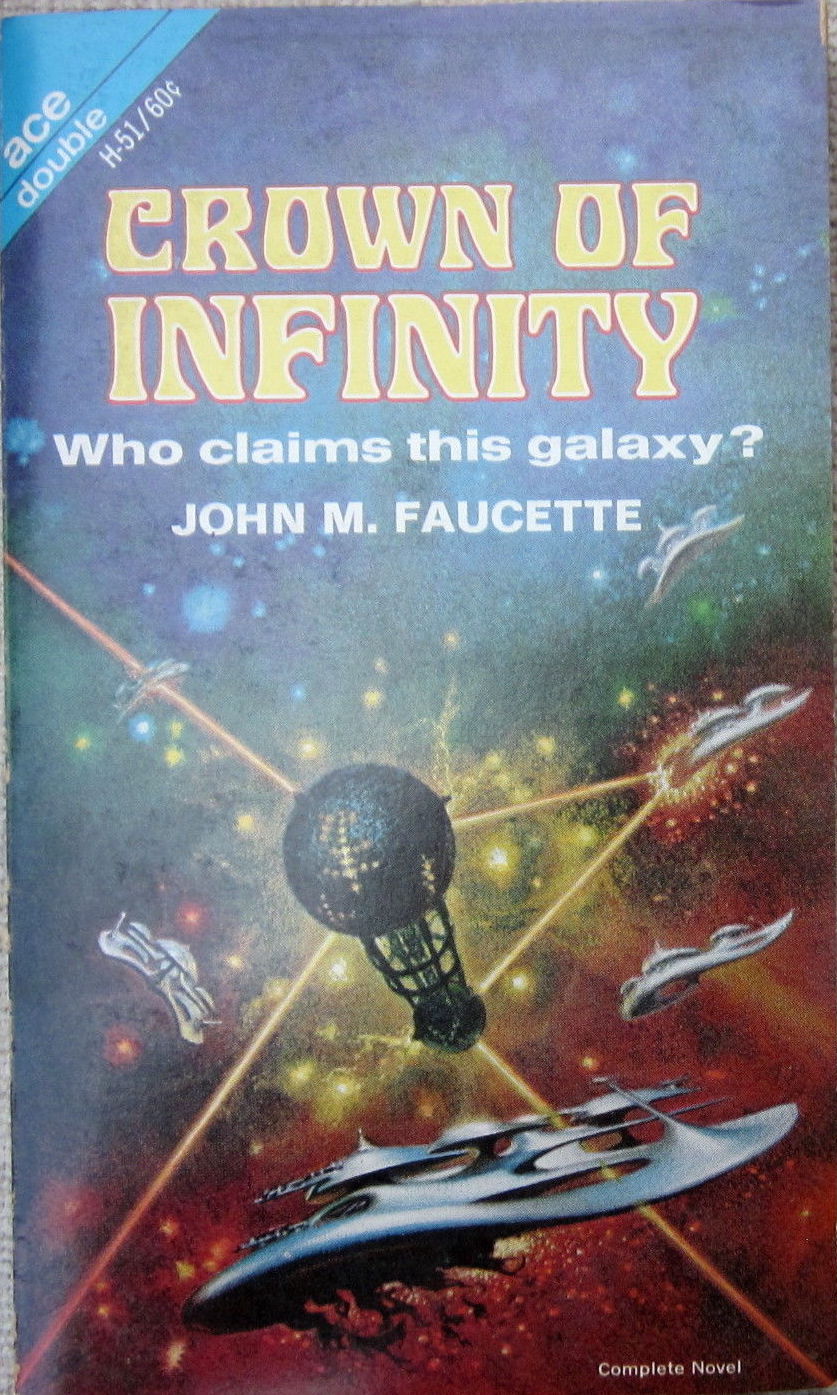
Over at his website Strange at Ecbatan, Rich Horton continues his survey of the Ace Double line of 50s science fiction novels with Who Speaks of Conquest by Lan Wright, paired with the anthology The Earth in Peril, edited by Donald A. Wollheim. It was originally published in 1957. Here’s Rich on the Wright novel.

The first Terran starship lands at Sirius (why they didn’t go to Alpha Centauri first is never explained — it turns out to be inhabited, so it can’t be for lack of planets). There they find a welcoming committee, from an intelligent race that has colonized these planets. They learn that the entire Galaxy is under the rule of the Rihnans, apparently a mostly benign rule, but an unquestioned one. Humans are expected to meekly accept their position. Of course, they don’t, and soon an invasion fleet is dispatched from Alpha Centauri. But to the invaders’ surprise, the plucky humans decide to fight back, and moreover they have been able to develop some surprisingly good tech, and the humans win.

The Rihnans don’t take that lying down, and begin plans for a much bigger fleet to suppress Terra. But the humans have their own ideas, and they decide to take the fight to the rest of the Galaxy…

The flip side is a little more interesting from my perspective — an anthology of tales focused on the invasion of Earth, edited by the founding editor of Ace, Donald A. Wollheim himself. The Earth in Peril contains short stories by Murray Leinster, A. E. van Vogt, C. M. Kornbluth, Edmond Hamilton, Bryce Walton, and H. G. Wells.

Read More Read More

Vintage Treasures: The Sword of Winter by Marta Randall

Vintage Treasures: The Sword of Winter by Marta Randall

The Sword of Winter-back-small The Sword of Winter-small

Marta Randall is best known for her science fiction. That’s definitely how I knew about her, anyway — through SF epics like Journey (1978) and Dangerous Games (1980), and her Nebula-nominated Islands (1976). So I was surprised to come across a paperback copy of The Sword of Winter, her sole fantasy novel, published by Pocket Books in 1985. It didn’t get a lot of attention, even back in 1985 — the only review I could find was this one at Kirkus:

In the frigid winter, vile dictator lord Gambin lies at Jentesi castle dying slowly and painfully, while foolishly refusing to name his successor lest a power struggle ensue. So when bad-tempered protagonist Lyeth, Gambin’s sworn Rider (messenger), dutifully arrives with prickly orphan Emris in tow, she’s soon drawn into the confused spying, plotting, and squabbling of the repellent heirs — Culdyn, Coreon, Maranta, and Syne. Much later, the Riders’ guildmaster is murdered, putting Lyeth in danger and obliging her to investigate…

In addition to her highly acclaimed novels Randall also made a name for herself as an editor, particularly with the New Dimensions series (including the mysterious Volume 13, which never reached bookstores.)

The Sword of Winter was published in hardcover by Timescape in September 1983, and reprinted in paperback by Pocket Books in April 1985. It is 273 pages, priced at $3.50 in paperback. The cover is by Rowena Morrill. There is no digital edition, and it has been out of print for over 30 years.

Future Treasures: John Silence–Physician Extraordinary / The Wave by Algernon Blackwood

Future Treasures: John Silence–Physician Extraordinary / The Wave by Algernon Blackwood

John Silence Physician Extraordinary - The Wave-back-small John Silence Physician Extraordinary - The Wave-small

I’ve heard a lot of praise heaped on Algernon Blackwood’s 1908 collection John Silence–Physician Extraordinary over the years. In his review of Blackwood’s 1914 collection Incredible Adventures, Ryan Harvey wrote:

Of all the practitioners of the classic “weird tale,” which flourished in the early twentieth century before morphing into the more easily discerned genres of fantasy and horror, none entrances me more than Algernon Blackwood. Looking at the stable of the foundational authors of horror — luminaries like Poe, James, le Fanu, Machen, Lovecraft — it is Blackwood who has the strongest effect on me. Of all his lofty company, he is the one who seems to achieve the most numinous “weird” of all…

In my view, Blackwood achieved his finest work in his earlier collections The Listener and Other Stories (1907), John Silence — Physician Extraordinary (1908), and The Lost Valley and Other Stories (1910), where he combined his weird adventures with aspects of horror and fear. These earlier classics are supernatural horror, but are also superb works of mood.

Josh Reynolds discussed the collection in detail as part of his occult detective series The Nightmare Men here at Black Gate.

Read More Read More

Vintage Treasures: Ghosts and Grisly Things by Ramsey Campbell

Vintage Treasures: Ghosts and Grisly Things by Ramsey Campbell

Weird Tales Summer 1991-small Dark Love-small Dark Terrors 2 The Gollancz Book of Horror-small
Fantasy Tales Summer 1985-small Night Visions 3-small Narrow Houses-small

We’re on the cusp of October, and you know what that means. Goth Chick will decorate the entire office with candles, pumpkins, and shrunken heads, and we’re about to get deluged with a fresh crop of horror books. It’s pretty exciting actually, and many of us look forward to this time of year (in addition to Goth Chick and her band of terrified interns, I mean). So to help kick off the season, I thought I’d showcase a classic horror collection as my latest Vintage Treasure.

Have a look at the assortment of magazines and anthologies above, and see if you notice a recurring theme. It’s not too hard to spot… the name Ramsey Campbell was ubiquitous in the market throughout the 70s, 80s and 90s, and for good reason. He’s one of the most accomplished horror writers in the business, and his name has graced many a magazine cover and Table of Contents. Campbell produced some 18 collections between 1964 and 2015, and the 80s and 90s were his most productive decades. The stories which appeared in the above volumes, and nearly a dozen more, were reprinted in Ghosts and Grisly Things, a collection from Pumpkin Books (UK, 1998) and Tor Books (US, 2000).

Read More Read More