Browsed by
Category: Magazines

The July Fantasy Magazine Rack

The July Fantasy Magazine Rack

Analog-Science-Fiction-July-August-2016-rack Blind-Spot-1-rack Interzone-264-rack TIn-House-68-Summer-2016-rack
Clarkesworld-118-rack Fantasy-and-Science-Fiction-July-August-2016-rack The-Destroyer-Tara-Isabella-Burton-rack Swords and Sorcery May 2016-rack

We had several significant firsts in the front half of July. We celebrated the launch of a brand new magazine, Blind Spot, edited by Julien Wacquez and René-Marc Dolhen and dedicated to bringing the best of French SF to English audiences. And just as monumental for me personally, Sean McLachlan covered issue #280 of Strategy and Tactics, perhaps the greatest wargaming magazine of all time. And Matthew David Surridge took a fond look back at Xignals, Waldenbooks’ in-house SF magazine in the late 80s and 90s.

We had plenty for vintage magazine fans this month, too — including a look at The Strange and Happy Life of The Astounding Science Fiction Anthology, and Rich Horton’s Retro Review of the April 1951 Thrilling Wonder Stories.

Check out all the details on the magazines above by clicking on the each of the images. Our Late June Fantasy Magazine Rack is here.

Read More Read More
July/August Magazine of Fantasy & Science Fiction Now on Sale

July/August Magazine of Fantasy & Science Fiction Now on Sale

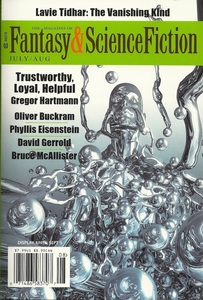
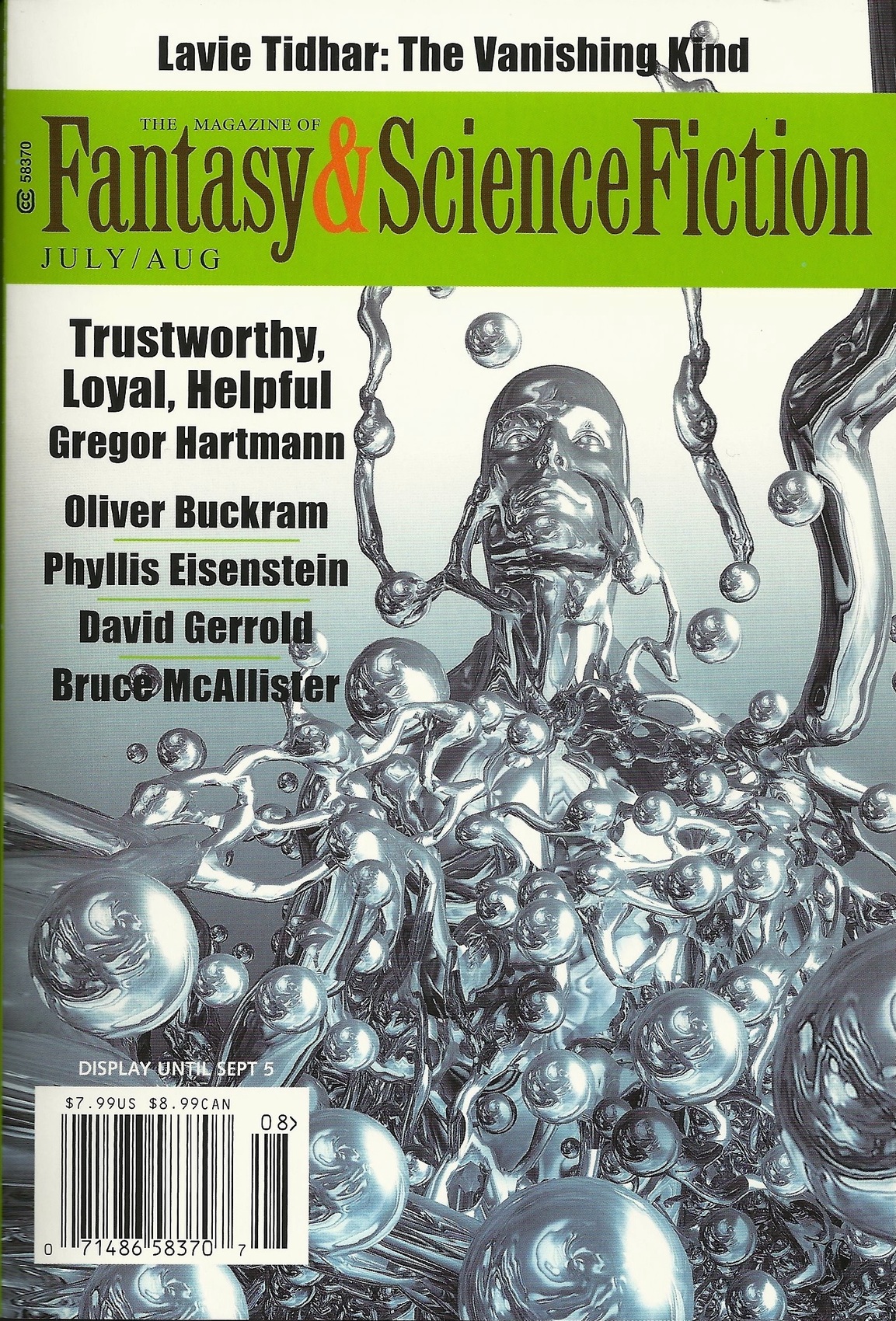
Fantasy and Science Fiction July August 2016-smallThere’s plenty to like in the latest issue of Fantasy & Science Fiction — including a new Alaric story by Phyllis Eisenstein, and short stories by Dominica Phetteplace, Bruce McAllister, and others. Tangent Online‘s Nicky Magas has particular praise for two of its longest tales, including a new novella by Lavie Tidhar, in his online review.

Gunther Sloam is a romantic in a world with no more heart for romance in Lavie Tidhar’s alternate history, “The Vanishing Kind.” When he receives a desperate message from Ulla, an old fling, that reminds him of the old sort of films that he himself used to write, Gunther travels to a post World War II ravaged London in which the Nazi’s have won, thinking of nothing more than rekindling an old flame. But when he arrives he finds Ulla conspicuously vanished, the Gestapo nipping at his heels, and a mysterious dwarf pulling an unknown number of strings from the sidelines. Gunther is far from the lead in a romantic motion picture and reality is a lot colder and meaner than he is prepared to accept.

“The Vanishing Kind” is an interesting mix of noir and alternate history. True to the noir genre, none of the characters are who they appear to be, and the mystery keeps spiraling deeper into the hole and all the while the reader is begging Gunther to just get on the transport and go home. But of course he must uncover each intricately connected layer of his missing paramour and the readers follow his every footstep with nail-biting anticipation.

Here he is on David Gerrold’s novelette “The Thing on the Shelf,” which features a horror writer who’s been nominated for the coveted Stoker Award.

Some things are better left alone. In “The Thing on the Shelf” by David Gerrold, that thing is a Stoker Award. To anyone outside of the horror community, the award is an honor, a mark of prestige. But for those who live and breathe horror, the Stoker — the creepy little stylized haunted mansion with its open and closed door — represents something else. It’s a heavy cross to bear, but someone must do it to keep that distinctly horrific, ominous presence from accumulating in too great an amount in one place.

“The Thing on the Shelf” is a long piece, filed with tangents, and tangents within tangents, and a Lovecraftian antagonist that is never fully explained or revealed. The protagonist is the author himself relaying the events of the horror convention, his subsequent win of the award, and the strange events that occur afterward. The story thus has one foot in reality and one foot outside of it. It is difficult to wade through all the ramblings that seem to have no connection to the heart of the story, but in the end the author assures readers that they all share a connection — if readers are able to find it.

The cover is by Mondolithic Studios (who also did the cover for Black Gate 8) for “Trustworthy, Loyal, Helpful.”

Here’s the complete Table of Contents.

Read More Read More
The Strange and Happy Life of The Astounding Science Fiction Anthology

The Strange and Happy Life of The Astounding Science Fiction Anthology

The Astounding Science Fiction Anthology Berkley 1967-small Astounding Tales of Space and Time Berkley 1967-small

The lifecycle of a modern anthology ain’t that complicated. It comes out in hardcover or trade paperback from a small press, stays in print for 5-6 years or so — or until the small press suffers a horrible death, whichever comes first — and then vanishes, popping up thereafter only on eBay and at SF conventions, like a Star Trek action figure.

It didn’t always used to be this way. Used to be that anthologies would appear originally in hardcover, just like real books, and then get reprinted in paperback (also, just like real books). And sometimes those paperbacks would get multiple editions over the decades. (No, I’m not joking. And yes, I know we’re talking about anthologies.)

But go back father than that, to the beginnings of American publishing itself — scholars of this dark and mysterious period are conflicted about actual dates, but in general we’re talking about the 1940s and 50s — and we enter a time when paperbacks had a fixed upper page limit. So how did these primitive cave-dwelling publishers reprint popular volumes, like for example John Campbell’s 600-page beast The Astounding Science Fiction Anthology (Simon & Schuster, 1952), when the typical paperback of the era contained barely 100 pages?

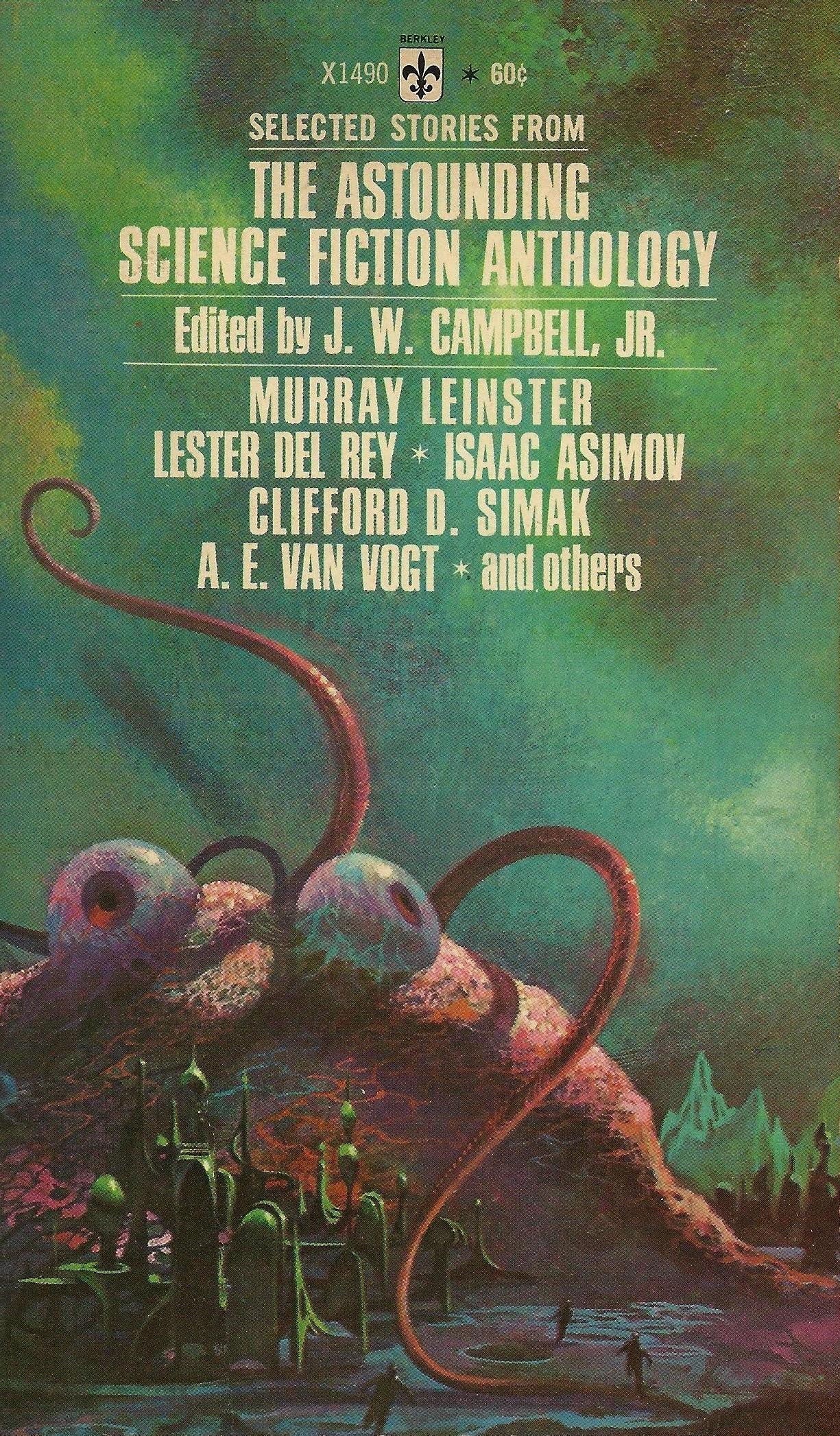
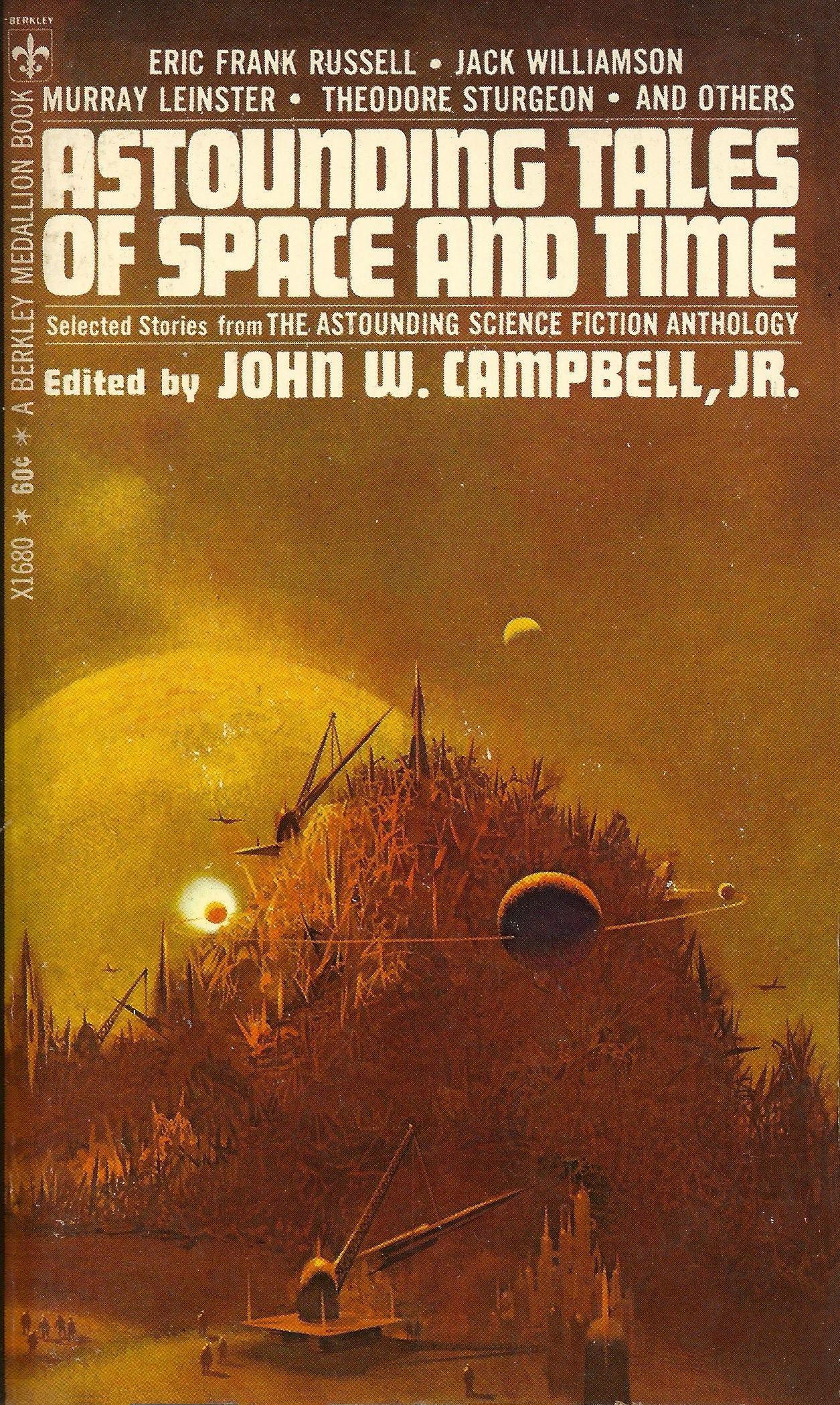
No easy task, but our intrepid publishing forefathers found a way. They broke the book up into two volumes and, because giving them similar names would have been just too easy, gave the paperback editions completely different titles. Thus the groundbreaking hardcover edition of The Astounding Science Fiction Anthology spawned two paperbacks: The Astounding Science Fiction Anthology  and Astounding Tales of Space and Time, both of which remained in print in various editions for years, confusing collectors like yours truly for decades. Let’s have a closer look, because I ended up buying all seven of the damn things before I figured out they were all the same book, and they might as well be useful for something.

Read More Read More

Teaching History through Wargaming: Strategy & Tactics #280: Soldiers 1918

Teaching History through Wargaming: Strategy & Tactics #280: Soldiers 1918

ST280-2I’ve been a history buff all my life, and this interest led me to a career as an archaeologist before becoming a writer specializing in history and historical fiction. Thus it’s not surprising that I want my ten-year-old son to have a firm grounding of history, even though he takes more after his astronomer mother and will almost certainly go into one of the STEM fields.

One of my main interests is World War One, so when I visited Belgium a couple of years ago for the centenary I brought him back some Belgian comics on the conflict. Now we’re watching the excellent Channel Four series The First World War. I’m also vocally hoping he’ll read my Trench Raiders series, so far with no luck! I’ve been pushing this particular era of history because we live in Madrid. Since Spain wisely stayed out of the war, I don’t think the Spanish educational system will teach him as much about WWI as I think he should know.

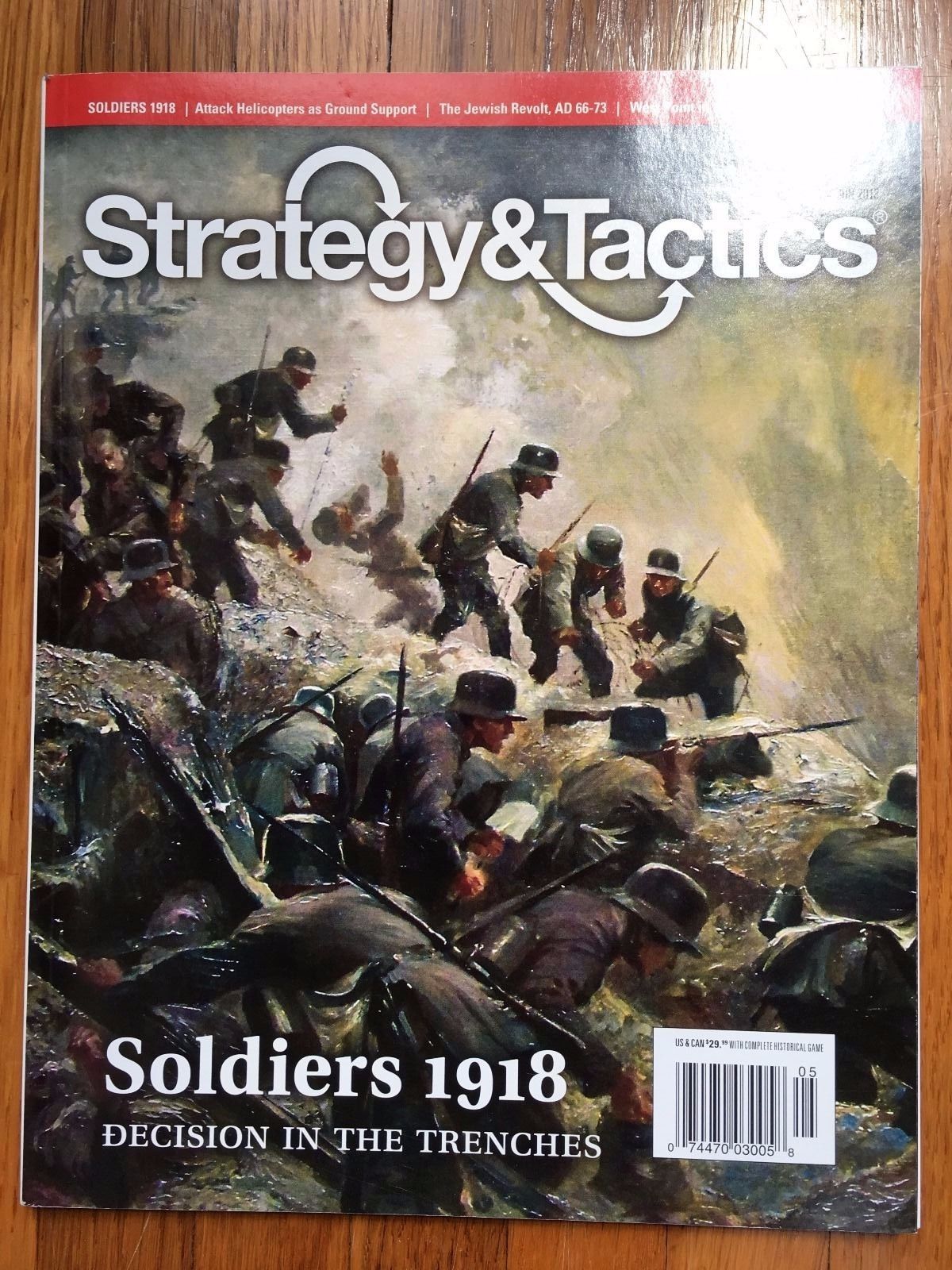
So why not add a little extra knowledge through wargaming? He’s been expressing an interest in it lately since his favorite comics shop has some wargaming tables, so I invested in issue #280 of Strategy & Tactics, a classic wargaming magazine that’s older than I am. This issue comes with the game Soldiers 1918: Decision in the Trenches, which one BoardGameGeek labeled as “medium light” in difficulty.

Read More Read More

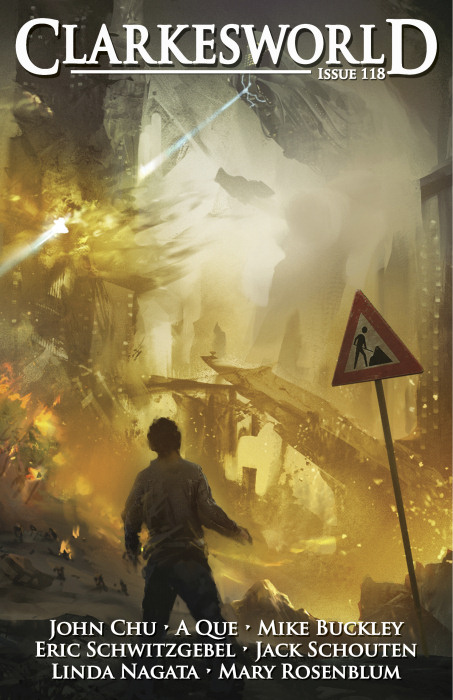
Clarkesworld 118 Now Available

Clarkesworld 118 Now Available

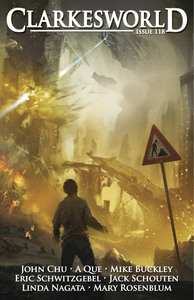
Clarkesworld 118-smallClarkesworld #118 has five new stories by Mike Buckley, Eric Schwitzgebel, John Chu, Jack Schouten, and A Que, and two reprints by Linda Nagata and Mary Rosenblum.

Short stories featured this issue are:

Helio Music” by Mike Buckley
Fish Dance” by Eric Schwitzgebel
The Sentry Branch Predictor Spec: A Fairy Tale” by John Chu
Sephine and the Leviathan” by Jack Schouten
Against the Stream” by A Que
Nahiku West” by Linda Nagata (from Analog Science Fiction, October 2012)
Lion Walk” by Mary Rosenblum (from Asimov’s Science Fiction, January 2009)

The non-fiction is:

Paradise Lost: A History of Fantasy and the Otherworld by Christopher Mahon
Talkative Creatures and a Mesozoic Cocktail: A Conversation with Michael Swanwick by Chris Urie
Another Word: Burning Bridges by Peter Watts
Editor’s Desk: What is it with Readercon? by Neil Clarke

Read More Read More

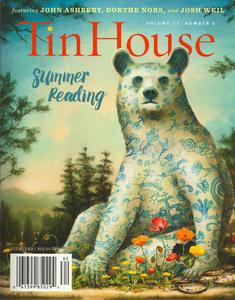
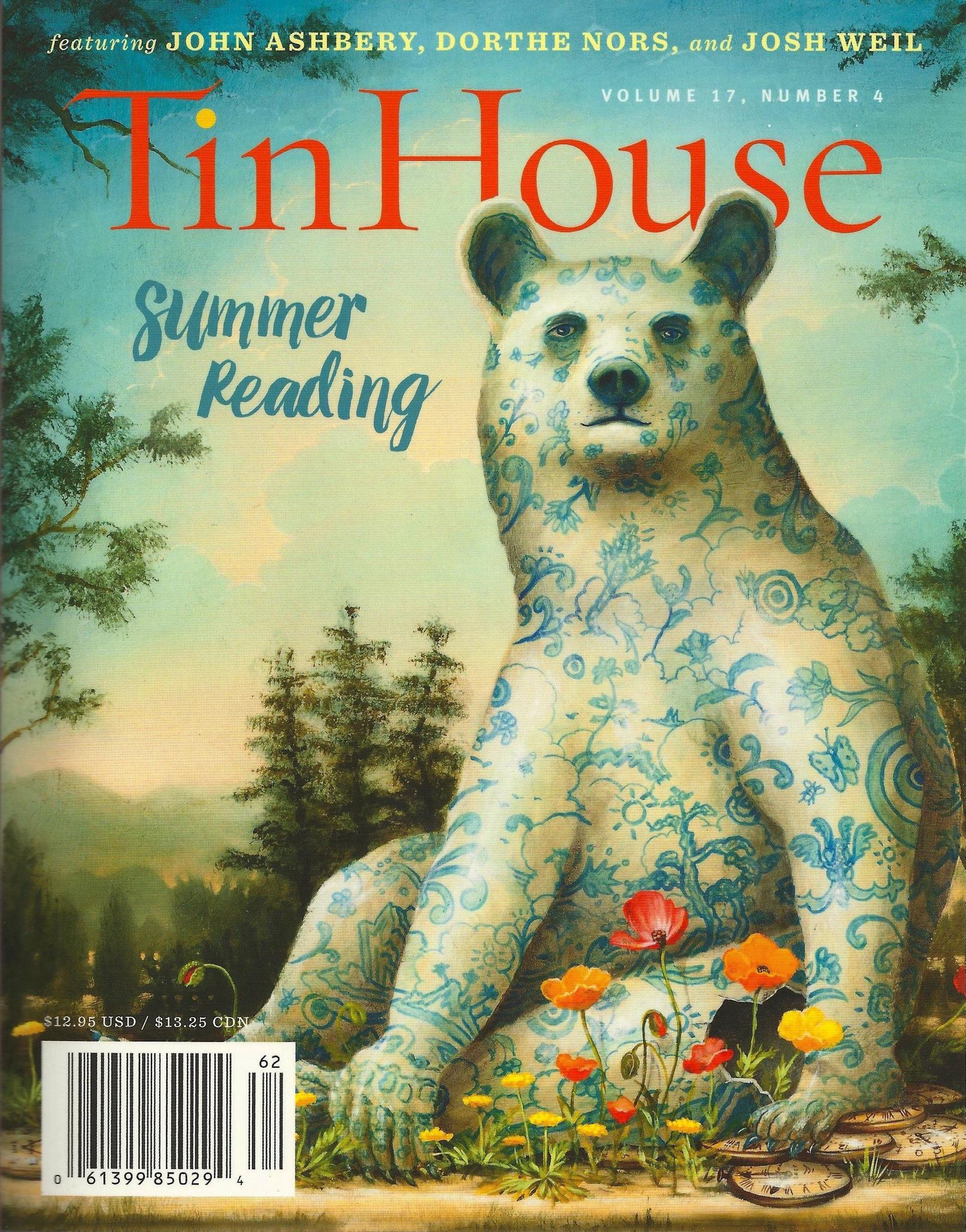
Tin House 64, the Summer Reading Issue, Now Available

Tin House 64, the Summer Reading Issue, Now Available

TIn House 68 Summer 2016-small TIn House 68 Summer 2016-back-small

Tin House is an American literary magazine, showcasing fiction and poetry from new and established writers. The magazine was founded in 1999, and has published fiction by Stephen King, Kelly Link, Jonathan Lethem, David Foster Wallace, and many others. The 2016 Summer Reading issue is huge — 224 pages — and filled with fiction. There are 11 stories, including five in translation, and an excerpt from the dark environmental thriller Marrow Island by Alexis M. Smith.

In his Editor’s Note, Rob Spillman gives us a sneak peek at the contents.

Booksellers like the ones I met in Denver challenge us to keep seeking out the most exciting and thoughtful work by new and established writers from all over the world, and because of them we’re confident there is an audience for their work. In this issue we’re proud to bring you five fabulous translations, among them Dorthe Nors’s “By Sydvest Station,” translated from the Danish by Misha Hoekstra, and Jean-Philippe Toussaint’s “The Dress of Honey,” translated from the French by Edward Gauvin. Alexis M. Smith’s debut novel, Glaciers, was an indie sensation, and here we feature an excerpt from her follow-up, Marrow Island. Smith is joined by other indie darlings, Deb Olin Unferth, Josh Weil, and Saša Stanišic, as well as esteemed poets Dorianne Laux and John Ashbery, who return to our pages. We’re also happy to welcome new-to-us poets Anna Journey and Sam Riviere.

Here’s a look at the complete Table of Contents.

Read More Read More

Check Out the Latest Fantasy Fiction at Tor.com

Check Out the Latest Fantasy Fiction at Tor.com

Terminal Lavie Tidhar-small Dune Time Jack Nicholls-small The Destroyer Tara Isabella Burton-small

Yeah, I’m still getting caught up, so it’s not really the latest fiction at Tor.com. But I’ve made it into April, so that’s progress!

Anyway, here’s a fine new batch of fantasy and adventure SF short fiction from Michael R. Underwood, Joan Aiken, Lavie Tidhar, Jack Nicholls, and Tara Isabella Burton, all available for free at Tor.com.

The Destroyer” by Tara Isabella Burton
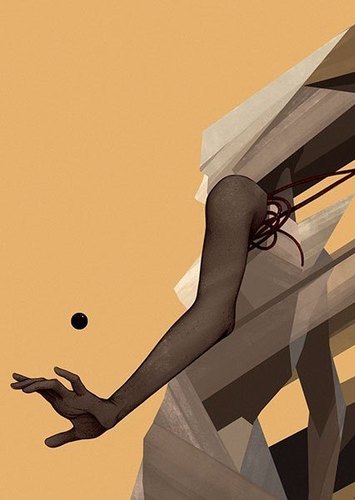
Posted April 20, edited by Ann VanderMeer. Art by Ashley Mackenzie (above right)
Fantasy, Science Fiction || In a futuristic, fascistic Rome, a brilliant, unstable scientist proves that she can transcend the human body’s limitations. The test subject? Her own daughter. A mother-daughter mad scientist story, “The Destroyer” asks how far we’ll go to secure our own legacies — and how far we’ll run to escape them.

Dune Time” by Jack Nicholls
Posted April 19, edited by David Hartwell. Art by Mark Smith (above middle)
Contemporary Fantasy, Magical Realism || Isolated in the desert with his brother, Hasan learns that there is more to the legends of the dunes than he initially believed.

Read More Read More

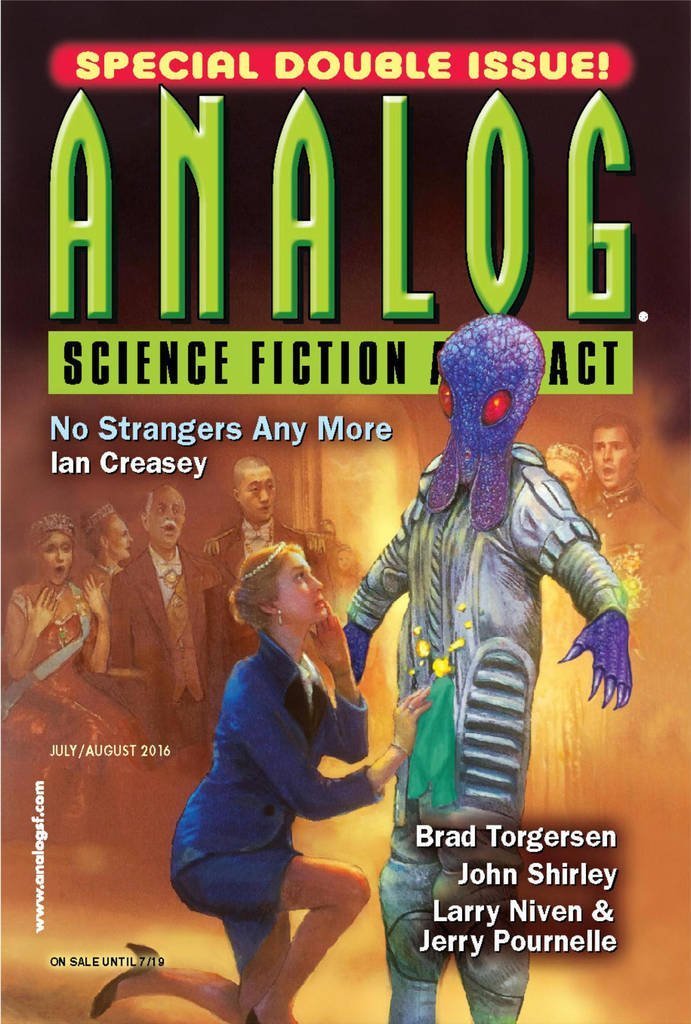
July/August 2016 Analog Now on Sale

July/August 2016 Analog Now on Sale

Analog Science Fiction July August 2016-smallI love these big double issues of Analog. Chiefly because they have space for longer stories — and indeed, the latest double issue, July/August 2016, has two big novellas by Arlan Andrews, Sr. and Brad Torgersen.

In fact, this issue has several nice surprises, including fiction by Ian Creasey, John Shirley, Nick Wolven, and James Van Pelt — and a brand new short story by Larry Niven & Jerry Pournelle, “Story Night at the Stronghold.” On top of that, there’s a special feature by editor emeritus Stanley Schmidt, titled “THE END, or, Leaving the Reader Satisfied.” Here’s editor Trevor Quachri’s teaser for the issue on the Analog website.

O, the double issue! I sing your praises! What can’t you do? Present a lead story ab out a future where social media and augmented reality have converged with mixed results? Indeed, we have “No Strangers Any More,” by Ian Creasey.

Can you give us not one but two novellas? Yes! When you take a path, it necessarily means there are other paths you cannot go down, and when humanity as a whole goes down one path, well . . . you’ll see, in Brad R. Torgersen’s “Purytans.” We’ll also look in on the travels of Arlan Andrews’ Rist in “Fall.”

What of material by luminaries like John Shirley, or Larry Niven & Jerry Pournelle? Indubitably! In fact, there will be both! See “Cory for Coriolis” and “Story Night at the Stronghold” for proof that your eyes do not deceive you!

Perhaps more short pieces, fiction and nonfiction alike, from authors such as Nick Wolven, Stanley Schmidt, James Van Pelt, Elisabeth R. Adams, Andrew Barton, Sean Vivier, Christina De La Rocha, and Karl Bunker? I believe we can accommodate you there, yes.

And columns. Oh the columns. Never will you see columns such as these again . . . except perhaps in the issue that follows.

All that for roughly the price of a paperback! How can you go wrong?

Read More Read More

Noise About Xignals

Noise About Xignals

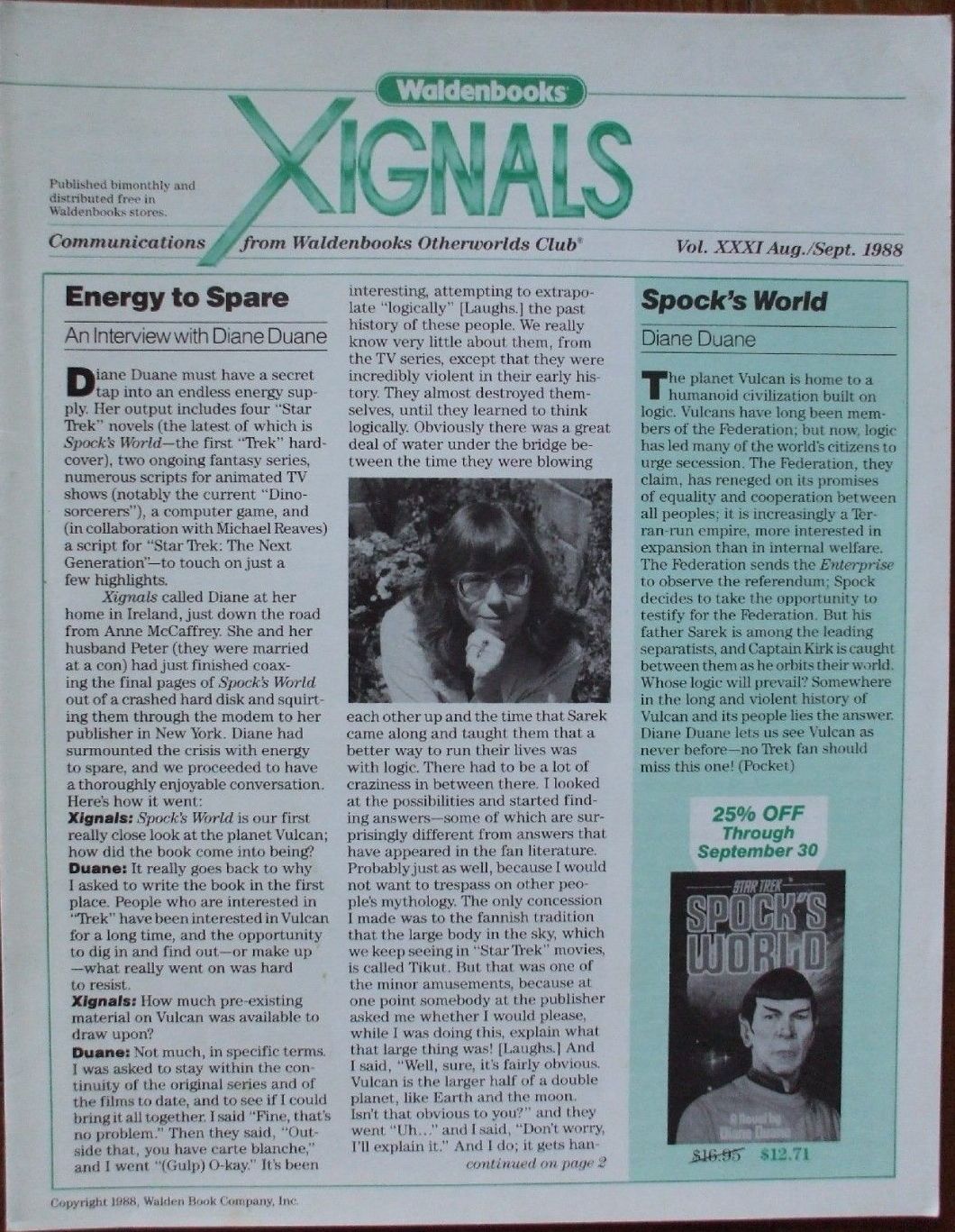
Xignals September 1988-smallI took a break from cutting the grass around the house. It was a hot day, and the chore always took a while. “Look what I found,” my aunt greeted me, as I went indoors and dropped into a chair. She’d been cleaning up, preparing to move into the cottage, and she’d been discovering things tucked away and forgotten long before, as one does. She handed me a copy of Xignals.

Years ago, back in the twentieth century, Xignals had been the in-house newsletter of Waldenbooks’ Otherworlds Club, a buyers’ club program for science fiction and fantasy readers. I was never a member, but I’d pick up a copy of Xignals when I’d go with my aunt and grandparents over the border from their summer cottage in Philipsburg, Quebec, to have dinner in Burlington, Vermont. There was a Waldenbooks in one of the shopping malls in Burlington, where we’d stop after eating, and I’d take an inexcusably long time browsing the science fiction section before buying a book to take back to Philipsburg. And, often, grab a copy of Xignals with it.

In 2016 I sat and read this copy of Xignals for perhaps the first time in over twenty-five years. It was dated August/September 1988, which means it had come out as I was turning 15. It was a 16-page booklet, 8 sheets of 11-by-17-inch paper folded over, black and white with greyscale images and green lines and fills. I was fascinated by the thing, its edges nibbled by field mice seeking a home during some winter between 1988 and 2016. It brought to my mind not a rush of Proustian reminiscence, but a sense of significance in difference. I was made conscious of the way the future was conceived then, based on the way the world then operated, and the way the world operates differently now.

Read More Read More

Try Out Blind Spot, a New Magazine of French Science Fiction

Try Out Blind Spot, a New Magazine of French Science Fiction

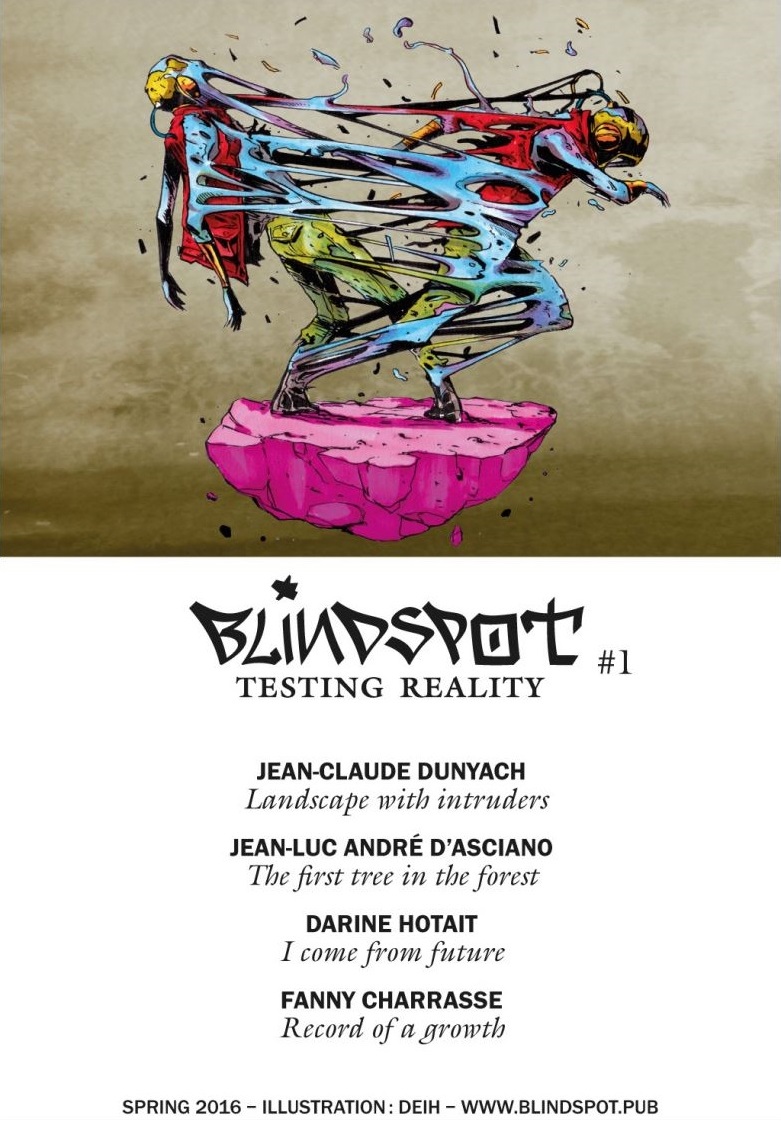
Blind Spot 1-smallWhen I was at the Nebula Awards weekend in May, I met a charming young man named Julien Wacquez, the co-editor of the French SF magazine Angle Mort, which publishes English SF in translation for French readers. I learned that he and his co-editor, René-Marc Dolhen, were launching a brand new English magazine to bring the best of French SF to English audiences, Blind Spot. He was kind enough to send me a copy of the first issue last week, and it looks terrific. Here’s René-Marc and Julien, from their introduction.

Angle Mort was founded in France in 2010 to translate innovative science fiction stories written by authors such as Aliette de Bodard, Jeffrey Ford, Kij Johnson, Kelly Link, Ian McDonald, Vandana Singh, and to publish French original narratives written by Stéphane Beauverger, David Calvo, Thomas Day, Jean-Claude Dunyach, Léo Henry, and Laurent Kloetzer among others. Our work has been recognized several times by the Grand Prix de l’Imaginaire and nominated as “best translated work of the year” or “best short story of the year…”

Going forward, we wish to widen our audiences to pursue our two main goals:

1 – Bolster the ties between French and American science fiction, by launching a new magazine, Blind Spot, that translates French stories into English. We think that French science fiction is rich from finding new ways to describe human experiences and contradictions, the weight of structures upon our lives, and the role of collective entities on our destiny.

2 – Bridge art, science, and literature, by supporting people who try to remold original perceptions of the self or the surrounding world, regardless of whether their works are fictional stories, academic papers, or visual arts, as long as they relate to science fiction.

Both French and English online magazines owned by the group are conceived as an endeavor to find new languages, new ways of telling true stories. They will be published at a frequency of two issues per year each. The narratives will be available for free on their dedicated website and exclusive additional content (interviews with contributors) can be accessed by ordering the complete online issue for $3. The proceeds will help us pay our contributors and translators.

Read the first story, Jean-Claude Dunyach’s “Landscape with Intruders,” free online here. And buy the first issue in PDF, epub and mobi formats for just $3 here. Broaden your horizons, and support a new SF magazine!