Browsed by
Category: Books

Sylvia Townsend Warner and Lolly Willowes

Sylvia Townsend Warner and Lolly Willowes

Lolly WillowesSylvia Townsend Warner is probably best known in fantasy circles for The Kingdoms of Elfin, her collection of linked short stories from 1977. I’ve been looking for a copy of that book, but have yet to locate one (using the Internet, I firmly feel, is cheating). But I did recently come across her debut novel, 1926’s Lolly Willowes, or the Loving Huntsman. It’s been described as a deal-with-the-devil story in which a middle-aged Englishwoman makes a Satanic pact and becomes a witch. That’s accurate, but not necessarily the best description.

It’s a story about an upper-class woman in 1920s England, Laura Willowes, and in wry third-person narration describes the outward details of her life and her search for imaginative freedom. Laura, or ‘Lolly’ to her family, is a vivid character who grows more fascinating as the book goes along. The first third of the book tells us about her childhood and family and how she lived with her father until he died and then moved in with her older brother to help him and his wife look after their children; the second part follows her in her late 40s, when she (seemingly) abruptly chooses to leave her brother’s London home to live on her own in a small town in South East England; the third sees her newfound independence threatened when her loving nephew comes to live in the same small town. At which time she turns to Satan — or thinks she does.

Is it a fantasy? Well, it’s a lovely book, filled not only with a dry and reserved wit, but also fine descriptions of nature and of dreams. It’s a gentle but devastating satire of gender roles, as well as a statement about love and freedom. It’s a leisurely-paced character study in elegant language. And then there’s also some stuff in it about witches and Satan. It’s possible to read it as a realistic novel in which the supernatural is hallucinated, but perhaps easier to read as a fantasy. Still, to say it’s a book ‘about’ witchcraft or Satan is untrue. The fantastic elements come in late and grow out of the mimetic elements. The book is ‘about’ Laura Willowes. Fantasy’s just a part of who she is.
Read More Read More

Vintage Treasures: H.P. Lovecraft’s The Colour Out of Space

Vintage Treasures: H.P. Lovecraft’s The Colour Out of Space

Lovecraft The Colour Out of Space-smallThe first Arkham House books I ever bought were the 3-volume 1964 edition of the complete stories of H.P. Lovecraft (The Dunwich Horror and Others, Dagon, and At The Mountains of Madness). It was a beautiful set, and one of the best purchases I’ve ever made.

On the other hand, having the complete Lovecraft at an early age robbed me of the joy of tracking down and collecting his fiction in paperback. I’ve been trying to rectify that over the years, starting with the marvelous Ballantine Adult Fantasy editions.

In the comments section of a recent post, John H. noted his first encounter with Lovecraft was:

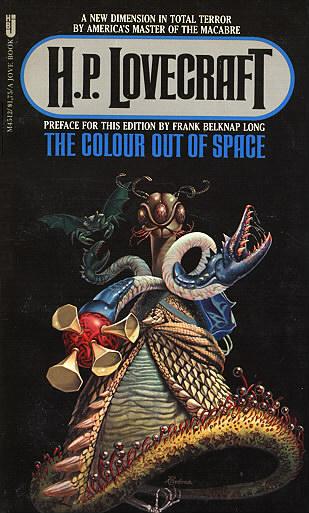
Colour Out of Space… the title story scared the bejeebers out of me (and to this day still creeps me out)… it was actually the Jove edition; the one with the Rowena painting of a Great Old One from “Shadow Out of Time” on the cover. Needless to say, it was the cover that drew me.

The Jove edition of The Colour Out of Space was one of two paperback Lovecraft volumes Jove published in 1978; the other was The Dunwich Horror. That’s it at right.

Joe’s comments intrigued me… I vaguely remembered a gorgeous set of Rowena covers on a pair of slender Lovecraft paperbacks in the late 70s but, like all Lovecraft paperbacks at the time, I scorned them because I had a complete set at home in hardback.

Read More Read More

Balance of Power

Balance of Power

People of the Black Circle-smallFantasy is generally about power. Who wields it, who wants it, and the price they pay for it. Magic (the supernatural world) is often the metaphor used for power in fantasy lit. But there are plenty of other kinds, such as fighting prowess, political power, and so on, that can also be incorporated.

In fact, what a fantasy story says about power is usually one of the most important elements to me.

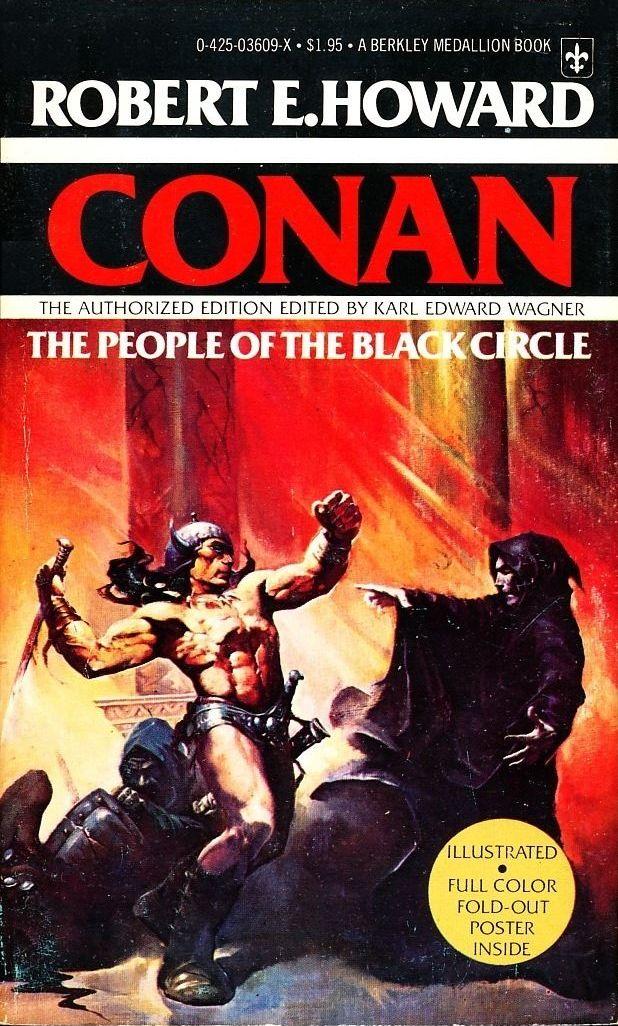
In Robert E. Howard’s Conan series, Conan represents the superiority of the barbarism over decadent civilization, and also the power of the individual against society. He is the fulcrum that swings the balance of power away from the rich nations by the force of his will and the strength of his arm. Until, of course, he eventually comes to rule one of those soft civilized nations….

In The Black Company, Glen Cook creates an epic saga about a company of grunts trying to survive during a massive war between supercharged sorcerers. Not only do the soldiers of the Black Company survive, they manage to thwart the wizards and witches who try to use them, showing that the common man and woman are the true shapers of history.

Steven Erikson’s The Malazan Book of the Fallen features a stunning array of factions and individuals across many levels of society, many of them jostling for power and some just trying to stay out of the way.

My own Book of the Black Earth series has only just begun, but already in the first book I’ve laid down the underlying conflict of rival powers. Religious cults vie with secular government. City-states compete for regional power. Individuals strive against the institutions of slavery and caste in a world where sorcery is the province of the ruling class.

Read More Read More

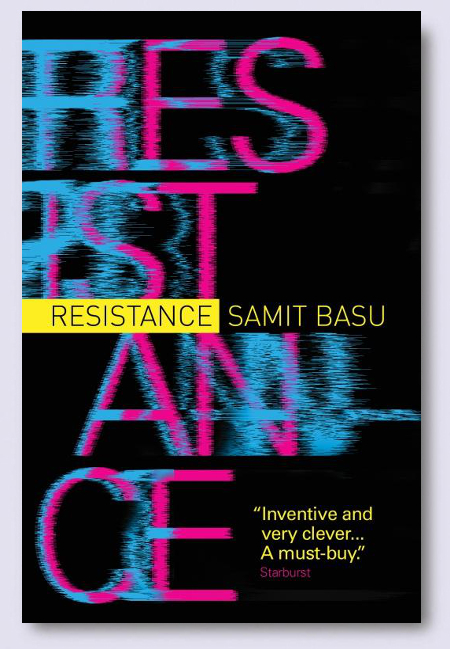
New Treasures: Resistance by Samit Basu

New Treasures: Resistance by Samit Basu

Resistance Samit Basu-smallIs it just me, or did I miss the literary trend where superhero novels suddenly became a thing?

Sure, superhero novels were always around, but now it seems they’re a thriving sub-genre. Just recently we’ve covered Michael R. Underwood’s superheroes-in-a-fantasy-city Shield and Crocus, V.E. Schwab’s super-villainous Vicious, Andrew P. Mayer’s steampunk Society of Steam trilogy, Jacqueline Carey’s werewolf novel Santa Olivia, and After the Golden Age by Carrie Vaughn, featuring the unpowered daughter of two famous superheroes, just to name a few. Maybe it’s all those billion-dollar Marvel movies, I dunno. But something’s made superheroes hot all of a sudden.

I missed Samit Basu’s first book from Titan, the well-reviewed superhero novel Turbulence. Which is a pity, because the premise sounds very intriguing: in 2009, all the passengers on flight BA142 from London to Delhi wake up the next morning to discover they have developed extraordinary abilities. His new novel Resistance picks up the tale a decade later, as a silent killer begins to pick off the supers one by one…

How would you adapt to a world full of superhumans? And how far would you go to stop them destroying it?

In 2020, eleven years after the passengers of flight BA142 from London to Delhi developed extraordinary abilities corresponding to their innermost desires, the world is overrun with supers. Some use their powers for good, others for evil, and some just want to star in their own reality show.

But now, from New York to Tokyo, someone is hunting down supers, kidnapping heroes and villains both, and it’s up to the Unit to stop them…

Resistance was published by Titan Books on July 8, 2014. It is 400 pages, priced at $14.95 in trade paperback and $7.99 for the digital edition.

Pat Murphy’s Three Books of Adventures

Pat Murphy’s Three Books of Adventures

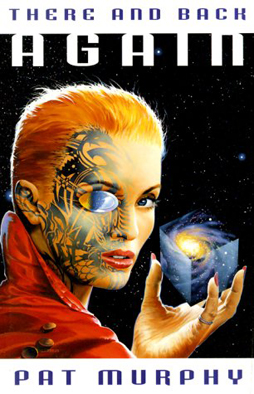
There and Back AgainThere was an extended period of time in the 1990s and the first decade of this century when I didn’t read much science fiction or genre fantasy. I started reacquainting myself with these fields a few years ago and I’m still in the process of learning what I missed. It’s not uncommon for me to only now find out about an author who established themselves during those years. Which brings me around to Pat Murphy.
A little while ago, I stumbled on three books by her that make up a highly distinctive sort of trilogy: There And Back Again, Wild Angel, and Adventures in Time and Space With Max Merriwell. They were published one a year from 1999 to 2001. They don’t really share a plot or setting, though some characters cross over from one to another. They’re linked by concepts both metafictional and science-fictional, which is a surprisingly unusual pairing, and while each can easily be read alone, the third book ties them all together with surprising effectiveness. ‘Surprising’ because at first the links between the books aren’t obvious. But by the end of book three, you realise what Murphy was driving at, and why these things had to be done in this particular way.

So what are these books? There And Back Again is a futuristic sf story about Bailey Beldon, a simple ‘norbit,’ a human inhabitant of an asteroid, who gets tied up with an oddball wanderer named Gitana and a family of thirteen clones. The clones have a map that’ll lead to a treasure with a fearsome guardian — and Gitana has decided that Bailey will accompany them on their quest. It is, in fact, a science-fictional and somewhat gender-flipped version of The Hobbit, and extremely effective. Similarly, Wild Angel is a story set in nineteenth-century California of a girl whose parents were killed when they came west to look for gold; the girl’s raised by wolves in exactly the same way Tarzan was raised by apes. But it’s the third book where things get really strange.

Read More Read More

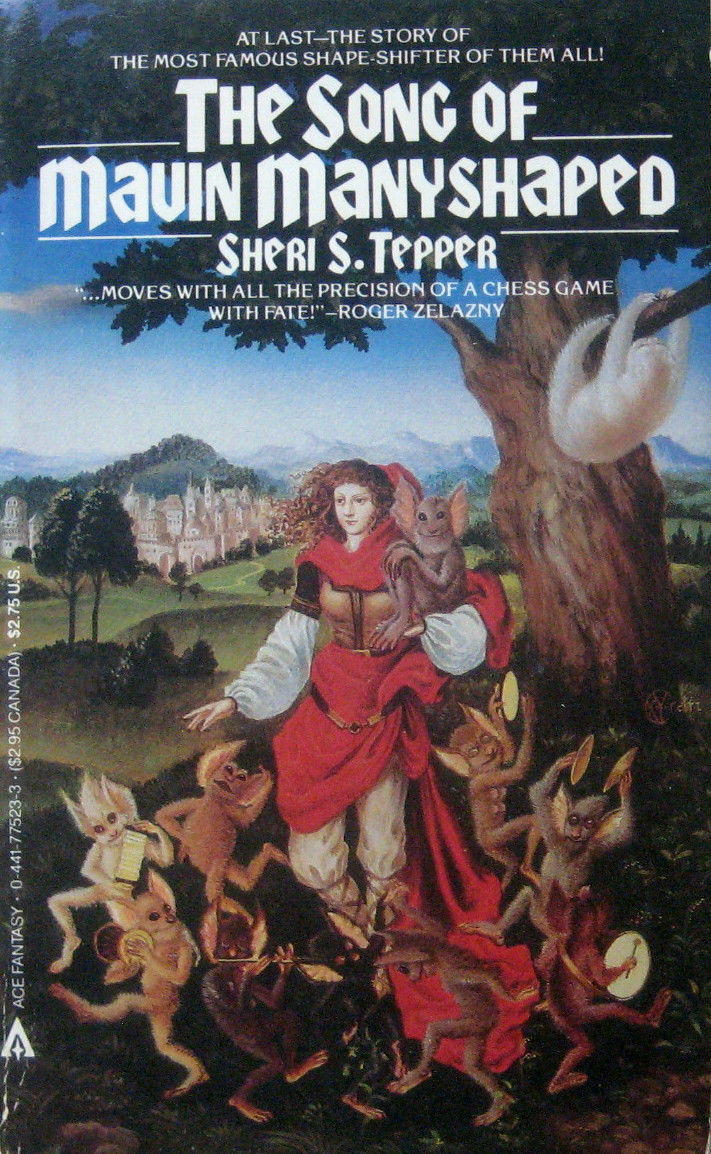
Vintage Treasures: The Song of Mavin Manyshaped by Sheri S. Tepper

Vintage Treasures: The Song of Mavin Manyshaped by Sheri S. Tepper

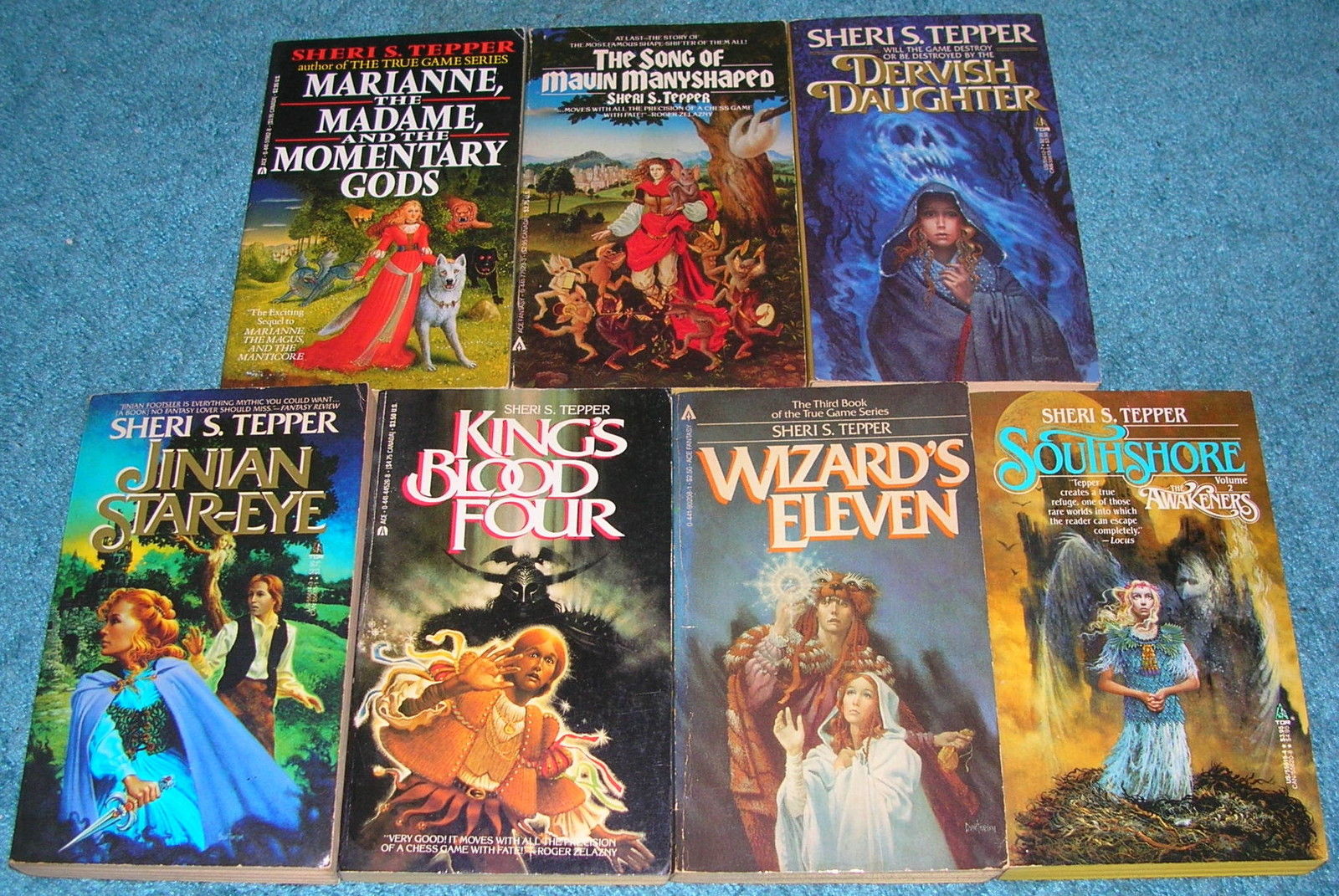
The song of Mavin Manyshaped-smallI think I’m finally starting to figure out Sheri Tepper’s 9-volume magnum opus The True Game (believe me, it took some work.)

I accidentally started (as usual) in the middle, with Dervish Daughter, which I didn’t even realize was part of a series, much less the eighth frickin’ volume. However, I overcame this as, after many decades of reading fantasy, I have mad reader skillz. Dervish Daughter isn’t really the eighth volume anyway, it’s actually the middle volume of the last trilogy, known as The Books of the True Game: Jinian.

The first trilogy, The Books of the True Game: Mavin Manyshaped, was written second, after the middle trilogy, which was composed of King’s Blood Four, Necromancer Nine, and Wizard’s Eleven, which were collectively gathered in a one-volume edition as The True Game. Which isn’t at all confusing. Still with me?

Forget it, I’m lost again. Let’s start over. The Song of Mavin Manyshaped is the first book in the first trilogy of The True Game. Mavin is a shapeshifter, and this opening trilogy tells the story from her point of view.

It is never easy growing up as a shape-shifter, learning to control the wild Talent for changing into any shape at all — a winged dragon, a pillar of stone, another human being, a creature from a nightmare. But for Mavin Manyshaped — one of only two she-shifters in her tribe, and recklessly headstrong by nature — coming of age is both exhilarating and terrifying. Little does she know she is destined to become the most notorious shape-shifter in all the lands of the True Game.

I bought The Song of Mavin Manyshaped as part of a jaunty collection of seven Sheri S. Tepper paperbacks on eBay for $10.50. They’re not all part of The True Game… I think. Anything is possible.

Read More Read More

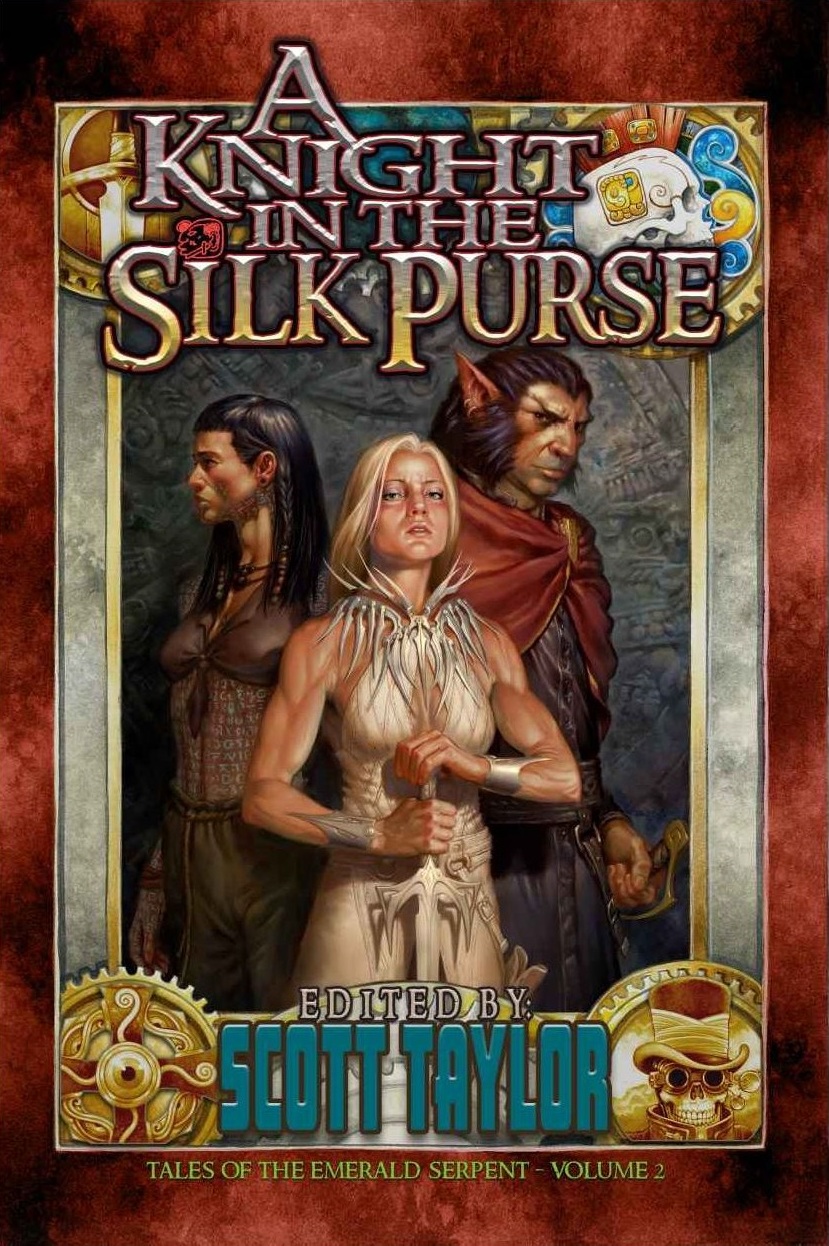
Scott Taylor’s A Knight in the Silk Purse Now Available

Scott Taylor’s A Knight in the Silk Purse Now Available

A Knight in the Silk Purse-smallScott Taylor’s latest anthology, A Knight in the Silk Purse, the sequel to his blockbuster, Tales of the Emerald Serpent, is now available.

If you’re a regular Black Gate reader, you’re familiar with Scott’s popular Art of the Genre column. But Scott is more than just a blogger and writer — he’s also an accomplished editor and publisher, with seven successful Kickstarter publishing projects under his belt. Inspired by classic shared world anthologies like Thieves World, Scott created the Free City of Taux, a sprawling fantasy port of “cursed stones, dark plots, and rich characters who share space inside the infamous Black Gate District,” and invited some of the genre’s most popular writers to tell its stories — including Lynn Flewelling, Juliet McKenna, Martha Wells, Julie Czerneda, Harry Connolly, and many others.

The result was Tales of the Emerald Serpent, one of the most acclaimed anthologies from last year. Lou Anders, editorial director at Pyr Books, said “I’m very impressed… it’s a smart, good looking package with some real gems of fiction inside.”

As we reported last year, Scott launched another successful Kickstarter to fund a sequel and A Knight in the Silk Purse was born — featuring virtually all of the writers from TotES, plus Dave Gross, Elaine Cunningham, Dan Wells, and Howard Tayler. Fans have been anxiously awaiting the arrival of the second volume and now the wait is over.

Here’s the book description.

Read More Read More

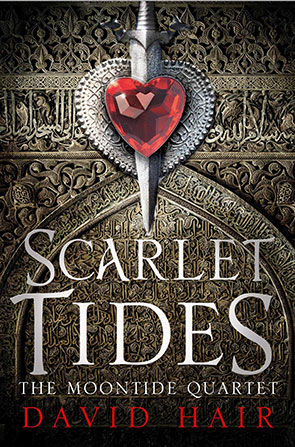
Future Treasures: Scarlet Tides by David Hair

Future Treasures: Scarlet Tides by David Hair

Scarlet Tides David Hair-smallI keep discovering interesting series with the second volume. I think it’s some kind of curse. When I was born, three fairies attended my christening. The first said, “Oh, crap. I didn’t bring a gift. Um, tell you what, John will be blessed with a love of reading.” And the second said, “That’s a good idea. And just for good measure, he’ll always be surrounded by books.” And the third, whom my parents had clearly offended somehow (seriously, who can figure out fairies?) said, “I curse this brat. He shall always discover great fantasy series with the second volume.” Fairies. Don’t invite them to parties and your life will go a lot easier.

My latest discovery is The Moontide Quartet by David Hair, which began last year with Mage’s Blood. Which I only learned recently, after I started reading the Advance Proof for the second volume, Scarlet Tides. Somewhere, a fairy is laughing.

In the exciting second volume of The Moontide Quartet, a scarlet tide of Rondian legions is flooding into the East, led by the Inquisition’s windships flying the Sacred Heart (the bright banner of the Church’s darkest sons). They are slaughtering and pillaging their way across Antiopia in the name of Emperor Constant. But the emperor’s greatest treasure, the Scytale of Corineus, has slipped through his fingers and his ruthless Inquisitors must scour two continents for the artifact, the source of all magical power.

Against them are arrayed the unlikeliest of heroes. Alaron, a failed mage, the gypsy, Cymbellea, and Ramita, once just a lowly market-girl, who have pledged to end the devastating cycle of war and restore peace to Urte.

East and West have clashed before, but this time, as secret factions and cabals emerge from the shadows, the world is about to discover that love, loyalty, and truth can be forged into weapons as powerful as sword and magic.

Mage’s Blood was published by Jo Fletcher Books last September; Tor. com called it “An outstanding start to a series which promises to recall epic fantasy’s finest.”

Scarlet Tides will be published in the US by Jo Fletcher Books on October 24, 2013. It is 657 pages, priced at $26.99 in hardcover.

New Treasures: The Shadow Throne by Django Wexler

New Treasures: The Shadow Throne by Django Wexler

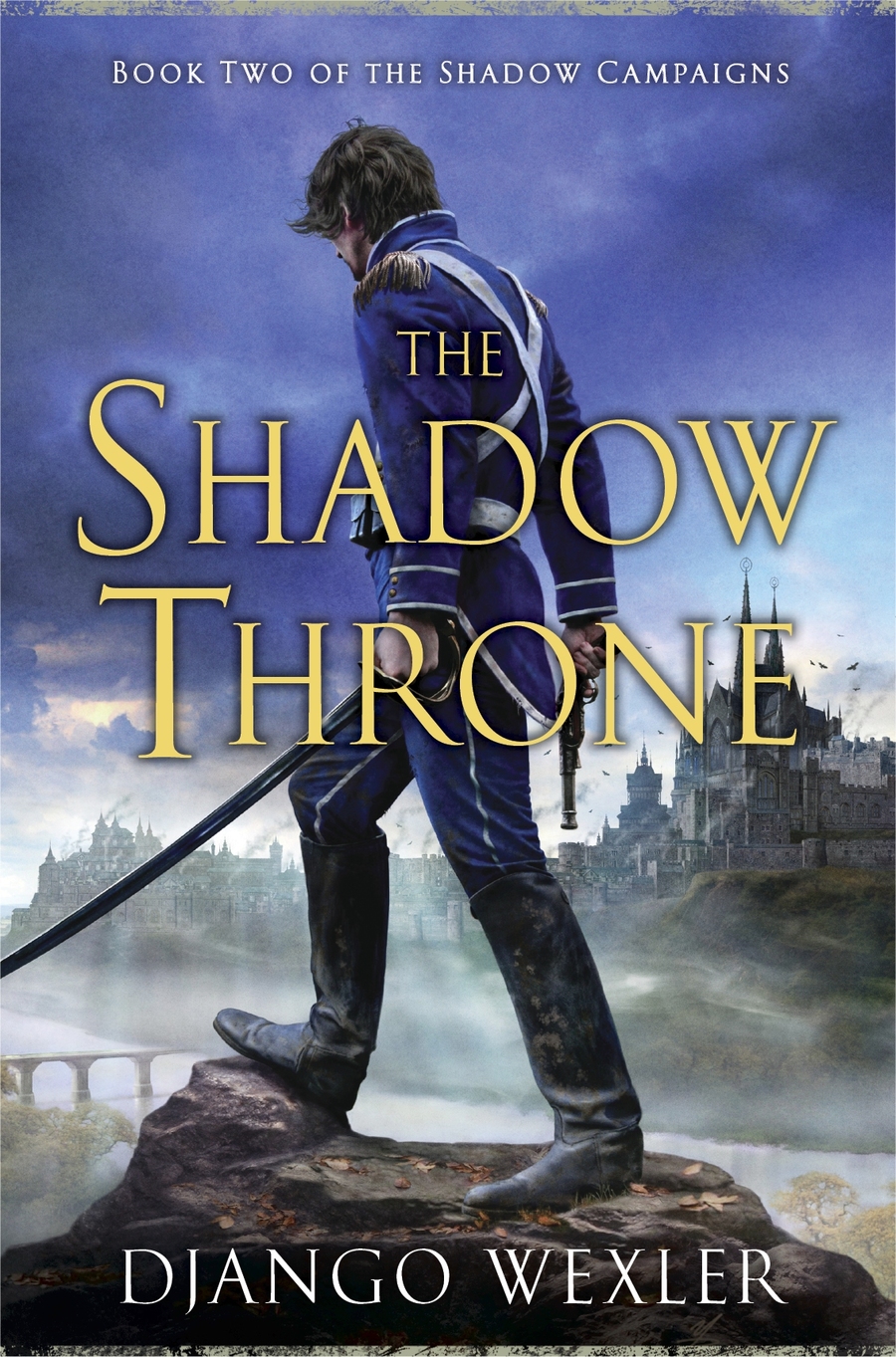
The Shadow Throne-smallGood morning, campers! And welcome to another marvelous Saturday morning. It’s raining here at the Black Gate rooftop headquarters in downtown Chicago, but that’s okay. The city could certainly use the rain — even if it did mean we had to scramble to put umbrellas over all the desks.

We don’t know the meaning of the word ‘weekend’ here at Black Gate. Our tireless quest to bring you the latest news, reviews, gossip, and innuendo means that the office has been packed all morning (and most of the previous night). Ottawa correspondent Derek Kunsken has assembled a stack of Katherine Kurtz paperbacks (and, curiously, an old issue of Dragon magazine) and is putting the finishing touches on his Saturday afternoon column. Matthew David Surridge is here — but then, that guy is always here. And Connor Gormley is over in the corner, making notes on a bunch of video games. I’m sure we’ll see the fruits of their labor in the next few days.

As for me, I’m just here to pick up some of the mail before driving back home to St. Charles. I have a Dungeons and Dragons game with my kids scheduled after lunch — the same campaign I wrote about last summer. They’re deep in the heart of Gary Gygax’s G1: Steading of the Hill Giant Chief and it looks like the final battle against the mighty giant Chief Nosnra could finally occur today. Don’t wanna be late for that.

But there’s a handful of eye-catching new releases in the mail and I’m tempted to take a few home. The most interesting to me is Django Wexler’s The Shadow Throne, the sequel to The Thousand Names.

Read More Read More

Vintage Treasures: Martians, Go Home by Fredric Brown

Vintage Treasures: Martians, Go Home by Fredric Brown

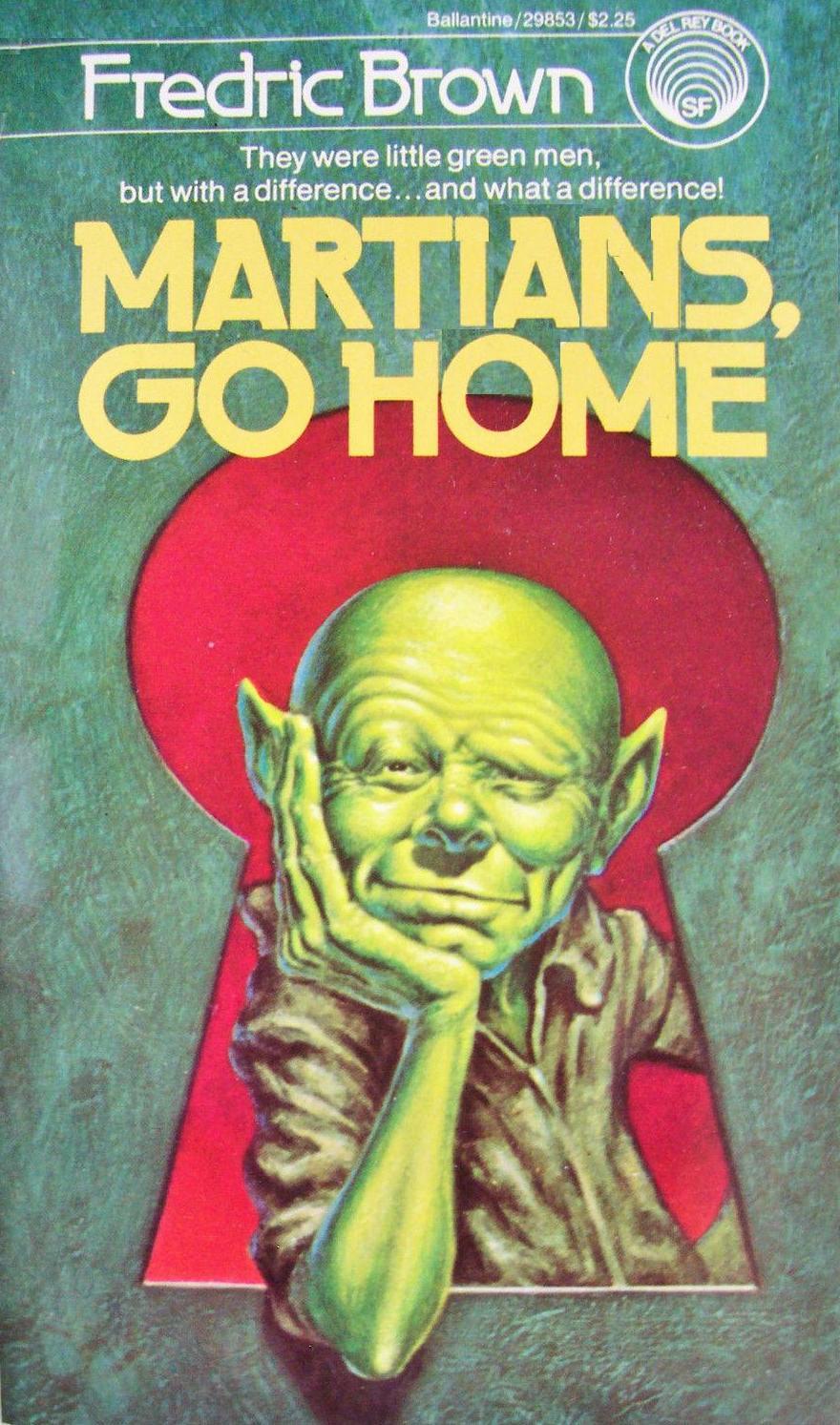
Martians-Go-Home-smallThe last time I talked about Fredric Brown, I called The Best of Fredric Brown one of the best short story collections I’ve read in years. Brown is best remembered today for his short stories — including  “Arena,” “Puppet Show,” and “The Geezenstacks” — but his novels are also fondly remembered.

Martians, Go Home is probably his most famous. A shorter version originally appeared in the September 1954 issue of Astounding; it was expanded a year later for publication in hardcover by E. P. Dutton. Set in the distant future of 1964, it begins as SF writer Luke Deveraux opens the door of his desert cabin in a drunken stupor to find a little green Martian, a one-creature invasion who proceeds to make Deveraux’s life hell. Richard A. Lupoff called it “one of the most charming bits of SF-whimsy ever written.” Here’s the description from the back of the 1976 Ballantine paperback.

THEY WERE GREEN, THEY WERE LITTLE, THEY WERE BALD AS BILLIARD BALLS AND THEY WERE EVERYWHERE!

Luke Devereaux was a science fiction writer, holed up in a desert shack waiting for inspiration. He was the first to see a Martian… but he wasn’t the last!

It was estimated that one billion of them had arrived — one to every three human beings on Earth — obnoxious green creatures who could be seen and heard, but not harmed, and who probed private sex lives as shamelessly as they probed government secrets.

No one knew why they had come. No one knew how to make them go away — except perhaps, Luke Devereaux. Unfortunately he was going slightly bananas, so it wouldn’t be easy. But for a science fiction writer nothing was impossible…

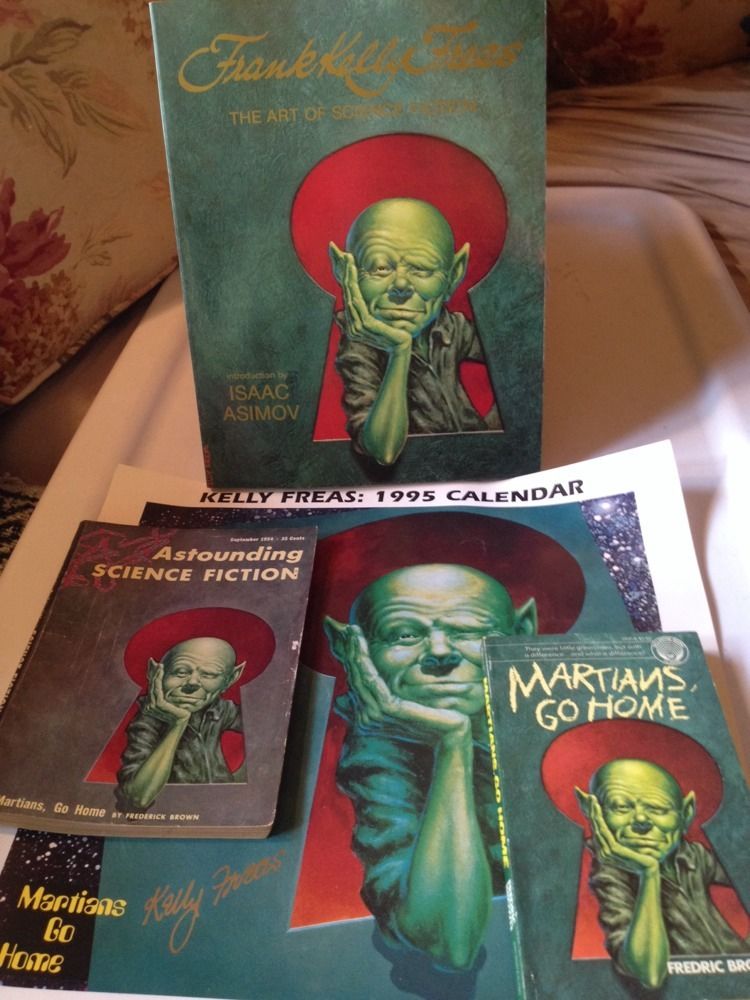
The cover painting by Frank Kelly Freas became one of his signature works, used as the cover of Astounding, two paperback editions, a calendar, and Freas’s art book (see the various versions here.)

Martians, Go Home was published by Ballantine Books in September 1976. It is 163 pages, originally priced at $1.50. It is currently out of print, but available in digital format from Hachette and audio book from Skyboat Media.