Browsed by
Category: Blog Entry

Traveller Resources Without Dice #1: The Travel Survival Guide by Lloyd Figgins

Traveller Resources Without Dice #1: The Travel Survival Guide by Lloyd Figgins

Travel Survival Guide
How travel works beyond the developed world

“That moment when you realise some of the people you follow on Twitter are Traveller characters…”

We’d been chatting about buying a second hand (deactivated) Bren Gun. (I once nearly impulse bought one, but ended up saving the money to spend on swords and armour like most if the other responsible adults I knew.) This led to a consensus that fair fights are bad. Then @wandering_andy tweeted:

30 years, mostly in the crappier parts of the world has developed what I would like to be my new family motto;
‘If you find yourself in a fair fight, you got your strategy wrong’

Not as catchy as the current one I guess… but more realistic

Intrigued, I clicked through to his profile and found:

Listening – Watching – Advising. Covert Intelligence, Security Adviser to UHNWI & Trainer

Yep, from that and his tweets,  he’s a British veteran turned security contractor. Up until this point I’d mostly been interacting with gamers and writers who only play at this sort of thing. Hence my tweet.

That moment when you realise some of the people you follow on Twitter are Traveller characters…

Guess what Andy tweeted back?

Free Trader Beowulf…

Why didn’t I use that as my twitter name!!!

A tingle went down my spine. Marc Miller’s immortal text:

This is Free Trader Beowulf, calling anyone… Mayday, Mayday… we are under attack… main drive is gone… turret number one not responding… Mayday… losing cabin pressure fast… calling anyone… please help… This is Free Trader Beowulf… Mayday….

Somebody out there who had rolled the dice was now walking the walk.  A very odd feeling.
Read More Read More

Origins Game Fair: Origins Awards

Origins Game Fair: Origins Awards

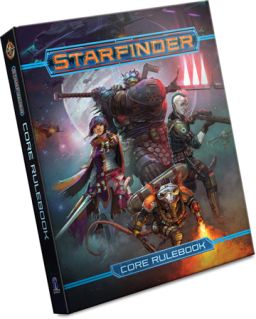
256 Starfinder CoreLast week and weekend, gamers descended upon the city of Columbus, OH, for Origins Game Fair. Running from June 13 to 17 – Wednesday through Sunday – the event is five solid days focused on playing some of the best games out there. And this year was my first time attending.

I have pretty extensive experience with smaller literary conventions, and I’ve gone to GenCon every year for about a decade at this point, so Origins felt pretty familiar to me. It filled the Columbus Convention Center, but had a smaller and less commercial feel than GenCon, on some level. There is more emphasis on playing games than on big marketing pushes, new releases, or even really game sales. The exhibit hall is a fraction the size of that at GenCon, and many major publishers don’t even have a sales presence at the convention.

My son turned 13 on Friday and the trip to Origins was part of his birthday present. Turns out that he wanted to spend all day on Saturday playing through three Starfinder sessions … which I suppose explains why the game won the Fan Favorite Best Roleplaying Game category in the Origins Awards.

Read More Read More

On to Khatovar: Shadow Games by Glen Cook

On to Khatovar: Shadow Games by Glen Cook

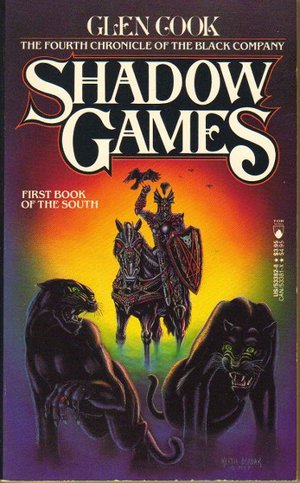
oie_193232fSIKM2J0If the previous book, The Silver Spike, told of endings, Shadow Games (1989) is about beginnings.

Picking up at the end of The White Rose (and taking place at the same time as The Silver Spike), Croaker, newly elected captain of the Black Company, decided he and any remaining members would return to Khatovar. With only six soldiers and Lady, it’s the only thing Croaker can think of doing: return the Company to its home. Unfortunately, neither Croaker nor anybody else knows precisely where Khatovar is (other than two continents away to the south) nor what it is. The Company’s annals describe it as one of the Free Companies of Khatovar, but the volumes from the first of the Company’s four centuries of existence were lost somewhere along the way. Trouble magnet that it is, and with a lost history brimming with evil deeds, the Black Company is certain to have a difficult path to Khatovar.

Shadow Games is the fifth of The Black Company books I’ve revisited, and so far my favorite. I suspect some will cry “Heretic!” So be it. Again be warned, there be spoilers below.

Even more than in the earlier books, Croaker is the lead character. As Captain, it’s he who is now responsible for the Company’s actions. Before, he was only an observer of the goings on of great men and women, now he is one of them. Cook presents him as the same snarky romantic from the previous volumes, but now he’s constrained by his position as the face and brains of the Company. The reader also gets to see the various levels of military preparation, only alluded to before, that go on in the Black Company.

As given to introspection as he’s always been, several of Croaker’s ruminations are deeper, and underline his separation from the world beyond the Company.

I ordered a day of rest at the vast caravan camp outside the city wall, along the westward road, while I went into town and indulged myself, walking streets I had run as a kid. Like Otto said about Rebosa, the same and yet dramatically changed. The difference, of course, was inside me.

I stalked through the old neighborhood, past the old tenement. I saw no one I knew — unless a woman glimpsed briefly, who looked like my grandmother, was my sister. I did not confront her, nor ask. To those people I am dead.

A return as imperial legate would not change that.

Something Croaker has mentioned several times over the series is that the Company is constantly changing. At one point in past centuries, the men of the Black Company were actually all black. By the time of the original trilogy, the only such member is One-Eye. As Croaker and friends go south, they slowly enroll new members. The greatest find are the Nar in the city of Gea-Xle. They are the descendants of members of the original Company who put the city’s reigning dynasty in power and stayed on as a hereditary caste of warriors. Croaker describes their leader, Mogaba, as the “the best pure soldier” he ever met. Gradually, Croaker builds on his pitiful remnant and something resembling a real fighting force, able to at least protect itself from the dangers of the road, is reborn.

Read More Read More

Birthday Reviews: Vivian Vande Velde’s “The Granddaughter”

Birthday Reviews: Vivian Vande Velde’s “The Granddaughter”

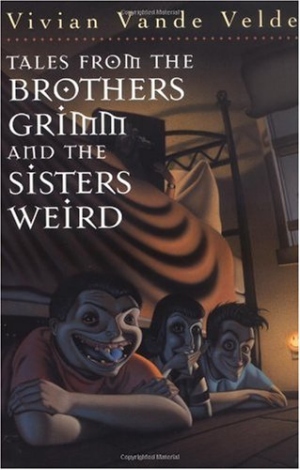
Cover by Bran Weinman
Cover by Brad Weinman

Vivian Vande Velde was born on June 18, 1951.

Her novel Never Trust a Dead Man received the Edgar Award for Best YA Novel in 2000 and Heir Apparent was nominated for the Mythopoeic Award for Children’s literature in 2003.

Vande Velde initially published “The Granddaughter” in her 1995 collection Tales from the Brothers Grimm and the Sisters Weird. The story was selected by Terri Windling for inclusion in The Year’s Best Fantasy and Horror: Ninth Annual Collection, edited with Ellen Datlow. Asdide from those appearances, the story has not been reprinted.

Retellings of fairy tales have a long established role, in fact the earliest version of fairy tales are often just the first version of a retelling of an oral tradition. Vivian Vande Velde has targeted the story of “Little Red Riding Hood,” which dates back at least as far as the tenth century and has been retold by both Charles Perrault and the Brothers Grimm. In “The Granddaughter,” Vande Velde’s focus is on the wolf, who can speak and is good friends with the title character’s grandmother.

Little Red Riding Hood, who is also known as Lucinda in this version, although she prefers the nickname, is an aspiring actress, almost completely self-centered, and horrified that her grandmother would be friends with a wolf, even one who can speak. The wolf, for his part, is equally horrified at Lucinda’s attitudes and inability to allow anyone else speak during a “conversation.” Not, at first understanding the grandmother’s reluctance to have Lucinda visit, the wolf quickly comes around to her point of view and works to rescue the woman from her granddaughter’s visit.

Read More Read More

Two, Count ‘Em, Two Nazi Robot T-Rexes

Two, Count ‘Em, Two Nazi Robot T-Rexes

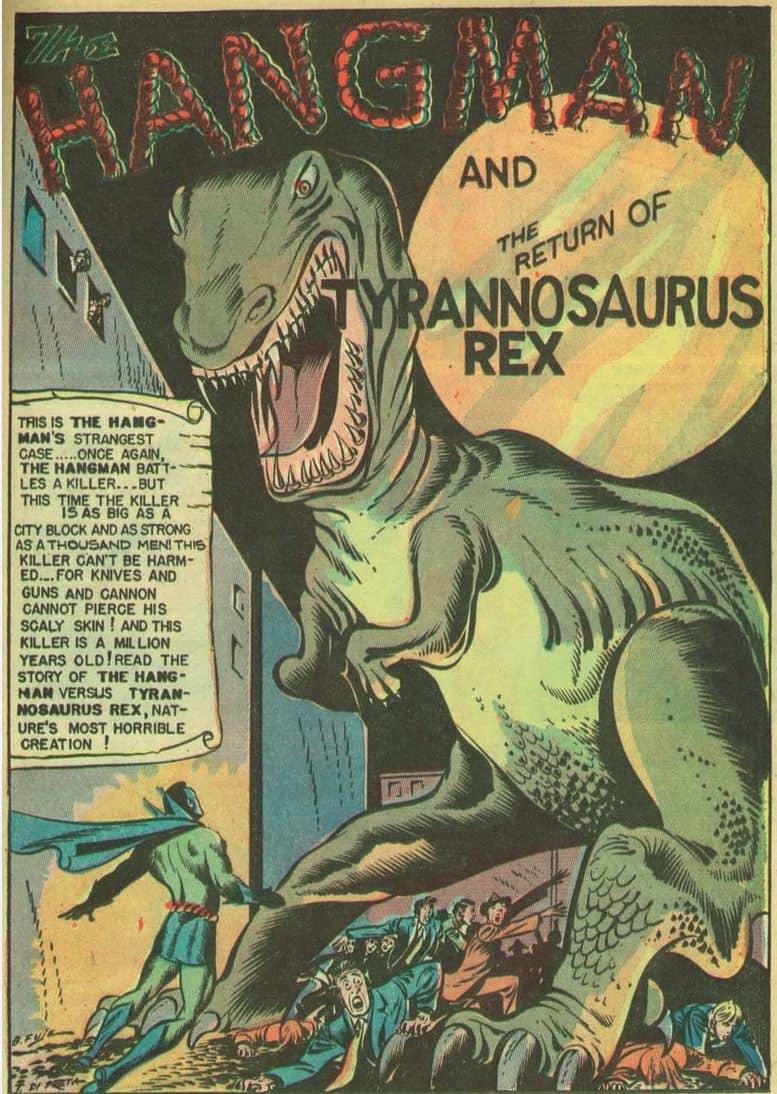
Hangman-Comics-4-Fall-1942-p1-small

We’re back in the wild, ineffable chaos of the comic book in its infancy. Superman had debuted in 1938, an instant smash. The audience clearly wanted more Supermen, but what did that mean? The 1938 Superman barely resembles today’s omnipotent cosmic hero. He couldn’t fly, couldn’t see through objects, couldn’t move at super-speed, couldn’t freeze objects with his breath, couldn’t emit beams from his eyes, couldn’t survive in space. These gaping holes in his resume gave competitors openings to try to beat Superman at his own game.

Maurice Coyne, Louis Silberkleit, and John L. Goldwater, all veterans of the pulp magazine world though none was yet 40, yoked their first initials together to form MLJ Comics in 1939, launching four titles in four months: Blue Ribbon Comics, Top Notch Comics, Pep Comics, and Zip Comics, which would introduce Steel Sterling, the literal man of steel – a cyborg, though, not a robot. MLJ floundered at first. Blue Ribbon #1 started with Rang-A-Tang, the wonder dog, Dan Hastings, fighting the Mexidians on Mars, and Buck Stacey, young range detective.

Read More Read More

Modular: Mordenkainen’s Tome of Foes Looks to the Horizon

Modular: Mordenkainen’s Tome of Foes Looks to the Horizon

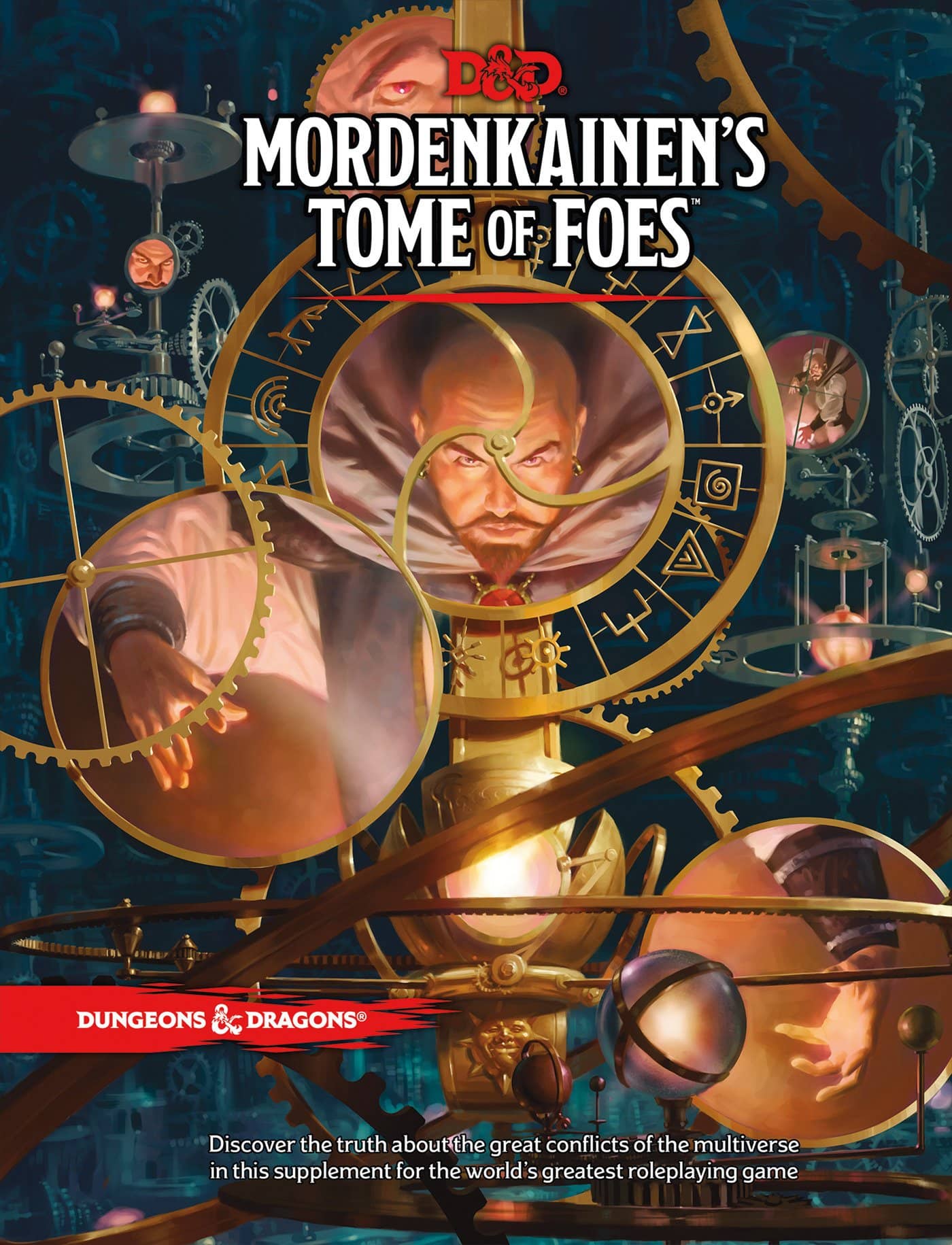
Mordenkainen’s Tome of Foes-smallThe newest supplement for Dungeons & Dragons 5th edition, Mordenkainen’s Tome of Foes (Amazon), continues to provide the high quality of content we’ve come to expect from this series, focusing on quality and story depth over serious escalation of power.

Tome of Foes expands on setting and background information for the main setting, with the bulk of the book being the 137-page Bestiary chapter, containing monsters from across the dimensions, including a variety of duergars and drow templates to a host of Demon Lords and Archdevils. And that’s all just in the D section of the Bestiary, not even account for the constructs, elder elementals, and ample quantities of undead!

While the monsters are great to have, the first half of the book has a lot to offer for the Dungeon Master in terms of depth, as well.

The first chapter gives a wealth of detail on the eternal Blood War between the armies of demons and devils for who gets claim on being more evil. It’s easy to treat demons and devils as villains just there to be killed, but after reading this chapter, you’ll be more inclined to treat them as unique creatures, with their own goals and motivations. I’m looking forward to using this information to build a storyline where my players are stuck between the goals of demonic cults and devil cults, who hate each other nearly as much as they hate the party of adventurers.

Subsequent chapters provide details on the cultures of elves, dwarves, halflings, and gnomes. Information on the Feywild and the Underdark is also provided where appropriate, for those who want to incorporate them more into their campaigns. In addition, a chapter focuses on the endless war between the two gith races, the githyanki and githzerai, who escaped their enslavement from the mind flayers (who are themselves not covered in detail Tome of Foes, but are well covered in the previous Volo’s Guide to Monsters) only to find themselves in a brutal clash against each other.

Read More Read More

A (Black) Gat in the Hand: Thomas Walsh

A (Black) Gat in the Hand: Thomas Walsh

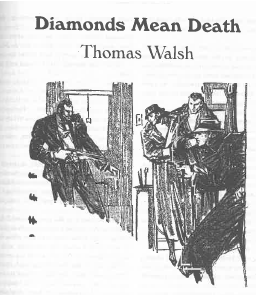
Gat_WalshDiamonds“You’re the second guy I’ve met within hours who seems to think a gat in the hand means a world by the tail.” – Phillip Marlowe in Raymond Chandlers’ The Big Sleep

(Gat — Prohibition Era term for a gun. Shortened version of Gatling Gun)

Eighteen years after writing his first story, Thomas Walsh’s 1951 debut novel, Nightmare in Manhattan, won an Edgar Award. Twenty-seven years later in 1978, he picked up another Edgar for the short story “Chance After Chance.” That is impressive! Walsh wrote a half-dozen stories for Black Mask in the thirties and his “Best Man” was included by Joseph Shaw in his prestigious Hard-Boiled Omnibus.

“Double Check” appeared in the July, 1933 issue of Black Mask, which also included stories by Raoul Whitfield (Jo Gar), Erle Stanley Gardner (Ken Corning), Frederick Nebel (Tough Dick Donahue) and Carroll John Daly (Race Williams). How’s that for less than a quarter?!

It’s a buddy cop story – except the two men aren’t buddies. Flaherty is well-dressed, small and the smart detective. Mike Martin is big, rough, not the quickest thinker and looks rumpled. It’s brains and brawn.

A banker named Conrad Devine is being threatened, presumably with death, if he doesn’t pay out.

Flaherty constantly pokes at Martin, annoying the bigger man. More than once, Martin’s exasperation with his temporary partner is expressed as “I’m gonna lay you like a rug.”

Read More Read More

Edgar Rice Burroughs Dictated His Work — So I Tried It

Edgar Rice Burroughs Dictated His Work — So I Tried It

edgar-rice-burroughs-dictaphoneOver his nearly forty-year career, Edgar Rice Burroughs put into use every writing method available to him. In a letter to the Thomas A. Edison Company regarding their Ediphone machine, which ERB purchased in 1922, he wrote: “I have written longhand and had my work copied by a typist; I have typed my manuscripts personally; I have dictated them to a secretary; and I have used the Ediphone.” (He didn’t mention in the letter that he also used the Dictaphone, Edison’s competitor.) Although Burroughs would shift his writing methods over the decade and sometimes returned to the trusty typewriter — even letting a ghostly force take over the typing duties in the prologue to Beyond the Farthest Star — wax cylinder dictation machines became his preferred tool. In his daily log of writing progress, he’d describe his workload in terms of how many wax cylinders he’d gone through that day. “May 24 Dictated 5 cyl. today — something over 4000 words.”

In the letter to the Edison Company, Burroughs listed the reasons he preferred to work using dictation machines: “Voice writing makes fewer demands upon the energy … it eliminates the eyestrain … the greatest advantage lies in the speed. I can easily double my output.” He kept his Ediphone (or Dictaphone) near his bedside “to record those fleeting inspirations that would otherwise be lost forever.”

At the time, dictation machines were primarily used for businesses. In order to make the most out of one, a writer had to have a stenographer to transcribe the wax cylinder recordings, so dictation machines weren’t much use to pulp fiction writers. But Edgar Rice Burroughs was both a writer and a business. He was wealthy enough to have an office staff, including a secretary whose job was to type up the manuscript from ERB’s cylinder output. The secretary would also do the job of shaving each wax cylinder — this required its own machine — so it could be reused.

Read More Read More

Remembering Michael D. Weaver

Remembering Michael D. Weaver

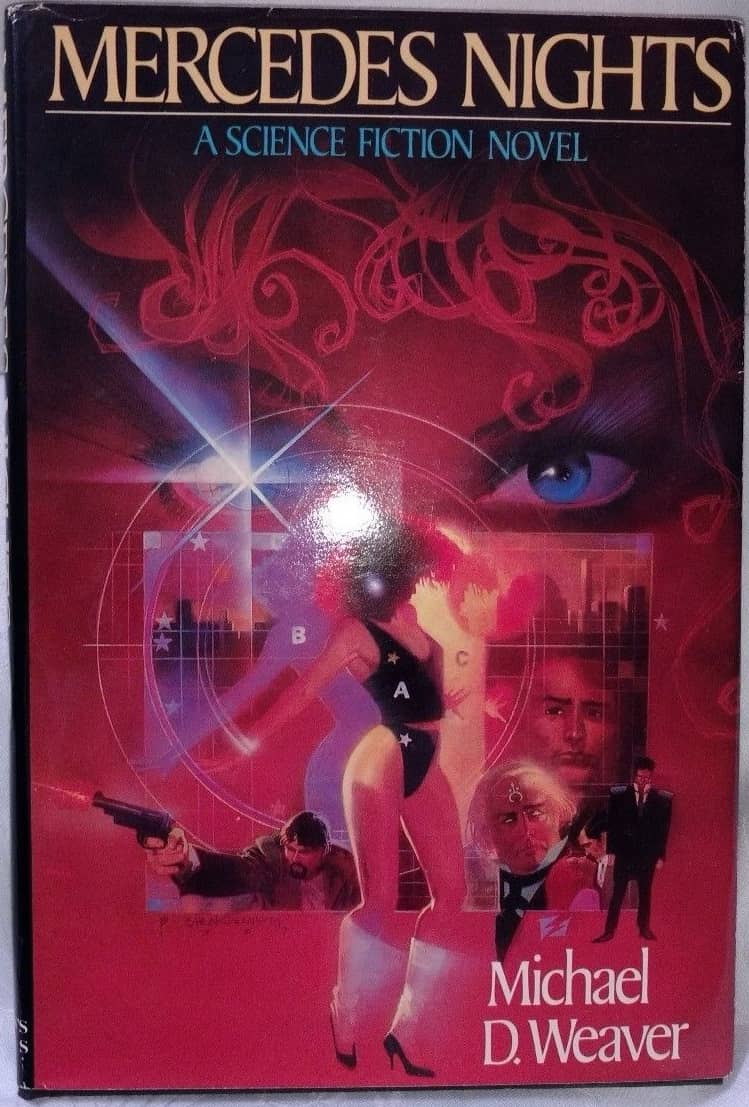
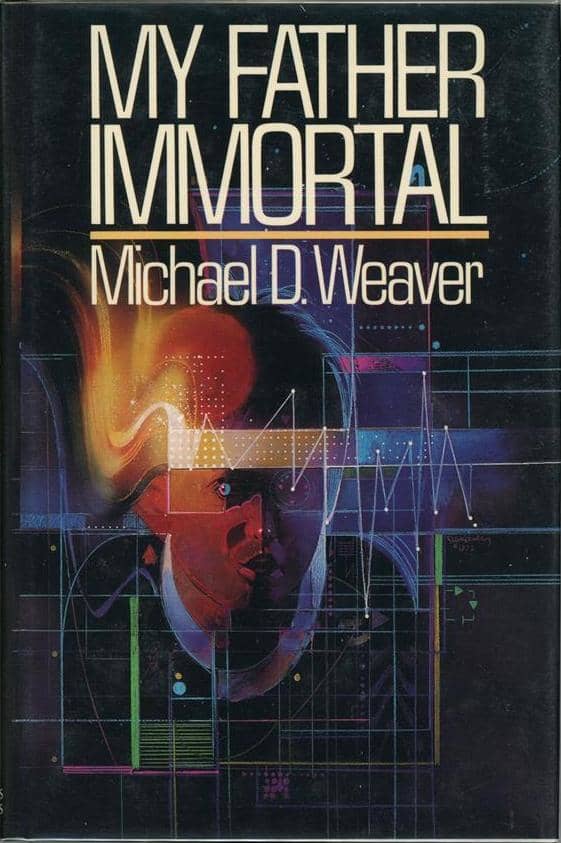
Mercedes Nights-small My Father Immortal Michael Weaver-small

I was on ISFDB and noticed that today marks the 20th anniversary of Mike Weaver’s death.

Michael D. Weaver broke into the SF field with Mercedes Nights in 1987 and looked like he was going to be The Next Big Thing (or one of them, anyway). He published seven novels in nine years before dying at the age of 37.

At St. Martin’s Press, I worked on his first two novels, particularly his second one, My Father Immortal. In those pre-email days, he would call almost every day about this or that. He came to New York for the SFWA Authors and Editors party with his girlfriend, whose name was Angel (if my memory serves) and whose dress and looks led some people to think she had been hired from an escort service. (She hadn’t.) I got drunk at the party and made the mistake of telling Mike how I thought his novel was ideal for teens — how the book worked as a great metaphor for adolescence. He didn’t call for several days after that.

If memory serves, he died in a freakish accident — something like falling in the yard and having his head land in a bucket or puddle, where he drowned.

Read More Read More

June Short Story Roundup

June Short Story Roundup

oie_534842mahYRSEFIt’s a short roundup this month, with only Swords and Sorcery Magazine from the pack of usual suspects. There is a special treat, though, making up for the lack of magazine stories. Multi-talented Robert Zoltan has created another wonderful audio adventure with his series duo, Dareon Vin and Blue.

Swords and Sorcery Magazine #76 has the publications’s usual two stories. One I don’t like, one I sort of like. I’m sorry, but I just can’t like everything.

The opening story, “Remnants” by Lynn Rushlau, is the one I don’t like. Returning from a night of revelry at the Festival of Liberation, Callery hears a voice in her home and runs screaming. Over the next week, she begins to see ghosts, lots of ghosts.

These aren’t human ghosts, but those of the Fairies who once ruled over all humankind. The best single part of the story is the description of that era.

Her hand lingered over the rebel costume. She could use some of the courage of her ancestors. They’d risen up three centuries ago and destroyed the fairies who’d kept humankind enslaved for untold millennia. Literally untold. Human history survived as rumor and tall tales. Nothing written went back before the Rising.

Read More Read More