Browsed by
Category: Blog Entry

What Would it Look Like to Pull a Watchmen on Planetary Romance? Part IV – The Conclusion

What Would it Look Like to Pull a Watchmen on Planetary Romance? Part IV – The Conclusion

carson of venusWhen we last left our intrepid blogger (me) two weeks ago, he had blogged (see Parts I, II, and III) about the superhero genre, pre- and post-Watchmen, the kind of light that Alan Moore’s Watchmen shone onto superhero comics, as well as the core conventions of the planetary romance form. He had set up a planetary romance situation that was ripe for a Watchmen-like treatment, both the pretty parts and the ugly ones.

And now, Part IV, What a Watchmen Treatment of Planetary Romance Might Look Like….

So our classic, morally unambiguous pulp hero has overthrown the dictator. This is where the classic planetary romance ends, with the hero riding off into the sunset or basking in his successes. But in an Alan Moore universe, this is only the set up.

We have two other heroes, Radulovic and al’Barri, connected to other parts of the alien world’s society in less overtly heroic ways, and they see things that Smith does not. True, the dictator is gone, and ostensibly, some new, more benevolent power is on the throne, or perhaps it is even a presidency or prime ministership if we want to be more modern.

Without moral judgment of any kind, I will point out that dictators can have the effect of imposing an unwilling peace. Tito in Yugoslavia, backed by Soviet help, kept ethnic tensions between Serb and Croat and Bosnian from flaring.

And under Saddam in Iraq and Assad in Syria, the large-scale ethnic violence we’re seeing now was not occurring. To be clear, I am not advocating dictatorships. I note only that one of the major foreign policy risks of the modern world is touching a situation that could get even worse than it was before.

Read More Read More

The Swordfolk Among Us

The Swordfolk Among Us

I write “anything with swords in it.”

The New York Times has done a short documentary on modern longsword fighting and everybody’s reacting like the media suddenly started covering quidditch; all the muggles are looking around and seeing the wizards for the first time…. except we’re swordsfolk, not wizards. However, like the wizards, we’ve been around a long long time.

Rewind a couple of weeks. I’m in a slightly tatty but sterile NHS consulting room speaking to a specialist doctor…

“I see you are a writer, Mr Page.” My consultant, as we call them in the UK, is an avuncular German, perhaps in his 50s.

I admit to my profession. I write “anything with swords in it.”

“Ah! You like swords?”

I tell him about my hobby, show him my sword scar.

“Tell, me,” asks this decidedly grown up, highly-qualified professional, whose eyes now have a twinkle. “Have you heard of Academic Fencing?”

Academic Fencing is a primarily German tradition. Young men with special face masks to protect eyes, ears, and mouth slash each other with whippy dueling blades in a highly ritualised environment. It’s why Prussian officers have scars in all the old movies.

And he’s done it.

Read More Read More

New Treasures: Dark Entries by Robert Aickman

New Treasures: Dark Entries by Robert Aickman

Robert Aickman Dark Entries-smallRobert Aickman was an English ghost story writer who died in 1981. I bought his famous collection The Wine-Dark Sea over 10 years ago and was very impressed.

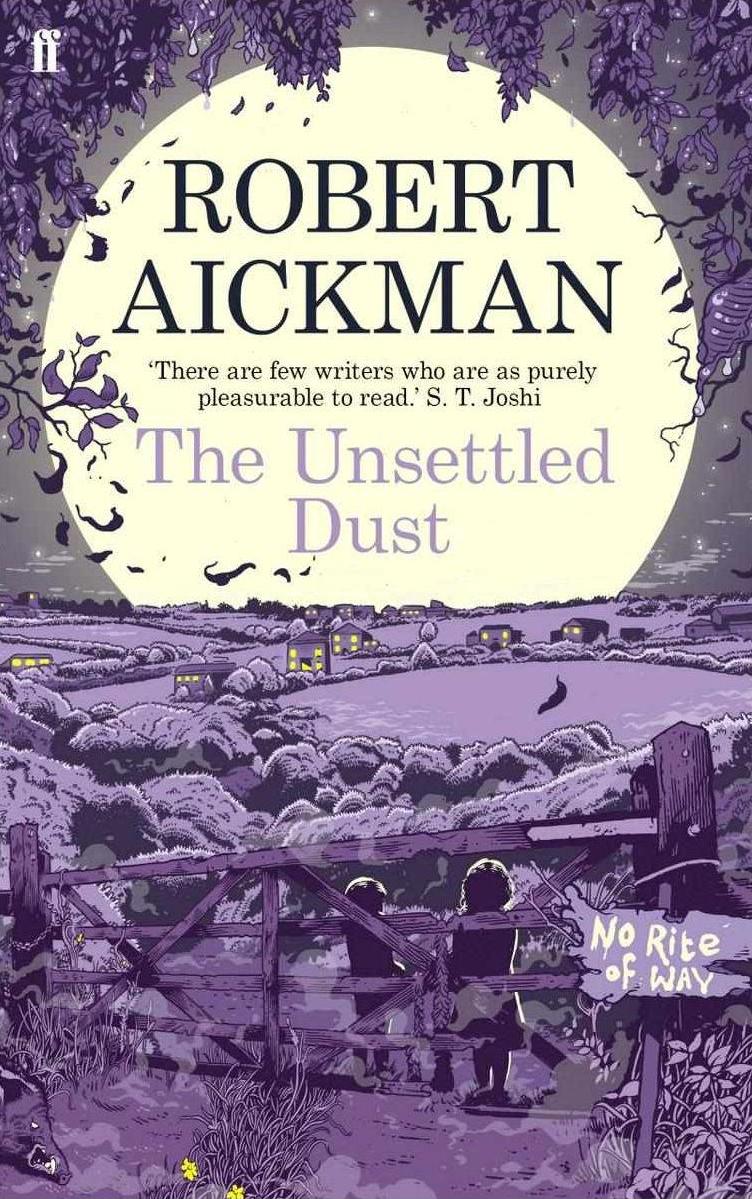
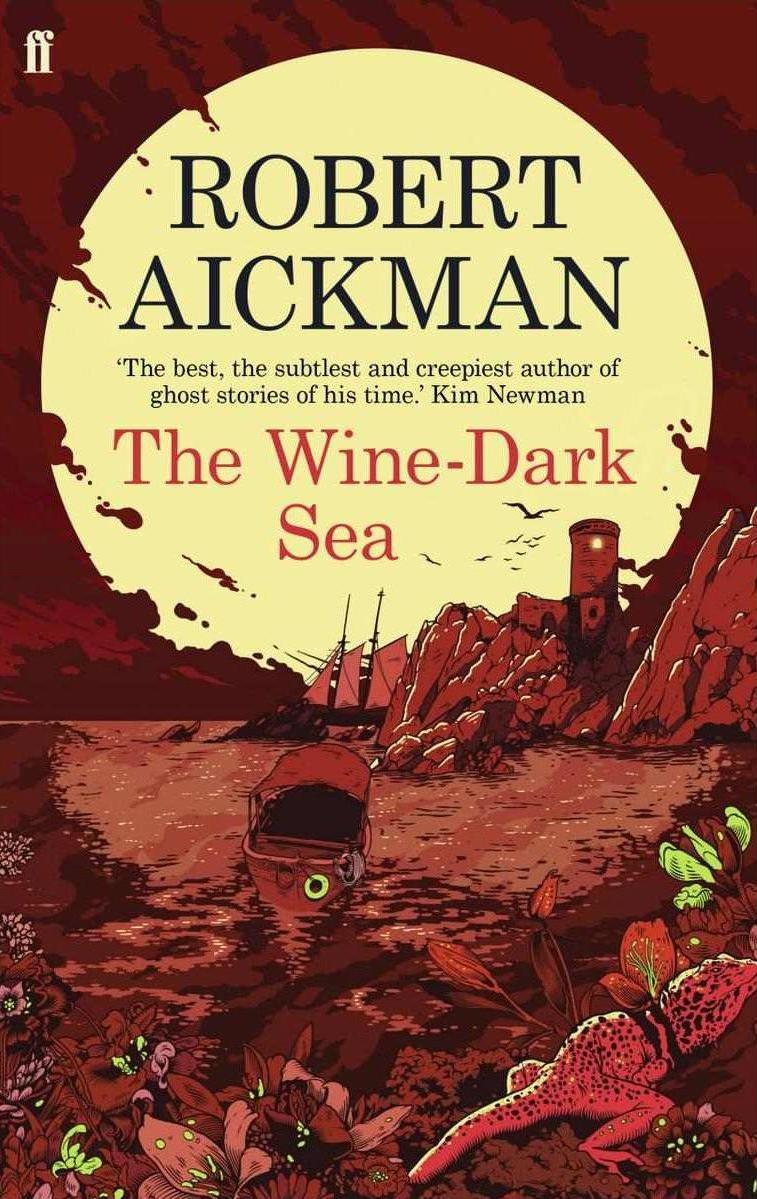
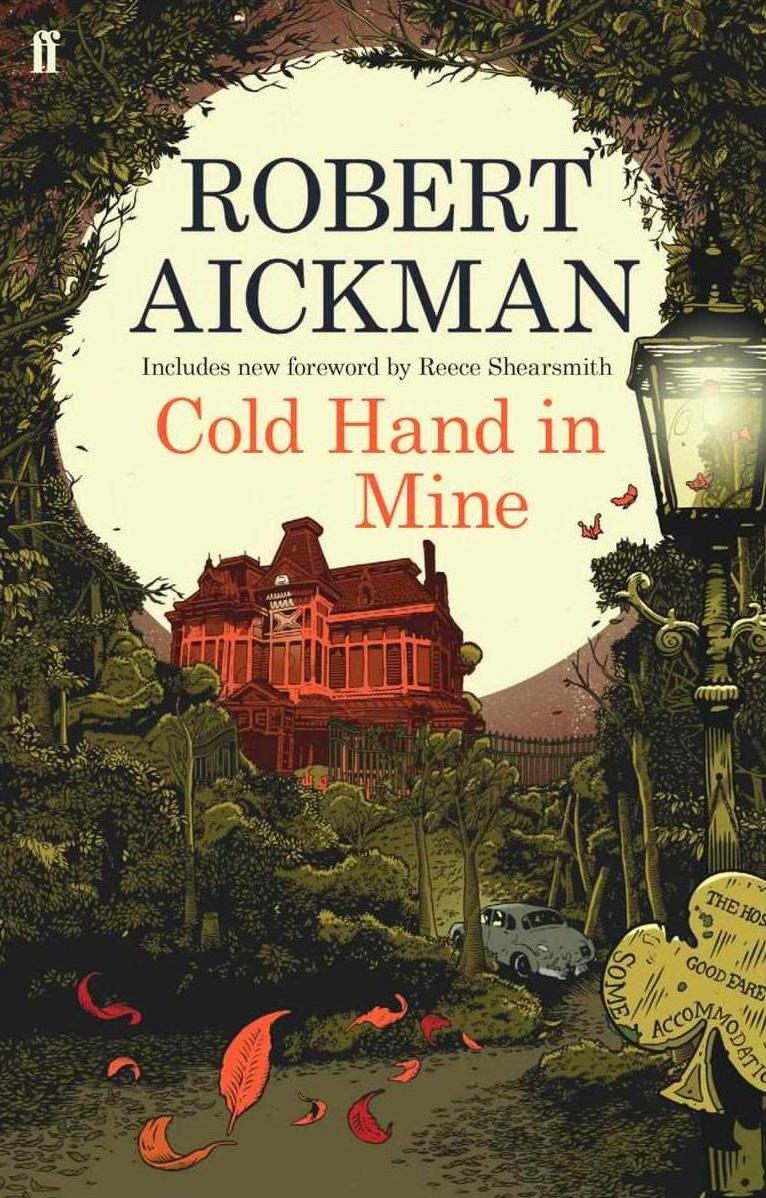
But it’s been a long time since I’ve seen a contemporary printing of his most famous books — especially in an affordable paperback format. So I was thrilled to see Faber & Faber recently reprint three collections in both digital editions and handsome trade paperbacks: The Unsettled Dust (September 4), The Wine-Dark Sea (August 7), and his very first collection, Dark Entries. All are well worth your time, especially if you’re a fan of British horror.

‘Reading Robert Aickman is like watching a magician work, and very often I’m not even sure what the trick was. All I know is that he did it beautifully.’ — Neil Gaiman

Aickman’s ‘strange stories’ (his preferred term) are constructed immaculately, the neuroses of his characters painted in subtle shades. He builds dread by the steady accrual of realistic detail, until the reader realises that the protagonist is heading towards their doom as if in a dream.

Dark Entries was first published in 1964 and contains six curious and macabre stories of love, death and the supernatural, including the classic story ‘Ringing the Changes.’

‘Robert Aickman was the best, the subtlest, and creepiest author of ghost stories of his time… still enormously readable, offering mysteries which get deeper and scarier with each return.’ — Kim Newman

Dark Entries was published June 5, 2014 by Faber & Faber. It is 256 pages, priced at £7.99 in trade paperback and $5.82 for the digital edition. The gorgeous cover is by Tim McDonagh; click for a bigger version.

Art of the Genre: The Top 10 TSR Cover Paintings of All Time

Art of the Genre: The Top 10 TSR Cover Paintings of All Time

Sorry Wayne, you aren't making this list
Sorry Wayne, you aren’t making this list

I’ve spent 30+ years looking at RPG artwork and I’ve yet to get tired of doing so. Sure, there are days when I wonder how the fantasy art world went to hell, but those are few and far between, as there are enough great new artists that still manage to inspire me in the mix of things [yeah Cynthia Sheppard I’m talking to you].

Nonetheless, I did begin thinking about well-aged TSR art this past month when James and I started digging in the nostalgia mines of old boxed sets. It prompted me to consider just what a ‘Top 10 list of TSR cover artwork’ would look like.

And to be clear, I wasn’t thinking about D&D in particular, but simply TSR catalogue stuff, which of course puts any artwork post WotC acquisition out of the picture. It does, however, allow for the additional inclusion of other games, although as I comprised this list I found it nearly impossible to include them. D&D, as it should be, dominated the RPG landscape from the mid-1970s, and thus is the bag of holding that any role-player will go back to again and again.

There are so many ‘things’ that could go into the making of this list, but for today I’m going to go with my gut. If I had feelings for it, it gets considered. If I know a lot of people owned it, it gets considered. Other than that, I don’t really have much to lean on other than the fact that this is what I do. I deal in old art. I buy it, I sell it, I broker it, I contract for it, I agent for its creators, and as you can see here, I blog about it. My only regret is that I wish it paid more, but since when does living your dream always to come with luxury?

That said, one name found on most RPG art lists these days won’t appear here because he came too late, and frankly, his greatest recognizable cover was done not for TSR, or WotC, but for Paizo. Yes, this means no Wayne Reynolds, but that is how this list is going to roll, so without further introduction, I give you my personal list of ‘Top 10 TSR Cover Paintings.’

Read More Read More

Future Treasures: Old Venus, edited by George R.R. Martin and Gardner Dozois

Future Treasures: Old Venus, edited by George R.R. Martin and Gardner Dozois

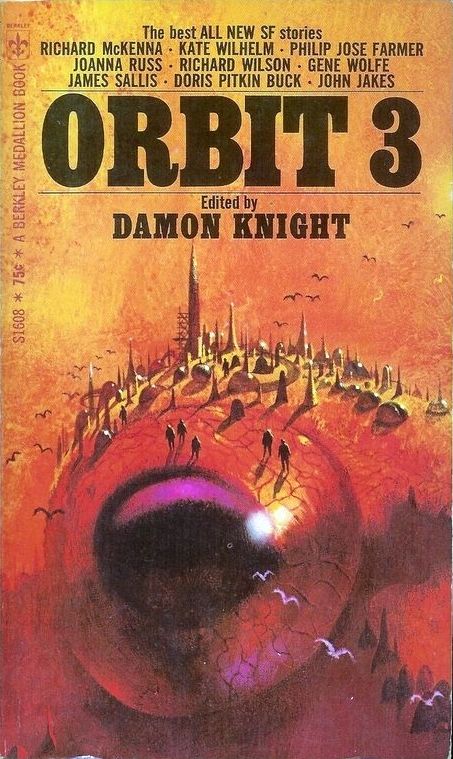
Old Venus-smallA while back, I was lamenting the disappearance of the modern SF anthology, and commenting that very few editors (or publishers, for that matter) have been successful at individual anthologies — let alone the anthology series, like the old Orbit and New Dimensions.

In so saying, I was overlooking the team of George R.R. Martin and Gardner Dozois, who have produced a loose series of top-selling SF and fantasy anthologies over the last few years — including the massive heroic fantasy volume Warriors (2010), the star-crossed love story collection Songs of Love and Death (2010), the massive Jack Vance tribute Songs of the Dying Earth (2010), the urban fantasy-focused Down These Strange Streets (2011), the even massive-er 800-page Dangerous Women (2013), and the just-released Rogues (2014).

My personal favorite was Old Mars, a tribute to “the Golden Age of Science Fiction, an era filled with tales of interplanetary colonization and derring-do” — which, if you’ve read even a handful of posts here at Black Gate, you’ll understand is the kind of thing that makes me very happy. When I blogged about it in January, Gardner sent me this intriguing message:

Glad you enjoyed it… If you liked this one, keep an eye out for Old Venus from the same publisher; same kind of thing, although I think it’s even stronger than Old Mars. Pub date is sometime in 2015.

I was delighted to hear it. Now Bantam has released the cover, and it looks gorgeous — and makes a terrific companion piece to the Old Mars cover. These will look very handsome indeed, back-to-back on my bookshelf.

Old Venus will be published by Bantam Books on March 3, 2015. It is 608 pages, priced at $30 in hardcover and $11.99 for the digital version. No news on who the contributors are — when we learn more, so will you.

Dueling Rakes, Mysterious Women, and the Goblin Aristocracy: The Queen’s Necklace by Teresa Edgerton

Dueling Rakes, Mysterious Women, and the Goblin Aristocracy: The Queen’s Necklace by Teresa Edgerton

oie_1605134EiRbubaPThe Queen’s Necklace (2001) by Teresa Edgerton (with its title borrowed from Alexandre Dumas) is a perfectly splendid swashbuckling adventure in an Age of Reason-like world as it teeters on the precipice of collapse.

For five thousand, years Goblins using powerful magical gems ruled the world, keeping Humans enslaved and uneducated. Fifteeen hundred years ago, Humanity rose up and slaughtered most — but not all — of the Goblins. Now a millennium of plotting by the Goblin aristocracy is about to culminate in their return to power in a wave of chaos and destruction.

The Queen’s Necklace (TQN) is one of the many (too many!) books that’s sat unread for years on my shelf. Ocassionally the thought would occur to me to pull it down and finally give it a go, but I never followed through. When I reread and reviewed Edgerton’s earlier novel Goblin Moon this summer, she suggested I give The Queen’s Necklace a try, mentioning that it was possibly going to be reprinted in the autumn. So I figured, what the heck, I had bought it with every intention of reading it at some point, so why not now? And I’m glad I did.

While not connected to Goblin Moon and its sequel, The Gnome’s Engine, TQN occurs in a similar Enlightenment setting. There are perfumed fops, dueling rakes, mysterious women, and equal parts quackery, science, and magic.

Read More Read More

Hearing the Voices of Dead Authors in the Present Tense

Hearing the Voices of Dead Authors in the Present Tense

tolkien lighting pipeThere are a number of citation styles for a variety of fields, but the two biggies are MLA (Modern Language Association) and APA (American Psychological Association). The latter is used in the natural sciences and research fields. The former is used in the humanities — literature, philosophy, visual and performing arts — so it’s the one I grew intimately familiar with while earning my bachelor’s and master’s degrees in English Literature and Language.

MLA is also the one I primarily taught my first-year composition students during my nine years as an English instructor (which, in retrospect, was a bit of a disservice to all the kids who were going on to pursue non-humanities degrees). In my defense, it is the style primarily used in high school, so it is the one that most students entering college have some degree of familiarity with — which is strange when you think about it: it’s as if our secondary-school system assumes most students will go on to pursue degrees in theater or English. The way I couched my presentation of MLA went something like this: “Whatever field you go into, you will have to write papers that follow a particular formatting and style guide. It may not be this one — it may be APA or Chicago — but using this one will get you accustomed to using one.”

In recent years, I’ve had to get more familiar with APA because I do a fair amount of copy-editing on the side for education, sociology, and psychology professors who write their chapters and academic papers in APA style. The differences between the styles are myriad — each one, after all, has its own labyrinthine manual of hundreds of rules in small type (with sometimes counter-intuitive indexing — as anyone who has spent wasted minutes vainly searching for the guideline pertaining to this one particular set of circumstances knows). Whatever the differences in details, though, their main purpose is to provide a consistent way for other scholars to easily locate the sources one has cited.

Read More Read More

Remembering The Tragic Fate of Moonbase Alpha, Fifteen Years Later

Remembering The Tragic Fate of Moonbase Alpha, Fifteen Years Later

Space 1999 moon breakaway-smallOver at SF Signal, Jeff Patterson recalls the tragic accident that hurled the brave men and women of Moonbase Alpha out of our solar system and into the cold reaches of space fifteen years ago.

On September 13, 1999, our dear Moon experienced a catastrophic nuclear explosion which hurled it out of orbit into deep space. It took with it the brave men and women of Moonbase Alpha. In the years that followed the Alphans encountered Joan Collins, Christoper Lee, Brian Blessed, and whip-wielding women in red catsuits.

Space: 1999 still gets a lot of flak for being cheesy SF TV, but one cannot understate the profound impact the show had on fans in the 1970s. It was the only new effects-heavy space-based show at the time, and a syndicated show at that. It had a fairly diverse cast, at least by 70s TV standards. It featured the distinct Gerry Anderson vibe that had made Thunderbirds and Captain Scarlet such eye candy, mostly due to the astounding effects work of Brian Johnson and Martin Bower.

As a child of the 70s, I remember racing home after school to catch the show in re-runs. The rockin’ theme music in the opening credits still gets me.

Read the complete article at SF Signal.

The Public Life of Sherlock Holmes: Doyle in The Resident Patient?

The Public Life of Sherlock Holmes: Doyle in The Resident Patient?

Resident_Richardson Bell
One of my favorite Holmes’ also played Joseph Bell

Apologies for this post running a bit long. While I’m a devoted Sherlockian, I’m not particularly a great fan of Conan Doyle himself. However, I find this tidbit from his life to be pretty interesting. So…

Biographers and devotees of Sherlock Holmes have written much regarding who the detective was modeled after. Joseph Bell is widely regarded as the primary inspiration, a belief bolstered by Sir Arthur Conan Doyle’s own words more than once.

In his autobiography, Memories and Adventures, Doyle said, “I thought of my old teacher Joe Bell, of his eagle face, of his curious ways, of his eerie trick of spotting details. If he were a detective he would surely reduce this fascinating but unorganized business to something nearer to an exact science.”

Add another comment, “Sherlock Holmes is the literary embodiment… of my memory of a professor of medicine at Edinburgh University.”

Now, it has been asserted that one can find bits of Doyle himself in the great detective. His second wife said that her husband had the Sherlock Holmes brain, solving mysteries that puzzled the police.

Son Adrian Conan Doyle vehemently (even militantly) argued that his father was Holmes. Seemingly more likely is that the stolid, patriotic Doctor Watson drew in great part from his creator.

But can we examine one of the sixty Holmes tales and discover biographical pieces of Conan Doyle? As a matter of fact, we need look no further than “The Adventure of the Resident Patient” and Dr. Percy Trevelyan.

Read More Read More

Future Treasures: Check-Out Time by Mark Rigney

Future Treasures: Check-Out Time by Mark Rigney

Check Out Time Mark Rigney-smallMark Rigney’s Tales of Gemen — a three-part adventure tale featuring a deadly tomb, a ruined gateway, and the mysterious trader Gemen, who risks everything to plumb their secrets —  have consistently hovered near the top of our Fiction charts since we first published them in 2012. Tangent Online called the tales “Reminiscent of the old sword & sorcery classics,” high praise in our book.

More recently, Mark has turned his attention to a series of thrillers starring the occult investigators Reverend Renner and Dale Quist. Bill Maynard raved about the first, The Skates, in his review for us last year.

I envy Rigney for his talents… Rigney can write circles around most of us as he seamlessly blurs the lines between genres and switches voice from one first person narrator to the other…

Rigney’s odd couple (in more ways than one) comprises a stuffy Unitarian minister and a rather crude, sometimes boorish, ex-linebacker. Together they solve occult mysteries… Make no mistake, this book is grand entertainment.

Simply put, I love this book.

The second in the series, “Sleeping Bear,” appeared in February, and anticipation has been building for their first novel-length adventure. Check-Out Time finally arrives next month.

Read More Read More