Browsed by
Category: Blog Entry

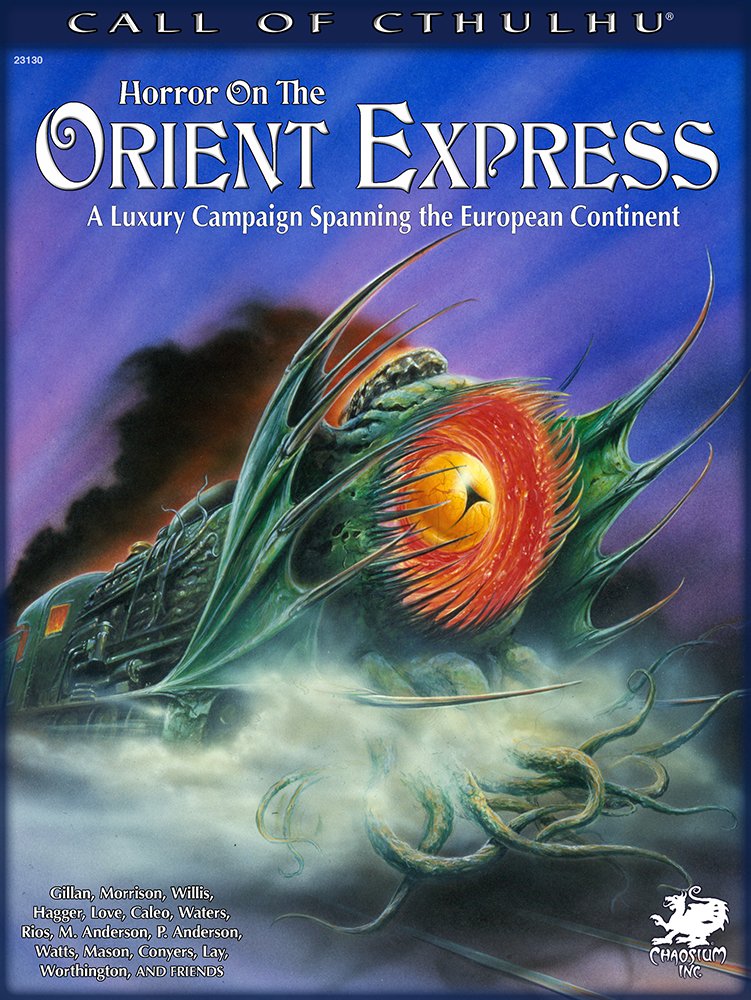
The Doom That Came to Lovecraft

The Doom That Came to Lovecraft

santhulhuI turned 45 right before Halloween and once again I feel the cold claws of senescence tighten their grip around my throat. I used to pride myself on my memory, which, while not truly “photographic” – assuming such a thing even exists – was always extremely keen. Note that that I said “was.” Lately, I’m finding it harder and harder to keep the details of my wasted youth straight in my mind.

A good case in point concerns when I first encountered the writings of H.P. Lovecraft. I know for certain that it was after I first started playing Dungeons & Dragons, but before Chaosium released its Lovecraft-inspired RPG, Call of Cthulhu. That suggests, then, the likeliest date is sometime in 1980, since, by then, I’d not only have acquired a copy of Gary Gygax’s masterwork, the Dungeon Masters Guide, whose Appendix N cited HPL as one of “the most immediate influences upon AD&D,” but had also made the acquaintance of older players who frequently extolled the virtues of pulp literature to my friends and I.

What I do remember is that, at the time, the very name “Lovecraft” sounded fantastical to me. I almost couldn’t accept that it was a real name, since I’d never heard of anyone with such a moniker before. This probably contributed greatly to the reverence in which I’d later hold his writings, a reverence that has only increased as I’ve grown older and had occasion to read and re-read his stories countless times.

What I also remember was that, not long after learning about the Gentleman from Providence, I rushed to my local library to find copies of his “books,” not yet realizing that most of his output consisted of short stories. What I found were battered copies of some of the Ballantine Adult Fantasy collections, along with the Scholastic Book Services edition of The Shadow over Innsmouth and Other Stories of Horror. The latter had a lasting effect on my imagination, thanks to its creepily comical depiction of a spectral inhabitant of the titular New England town. From then on, Lovecraft’s creations struck a powerful chord with me and, as I later learned, with so many of my fellow gamers. They were the epitome of horror.

How times have changed.

Read More Read More

Gold, Frankincense, Myrrh… and Ectoplasm?! Ghost Stories for Christmas

Gold, Frankincense, Myrrh… and Ectoplasm?! Ghost Stories for Christmas

Victorian Ghost StoriesNow that we have passed the point of no return (also known as Thanksgiving), we have plunged irrevocably into the Christmas season, that time of the year which is richest in traditions, be they old or new, religious or secular, serious or lighthearted, shared with millions worldwide or kept hidden behind closed doors and reserved for the private humiliation of those we hold dearest.

Decorating a tree with lights and ornaments, kissing under the mistletoe, hanging stockings, singing carols — these widespread traditions are the instantly recognizable emblems of the season, while other rituals are restricted for a select circle. For one household the season’s signifier may be listening to Dad read the nativity story from the Gospel of Luke, for another group it may be gathering around the television to watch It’s a Wonderful Life, while for yet another family it may be nervously edging away as Uncle Carl begins his annual Yuletide disquisition on America’s inexorable slide into socialism.

Traditions come and traditions go, however. An observance that has largely faded from view is the once-widespread custom of reading ghost stories on Christmas Eve. As with many Christmas traditions, this one began in Victorian England. Of course long before the Victorians, Christmas was associated with the miraculous and the supernatural, but during those middle and later years of the nineteenth century, the season became explicitly linked with the overtly ghostly as well.

The Victorian era was the high-water mark of the traditional ghost story, which was a staple of the magazines and inexpensive books that vied for the attention of an expanding and prosperous middle class. These publications were hungry for content, and ghost stories helped fill that need. Some of the form’s greatest masters — Joseph Sheridan LeFanu, Amelia Edwards, Mary Braddon, Edith Nesbit, and M.R. James, among many others — wrote during this period.

However, it was Charles Dickens who was, more than any other person, responsible for the identification of one particular time of year — the Christmas season — with the explicitly ghostly. Dickens loved a good ghost story; he had, in the words of his friend and biographer, John Forster, “something of a hankering after them.”

Read More Read More

The Classic Games of Metagaming: Ogre

The Classic Games of Metagaming: Ogre

Ogre Metagaming-smallLast week, I wrote about discovering early Metagaming advertisements in copies of Analog and Asimov’s SF, as well as other science fiction magazines I read in the late 1970s. The ads — for tiny science fiction games I could carry around in my pocket — fired my imagination.

I was already gaming with my friends over lunch at school and the thought of playing games featuring giant robot tanks and wizard duels instead of another round of chess was too much to resist. I mailed off my check and waited impatiently for my treasures to arrive.

Now, ask most young folks how they felt when the magical item they ordered from the back of a comic or magazine finally came in the mail and you’ll hear some pretty sad stories. Those X-ray spectacles? A crushing disappointment. That family of sea monkeys? In reality, tiny frozen shrimp. And don’t even ask about the Polaris Nuclear Submarine.

But Metagaming microgames were not disappointments. Quite the opposite.

Microgame #1: Ogre was one of the first games I ordered from Metagaming. It was not the last. I still remember the first trial games I played with my brother Mike; the thrill of moving my Ogre cybertank relentlessly across the heavily cratered map board. Ogre was a wonderful game — brilliantly simple in design, easy to set up, and lightning fast to play.

It became, in fact, one of the most successful science fiction board games ever published, selling hundreds of thousands of copies. It went through numerous editions, and is still in print and available today — in both a no-frills reprint of the original 1977 edition and a limited edition deluxe version with multiple giant mapboards, more than 500 oversized full-color unit counters, and 3-D models, which will run you over $150 (if you can find a copy).

Read More Read More

New Treasures: Jala’s Mask by Mike and Rachel Grinti

New Treasures: Jala’s Mask by Mike and Rachel Grinti

Jala's Mask-smallThis is something of an unusual cover for Pyr. They’re known for their heroic fantasy and sword & sorcery, and their covers have reflected that — with colorful action set pieces usually illustrating a dynamic narrative moment (Check out a few of the Pyr covers we’ve showcased in the past few months, such as James Enge’s The Wide World’s End, or the Nebula Awards Showcase 2014.)

Not so for Jala’s Mask, which shows a couple in dull islander garb standing on a beach, doing… well, not much of anything, really. Not what I usually expect from Pyr. Good to see some racial diversity on a fantasy cover — Lords knows this industry could use it — but  would it kill you to throw in a sword, or maybe a gratuitous sea monster? I’m just sayin’. At least there’s a dude in a mask floating behind the title to menace up the proceedings a bit — that’s something, anyway.

Fortunately, I’m intrigued by the back cover blurb, which introduces us to a woman who must steal the face of a god in order to save her people.

For two hundred years, Jala’s people have survived by raiding the mainland. By shaping the reefs around the Five-and-One Islands into magical ships, they can cross the ocean, take what they want, and disappear. Or so they have always believed. On the night after Jala becomes queen, a tide of magical fog sweeps over the islands, carrying ships from the mainland. Inside are a desperate people, driven half-mad by sorcery and looking for revenge.

Now Jala — caught between her family’s unending ambitions, the politics of the islands thrown into turmoil, and her unexpected love for the king — must find a way to save them all if she can.

But there are greater powers at work, and the politics of gods are more terrifying than she could have imagined. To save the Five-and-One Islands she may have to leave them behind.

Mike and Rachel Grinti are also the authors of Claws. Jala’s Mask was published by Pyr on November 4, 2014. It is 285 pages, priced at $18 in trade paperback and $11.99 for the digital version. The cover art is by Marc Simonetti.

The Public Life of Sherlock Holmes: Holmes for Christmas

The Public Life of Sherlock Holmes: Holmes for Christmas

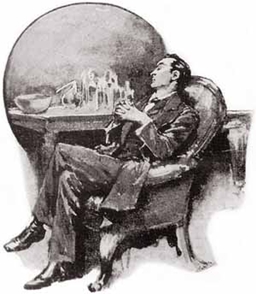
HolmesXmas_HolidaysOf the sixty Sherlock Holmes tales penned by Sir Arthur Conan Doyle, only one is set during the holiday season. “The Adventure of the Blue Carbuncle” takes place two days after Christmas and involves a worn bowler hat and a goose worth more dead than alive.

That story doesn’t actually have a whole lot to do with Christmas; it just happens to occur shortly afterwards. However, there are a few books in my Holmes library that definitely qualify as Christmas adventures.

One of my favorite anthologies is 1996’s Holmes for the Holidays, which includes fourteen Christmas-themed adventures. Any Holmes anthology is likely to be a mixed bag. However, I consider this to be among the better of the multiple-author collections on my Holmes bookshelf.

Loren D. Estleman’s (author of Holmes pastiches featuring Dracula and Jekyll and Hyde) “The Adventure of the Three Ghosts” is a sequel to Dickens’s A Christmas Carol. Texan Bill Crider (give his Dan Rhodes mysteries a whirl) also continues the Scrooge story with “The Adventure of the Christmas Ghosts.”

William DeAndrea’s “The Adventure of the Christmas Tree” is a neat piece of Christmas-themed espionage. While Anne Perry’s “The Watch Night Bell” is one of my favorite Holmes holiday stories.

Read More Read More

The Top 50 Black Gate Posts in October

The Top 50 Black Gate Posts in October

Dragon34-KenRahmanSometimes people critique Black Gate by looking over the site, noting our focus on books and magazines, and proclaiming us “books snobs.”

That’s not true at all, I argue calmly. Look — you know what the most popular article on the Black Gate website was just last month? It was Scott Taylor’s Art of the Genre post, “The Top 10 Dragon Magazine Covers of the 1970s & 80s.”

You see? We’re not merely book snobs. We’re also art snobs.

This is Scott’s second month at the top of the charts — back in September, he claimed the top spot with his article on the Top 10 TSR Cover Paintings of All Time, a nostalgic look at the finest artwork from the Golden Age of roleplaying. Scott certainly knows his stuff when it comes to fantasy art — and our readers love him for it.

The next few articles at the top of the charts don’t do much to help my thesis that we’re not book snobs, however. The #2 article for the month of October was M. Harold Page’s “Four Books on Historical European Martial Arts.” Hard to argue that you’re not just all about books, when your most popular posts are all about books.

The #3 article for the month was my look at The Fantasy Roots of Fan Fiction, an argument that the modern fan fiction phenomenon grew largely out of the tradition of the pastiche novel, and especially the long-running success of the Conan pastiche, and the success of writers like Lin Carter, who wrote pastiches for most of his career.

Read More Read More

Avatars of Wizardry

Avatars of Wizardry

AvWizMore often than not, the best art comes from the indie side of any field. Case-in-point:

AVATARS OF WIZARDRY from P’rea Press is one of the best works of pure dark fantasy I’ve read in a long time. This superb collection of poems inspired by the work of Clark Ashton Smith and his mentor George Sterling offers one fantastic, phantasmal head trip after another, transcendental goth romanticism with shades of cosmic sword-and-sorcery.

I’m not usually someone who seeks out poetry. I teach it often, but fantastic poetry is something of a rarity in academic texts. Reading this collection (with some Pink Floyd, Kyuss, or Monster Magnet rumbling softly in the background for good measure) takes me right back to the “wonder years” of my early reading life. From the ages of 9 to 12, I discovered the amazing fiction of Edgar Rice Burroughs, J.R.R. Tolkien, Robert E. Howard, Clark Ashton Smith, and other great fantasists. Reading AVATARS OF WIZARDRY sends me back to those days when fantasy was still dangerous, mysterious, and full of strange wonders.

One of Smith’s greatest poems “The Hashish Eater, or The Apocalypse of Evil” was inspired by George Sterling’s “A Wine of Wizardry.” Both of these poems are celestial odysseys of fantasy perfection. They begin AVATARS OF WIZARDRY back-to-back and are followed by eight poems from more contemporary writers: Alan Gullette, Wade German, Michael Fantina, Richard L. Tierney, Liegh Blackmore, Bruce Boston, Earl Livings, and Kyla Lee Ward. The result is an epic fantasy experience like none other. The words “psychedelic” and “phantasmagorical” are barely enough to describe it.

These poems aren’t for the shallow-minded 160-character world that we live in today. Each one is an epic adventure beyond space and time, directly into the center of eternal imagination, rife with cosmic transcendence. This is spirit-freeing fantasy in the best sense of the word, literary escapism as psychological catharsis. It’s some of the best damn poetry I’ve ever read, which makes it some of the best fantasy I’ve ever read, period.

You don’t have to be a poetry expert (or fan) to take this cosmic ride. Just get yourself a copy before they’re all gone.

Voices in Fantasy Literature, Part 4

Voices in Fantasy Literature, Part 4

no-lonely-seafarer-208x160It’s not just Hallowe’en, Christmas, and Thanksgiving, but it’s also that time of year when I try to catch up my 2014 short fiction listening so that I’ll be ready to make some choices about the Nebulas, the Hugos, and the Auroras.

This is a good kick in the pants for me, and it lets me pick up the thread of my Voices in Fantasy Literature series (see parts I, II, III). I started with Lightspeed magazine and three stories I loved in my first batch of listening.

No Lonely Seafarer” by Sarah Pinsker tells the coming-of-age story of Alex Turlington, an intersex orphan being raised by a tavern-keeper in a sea-town. When a flock of sirens set up a nest overlooking the harbor, all the sailors are trapped in the town, until one captain has an idea of how to get past them, and it involves Alex. There’s some beautiful, closely intimate language, but the strength of the story is in Alex’s growth. A great listen in under 40 minutes.

Illustration sketch of  woman with eagle wings, made with digital tabletThe Quality of Descent” by Megan Kurashige is a different kind of fantasy voice, one that is confused, vacillating, self-deprecating, and self-eviscerating by turns, a thematic match for this love collision story. The narrator gets unusual animals and items for parties and performers, and is visited by a vagabond girl with wings on a bicycle. They are both broken in different ways and this is that kind of love story. Beautifully done. Worth listening to a second time. Clocks in at 32 minutes.

The last story, “Thirteen Incantations” by Desirina Boskovitch, is a bit of a cheat for me, because this is a 2011 story from fantasy magazine and was only recently reprinted in Podcastle, but was such a captivating listen that I couldn’t leave it off.

Read More Read More

Robert Silverberg on the Tragic Death of John Brunner

Robert Silverberg on the Tragic Death of John Brunner

The Great Steamboat Race John Brunner-smallSix months ago, I wrote about an unusual find I made online: The Great Steamboat Race, an enormous and ambitious historical novel written by none other than John Brunner. Brunner, of course, was a highly regarded SF and fantasy writer, beloved even today for Stand on Zanzibar, The Complete Traveller in Black, and many other novels. He died in 1995, at the World Science Fiction convention.

The Great Steamboat Race was an enigma. I’d never seen a copy before, never run across one in dozens of years of haunting bookstores. The copy I found online was very inexpensive — less than the $7.95 cover price for a brand new copy, for a book published over 30 years ago — so I bought it. I wrote it up as a Vintage Treasures curiosity, and then more or less forgot about it.

At least until this week, when I was browsing through a collection of Asimov’s SF magazines from the late 90s I recently acquired. Before I packed it away in the Cave of Wonders (i.e. the basement), I plucked one out of the box at random, and settled back in my big green chair to read it.

It was the March 1996 issue, with stories by Tony Daniel, Suzy McKee Charnas, Steven Utley, and the late John Brunner. I always take the time to read Robert Silverberg’s Reflections column, and I flipped to that first. The title was “Roger and John,” and it was a tribute to two recent deaths that had shaken the SF community: Roger Zelazny and John Brunner. Silverberg had been friends with both men for decades and said “Their deaths, for me, illustrate the difference between a tragedy and a damn shame. Let me try to explain.”

Silverberg portrays Zelazny’s death as a damn shame, saying “Roger was the happy man who led a happy life… By the time he was twenty-five he had begun what was to be a dazzling career in science fiction.” Zelazny’s career, Silverberg observes, had been filled with a series of triumphs, and his death by cancer at the age of 58 had robbed the field of future great work from a master.

Brunner, Silverberg observes, was a tragic figure. And central to the tragedy was the novel The Great Steamboat Race.

Read More Read More

The Hardy Boys Meet M.R. James: The Supernatural Mysteries of John Bellairs

The Hardy Boys Meet M.R. James: The Supernatural Mysteries of John Bellairs

The Mummy, the Will, and the Crypt-smallIn the world of publishing today, books written for children and young adults are the tails that are increasingly wagging the dog, especially when those books also fall into the horror, fantasy, or science fiction categories. Many mainstream or “literary” authors would probably sell their souls to Voldemort for the kind of success that J.K. Rowling achieved with her Harry Potter books, though Thomas Pynchon or Phillip Roth pushing Harry from his place atop the bestseller lists would be rather like a Marxist literary critic becoming a judge on Dancing With the Stars. (That’s something I’d like to see, actually.)

One relatively new aspect in this ascendance of what is called YA (or young adult) fiction is its popularity with older readers. Where in previous years some might be embarassed to be seen reading books written for younger readers, now there is nothing unusual in seeing people with jobs, mortgages, and children of their own eagerly perusing The Hunger Games or Twilight.

And why not? (Well, I could give you a big why not for Twilight, but that’s another matter.) Good writing comes in all sorts of packages, and there are plenty of legitimate pleasures to be had in reading the best YA books.

However, in sorting through the many worthwhile reads available in this era of new-found YA respectability, it is easy to overlook work that was written before the current boom; some fine authors of only twenty or thirty years ago are now unjustly neglected, their reputations eclipsed by those who are fortunate enough to still be alive and producing new work in this YA golden age (a golden age of cultural visibility and publishing advances, if nothing else.)

One such writer who perhaps came just a little too early was the once highly popular writer of children’s supernatural mysteries, John Bellairs, who died in 1991.

If Bellairs is remembered by fantastic fiction readers at all, it is for his single adult novel, the superb and eccentric fantasy The Face in the Frost, which was published to little notice in 1969. (Though in his 1973 history of the genre, Imaginary Worlds, the ever-perceptive Lin Carter hailed it as “one of the best fantasy novels to appear since The Lord of the Rings.”)

Read More Read More