Changa: Before the Safari by Milton Davis
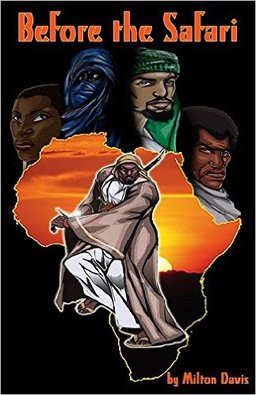 Remember swords & sorcery? You know, the wild, adventurous storytelling that brought most of us here together at Black Gate. I’ve put it on the back burner for the last couple of months, choosing instead to delve into epic high fantasy. But a few weeks ago I got a message from sword & soul impresario/writer/publisher Milton Davis, who wanted to know if I’d be interested in reading the new Changa collection, Before the Safari, pre-publication. Is Conan’s hair square-cut? Does Ningauble have seven eyes? Is Elric bad luck for his friends? Yes. There are a few perks to reviewing at Black Gate and this is one of them. (The hard copy won’t be hitting the shelves until July, but you can get the e-book right now).
Changa Diop, for those not familiar with him (and every self-respecting S&S fan should be by now), was once a prince of the Bakongo people, but his father was overthrown and killed by the sorcerer Usenge. In the original collections, Changa’s Safari 1, 2, and 3 (reviewed by me and Joe Bonandonna), we learned that Changa eventually ended up enslaved and forced to fight in gladiatorial combat. He was rescued from his bloody life by the Swahili Belay. A merchant, Belay taught Changa his trade and eventually made him heir in preference to his own sons.
The three Safari books tell of Changa’s great adventure as he takes his merchant fleet from 14th century Sofala, in present day Mozambique, across the Indian Ocean to China and back again. If you have the slightest interest in old school S&S, these are right up your alley. Changa Diop is an adventurer of heroic proportions and deeds, worthy of standing alongside any of the S&S greats. Constantly pushed to his limits, he faces off against demons, pirates, evil sorcerers, and monsters — lots and lots of monsters.




 I don’t know how I forgot “superhero” when I wrote about