Browsed by
Author: John ONeill

New Treasures: The Devil’s Only Friend by Dan Wells

New Treasures: The Devil’s Only Friend by Dan Wells

The Devil's Only Friend-smallDan Wells’ novel, I Am Not A Serial Killer, featuring monster-killing teenage sociopath John Cleaver, was the first novel in a trilogy. It was followed by Mr. Monster (2010) and I Don’t Want To Kill You (2011). Wells became a New York Times bestseller with Ruins, the third novel in his YA Partials series. Now he returns to the John Cleaver series with the first novel in a brand new trilogy, The Devil’s Only Friend.

John Wayne Cleaver hunts demons: they’ve killed his neighbors, his family, and the girl he loves, but in the end he’s always won. Now he works for a secret government kill team, using his gift to hunt and kill as many monsters as he can…

…but the monsters have noticed, and the quiet game of cat and mouse is about to erupt into a full scale supernatural war.

John doesn’t want the life he’s stuck with. He doesn’t want the FBI bossing him around, he doesn’t want his only friend imprisoned in a mental ward, and he doesn’t want to face the terrifying cannibal who calls himself The Hunter. John doesn’t want to kill people. But as the song says, you can’t always get what you want. John has learned that the hard way; his clothes have the stains to prove it.

When John again faces evil, he’ll know what he has to do.

I’m not the only reader in my house, and I have to admit I wasn’t the one who discovered The Devil’s Only Friend. My daughter brought it home from the bookstore on Saturday, and has been glued to it ever since. Maybe I’ll get her to do a review.

The Devil’s Only Friend was published simultaneously in hardcover and trade paperback by Tor Books on June 16, 2015. It is 304 pages, priced at $25.99 in hardcover, $14.99 in trade paperback, and $9.99 for the digital version.
The Omnibus Volumes of Murray Leinster

The Omnibus Volumes of Murray Leinster

Med Ship-small Planets of Adventure-small A Logic Named Joe-small

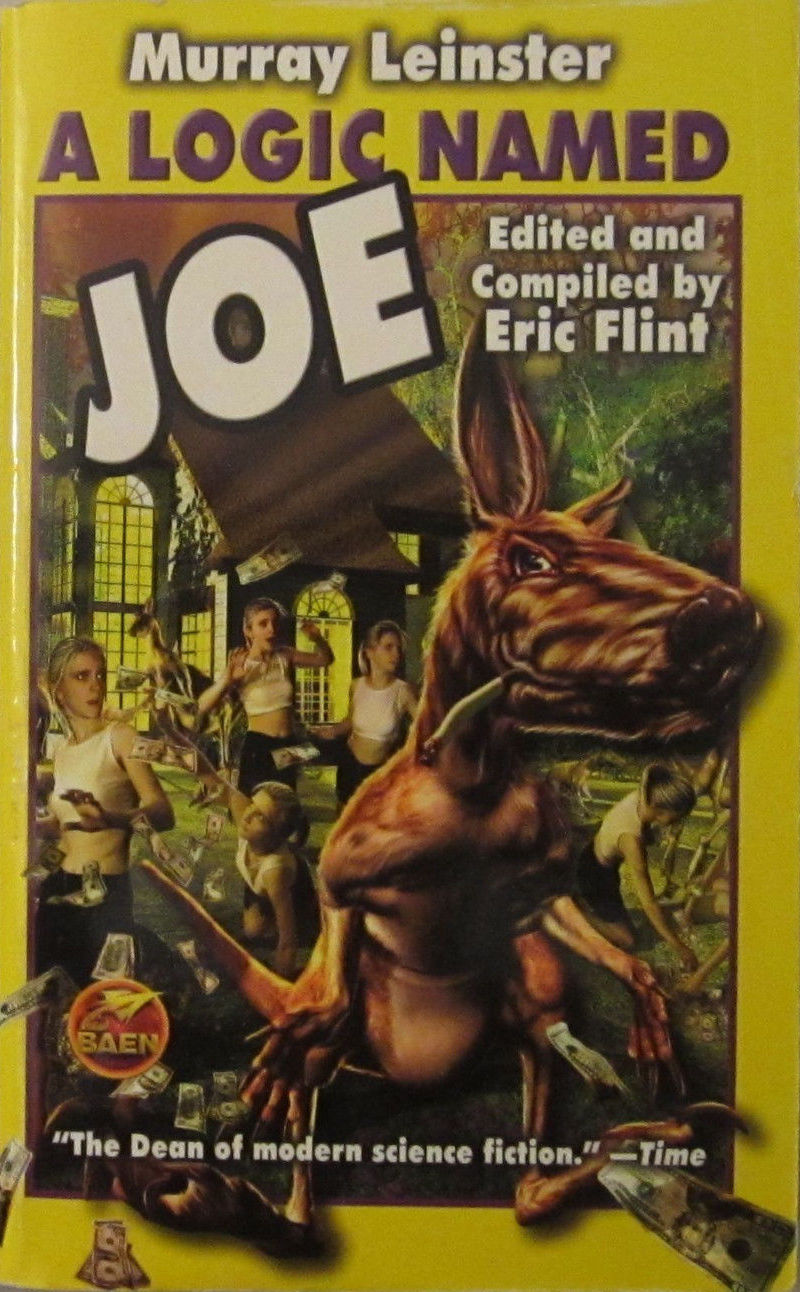
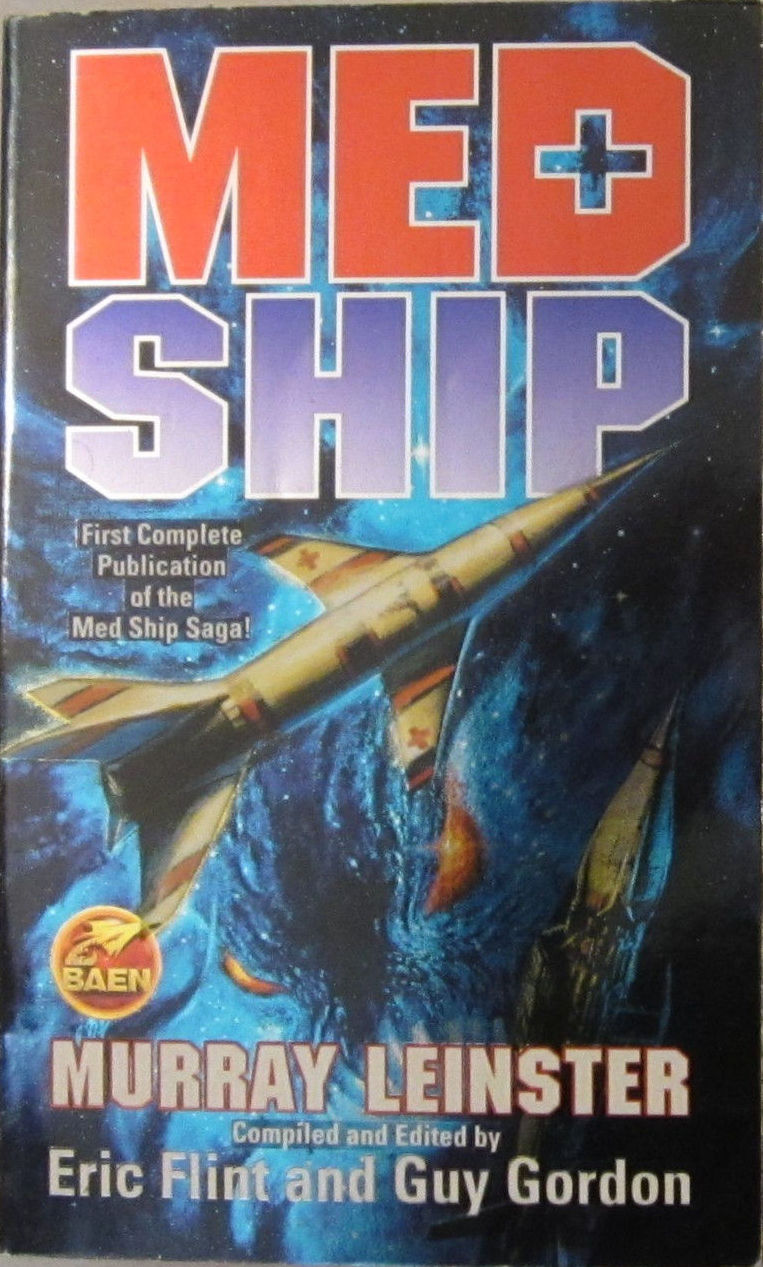
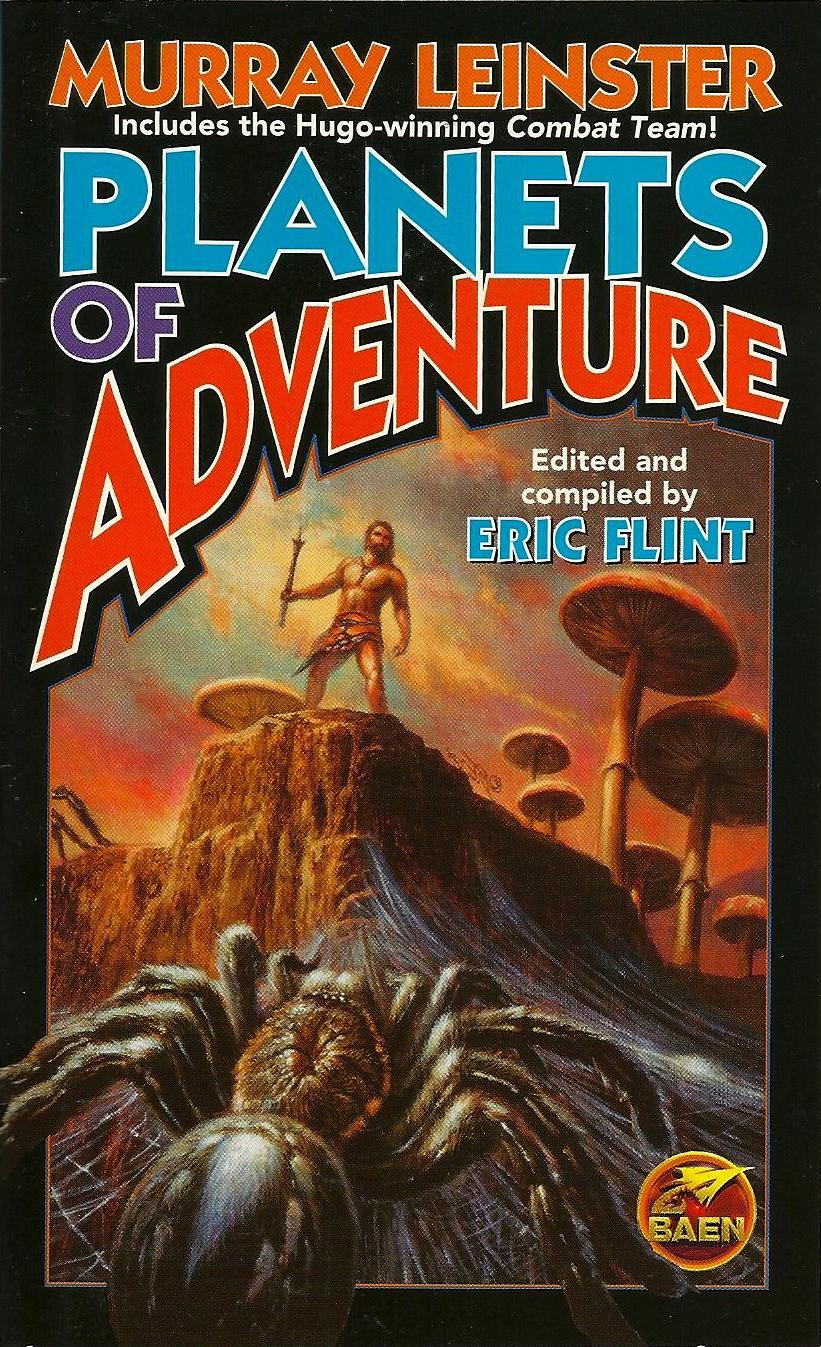
Last week, in my article on The Omnibus Volumes of James H. Schmitz, I noted how Eric Flint edited seven omnibus volumes collecting the science fiction of James H. Schmitz, starting in 2000. Those books were successful enough that Eric expanded his project to include other great SF and fantasy writers of the mid-20th Century.

And boy, did he expand it. By the time he was done, Baen had published volumes dedicated to A. E. Van Vogt, Michael Shea, Howard L. Myers, Keith Laumer, Randall Garrett, Christopher Anvil, Cordwainer Smith, Lois McMaster Bujold, A. Bertam Chandler, P.C. Hogdell, Andre Norton, and many others. Today I want to look at the three volumes dedicated to Murray Leinster, “The Dean of Science Fiction,” whose work I think still has enormous appeal even today.

Read More Read More

Vintage Treasures: The Haunted Hotel by Wilkie Collins and 25 Other Ghost Stories

Vintage Treasures: The Haunted Hotel by Wilkie Collins and 25 Other Ghost Stories

The Haunted Hotel by Wilkie Collins and 25 Other Ghost Stories-small The Haunted Hotel by Wilkie Collins and 25 Other Ghost Stories-back-small

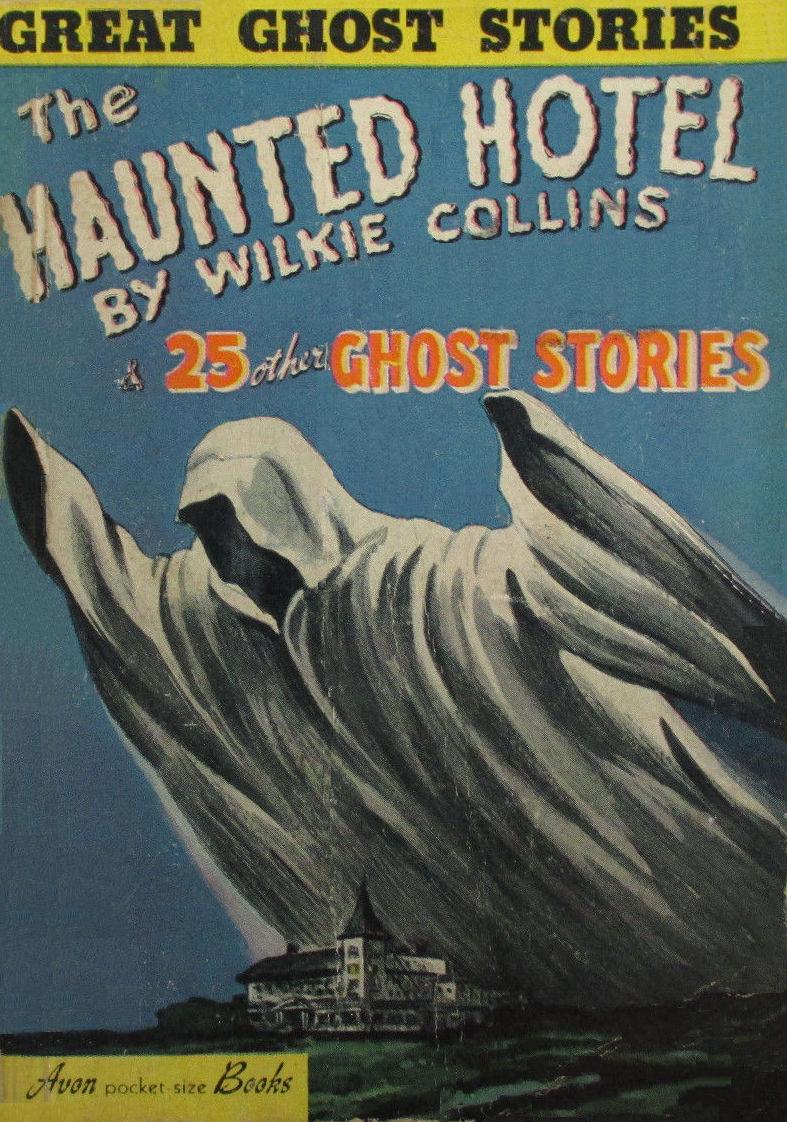
The Haunted Hotel by Wilkie Collins and 25 Other Ghost Stories is one of the oldest paperbacks I own. It is, in fact, one of the oldest fantasy paperbacks produced in the United States. It was published in 1941, just two years after Pocket Books released the first paperbacks in 1939, revolutionizing the American publishing industry. And like a lot of old things, it’s a little strange and doesn’t do things in a familiar way.

For one thing, as it was one of the first paperback anthologies ever produced, apparently no one thought the name of the editor was important. Some folks assume it was W. L. Parker, who wrote the intro, and others assume W. Bob Holland, but no one is really sure.

Also, it’s called The Haunted Hotel by Wilkie Collins and 25 Other Ghost Stories not because it contains The Haunted Hotel (by Wilkie Collins) and twenty-five more stories about ghosts, but because it’s actually a mash-up of two previously published books: the novel The Haunted Hotel (by Wilkie Collins), and Twenty-Five Ghost Stories. So naturally, the page numbering re-starts halfway through the book. In the early days of paperbacks, publishers were trying all kinds of wacky things. Except original titles, apparently. Because, hey, let’s not go crazy.

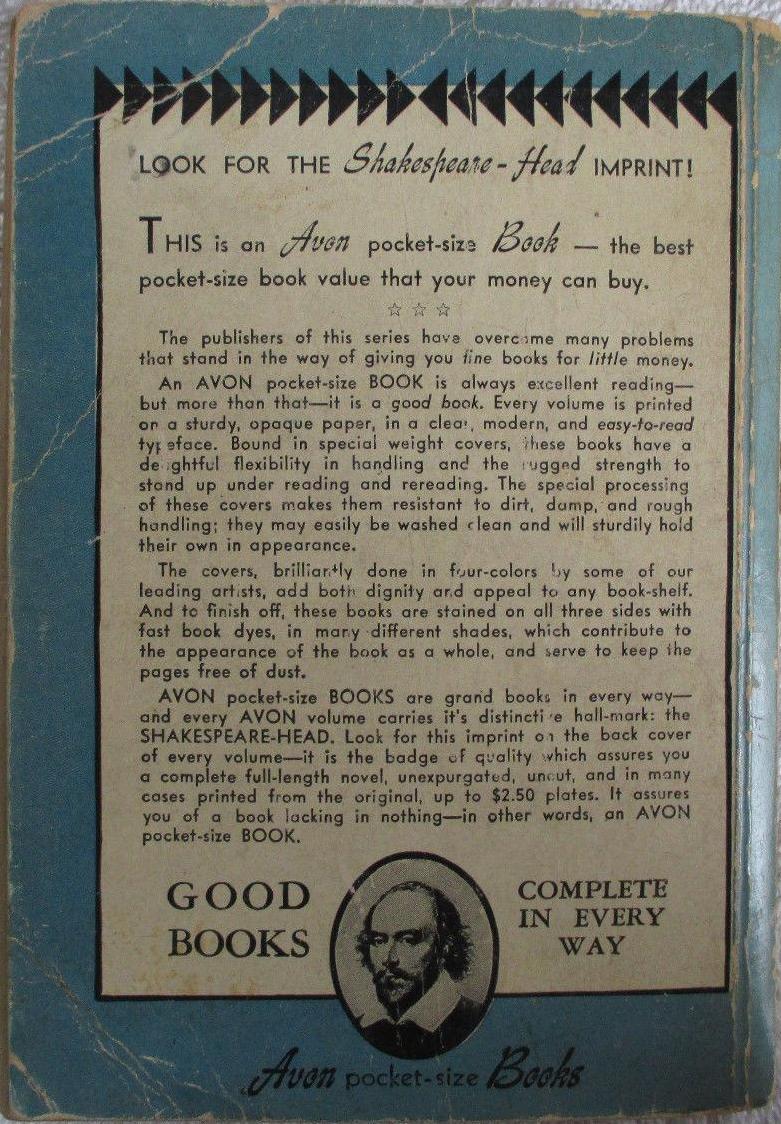
And another thing. Have a look at the strange back cover (click for a bigger image). Today, we think of the back cover as, you know, a great place to tell prospective buyers a little about the book in their hands. In 1941, you mostly told readers what the hell a paperback book was. You imparted critical information, like “opaque paper,” “delightful flexibility in handling,” and “stained on all three sides with fast book dyes.” It’s easy to mock the primitive publishers of 1941 today, but let’s face it — if they hadn’t sold their early readers on paperbacks, you and I would be reading books exclusively in hardcover and clay tablets.

Read More Read More

Bill Ward on Poul Anderson’s “Thud and Blunder” — Thirty Years Later

Bill Ward on Poul Anderson’s “Thud and Blunder” — Thirty Years Later

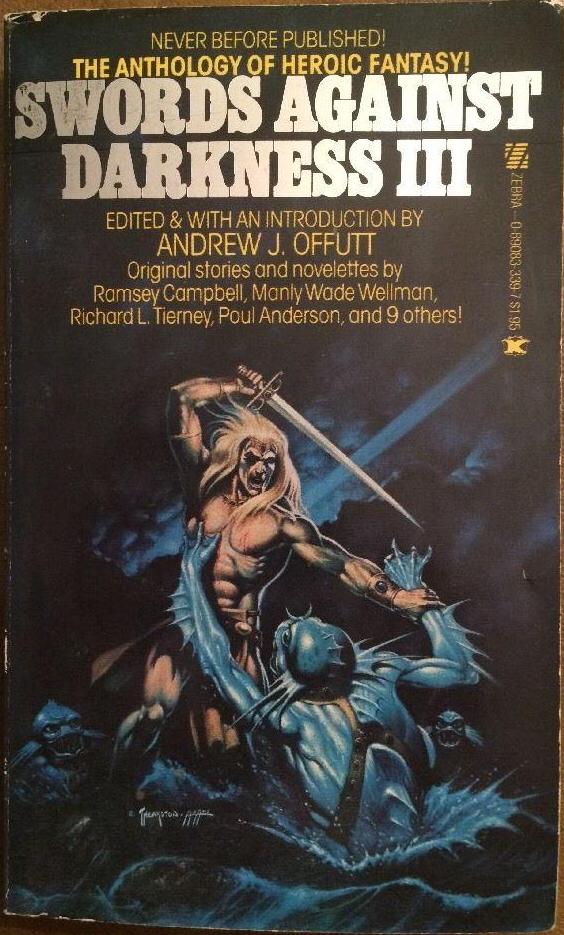
Swords Against Darkness III-smallNearly seven years ago, Bill Ward wrote “On Thud and Blunder — Thirty Years Later,” one of the first articles ever posted at BlackGate.com. Here’s what he said, in part.

It’s been thirty years since Poul Anderson wrote his essay on the need for realism in heroic fantasy, ‘On Thud and Blunder,’ which you can read in its entirety at the SFWA site, and I think it holds up well even though the genre — and the perception of it — has changed greatly. ‘On Thud and Blunder’ originally appeared in the third installment of Andrew Offutt’s classic anthology series Swords Against Darkness; though it was in the excellent, if unimaginatively named, collection of Anderson’s called Fantasy that I first encountered it. But already at the time of my reading a whole generation of writers had made a name for themselves by following the dictates of realism and common sense in designing their fantasy worlds.

The essay begins with a satire of the genre that features a barbarian cleaving through armor with a fifty-pound sword and riding a horse as if it were a motorbike, among other ridiculous things. It’s the kind of thing that gave heroic fantasy and sword and sorcery a bad name, and perhaps the sort of thing that meant it would soon be eclipsed by a rising tide of ‘high fantasy’ in the eighties and nineties. But, in 1978, hf — as Anderson terms heroic fantasy in an abbreviation that seems to have never caught on — was an emerging star.

In the Comments section, James Enge wrote, “Thanks for this: I’m a big Anderson fan and it’s a pleasure to reread this article… it’s still the authentic points of concrete imagination that strike deep, and Anderson was a past master at those.”

Read the complete article here. We’ll be presenting more classic articles from BG‘s rich history over the next few months.

Apex Magazine #74 Now on Sale

Apex Magazine #74 Now on Sale

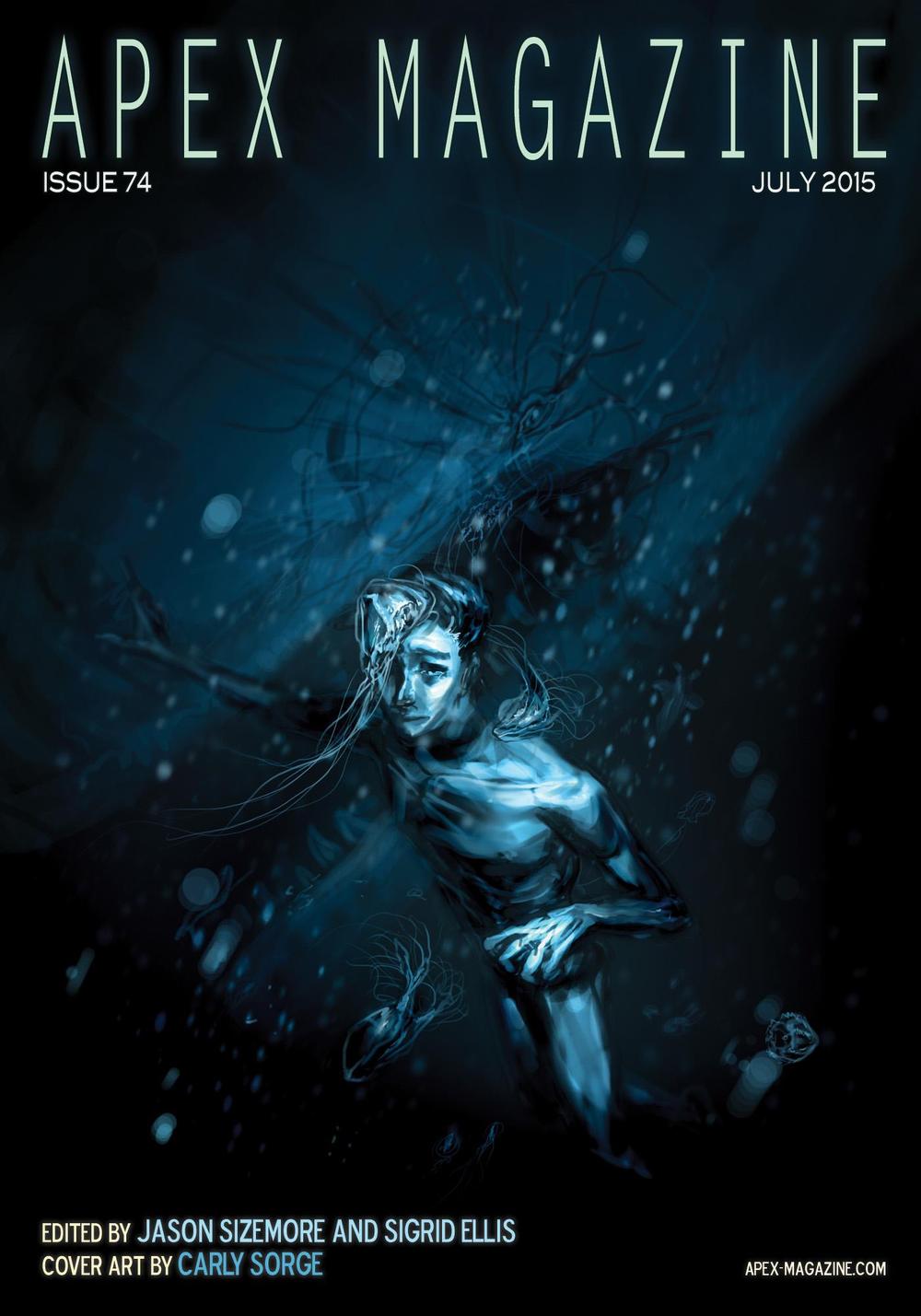
Apex Magazine Issue 74-smallCongratulations to Ursula Vernon, whose story “Jackalope Wives” (Apex 56) won the Nebula Award for Best Short Story! Charlie Jane Anders at io9 called it “the most beautiful story I’ve read in ages.” Check it out here.

Columnist Charlotte Ashley reviews the Hugo Award short fiction nominees this month in her short fiction column in Apex #74, and she address the controversy head on:

I will not be coy and pretend I do not know that the contenders for this year’s Hugo Awards are controversial. The nominees in, especially, the short fiction categories have mostly been drawn from the “Rabid Puppies” slate: stories chosen to reflect the values of a vocal ideological minority in fandom, often published by them directly. These are stories that were largely unfamiliar to most readers of speculative fiction until very recently.

I intend to vote in the Hugo Awards, and while I am well aware that voting “No Award” in the face of a slate offered in bad faith is an option preferred by many of my peers, I prefer to make my decisions armed with well-informed reasons for my choices. I have opted to read the slates with a generous attitude, to determine for myself if there are any hidden gems in the corners of SFF that I have unfairly overlooked.

“On A Spiritual Plain” by Lou Antonelli (Sci Phi Journal #2) is definitely not that gem. This is a straight-forward piece about a Methodist minister posted to a remote outpost on the planet Ymilas. The local aliens are a “low-tech highly-ritualized” people who live alongside the ghosts of their dead, called “Helpful Ancestors.”…

Read the compete article online here.

Read More Read More

Future Treasures: The House of Shattered Wings by Aliette de Bodard

Future Treasures: The House of Shattered Wings by Aliette de Bodard

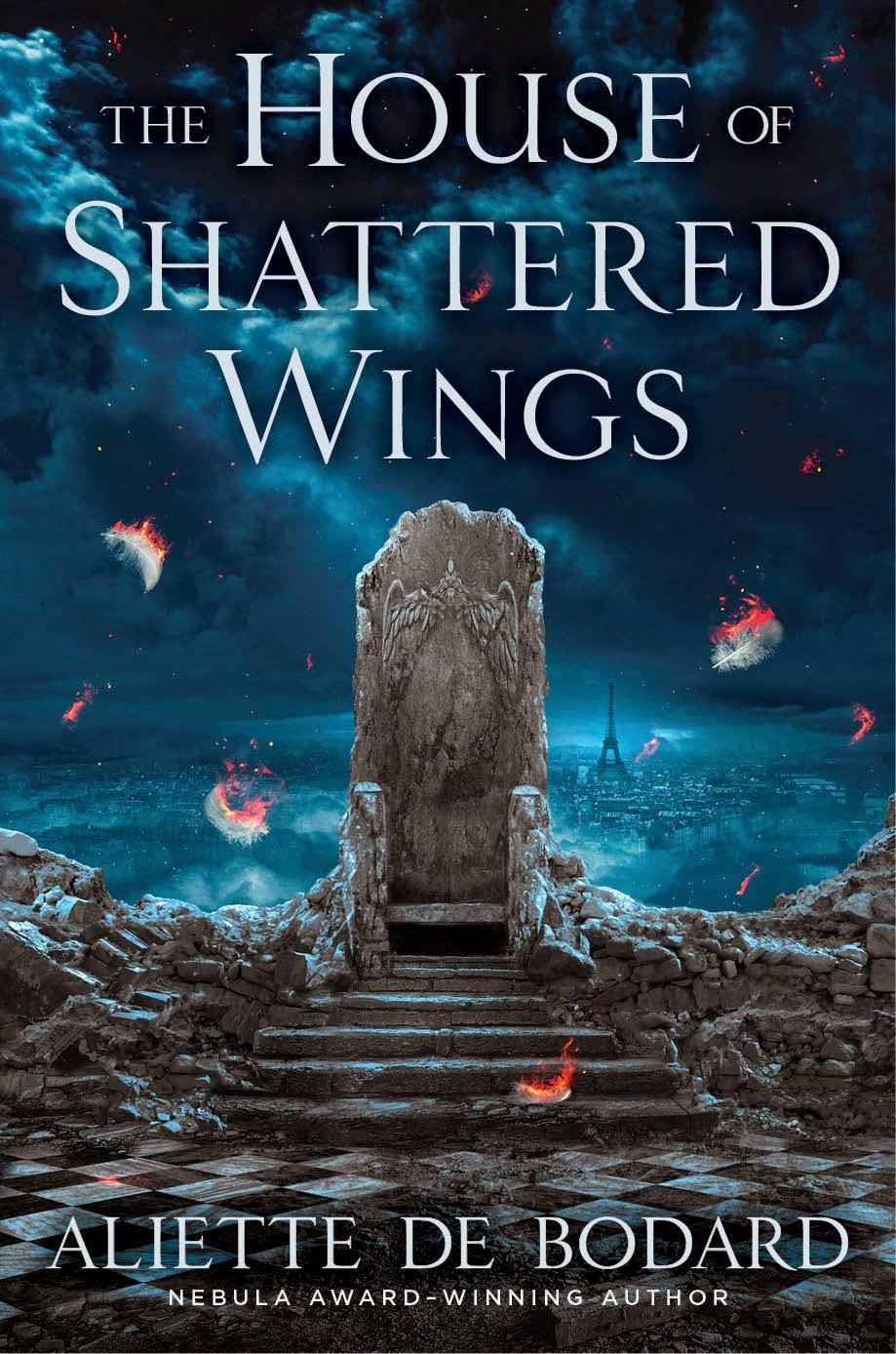
The House-of-Shattered-Wings-smallI’ve been a fan of Aliette de Bodard since the publication of her Aztec mystery novels, collected in Obsidian & Blood, so I was thrilled to have the chance to meet her at the Nebulas last month. She is articulate, funny, and absolutely charming in person, and I’m very excited about her upcoming fantasy novel, The House of Shattered Wings, to be published by Roc next month.

Aliette has won the Nebula Award (twice), the Locus Award, and the 2010 British Science Fiction Award, and has been nominated multiple times for the Hugo. The House of Shattered Wings is set in a devastated Paris ruled by fallen angels, and tells a tale of the War in Heaven, divine power and deep conspiracy…

In the late twentieth century, the streets of Paris are lined with haunted ruins, the aftermath of a Great War between arcane powers. The Grand Magasins have been reduced to piles of debris, Notre-Dame is a burnt-out shell, and the Seine has turned black with ashes and rubble and the remnants of the spells that tore the city apart. But those that survived still retain their irrepressible appetite for novelty and distraction, and The Great Houses still vie for dominion over France’s once grand capital.

Once the most powerful and formidable, House Silverspires now lies in disarray. Its magic is ailing; its founder, Morningstar, has been missing for decades; and now something from the shadows stalks its people inside their very own walls.

Within the House, three very different people must come together: a naive but powerful Fallen angel; an alchemist with a self-destructive addiction; and a resentful young man wielding spells of unknown origin. They may be Silverspires’ salvation — or the architects of its last, irreversible fall. And if Silverspires falls, so may the city itself.

The House of Shattered Wings will be published by Roc on August 18, 2015. It is 402 pages, priced at $26.95 in hardcover and $12.99 for the digital version. The cover art is uncredited.
New Treasures: Beyond Redemption by Michael R. Fletcher

New Treasures: Beyond Redemption by Michael R. Fletcher

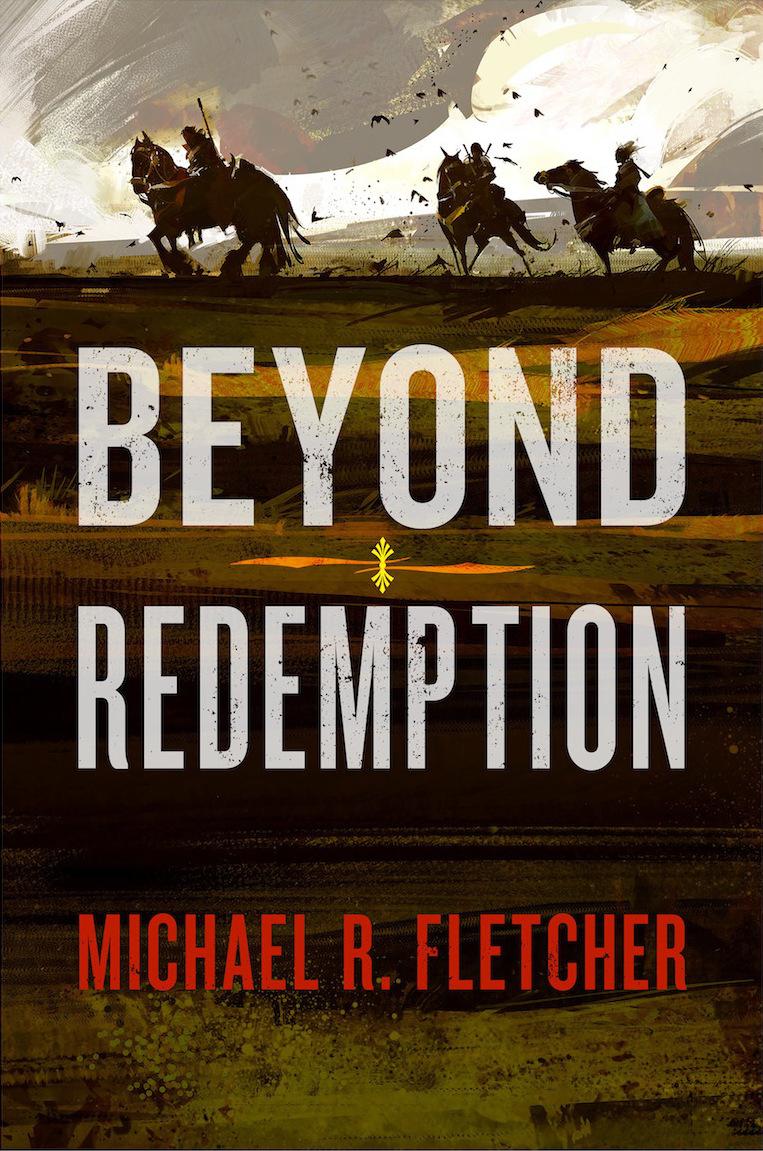
Beyond Redemption-smallWe all love to see new novels by our favorite writers. But this industry also warmly embraces new authors, especially when they bring something fresh and new. The latest hot buzz I’m hearing is for Canadian author Michael R. Fletcher, who’s just released his second novel, Beyond Redemption, the first in a gritty new series set in a world where delusion becomes reality… and the fulfillment of humanity’s desires may well prove to be its undoing.

When belief defines reality, those with the strongest convictions — the crazy, the obsessive, the delusional — have the power to shape the world. And someone is just mad enough to believe he can create a god . . .

Violent and dark, the world is filled with the Geistrekranken — men and women whose delusions manifest. Sustained by their own belief — and the beliefs of those around them — they can manipulate their surroundings. For the High Priest Konig, that means creating order out of the chaos in his city-state, leading his believers to focus on one thing: helping a young man, Morgen, ascend to become a god. A god they can control.

Trouble is, there are many who would see a god in their thrall, including the High Priest’s own doppelgangers, a Slaver no one can resist, and three slaves led by possibly the only sane man left. As these forces converge on the boy, there’s one more obstacle: time is running out. Because as the delusions become more powerful, the also become harder to control. The fate of the Geistrekranken is to inevitably find oneself in the Afterdeath. The question, then, is:

Who will rule there?

According to Fletcher’s bio, the next two novels in the Manifest Delusions series, The All Consuming and The Mirror’s Truth, are already complete, and are currently being edited for release.

Beyond Redemption was published by Harper Voyager on June 16, 2015. It is 512 pages, priced at $15.99 in trade paperback and $10.99 for the digital version.

Is Berkeley Breathed Returning to Bloom County?

Is Berkeley Breathed Returning to Bloom County?

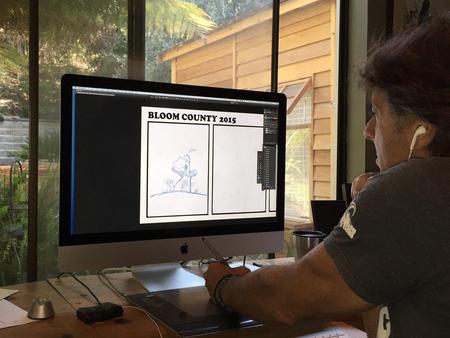
Berkeley Breathed draws Bloom CountyBerkeley Breathed, creator of the Pulitzer Prize-winning comic strip Bloom County, posted the enigmatic image at left on his Facebook page, showing him working on a new Bloom County strip, with the caption, “A return after 25 years. Feels like going home.”

Bloom County, one of the finest comic strips of the 20th Century, ran from December 8, 1980 to August 6, 1989. It featured a great deal of political satire and commentary on pop culture, and introduced the characters Bill the Cat, 10-year-old newspaper reporter Milo Bloom, the completely moral-free attorney Steve Dallas, and Opus the Penguin. Breathed ended the strip in 1989 to focus on a Sunday-only comic, Outland, and later a number of best-selling children’s books, including A Wish for Wings That Work: An Opus Christmas Story (1991), The Last Basselope (1992), Goodnight Opus (1993), and Mars Needs Moms! (2007), adapted into the Disney flop of the same name produced by Robert Zemeckis in 2011.

Breathed has not elaborated the exact meaning of his comment, but it seems pretty clear he’s returning to Bloom County in some fashion (and within hours of his post, speculation had already begun to spread that that’s exactly what he’s doing, in places like the A.V. Club and Comic Book Resources.)

However, there are some clues in the comments. Donald Trump, who was frequently the butt of Breathed’s jokes, and who played a role in the demise of the original strip (the final storyline featuring Trump buying out the strip and firing all the characters, forcing them to find jobs in other comic strips), is now running for President. Asked directly in the comments if Trump’s campaign had any influence on his decision to return, Breathed replied “This creator can’t precisely deny that the chap you mention had nothing do with it.” Stay tuned for additional details.

August 2015 Asimov’s Science Fiction Now on Sale

August 2015 Asimov’s Science Fiction Now on Sale

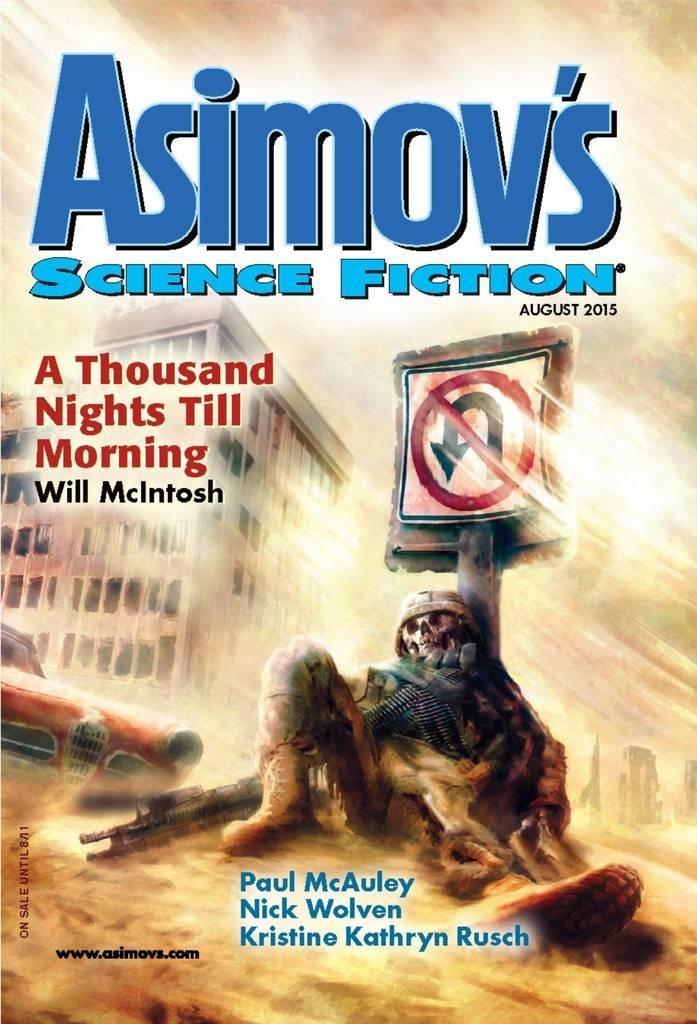
Asimov's Science Fiction August 2015-smallI buy Asimov’s for the fiction, but I always read Sheila Williams’ editorial first. This issue, she write some wise words on what appreciation means to authors — even authors who’ve made it to the pinnacle of their field.

Isaac Asimov… told me that he hadn’t felt himself a complete success until his peers, the Science Fiction Writers of America, named him a Grand Master… On our way to the Readers’ Award celebration that year, I mentioned Isaac’s wistful comments about the Grand Master Award to Stan [Schmidt, editor of Analog]. Stan was stunned. Despite all his accomplishments, even Isaac Asimov needed reassurance? Did this mean the situation was hopeless for the rest of us?…

I’ve always thought that Isaac’s desire for SFWA’s Grand Master Award had more to do with the human need to set goals and strive forward than it did with any further wish for career validation. After all, by 1987 Isaac had already won four Hugo Awards, two Nebula Awards, and five Locus Poll awards. In 1982 he’d finally made the New York Times best sellers’ list as well. Yet if even Isaac was not quite satisfied, then what about all the unsung scriveners — those that only win one or two awards, those that only end up with one or two nominations, and those that are never even nominated?…

I recently came across an amusing Facebook comment by Daniel Hatch. “I’ve been publishing stories for twenty-five years now, and every time someone says they’ve read one of them, I feel like I’ve won a Hugo. I think I have seven of them.”… So readers… let those writers know when you read and enjoy their tales. An appreciative comment may not be a Hugo or a Nebula, but it can be exactly what an author needs to keep producing their very best stories.

There’s lot of great fiction this month, with stories from Will McIntosh, Paul McAuley, Kristine Kathryn Rusch, and many others.

Read More Read More

Vintage Treasures: The Green Girl by Jack Williamson

Vintage Treasures: The Green Girl by Jack Williamson

The Green Girl-smallJack Williamson is a science fiction legend. He won the Hugo and Nebula award for his novella “The Ultimate Earth,” published in Analog in 2000, when he was 92 years old. He kept right on writing until 2006, when he died at the age of 98.

Of course, Jack Williamson first made a name for himself in the pulp era, when he was right at the top of the field, with novels like Golden Blood (1933), The Legion of Space (1934), The Cometeers (1936) and One Against the Legion (1939). That’s right, Williamson was a popular writer for more than seven decades. Sales records fall all the time in this fast-moving business…. but that one is likely to stay for a very long time.

Williamson is also highly collectible, especially his early paperback appearances. In my Vintage Treasures posts it’s routine for me to highlight highly desirable paperbacks from the 50s, 60s, and 70s that can be purchased for $5-$6, or less than the price of a modern paperback. (That’s what “highly desirable” means in the vintage paperback biz. Paperbacks that aren’t highly desirable usually sell for under $1.)

Not so with Williamson. His first book, The Green Girl, is one of the most collectible paperbacks in the field, with copies routinely selling on eBay from $25 – $150.

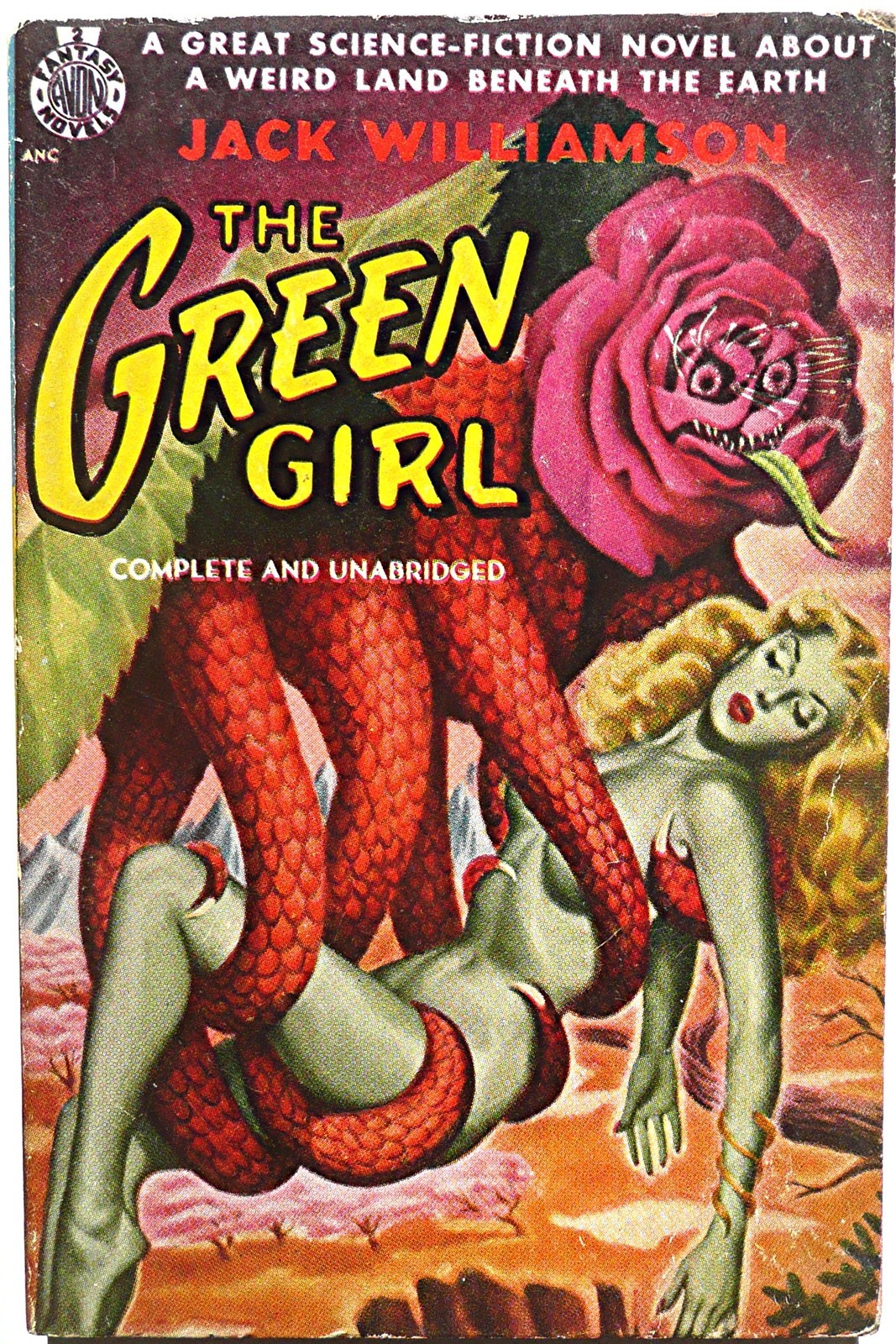
Of course, much of that has to with the eye-catching cover, painted by prolific pulp artist Ray Johnson. The novel was out of print for over 60 years (another reason for its collectibility), but that cover has spawned thousands of posters and t-shirts. Click on the image at left for a bigger version.

The Green Girl was originally published in two parts in Amazing Stories in March and April, 1930, and reprinted in 1950 as Avon Fantasy Novel #2, under editor Don Wollheim. While Williamson had had many popular appearances in the magazines by this point, this was his first solo appearance in book form.

Read More Read More