Writer’s Workshops: Under the Black Flag
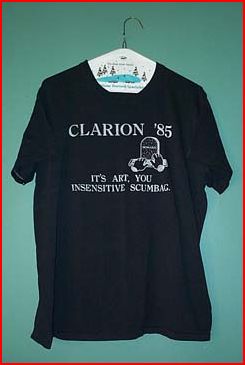 I actually once said to a fellow writer, “The best thing you could do for art is cut off your hands and bury your typewriter.”
Beyond the words themselves, it’s hard to know what’s worse about this: that I said it to someone I’m sure I liked or that I can’t remember to whom I said it.
I know it was at the Clarion Writer’s Workshop in the summer of 1985, then held at Michigan State University in East Lansing. I knew it was someone I liked, because I liked every one of my fellow workshoppers. As I got to know the 16 other participants, I felt these are my people!
The context for the remark was a workshop session. For those unfamiliar with the format, everyone in the workshop delivers an oral critique of a manuscript handed out — and one hopes, read — in advance, then the author responds. Clarion workshops are machines for producing pithy one-liners — often put downs — the best (worst?) of which are memorialized on tee-shirts printed in the last week or two of the workshop.
So how was my comment received? With laughter, unbelievably. It was even graphically depicted in our year’s tee-shirt. (Image courtesy of Bill Shunn.)
I should say that my class was, according to our instructors, famously cohesive and collegial. Either they lied to make us feel good or other Clarion classes went at each other with lawn darts.
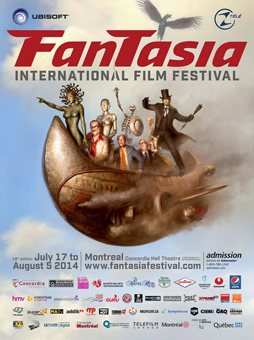 As I write this, I’m preparing for a vacation in the country. It’s an odd thing, in that the past three weeks have been a kind of vacation in themselves, as thanks to John O’Neill here at Black Gate and to the Fantasia staff, I was able to cover this year’s edition of the Fantasia International Film Festival. Still, watching (by my count) thirty-nine movies and writing about all of them was quite a project. Fun, though. I thought I’d take a quick post to wrap up my coverage by talking about what I’ve learned from the experience.
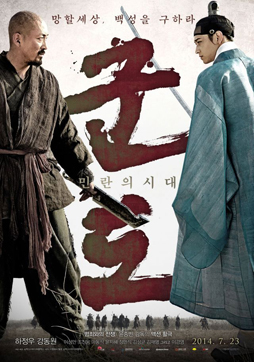 I closed out this year’s Fantasia film festival with a movie on Wednesday and another on Thursday. Together they seemed to say something about the festival, in that they had virtually nothing in common. They’re from different countries, they’re different genres of film, they have wildly different budgets — and yet somehow they both seem to belong at Fantasia. Unsurprisingly, one played the big Hall Theater, while the other screened at the small De Sève.
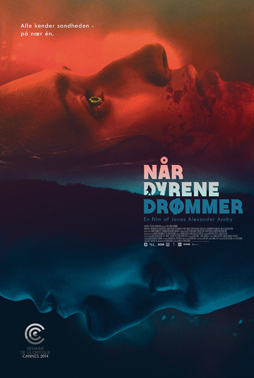 Last Tuesday saw the presentation of the official closing film of the 2014 Fantasia International Film Festival. Film festivals being what they are, there’d actually be another two days of films after that. In any event, I’d manage to see the closer, after catching two other movies earlier in the day.