Read an Original Short Story in the World of The Lazarus Gate and The Iscariot Sanction at the Barnes & Noble Sci-Fi Blog
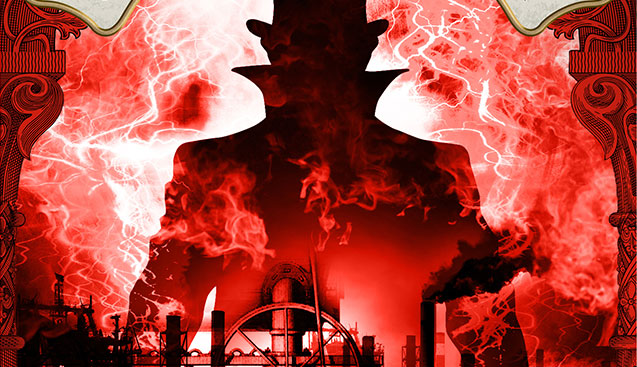
Mark Latham’s new novel in The Apollonian Case Files, The Iscariot Sanction, was published by Titan Books on September 20. It’s the follow-up to The Lazarus Gate and, in honor of the occasion, the popular Sci-Fi and Fantasy Blog at BarnesandNoble.com has posted a brand new story set in the same world, “The House of the Dead.”
Mark Latham’s two novels of The Apollonian Case Files, The Lazarus Gate and The Iscariot Sanction, take place in an alternate Victorian Age in which Her Majesty’s Empire is under attack by supernatural threats, and only a mystery “gentlemen’s club” stands in the way of total oblivion. They’re great fun, mixing elements of Sherlock Holmes and H.P. Lovecraft, James Bond and H.G. Wells, with a setting we love spending time in — which is why, in honor of the release of the latest in the series, we’re pleased to present an original short story set in the same universe. Enjoy!
Read the complete story here.
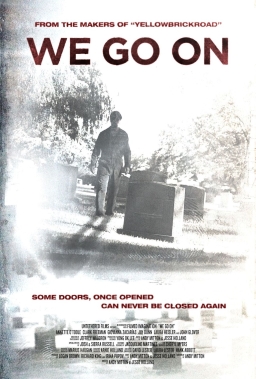 I had errands keeping me away from the Fantasia film festival on Monday, July 25. Now, interruptions are a sad fact of life, but sometimes it’s easy to get back into the swing of things; and as it happened the next day I made it back to the De Sève theatre to watch an American horror film called We Go On, which served to get me back into the Fantasia spirit. Then the day after that I saw two more movies at the De Sève, an odd Swiss romance called Aloys followed by a French horror film called Therapy. The latter had been directed by 16-year-old Nathan Ambrosioni — his second feature film. Together the movies made an odd meditation on life, death, and horror.

 Impossible to predict some things. Notably: you can’t know how you’ll react to a work of art until you’ve experienced it. Looking at the movies Fantasia offered on Sunday night, July 24, I thought I’d try If Cats Disappeared from the World (Sekai kara neko ga kietanara), which promised a tale about a terminally ill man who makes a surreal Faustian bargain. After that, I decided I should watch Superpowerless, as it was a genre piece about an aging superhero who’d lost his powers. In truth, I had my doubts about both movies; Cats looked it might suffer from excess of romanticism and forced whimsy, while Superpowerless seemed like some kind of mumblecore satire treading ground comics had worked over decades past. In the event, I was wrong to doubt. If Cats Disappeared from the World would be likely the best movie I saw at Fantasia, and probably my favourite. Superpowerless, meanwhile, turned out to be the festival’s most pleasant surprise, the film which most greatly exceeded all my expectations.