Fantasia 2020, Part XXXIII: Savage State
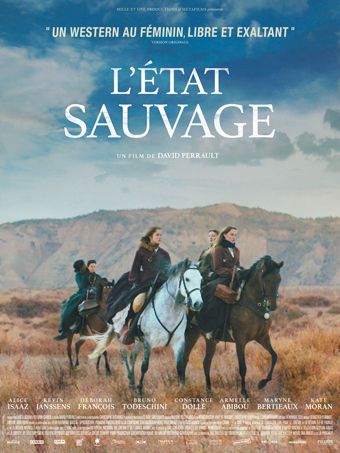 The Western’s an American genre in origin, but Europeans from Sergio Leone to Charlier and Moebius have done interesting work in the form. Usually, though, European Westerns follow American heroes. That is, the European creators are still telling American stories. Savage State (L’État Sauvage), a Western from French writer/director David Perrault, does something different, following a French family trying to get out of the American South during the Civil War. It’s a nice idea. Unfortunately, the execution’s lacking.
The movie starts in Missouri in 1863. After a brush with occupying Union soldiers turns violent, a wealthy French family decides to flee the American Civil War and return to France. Patriarch Edmond (Bruno Todeschini) hires a gunslinger named Victor (Kevin Janssens) to accompany him, his wife Madeleine (Constance Dollé), his three daughters, and their free Black servant Layla (Armelle Abibou) who is also Edmond’s lover. They set out for the coast accompanied by a couple other family retainers, but a woman from Victor’s past (Kate Moran) who leads a gang of bandits threatens to bring ruin on them all.
Let’s start with the good: the movie looks spectacular. There’s a long tradition in Western films of stunning landscape cinematography, and we get that here. The first act, largely taking place in aristocratic interiors, is less interesting; but the journey through the wilderness, lush in a way that Westerns usually aren’t, presents one sumptuous location after another. Mountain scenes give us sublime vistas. Deep green forests yield to snow as the journey progresses. It’s a nice picture to look at.
But if that’s the good, all the rest is the bad and the ugly. In particular, the story is at best thin and unconvincing. At worst, it’s a misfire. Nothing builds in any logical way or develops coherently. Character remains underdeveloped. Choices are baffling.
The idea here should be simple: fill the journey that is the spine of the film with thematically-resonant incidents that say something about character. This doesn’t happen. In fact the journey takes a while to get started — as noted, the whole first act — and then doesn’t end either in France or at an American port city, but in a ghost town in a mountain valley. So the movie starts late and ends early.
 Every story’s got a genre, even if the story’s the sole example of its genre, so by extension a lot of stories use genre conventions and trust that the audience will accept them even if they’re unlikely or unbelievable. Often the audience does, especially when the conventions are so common they don’t register as conventions. But a story usually works better the more it can justify its conventions. Especially when the justification, and the convention, work with the story’s theme.

 One of the crucial differences between the way a storyteller approaches the tale they’re telling and the way the audience experiences that tale is that the storyteller typically knows the ending in advance. If they don’t start with the ending and work to that, they’ve usually still worked out multiple drafts of the story, if only in their head. The audience, on the other hand, at least on their first experience of a story doesn’t get to the end until they’ve gone through the whole of the work leading there. Even if they’ve heard something of the ending, or guess at it, the body of the work is necessarily the main part of the experience. If you just get the ending, you haven’t really gotten the whole story.
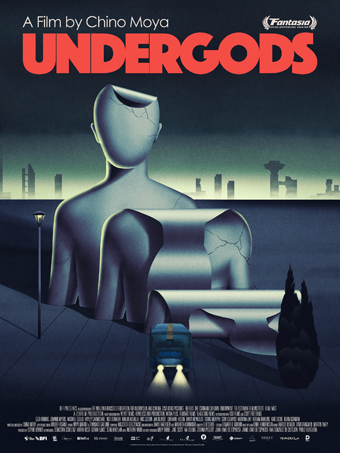 There is a certain tone I find in some works of science fiction, almost all from Europe, a ‘literary’ approach that uses science-fictional imagery with self-conscious irony in a way that at least approaches allegory and often satire. In prose I associate this approach with Lem and indeed Kafka; in film, with Tarkovsky’s science-fiction (adapting Lem and the Strugatskys) and Alphaville and On The Silver Globe. The focus in these works is less on world-building than on symbolism, and often on a narrative structure that layers stories within stories and plays with chronology. At their best, these tales emphasise the purely fantastic essence at the heart of science fiction: a type of wonder that uses a modern vocabulary.