Worlds Within Worlds: The First Heroic Fantasy (Part I)
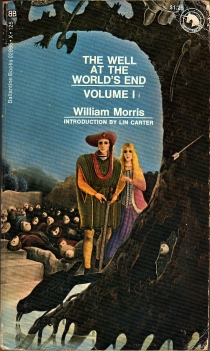 Who was the first person to write high fantasy?
It seems like a simple enough question. By “high fantasy” I mean a story set in a world that is not this one. John Clute, in The Encyclopedia of Fantasy, defines high fantasies as stories “set in otherworlds, specifically secondary worlds, and which deal with matters affecting the destiny of those worlds.” In this definition, ‘Secondary worlds’ is Tolkien’s useful term for a fictional, self-consistent world with its own geography and history.
There’s a bit of ambiguity here, though. A secondary world is not necessarily a wholly other world. Tolkien intended his world of Arda to represent this world in a mythic, pre-historic time. Similarly, Robert E. Howard’s stories of Conan and Kull were meant to take place before the dawn of recorded history, and even most (if not all) of Clark Ashton Smith’s stories are given a precise relation to reality. In fact, Smith locates his stories almost everywhere in the existing universe that a fantasy could conceivably be placed: in the past (Hyperborea, Poseidonis), in the far future (Zothique), on other worlds known (Mars) or unknown (Xiccarph).
These choices of settings justify the fantasy. They explain how the fantasy can be imagined to exist, and make suspension of disbelief easier by linking the fantasy to reality. They frame the fantasy, if you like, in a connection to the real. That’s interesting, but it makes you wonder who the first person was that discarded the frame, and stepped wholly outside of reality. Or, to reframe my original question: who was the first person to come up with the idea of setting a story entirely in a world that is not our own? Who told the first story that had no link to the real world?
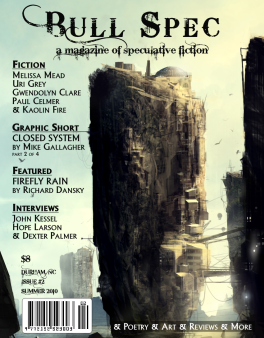 The second issue of Bull Spec, Samuel Montgomery-Blinn’s quarterly print magazine of Speculative Fiction, arrived last week, with a spectacular cover by Vladimir Krizan.
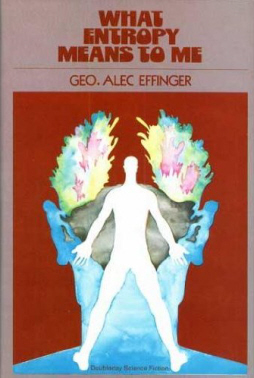 There are indeed urban legends at work in the Collector’s market. For example, the entire print order of George Alec Effinger’s first novel, What Entropy Means to Me (Doubleday, 1972) was supposedly pulped before publication (almost certainly untrue).
 “Imagine if Frodo had died during his journey and the One Ring had returned to Sauron.”

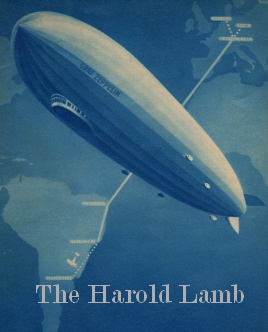 There’s a temporary lull in operations and the skies are clear over Oklahoma, so I thought I’d take the time to set the record straight about our expedition to Dragon*Con via the Black Gate zeppelin, the Harold Lamb. John described the
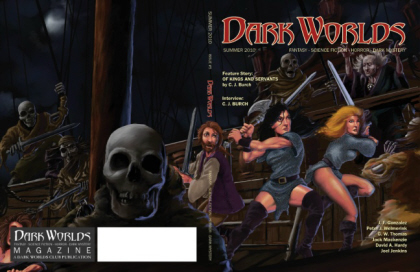 Dark Worlds #5 (Summer 2010) is online at last.