The Mystical Viking: Valhalla Rising
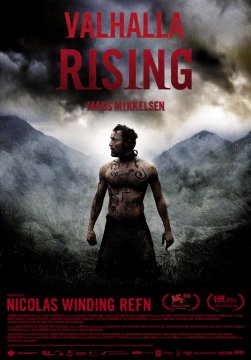 Valhalla Rising (2009)
Directed by Nicolas Winding Refn. Starring Mads Mikkelson, Jamie Sives, Gary Lewis, Ewan Stewart, Maarten Stevenson.
Danish director Nicolas Winding Refn went into his film Valhalla Rising right as he was wrapping up post-production on Bronson, the bizarre biopic about British prisoner Charlie Bronson that turned into his biggest success and pushed star Tom Hardy into the front lines. But Bronson surprised many viewers, going against expectations of what a biopic about Charlie Bronson would be like. In the same way, Valhalla Rising flips around the conceptual idea of “Viking movie” and is unlike anything viewers might expect from an historical epic about skull-crushers like the medieval Norsemen. Valhalla Rising had its festival premiere in 2009 and a theatrical release in mid-2010, but it sits defiantly outside the mainstream. If El Topo is an “Acid Western,” then consider Valhalla Rising an “Acid Viking Movie.”
Although it clocks in at a lean 92 minutes with credits, Refn’s film moves at a slow pace and contains vast silences within a harsh landscape. The first twelve minutes contain only a single line of dialogue, and this sparse style remains consistent throughout the running time. Red-hued violence occasionally breaks out, done with no modern stylization, but there are no “action set-pieces.” This is a movie concerned with its tone and texture, telling an oblique story through implication. And for what it attempts to do, it succeeds: this is a transcendent film that creates an authentic sense of what Nordic life in the eleventh century must have felt like. Its taciturn introspection says an enormous amount about early Christian and late Pagan mysticism.
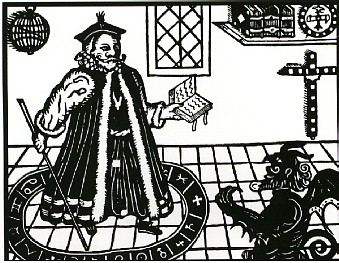 This week I read an advance copy of the second book in Mark Chadbourn’s series of espionage-fantasy-adventure novels, Swords of Albion. The Scar-Crow Men begins with the first performance of Christopher Marlowe’s play Doctor Faustus, and the story of the novel and the story of Faust end up connecting in a number of ways. It got me thinking about Faust, and why the story of Faust has flourished in the centuries since Marlowe wrote, and how many different ideas about wizards there really are.
 When a show with a large fan base – especially a large SF fan base – ends, the fans have some small amount of solace, because there’s usually a rich bounty of “extended universe” materials to keep the fix going for a while. Often the avid fan, deprived of new episodes of the show, can enjoy exploring the novels, comic books, and, yes, even role-playing game supplements which are created through license with the show … but all good things must end.
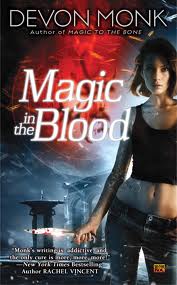 Magic in the Blood
 Nearly a decade ago, having spent four nights reading my story “A New Grave For Monique” aloud to a late-night workshop audience, I won an award for fiction from the Santa Barbara Writer’s Conference. The audience (and the conference in general) was uniformly Caucasian.
 Back at around the turn of the century when I first started writing reviews for various SF/F on line publications, there was a lot of heated discussion about something called “
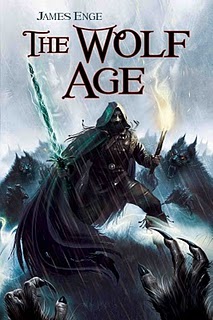 No sooner does our man James Enge — World Fantasy Award-nominated author, Black Gate blogger, and international man of mystery — appear on the scene with his third novel