The Land the Ravens Found and Naomi Mitchison
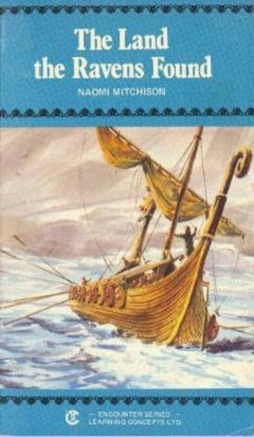 One of the joys you get to have as a reader is the discovery of a new writer, or a new old writer, with a back catalogue of work out there waiting for you. A little while ago, my girlfriend Grace and I were at a book fair when Grace came across a children’s novel called The Land the Ravens Found. First published in 1955, the copy she’d found was a fourth edition, from 1966, suggesting there’d been some demand for the book over the years. It was a story of Viking times and the founding of a settlement in Iceland, written by a woman named Naomi Mitchison. Neither of us had heard of her, but after reading the book, Grace was impressed enough to recommend it to me; after reading it myself, and learning a bit about Mitchison online, I thought it’d be worth writing a little here on both book and author.
The short novel tells the story of Aud the Deep-Minded, a historical figure who was the head of a Viking household in Caithness, and who led her household to Iceland late in the ninth century. The book begins in Caithness, with a scene from the perspective of Aud’s grandson, Anlaf, but the point-of-view shifts easily throughout the book, giving a kind of communal portrait of Aud and her family and her family’s thralls, describing their relationships and daily lives. The drama seems almost secondary to the precise, detailed depictions of ninth-century life, but oddly the book becomes all the more involving because of it, as life moves on, through marriages and deaths and quarrels which oddly remain in the background, yet still shape everything that goes on.
Mitchison was born Naomi Haldane in 1897. She died in 1999, at the age of 101, after what seems to have been one hell of a life. It’s not just that she wrote over ninety books in her life, from science fiction to autobiography. She was an anti-fascist who helped get left-wing refugees out of Nazi Austria, an activist for women’s rights and open access to birth control, a polyamorist, and, after a period living in Africa in the 1960s, an honorary mother (‘Mmarona’) and advisor to a Botswanan leader.
 The term ‘dying earth’ comes from