Gothic Ambiguity: Helen Oyeyemi’s White is for Witching
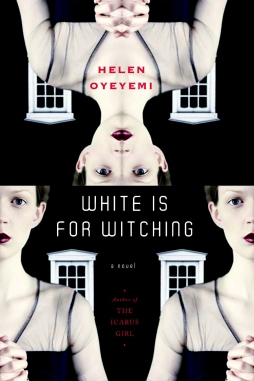 I picked up Helen Oyeyemi’s third novel, 2009’s White is for Witching, knowing very little about it. I’d read that Oyeyemi was a highly-regarded young writer in ‘mainstream’ literary circles, whose work contained some speculative elements (born in 1984, her first book had been 2005’s The Icarus Girl, followed by The Opposite House in 2007; a fourth book, Mr Fox, came out in 2011). What I found in White is for Witching was an excellent horror story whose intricacy demanded careful attention. It’s sharply-written and tightly-constructed, and if its plot is not immediately clear, the book’s strong enough to encourage careful attention.
The novel moves back and forth between several perspectives, building an unusual structure out of their interplay. The prologue at first borders on nonsensical, but as the tale goes on, things become clear: this is a novel of great ambition, not afraid to possibly bite off too much. If the tone had been slightly different, the sheer flashiness and verve might have been distracting; as it is, the book modulates nicely between voices, building from a normal-seeming reality to an increasing awareness of wrongness, madness, and the supernatural.
The inventiveness of the book rests on a traditional gothic framework. There’s a family saga here and a cursed dwelling. The house, in fact, is given a voice, a personality, and may be the monster, or a monster, moving events. But one of the book’s unusual aspects is the way you’re never quite sure who is the monster, even when you’re given the point-of-view of each character. It’s a book that seems to resist any one possible reading, any reduction to one truth.

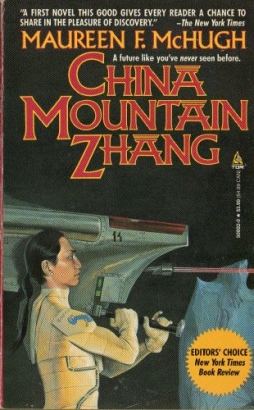 There’s a distinctive kind of surprise some science fiction books can generate: surprise that a book which seems to be speaking to the beliefs, fears, or world-view of a given time was in fact written well beforehand. I remember being taken aback, for example, that A Clockwork Orange was first published in 1962, before hippies and punks and the coining of ‘generation gap’ (first recorded 1967). And it’s interesting to me that Maureen F. McHugh’s China Mountain Zhang, published in 1992, calmly and thoroughly imagines a future dominated by China — something much discussed today, but a less common idea before the turn of the millennium. McHugh’s book is a twentieth century novel, lacking a world wide web or smartphones, that speaks to the twenty-first.