R.A. Lafferty Literary Estate For Sale
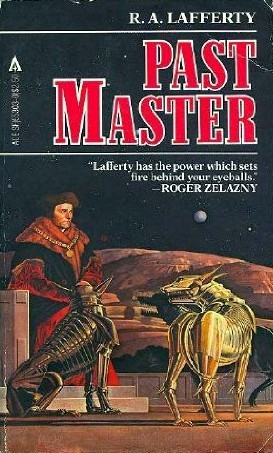 Steven Silver at SF Site is reporting that the estate of R.A. Lafferty, including rights to his 29 novels and 225 short stories, is currently being auctioned off.
The source for the news appears to be an online classified ad at Locus Online, which claims that the “Current bid is $70,000+.”
R.A. Lafferty is the author of the novels Past Master, The Reefs of Earth, Fourth Mansions, and Sindbad: The Thirteenth Voyage, as well as the classic short story collections Nine Hundred Grandmothers, Strange Doings, and Lafferty in Orbit.
He won a Hugo Award in 1973 for the short story “Eurema’s Dam,” and was nominated for both the Hugo and Nebula awards for Past Master.
He died in 2002.
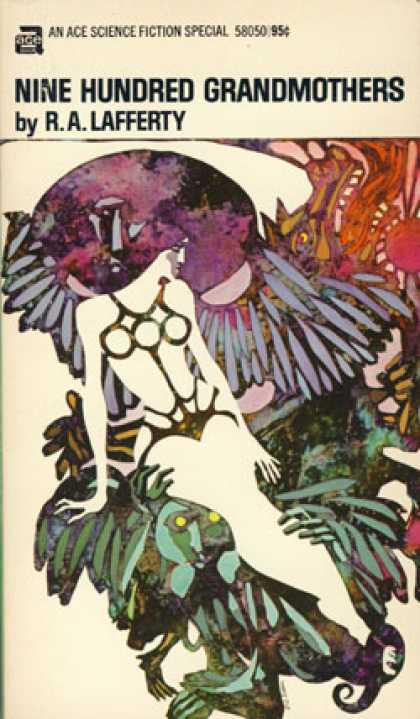 Reports have been circulating for some time that the Lafferty estate had withdrawn reprint rights to all of his work, including recent short story collections. While Lafferty’s novels have not generally drawn much attention in recent years, his short stories continue to be highly regarded.
Until recently Wildside Press had been keeping much of Lafferty’s best work in print, including Nine Hundred Grandmothers, The Devil is Dead, The Reefs of Earth, Does Anyone Else Have Something Further to Add?, and many others. Those editions are now out of print.
While it’s not unusual for literary rights to go to auction, I can’t recall seeing a bulk lot of an author’s entire output auctioned at once — especially one as large as Lafferty’s.
Interested bidders can contact the Lafferty estate.
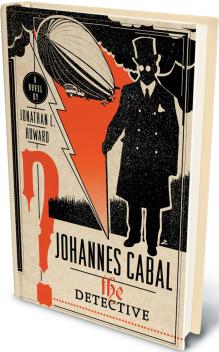 I have been asked to write a few words on how the Johannes Cabal novels came to be published with a particular view to explaining some of the intricacies of the publishing trade. Because I am nothing if not didactic (“Didactic” means, among other things, to speak in a lecturely manner. I hope you’re taking notes – there will be a test afterwards), I have also added a few notes of advice at the end for folk who want to get into the professional novel writing gig.
 Nearly a decade ago, having spent four nights reading my story “A New Grave For Monique” aloud to a late-night workshop audience, I won an award for fiction from the Santa Barbara Writer’s Conference. The audience (and the conference in general) was uniformly Caucasian.
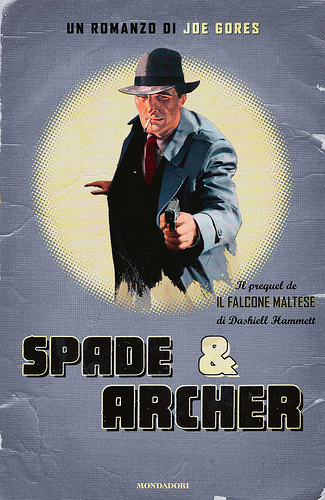
 Thirty-five years earlier, Gores had likewise fictionalized Hammett’s Pinkerton days when he immersed himself in real and imagined political corruption in Roaring Twenties San Francisco in his novel, Hammett.
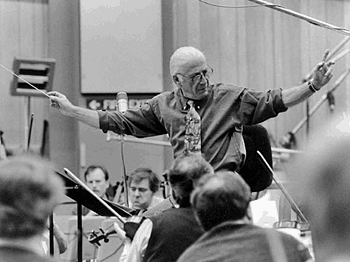 I always write with music playing. That’s not much of an admission. A few writers prefer to work in silence, but most that I have talked to say that they need to have music in the background while they work at their keyboards or notebooks. Some writers like to listen with headphones on as an extra seal against the rest of the world, but I only do that if I’m working in a public environment. Otherwise, I let my massively stuffed iPod play through the huge speakers in my apartment to surround me with music as I work.
 Selling novel-length fiction is tough. Really tough. Anyone who’s been in it for any length of time can tell you how competitive it is, how quickly the rejections can stack up, how frustrating it can be to get someone to even look at your manuscript. If you’re like me, you’ve tried submitting dozens of query letters in hopes that someone will at least ask for a few pages of the work itself. I mean, that’s fair, right — to at least look at the stuff before you reject it?