Browsed by
Category: Vintage Treasures

Blogging Sax Rohmer’s The Shadow of Fu Manchu, Part One

Blogging Sax Rohmer’s The Shadow of Fu Manchu, Part One

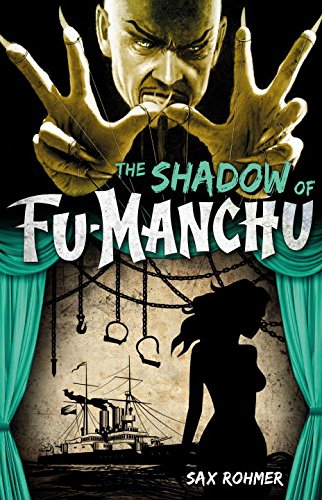
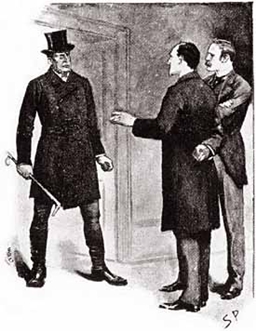
Doubleday ShadowShadow JenkinsThe Shadow of Fu Manchu was serialized in Collier’s from May 8 to June 12, 1948. Hardcover editions followed later that year from Doubleday in the U.S. and Herbert Jenkins in the U.K. The book was Sax Rohmer’s eleventh Fu Manchu thriller and was also the last of the perennial series to make the New York Times bestseller list.

The story had its origins in a Fu Manchu stage play that Rohmer had developed for actor Basil Rathbone. The project had failed to get off the ground, but became instead the first new Fu Manchu novel in seven years. Sadly, during these seven years, the property had begun to fade from the public eye.

It had been eight years since the character last appeared on the big screen (in the popular 1940 Republic serial, Drums of Fu Manchu) and eight years since the well-received Shadow of Fu Manchu radio series (from which the planned stage play and later novel borrowed its title) had left the air. Detective Comics had long since finished reprinting the Fu Manchu newspaper comic strip as a back-up feature for Batman. As far as the public was concerned, Fu Manchu was a part of the past that seemed far removed from the world that had been transformed by the Second World War.

Read More Read More

The Huffington Post on Fantasy Series Better Than Harry Potter

The Huffington Post on Fantasy Series Better Than Harry Potter

Master of the Five Magics-smallOver at The Huffington Post, author Jeff Somers (The Digital Plague, The Ustari Cycle) holds forth on fantasy worlds that are more appealing than the mega-successful Harry Potter series.

I was surprised to see his list consisted exclusively of vintage paperbacks, including Jack L. Chalker’s Midnight at the Well of Souls (1980), Piers Anthony’s first Xanth novel A Spell for Chameleon (1977), L. Frank Baum’s The Magic of Oz (1919), and Master of the Five Magics (1980) by Lyndon Hardy. Perhaps not coincidentally, all are part of a fantasy series. Here he is on the latter book:

I read this book as a kid, and the magic system Hardy creates remains one of the more interesting and entertaining ones out there. He imagines a universe that has (initially) five magical disciplines: Thaumaturgy, Alchemy, Magic, Sorcery, and Wizardry. Each form of magic has a clear set of rules that govern how it works. For example, Wizardry is the discipline that summons demons, and it has two rules: the Law of Ubiquity, which states that flame permeates all (making it a gateway between worlds), and the Law of Dichotomy, which states that once a demon is summoned it must either dominate the summoner or be dominated. All in all, a logical system that requires the protagonist to actually study and learn and think critically about the magic, instead of waking up one morning with the ability to turn people into newts or something.

Lyndon Hardy wrote two sequels to Master of the Five Magics: Secret of the Sixth Magic (1984) and Riddle of the Seven Realms (1988). He has not returned to fantasy since. Outside of fantasy, he is perhaps best known as the mastermind of the 1961 Great Rose Bowl Hoax.

Read Somers’ complete article here.

Bloody Battles, Espionage, Dark and Beautiful Prose, & Lovecraftian Horror: A Review of Karl Edward Wagner’s Dark Crusade

Bloody Battles, Espionage, Dark and Beautiful Prose, & Lovecraftian Horror: A Review of Karl Edward Wagner’s Dark Crusade

Dark Crusade Karl Edward Wagner-smallYou guys are going to love for me for this. So very much. Someone, somewhere might have mentioned this already, but whatever, now it’s my turn.

All of the Kane books, both the novels and short story collections, have been released on Kindle for four or five bucks each, which is a mere three pounds if you live in England. It’s kind of bittersweet actually, because it means all that time I spent rummaging around in the musty corners of used bookshops looking for Bloodstone (which I reviewed, by the way) has kind of gone to waste, and anyone that spent around 100 bucks for a copy of Gods in Darkness or Midnight Sun is going to want to curl up in a big ball over there in the corner and have a little cry. So whilst you do that, I’m going to get on with the review, if you don’t mind.

Dark Crusade revolves around the rise of the dark Cult of Sataki, its meteoritic domination of the kingdom of Shapeki, the brutal regime it establishes and its enigmatic and mysterious prophet Orted something or other. When Orted’s fanatical cult of peasants try to seize the southern kingdoms, they are swiftly and brutally quelled by a superior military force, and that’s when Kane, a mercenary, steps in to help.

Kane really is the star of the show here, as anyone familiar with the series will tell you, but for anyone not in the know, Kane is a prince cursed with immortality who has wandered the world for eternity, plumbing its secrets, learning grim and interdicted sorceries, seeking out mysteries and conflicts and battle and war, and just generally trying to entertain himself during the course of his unending life.

Read More Read More

Vintage Treasures: Pavane by Keith Roberts

Vintage Treasures: Pavane by Keith Roberts

Pavane Ace Special-small Pavane Berkley-small Pavane Ace-small

I think I first took notice of Keith Roberts’s classic alternate history Pavane because it was part of the famed Ace Science Fiction Special line. The Ace specials, edited by Terry Carr, were a legendary line of (mostly) original paperbacks that included some of the most acclaimed SF and fantasy ever published, such as R. A. Lafferty’s Past Master (1968), Ursula K. Le Guin’s The Left Hand of Darkness (1969), Alexei Panshin’s Rite of Passage (1969), John Brunner’s The Traveler in Black (1971), and William Gibson’s Neuromancer (1984). Pavane was one of the rare reprints; it first appeared in hardcover in 1968, and the Ace paperback came along a year later, with a cover by Leo Dillon and Diane Dillon (above left).

Pavane has been reprinted many, many times in the past four decades — at least 20 times, by my count. Frankly, I’d be surprised if it’s been out of print for more than a year or two over the past forty years. Trust me, that’s evidence of an exceptional book, with the kind of appeal that crosses generations. Berkley put a very purple Richard Powers on their 1976 paperback edition (above, middle), but I think my favorite cover may be Chuck Minichiello’s, for the 1982 Ace reprint (right).

What’s Pavane all about, then? It’s a collection of nine linked short stories, most of them published in the British SF magazine Impulse in 1966. Roberts imagines a complex and well-realized alternate world where England fell to the Spanish Armada in the 16th Century, and the 20th Century sees the all-powerful hegemony of the Church of Rome, which has ruthlessly smothered scientific progress through the terror of the Inquisition. But knowledge cannot be suppressed indefinitely and the world is beginning to inexorably change…

Read More Read More

Collector the Barbarian: One Man’s Trash…

Collector the Barbarian: One Man’s Trash…

apes

“I love trash.” — Oscar

It had long ago slipped my mind, but I was recently reminded of one childhood fad that was literally a load of garbage. I’m speaking of tin waste bins (garbage pails, trash cans, or whatever you happened to call them) lithographed with licensed characters from popular films, TV shows, and comic books.

Thinking back, it seems everyone had one when I was in grade school – you’d start in on a book report, crumple up your first attempt in frustration (yeah, we actually wrote reports with pen and paper back in the olden days of yore), and toss it into the knee-high basket emblazoned with characters from Star Wars or G.I. Joe. When you were sick, they also served as a handy vomit bucket.

Read More Read More

The 1939 Retro Hugo Award Winners Announced

The 1939 Retro Hugo Award Winners Announced

The Sword in the Stone T. H. White-smallBack in April, we told you about the nominees for the 1939 Retro Hugo Awards, for the best science fiction and fantasy first published 75 years ago.

The Hugos were first awarded at the 11th World Science Fiction Convention in 1953. The 1939 Retro Hugo Awards celebrate the finest work published in 1938, which fans would have voted on at the very first Worldcon in New York in 1939 (if the Hugos had existed in 1939).

The Retro Hugos were awarded at Luncon 3, the The 72nd World Science Fiction Convention, held from Thursday, August 14th through Sunday, August 17th, in London, England. The 2014 (non-Retro) Hugos will be awarded tomorrow in a ceremony just before the close of the convention.

The Retro Hugo awards were presented by Mary Robinette Kowal and Rob Shearman.

Without further ado, here are the winners:

Best Novel:

The Sword in the Stone by T. H. White (Collins)

Best Novella:

“Who Goes There?” by Don A Stuart [John W. Campbell] (Astounding Science-Fiction, August 1938)

Read More Read More

Collecting Lovecraft, Part I

Collecting Lovecraft, Part I

HP Lovecraft Ballantine Paperbacks-small

Last month I wrote about the first Arkham House books I ever bought, the beautiful 3-volume 1964 edition of the complete stories of H.P. Lovecraft. It was a splendid purchase, and a great introduction to the master. But, as I mentioned last month, collecting Lovecraft can be a lot of fun, and that initial purchase robbed me of the joy of tracking down his fiction in paperback. Until I finally decided to do it anyway.

Now, if you’re going to start collecting Lovecraft in paperback (and why wouldn’t you?) I recommend starting with the 1958 Avon paperback Cry Horror!, originally released as The Lurking Fear. That’s a terrific little book.

Of course, it’s just one book, and one that’s pretty easy to find, really. Amazon has copies starting at $7.95, and eBay has around a dozen copies, starting at $6.99. You want more of a challenge than that, don’t you?

Read More Read More

Vintage Treasures: Sturgeon in Orbit by Theodore Sturgeon

Vintage Treasures: Sturgeon in Orbit by Theodore Sturgeon

Sturgeon in Orbit-smallA few weeks ago, I wrote about my surprise in finding a Theodore Sturgeon collection I hadn’t known existed: To Here and the Easel, a handsome Panther Books paperback from 1975 that never had a US edition.

That book re-ignited my interest in Theodore Sturgeon, whom I consider one of the finest short story writers to dabble in SF and fantasy in the 20th Century. And it reminded me that I have by no means exhausted the Sturgeon titles I already have in my collection.

So this week I pulled another one off my shelf — the 1978 paperback edition of Sturgeon in Orbit, which I’ve never read before. It collects a fine sample of Sturgeon’s work from the early 1950s, the era of flying saucers, national paranoia, and a newborn fear of nuclear Armageddon. It features mysterious alien invaders, noble scientists facing terrifying choices, and stranger things.

The unusual cover, by Stanislaw Fernandes, was a departure for Sturgeon, whose books usually featured abstract space scenes. This one features… well, I’m not sure really. A runway model wearing three capes and a swami headdress, who looks like she’s about to level up. I get it.

Whatever the case, it’s a nice, slender volume that promises to be something I haven’t enjoyed in a while — a very quick read. So far, it’s been a lot of fun and I look forward to finishing it this weekend.

Here’s the description from the back of the book.

Read More Read More

Fantastic Science Fiction Stories, April 1960: A Retro-Review

Fantastic Science Fiction Stories, April 1960: A Retro-Review

Fantastic Science Fiction Stories April 1960-smallI’d rank this as a determinedly minor issue of this magazine, from fairly early in Cele Goldsmith’s tenure. It has a bland cover by an artist I’ve never heard of, Jack Faragasso. The feature list is slim. Norman Lobsenz’s editorial, very brief, is about an idea to put a ring of dust around the Earth so that it is always light. (What a dreadful idea!)

There is also the lettercol, with no contributors I recognized – the names are Miles McAlpin, James W. Ayers, Wesley Sharp, Billy Joe Plott, Frank P. Pretto (perhaps a typo for Prieto), and Michael W. Elm – and their usual small “Coming Next Month.” Interior illustrations are by [Leo] Summers, Varga, and Grayam.

So, what about the stories?

The cover story is “Doomsday Army,” by Jack Sharkey, an entirely too long story about a National Guard captain who ends up being the main intermediary to a bunch of (as it turns out) very small alien invaders. He’s portrayed as a fairly ordinary suburban husband, prone to taking shortcuts in solving problems his wife brings to his attention: so of course his solution to the alien problem will be a dangerous shortcut. And so it is, with an implausible solution.

There’s joke enough here for maybe 3,000 words at the outside, and this drags terribly at some 13,000 words. (I wonder if it was written to the cover, which does portray a scene from the story but in a very generic fashion.)

Read More Read More

Vintage Treasures: City Under the Sea by Kenneth Bulmer

Vintage Treasures: City Under the Sea by Kenneth Bulmer

City Under the Sea Kenneth Bulmer Ace-small City Under the Sea Kenneth Bulmer UK-small City Under the Sea Kenneth Bulmer Avon

As you may have noticed if you’ve been following my Vintage Treasures posts since I returned from the Windy City Pulp & Paper show, I’ve been time-traveling back to the early 1980s in my big green chair, courtesy of some newly acquired vintage magazines, paperbacks, and fanzines.

Al those ads, editorials, and reviews have rekindled an interest in the forgotten books of the era. I find myself browsing my library, shopping for titles from the early 80s. Last night, I picked up a handsome Avon paperback from January 1980, the very threshold of the decade, and settled back into my chair to try it out.

Of course, when I finally bothered to look at the copyright, I discovered that City Under the Sea wasn’t written in the 80s. It first appeared three decades earlier in 1957 as an Ace Double, back-to-back with Poul Anderson’s Star Ways, and it was reprinted multiple times in the intervening years.

Above is a sample of some of the various editions over the years (click for bigger versions). If I owned these editions, I wouldn’t be the clueless reader you see before you. This is why a huge paperback collection is so essential.

Read More Read More