Browsed by
Category: Series Fantasy

New Treasures: The Cobbler of Ridingham by Jeffrey E. Barlough

New Treasures: The Cobbler of Ridingham by Jeffrey E. Barlough

The Cobbler of RidinghamWinter is the best time to appreciate Jeffrey E. Barlough, perhaps none more so than the current brutality we’ve been experiencing in New England. Day after day of snow blowing past the windows makes it easy to imagine oneself in Barlough’s alternate history of an ice age that never fully receded; and a fire in the grate and a cup of hot coffee at hand while the wind howls beyond the lattices blurs the distinction between this reality and living in a separate megafauna-filled America settled by Victorian doomsday survivors swaddled in coats and mufflers.

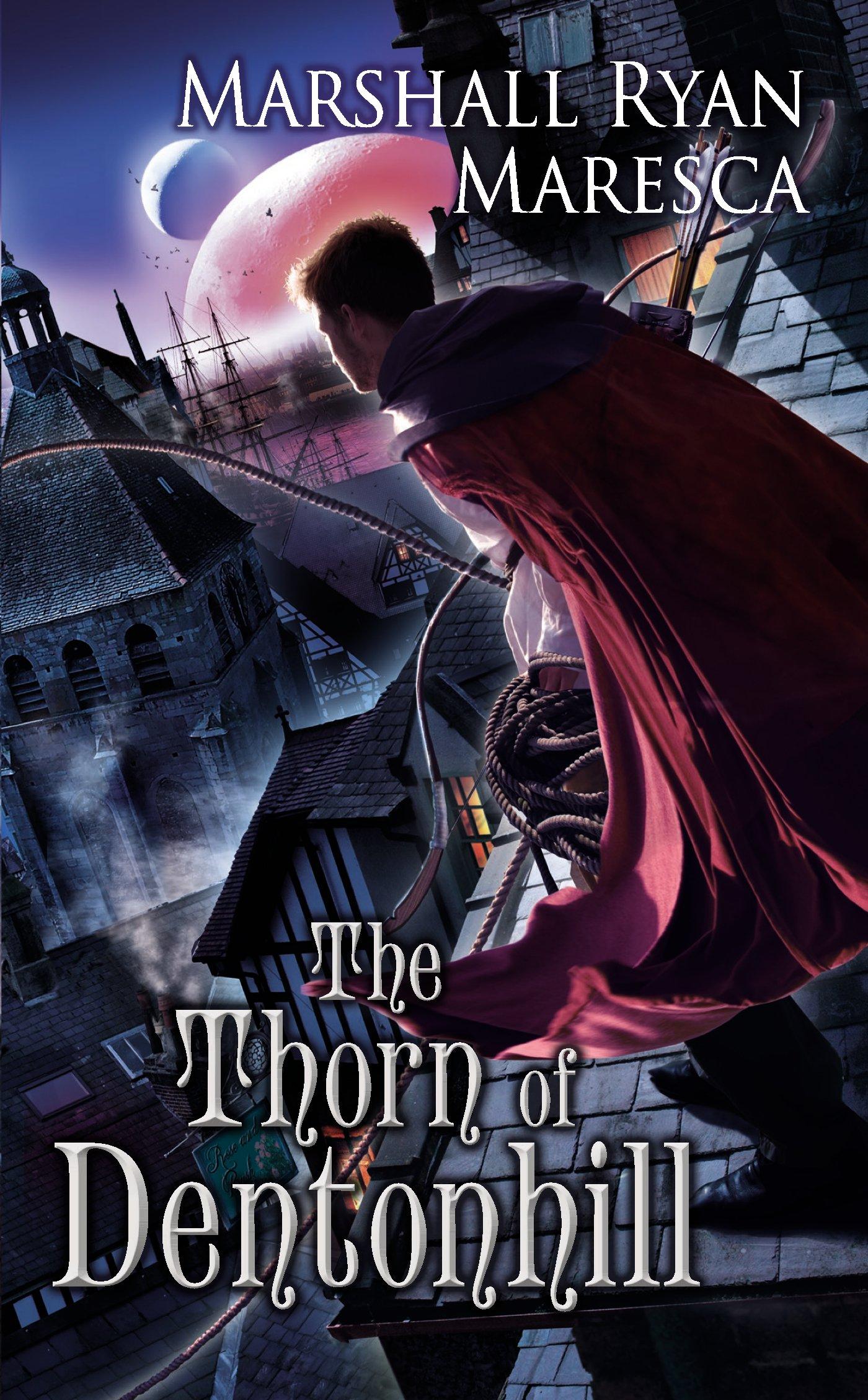
In Barlough’s latest novel, The Cobbler of Ridingham, Richard Hathaway comes to Haigh Hall to examine some letters penned by Pharnaby Crust, an overlooked composer whom Hathaway intends to rescue from obscurity with a thorough biography. While studying in the Hall’s library, Hathaway observes a lurking shadow without source and is soon immersed in the curse of Crispin Nightshade, the infamous cobbler of nearby Ridingham. Nightshade used something known as haunted leather to fashion shoes which, when placed on the feet of corpses, could make the dead walk again. There are bumps in the night, unexplained footprints, a boot found in a snow bank, and more, all involving Barlough’s typical cast of well-sketched characters from upstairs and down.

Read More Read More

Future Treasures: Last First Snow by Max Gladstone

Future Treasures: Last First Snow by Max Gladstone

Last First Snow-smallWell, Max Gladstone’s Craft Sequence has officially moved past three novels now, meaning it’s no longer a trilogy and it’s now a “Sequence.” That means I’m even further behind, because I haven’t even read the second one yet.

The best description of this series I’ve found so far is from Elizabeth Bear, who says at her blog:

The Craft Sequence books are all about ancient necromancers in charge of corporations; liches running litigation; court battles fought by means of sorcerous contests; deities dueling by means of legal proxies and stock trading souls.

Last First Snow, the fourth novel in the sequence following Three Parts DeadTwo Serpents Rise, and Full Fathom Five, is due to arrive in July. Here’s the description:

Forty years after the God Wars, Dresediel Lex bears the scars of liberation —especially in the Skittersill,  a poor district still bound by the fallen gods’ decaying edicts. As long as the gods’ wards last, they strangle development; when they fail, demons will be loosed upon the city. The King in Red hires Elayne Kevarian of the Craft firm Kelethres, Albrecht, and Ao to fix the wards, but the Skittersill’s people have their own ideas. A protest rises against Elayne’s work, led by Temoc, a warrior-priest turned community organizer who wants to build a peaceful future for his city, his wife, and his young son.

As Elayne drags Temoc and the King in Red to the bargaining table, old wounds reopen, old gods stir in their graves, civil blood breaks to new mutiny, and profiteers circle in the desert sky. Elayne and Temoc must fight conspiracy, dark magic, and their own demons to save the peace — or failing that, to save as many people as they can.

Last First Snow will be published on July 14, 2015 by Tor Books. It is 384 pages, priced at $25.99 in hardcover and $12.99 for the digital edition.

The Omnibus Volumes of C.J. Cherryh, Part III

The Omnibus Volumes of C.J. Cherryh, Part III

The Dreaming Tree-small At the Edge of Space-small The Deep Beyond-small

We’ve come to the end of our three-part series on DAW’s omnibus reprint volumes of C.J. Cherryh’s early fantasy and space opera novels. Part I examined The Faded Sun Trilogy, The Morgaine Saga, and The Chanur Saga, all published in the year 2000, and Part II continued with Chanur’s Endgame, Alternate Realities, and Alliance Space. In Part III, we’ll take a look at The Dreaming Tree, At the Edge of Space, and The Deep Beyond., each of which collects a pair of novels.

With The Dreaming Tree, we’re back to fantasy again. Cherryh dabbles in fantasy only occasionally — she’s had the greatest success with space opera over her long career, especially her long-running Foreigner and Chanur series, which together encompass some 20 novels. But The Dreaming Tree, which collects the two Ealdwood novels, The Dreamstone and The Tree of Swords and Jewels, has proved to be one of her most enduring works. The omnibus volume was published in 1997 and is still in print, eighteen years later.

Read More Read More

New Treasures: The Dhulyn and Parno Novels: Volume One by Violette Malan

New Treasures: The Dhulyn and Parno Novels: Volume One by Violette Malan

The Dhulyn and Parno NovelsWhen Amazon created a mobile Kindle app a few years ago, the very first book I bought and downloaded to my mobile phone was The Sleeping God, the first Dhulyn and Parno novel by Violette Malan, our Friday blogger here at Black Gate. It proved a marvelous diversion during slow moments while I was working the floor of the NACHA banking conference in 2013.

I’ve wanted to read the other books in the series ever since, and now DAW is making that easy with a pair of omnibus volumes collecting all four novels. The first, The Dhulyn and Parno Novels: Volume One, containing The Sleeping God and The Soldier King, was released last week.

Dhulyn Wolfshead and Parno Lionsmane are members of the Mercenary Guild, veterans of numerous battles and missions, and masters of martial arts. But more than that, Dhulyn and Parno are Partners, a Mercenary bond that can only be broken by death. And though one’s past is supposed to be irrelevant to a Mercenary Brother, who they’d been might make the difference between success and failure in their missions.

As far as she knows, Dhulyn is the last of her tribe, the sole survivor of a terrible massacre when she was a young child. Sold into slavery and rescued by a pirate, Dhulyn has learned the hardest lessons life has to teach. What she has not learned is to master her Visions, glimpses of the future.

Read More Read More

The Series Series: What, You Mean Sarah Beth Durst’s Conjured Is A Stand-Alone?

The Series Series: What, You Mean Sarah Beth Durst’s Conjured Is A Stand-Alone?

Sarah Beth Durst Conjured-smallConjured defied nearly all my expectations. That’s part of what makes it awesome.

Alas, one of my expectations was that it would be the first volume in a series. It’s strong enough to have carried that work, and then some. Instead, the book turns its final twist with a near-audible click, and we must leave its characters for good.

I need to tell you about it anyway.

My copy of Conjured came to me in a big bag of freebies at the World Fantasy Convention. Most of the books in that bag were first volumes in series, given away to promote the later volumes. When I gave each book a one-page chance to catch my attention, this was the story that wouldn’t let me go.

Eve can’t put together a coherent memory of the crimes she witnessed, or much else about her past, but the FBI must find the killer she escaped from. She knows she’s the only victim who ever escaped. She knows he wants her back. Nothing else she remembers fits the life she’s living now in the Witness Protection Program.

She’s as big a mystery to herself as her former captor is to the FBI. Why, she wonders, does she know what pizza is, but not how to unbuckle a seat belt?

Read More Read More

Vintage Treasures: Pamela Dean’s Secret Country Trilogy

Vintage Treasures: Pamela Dean’s Secret Country Trilogy

The Secret Country-small Pamela Dean Hidden Land-small Pamela Dean The Whim of the Dragon-small

We’ve been talking a lot about the early days of Dungeons and Dragons recently, and that put me in mind of the early novels directly inspired by fantasy role playing. The most famous examples are probably Andre Norton’s Quag Keep (1979) and Joel Rosenberg’s long-running Guardians of the Flame series, starting with The Sleeping Dragon (1983).

Pamela Dean’s Secret Country Trilogy is another early example, although it’s not as well remembered today. It began with The Secret Country (1985), featuring a group of friends who become stranded in the fantasy realm they thought they had created.

Read More Read More

The Long Reach of Night: The Voidal Vol. 2 by Adrian Cole

The Long Reach of Night: The Voidal Vol. 2 by Adrian Cole

oie_862634UE7X7d5eLast year I reviewed (quite favorably, after an initial aversion to it) The Oblivion Hand (2001), the first collection of Adrian Cole’s stories about the Voidal. To say they’re excessive, over the top, and incredibly phatasmagorical barely does them justice. They are all those things and much more. These traits are carried over into the second volume, The Long Reach of Night (2011), an even better book than the first.

The Voidal is a man, cast out by the Dark Gods onto the currents of the Omniverse as punishment for some unknown sin. He has been stripped not only of his memory but also of his right hand, which has been replaced with the Oblivion Hand — a sentient-seeming thing that carries out the will of his tormentors. The Voidal is endlessly tossed about parallel dimensions and planets of the Omniverse, wholly against his will, a scourge in servitude to some celestial tribunal.

By the end of The Oblivion Hand the Voidal had acquired an associate, the froggy familiar, Elfloq. Together they set out on a search, from one hellish locale to another, for how to restore the Voidal’s lost memories and free him from the control of the Dark Gods.

Like its predecessor, The Long Reach of Night is a fix-up. Two of the stories appeared in magazines previously, but the rest appear here for the first time.

It is Elfloq who is the real protagonist of this book. For much of the time, the Voidal is lost somewhere in the aether. In each story the familiar is forced to hunt for clues to where his master is, ever formulating a plan to get one step closer to their goals.

Sometimes Elfloq is forced to undertake some dangerous task in exchange for information. In the first story, “The Preposterous Library,” he must travel through the pages of a book entitled The Skullworks to a pocket world of the same name.

Read More Read More

The Future of Fantasy: February New Releases

The Future of Fantasy: February New Releases

The Wide World’s End-small The Way Into Darkness-small Fortune's Blight-small

February is packed with a stellar line up of fantasy releases. If you’ve got a ski trip or high school reunion coming up, we recommend you cancel. If you seclude yourself in your room immediately, you may just have enough time to read a small fraction of the great books coming you way.

No way you can even keep up with them all without help, however. No worries — that’s what we’re here for. Sit back and relax, and we’ll fill you in on the top new releases in fantasy scheduled for February.

Read More Read More

Dual Structures in Fritz Leiber’s Fafhrd and the Gray Mouser Stories and Robin Wayne Bailey’s Swords against the Shadowland

Dual Structures in Fritz Leiber’s Fafhrd and the Gray Mouser Stories and Robin Wayne Bailey’s Swords against the Shadowland

BaileyShadowlandRecently I completed my reading of all of Fritz Leiber’s Fafhrd and the Gray Mouser stories. After I had put down the second or fourth collection (this depends on how you approach the editions from White Wolf, which collected the books doubly in single volumes, and these are the publications with which I began my survey), I made some faintly denigrating comment on Goodreads (if I remember it correctly), something about the quality of these stories being like flies caught in amber. This was a metaphor for Leiber’s soupy, languid, highly embellished prose style.

But a year or so later, as I got to the end of The Knight and Knave of Swords and then the termination of Swords and Ice Magic, I found that I had really begun enjoying these stories. I had even begun to admire the writing style. So I bought, without question, Robin Wayne Bailey’s Swords against the Shadowland out of interest to see who possibly could be so foolish as to try to meet Leiber on his own brilliant terms.

Before I get to a review of Leiber and then, specifically, to Bailey, I want to detail the kind of place I come from. As I become a regular contributor to Black Gate, I realize that there are quite a number of books that I really should have read while I was growing up. Now, I’ve read a lot of fantasy. That will be apparent. But sometimes I pick up a new volume, open the cover, begin reading, and ask myself, “Why didn’t I read this twenty-five years ago?” One of the answers might be because of my intense snobbishness, a youthful shortcoming that I slightly touched on last entry. Another reason is because, at the beginning of eleventh grade, I artificially arrested the sheer volume of my high fantasy reading by consciously “growing up” and turning my back on the genre in preference for established “literary” pursuits. But also, as I cast my memory back through the years, I’m coming to believe that I didn’t read a lot of these works then because a lot of these weren’t all that visible.

Read More Read More

The Ballantine Adult Fantasy Series: Figures of Earth by James Branch Cabell

The Ballantine Adult Fantasy Series: Figures of Earth by James Branch Cabell

Figures of Earth-smallFigures of Earth
James Branch Cabell
Ballantine Books (290 p, November 1969. $0.95)
Cover art by Robert Pepper

Okay, this one is probably going to be the last Cabell I read for a while. It turned out to be more of a slog than I expected. I’ll elaborate below.

Figures of Earth was the second volume of James Branch Cabell’s Chronicles of Fabled Poictesme, published as part of the Ballantine Adult Fantasy series. It is the story of how the swineherd Dom Manuel came to be the Count of Poictesme.

Poictesme is of course a fictional province in France. Cabell freely mixes real and imaginary locations in his work.

The story begins with Dom Manuel leaving his pigs to rescue the kidnapped daughter of a count from the sorcerer Miramon Lluagor. He hasn’t really been paying much attention to the pigs. Instead he’s been making human figures from clay because his mother told him from her deathbed that he should make a figure in the world. I suspect he misunderstood what she meant.

Anyway, Manuel sets off on his quest. Along the way, he meets the young woman Niafer, who is the one who actually gets them through the various magical traps along the way. Once they reach the sorcerer’s castle, they learn that things aren’t quite what they seem. The quest to rescue the princess is actually Miramon’s idea. She’s his wife, and he’s tired of her. Manuel and Niafer manage to reconcile the couple and start back down the mountain.

At the bottom of the hill, they are met by Grandfather Death. He is riding a black horse and has a white horse with him. Grandfather Death says that one of them must ride his white horse. Dom Manuel promptly volunteers Niafer to be the rider. She goes to her death without protest.

Read More Read More