Browsed by
Category: New Treasures

New Treasures: Tunnel Out of Death by Jamil Nasir
New Treasures: Tunnel Out of Death by Jamil Nasir

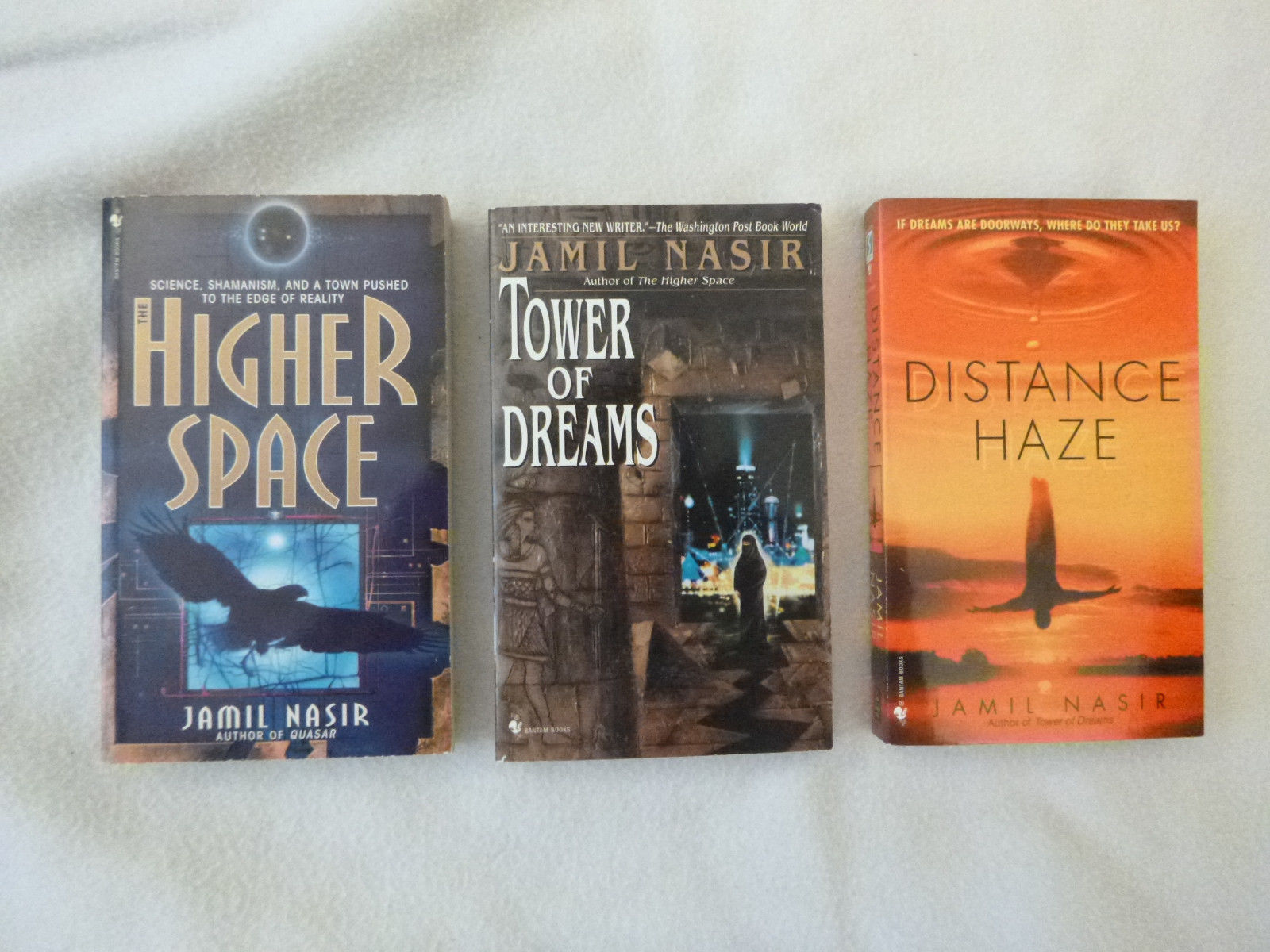
Tunnel Out of Death-smallJamil Nasir wrote a number of intriguing paperbacks for Bantam Spectra over a decade ago, including The Higher Space (1996), Tower of Dreams (1999), and Distance Haze (2000) — see all three here. They were an interesting blend of science fiction of fantasy, asking Philip. K. Dick-like questions about dreams and the nature of reality (the cover tag for Distance Haze was “If dreams are doorways, where do they take us?”). And indeed, Tower of Dreams was nominated for the Philip. K. Dick Award, given annually to the best original paperback published in the US.

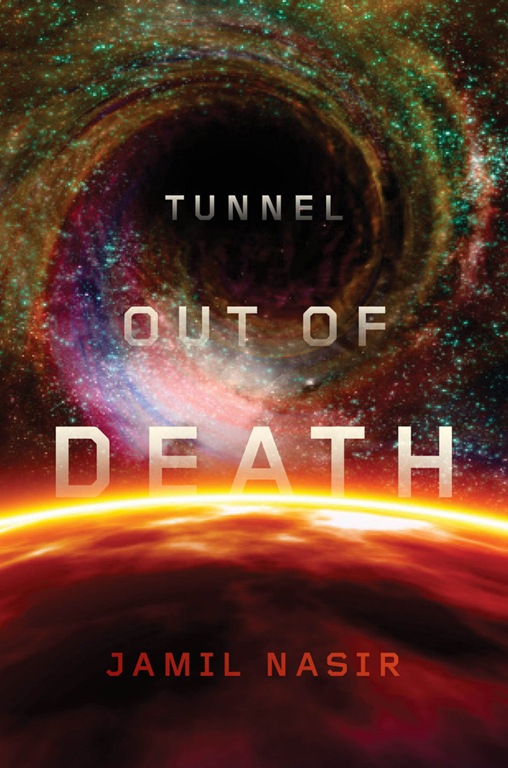
Nasir has been relatively quiet since 2000, publishing one new novel from Tor in 2008, The Houses of Time. But he bounced back last year with Tunnel Out of Death, a science fantasy about a private detective hired to find a literal lost soul…

Heath Ransom, former police psychic turned machine-enhanced “endovoyant” private investigator, is hired to find the consciousness of the rich and comatose Margaret Biel and return it to her body. Tracking her through the etheric world, he comes upon a strange and terrifying object that appears to be a tear in the very fabric of reality. He falls into it — and into an astonishing metaphysical shadow-play.

For Margaret is a pawn in a war between secret, ruthless government agencies and a nonhuman entity known only as “Amphibian.” Their battlefield is a multi-level reality unlike anything humankind has ever imagined. When Heath learns to move back and forth between two different versions of his life, and begins to realize that everyone around him may be a super-realistic android, that is only the beginning of a wholesale deconstruction of reality that threatens more than his sanity…

I have to admit, that’s one of the most original plot synopses I’ve read in the last year. I ordered a copy last week; my to-be-read pile is hopelessly backlogged, but if I get a chance to crack it open, I’ll report back here. Tunnel Out of Death was published May 7, 2013 by Tor Books. It is 304 pages, priced at $24.99 in hardcover and $12.99 for the digital edition. So far, there is no paperback edition.

See all of our recent New Treasures posts here.
The Series Series: The Bone Season by Samantha Shannon

The Series Series: The Bone Season by Samantha Shannon

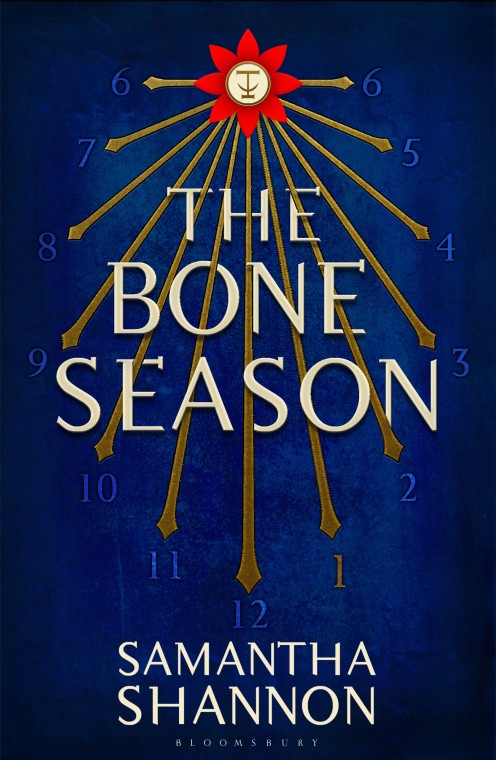
The Bone Season-smallRead this book. Just read it. Ignore the reviews that call Samantha Shannon the next J.K. Rowling, or call the series that opens with The Bone Season the next Hunger Games. Most importantly, ignore the jacket copy, which spoils a big reveal that is best appreciated in a state of shocked astonishment alongside the protagonist’s own. For that matter, I give you leave to ignore everything about this review I am writing right now except the first sentence, which I am not abashed about reiterating: Read this book.

You’re still here? Okay, that’s cool, too.

If all the comparisons in the mainstream reviews are off the mark — and the ones I find bandied about online all are — then what is The Bone Season?

It’s the book you would get if Philip K. Dick decided to write about the wild Victorian occult scene that flourished under Madame Blavatsky, blossomed again in the time of W.B. Yeats and Aleister Crowley, lingering until it faded with its evenstar, Dion Fortune. That is, if Philip K. Dick decided to take all that supernatural grandiosity, and steampunk adaptations of Victoriana,  and turn them on their heads by transposing them into a dystopian near-future historical moment that feels intermittently like  hard SF with its what-ifs scrambled.

It’s Minority Report meets Oliver Twist in the secret séance parlor of Martha Wells’s The Death of the Necromancer. Sez me. But the readers of Cosmopolitan don’t speak geek, so instead Cosmo conjures the ghost of J.K. Rowling, because hey, the blasted ruins of Oxford being repurposed as a prison camp for deliberately starved clairvoyants is a setting so reminiscent of Hogwarts. Oh, well. I’m sure someday I’ll write a review that far off the mark, too. (But not this day.)

Read More Read More

New Treasures: The Vampire Archives, edited by Otto Penzler

New Treasures: The Vampire Archives, edited by Otto Penzler

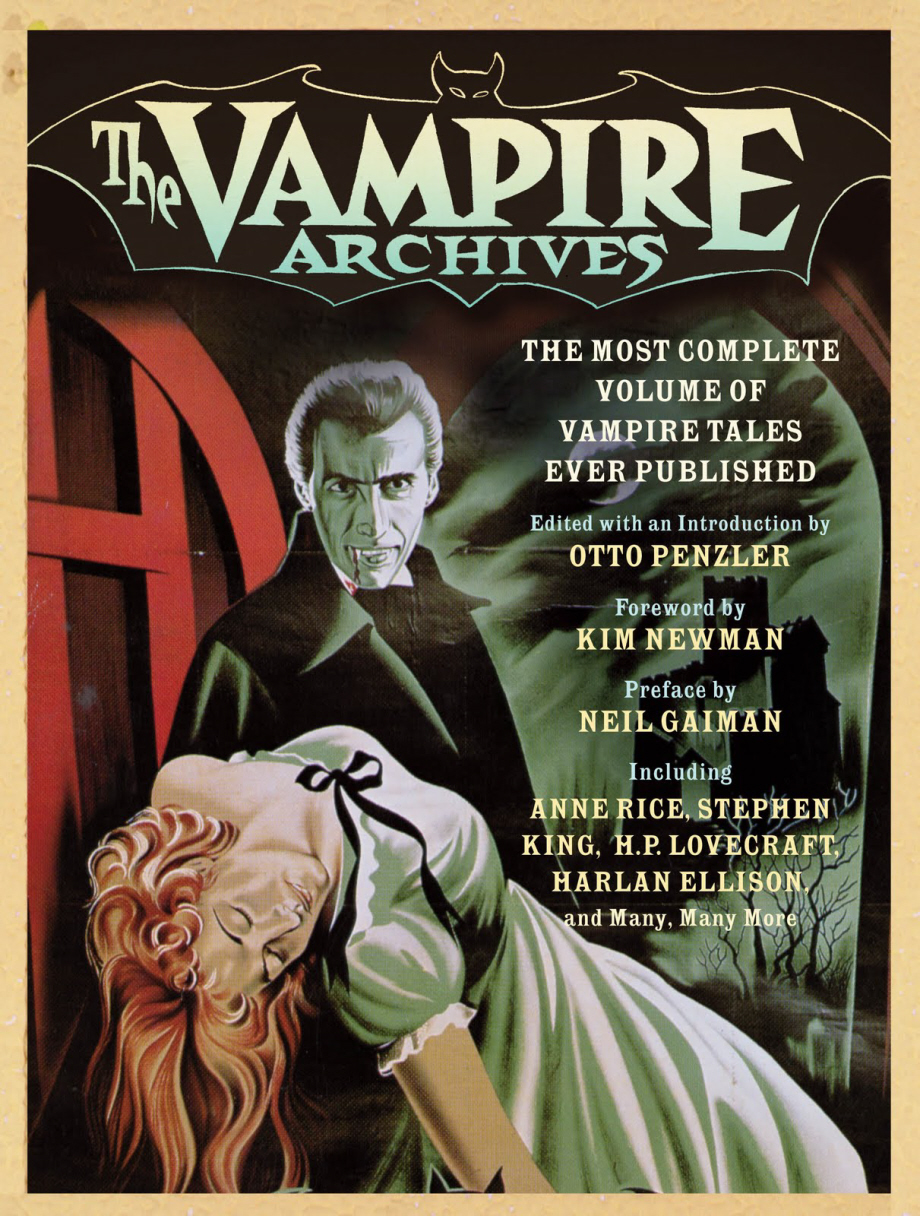
The Vampire Archive-smallLast week I wrote a brief piece on Otto Penzler’s marvelous The Big Book of Adventure Stories, and I’ve been having so much fun with it that I decided to look at some of his other door-stopper genre anthologies. So here we are this week with The Vampire Archives, one of the best collections of vampire stories I’ve ever encountered.

What makes it so great? It’s over 1,000 pages of the finest vampire fiction ever written, old and new, in a beautiful and inexpensive package. This is the only volume you need to bring yourself up to speed on vampire lit of the 18th, 19th, 20th and 21st centuries — no small claim.

It includes the classics you’d expect, like John Keats’ 1820 poem “La Belle Dame sans Merci,” Guy de Maupassant’s “The Horla,” and “The Girl with the Hungry Eyes” by Fritz Leiber — as well as many that you might not, like Ambrose Bierce’s 1891 tale “The Death of Halpin Frayser,” an excerpt from Lord Byron’s poem “The Giaour,” “Ligeia” by Edgar Allan Poe, “The Lovely Lady” by D. H. Lawrence, and even a Sherlock Holmes tale, “The Adventure of the Sussex Vampire” by Arthur Conan Doyle.

There’s a generous selection of fiction from the pulps, including “Stragella” by Hugh B. Cave, “Revelations in Black” by Carl Jacobi, “When It Was Moonlight” by Manly Wade Wellman, and Clark Ashton Smith’s Averoigne tale “The End of the Story.”

Read More Read More

The Return of Rick Steele

The Return of Rick Steele

Yesterday MenRickSteele-LostCityofAzgara-250Last year was my introduction to author Dick Enos and his Rick Steele adventure series. I suspect this year will be the one where both author and character make real headway among fans of New Pulp.

The fourth Rick Steele adventure, The Yesterday Men, was just published. If you’ve read the first three titles in the series, then you know Enos loves to confound reader expectations by delivering widely varying pulp adventures from alien invasion to the preternatural to lost civilization adventures. The Yesterday Men is both more of the same and something completely different. Rick Steele, for those unfamiliar with the character, is a hard-nosed Korean War veteran turned test pilot who somehow can’t avoid dragging himself and his supporting cast into adventures. Rick is a likable, but imperfect hero.

Read More Read More

Vintage Treasures: Shardik by Richard Adams

Vintage Treasures: Shardik by Richard Adams

Shardik-smallI’m frequently asked what my favorite fantasy novel is. I don’t have a standard answer — some days it’s The Lord of the Rings, some days Bridge of Birds. If I can get away with it, I sometime say Lord of Light, although that’s secretly science fiction (shhh).

But as the years go by, more and frequently I find myself saying Watership Down, by Richard Adams.

Watership Down is a brilliant book — wholly original, uniquely English in both setting and viewpoint, and possessed of the most exciting and satisfying climax I’ve ever read (go Bigwig, you magnificent Owsla, you.) But it’s far from Adam’s only fantasy novel — or even his only worldwide fantasy bestseller. He also wrote The Plague Dogs, the tale of two dogs on the run from a secretive testing facility in Britain; Traveller, a retelling of the American Civil War through the eyes of Robert E. Lee’s favorite horse; the massive Maia, the story of a sex slave in a fantasy empire; and his short story collection Tales from Watership Down.

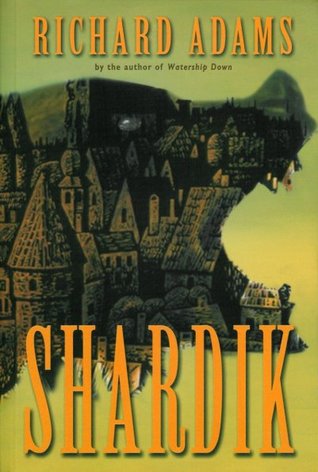
And in 1974, only two years after Watership Down, he produced perhaps his most ambitious novel, the epic fantasy Shardik, which The Wall Street Journal said “Grips with suspense, haunts with mystery… not to be read once but to be reread as loved books are.”

Shardik struck a chord with readers after it appeared. Fantasy fans expected another animal fantasy, but perhaps weren’t expecting the depth of world-building and political intrigue in Adams’ Beklan Empire, or his powerful antagonist, the giant god-bear Shardik.

Read More Read More

New Treasures: Bone Dance by Emma Bull

New Treasures: Bone Dance by Emma Bull

Bone Dance Emma Bull-smallI’m not all that familiar with the fantasy of the 90s. That’s the decade I graduated, got a job, got married, had three kids… and my leisure reading time fell to zero. Things got better after the year 2000 as life settled back into a routine, but when I look back at the major publishing events of that decade, things are still kinda fuzzy.

Fortunately, I’m not the only person working at Black Gate. In fact, I’m surrounded by annoying young people who first discovered fantasy in the 90s, and devoured everything on the shelves. I can’t walk to the water cooler without overhearing them go on and on about the books that first turned them into fantasy fans. And the more I listen, the more I realize that they’re talking about Emma Bull.

Emma Bull is not a prolific writer. Her first novel War for the Oaks made a huge splash in 1987; it was followed by Falcon (1989), Bone Dance (1991), Finder (1994), The Princess and the Lord of Night (1994), Freedom and Necessity (1997, co-written with Steven Brust) and Territory (2007). I finally decided it was time to find out how someone can win over an entire generation with half a dozen fantasy novels, and figured I’d start with Bone Dance.

Sparrow’s my name. Trader. Deal-maker. Hustler, some call me. I work the Night Fair circuit, buying and selling pre-nuke videos from the world before. I know how to get a high price, especially on Big Bang collectibles. But the hottest ticket of all is information on the Horsemen — the mind-control weapons that tilted the balance in the war between the Americas. That’s the prize I’m after.

But it seems I’m having trouble controlling my own mind. The Horsemen are coming.

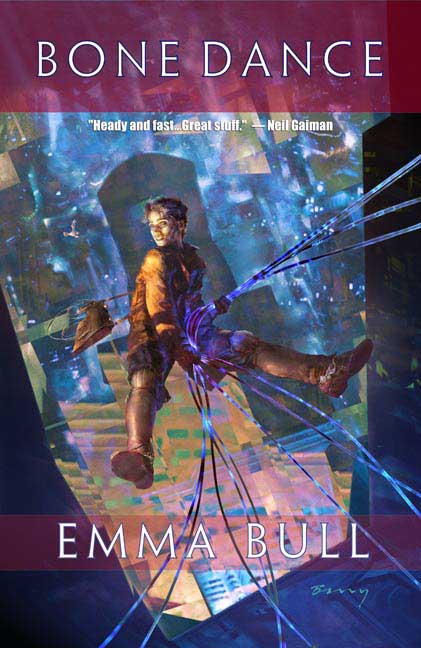
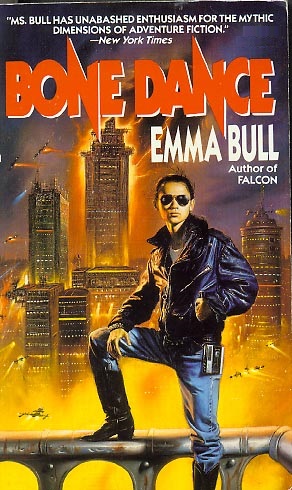
Bone Dance was nominated for a ridiculous number of awards — the Hugo, Nebula, World Fantasy, Locus, and even the Philip K. Dick Award. It was originally published in paperback by Ace in May, 1991, with a typical 80s art by Jean Pierre Targete, who looked like he was trying to paint Corey Hart on the cover. It was reprinted in a handsome trade paperback edition by Tor/Orb Books on July 7, 2009, and this cover has much more of a YA feel — and a new subtitle: “Fantasy for Technophiles.” Bone Dance is 317 pages, priced at $15.99 in trade paperback, or $7.99 for the digital edition. I bought a discounted trade edition at Amazon for just $6.40 — copies are still available if you act fast.

Revisiting A.B. Mitford’s The 47 Ronin: Japanese Tales of Vampires, Ghosts, and Renegade Samurai

Revisiting A.B. Mitford’s The 47 Ronin: Japanese Tales of Vampires, Ghosts, and Renegade Samurai

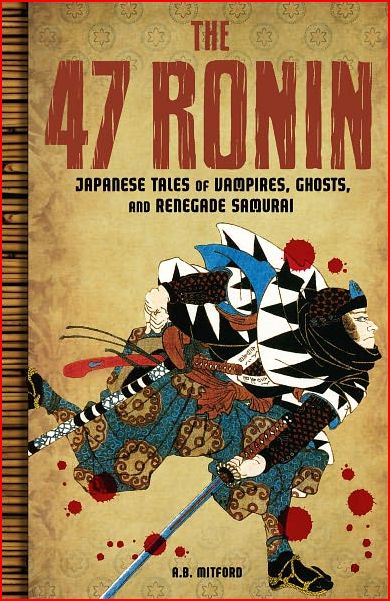
The 47 Ronin-smallTwo weeks ago I reviewed the film 47 Ronin, which Universal Pictures labeled a flop only a day after its U.S. release.

At that point the picture had earned about $85 million worldwide. That take has now increased to $116 million (according to BoxOfficeMojo), still well shy of its $175 million budget. Whether or not Universal’s premature announcement doomed the film, it’s now clear they weren’t wrong about its ultimate fate.

While browsing the remainder tables at Barnes & Noble yesterday, I stumbled on a curious title: The 47 Ronin: Japanese Tales of Vampires, Ghosts, and Renegade Samurai, by A.B. Mitford. I assumed it was a guerrilla tie-in; a cheap reprint timed to capitalize on the release of the movie. Except it was published nearly two years ago, in 2012, and there’s nothing cheap at all about the beautiful design, with striking endpapers and gorgeous color art on nearly every page.

I was right about at least one thing though: it is a reprint. It was originally published as Tales of Old Japan in 1871, one of the very first tomes to bring tales of Japanese monsters to Western shores.

Algernon Bertram Mitford was a British diplomat who later became Baron Redesdale. He developed a keen interest in Japanese folk tales while serving as attaché to the British delegation in Japan from 1866 – 1870 where, among other things, he witnessed the dissolution of the last feudal Japanese military government — the Tokugawa shogunate, ruled by the shoguns of the Tokugawa clans at Edo Castle — and the founding of a modern nation-state under Emperor Meiji.

Mitford was writing at a time when Japan was beginning to open to the West for the first time, less than 20 years after American Commodore Matthew Perry infamously sailed into Tokyo Bay with modern steam ships and explosive shell guns, gave the Japanese two white flags, and told them to hoist the flags when they wanted him to cease shelling the city and surrender. Perry forced the opening of Japan with the Convention of Kanagawa, and Mitford, writing a decade later, is a textbook case of white-guy-stupid, especially in how he’s perpetually surprised that the Japanese don’t greet Westerners with open arms and a bottle of warm saki.

Read More Read More

Gifts From the Godfather of Space Opera: The Collected Edmond Hamilton, Volume Four

Gifts From the Godfather of Space Opera: The Collected Edmond Hamilton, Volume Four

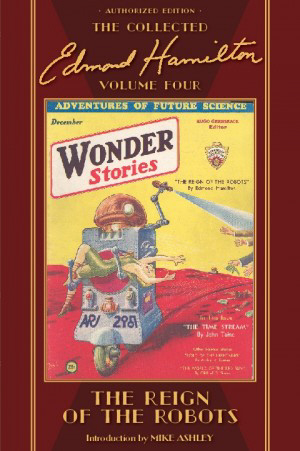
The Collected Edmond Hamilton Volume Four-smallCancel all my appointments! My copy of The Reign of the Robots, The Collected Edmond Hamilton, Volume Four arrived today.

Edmond Hamilton is my favorite pulp writer, and has been ever since I encountered his work in Isaac Asimov’s seminal anthology Before the Golden Age. I talked about my early affection for Hamilton — and my frustration at being unable to find some of his most acclaimed early space opera — in my Vintage Treasures piece on The Best of Edmond Hamilton last fall.

At the time I wrote:

While some of Hamilton’s shorter fiction was reprinted over the years, both Cities in the Air and The Universe Wreckers, and much of the longer work which made him famous, was available only in the early pulps in which they first appeared.

Stephen Haffner finally rectified this in 2011 with his The Collected Edmond Hamilton volumes, which gathered at last all of Hamilton’s early pulp work in archival quality hardcovers (thanks Stephen! I owe you one).

When I wrote that, only three volumes of The Collected Edmond Hamilton were available, covering Hamilton’s work from his very first story “The Monster-God of Mamurth” (from Weird Tales, Aug 1926, gathered in The Metal Giants and Others), through “World Atavism” (from Amazing Stories, Aug 1930, collected in The Universe Wreckers.)

Read More Read More

New Treasures: RuneQuest 6 by Pete Nash and Lawrence Whitaker

New Treasures: RuneQuest 6 by Pete Nash and Lawrence Whitaker

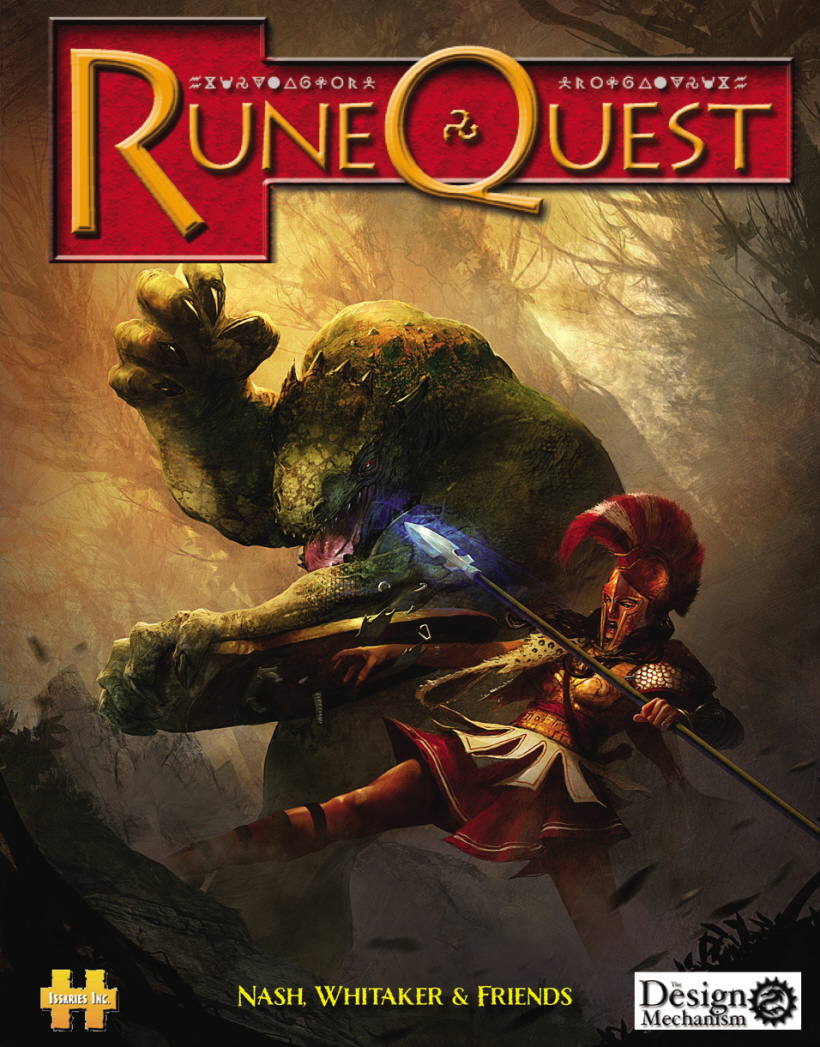
Runequest Sixth Edition-smallIt takes a lot to get me to try a new role playing system. I’m fairly happy with the ones I already play — first edition Advanced Dungeons and Dragons, Call of Cthulhu, and Steve Jackson’s Melee and Wizards games — and I barely have time to devote to those at it is.

I’m not sure what it was that originally drew me to try RuneQuest. I think it might have been the promise of a wholly different flavor of fantasy. AD&D was medieval villages, magic users, and Gygax’s Against the Giants. RuneQuest was talking animals, bronze age warriors from strange ancient cultures, and Paul Jacquey’s enigmatic Duck Tower (“What? A tower of ducks? That’s so weird. What’s with all the ducks in armor? Seriously? Mike, come check this out.”)

So I dragged my brother Mike to a RuneQuest game on the campus at Carleton University in Ottawa, where we soon found ourselves in the thick of a fast-action melee. In our first exposure to critical hit tables, Mike’s grizzled dwarf fighter fumbled an epic axe hit at the height of the battle, and managed to slice off his own leg. To this day, I can’t mention the word “RuneQuest” without Mike growling, “Yeah. Best system in the world.”

Needless to say, Mike didn’t play much after that. But I kept up with the various incarnations. A big part of my fascination was the result of Chaosium’s support efforts, especially the amazing Pavis and Big Rubble boxed sets. I still consider them some of the finest gaming products ever created, and have been much impressed with the recent reprint editions from Moon Design Publications.

Read More Read More

New Treasures: The Big Book of Adventure Stories, edited by Otto Penzler

New Treasures: The Big Book of Adventure Stories, edited by Otto Penzler

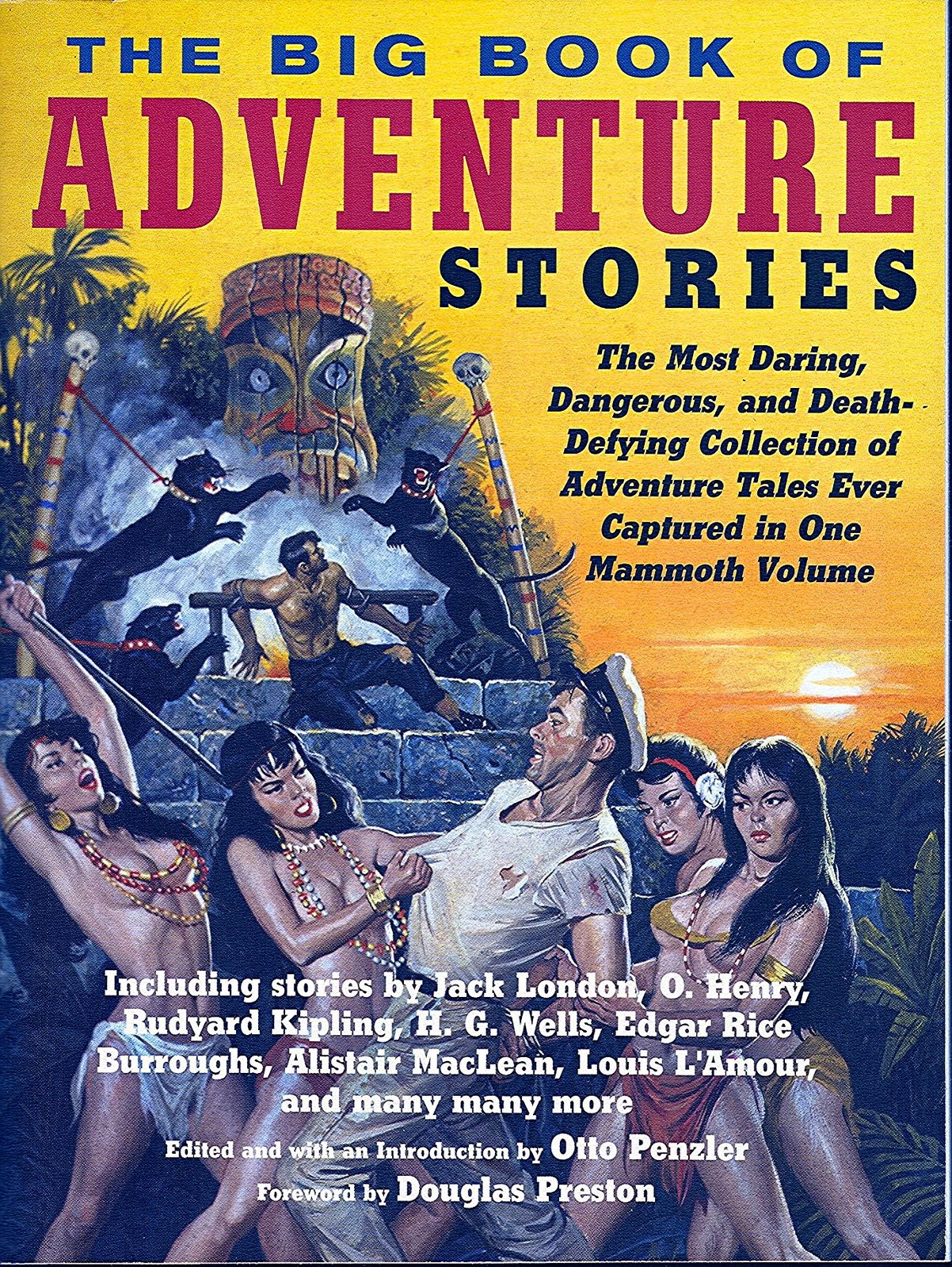
The Big Book of Adventure Stories-smallIt shouldn’t be a surprise that I love these big omnibus collections, and The Big Book of Adventure Stories is much bigger and omnibus-er than most. Weighing in at a generous 896 pages, it’s Penzler’s generous gift to those of us who love fast-paced pulp adventure… or just need a door stop (for a bank vault).

The massive volume is divided in 11 intriguing sections, including Sword & Sorcery, Man Vs. Nature, Island Paradise, Go West, Young Man (pulp westerns), Future Shock (science fiction), Yellow Peril (sinister Asian villains), and by far the largest, In Darkest Africa.

You can pack a lot of great authors into nearly 900 pages, and Penzer doesn’t disappoint, including Robert E. Howard, Fritz Leiber, Philip Jose Farmer, Harold Lamb, Rudyard Kipling, Ray Cummings, Rafael Sabatini, Sax Rohmer, Cornell Wollrich, Louis L’Amour, and many others. Among other fascinating tales are the one that introduced The Cisco Kid, O. Henry’s 1907 “The Caballero’s Way,” and Edgar Rice Burrough’s complete novel Tarzan the Terrible.

Everyone loves adventure, and Otto Penzler has collected the best adventure stories of all time into one mammoth volume. With stories by Jack London, O. Henry, H. Rider Haggard, Alastair MacLean, Talbot Mundy, Cornell Woolrich, and many others, this wide-reaching and fascinating volume contains some of the best characters from the most thrilling adventure tales, including The Cisco Kid; Sheena, Queen of the Jungle; Bulldog Drummond; Tarzan; The Scarlet Pimpernel; Conan the Barbarian; Hopalong Cassidy; King Kong; Zorro; and The Spider. Divided into sections that embody the greatest themes of the genre — Sword & Sorcery, Megalomania Rules, Man vs. Nature, Island Paradise, Sand and Sun, Something Feels Funny, Go West Young Man, Future Shock, I Spy, Yellow Peril, In Darkest Africa — it is destined to be the greatest collection of adventure stories ever compiled.

Featuring: Lawless open seas, ferocious army ants, deadeyed gunmen, exotic desert islands, feverish jungle adventures.

Read More Read More