Browsed by
Category: Magazines

Heroic Fantasy Quarterly 33 Now Available

Heroic Fantasy Quarterly 33 Now Available

Heroic Fantasy Quarterly Q33

While I was strolling through the streets of my hometown of St. Charles, a mysterious traveler in black slipped me a tightly bound scroll. “Keep if safe,” he whispered. “And honor the pact of knowledge.” When I got home, I found it contained a copy of the latest issue of Heroic Fantasy Quarterly, plus a tasty-looking recipe for Canadian date squares. Looks like it’s my lucky week.

The latest issue of HFQ includes stories by Evan Dicken, Raphael Ordoñez, and Jason Carney, plus poetry from Andrew Crabtree, Kendall Evans, and Michael Tilbury. Here’s the complete TOC, with fiction links.

…

Read More Read More

New Treasures: Graphic Classics Volume 26: Vampire Classics

New Treasures: Graphic Classics Volume 26: Vampire Classics

Gothic Classics Graphic Classics Volume 14-small Graphic Classics Volume 23 Halloween Classics-small Graphic Classics Volume 26 Vampire Classics

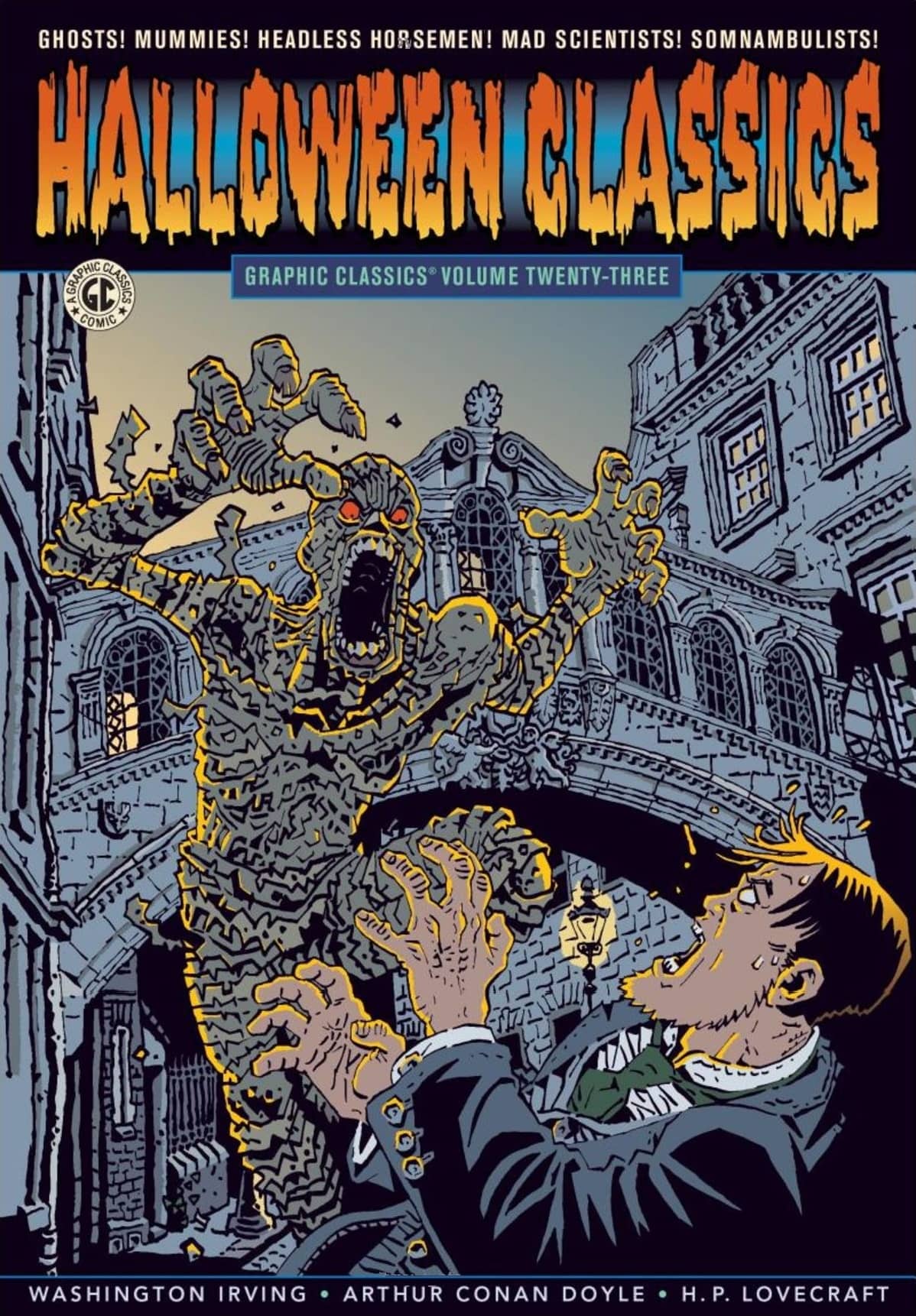
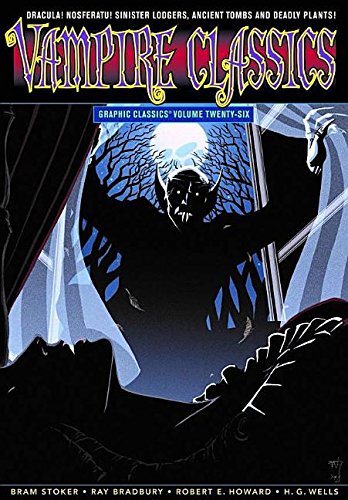
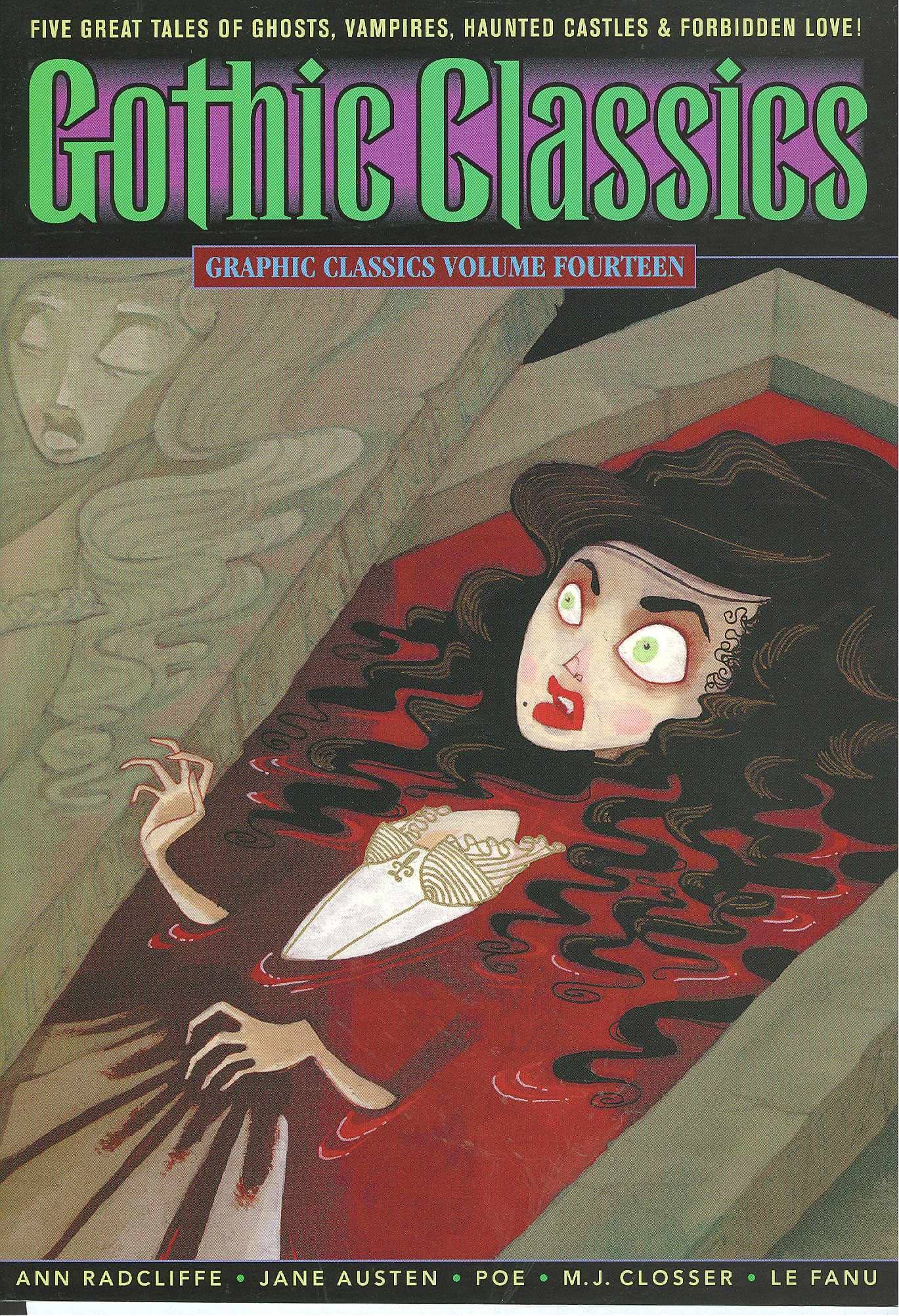
I’ve been a huge fan of Tom Pomplun’s Graphic Classics comic anthologies for years, ever since I received a copy of the first one, Volume 1: Edgar Allan Poe, in 2001 (back when they were Rosebud Graphic Classics, a spin-off of Rosebud magazine). Some of my favorites are Volume 4: H. P. Lovecraft, Volume 14: Gothic Classics, and Volume 23: Halloween Classics (back cover here). But I hadn’t seen a new release in over three years, ever since Volume 25: Canine Feline Classics back in 2014. So imagine my surprise when I accidentally stumbled on a copy of Graphic Classics Volume 26: Vampire Classics, which snuck into bookstores on June 28. Here’s the description.

Vampire Classics features a unique adaptation of the 1922 silent film, Nosferatu. Plus a horror-western by “Conan” creator Robert E. Howard and Ray Bradbury’s “The Man Upstairs.” With “The Strange Orchid” by H.G. Wells, “Olalla” by Robert Louis Stevenson, and a short story by famed horror writer and co-editor Mort Castle.

Our previous coverage of Graphic Classics includes:

Graphic Classics Half-Price Sale
It’s Halloween Already with Graphic Classic’s Halloween Classics
Get Graphic Classics Volume 23: Halloween Classics for only $10 in October

Graphic Classics Volume 26: Vampire Classics was published by Eureka Productions on June 28, 2017. It is 144 pages, priced at $19.95. See all our recent Comics coverage here.

Amazing Stories, July 1964: A Retro-Review

Amazing Stories, July 1964: A Retro-Review

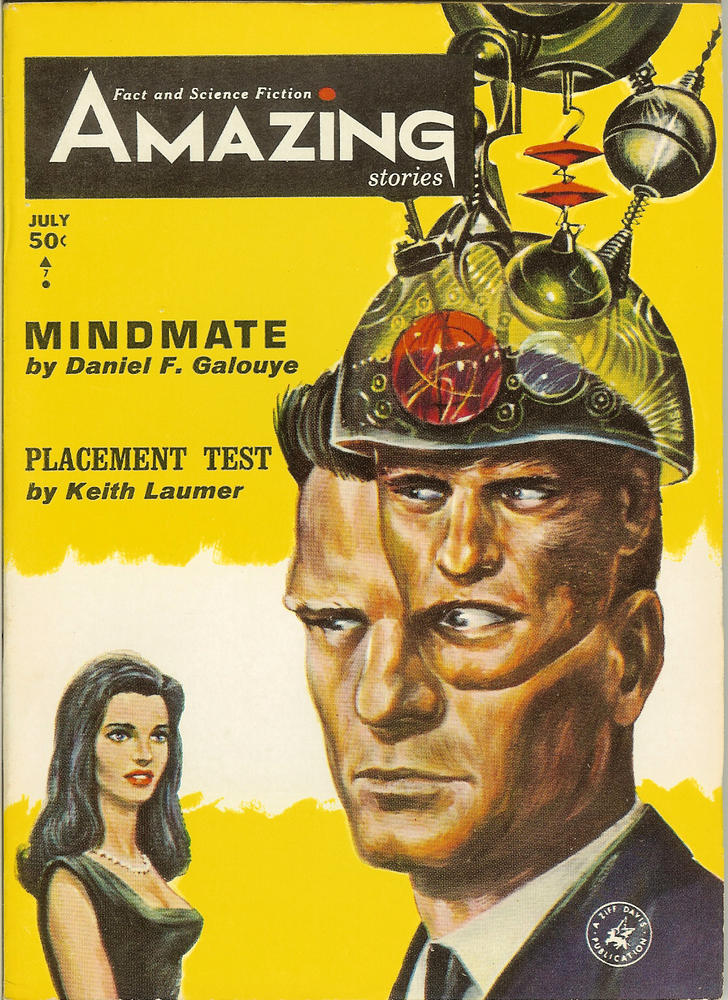
Amazing Stories July 1964-smallThis was the last issue edited by Cele Goldsmith — with the next issue she became Cele Lalli, after her marriage.

Ed Emshwiller contributes the cover this time, to my taste not one of his best. Interiors are by Virgil Finlay, George Schelling, and a couple I don’t recognized, identified in the magazine only by their last names: McLane and Blair. Norman Lobsenz’ editorial discusses the effects of space and alien environments on humans, and goes on to wonder how we can justify terraforming planets on which other species live. Ben Bova’s science article, “Operation Shirtsleeve,” then discusses exactly that — how to terraform other planets so that humans can live comfortably there (in “shirtsleeves”).

Robert Silverberg’s book review column, The Spectroscope, first takes on Edgar Rice Burroughs, both on his own (The Cave Girl) and via a slavish imitator (Otis Adelbert Kline, with Prince of Peril). Silverberg’s verdict: “unmitigated trash, subliterate claptrap barely worth the time of children.”

(My verdict, based on a very limited sample (ERB’s first novel, A Princess of Mars aka “Under the Moons of Mars“) is a bit more forgiving — claptrap and trash it may be, but it’s definitely mitigated — at least early in his career Burroughs offered an energetic glee that made him worth reading despite the silliness.)

Next he reviews a couple of collections by major writers — one is an SFWA Grand Master, the other died too young to be named a Grand Master but would certainly have been one eventually, and one of the very best. So: Silverberg finds James Gunn’s Future Imperfect somewhat disappointing next to the best of Gunn’s work; but he finds Sturgeon in Orbit surprisingly better: even though it features uncollected early ’50s stories it manages to surprise with some good stuff, particularly “The Incubi of Parallel X,” a wild piece full of cliches from Planet Stories in 1951 that Sturgeon redeemed with his panache. (I read that story in the Planet Stories issue it appeared in (not in 1951 though!) and I completely agree!)

…

Read More Read More

July/August 2017 Analog Now on Sale

July/August 2017 Analog Now on Sale

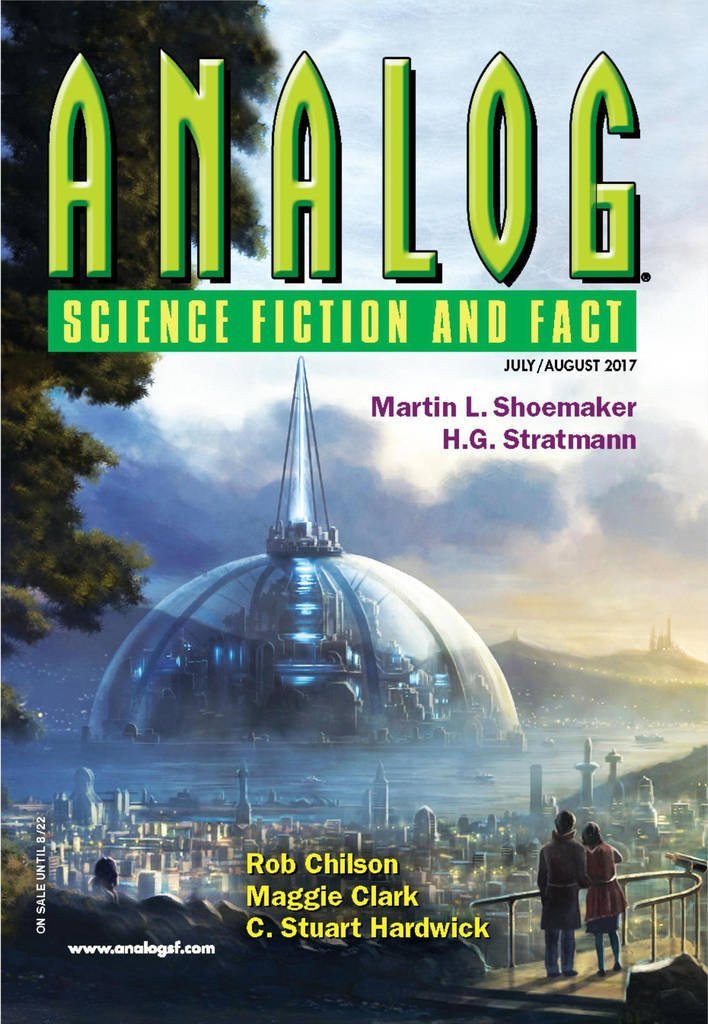
Analog July August 2017-smallI’ve been buying Analog Science Fiction and Fact for over 40 years. Remarkably little has changed in that time. It’s still a digest magazine. It still has interior art by Vincent Di Fate. And I still read “Probability Zero” first.

The July’August issue has a big novella by Martin L. Shoemaker, “Not Far Enough,” featuring the return of Captain Nick Aames, Carver, and Smith, who’ve previously appeared in the pages of Analog in “Murder on the Aldrin Express” (September 2013), “Brigas Nunca Mais” (March 2015), and “Racing to Mars,” (September 2015, winner of the Analog Award for Best Novella of the year). Here’s editor Trevor Qachari on the issue.

We kick off our July/August issue by checking in on Captain Nick Ames and his crew, last seen in “Racing to Mars,” September 2015, by Martin Shoemaker. When a routine mission goes off the rails, it’s more than just a matter of shipboard politics: lives are at stake, and people will die if they go too far, or “Not Far Enough.”

Then we have the kind of fact article that we only pull off all too rarely: H. G. Stratmann gives us a look at the science behind Stanley Schmidt’s story in this very issue, “The Final Nail.”

We also have fiction ranging from “Across the Streaming Sea,” an adventure that perfectly embodies Clarke’s Law, by Rob Chilson; to a story of the bond between a captain and his ship in Brian Trent’s “Galleon”; a follow-up to Maggie Clark’s “Seven Ways of Looking at the Sun-Worshippers of Yul-Katan,” in “Belly Up”; and an almost-could-have-happened-this-way tale of early space travel, “For All Mankind,” from C. Stuart Hardwick.

There’s also a slew of short pieces from such folks as Andrew Barton, Tom Easton, Tim McDaniel, Robert R. Chase, Ron Collins, Kyle Kirkland, Aubry Kae Andersen, Edward M. Lerner, Eve Warren, Holly Schofield, Uncle River, and Howard V. Hendrix, as well as an awesome array of compelling columns.

Although Trevor says “H. G. Stratmann gives us a look at the science behind Stanley Schmidt’s story in this very issue, ‘The Final Nail,'” don’t look too hard for Stan’s story. It actually appeared last issue.

The cover this issue is by Rado Javor. Here’s the complete Table of Contents.

…

Read More Read More
July/August Interzone Now on Sale

July/August Interzone Now on Sale

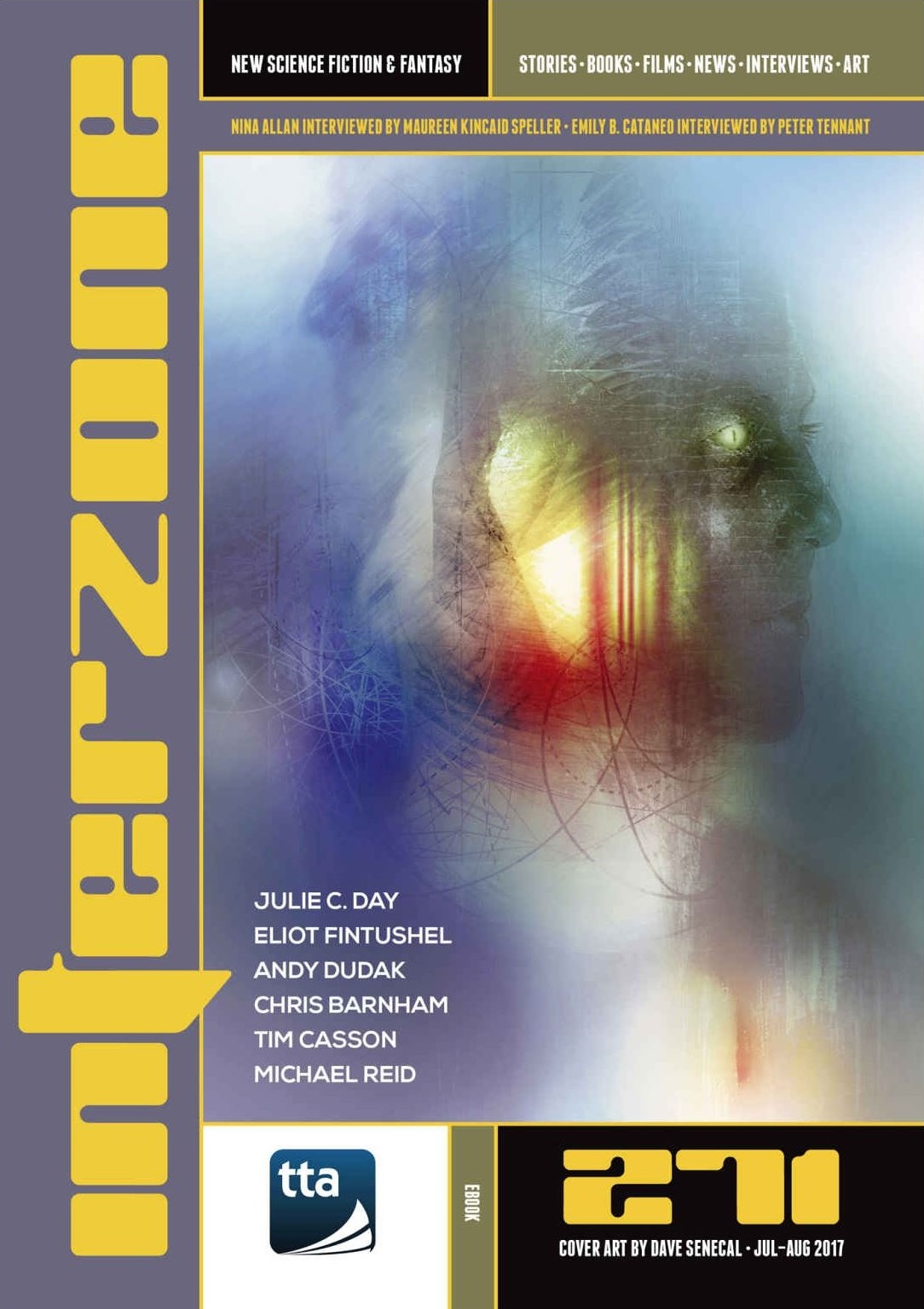
Interzone 271-smallThe July/August issue of Britain’s longest running science fiction and fantasy magazine has new fiction by Julie C. Day, Tim Casson, Michael Reid, Eliot Fintushel, Chris Barnham, and Andy Dudak, plus David Langford’s Ansible Link, film reviews by Nick Lowe; book reviews, and columns by Jonathan McCalmont and Nina Allan. Here’s Robert L Turner III, writing at Tangent Online.

Michael Reid’s “If Your Powers Fail you in a City Under Tin” is set in a future where magic has returned to the world after the God Beast tore a hole into this dimension. Jun, a portalist with control problems and a haunted past, starts to panic when his lover, Riel, disappears while fighting for the UN. As a week passes without word, Jun finally discovers how to control his abilities and makes an attempt to rescue Riel…

Eliot Fintushel creates a world in which people are partnered by genetic match in “Chubba Luna.” Sweeney, the protagonist, lives in a chaotic world where society has almost broken down and due to NPJ, Non-Punitive Justice, there are few consequences for any actions. He, Mo, Sheila Mo’s paired partner, and the Bartender gather together to argue, drink and decide what to do with their lives and partners…

“When I Close my Eyes” by Chris Barnham is the story of the first manned expedition to Titan. Darlo, one of the team, becomes trapped in an ice cave and has to make his way out while dealing with visions of his dead wife. When he discovers that there is life on the moon and that it seems to dislike his light he has to rely on faith in his hallucinations to save him. The story, an explorer facing a hostile environment is a common one, but Barnham does a good job of mixing the psychological elements to add depth to the piece…

Professor Turner’s complete review is here.

…

Read More Read More

July/August Magazine of Fantasy & Science Fiction Now on Sale

July/August Magazine of Fantasy & Science Fiction Now on Sale

Magazine of Fantasy and Science Fiction July August 2017-smallThe July/August F&SF features fiction by Gardner Dozois, William Ledbetter, Marissa Lingen, and many others. Here’s Victoria Silverwolf from Tangent Online with the lowdown.

Leading off the magazine is its only pure SF story, “In a Wide Sky, Hidden” by William Ledbetter. Human beings have explored many worlds throughout the galaxy by transmitting their minds into artificial bodies created at the point of arrival. The protagonist is one such explorer. As a child, his older sister, who designed vast, technologically sophisticated works of art, disappeared with a promise that she was going to create her masterpiece, and a request that her brother find her. Many years later, after journeying to multiple planets, he discovers what became of her. This a fine story, written with grace, clarity, and imagination. It balances sense of wonder with empathy for its characters.

Readers familiar with classic science fiction will recognize a tribute to Robert A. Heinlein’s 1941 story “—And He Built a Crooked House—” in “There Was a Crooked Man, He Flipped a Crooked House” by David Erik Nelson. Not only are the title and the theme of the story similar, but a minor character, mentioned only in passing, has the same name as a major character in Heinlein’s story. In modern Detroit two men who work for a fellow who buys abandoned properties in order to sell them at a vast profit are sent to examine his latest acquisition. It turns out to be a beautiful old mansion in immaculate condition, despite the fact that it is located in one of the worst places in the city. The moment the narrator enters the front door he winds up in the back yard. Other dimensional paradoxes abound. Once a way into the house is discovered, things take a darker turn…

Read Victoria’s complete review here.

Here’s the complete Table of Contents.

…

Read More Read More
Dune by Frank Herbert

Dune by Frank Herbert

oie_3171159srWv2GrQIt’s been called the greatest science fiction novel of all time. Maybe, maybe not, but it’s one of the best I’ve ever read. Published all the way back in 1965, it’s the best-selling science fiction novel of all time. The first half of Dune made its debut as “Dune World,” starting in the December 1963 Analog. The second half, “The Prophet of Dune,” began in the January 1965 issue.

I read Dune for the first time in 1981, at the age of 14. From the very first pages I was hooked.  I was house sitting for my grandfather, and the only things I had to do were let the dog out and feed her and myself, and that meant I barely put the book down all day. Like Dune’s hero, Paul Atreides, I was wondering what the heck is a gom jabbar? Who are the Bene Gesserit? What is melange? My dad’s paperback, at 544 pages, is one of the longest books I’ve read in a single day (beat only by Terry Brooks’ The Sword of Shannara).

I’m not sure what triggered it, but something called out from the depths telling me it was time to reread Dune again. The last time (which was the fourth time) I read it was nearly 20 years ago. A friend wanted to get into science fiction, so a few of us started rereading the classics and tossing them his way. Among the books I revisited were Asimov’s Foundation Trilogy and The Gods Themselves, Clarke’s Rendezvous With Rama, Heinlein’s Orphans of the Sky, and Herbert’s Dune.

…

Read More Read More

July 2017 Nightmare Magazine Now on Sale

July 2017 Nightmare Magazine Now on Sale

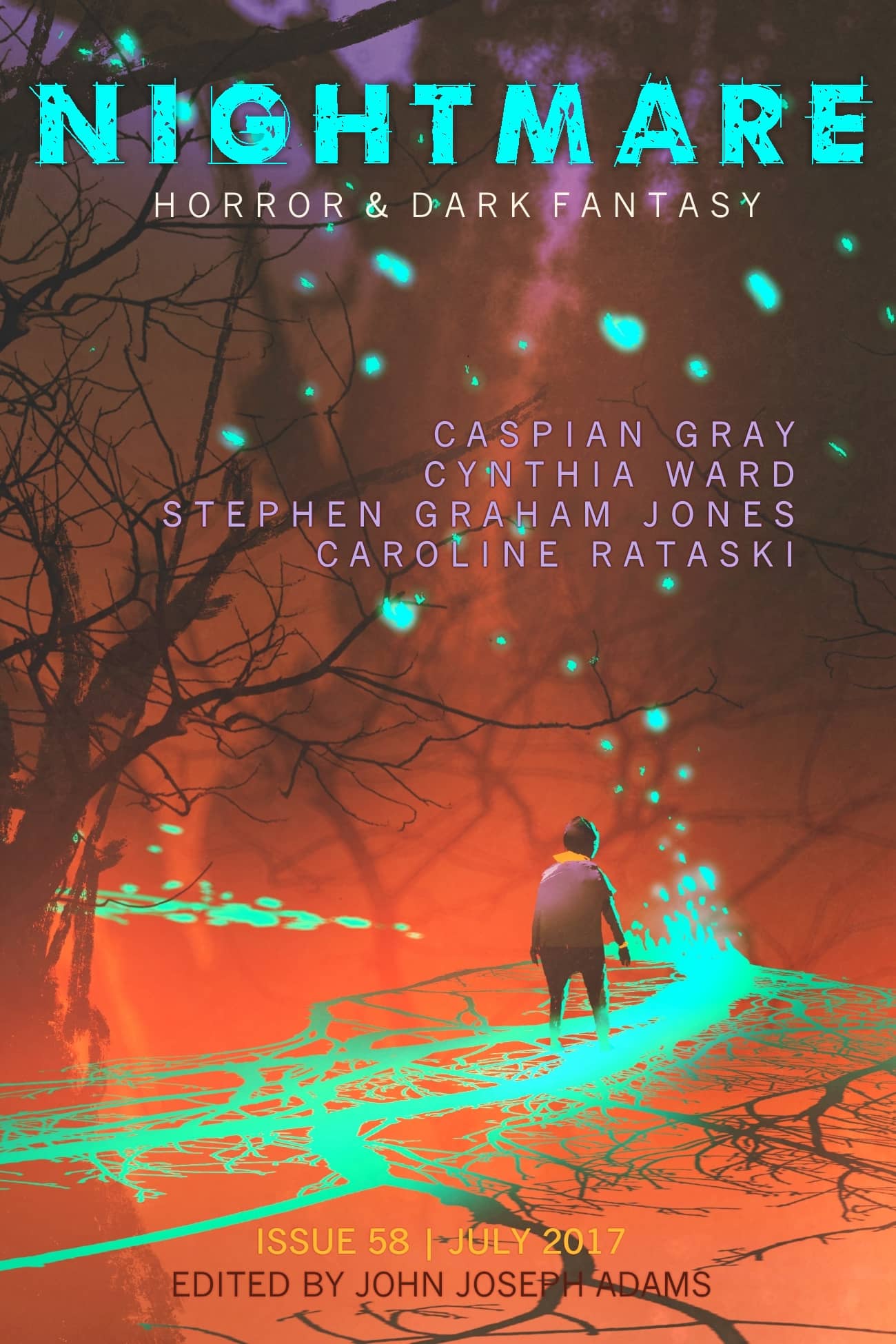
NIghtmare Magazine July 2017-smallThe July 2017 issue of Nightmare is now available, with original fiction from Caspian Gray and Caroline Ratajski, and reprints by Stephen Graham Jones and Cynthia Ward. Here’s Valerie A. Lindsey from Tangent Online:

“Promises of Spring” by Caspian Gray opens with Cody asking his high school friend, Tay, to help him stop some high school kids from summoning the witch that granted three of them their desires during a bloody ritual. Gray illustrates the high cost of making wishes without understanding how high the true cost will be. Fortunately, the one who suffered the most is able to make the best wish of all…

Caroline Ratajski’s “And With Her Went the Spring” captured my interest from the first evocative sentences. The story seems to open as you would expect with grieving parents and an outraged town, but it soon becomes more. The story moves smoothly from what happened to the viewpoints of the boy and the dead girl. The missing girl refuses to accept her fate meekly and becomes a retributive force for herself and all the girls before her.

Read her complete review here.

There’s also an editorial from John Joseph Adams (which includes a cover reveal for all of his 2017 titles at John Joseph Adams Books), the latest installment of “The H Word” (Nathan Carson shares the creepy truth about goats), author spotlights, and a feature interview with Donnie Darko’s Richard Kelly.

The complete contests of the issue are listed below.

…

Read More Read More

July Short Story Roundup

July Short Story Roundup

CaptureAs the dog days begin, my mind has been prodded back to swords & sorcery by a few things. The most important one was the the return to the fray of Charles R. Saunders, creator of the heroes Imaro and Doussouye. Just the other day, he announced the start of a new blog, Different Drumming. If you are not familiar with Saunders and his superb body of work, go at once and check out his site.

The next thing, while not exactly S&S, was that I learned the final volume of R. Scott Bakker’s Aspect Emperor series, The Unholy Consult, is about to be published. For all my issues with it, it is one of the few contemporary series that has held my interest past the first book or two.

There have also been some fun discussions among various wags over on Facebook about what a list of good introductory books to the genre would look like. I suspect it won’t be long before I’m lifted entirely from my S&S doldrums and return to reading and reviewing the stuff on a regular basis. Until then, there will still be short story roundups. Like this one.

Swords and Sorcery Magazine #65 provides the publication’s usual two new stories. I like both well enough, but neither qualifies as actual S&S. The definition of “what is swords & sorcery?” has been done to death by divers hands and on numerous stages, but suffice to say there should be action and at least a touch of the dark and macabre. This issue’s two stories contain neither of those things.

“Then Will Die Your Pain,” by Tom Crowley, consists of the reflections of Konsler, an aged soldier now serving as the attendant to a knight of unclear pedigree.

Sir Garner isn’t a proper knight, just as I’m not a proper squire. There are no knights where Garner comes from, but everyone in the company calls him Sir. And of course I’m too old to be a squire. The other mercenaries say to me, “You’re gonna die out here, grandpa.” They’re probably right. I just need to finish my job first, and I’m writing this in case I don’t.

…

Read More Read More

July 2017 Clarkesworld Now Available

July 2017 Clarkesworld Now Available

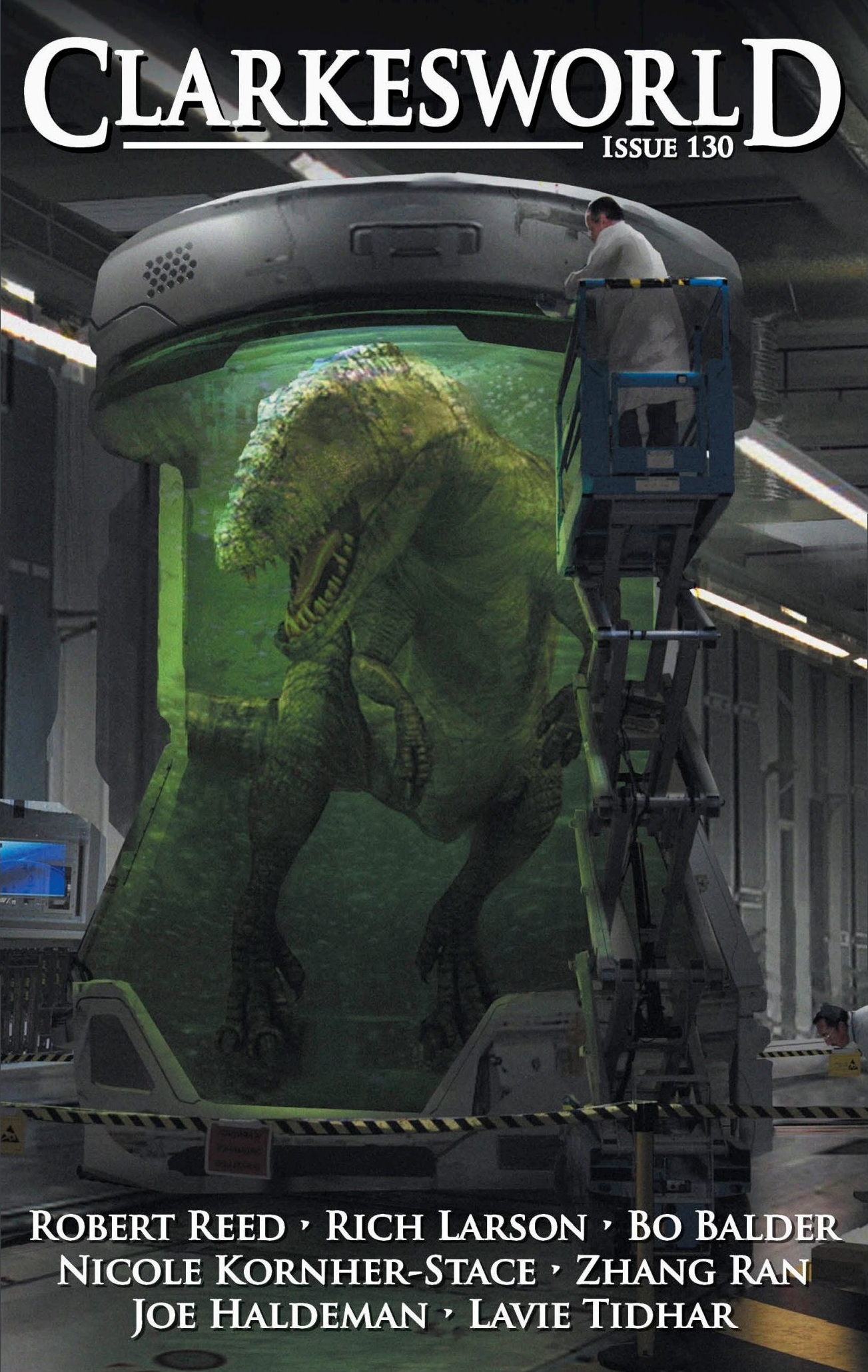
Clarkesworld July 2017 smallIn his editorial this issue, Neil Clarke reflects on the heart attack that nearly killed him five years ago.

When the universe calls, you have no choice but to listen. Five years ago this month, it sent me a message in the form of a near-fatal heart attack. It was the sort of thing that not only caught me off guard, but my family, friends, and doctors as well. As I lay there in the critical care unit, the weight of what happened hit me hard, providing an odd sort of clarity and a revised outlook on life. I had some choices to make, a lot of alone time before visitors to think about it.

Over the years, I’ve blogged and editorialized many of the details of that time, but today is about celebrating an anniversary and pushing forward. Not only did I survive, but I learned a lot of valuable lessons. It was a crappy way to get the message, but I’m very glad I did. At the end of the first year, I took back the anniversary by returning to Readercon — the scene of the crime — and successfully ending the Kickstarter campaign for Upgraded, my first anthology.

Five years later, I have a year’s best series and several more anthologies, watched Clarkesworld turn ten, and made it to my fiftieth birthday. Earlier this year and thanks to my wife’s return to the workforce, I was able to quit the day job and have the time to pursue my dream of becoming a full-time editor. Technically, I am full-time now, but the goal was always to be making a full-time income — with healthcare covered — and I’m still working towards that.

Speaking as someone who still believes SF magazines are the heart of the field, I’m enormously grateful Neil is still with us.

The July Clarkesworld contains original fiction from Zhang Ran, Rich Larson, Robert Reed, Bo Balder, and Nicole Kornher-Stace, plus reprints by Joe Haldeman and Lavie Tidhar. The cover, “Genetics Lab,” is by Eddie Mendoza.

Nicole Kornher-Stace, author of Archivist Wasp, writes that her tale is “the first short story I’ve written in approximately forever. It’s also the first tie-in story I’ve written in the Archivist Wasp world. More of those to come.”

…

Read More Read More