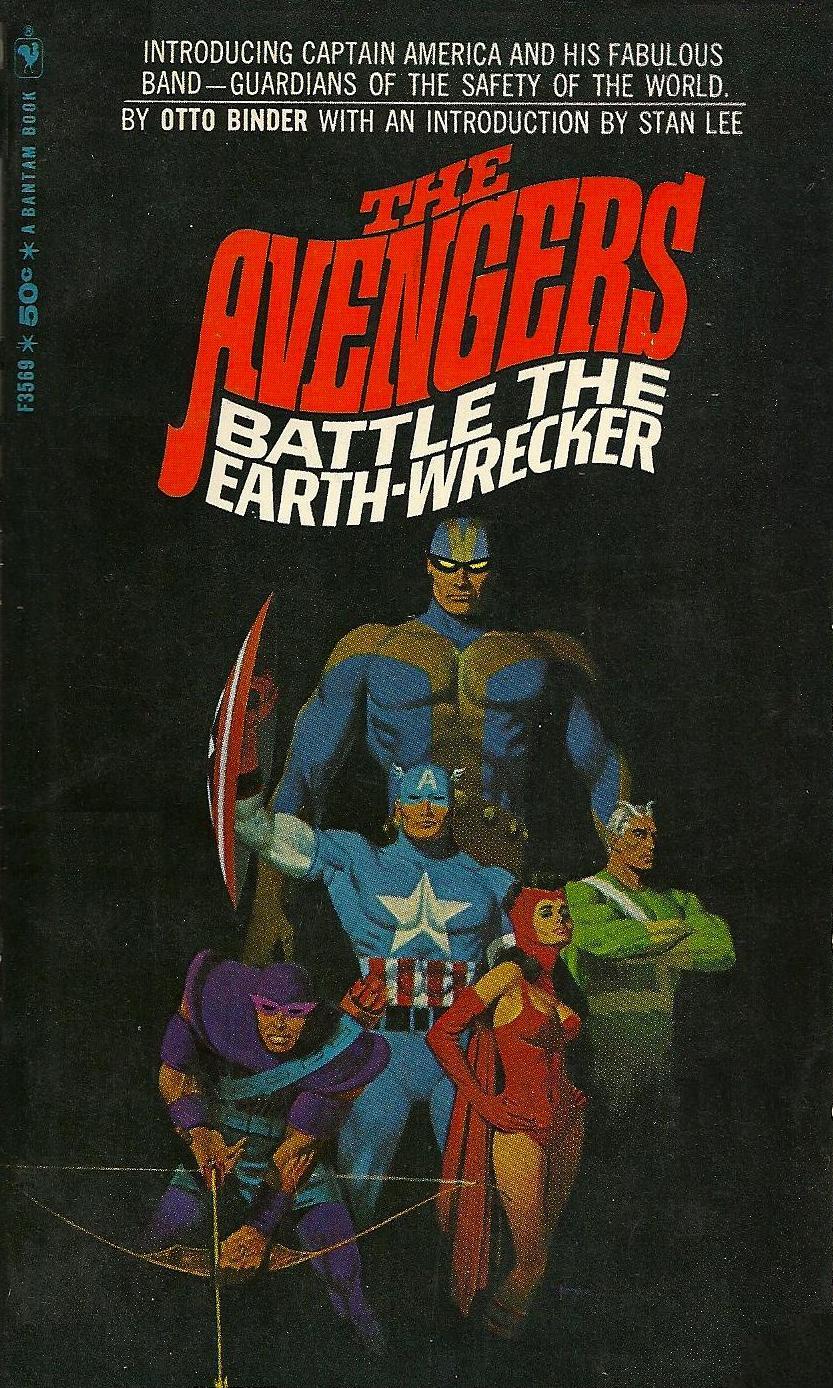
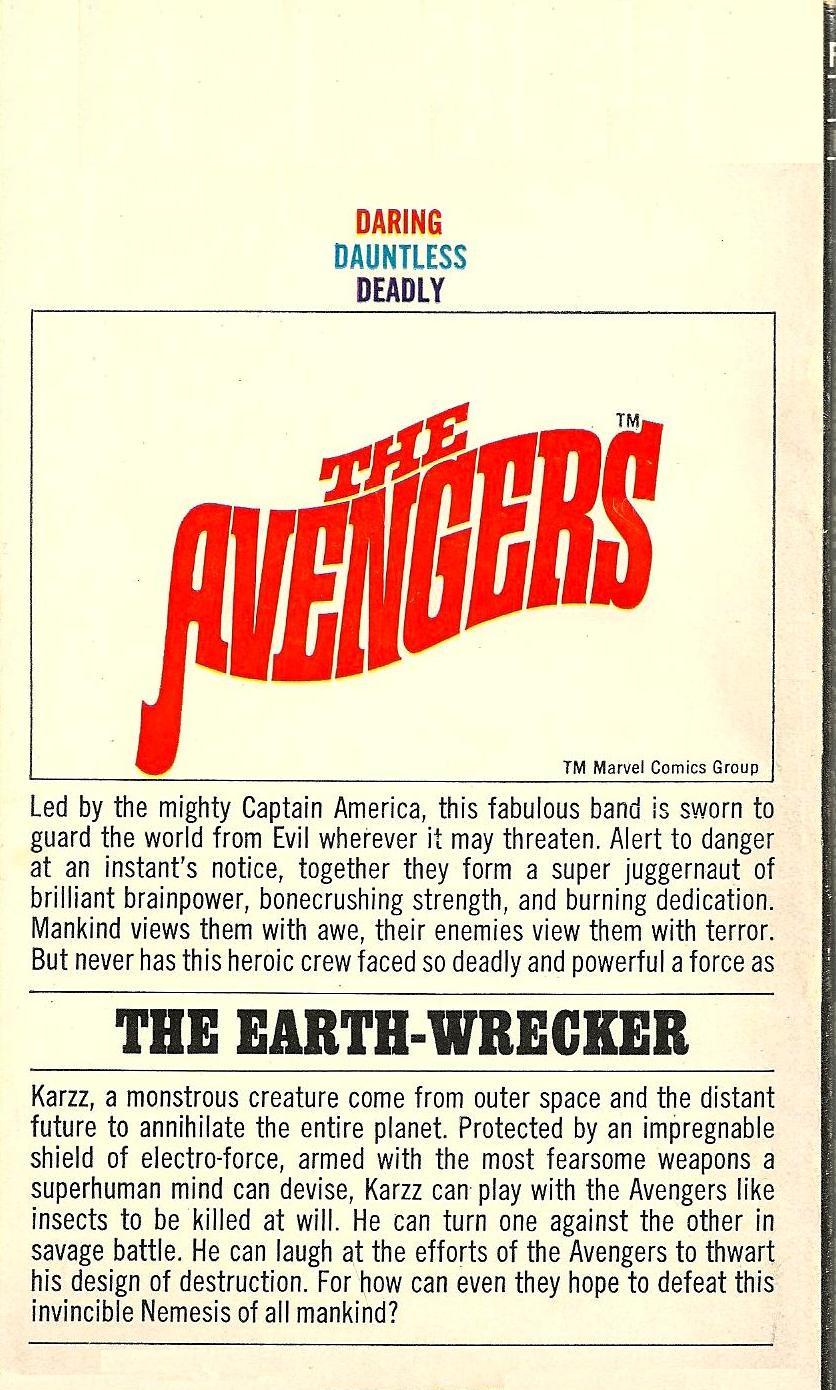
Spot the Avengers: Age of Ultron Spoiler on the Cover of the 1967 Paperback The Avengers Battle the Earth-Wrecker
 |
 |
I took my kids to see Avengers: Battle of Ultron on Friday, and we heartily enjoyed it. It’s a remarkable funny and ridiculously fast-paced two hours and 20 minutes of superpowered mayhem, and it’s obvious that writer/director Joss Whedon and his cohorts have a genuine love for the source material, as it’s packed with asides and sly references for those who remember the Marvel comic by Stan Lee and Jack Kirby.
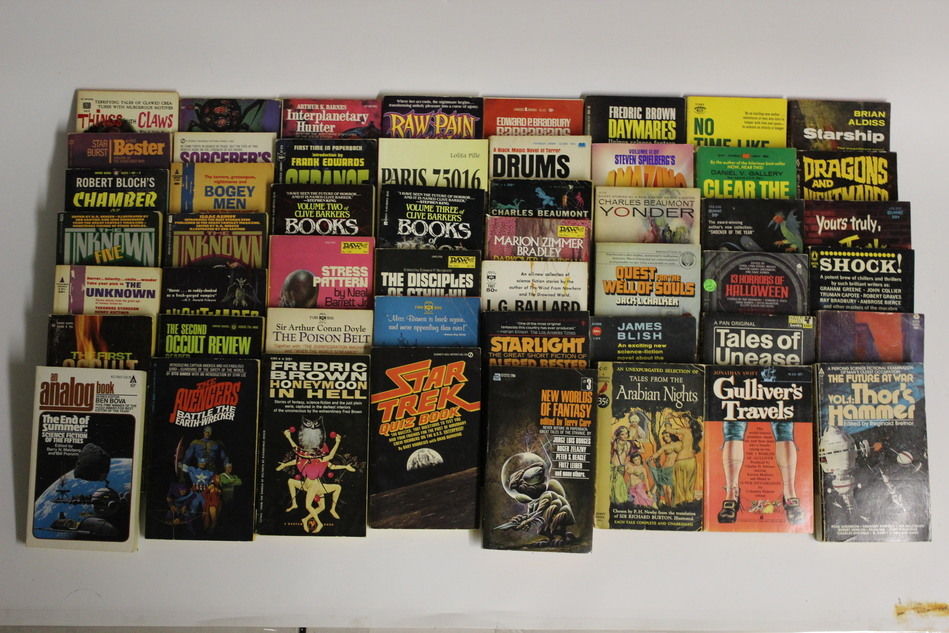
Yesterday I was doing what I do every Saturday — sorting piles of old paperbacks — when I stumbled on the 1967 Bantam paperback The Avengers Battle the Earth-Wrecker by Otto Binder. It came from a collection of 52 vintage paperbacks I bought on eBay for fifteen bucks last year (which also included The Unknown, Nine Horrors and a Dream by Joseph Payne Brennan, and Robert Bloch’s Nightmares.) Earth-Wrecker is one of only two Bantam Marvel tie-ins I’m aware of; the other is Captain America: The Great Gold Steal, by Ted White (1968).
The fascinating thing about The Avengers Battle the Earth-Wrecker, though, is that, despite being released nearly 50 years ago, it has a mild spoiler for the Avengers: Age of Ultron right on the cover. If you want to avoid spoilers, just scroll on to the next article. Otherwise, read on.