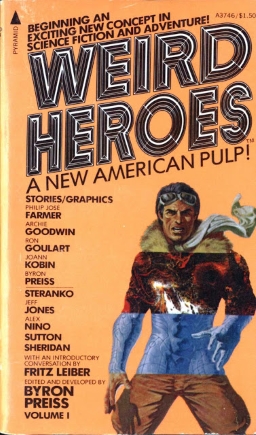
 Weird Heroes was a series of eight books put out by Byron Preiss Visual Publications from 1975 through 1977, a copiously-illustrated mix of novels and short stories that aimed at creating a new kind of pulp fiction with new kinds of pulp heroes. The series had a specific set of ideals for its heroes, linked with an appreciative but not uncritical love of pulp fiction from the 1920s through 40s. Well-known creators from comics and science fiction contributed to the books, and one character would spawn a six-volume series of his own. And yet Preiss’ long-term plans for Weird Heroes were cut short with the eighth volume, and today it’s hard to find much discussion of the books online (though they’re well-remembered when they are discussed). That absence is a little surprising, as a whole new generation of writers has come along with an interest in creating new pulps. Now that we’re separated from Weird Heroes by about the amount of time it was separated from the original pulps, it’s well worth a look back at its truncated run.
Editor Byron Preiss was only 21 years old when he founded Byron Preiss Visual Publications in 1974, and the company began putting out two series of illustrated paperbacks the next year, Weird Heroes and Fiction Illustrated (which ran for four volumes with a fifth issued under a different name). Both were packaged by BPVP to be published by Pyramid Books. Weird Heroes started its run with two anthologies of short fiction that, according to Preiss’ introductions to both books, were conceived as a single volume but divided up due to length constraints. Over the course of the series’ run, it published work by Archie Goodwin, Steve Englehart, Harlan Ellison, and Michael Moorcock, alongside art by Jim Steranko, Alex Niño, Neal Adams, and P. Craig Russell.
In the editorial matter within the first book, Preiss laid out what he hoped to do with the series. Across a general introduction, a historical discussion of “old American pulp,” and an interview with Fritz Leiber later on in the book, Preiss articulated a specific sense of what old pulps did well, what they did poorly, what he wanted to take from them, and what he wanted to improve on. He also wrote about presenting an alternative to the heroes that had emerged up to that point in 1970s popular culture. Broadly, he wanted to recapture the storytelling thrills of pulp fiction and its sense of wonder, while avoiding its misogyny and racism — and unlike what he saw in both the pulps and much 1970s hero fiction, he wanted to find a way to resolve stories and conflicts without the use of violence and murder.
…
Read More Read More
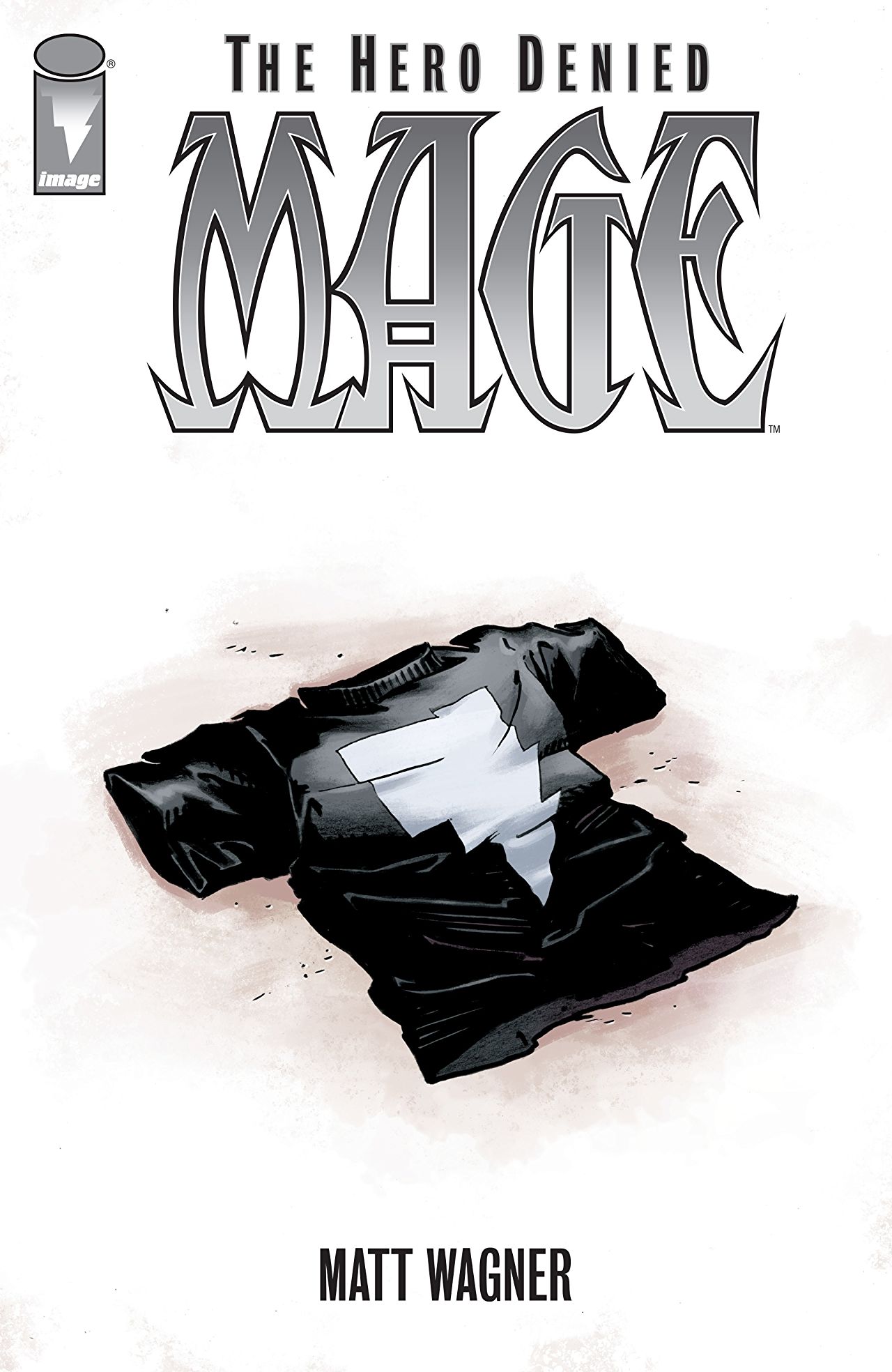
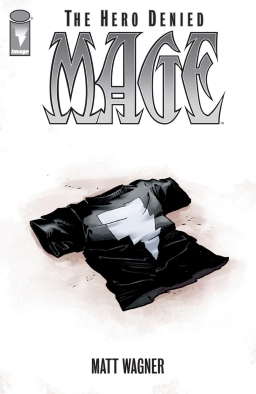 At the Emerald City Comicon in early March, Image Comics announced that starting in August they’d be publishing writer/artist Matt Wagner’s Mage: The Hero Denied, a 15-issue series with a half-length 0 issue and a double-sized conclusion. Hero Denied will be the final part of a trilogy Wagner began over thirty years ago, and I want to prepare for that last installment by looking back here at the first parts of the saga. The Mage books are two of the finest works of a great comics talent, urban fantasies mixing excellent action storytelling, a mastery of plot beats, and a sense of the mythic into gripping stories — and stories with a semi-autobiographical slant, no less.