Time to Die: Ten Things I Think I Think – Blade Runner Edition
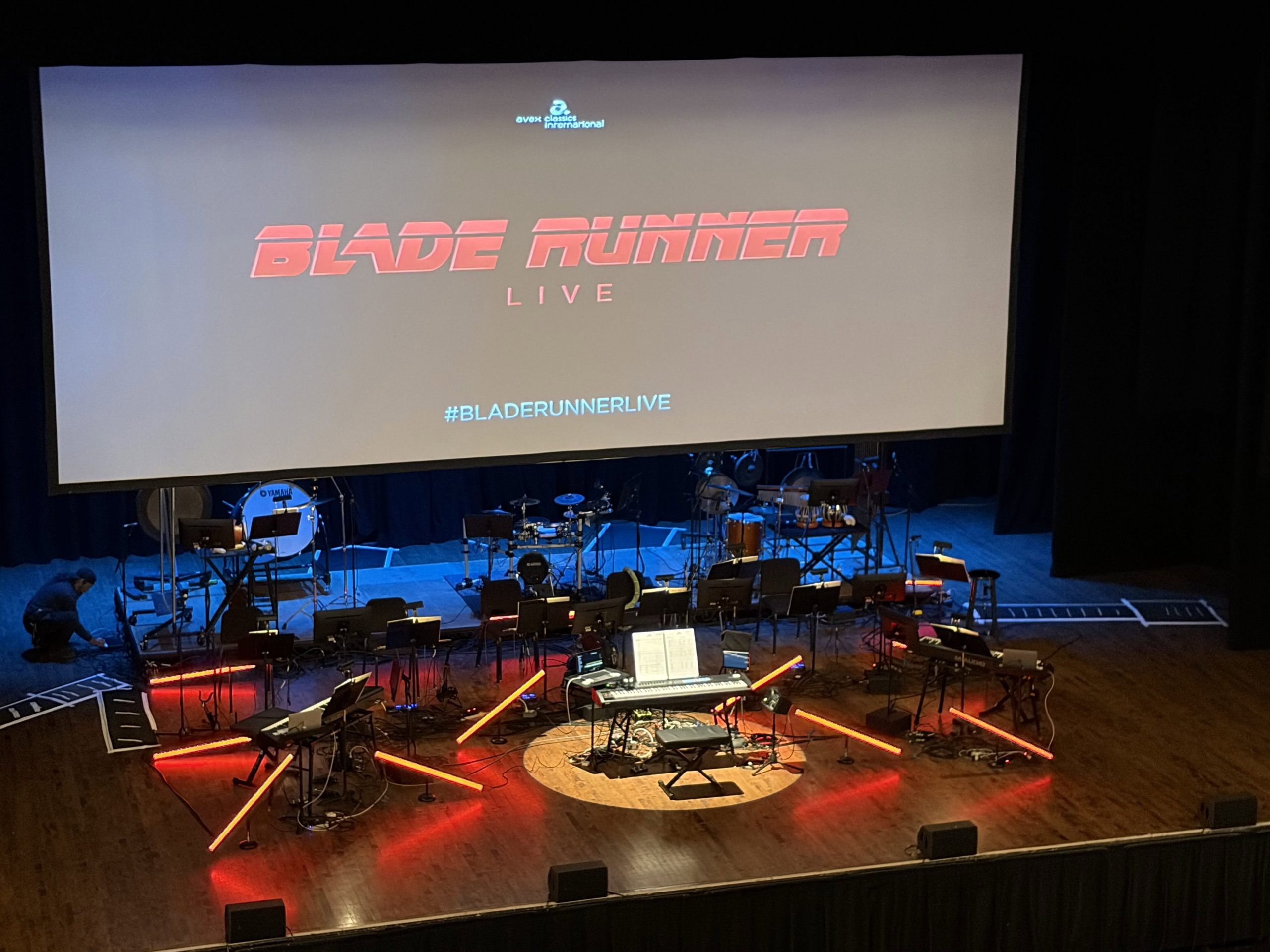 Last week, I attended Blade Runner Live. The Final Cut is making the rounds on big screens, with the score played live alongside it. I haven’t enjoyed an in-theater experience this much since one of the Star Wars movies. I was blown away.
In preparation, I had read most of the 3rd Edition (2017) of Paul Sammon’s incredibly comprehensive book, Future Noir. I read the 1997 1st Edition, decades ago. ANY Blade Runner fan would do well to pick up a copy. They will learn a ton about the film.
Blade Runner was released in 1982, and it was not a hit. There are several distinct versions, from the first screenings (the Work Print) to The Final Cut. It was the 29th highest grossing film of 1982: and only the 8th highest sci-fi/fantasy flick. Heck, it wasn’t even Sean Young’s most successful film of the year. The soap opera parody, Young Doctors in Love, was 25th.
Blade Runner barely made back its budget (which ran over and led to future control issues), and had minimal international impact. Simply put, it wasn’t a hit. People went in expecting Star Wars, and they came out of some weird dystopian, hardboiled PI, sci-fi movie. And yeah, it was confusing. But my God, what a film!
Whatever. It became a cult classic, then simply, a classic. After the theater outing, I did a first watch of Blade Runner 2049. And I’ve started a re-watch of the three-hour documentary, Dangerous Days. And now, it’s time you get to read me musing about Blade Runner.
So, I think:
1 – VISUALLY IT MAY STILL BE UNMATCHED
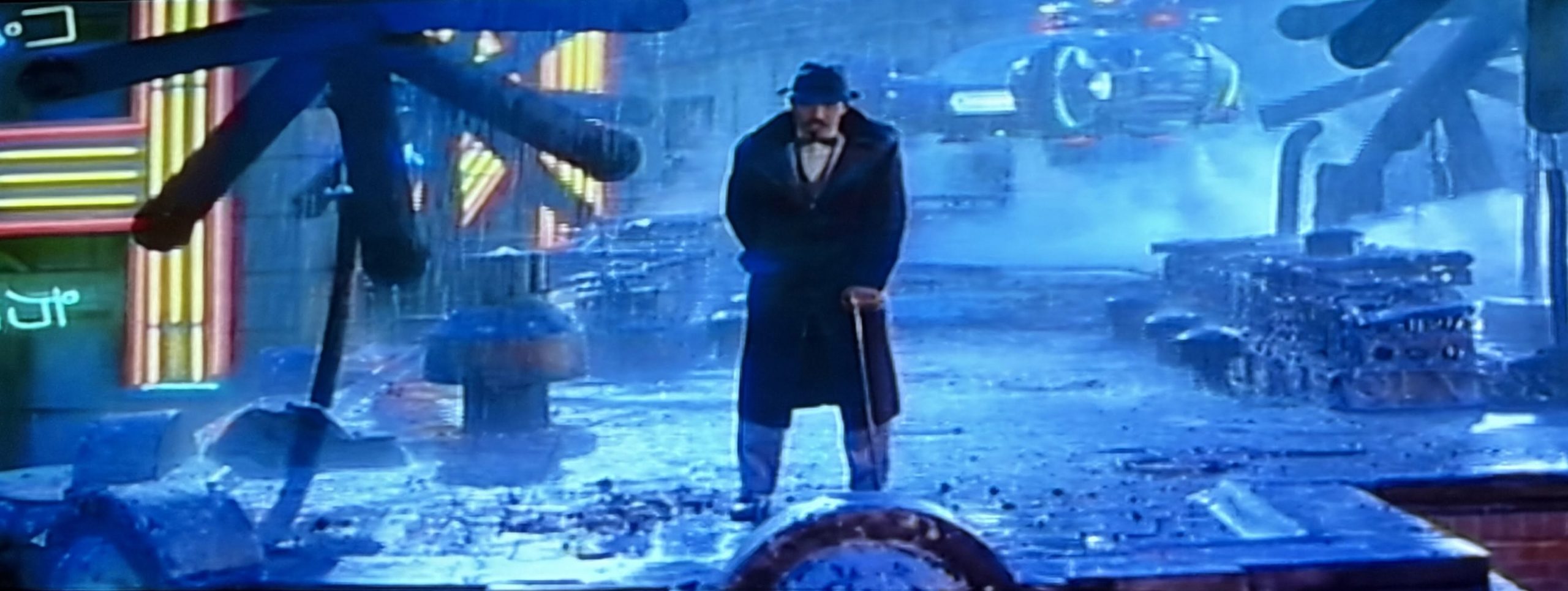
This was all pre-AI. They built models, and shot things live. They scrounged old movies for that neon tubing which is all over the place. Ridley Scott’s style was to fill up every frame. And he did. There isn’t wasted space on screen. When you watch it (especially if you can see it on the big screen), look off center. Don’t just stare at the main characters in the scene. The backgrounds, the other people, all of it. It’s staggering what he was capturing on film.
The dystopian, bleak, constantly raining, dark, future Los Angeles, is as much a character as any human – or replicant (called androids, or ‘andis’ in the book)
2 – THE MOVIE IS BETTER THAN THE BOOK
I’ve twice read Do Androids Dream of Electric Sheep. And listened to the audiobook once. Dystopian sci-fi isn’t my thing, so there’s that. And Philip K. Dick was about as subtle with his themes as someone beating a baby seal with a club (and yes, that is still an active thing). Deckard doesn’t evoke Philip Marlowe in the book. He’s more of a beaten-down civil servant, henpecked by his unpleasant wife. And the quest for a real animal is central to the story.
The book is some kind of surreal dive into what it means to be human, with an entire religion – Mercerism – built on it. I find a lot of what got cut out of the book, boring. It slows down my read. That’s my take. But by playing up the private eye part, I think the movie makes for a much better experience. I’m not a big science fiction reader, but Do Androids Dream… isn’t in my Top 10.
3 – THEY LOOK SO YOUNG
 This was 1982. Daryl Hannah was 22 and this was her first ‘adult’ role. Rutger Hauer has a boyish look when he smiles, even though he was 38. Ford spends the whole movie looking weary and worn out (it’s actually a bit over the top), but he’s got a boyish face. Sean Young was 23, and it was only her fourth movie (Stripes was her third).
This doesn’t apply to everybody M. Emmett Walsh, James Edward Olmos, William Sanderson, and others, show their lines. Though Brion James does have a smooth complexion. But in a movie that visually is very dark, dreary, bleak, oppressive, smoky, rainy – there’s literally no sunshine – some folks that we’ve seen many many times over the years, look young and fresh-faced.
4 – IT WAS A PRETTY COOL VIDEO GAME
Westwood was one of those cool game studios in the 90s. Like many others, they were acquired (by EA this time) and absorbed, though with more history ahead (some employees formed Petroglyph Games). Along with Eye of the Beholder, and the RTS classic Command and Conquer, they developed Blade Runner. And man, this was a treat for fans of the movie.
It was a point-and-click third-person game. It was puzzle-based; not a combat, game. Which is evident from the combat interface. You didn’t need that too much, though.
The game ‘runs alongside’ the movie, and actually interacts with it. You are a real-life blade runner, hunting down replicants. I love that it included ‘the other police station’ sequence from the book, which was dropped for the movie.
I remember that it came with a booklet that helped with game play, like how to run the Voigt-Kampff machine. I very much enjoyed the look and story of this game. It captured the movie’s vibe about as well as any 1997 game could.
Back around this time, I played Nocturne (an all-time favorite), and Shannara. Games certainly evolved from those point-and-clickers, but they were pretty neat in their day.
An Enhanced Edition came out in 2022. I tried it, but I really couldn’t even tell that they cleaned it up. I quit in the first scene. Maybe I’ll fiddle with the graphics settings and give it another try.
5 – SEE THIS ON THE BIG SCREEN
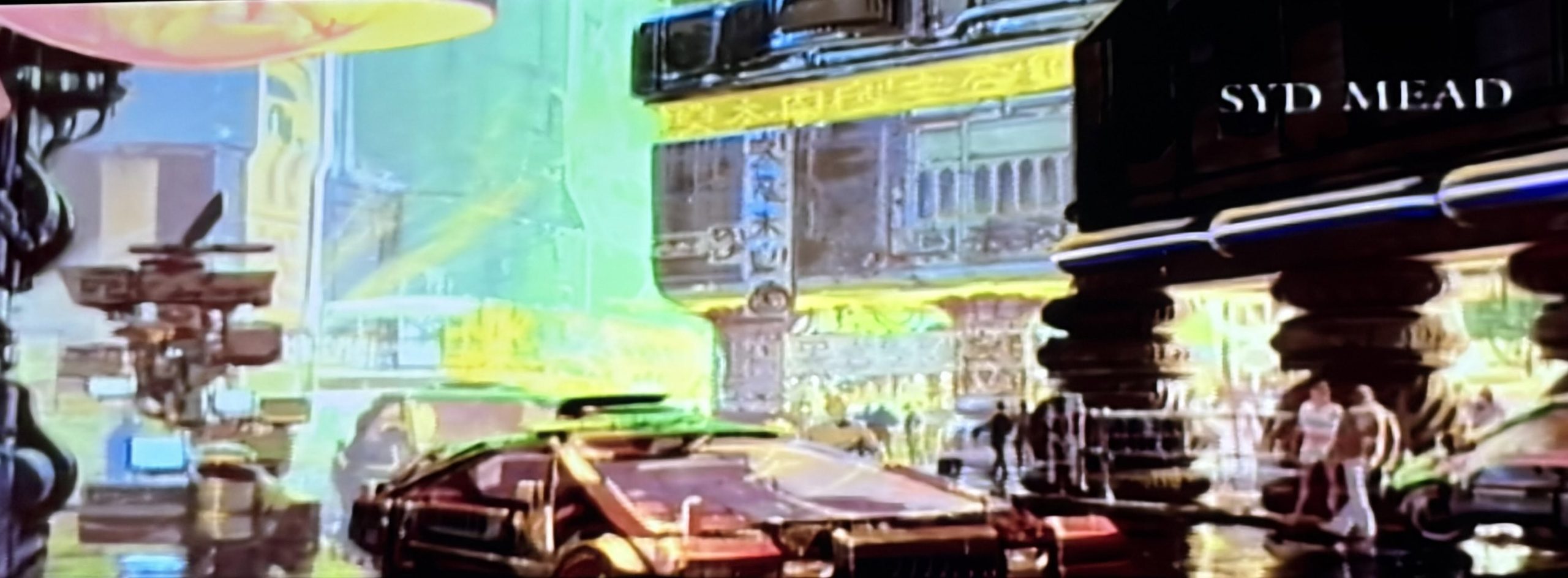 I first saw Blade Runner on TV. I bought the VHS. Now I own the 3-disc CD set. Last week was my first time seeing it on a movie screen. And it was a HUGE screen at The Palace Theater. I actually found that my jaw was open during the opening scene, where the spinner approaches the Tyrell pyramids. And I was actually a little short of breath. It was probably the most spectacular thing I’ve seen on-screen, probably ever. I praised the visuals in number 1. But seeing it on a movie screen, rather than a TV, is a completely different, immersive experience.
Having just re-read Future Noir, I paid extra attention to the backgrounds and details – I already know the story. And it was like Halloween. Just more and more eye candy. This stylish, futuristic Noir LA which Ridley Scott created, is simply staggering. I would see this again in a theater, without the live accompaniment. It’s simply something you just don’t experience in other movies. I’m not saying Avatar or whatever is ‘less.’ I’m just saying that in 1982, Scott made something visually spectacular, influential, and enduring.
6 –THE MODELS
AI wasn’t quite a thing in the 1980s. And this was about 20 years before WETA and The Fellowship of the Ring. The special effects folks made SO MANY models, of different sizes, for the movie. That incredible opening scene, over a landscape referred to as ‘the Hades landscape’? That’s a mix of models and camera manipulation techniques (Future Noir goes into the special effects into excruciating detail). When Scott and special effects director Doug Trumbull showed up to take a look at the in-progress work, after minutes of silence, Trumbull said “This looks like shit!”. It was lit all wrong, and they laid miles of fiber-optic cables to fix it.
The Tyrell Pyramid in the center of the scene? 2 and-a-half feet high, with a 9 foot base. That would totally be AI today. But they built amazing models. And the cars were actual, running vehicles. The ‘physical’ special effects in Blade Runner are truly marvelous.
7 – WE DIDN’T NEED A SEQUEL
35 years later, a Ridley Scott-less sequel came: Blade Runner 2049. Set 30 years after the original, it continues the story. I gave up about 40 minutes into my first attempt at this. Jazzed from my Blade Runner Live experience, I committed to watching it the following night.
Gah. Science fiction should not be boring. This nearly 2 hours and 45 minutes flick moved at a glacial pace. It wasn’t just slow. It was boring: Length and story. And mono-color is not a visual vibe. Ridley Scott interspersed color with the gloom and oppressive darkness. 2049 offers one color on the palette, for scene after scene. All gray is dull. All foggy orange(?) is dull.
I enjoyed the game (#4) much more than I did this movie. I was kinda surprised there wasn’t a novelization. But after watching it, I don’t want to read one any ways. I’ve certainly seen worse movies. But this is maybe 2.5 out of 5 stars. And not a fitting sequel to one of my favorites of all time.
NOTE: Re-watching the Dangerous Days documentary, I realized that the opening scene with Dave Bautista draws somewhat on an unfilmed scene from the original Blade Runner storyboards. That was cool.
8 – MAYBE THIS NEW BLADE RUNNER WILL BE…OK?
Well. We’re two weeks out from Blade Runner 2099: a six-episode series on Prime. This looks to be a totally independent story from the first two movies, but set in the official Blade Runner timeline (we have 2019, then 2049, now 2099). Michelle Yeoh (who I liked in Star Trek: Discovery) stars. The trailer looked good, and I’ll watch it. I’m thinking I’ll probably like I more than I did 2049, so that’s good.
9 – YOU CAN SKIP THE BOOKS
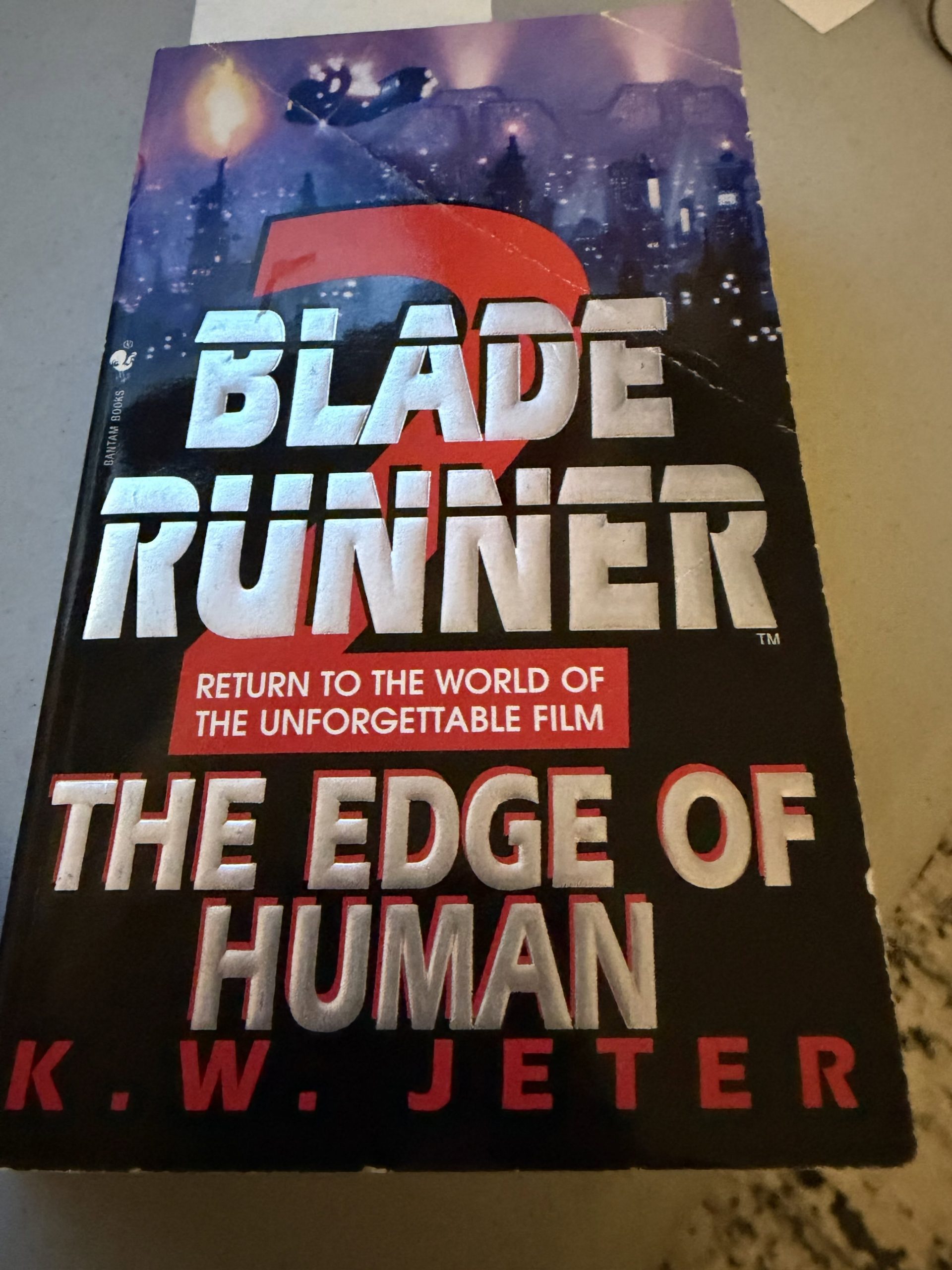 Once again, proving that you don’t need to revisit things a decade-plus later (Firefly is an exception), K.W. Jeter wrote three authorized sequels to the movie.
SPOILER – This is a 30 year old sequel to a popular movie. You could have read it by now. Skip to the next one if you plan on reading this. Though clearly I don’t think you need to bother.
The Edge of Human picks up where the movie ended, with Decker after a sixth replicant (that’s a bit of errata from the multiple movie versions). Look: Pris, alive. Sebastian, alive. Holden, alive (yeah, they filmed Deckard visiting him in the hospital – that was cut), but the movie as released certainly made him look dead). Roy, alive. I didn’t need a sequel book that undoes the movie which is the reason I bought the book for. Ugh.
It’s tolerable, but I can’t say much else good about it. Except, it’s far better than the follow-up, Replicant Night. That was so dumb and so bad, I never even bothered to read the third and final book, Eye and Talon (which had a new blade runner front and center).
After seeing Blade Runner Live, and watching Blade Runner 2049, I re-read Edge of Human for the first time. It’s still not very good. You can definitely not bother with these. The Firefly novels were hit and miss, but definitely more enjoyable reads.
10 – WHAT ABOUT THAT NARRATION?
There’s still some uncertainty surrounding the story of Harrison Ford’s old-style voice over on the theatrical release. There were previews in Dallas and Denver, with what is referred to as the Work Print. Reports are that the audience came out of Dallas, quiet. You don’t want that at a preview. You want noise and excitement. The overwhelming feedback was that it was confusing. Which is fair. There was no narration at that point.
So, they had Harrison Ford go back in and record some narration, explaining things more clearly. This was a trope from the old hardboiled PI movies. Which fit the future Noir theme. Ford didn’t want to do it, and he didn’t want it in the film. He was strongly opposed to Deckard just telling the viewer what was going on. He had a point.
I didn’t mind it the first viewing. But once you really pay attention – which draws your attention from the action on screen – it’s flat. Instead of revealing what was going on inside Deckard, it’s just mostly explaining what’s going on. Which is not so great.
NOTE: They also changed the ambiguous ending to a happy one, which was very un-Blade Runner like. The voice over and the happy ending were both in the Theatrical Release. Both elements were removed for the Director’s Cut, and The Final Cut.
Was it the producers, or the financial backers, or Scott and Michael Dealey, or who, that wanted it? Over the years, Scott has said he didn’t want it. But he has also indicated it wasn’t totally forced on him. The fact it’s left out off both the Director’s Cut and The Final Cut, is probably definitive enough for me.
Ford is clearly on record that he was against it. Finances were very tight on the project, and I think the money voices were pretty loud on adding it after the preview feedback. The movie is better without the narration (and I say that as a big fan of the trope) and the happy ending (which I call the ‘Happy Hollywood Horseshit’ trope).
11 – TEARS IN RAIN WAS MOVIE-MAKING MAGIC
11? Isn’t this a ‘Ten’ Things? Yeah. This is 10 things the way The Big 10, The Big 12, and the Pac 12, are accurately-named football conferences. Move along.
Roy Batty’s soliloquy before he dies is perhaps the movie’s signature moment. It’s certainly a definitive scene in film history. There’s no single narrative for Blade Runner’s behind-the-scenes events. There are different takes and different stories. I’ve seen somewhat inconsistent stories from Rutger Hauer and screenwriter David Peoples, on this scene. It was in the script. And Hauer revised it: perhaps during the read-through, and definitely during shooting.
As they filmed, Hauer added “All these moments will be lost, in time. Like tears in the rain. Time to die.”
I think this is one of the most powerful scenes I’ve ever watched on screen. There’s a visual impact (of course, it’s Blade Runner) as the fight scene comes to an end on that rooftop, in the rain. But holy crap. I mean, 40+ years later, I still just sit there, mesmerized, as Hauer enunciates in that soft voice, “I’ve seen things you humans wouldn’t believe.”
I don’t know what Peoples’ original version looked like. But what Hauer ended up collaboratively delivering, was simply superb. I would have watched this movie for that lone scene. There are a few more scenes, but we’re pretty close to the end of the movie. The Hades Landscape and Hauer’s death speech, essentially bookend Blade Runner. And what a fantastic start and finish.
Interestingly, the actual ending has caused much mixed feelings – unlike Hauer’s speech.
12 – WE GOT A WONDERFUL MESS
 The process was a mess, not the finished product (though, it was confusing). Ridley Scott turned it down. Then, while he was in pre-production for Dune, his brother killed himself, and Scott quit Dune and took Blade Runner. The original screenwriter who optioned the movie and made the whole thing happen, was fired. Scott drove the crew to almost open rebellion (anti-Scott t-shirts were actually made).
Dustin Hoffman interviewed for Deckard. Dustin Hoffman!!! Other names at least mentioned in studio memos include Peter Falk, Burt Reynolds, and Judd Hirsch. Multiple storyboarded scenes weren’t even filmed because it went way over budget. The sixth replicant was cast but cut due to budget. Morgan Paull (Holden) did the Deckard role for the Rachel auditions and Scott liked him so much he handed him the Holden role. Harrison Ford did not like Sean Young. I kinda think Scott still doesn’t know whether he intended for Deckard to be a replicant or not. On and on. There were so many variables and possible derailments and happenstances.
There are a plethora of things that somehow ‘came together’ to result in the masterpiece it became. It wasn’t easy, and there were issues and bad things along the way (I didn’t even get into the unicorn stuff). But somehow, we got Blade Runner (multiple versions, actually…).
THE TAKEAWAY MAY BE THAT I LIKE RIDLEY SCOTT’S BLADE RUNNER
So, I don’t really care much for Dick’s original novel. The two movie sequel novels were nothing to praise. And I was bored with the sequel movie.
Yeah, I love Blade Runner. But what I love is Ridley Scott’s Blade Runner. And that’s not what these other incarnations are. While I enjoyed the game, I liked lots of point-and-click games in the 80s and 90s. It’s Ridley Scott’s vision (through screenwriters Hampton Fancher Jr and David Peoples) that makes Blade Runner one of my all-time favorites. It’s not the franchise, or the ‘expanded world of’, it’s the movie which Ridley Scott made.
I haven’t read any of the graphic novels, but I’m not too interested. I couldn’t really even get that into the Firefly ones. Ridley Scott took Philip K. Dick’s very thematic novel and turned it into a sci-fi, hardboiled PI, Noir. And in so doing, created one of the most visually arresting movies. Ever.
MISC
The four disc Collector’s Edition has the Work Print (from the Dallas/Denver previews), the Theatrical Release, the Director’s Cut (which was actually a revised version of the Work Print, and more the money guys’ cut than Scott’s, and The Final Cut (which was as close to Scott’s vision for the movie as he could get). So, you can see all the different versions. Plus a three hour documentary, and some other stuff.
Blade Runner is simply a marvelous film. And one of those that is truly meant to be seen on the big screen. But you should still give it a try at home. And the three-hour Dangerous Days documentary is a must-see for any fan of the movie. I can live without the other Blade Runner stuff. But whatever version of the movie you watch, it’s a wonderful sci-fi Noir.
 Bob Byrne’s ‘A (Black) Gat in the Hand’ made its Black Gate debut in 2018 and has returned every Summer since.
His ‘The Public Life of Sherlock Holmes’ column ran every Monday morning at Black Gate from March, 2014 through March, 2017. And he irregularly posts on Rex Stout’s gargantuan detective in ‘Nero Wolfe’s Brownstone.’ He is a member of the Praed Street Irregulars, and founded www.SolarPons.com (the only website dedicated to the ‘Sherlock Holmes of Praed Street’).
He organized Black Gate’s award-nominated ‘Discovering Robert E. Howard’ series, as well as the award-winning ‘Hither Came Conan’ series. Which is now part of THE Definitive guide to Conan. He also organized 2023’s ‘Talking Tolkien.’
He has contributed stories to The MX Book of New Sherlock Holmes Stories — Parts III, IV, V, VI, XXI, and XXXIII.
He has written introductions for Steeger Books, and appeared in several magazines, including Black Mask, Sherlock Holmes Mystery Magazine, The Strand Magazine, and Sherlock Magazine.
You can definitely ‘experience the Bobness’ at Jason Waltz’s ’24? in 42′ podcast.