Weird Times 9: Religion and the Occult
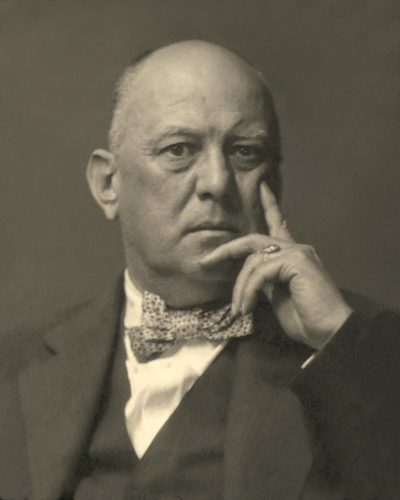
Aleister Crowley in 1925.
It’s tolerably likely that you’ll see a church. The 1926 US Census of Religious Bodies will find one church for every 220 Christians, and one synagogue for every 1309 Jews. Places of worship for other religions were rarer. For example, one source states that “the first known American mosques were established in Biddeford, Maine, in 1915; in Ross, North Dakota, in 1920; in Highland Park, Michigan, in 1923; and in Michigan City, Indiana, in 1925.” Those would have been the first specific buildings for prayer, as opposed to meeting-places in, for example, private homes; the same source notes that “by the 1920s, American Muslims were widely diverse and dispersed throughout the United States, with South Asians, Albanians, Turks, Bosnians, as well as people from Syria-Lebanon, scattered in small communities throughout the U.S.”
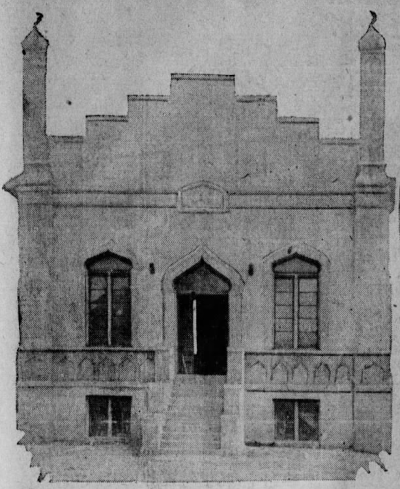
An image of the Highland Park mosque, perhaps the first purpose-built mosque in the United States, from a 1924 newspaper.
So if you see a place of worship, it is probably a church. We will begin there, at any rate, because in this post I want to talk about the situation of religion and occultism in 1923; a huge subject, but directly relevant to much weird fiction and to much of Weird Tales. Therefore even if the subject’s too big to discuss in depth, it’s worth recording some facts and figures about belief in the 1920s.
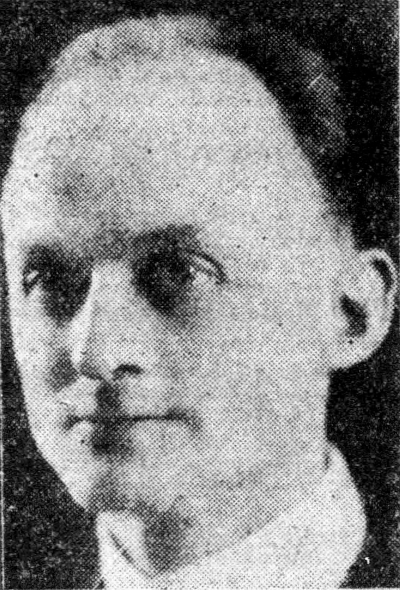
Theologian Reinhold Niebuhr.
Still, the great 1929 sociological study Middletown, examining the way of life of white residents of Muncie, Indiana, will observe that: “Membership in one of the religious groups is generally taken for granted, particularly among the business class, and a newcomer is commonly greeted with the question, ‘What church do you go to?’” Further, “With few exceptions, notably the Jewish temple, churches in Middletown represent some form of Christianity. When one asked various individuals in Middletown, ‘What does one believe in if one is a Christian?’ they inclined at first to think the questioner was joking, a condition reflecting the general tendency to accept ‘being a Christian’ as synonymous with being ‘civilized’ or ‘an honest man’ or ‘a reputable citizen.’” At the same time not everyone is devout so much as simply prepared to go along with society at large:
The openly free-thinking group, represented in part in the Ethical Society of the nineties, has disappeared and in its stead is an outwardly conforming indifference among a certain minority of the business class. “I’ve joined the church,” said one prominent man, “because who am I to buck an institution as big as the church, and anyway it seems necessary to conform, but I guess my pastor knows all right how little my heart is in it.”
(The Ethical Society was an international secular movement, in the United States popularised by Felix Adler, which focussed on morality and public works.)
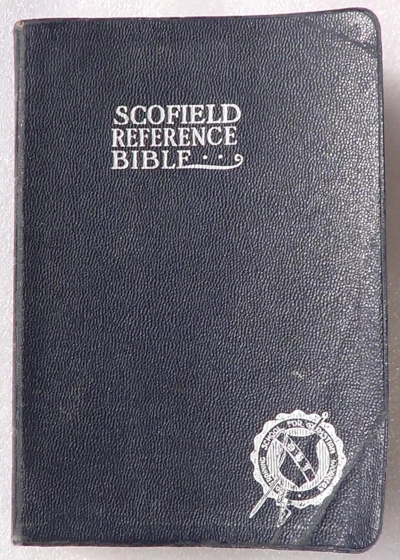
The 1917 Scofield Reference Bible.
The tension between modernists and fundamentalists will lead to led to a new term for the modernists: ‘Mainline Protestants,’ apparently deriving from the Philadelphia Main Line, a group of wealthy suburbs named for the Main Line of the Pennsylvania Railroad that connected them; the Protestants of these suburbs belong to denominations that oppose the fundamentalists. The controversy has already birthed a major polemical controversy, especially in the North. In 1922 Harry Emerson Fosdick, a Baptist minister, preached a sermon called “Shall the Fundamentalists Win?” which portrayed the dispute as a struggle between intolerant conservatives and open-minded scholars; that sparked a fierce fundamentalist response in sermons, pamphlets, and books.
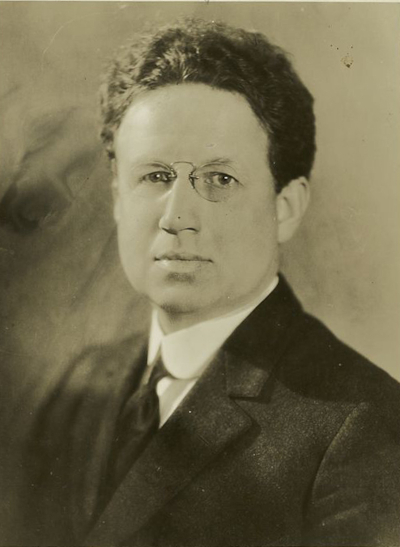
Harry Emerson Fosdick
One particularly significant series of revival meetings was held in Los Angeles from 1906 to 1915, led by African-American preacher William J. Seymour. He was a Pentecostalist, part of a new denomination that had recently emerged from the Holiness Movement within Methodism, which looked back to the teachings of John Wesley. Pentecostalism is notorious for dramatic worship services; the Azusa Street Revival was known for its spontaneous singing and shouting and preaching and speaking in tongues, and was a major reason for the rapid establishment of Pentecostalism, with many new churches founded by attendees of the Azusa Street meetings. (Aimee Macpherson, mentioned above, is another of the most prominent Pentecostalists of the 1920s.)
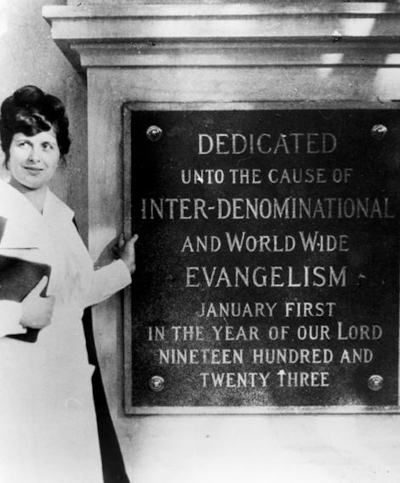
Aimee Semple Macpherson at the January, 1923 dedication of her Angelus Temple in Los Angeles, considered the first megachurch in the United States.
The census is also silent about Indigenous American religions; an 1883 law called the “Code of Indian Offenses” forbade many Indigenous American religious ceremonies with the specific intent of forcing assimilation to white culture. Similarly Vodou in Louisiana has been actively suppressed for decades, though it is still being practiced; but with the United States currently occupying Haiti (and also maintaining a separate occupation of the neighbouring Dominican Republic) white outsiders are increasingly fascinated by the religion. For better or worse, Vodou turns up in early Weird Tales stories and in a ‘nonfiction’ piece in the fifth issue. Hoodoo, or conjure, a distinct tradition of African-American folk belief and magic, is thriving and changing as practitioners move north to different climates and environments. Note that in a time when stage magic acts are popular, the best-known African-American magician is a man named Black Herman who incorporates elements of hoodoo in his performances, and will discuss them in his 1935 quasi-autobiography Secrets of Magic, Mystery, and Legerdemain.
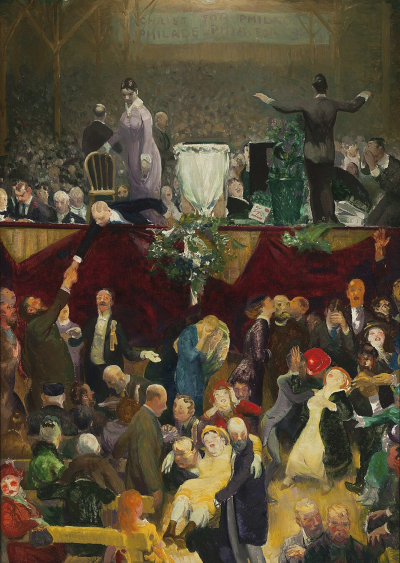
“The Sawdust Trail,” a 1916 painting by George Wesley Bellows depicting Billy Sunday (shown shaking convert’s hand) preaching in Philadelphia.
This is an important process in its own right. But it also links to another characteristic of the times, and one directly relevant to Weird Tales. The second half of the nineteenth century saw more and more people searching for some kind of spiritual truth beyond mainstream Christianity, and that’s continued n the first decades of the twentieth cetury. New religious traditions have sprung up, and interest in various strands of the occult has grown. Certain parts of the country seem especially hospitable to this spiritual seeking. A San Francisco newspaper column stated in 1913 that:
It is inevitable that Los Angeles should offer rare and glowing opportunities for faddists and mountebanks — spiritualists, mediums, astrologists, phrenologists, palmists, and all other breeds of esoteric wind jammers. The city is cursed with an incredible number of these cabalistic scaramouches. Whole buildings are devoted to occult or outlandish orders — mazdaznan clubs, yogi sects, homes of truth, cults of cosmic fluidists, astral planers, Emmanuel movers, Rosicrucians and other boozy transcendentalists. These empirics do a thriving and luxurious business. They fill the papers with mystic balderdash. They parade the streets in lush kimonos. They hold “classes” and “circles” and wax fat on the donations of the inflammatory. No other city possesses so large a number of metaphysical charlatans in proportion to its population.
But if Los Angeles is already gaining a reputation as a centre for odd cults by 1923, some of the most significant spiritual and religious movements of the past decades have come from western and central New York state. One was the Latter Day Saint movement, begun there in in the 1820s; by the 1920s the largest branch of the movement, the Mormons, has become well-established in Utah (though still occasionally cast as villains, in such popular fictions as A Study In Scarlet and Zane Grey’s 1912 Riders of the Purple Sage). More significant for weird fiction was what came out of Hydesville, New York, in 1848.
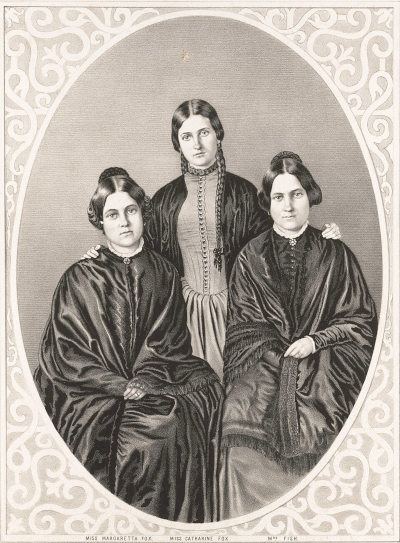
The Fox sisters: left to right Margaretta, Kate, and Leah. Leah was the only one of the three who did not claim to summon spirits.
Holding hands during seances was a later development. Into the 1920s seances were simply people sitting in the dark while odd sounds or other manifestations took place around them. Communication by sharp knocks took a long time, as spirits had to tap in code like — the comparison was frequent at the time — a spiritual telegraph. In 1860 the planchette was invented, and in 1890 the Ouija board was commercialised, which eased things. (The Ouija board was patented as a “toy or game,” and as such was spectacularly popular at once; the early 20s have seen a resurgence in Ouija popularity, with Norman Rockwell illustrating a couple communing with the spirits in 1920.) By 1878, mediums had begun to pass along messages from the dead through ‘automatic writing,’ in which their hand and arm was possessed and a text written out by a spirit.
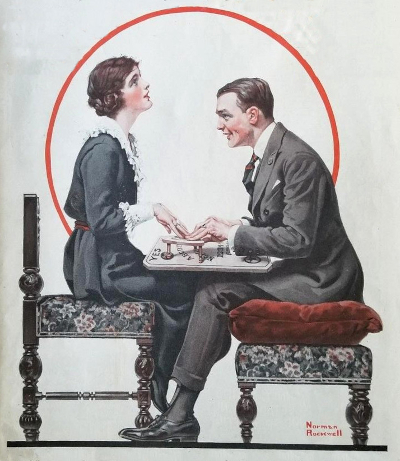
“The Ouija Board,” a 1920 painting by Norman Rockwell for the Saturday Evening Post.
Some mediums were amateurs, while others were paid; seances were, sometimes, and to greater or lesser degrees, performances like theatre. Very many mediums were women, and there has been much written about women channeling or claiming to channel male spirits and so speaking with male authority. Some mediums went beyond that, claiming to channel the voices of speakers from other planets — thus David Lindsay’s strange 1920 novel A Voyage to Arcturus opens with a seance manifesting extraterrestrial activity. Hélène Smith, a medium active from the early 1890s, was the subject of a 1900 book by psychologist Théodore Flournoy, Des Indes à la planète Mars; she would fall spontaneously into trances and tell of her past lives, including a life as a Martian who wrote in a Martian alphabet. Flournoy was a skeptic who was able to show how Smith’s visions were echoes of books she’d read earlier in life, but decades later she’d be considered “the Muse of Automatic Writing” by the Surrealists.
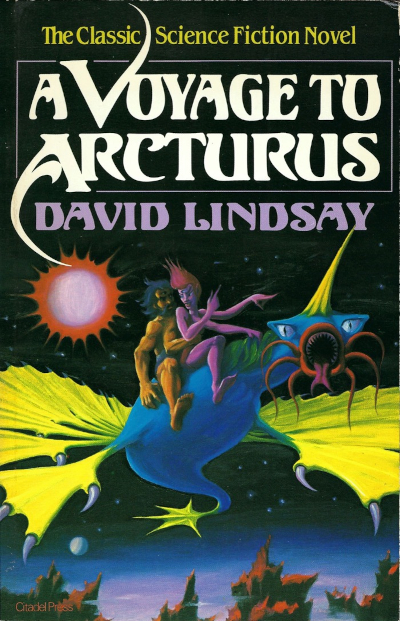
A Voyage to Arcturus, by David Lindsay
Some common concepts did develop. Notably, the term “Summerland” became a general term for the highest of heavens, following the writings of psychic and medium Andrew Jackson Davis. And Emma Hardinge Britten — a medium, lecturer, and writer who was a great populariser of spiritualism — produced seven principles of spiritualism which became central to the National Spiritualist Association (later the National Spiritualist Association of Churches), founded in 1893.
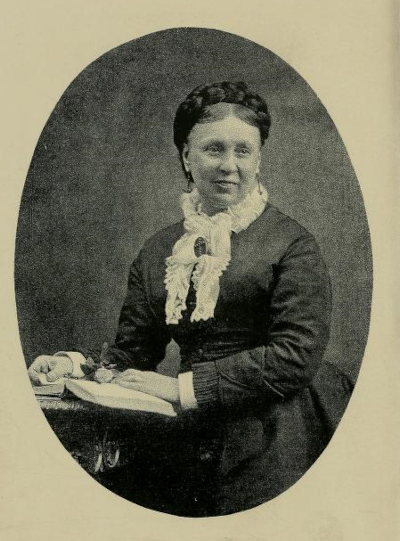
Emma Hardinge Britten
In 1882 the Society for Psychical Research was founded in the United Kingdom to investigate and research apparently supernatural phenomena; an American branch was founded in 1885 and became independent in 1906. The SPR soon developed a new terminology; ‘psychic’ had been in use since 1870, but SPR members soon introduced ‘telepathy,’ ‘telekinesis,’ and ‘ectoplasm.’ Some members were believers, some skeptics, and some purely interested in determining what could be scientifically proven. But the SPR was frequently accused of being too credulous, and of lacking the training needed to detect skillful frauds. Other investigators, though, also tried and often succeeded in disproving the claims of mediums and spirit photographers. Stage magicians in particular debunked many frauds who used the same techniques the magicians used in their acts. Notably, the 1920s saw Harry Houdini expose a number of supposed psychics and mediums at the same time he would be associated with Weird Tales.
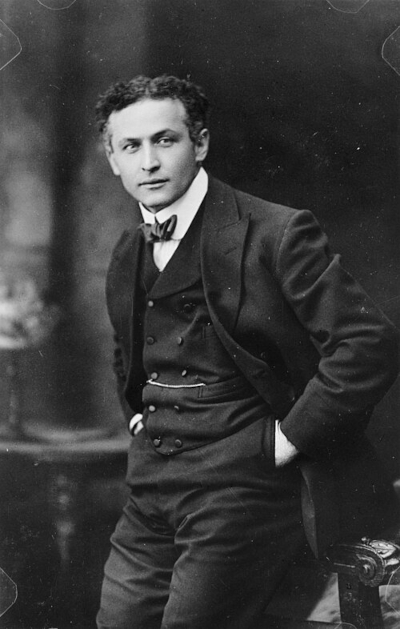
Harry Houdini
Noted self-promoter Thomas Edison claimed he’d build a machine to communicate with spirits. No such machine was forthcoming, but he was not alone in the dream of scientific communication with spirits; to take one example, at the beginning of the 20th century Canadian telephone engineer Maurice Aykroyd attended séances and hoped to invent ways to communicate with the spirit world through “a high-vibration crystal radio.” (Eventually, Maurice’s grandson Dan would become known for engaging with ghosts in a busting capacity.) In 1922 the respectable magazine Scientific American announced a contest with total prizes of $5000 for any medium who could present their committee (which included Houdini) with convincing proof of the afterlife. The money was never handed out.
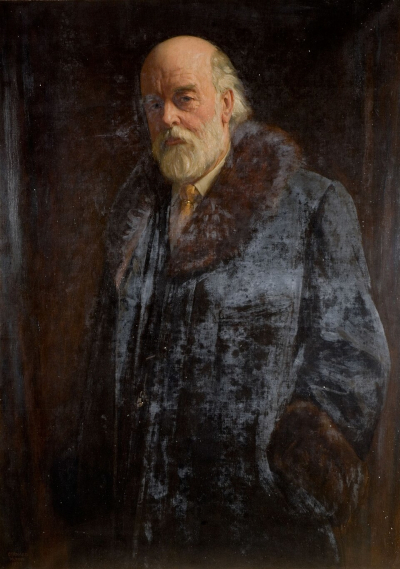
“Portrait Of Sir Oliver Lodge,” by John Bernard Munns, 1923.
Spiritualist Helena Petrovna Blavatsky was the creator and main force behind Theosophy, along with Henry Steel Olcott, a spiritualist and lawyer. Theosophy nominally aimed to study occultism, mysticism, and religion, but acquired a specific focus from the writings of the charismatic and strong-willed Blavatsky. In particular her books Isis Unveiled, from 1877, and The Secret Doctrine, from 1888, expounded a number of her key esoteric ideas.
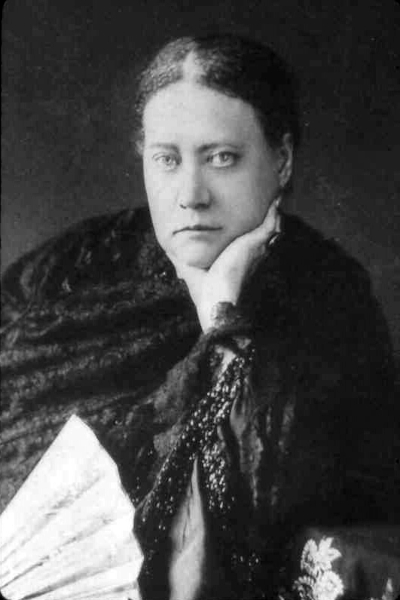
Helena Petrovna Blavatsky, circa 1877.
There have been various schisms in the movement, starting even before Blavatsky’s death. An American branch under Katherine Tingley, based in Point Loma, California, seceded from the main Theosophical Society in 1895. The German society under philosopher and mystic Rudolf Steiner spit from Theosophy in 1912 and renamed themselves the Anthroposophical Society. But in 1923 Theosophy is continuing to grow. The original Society, now based in Adyar, India, and led by Blavatsky’s successor Annie Besant, had 36,000 members in 1920 and will grow to 45,000 members by 1928.
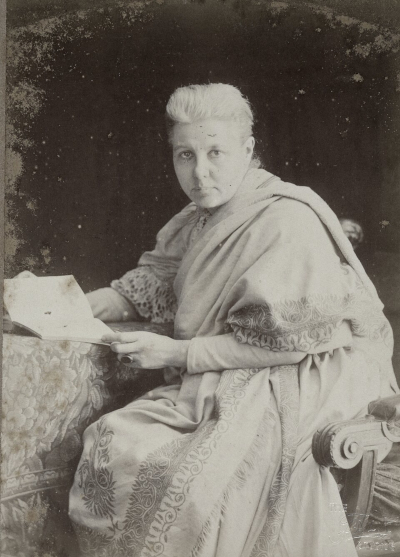
Annie Besant, circa 1910.
Still, Theosophy’s not only adding members but drawing interest among artists. Notable figures that are or have been engaged with Theosophy by 1923 include Gustav Meyrink, Algernon Blackwood (who founded the Toronto Theosophical Society in 1891), pulp master Talbot Mundy, early abstract painter Hilma af Klint, Piet Mondrian, and Wassily Kandinsky. Many writers, of course, took ideas from Theosophy without buying into the belief system; Clark Ashton Smith wrote to H.P. Lovecraft that “I got my own ideas about Hyperborea, Poseidonis, etc. from such [Theosophical] sources, and turned my imagination loose.”
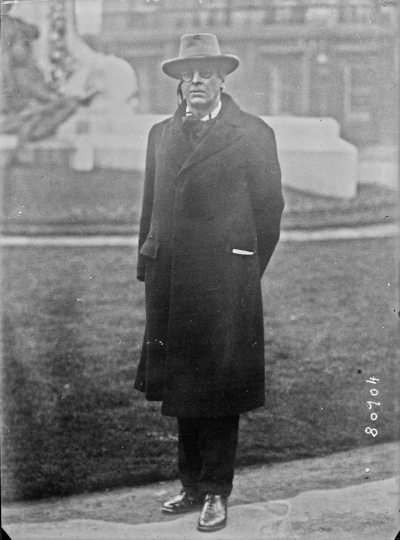
William Butler Yeats in 1922.
It is worth discussing the Golden Dawn and some of its animating figures in a bit more detail. In the 1880s there were several occult groups or ‘lodges’ in London; some offered membership through the mail, such as the Hermetic Brotherhood of Luxor, which also maintained a running feud with Theosophy until declining after its Secretary was convicted of mail fraud in 1883. In 1886 a man named William Wynn Westcott acquired (from clergyman A.F.A. Woodford, shortly before Woodford’s death) a set of enciphered manuscripts presenting a set of rituals and teachings. A Theosophist and occultist, Westcott was also a Freemason and had been part of the esoteric organisation Societas Rosicruciana in Anglia, founded in 1866; Westcott deciphered the manuscripts along with fellow Masons and former Societas Rosicruciana members Samuel Liddell MacGregor Mathers and William Robert Woodman, and the three men founded the Order of the Golden Dawn in 1888.
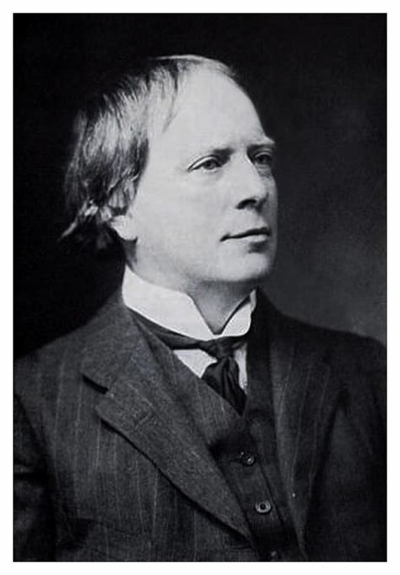
Arthur Machen
Mathers, by this time, had been conned out of Golden Dawn rituals by two criminals who opened a “Theocratic Unity and Purity League” as a cover for the sexual and financial exploitation of League members. When this, and their use of Golden Dawn material, came to light in a 1901 trial, Mathers renamed the fragment of the Order that remained loyal to him the Alpha et Omega. Various branches opened in several countries over the years, even after Mathers’ 1928 death.
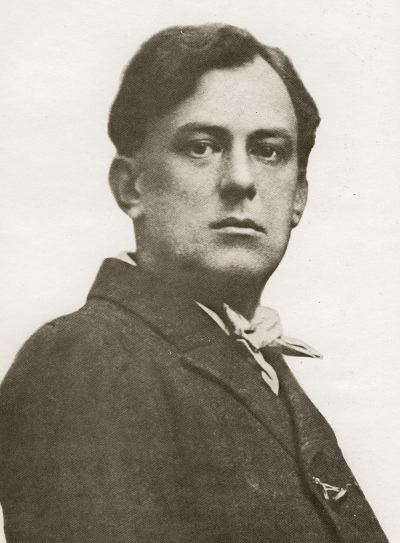
Aleister Crowley, circa 1912
His subsequent career is eventful enough that it’s difficult to summarise in brief. He travelled, married, wrote poetry, had affairs with men and women, climbed mountains, divorced his wife on the grounds of his own adultery (they remained friends), and used many different drugs quite a lot. He published a book, The Book of the Law, that he claimed had been dictated to him by a spirit; it declared Crowley the prophet of a new religion called Thelema, based on practicing ceremonial magic, and stated “do what thou wilt shall be the whole of the law.” He founded his own magical organisation in 1907 to promote Thelema, claimed to have summoned a demon with sex magic in 1909, then took over the Ordo Templi Orientis — another magical organisation, formed in 1895 and formerly known as the Hermetic Brotherhood of Light (not to be confused with the Hermetic Brotherhood of Luxor).
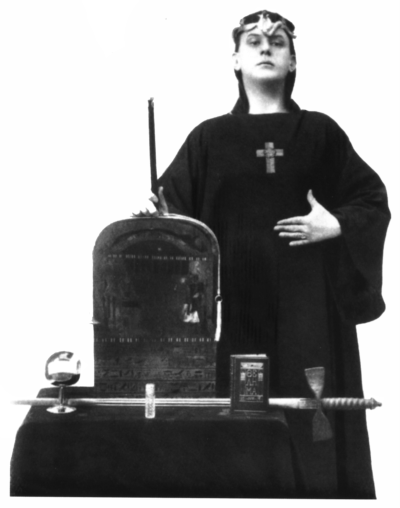
Aleister Crowley in ritual dress.
If Crowley’s the most notorious figure to come out of the Golden Dawn, there are some other occultists worth noting. One is a writer and Theosophist named at birth Violet Firth, who, after joining the Alpha et Omega, began using the name Dion Fortune. By 1923 she’s started to publish short stories about occult investigator Doctor John Taverner; she’ll later publish several occult novels, as well as numerous books on the occult. Another of the Golden Dawn magicians is painter Austin Osman Spare, whose work is influenced by Spiritualism and Theosophy, and who was associated with Crowley from 1907 to 1912 before turning against Crowley’s love of hierarchy. Spare writes and designs his own grimoires, and has developed his own magical philosophy, Zos Kia Cultus, based on the division of the spirit and the body.
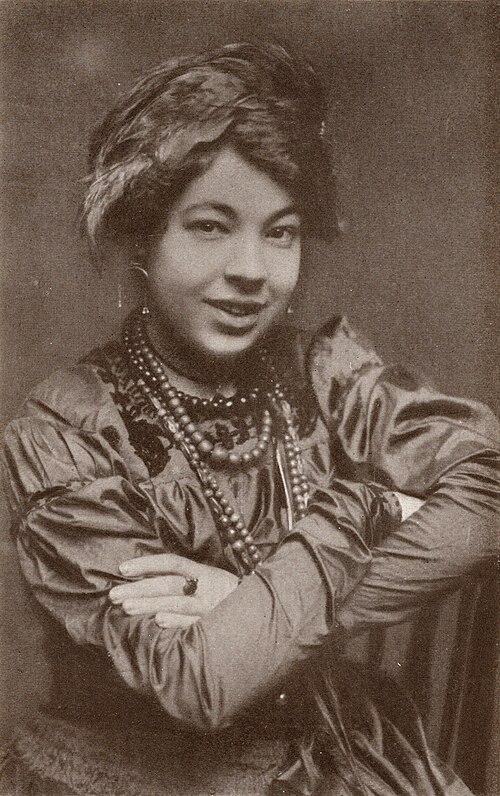
Pamela Colman Smith
All this interest in occultism is, if not a general interest of society, at least spread widely enough to draw the attention of journalists and artists. It has been suggested, for example, that A. E. Waite inspired the character of Innsmouth magician Ephraim Waite in H. P. Lovecraft’s story “The Thing On the Doorstep.” Certainly occult reading was widely available; Lovecraft mentions an occult bookstore on New York’s 46th Street in a letter to Clark Ashton Smith, while in London The Atlantis Bookshop was established in 1922. Theosophist John Maurice Watkins started “Book-Notes,” a publication about Theosophical writings, in 1893, and had opened a shop by 1897; Watkins continued to publish new and classic esoteric books, and his store continues in business today.
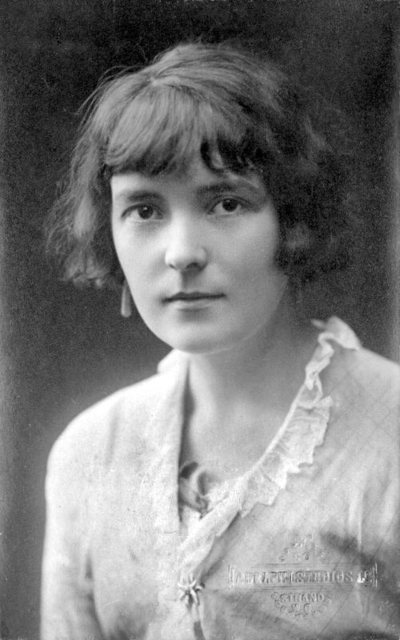
Katherine Mansfield
One can find any number of other occultists and occult societies. But by way of concluding, it is worth noting certain theories about religion and religious beliefs that are now considered to have been at least overstated, but which in 1923 are widely known and quite influential. In the late 19th century, folklorists came to believe that just as geological strata preserved fossils of different eras, so human cultures might have different strata preserving cultural fossils in the form of folk customs. Thus Sir James Frazer’s 1890 work of comparative mythology The Golden Bough attempted to link European folk beliefs and customs with myths and religious practices from societies around the world; it was expanded in two later editions, then in 1922 an immensely popular one-volume edition was published. By that time anthropologists had largely backed away from Frazer’s theories, but in 1923 less-academic folklorists — the Folklore Society had been founded in 1878 — continue to be fascinated by them, along with the general public and many writers and artists.
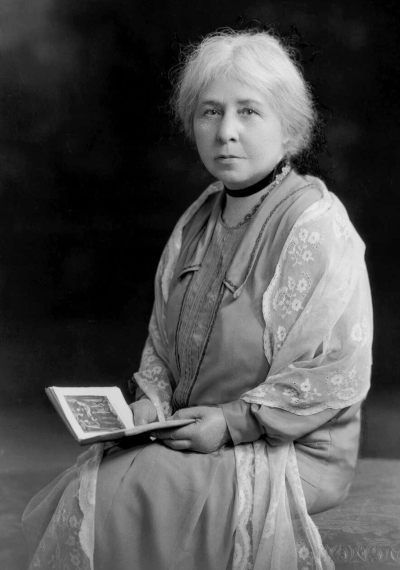
Margaret Murray
By 1923, these ideas of paganism, witch cults, and folklore as prehistoric survival have already inspired masters of weird fiction like Algernon Blackwood and Arthur Machen. They will go on to inspire others. Not least among those being H.P. Lovecraft, who cites both Frazer and Murray in “The Call of Cthulhu,” and refers to Murray’s ideas in stories like “The Dreams In the Witch House.” As scholarship these arguments have, by and large, not held up well over the past few decades of scrutiny, and indeed they were criticised even in their own time. But as inspiration for writers, as spurs to creativity, they’re as significant as any religious movement of the time.
Find all my posts about Weird Tales here!
Matthew David Surridge is the author of “The Word of Azrael,” from Black Gate 14. You can buy collections of his essays on fantasy novels here and here. His Patreon, hosting a short fiction project based around the lore within a Victorian Book of Days, is here. You can find him on Facebook, or follow his Bluesky account, @bookofdays.