Browsed by
Category: Books

Sean T. M. Stiennon reviews Circle of Enemies

Sean T. M. Stiennon reviews Circle of Enemies

Circle of EnemiesCircle of enemies cover
By Harry Connolly
Del Rey (320 pages, mass market first edition August 2011, $7.99)

And so we come full circle. Circle of Enemies is the final novel in the Twenty Palaces series as it stands, and in some ways the most crowded with monsters, sorcery, and mysteries. If it has one major flaw, it’s that it whet my appetite for a sequel that will likely never be written.

The action moves south from the Pacific northwest hamlets of Child of Fire (my review here) and Game of Cages (review) to the sun-scorched sidewalks and shadowy mansions of Los Angeles, as Ray revisits the life he lived before his stay in prison. One of his old friends from his carjacker days — a woman named Caramella — arrives in Ray’s Seattle room with a cryptic message: “You killed me, Ray.” After delivering it, she vanishes into thin air.

Magic — and all the horrors that accompany it — have found Ray’s old crew. He drives south to his old stomping grounds in Los Angeles to find his old allies and save them before the Twenty Palaces society arrives to wipe them out. The world is once again in danger from a predator with the potential to annihilate all human life, one hapless victim at a time.

Read More Read More

Maureen F. McHugh’s China Mountain Zhang

Maureen F. McHugh’s China Mountain Zhang

China Mountain ZhangThere’s a distinctive kind of surprise some science fiction books can generate: surprise that a book which seems to be speaking to the beliefs, fears, or world-view of a given time was in fact written well beforehand. I remember being taken aback, for example, that A Clockwork Orange was first published in 1962, before hippies and punks and the coining of ‘generation gap’ (first recorded 1967). And it’s interesting to me that Maureen F. McHugh’s China Mountain Zhang, published in 1992, calmly and thoroughly imagines a future dominated by China — something much discussed today, but a less common idea before the turn of the millennium. McHugh’s book is a twentieth century novel, lacking a world wide web or smartphones, that speaks to the twenty-first.
It does so because it’s a very strong book. And because the world it imagines is credible; the setting doesn’t seem a product of the anxiety of an ebbing imperial power, but a depiction of life as it is lived in the future. Characters go about their business, negotiating with the structures of their society as we do ours. We recognise them, and what they do, and their attempts to plan out their lives. As in much of the best science fiction, the imagined society’s complex and deeply imagined, existing in a dynamic relationship with character; it’s realistic, but not mimetic, and uses both its differences and similarities to the world we know as a way of getting at its thematic interest.

The book’s made up of long chapters that have the shape of short stories. Most follow an engineer surnamed Zhang, whose given names are ‘Rafael’ and ‘Zhong Shan,’ the latter of which can be translated ‘China Mountain.’ We follow Zhang as he finds his way to a career and builds a life for himself, a task complicated by ethnicity and sexual orientation. In and around the chapters dealing with Zhang are stories following other characters, minor figures in his life who broaden the story and add depth to the novel’s setting and structure. One of the metaphors that emerges in the book is chaos theory, and the now-familiar image of the butterfly fluttering its wings and causing a hurricane on the far side of the world; so these characters help demonstrate the interconnectedness of the world, affecting each other slightly or significantly, a structural embodiment of the chaos imagery.

Read More Read More

Parke Godwin, January 28, 1929 – June 19, 2013

Parke Godwin, January 28, 1929 – June 19, 2013

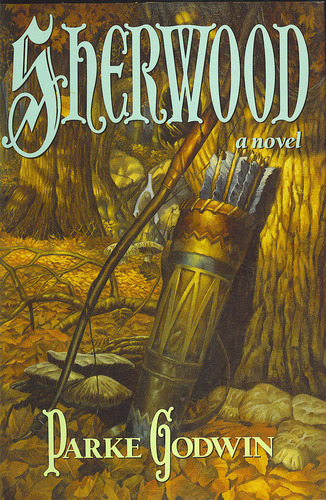
Sherwood Parke Godwin-smallParke Godwin, the American author of more than a dozen fantasy novels, died this week.

I first encountered Godwin with The Masters of Solitude, his 1978 science fiction collaboration with Weird Tales editor Marvin Kaye. They wrote one sequel, Wintermind (1982), and one horror novel together: A Cold Blue Light (1983).

But I’ll chiefly remember Godwin for my favorite Robin Hood adaptation, Sherwood, published in hardcover by William Morrow & Co. in August 1991. The novel follows young Edward Aelredson, Thane of Denby, who’s driven from his home by Norman invaders and takes refuge in primeval Sherwood forest — where he meets a surprising cast of characters and gradually becomes a thorn in the side of the usurping king. Set during the Norman conquest, Sherwood features both William the Conqueror and William Rufus as major characters. Godwin wrote one sequel, Robin and the King, in 1993.

Sherwood was perhaps his most successful book, but he’s also fondly remembered for his Arthurian trilogy set in 5th century Britain during the collapse of the Roman empire: Firelord (1980), Beloved Exile (1984), and The Last Rainbow (1985).

Godwin’s first novel was Darker Places (1973), his last was Prince of Nowhere, published in 2011. In between, he wrote a number of popular historical and romantic fantasies, including A Truce with Time (1988), The Tower of Beowulf (1995), and Lord of Sunset (1998). He also turned his hand to solo science fiction with Limbo Search (1995) and the humorous Snake Oil series: Waiting for the Galactic Bus (1988) and The Snake Oil Wars (1989).

As an editor he produced Invitation to Camelot (1988) and, with Marvin Kaye, one collection of Weird Tales reprints, Weird Tales: The Magazine That Never Dies (1988). He had one short story collection, the Hugo-nominated The Fire When It Comes (1984), which included the World Fantasy Award-winning title story.

His short story “Influencing the Hell out of Time and Teresa Golowitz,” (Twilight Zone magazine, January, 1982) was adapted as “Time and Teresa Golowitz,” an episode of The Twilight Zone TV show in 1986.

Parke Godwin was born in New York City in 1929, and lived there much of his life. He died on Wednesday at the age of 84.

Did I Do That? Or, We’ve Had the Sword, Where’s the Sorcery?

Did I Do That? Or, We’ve Had the Sword, Where’s the Sorcery?

ElricA while ago, when I started writing these posts, I talked about how to put the sword in Sword and Sorcery, and while doing my latest posts on the Fantasy and SF hero, it struck me that, in a way, I was still really talking about the sword. Maybe it’s time to talk about the sorcery.

This is not to say that our heroes can’t be wielding some kind of magic at the same time they’re wielding swords – but that’s not the way things started out. Most of the early heroes of the genre that we’re familiar with, Conan, for example, and yes, even Fafhrd and the Grey Mouser, weren’t magic users. In fact, many of these early heroes were fighting against those who were. Sorcerers were often seen as the enemy, or, at best, as very gingerly tolerated allies.

Along came some notable exceptions to this idea, particularly Michael Moorcock’s Elric of Melniboné, and, someone I mentioned last week, Roger Zelazny’s Dilvish the Damned. But these two, we might argue, are representatives of the “New Wave” in Fantasy, which in part introduced the concept of the more complex, multidimensional, anti-hero. They also fall into a special category of sorcerer, in that they’re at least partially magical beings, not humans. Which brings us to the first major subdivision of sorcery or magic that any writer in our genre has to consider: Is the magic internal, or external? Does it come from within, or without?

Read More Read More

Vintage Treasures: The Best of Murray Leinster

Vintage Treasures: The Best of Murray Leinster

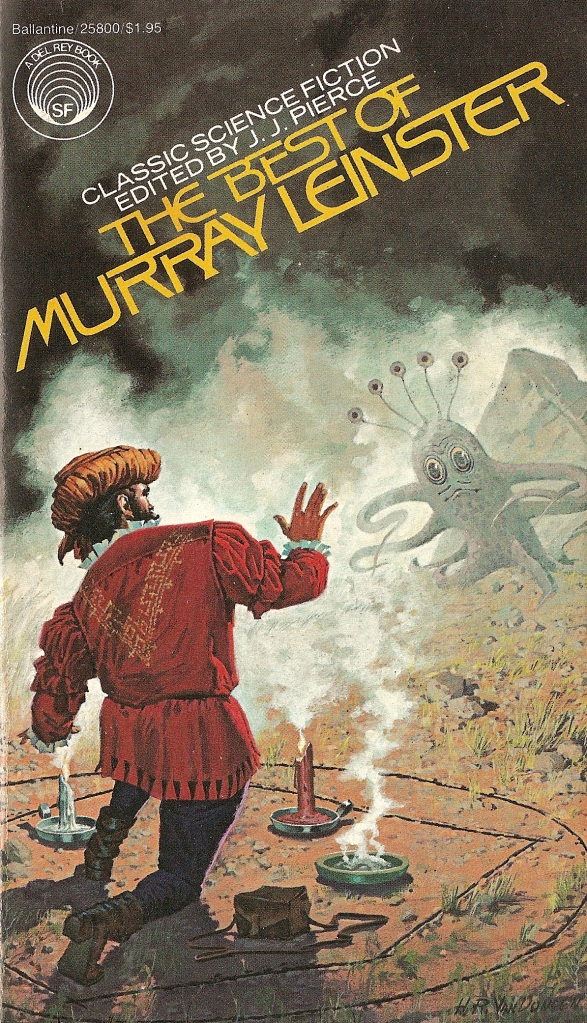
The Best of Murray LeinsterI first encountered Murray Leinster… wow, I don’t even know when. Probably in The Hugo Winners, Isaac Asimov’s 1962 anthology collecting the first short stories to win science fiction’s coveted prize.

It featured Leinster’s 1956 novelette, “Exploration Team,” about a desperate rescue attempt on a distant planet — involving an illegal settler blackmailed into helping a lost colony, and his team of Kodiak bears. Lost colonies, deadly aliens, and even more deadly bears… that’s the kind of story that sticks in your mind when you’re twelve, believe me.

Leinster died in 1975; he published his last book, a novelization of the Land of the Giants TV series, in 1969. But he was a steady presence on bookstore shelves during my formative reading years for well over a decade after his death, with reprint titles like The Med Series (Ace, 1983) and The Forgotten Planet (Carroll & Graf, 1990).

The mass market reprints have tapered off over the last few years. The last were all from Baen, a trio of excellent collections all edited by Eric Flint and Guy Gordon: Med Ship (2002), Planets of Adventure (2003), and A Logic Named Joe (2005).

Since then, the wheels of publishing have ground on, as they do, abandoning Leinster by the side of the road. We did our part to keep his memory alive, of course. I reprinted one of Leinster’s earliest pulp tales, “The Fifth-Dimension Catapult,” from the January 1931 Astounding Stories of Super-Science, in Black Gate 9.

There have also been low-budget digital editions of his out-of-copyright pulp fiction, sure, but by and large the genre — as living genres should — has focused instead on new and emerging authors.

I used to think that was inevitable. Readers have long memories, but publishing industries don’t, and when an author has been out of print for over a decade, she’s likely to remain that way.

But the brilliant Lester del Rey, publisher of Del Rey Books, proved me wrong. In fact, he proved me wrong nearly four decades ago, with a fabulous line of top-selling paperbacks collecting the best short science fiction and fantasy from the writers of the Golden Age of SF — including The Best of Murray Leinster, a collection of some of the best short SF and fantasy of the 20th Century.

Read More Read More

New Treasures: Fiery Edge of Steel

New Treasures: Fiery Edge of Steel

fiery-edge-of-steelJill Archer’s first Noon Onyx novel, Dark Light of Day, served up a truly post-apocalyptic setting. And I don’t mean global warming or an inconvenient economic collapse. Armageddon is over, the demons won, and the few surviving humans worship patron demons just to survive. Sorta makes Mad Max look more like Mad Men, just with cooler fashions.

The second book in the series, Fiery Edge of Steel, has now arrived and it looks even more intriguing. It tosses an unusual mystery, a remote outpost, and an ancient and evil foe into the mix.

Lucifer and his army triumphed at Armageddon, leaving humans and demons living in uncertain peace based on sacrifice and strict laws. It is up to those with mixed demon and human blood, the Host, to prevent society from falling into anarchy.

Noon Onyx is the first female Host in memory to wield the destructive waning magic that is used to maintain order among the demons. Her unique abilities, along with a lack of control and a reluctance to kill, have branded her as an outsider among her peers. Only her powerful lover, Ari Carmine, and a roguish and mysterious Angel, Rafe Sinclair, support her unconventional ways.

When Noon is shipped off to a remote outpost to investigate several unusual disappearances, a task that will most likely involve trying and killing the patron demon of that area, it seems Luck is not on her side. But when the outpost settlers claim that an ancient and evil foe has stepped out of legend to commit the crimes, Noon realizes that she could be facing something much worse than she ever imagined…

Fiery Edge of Steel was published by Ace Books on May 28. It is 330 pages, priced at $7.99 for both the paperback and digital editions.

See all of our recent New Treasures posts here.

Vintage Treasures: Hauntings: Tales of the Supernatural

Vintage Treasures: Hauntings: Tales of the Supernatural

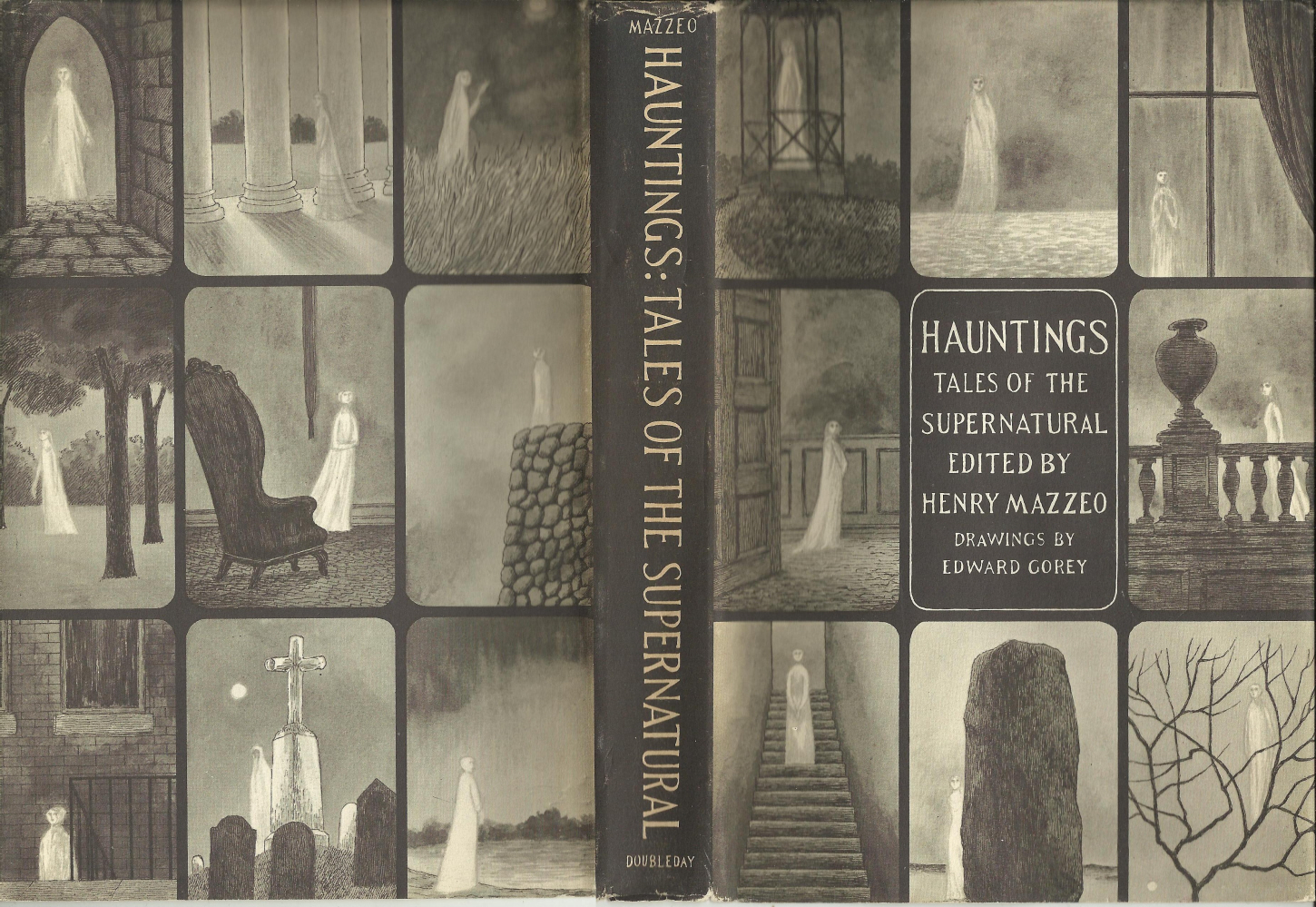
Hauntings Tales of the SupernaturalWhen I was a kid in the late 60s/early 70s, I was fascinated by the fantastic. It didn’t matter what it was: films, comics, television, or books. Although, until I learned to read, my exposure to the genre — and especially horror — was through purely visual media such as comics and whatever was on TV.

Luckily my earliest talent, which later turned out to be pretty much my only one, was that I took to reading like a cultist takes to, well, cults! This opened up a whole new world for me, as our elementary school had a well stocked library.

And it didn’t take long to catch on that the best books didn’t have any pictures in them. Sure, they had great covers, but inside there was nothing but words! Lots and lots of wonderful words that helped me fill my mind with images that no film or comic could match.

Another important thing that I learned was that adults didn’t care what you read as long as it was a genuine book. Comics brought only disdain and suspicion.

Especially those wonderfully gory black and white comics published by Warren, Skywald, and Eerie Publications, those you had to hide from the adults. My dad always called those comics “Doug’s damned weirdo books.”

Read More Read More

The 2012 Bram Stoker Award Winners

The 2012 Bram Stoker Award Winners

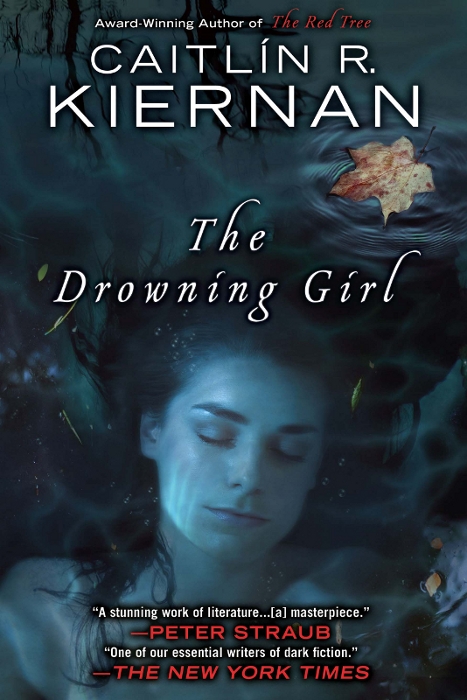
The Drowning GirlWait, what? The 2012 Stokers have been awarded already? It seems like just yesterday they gave out the 2011 awards!

Man, the years are flying by. Soon I’ll be in a wheelchair in a retirement home, playing checkers with Howard Andrew Jones and shouting at kids to keep their hoverboards off the lawn. Which — now that I think about it — doesn’t sound too bad, as long as they have cable. And smothered chicken for lunch.

But back to the Awards. Sorry, your mind wanders at my age. Here’s the complete list of winners:

Superior Achievement in a Novel:

The Drowning Girl by Caitlín R. Kiernan (Roc)

Superior Achievement in a First Novel:

Life Rage by L.L. Soares (Nightscape Press)

Superior Achievement in a Young Adult Novel:

Flesh & Bone by Jonathan Maberry (Simon & Schuster)

Superior Achievement in a Graphic Novel:

Witch Hunts: A Graphic History of the Burning Times by Rocky Wood and Lisa Morton (McFarland and Co., Inc.)

Read More Read More

Black Gate Online Fiction: The Death of the Necromancer, Part Three

Black Gate Online Fiction: The Death of the Necromancer, Part Three

The Death of the Necromancer KindleBlack Gate is very proud to present Part Three of Martha Wells’s Nebula Award-nominated novel, The Death of the Necromancer, presented complete online for the first time. Here’s a quote from Donna McMahon’s SF Site review:

It’s relatively easy to convey the plot of Necromancer, but far more difficult to describe the extraordinary texture of its setting. The city of Vienne has an Italian Renaissance flavour, plus nineteenth century technology, hints of Victorian England, and even whiffs of A Tale of Two Cities and The Tempest. From this seemingly improbable mix of historical and fantasy elements, Martha Wells creates a stunningly vivid society…

Wells’ characters are equally compelling: among them Nicholas, who is a gentle man with a dark streak of rage; Madeline, the ambitious actress who lives with him; Reynard, the disgraced but proud army officer; and Crack, the tough, terse henchman. And there are many more, none of them forgettable.

Still, Necromancer’s most impressive feature may be its complex, twisting plot and swift pacing, which kept me glued to the pages… this is a terrific novel. Wells is in a league with top writers like Lois McMaster Bujold and Barbara Hambly.

Martha Wells is the author of fourteen fantasy novels, including City of BonesThe Element of FireThe Cloud Roads, and The Serpent Sea. Her most recent novel is the YA fantasy, Emilie and the Hollow World, published by Strange Chemistry Books in April. Her previous fiction for us includes “Reflections” in Black Gate 10, “Holy Places” (BG 11), and “Houses of the Dead (BG 12). Her most recent article for us was “How Well Does The Cloud Roads Fit as Sword and Sorcery?,” which appeared here March 13. Her web site is www.marthawells.com.

The complete catalog of Black Gate Online Fiction, including stories by Mary Catelli, Michael Penkas, Vera Nazarian, Ryan Harvey, Nina Kiriki Hoffman, E.E. Knight, C.S.E. Cooney, Howard Andrew Jones, Harry Connolly, and many others, is here.

The Death of the Necromancer was originally published in hardcover by Avon EOS in 1998. The complete, unedited text will be presented here over the next three weeks; it began on June 2 with the first four chapters here.

Part Three includes Chapters Nine through Thirteen. It is offered at no cost.

Read Part Three of the complete novel here.

New Treasures: The Simon & Kirby Library: Science Fiction

New Treasures: The Simon & Kirby Library: Science Fiction

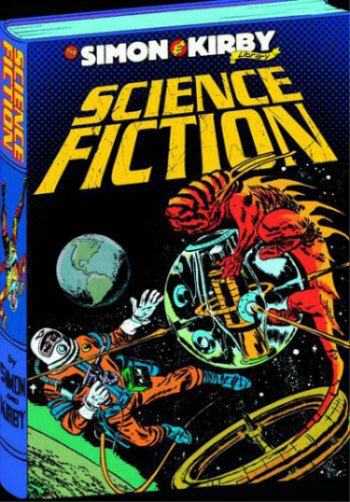
The-Simon-and-Kirby-Library-Science-FictionJoe Simon and Jack Kirby were perhaps the most important and successful comic team of the 1940s and 50s. Together they created Captain America (among many other popular creations) and produced an incredible body of work spanning numerous genres. Joe Simon was the first editor of Marvel Comics and the legendary Jack Kirby later partnered with Stan Lee to create some of the most enduring characters of the 20th Century, including Iron Man, The Fantastic Four, The Hulk, The Silver Surfer, Daredevil, Thor, the X-Men, and countless others.

The Simon & Kirby Library: Science Fiction is packed with dozens of stories, many of them photographed from the original artwork. This is essential pulp science fiction, with tales of brave spacemen, intrepid jungle explorers encountering lost civilizations, living shadows, crash landings on bizarre alien worlds, sinister robots, giant monsters battling desperate armies, beautiful barbarian princesses, impossible inventions, and much more.

The Simon and Kirby Library: Science Fiction spans more than 20 years, beginning with the first stories Joe Simon and Jack Kirby ever produced together (beginning in June 1940) — their ten-issue run of Blue Bolt adventures. Then the Cold War years will be represented by Race For the Moon, featuring pencils by Kirby and inked artwork by comic book legends Reed Crandall, Angelo Torres, and Al Williamson.

Other rarities from both decades are included, and as a bonus for readers, the volume features stories illustrated by Crandall, Torres, and Williamson — without Kirby.

The book also includes an introduction by Watchmen co-creator Dave Gibbons. This is the fourth volume in The Simon & Kirby Library, following SuperheroesCrime and the best-selling Horror.

The book is in full-color throughout, and most of the art has been restored and vibrantly re-colored by Harry Mendryk. My only complaint about this volume is that only a handful of covers are included, in a sparse 3-page cover gallery in the back.

The Simon & Kirby Library: Science Fiction was published by Titan Books on June 4. It is 352 pages in hardcover, priced at $49.95. There is no digital edition.