Browsed by
Category: Books

New Treasures: Worlds of Edgar Rice Burroughs
New Treasures: Worlds of Edgar Rice Burroughs

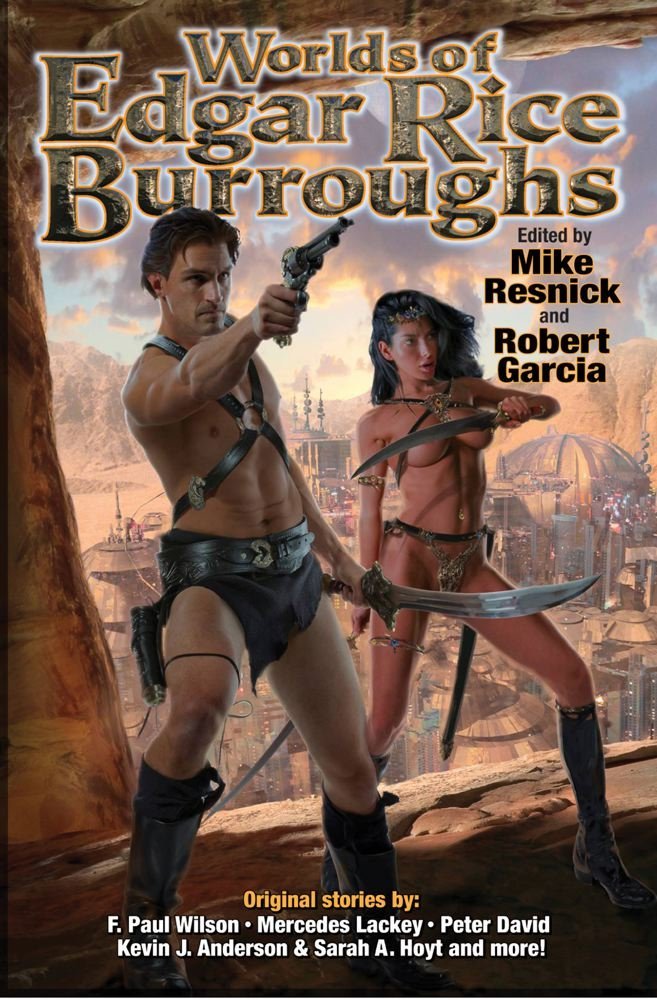
Worlds of Edgar Rice Burroughs-smallI had the pleasure of talking to Bob Garcia a few weeks ago, at a party at Doug Ellis‘s house near Chicago. Bob is a great guy — always jovial and superbly well-informed, and always ready to entertain with fascinating, behind-the-scenes tales of the publishing biz. His American Fantasy was one of the finest fantasy magazines of the 80s, and ever since he’s been well-positioned at the heart of the industry.

I took the opportunity to ask him about his new anthology, Worlds of Edgar Rice Burroughs, co-edited with Mike Resnick, just published by Baen on October 1st. It’s such a great idea — all new stories set in the many worlds of ERB, by many of today’s hottest writers — that it’s a wonder no one has thought of it before.

Bob was happy to give me the details. The book contains ten new tales set in the legendary worlds of Edgar Rice Burroughs — plus one reprint, Resnick’s novella, “The Forgotten Sea of Mars,” which originally appeared in the fanzine ERB-dom way back in 1966. This is the only Mars/Barsoom story in the book, as Disney now controls the rights to Burroughs’s Mars properties.

The book suffers not at all for that, however. When Bob and Mike started approaching writers, soliciting submissions, they were overwhelmed by the enthusiastic response. The final Table of Contents includes a new Tarzan tale by Kristine Kathryn Rusch, a Carson Napier of Venus homage by Richard A. Lupoff, a Moon Maid contribution from Peter David, a Mucker story from Max Allen Collins and Matthew Clemens, a Pellucidar story by Mercedes Lackey, a crossover tale by Joe R. Lansdale (“Tarzan and the Land Time Forgot”), plus stories by F. Paul Wilson, Todd McCaffrey, Kevin J. Anderson and Sarah A. Hoyt, and Ralph Roberts.

Here’s a few sentences from the introduction by Resnick and Garcia that give you an idea of the breadth of Burroughs’s accomplishments and just how vast a playground he left for their contributors to play in.
…

Read More Read More

Amazon Discounts Laird Barron’s The Beautiful Thing That Awaits Us All to $1.99 for October

Amazon Discounts Laird Barron’s The Beautiful Thing That Awaits Us All to $1.99 for October

The Beautiful Thing That Awaits Us All-smallSweet! Amazon.com has made Laird Barron’s new collection, The Beautiful Thing That Awaits Us All, a Kindle special, pricing it at just $1.99 for the month of October.

In his September 4th review for us, James McGlothlin wrote:

This highly anticipated book marks Barron’s third collection of short stories (and fourth book), following both of his Shirley Jackson Award-winning collections The Imago Sequence and Occultation, as well as his 2012 debut novel, The Croning. As with his prior volumes, this one continues to meet, and exceed, the bar of contemporary horror stories, showing that Barron is still one of the leading horror voices of today.

Let me emphasize that this collection is in keeping with what I, and many others, have come to love and expect from Barron: a great combination of cosmic horror feel — which many associate with the early pulp writer H. P. Lovecraft — as well as Barron’s own gritty noir-like style…

Laird Barron’s The Beautiful Thing That Awaits Us All continues to provide us with his gritty cosmic horror as well as other enjoyments. I highly recommend it!

On his blog, Laird notes “This collection marks the end of the cosmic horror arc that includes The Imago Sequence and Occultation.” Cosmic horror comes in arcs now? Man, I am so out of it. Good thing I have James and Laird to keep me hip (and it’s a full-time job, let me tell you.)

What more do you need to know? Drop by Amazon today and get some gritty cosmic horror for just $1.99!

The Series Series: Naomi Novik’s Latest Novel of Temeraire

The Series Series: Naomi Novik’s Latest Novel of Temeraire

Blood of Tyrants-small“Series fantasy,” said John O’Neill when I asked him what he’d like my new blog column here to focus on. “It’s the most popular form of fantasy, and we virtually ignore it — especially the early stuff.”

What do you call a series about series? Series is a word with no plural, or, depending on how you look at it, a plural word with no singular form. If I can talk about the peoples of the earth, I should be able to talk about the serieses of fantasy novels, but I can’t quite bring myself to do it. No wonder the publishing industry is so fond of words like trilogy, tetralogy, saga, and so forth. Maybe you have a brilliant idea that solves this problem, a genre equivalent of the invention of the word “y’all.” My comment thread awaits.

Meanwhile, welcome to the Series Series.

You know people who won’t start reading a series until the last volume is published, because they don’t want to invest their hearts in a story that might never reach its end. You may be one of those readers.

Me, I used to say I’d try anything once. It turned out not to be quite true, but I’m still willing to try almost any book for a few pages. If it keeps me reading, I don’t worry about whether the author’s going to live long enough to complete all the plot arcs, or whether the market will allow the series to go on.

I also don’t mind putting a book or a series aside if it stops hitting the sweet spot for me. A wildly successful and highly skilled author I will not name has a few series out. I read the first volumes of each, recognized their excellences and the reasons most of my friends loved them, and I never picked up any more volumes. Not my sweet spot. Sorry.

At some point, a stream of review copies of debut novels and first volumes of fantasy series will start flowing from BG to my mailbox. I wanted to start, though, with the two series I can’t put down, the ones that have driven me to break my no-buying-new-books-until-I’m-done-moving rule. For my last post, I wrote about James Enge’s new novel of Morlock the Maker, Wrath-Bearing Tree. This week, it’s Naomi Novik’s Blood of Tyrants, the eighth novel about the naive but brilliant dragon Temeraire and his human, Captain William Laurence.

…

Read More Read More

The Before It’s Too Late List

The Before It’s Too Late List

Confucius A Life of Thought and Politic-smallNot long ago, I sat down to begin a day’s work and found myself distractedly messing about online, where I blundered into a collection of quotes about reading.

I was immediately wrapped up in agreeing with the pronouncements of many famous people as they uttered heartfelt words about just how valuable, transporting and all around awesome reading really was. I nodded enthusiastically, feeling justified and righteous, and occasionally surprised.

I read,

No matter how busy you may think you are, you must find time for reading, or surrender yourself to self-chosen ignorance.

Whoa! That’s in-your-face enough to warrant a fist pump, maybe even throwing the horns. And who said it? Can you guess?

Confucius. I cackled to myself. Way to go, Confucius. Literary bad-ass of 500 BC.

Then I read…

“Read the best books first, or you may not have a chance to read them at all.”
— Henry David Thoreau

And that simple, obvious, muscular little sentence shot through me like a frozen dart.

…

Read More Read More

New Treasures: Let the Old Dreams Die by John Ajvide Lindqvist

New Treasures: Let the Old Dreams Die by John Ajvide Lindqvist

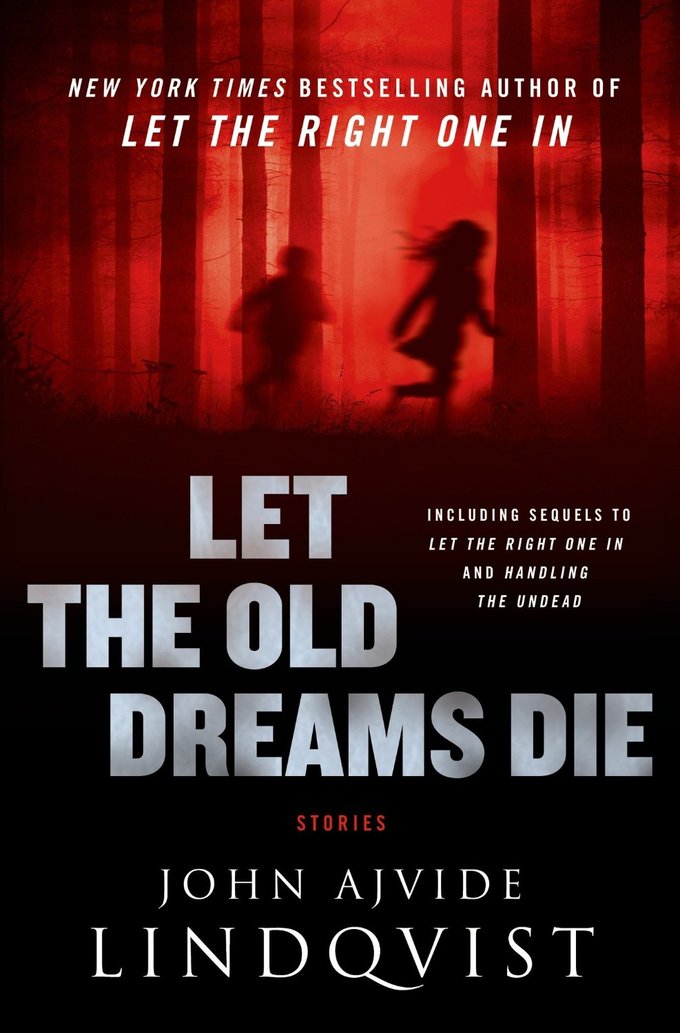
Let the Old Dreams Die-smallJohn Ajvide Lindqvist may be the breakout horror writer of the last decade.

That’s not what I might have predicted, given his bio. Lindqvist was a street magician and stand-up comic in Sweden when his first novel appeared. Set in his home town of Blackeberg, a suburb of Stockholm, Let the Right One In (2004) has been filmed twice, once in Swedish and once in English, and both versions have brought him hosts of new fans. His second novel, Handling the Undead (2005), featured a horde of zombies shambling towards Stockholm; Harbour arrived in 2008, followed by Little Star in 2010.

Of course, being prolific is no proof of popularity. No, the real evidence that he’s become a mainstream horror phenomenon is more obvious: he is relentless compared to Stephen King. Of the eight blurbs reprinted on the back of his latest, the short story collection, Let the Old Dreams Die, more than half invoke King: “Reminiscent of Stephen King at his best” (The Independent). “Deserves to be as much of a household name as Stephen King” (SFX). “Sweden’s answer to Stephen King” (Daily Mirror). Makes me wonder if Stephen King will pick the book up in Barnes and Noble and think to himself, “Hey, this guy sounds pretty good.”

Let the Old Dreams Die contains a dozen short stories and novellas, including sequels to both Let the Right One Did and Handling the Undead.

Because of the two superb films made of John Ajvide Lindqvist’s vampire masterpiece Let the Right One In, millions of people around the world know the story of Oskar and Eli and of their final escape from Blackeberg at the end of the novel. Now at last, in “Let the Old Dreams Die,” the title story in this absolutely stunning collection, we get a glimpse of what happened next to the pair…

“Let the Old Dreams Die” is not the only stunner in this collection. In “Final Processing,” Lindqvist also reveals the next chapter in the lives of the characters he created in Handling the Undead. “Equinox” is a story of a woman who takes care of her neighbor’s house while they are away and readers will never forget what she finds in the house. Every story meets the very high standard of excellence and fright factor that Lindqvist fans have come to expect.

Let the Old Dreams Die was released today by Thomas Dunne Books. It is 400 pages, priced at $27.99 in hardcover, and $14.99 in digital format.

Richard Kadrey Talks with Black Gate About Dead Set

Richard Kadrey Talks with Black Gate About Dead Set

Richard Kadrey author photoRichard Kadrey is the kinda guy you see at the all night diner who looks like a degenerate even when he’s sitting there eating a burger. Dark hair. Dark glasses. Dark tattoos. Except the knuckle ink, that’s white. He’s the kinda guy that when he looks up from his coffee and smiles at you, you can’t tell if that grin means he’s going to steal your car on the way out or say hello.

Either way, he’s ridiculously charming and… cool. Like James Dean, Nick Cave, Wild One, cool. You can tell, lookin’ at the rough bastard that he’s got good stories. Like maybe he was a teenage werewolf or used to live with a burlesque troupe in Berlin or he and Tom Waits went on benders in adult theaters in New Orleans — but before you get the nerve to say hey, he picks up his yellow legal pad, tosses the waitress a tip and he’s off into the night.

Now take all that nonchalant badassery and put it on the page because Richard Kadrey’s books are as hella cool as he is.*

Kadrey’s upcoming young adult novel, Dead Set, is about Zoe, a high school kid dealing with the loss of her dad. Zoe and her mom moved to the city. Money’s tight, the insurance company isn’t paying, and starting over sucks for both of them. While her mom non-stop job searches, Zoe is left mostly alone to deal with her grief.

Zoe stumbles on a record store that might be the answer to her problems. The records sold therein don’t hold music in the grooves… they hold souls – including Zoe’s dad… and it’s only a short jaunt from the shop to the underworld.

…

Read More Read More

Vintage Treasures: The Best of James Blish

Vintage Treasures: The Best of James Blish

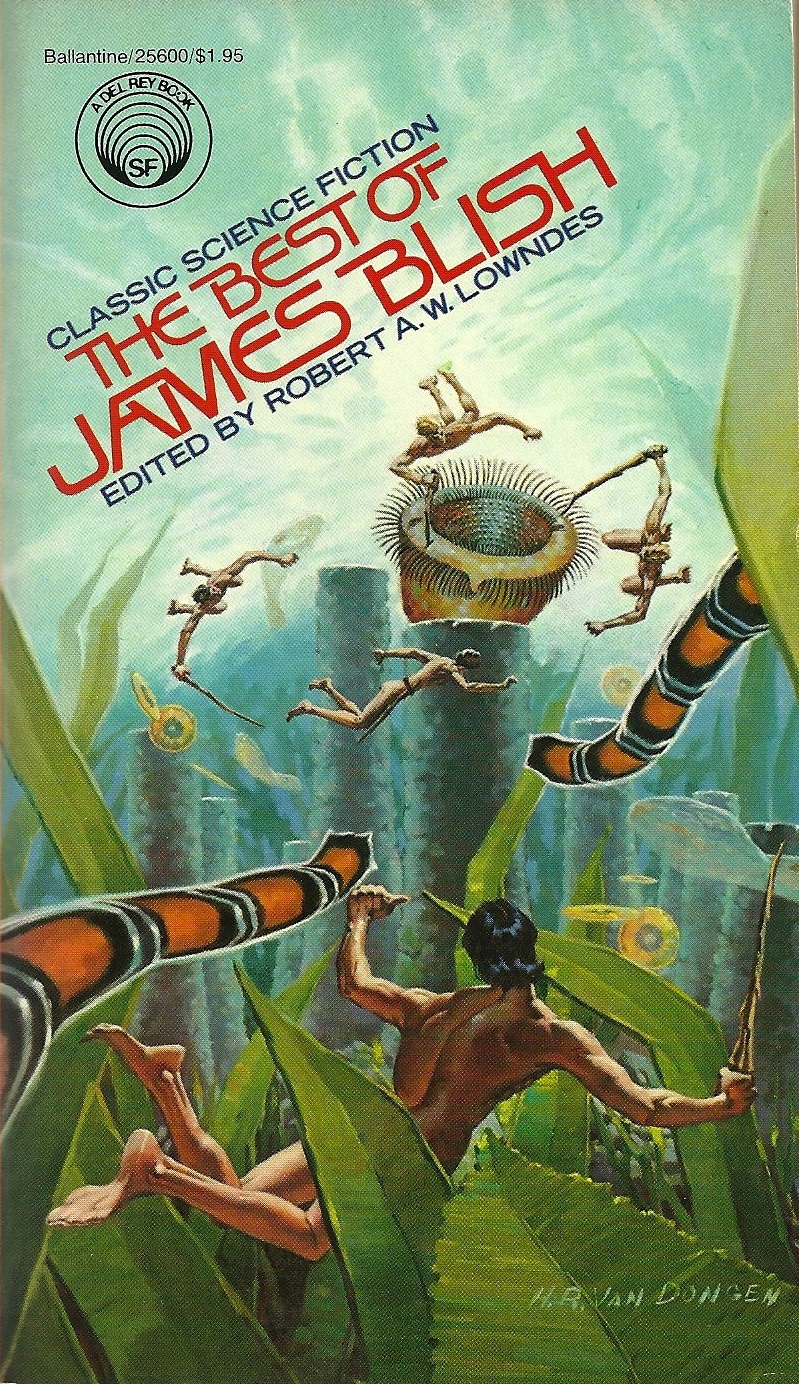
The Best of James Blish-smallAnd so we come to the final Classics of Science Fiction volume, The Best of James Blish, published in August 1979.

Final as in the last one published, not the last one we’ll talk about here. We’re at roughly the halfway point in terms of coverage, as I’ve only written about 11 of the 21 volumes so far. I’m not covering them in chronological order (but that probably would have been a good idea, now that I think about it).

As we’ve discussed in the Comments section of previous posts, Lester Del Rey’s Classics of Science Fiction library is perhaps the finest mass market survey of early 20th Century short SF and fantasy. But looking at it purely from a historical viewpoint, it sure made some odd choices.

Where’s the Best of Robert A. Heinlein, for example? Or Isaac Asimov? Arthur C. Clarke? For that matter, Jack Vance? Keith Laumer? A.E. van Vogt or Gordon R. Dickson? Larry Niven, Harlan Ellison, Ray Bradbury, Robert Silverberg, Poul Anderson, Ursula K. Le Guin, Theodore Sturgeon, Frank Herbert, or Anne McCaffrey?

The answer is simple, of course. Del Rey was limited to publishing the stories he could get rights to — and the short fiction of many of the genre’s top writers, including Asimov, Heinlein, Bradbury, and Clarke, was tied up with other publishers. It’s a wonder he was able to acquire as many top-flight writers as he did.

And there were obviously commercial factors weighing on his selection as well. While some of his early authors — like John W. Campbell and Stanley Weinbaum — had stopped producing fiction decades ago, Del Rey caught on quickly to the idea that his popular Best of… line was a great way to introduce readers to his midlist authors. And so later entries included The Best of Raymond Z. Gallun and The Best of Hal Clement, authors with a much lower profile than Leiber, Henry Kuttner, or Edmond Hamilton, but who had the good fortune to have books in print from Del Rey in the late 70s.

…

Read More Read More

New Treasures: Three by Jay Posey

New Treasures: Three by Jay Posey

Three Jay Posey-smallIn case anybody has surfed over accidentally from io9 or something, I want to make clear that we’re a fantasy website. Fantasy is J.R.R. Tolkien, Conan, Harry Potter, movies with wizards, pretty much any game with oddly-shaped dice, most anime, and those secret daydreams you have about Scarlett Johansson. That’s fantasy.

We don’t cover much mystery, current events, or science fiction. Except maybe for Star Trek, ’cause it’s Howard’s favorite show, and we’re big William Shatner fans (but who isn’t?)

I mention this because I bought a copy of Three today and thought I would turn it into my Saturday New Treasures column. But no sooner do I settle into my big green chair and crack it open, then I discover it’s actually science fiction. Should have paid more attention in Barnes & Noble. That’s what dreaming about Scarlett Johansson will do to you.

Well, what the heck. Still looks more like fantasy than SF to me. Three is the first book in a new trilogy (see? What’s more fantasy than that!) called Legends of the Duskwalker. Here’s the book description.

The world has collapsed, and there are no heroes any more. His name is Three, a travelling gun for hire in a dying world. He has no allegiances, no family, no ties.

Against his better judgment, he accepts the mantle of protector to a sick woman on the run, and her young son. Together they set out across the plains in search of a mythic oasis, attempting to survive the forces that pursue them, and the creatures of the dark. In these dark times, a hero may yet arise.

Angry Robot, in their efforts to be helpful, have the words “Not a sequel” buried in the copyright page. That was helpful, actually. They’ve also printed handy category labels on the back — apparently Three should be filed under Science Fiction, Apocalyptic Wasteland, A Journey Home, Three For All, and Fear the Weir. Fear the Weir? Let’s just say that book categorization sure has changed since I learned the Dewey Decimal system, and leave it at that.

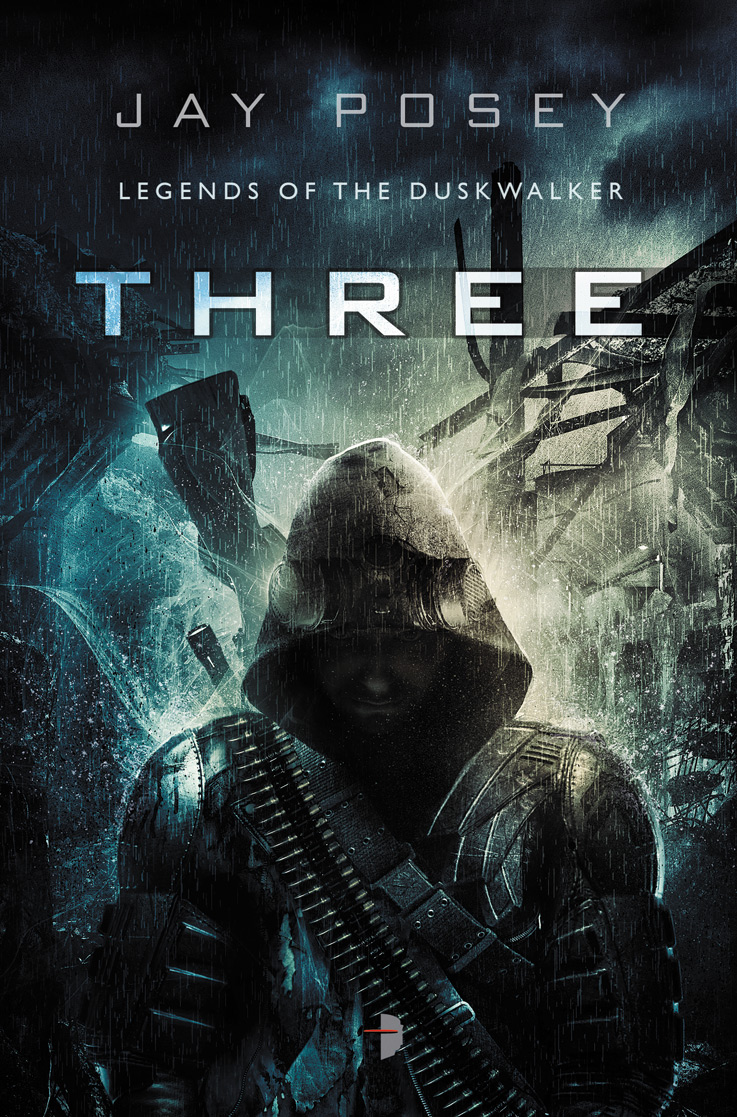
Three was published by Angry Robot on July 30.It is 480 pages, priced at $7.99 for the paperback and $6.99 for the digital edition. The moody bloke-in-a-cloak cover is by Steven Meyer-Rassow.

The Devil in the Details: A Review of Lawyers in Hell

The Devil in the Details: A Review of Lawyers in Hell

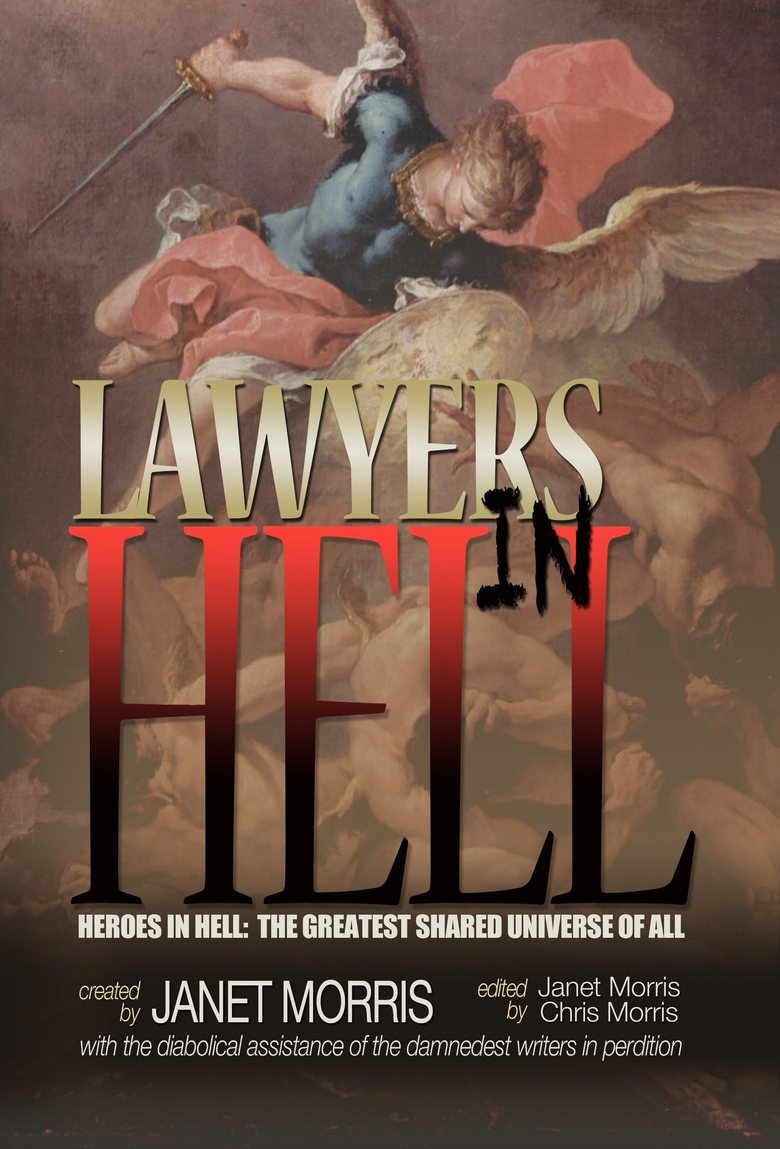
Lawyers in Hell-smallLawyers in Hell (Heroes in Hell, Volume 12)
Created by Janet Morris, edited by Janet and Chris Morris, and written “with the diabolical assistance of the damnedest writers in perdition.”
Perseid Press (456 pages, June 8, 2011, $19.95 in trade paperback)

This is volume twelve in the most clever and interesting shared-universe series I’ve ever had the pleasure to read. Lawyers in Hell actually precedes Rogues in Hell and Dreamers in Hell, both of which I previously reviewed here. And like those other volumes, this one is also outstanding.  So let me start off with a bit of info on what’s going on this time around in Hell, among the characters drawn from the pages of history, legend, folklore, and mythology.

Hell is a twisted, ironic echo of life on Earth. Here the mighty have fallen, though they retain some delusion of grandeur. Here the lowly have risen in rank, though they are no more than toys for Satan to play with. Everyone in Hell is HSM’s (His Satanic Majesty’s) pawn, his puppet.

Erra is the Babylonian god of mayhem and plague, and rumors of Erra and his 7 Sibitti enforcers running amok in Hell are spreading like hellfire. They have been sent by Heaven to audit Hell, to enforce punishment equally. They are there to make damned sure that every damned soul in Hell “receives injustice justly. Or something like that,” to quote author Nancy Asire. “Lawyers are shaking in their boots or salivating over their opportunities.”

As the title of this volume suggests, each story/chapter revolves around legal battles being fought, court cases being heard, and lawsuits being drawn up. Everyone in Hell wants out of Hell and the damned are going through whatever legal system there can be said to exist in Hell. Where’s Perry Mason when you need him? I don’t think he’s in Hell. Not yet, at any rate.

…

Read More Read More

Low Adventure: Clasp-knives and Fortunetelling in Carmen

Low Adventure: Clasp-knives and Fortunetelling in Carmen

Prosper Mérimée Carmen-smallWhy does it have to be the days of “high adventure?”

Low adventure can be extraordinarily riveting, as I recently found when I revisited Prosper Mérimée’s Carmen, the novella that inspired the Bizet opera. I’d read it once before, after seeing the (definitive, to my taste) Rosi film of the opera in the early 80s. Thanks to that film, I was so enchanted with the light and color of Andalusia that on my first trip to Europe I spent the better part of it there, on the coasts, in the alleys of Gibraltar, and especially in the stony mountains of Spain’s Sierra Nevadas. Thanks to a stay at an Andalusian cortijo (estate-farm) I was able to see some of the more remote areas on horseback, dragging a dutiful, saddlesore (need I say “ex”?) girlfriend behind who would have much rather been sunning on the beaches of Marbella or examining the wonders of the Alhambra.

Spain is a country of regions. The differences you might notice between northern Italians and southern are trebled in the expanses of Spain, divided as it is by mountains and joined by indirect routes reaching back into the dust of antiquity. There’s something of Robert E. Howard’s Zamora in Andalusia. Rome, the Caliphate, Catholicism, and for the history-minded traveller with a good guidebook, traces of the Phoenicians, Carthaginians, and Napoleon can still be found. Each province has its flavor, industrious Bilbao, pretentiously bustling Madrid, historic Toledo, artistic Barcelona, leaving a distinct impression. The Andalusians are famous for just living life. Every meeting is an excuse for a party, every parting as one between old friends. Visiting Spain revised my personal definitions of “courtesy” and “hospitality.”

I see I’ve imitated Mérimée in framing these notes, elaborating the circumstances of my acquaintance with Carmen and Don Jose and the search into their origins. So enough about me.

…

Read More Read More