Browsed by
Category: Books

The Art of Magic

The Art of Magic

Growing up, Halloween was my favorite holiday. Christmas is great for the presents and Thanksgiving for the feast, but Halloween has a connection with the supernatural that always enthralled me. Ghosts, demons, undead, witches — these were (and are) my meat and mead.

When it comes to fantasy stories, magic is what calls to me. In some stories, the magic is subtle. In others, it’s loud and proud. Here are some of my favorite uses of magic in fantasy.

The Wheel of Time

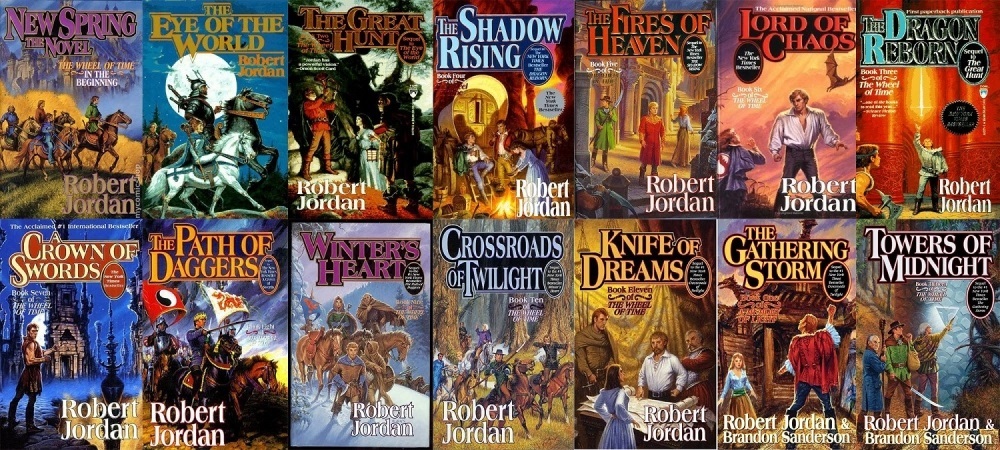
The Wheel of Time by Robert Jordan: Jordan created one of the most detailed magical systems that I’ve ever read. The powers of the Aes Sedai are rich and varied, and they all originate from an elemental structure that feels both familiar and innovative. Especially in the early books, where the younger characters are learning how to access their power, the unfolding of this magic coincides very well with the physical exploration of Mr. Jordan’s story world. Also, it must be said that Jordan is adept at describing magical battles between wielders of massive power, something that trips up many other authors.

…

Read More Read More

Tales of the Wold Newton Universe, Part 2 of 4

Tales of the Wold Newton Universe, Part 2 of 4

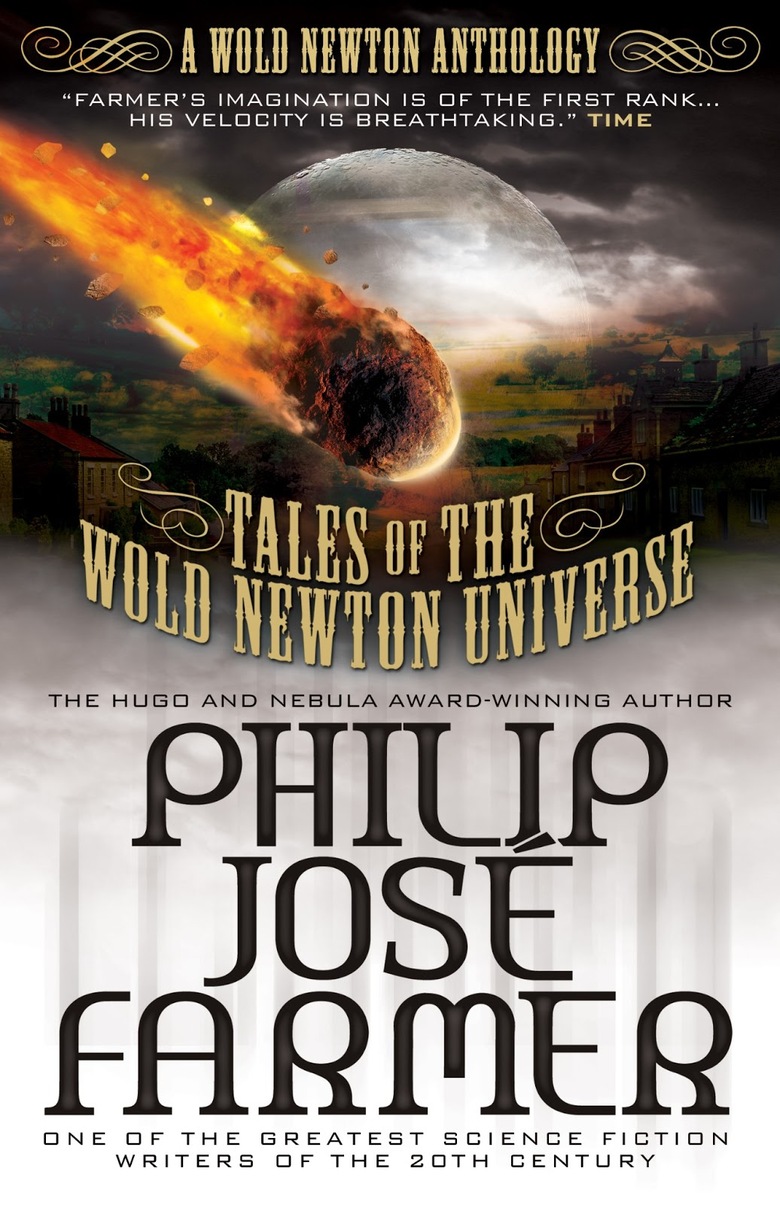
Tales of the Wold Newton Universe-smallThis month marks the release of Tales of the Wold Newton Universe, a new anthology from Titan Books that collects, for the first time ever in one volume, Philip José Farmer’s Wold Newton short fiction, as well as tales set in the mythos by other Farmerian authors.

The Wold Newton Family is a group of heroic and villainous literary figures that science fiction author Philip José Farmer postulated belonged to the same genetic family. Some of these characters are adventurers, some are detectives, some explorers and scientists, some espionage agents, and some are evil geniuses. According to Mr. Farmer, the Wold Newton Family originated when a radioactive meteor landed in Wold Newton, England, in the year 1795. The radiation caused a genetic mutation in those present, which endowed many of their descendants with extremely high intelligence and strength, as well as an exceptional capacity and drive to perform good, or, as the case may be, evil deeds. The Wold Newton Universe is the larger world in which the Wold Newton Family exists and interacts with other characters from popular literature.

To celebrate the release of the new anthology, we’ve asked the contributors to discuss their interest in Philip José Farmer’s work and to tell us something about how their stories in the book specifically fit into the Wold Newton mythos.

For today’s installment, please join us in welcoming authors Octavio Aragão and Carlos Orsi.

Win Scott Eckert and Christopher Paul Carey,
Editors, Tales of the Wold Newton Universe

…

Read More Read More

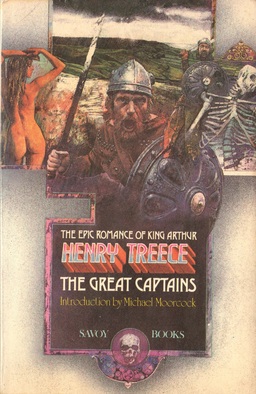
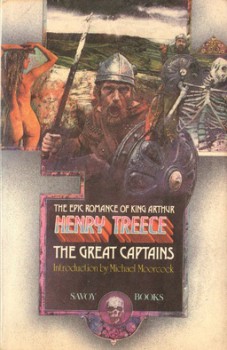
The Great Captains by Henry Treece

The Great Captains by Henry Treece

oie_262359311A1AFqJk

They were great men, yet to see them only as men, stripped of their doom-driven greatness, is to represent them on too trivial a scale. To draw them as massive heroes only would be to recreate them as inhuman cyphers.

from the preface to The Great Captains

The Great Captains (1956) is Henry Treece’s brutal and gripping version of the King Arthur story. Treece has pruned away the romantic embellishments that have obscured the old legend and returned it to the historic time and place in which it might really have happened. Excalibur isn’t buried in an anvil, but a tree stump, and Camelot isn’t a fairy tale castle, but a restored Roman town. Instead of an anachronistic quasi-medieval setting, the story unfolds during the bloody chaos of the waning days of Roman Britain decades after the last legionaries sailed for Gaul.

Britain’s darkest hours came in the Fifth Century AD, when waves of Germanic invaders swept across the English Channel. Stripped of all Roman soldiers in 407 AD, the people of Britain were forced to fend for themselves. In the end, they failed. None of the 1,000 or more prosperous Roman-style villas survived the Saxon onslaught. London, once rich and home to 60,000 people, was abandoned. Starvation and violence covered the land. Yet there were moments of hope.

In the middle of the Fifth Century AD, Ambrosius Aurelianus, a soldier of noble Roman ancestry, rallied the people and raised an army. For years, he fought off the invaders. His success spurred on the British and a generation after his death, the Saxons were routed at the Battle of Badon, securing another generation of peace for the land. According to the Historia Brittonum, written around 828 AD,

The twelfth battle was on Mount Badon in which there fell in one day 960 men from one charge by Arthur; and no one struck them down except Arthur himself.

This is the first historical mention of Arthur. The Historia goes on to document twelve great battles waged by Arthur, dux bellorum (war leader), against the Saxons and their allies. From this, all the great legends of Arthur Pendragon, Once and Future King, arise. And though many historians today have come to doubt he existed, Arthur lives on as the chivalric hero who leads the righteous against a seemingly overwhelming enemy.

…

Read More Read More
Goblins, Demons, Zombies and Fights Aplenty: A Review of The Blue Blazes

Goblins, Demons, Zombies and Fights Aplenty: A Review of The Blue Blazes

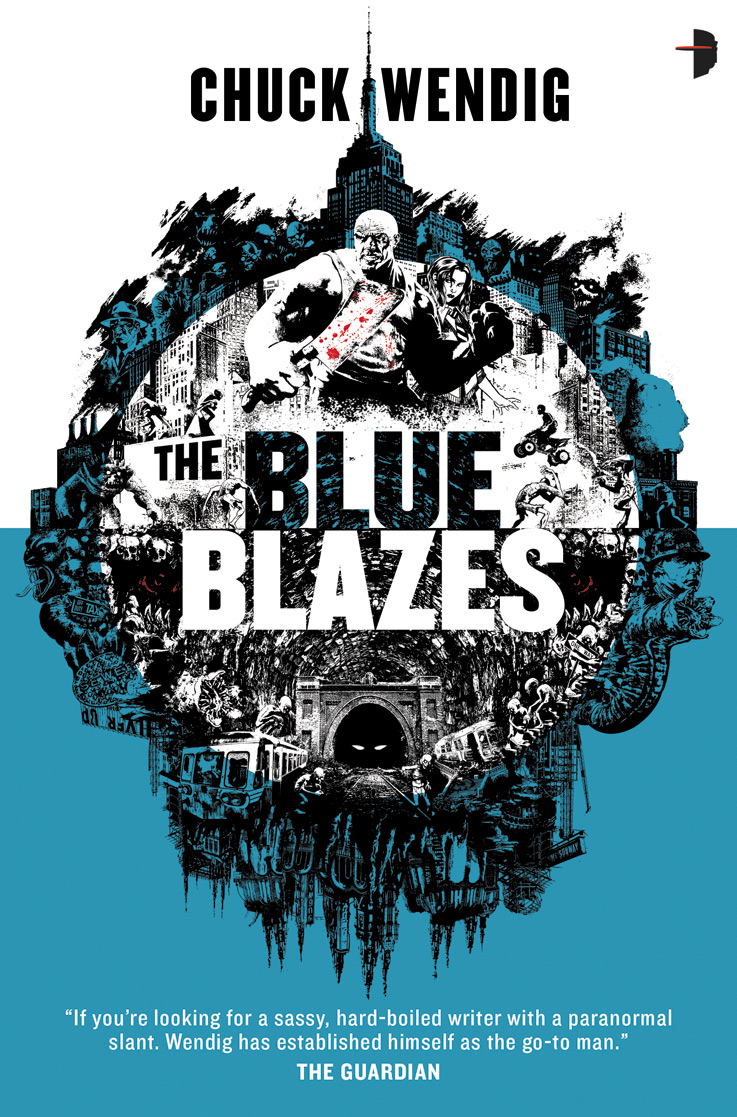
The Blue Blazes-smallIn this quickly changing Internet-obsessed publishing market, Chuck Wendig has shown himself to be a successful and versatile writer as a game designer, a screenwriter, and as a novelist as well. He is also known for some helpful books on how to be a better writer. The man also knows what makes a good author website!

Besides his many authorial talents, I first heard about Wendig from buzz concerning his Miriam Black series and their cool covers from Angry Robot. Unfortunately, I haven’t read any of those yet. You know how it is with that “to read” pile or compiled list at Goodreads.com.

But then I saw the following blurb from Adam Christopher concerning a new upcoming book from Wendig:

The Blue Blazes is exactly my kind of supernatural mob crime novel: dark and visceral, with an everyman hero to root for and Lovecraftian god-horror to keep you awake at night… this is the good stuff, right here.

Noir-ishness and Lovecratian horror? Sold! I immediately bought my first Wendig novel and began to devour The Blue Blazes upon receiving.

This book centers upon the character Mookie Pearl, a big-fisted lug who works for a crime syndicate in modern day (or possibly near future) New York City. Mookie is not a regular wiseguy though. He mainly works in the Underworld — no, not the usual euphemism for organized crime. Mookie works in the Underworld: a place crawling with the undead and monsters, some of which have come in contact with the regular world, though often staying down in the tunnels and caves below New York.

Though Mookie is built like a tank, he also has access to a special underworld drug called “blue blazes” — a blue powder that, when rubbed on one’s temples, turns you into something of a superhuman. Given Mookie’s build, it seems to turn him into a non-green version of The Incredible Hulk.

…

Read More Read More

Publishing and the Luck of Timing

Publishing and the Luck of Timing

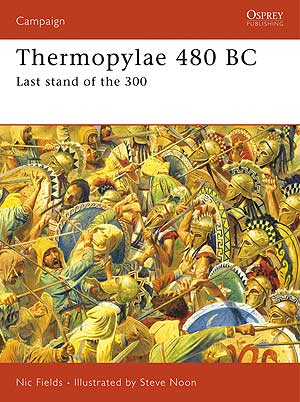
Thermopyale Last Stand of the 300-smallAlthough publishers don’t like to admit it, there is a large amount of luck involved in the sales of most books. No one really knows when (or even how) a book is going to catch fire in the public imagination and charge to the top of the bestsellers list. Publishers can help. They can advertise; they can push to get the book on the shelves, but they can’t make the public buy it.

In many ways, Osprey Publishing relies less on luck than most publishers. Since most of our books are based around long-running series that have an established following and fan base, we can generally predict, with some degree of accuracy, how well a given book will do. That said, sometimes we are surprised. Personally, I’m still baffled as to why Warships of the Anglo-Dutch Wars 1652-74 has sold so well. And sometimes, we are just lucky…

A few years ago, we published Thermopyale: Last Stand of the 300 right about the same time the movie 300 came out. Sales for the book went off the charts. Not too long after, we released Zombies: A Hunter’s Guide right about the time The Walking Dead first hit television screens. Another instant hit.

This leads to the obvious question: Why don’t we time our books to come out at the same time as big budget movies or television shows? Oh, we’ve tried. And we’ve been burned. In the book trade, it is necessary to announce your book at least a year before publication if you want it seriously considered for placement in the stores. Now, movie releases are usually announced even sooner than that, but they often don’t stick to their release dates.

…

Read More Read More

Robert W. Chambers’ The King in Yellow

Robert W. Chambers’ The King in Yellow

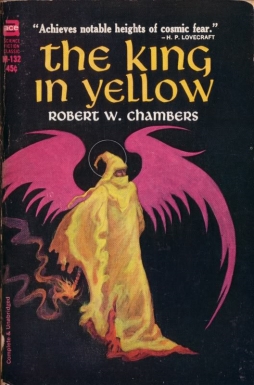
The King in YellowOctober draws to a close and so it’s time to turn to horror and the supernatural, to the weird tale and the things that cannot be known. Today, I want to look at one of the founding classics of the weird, Robert W. Chambers’s collection of linked short stories, The King in Yellow. Published in 1895, it was celebrated by H.P. Lovecraft, who used some of the book’s ideas in his Cthulhu mythos; in fact, the book’s inspired a mythos of its own, complete with a wiki site, as well as any amount of further fiction, music, and games. You can find it for yourself online.
The book’s made up of ten short stories, plus a poem supposedly extracted from a play called The King in Yellow. The first five tales mention the play to varying extents, and all have other fantastic elements, as well as a horrific or weird tone. The sixth story is a set of brief prose poems, while the final four stories are basically mimetic and seem to have nothing to do on a plot level with the first five — though they have certain motifs and themes in common. The play which links the first five stories, the group I’ll call here the ‘mythos stories,’ is said to drive mad anyone who reads it; it’s not clear if it has ever been performed. The first tale’s clearly set in the ‘future’ of 1920, so by extension the following four must be as well (a sculptor mentioned in the first story turns up in the second). The second story features an odd fluid that can turn anything immersed in it to stone. The third and fourth seem to have characters from the play crossing into the real world, while the fifth deals with a timeslip — a blurring of past and present — and also has a character who seems at least tangentially related to the play.

But the primary interest in these stories is the play itself, and the strange things it contains. We never get a plot summary, or character list, or even a description of its themes. Only hints and names. Hastur. The Yellow Sign. The Pallid Mask. “Carcosa, where black stars hang in the heavens; where the shadows of men’s thoughts lengthen in the afternoon, when the twin suns sink into the Lake of Hali.” The sinister King in Yellow himself. What does it all add up to?

…

Read More Read More

Excuse me, Are you Using that Plot Device?

Excuse me, Are you Using that Plot Device?

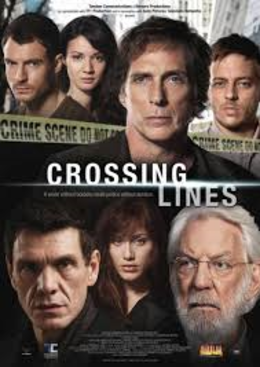
Crossing LinesThe other day, I was watching a new Canadian show that I’m not sure is even airing in the US called Crossing Lines. It stars, among others, William Fichtner and Donald Sutherland, and promises to be a kind of Agents of Shield without the Marvel universe – a group of police officers from different countries come together to solve international crimes as an arm of the International Court. So far so good, except for . . .

In the second episode, a tender moment occurs where two characters bond over similar family issues. They look warmly into each other’s eyes and promise to talk about it later. I call out “Dead man!” And of course I was right. One of them was dead by the end of episode, leaving the other feeling bereft. And leaving me rolling my eyes.

While “Dead man!” can be fun to play (as can “She did it!”) it’s a sad commentary on the state of narrative that these games can be played so often.

Okay, I hear you say, so it’s a plot device, and maybe it’s a bit overused (where “a bit” means I’m understating). Is that really so wrong? Yes, yes it is. The problem with this kind of thing is that because we recognize it, we feel manipulated, and when your viewers, or your readers, feel manipulated, you’ve lost them. You’ve reminded them that not only did you make this bit up, you’ve made all of it up. When your readers start considering the structure of the narrative, they’ve taken a step back from it. And bang, as they say, goes your willing suspension of disbelief.

We could argue that this kind of manipulation doesn’t happen as much in novels or short stories as it does in television and movies. Maybe not. Novels, for one, have time enough to make readers genuinely care about a character before she gets killed. And plot devices are actually useful things; both as readers and writers we love them, except when we hate them.

…

Read More Read More

Goth Chick News: Doctor Sleep or Back to the Overlook Hotel

Goth Chick News: Doctor Sleep or Back to the Overlook Hotel

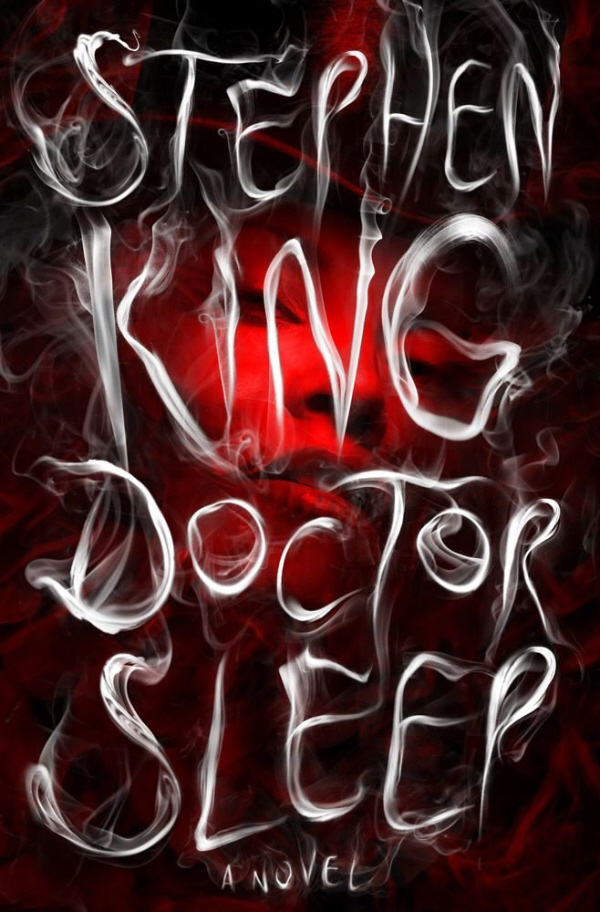
Doctor SleepI honestly never thought I would ever again gush about a Stephen King novel, but here I am.

You see, I’ve been disillusioned for some time – as in ever since The Stand. And before I start seeing dozens of posts about how great the Dark Tower series is, or Under the Dome for that matter, to me King is and always will be the teller of horror tales. And frankly, he hasn’t really scared me since IT.

Or maybe Pet Cemetery.

Honestly, I felt King had lost his horror mojo – or had it forcibly extracted during the conception of his son Joe Hill, who tears up the NYC Best Seller list every time he puts pen to paper.

But back in September 2011, as King was receiving an award at George Mason University in Fairfax, Virginia, he talked a little bit about the latest novel he was working on, Doctor Sleep – a sequel to his 1977 blockbuster hit The Shining.

This is an idea that I’ve had for some time. I wrote a novel in the ’70s called The Shining… I always wondered what happened to that kid, Danny Torrance, when he grew up… and this story started to form. The book isn’t finished yet, it’s called Doctor Sleep. This kinda goes back to: what’s the worst thing you can think of? I knew that there were bad people in this story that were like vampires, only that what they sucked out was not blood, but psychic energy from special people like Danny Torrance. And I came to realize that these people were called The Tribe and that they move around a lot.

I was skeptical then and remained so all the way up until September 24th, when my copy of Doctor Sleep finally arrived.

…

Read More Read More

New Treasures: Johannes Cabal: The Fear Institute by Jonathan L. Howard

New Treasures: Johannes Cabal: The Fear Institute by Jonathan L. Howard

Johannes Cabal The Fear InstituteI still remember the first Jonathan L. Howard story I ever read. It was buried in the slush pile and I’d almost given up reading submissions for the evening, but told myself I’d try one more before heading to bed.

Turned out to be a good decision. The story, about a young thief named Kyth hired to penetrate a deadly tomb, was filled with surprises — not least of which was the amiable lich who congratulated Kyth when she reached the heart of his lair. It was titled “The Beautiful Corridor,” and I was happy to purchase it for Black Gate 13 — and its sequel, “The Shuttered Temple,” for BG 15.

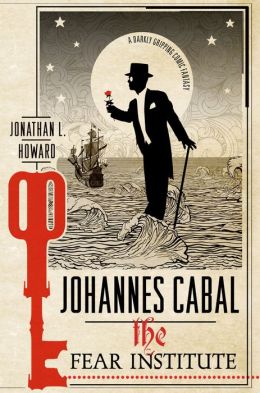
Jonathan’s first novel was the highly regarded Johannes Cabal the Necromancer (2009), followed by Johannes Cabal the Detective (2010). Now at last the third volume has arrived and it promises a fresh serving of twisted comic fantasy, as the intrepid and resourceful Johannes Cabal plans an expedition into the Dreamlands.

Beyond the wall of sleep lie the Dreamlands, a whole world formed by dreams, but not a dream itself. For countless millennia, it has been explored only by those with a certain detachment from the mundane realities of our own world, its strange seas navigated, and its vast mountains climbed by philosophers, and mystics, and poets.

Well, those halcyon days are over, beatniks.

Johannes Cabal is coming.

Cabal, a necromancer of some little infamy, is employed by the mysterious Fear Institute to lead an expedition into the Dreamlands, an expedition whose goal is nothing less than to hunt and destroy the dread Phobic Animus, the font of terrors, the very source of all the world’s fear. They will enter exotic lands where magic is common and monsters abound, see wonders, and suffer dreadful hardships. Cabal will encounter witches, vile abominations, and far too many zebras.

And, when they finally come close to their goal, Cabal will have to face his own nightmares, but for a man who communes easily with devils and the dead, surely there is nothing left to fear.

Jonathan’s most recent novel was Katya’s World, the first book of The Russalka Chronicles. Read Jonathan’s article on writing the Johannes Cabel series and his interview with John Joseph Adams.

Johannes Cabal: The Fear Institute was published by Thomas Dunne Books on October 1st. It is 334 pages, priced at $24.99 in hardcover and $11.99 in digital format.

Where Did Fantasy Come From? A Review of Literary Swordsmen and Sorcerers: The Makers of Heroic Fantasy by L. Sprague de Camp

Where Did Fantasy Come From? A Review of Literary Swordsmen and Sorcerers: The Makers of Heroic Fantasy by L. Sprague de Camp

Literary Swordsmen and Sorcerers The Makers of Heroic Fantasy-smallI love fantasy literature. And I’m greatly interested in its history as well. Where did fantasy come from? Is Tolkien solely to blame? How does King Arthur and his round table knights enter in? What about this business with elves and dwarves? Am I the only one who thinks about where this stuff came from?

As far as I can tell, there are very few fantasy histories out there and not much more than cursory stabs at explaining how we have the fantasy literature that we do. (For a couple of very good ones though, see the introductions to David G. Hartwell and Jacob Weisman’s The Sword and Sorcery Anthology and Jonathan Strahan and Lou Anders’s Swords and Dark Magic.) So, when I recently stumbled across a whole book devoted to the history of fantasy, I grabbed it!

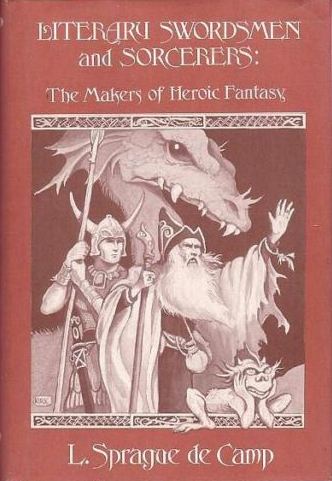
The book in question is Literary Swordsmen and Sorcerers: The Makers of Heroic Fantasy by (now deceased) L. Sprague de Camp, originally published by Arkham House Publishers in 1976. Even if you haven’t been an SF&F (science fiction and fantasy) fan very long, you’ve undoubtedly come across de Camp’s name.

De Camp was one of the most prolific SF&F writers of the twentieth century. He wrote both fantasy and science fiction, as well as non-fiction. I first came across de Camp through my interest in Lovecraft. He seems to have been the first person to have written a biography of H. P. Lovecraft — one that unfortunately has not aged well. But it’s clear that de Camp was very interested in the history of SF&F and particularly fantasy.

I’m not enough of an historian to be able to criticize Literary Swordsmen and Sorcerers on a scholarly level; but as far as being engaging and informative, de Camp’s book is superb.  I found it to be incredibly engrossing — one of those books that are hard to put down.

Lin Carter — another prolific twentieth century SF&F writer — gives a fairly long and informative introduction. It simply whets your appetite for what is to follow.

…

Read More Read More