Browsed by
Category: Books

Werewolves, Vampires, Zombies, Serial Killers, and the Horror of Mundane Lives: Nathan Ballingrud’s North American Lake Monsters
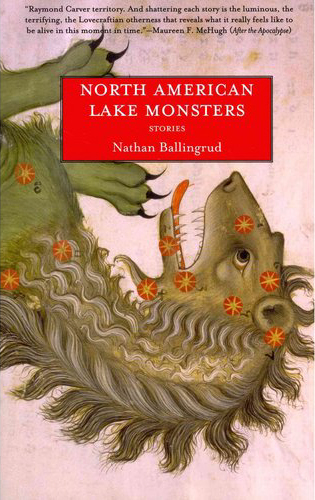
Werewolves, Vampires, Zombies, Serial Killers, and the Horror of Mundane Lives: Nathan Ballingrud’s North American Lake Monsters

North American Lake Monsters-smallNathan Ballingrud’s short stories have been making the rounds for a while, with some of the most prestigious names in contemporary weird fiction and horror sounding his praises. Jeff VanderMeer calls Ballingrud “One of my favorite short fiction writers” and Laird Barron claims that Ballingrud’s debut horror collection “deserves a place of honor in the canon of the dark fantastic.” Thus I’ve had my eye on Ballingrud’s collection, North American Lake Monsters, since last summer when it first came out. I recently got my hands on it and it was definitely worth the wait.

Ballingrud’s fiction is an amalgamation of some of the best elements of current dark fiction. The stories of North American Lake Monsters are poetic and literary (think Kelly Link or Caitlin Kiernan), forbidding and nihilistic (think John Langan), very real and raw (think Nic Pizzolatto), while also scaring the bejesus out of you (think Laird Barron).

I’m not a big fan of some of the dark and weird fiction coming out nowadays. Though much of it takes its trajectory from cosmic horror, which I love, set by late nineteenth and early twentieth century writers like Robert W. Chambers, Ambrose Bierce, Algernon Blackwood, and most singularly that of H. P. Lovecraft, the stories of many current masters, such as Thomas Ligotti, tend to leave me more depressed than horrified. (Not necessarily a criticism, more of a personal bias.)

Though Ballingrud’s stories are similarly dark and depressing in many ways, his characterizations, his use of horror tropes, and his building of suspense are so good that I usually end one of his stories with more of a horrified thrill than just simple heavy-heartedness.

Read More Read More

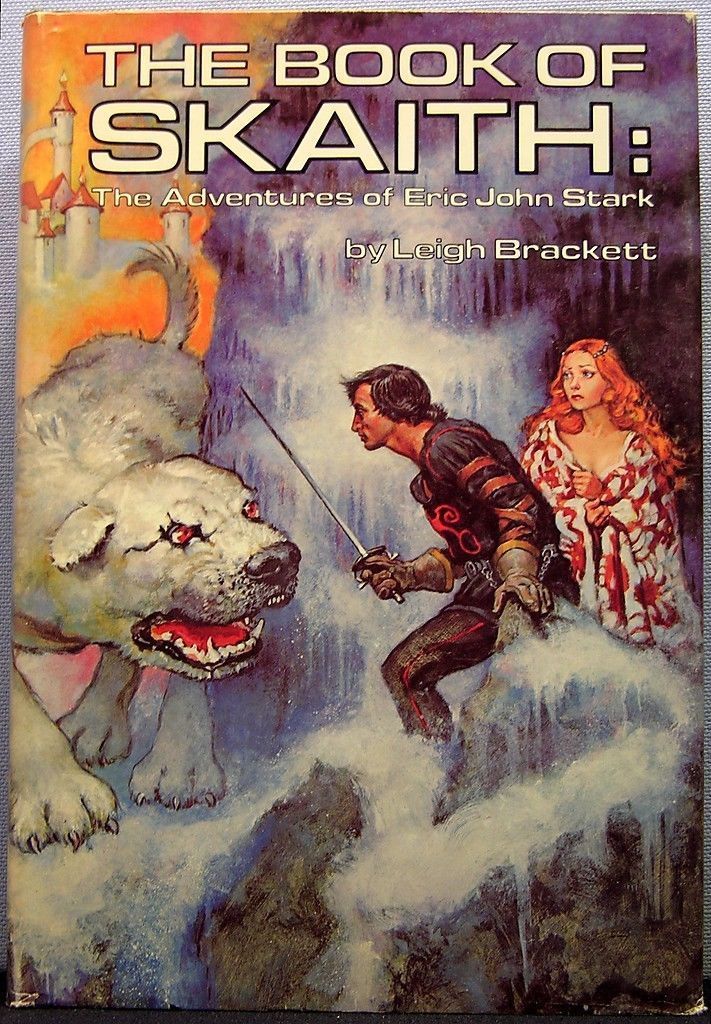
Vintage Treasures: The Book of Skaith: The Adventures of Eric John Stark by Leigh Brackett

Vintage Treasures: The Book of Skaith: The Adventures of Eric John Stark by Leigh Brackett

Leigh Brackett The Book of Skaith-smallI joined the Science Fiction Book Club in the fall of 1975, when I was in my last year at St. Francis Junior High School in Halifax, Nova Scotia. Before I joined, I agonized over my introductory selection — three books for a just a dollar! — for days, reading and re-reading the tiny paragraphs in the brochure, and then waiting impatiently for my selections to arrive in the mail. My friend John MacMaster enrolled me and I’m pretty sure I’ll remember the contents of my enrollment package until the day I die: The Foundation Trilogy by Isaac Asimov, The Hugo Winners, Volumes One and Two, edited by Isaac Asimov, and Before the Golden Age, edited by (can you guess?) Isaac Asimov.

John had introduced me to science fiction earlier that year, loaning me Clifford D. Simak’s Shakespeare’s Planet and Piers Anthony’s Ox when I was home sick from school. I devoured them both and wanted more. John explained how the club worked and it sounded terrific. “They sometimes have these big collections, a bunch of novels gathered into one book,” he said. “They’re the best.”

John was right. The year after I joined, in 1976, the featured selection for the month was The Book of Skaith: The Adventures of Eric John Stark, an omnibus of three novels by Leigh Brackett, under a new cover by Don Maitz. It was a marvelous introduction to one of SF’s great pulp writers, in an attractive and affordable package offered exclusively through the Science Fiction Book Club.

That’s one of the great things about the SFBC: its exclusive omnibus editions, highly collectible as they are, are generally still available at excellent prices. In February of this year, nearly 40 years after it was published, I bought a copy of The Book of Skaith in excellent condition on eBay for just $2.99.

Read More Read More

New Treasures: Valour and Vanity by Mary Robinette Kowal

New Treasures: Valour and Vanity by Mary Robinette Kowal

Valour and Vanity-smallBack in February, I had the good fortune to attend Capricon 34 here in Chicago, where I heard Mary Robinette Kowal read from her upcoming novel Valour and Vanity. It was a delightful affair, not least because Mary gave us a highly entertaining peek behind the scenes at what it really takes to produce a period fantasy novel.

Valour and Vanity is the fourth book in the successful Glamourist Histories, following Shades of Milk and Honey (2010), Glamour in Glass (2012), and Without a Summer (2013). Mary’s first collection, Scenting the Dark and Other Stories, was released by Subterranean Press in 2009.

Acclaimed fantasist Mary Robinette Kowal has enchanted many fans with her beloved novels featuring a Regency setting in which magic — known here as glamour — is real. In Valour and Vanity, master glamourists Jane and Vincent find themselves in the sort of a magical adventure that might result if Jane Austen wrote Ocean’s Eleven.

After Melody’s wedding, the Ellsworths and Vincents accompany the young couple on their tour of the continent. Jane and Vincent plan to separate from the party and travel to Murano to study with glassblowers there, but their ship is set upon by Barbary corsairs while en route. It is their good fortune that they are not enslaved, but they lose everything to the pirates and arrive in Murano destitute.

Jane and Vincent are helped by a kind local they meet en route, but Vincent is determined to become self-reliant and get their money back, and hatches a plan to do so. But when so many things are not what they seem, even the best laid plans conceal a few pitfalls. The ensuing adventure is a combination of the best parts of magical fantasy and heist novels, set against a glorious Regency backdrop.

Valour and Vanity was published on April 29 by Tor Books. It is 408 pages, priced at 25.99 in hardcover and $12.99 for the digital version. The jacket art is by Larry Rostant.

Author Spotlight on James Sutter

Author Spotlight on James Sutter

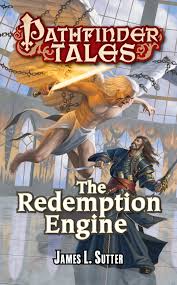
redemption engineI recently got a chance to talk with my friend (and editor) James Sutter about his new novel, The Redemption Engine, which debuts this week. In this wide-ranging and honest Q&A, James talked about his book and characters, the writing process, misperceptions about genre fiction — particularly of the tie-in flavor — and his hopes and dreams.

What would you say to someone wary of reading game fiction? (I would personally point them towards your first novel, Death’s Heretic, being number three on the Barnes & Noble Book Club’s 2011 Best Fantasy list.) But what would you say?


I would say that I used to be wary of it, too. As a kid, I read a ton of tie-in novels for properties like Star Wars, Dragonlance, etc. Then I got older and snobbier, and decided that anything with a logo couldn’t possibly be quality art. I won’t pretend there wasn’t evidence for that — a lot of tie-in books aren’t great. But as Theodore Sturgeon taught us, a lot of any art form isn’t great.

Once I started working in the game industry and realized just how many fabulous authors have done or currently do tie-in work, my opinion changed again. When you’ve got folks like Brandon Sanderson and Greg Bear writing tie-in novels, can you really claim that they’re somehow going to lose their chops just for that one book? And the truth is that great authors have always written novelizations, scripts, tie-ins, and other work-for-hire. Hell, Isaac Asimov himself wrote the novelization for Fantastic Voyage.

Read More Read More

New Treasures: Thornlost by Melanie Rawn

New Treasures: Thornlost by Melanie Rawn

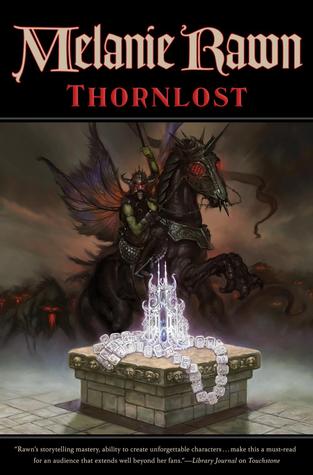
Thornlost Melanie Rawn-smallMelanie Rawn burst onto the fantasy scene in 1988 with her debut novel Dragon Prince, an instant success that became the first part of the Dragon Prince Trilogy (and, at nearly 600 pages, certainly helped usher in the 90s fat fantasy craze.)

How successful was Dragon Prince and its fat fantasy sequels? 26 years later, they’re all still in print. Pretty darned amazing, especially when you consider that half the New Treasures I’ve covered in the past six months are out of print already.

Rawn followed her breakout success with the Dragon Star trilogy (1991-94) and the first two novels of the Exiles trilogy. And then… silence, for nearly ten years.

She eventually set the Exiles trilogy aside (the final volume, The Captal’s Tower, is still listed as forthcoming on her website) and turned to urban fantasy with Spellbinder (2006), telling fans in a postscript to that book that she was battling clinical depression and needed to move on to other projects to speed her recovery. Fire Raiser arrived in 2009 and she returned to epic fantasy at last with The Diviner (2012).

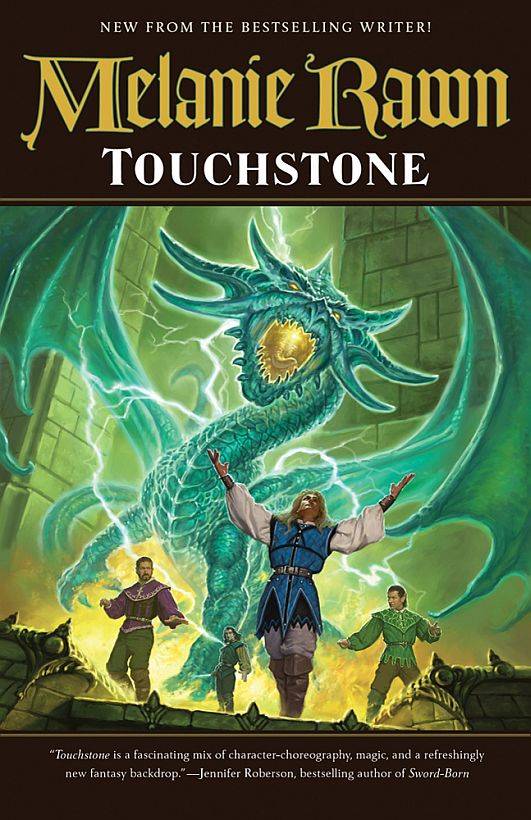
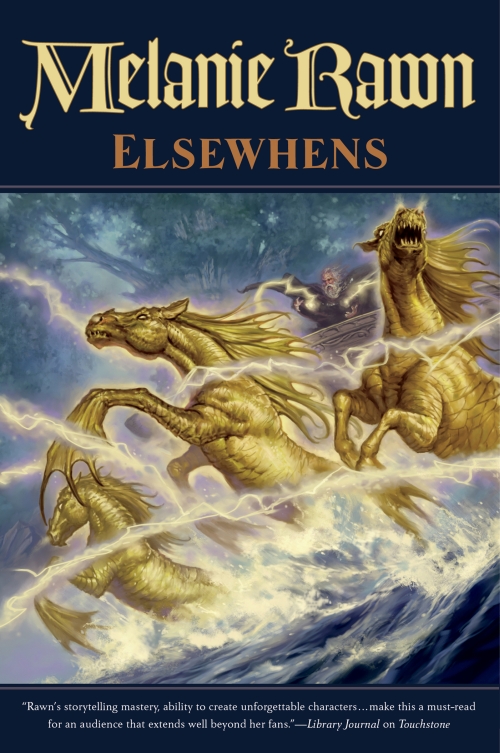
She’s been working tirelessly ever since, delivering the first two volumes of the Glass Thorns series: Touchstone (2012) and Elsewhens (2013). Now she returns to the rich fantasy world of those volumes with Thornlost, the third volume in the series.

Read More Read More

Ancient Worlds: What Kind Of Book Is This, Anyway?

Ancient Worlds: What Kind Of Book Is This, Anyway?

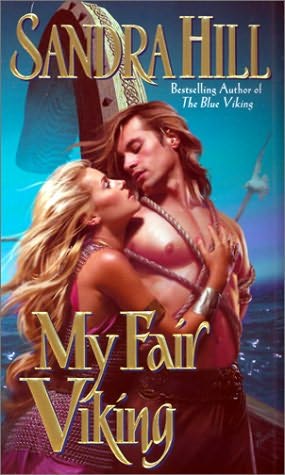
Oh no, I admit it. I'm judging this book by the cover. And its title. And the fact that it's a part of a series about time traveling viking navy SEALs. I'm not making any part of that up. But I am judging the holy hell out of it.
Oh no, I admit it. I’m judging this book by the cover. And its title. And the fact it’s part of a series about time traveling viking navy SEALs. Not making any part of that up. But I am judging the holy hell outta it.

We all know the old adage “Never judge a book by its cover.” But when it comes to literal application, we all do. That’s because our book culture encourages it. The cover won’t always tell us much about the quality of a book, true, but if we want to know what kind of book it is, the cover is where we find out.

Shirtless guy holding woman in historically inaccurate clothing in highly improbable position? Romance.

Shirtless guy flexing while holding sword (with or without scantily clad woman clinging to his knees)? Heroic fantasy.

Woman scantily clad while still wearing a lot of black leather with a sword, possibly straddling a motorcycle? Urban fantasy. Probably.

Genre is how the publisher knows what kind of cover to put on a book. It’s also how the reader knows, more or less, what to expect when they pick a novel up. If you buy a book with a silhouette of a tank on the cover and get a story that is 90% romance, you’re going to be perplexed.

The same was true of ancient books, although the cues were given in different ways.

Read More Read More

A Perfect Artifact from the Glory Days of 1970s Swords & Sorcery: Keith Taylor’s Bard

A Perfect Artifact from the Glory Days of 1970s Swords & Sorcery: Keith Taylor’s Bard

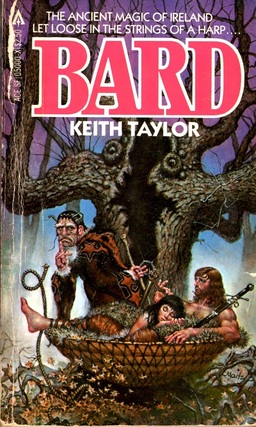
oie_520266yr2OCRWhAfter several weeks spent among ghoulish haunts, a Cthulhu-haunted island, and nightmare dimensions, I thought a trip to ancient Britain — the sun-dappled forests of the High Weald and the rolling downs of the Vale of Kent — was needed. Yes, I’ve visited previously in reviews of Henry Treece’s The Great Captains and David Drake’s The Dragonlord, and Keith Taylor’s Bard (1981) is a return to post-Roman Britain in the days of Arthur and Saxon and Jutish invaders.

Bard is one of those books that my dad bought years ago and I never bothered to read. I didn’t know anything about it or its author, but I was done with my short-lived infatuation with Celtic fantasy. Nothing about it enticed me to pick it up… until I started blogging about swords & sorcery.

As I read articles and websites on heroic fiction, I quickly learned that Keith Taylor was an important voice in the field of Robert E. Howard scholarship and then I started seeing very good reviews of Bard. I remembered that a copy was tucked away in the attic so I went and retrieved it and I’m quite glad I did.

Bard is a fix-up of four previously published stories and one original tale about Felimid mac Fal of Eire, wielder of the magic sword, Kincaid, and player of the ancient harp, Golden Singer. Under the right circumstances, the harp allows him to cast spells and play songs to influence his audience. Blessed with talent, wit, and cunning, Felimid is able to enter the courts of ferocious Jutish warlords and survive encounters with monsters and sorcerers in haunted forests.

Though tied together by a pair of ongoing plots, Bard reads more like the scattered adventures of a peripatetic traveler than a novel. Despite its melancholic setting in a time of fading magic and invaders from across the sea, this book is tremendous fun. Felimid is a bold, lively character with a winning way, well worth any heroic fantasy reader’s time.

Read More Read More

Vintage Treasures: Science Fiction of the 30’s edited by Damon Knight

Vintage Treasures: Science Fiction of the 30’s edited by Damon Knight

Science Fiction of the 30s-smallWindy City Pulp and Paper is a fabulous convention and, as its name implies, it’s focused mostly on vintage magazines and paperbacks. Wandering the vast Dealer’s Room is like stepping into a Cave of Wonders for fans of pulp science fiction and fantasy.

But it’s also a den of surprises and a pleasant one awaited me while browsing a table piled high with pulps and digest magazines. A hand-written sign proclaimed all items were “3 For $10,” so I decided to spend a few minutes exploring the heaped stacks. Buried under a loose pile of Science Fiction Quarterly magazines and Amazing Stories, I found a lone hardcover volume: Damon Knight’s pulp anthology Science Fiction of the 30’s, in much better shape than my tattered copy.

Well, that was certainly worth $3.33. It didn’t take much effort to find two other worthy treasures (a July 1948 Fantastic Novels pulp with a classic Lawrence cover and the January 1956 issue of The Original Science Fiction Stories with a James Blish cover story, which looked like it had just come off the magazine rack.) I plunked down my ten bucks and fled before the vendor changed his mind.

Science Fiction of the 30’s was one of two great pulp anthologies I read over thirty years ago — the other being of course Isaac Asimov’s marvelous Before the Golden Age. Those books, together with Jacques Sadoul’s art book 2000 A.D. Illustrations From the Golden Age of Science Fiction Pulps, ignited a love of pulp fiction in me as a young teen that never died.

Read More Read More

The Public Life of Sherlock Holmes: A Man Called Spade

The Public Life of Sherlock Holmes: A Man Called Spade

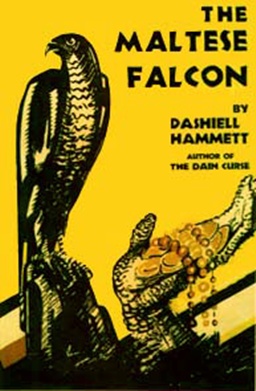
Spade_FalconbookIn last week’s column, I mentioned The Maltese Falcon, starring Humphrey Bogart. (Did you follow instructions and watch it for the first time?) Over eighty years after its publication, Dashiell Hammett’s The Maltese Falcon stands supreme today as the finest private eye novel ever written. Bogie’s 1941 film proved that the third time is a charm, prior attempts in 1931 and 1936 having failed.

Sam Spade, the quintessential tough guy shamus, appeared in a five-part serial of The Maltese Falcon in Black Mask in 1929. Hammett carefully reworked the pieces into novel form for publication by Alfred E. Knopf in 1930 and detective fiction would have a benchmark that has yet to be surpassed.

Hammett, who wrote over two dozen stories featuring a detective known as The Continental Op (well worth reading), never intended to write more about Samuel Spade, saying he was “done with him” after completing the book-length tale.

But the public wanted more and his agent cajoled him into cranking out three more short stories featuring Spade. The first two appeared in American Magazine and the third in Collier’s in 1932 and they were collected into book form later that year as The Adventures of Sam Spade and Other Stories. In 1999, Vintage Crime published Nightmare Town, a compilation of twenty Hammett stories, including all three Spade short stories.

Read More Read More

Announcing the Winner of the Laurence Manning Giveaway

Announcing the Winner of the Laurence Manning Giveaway

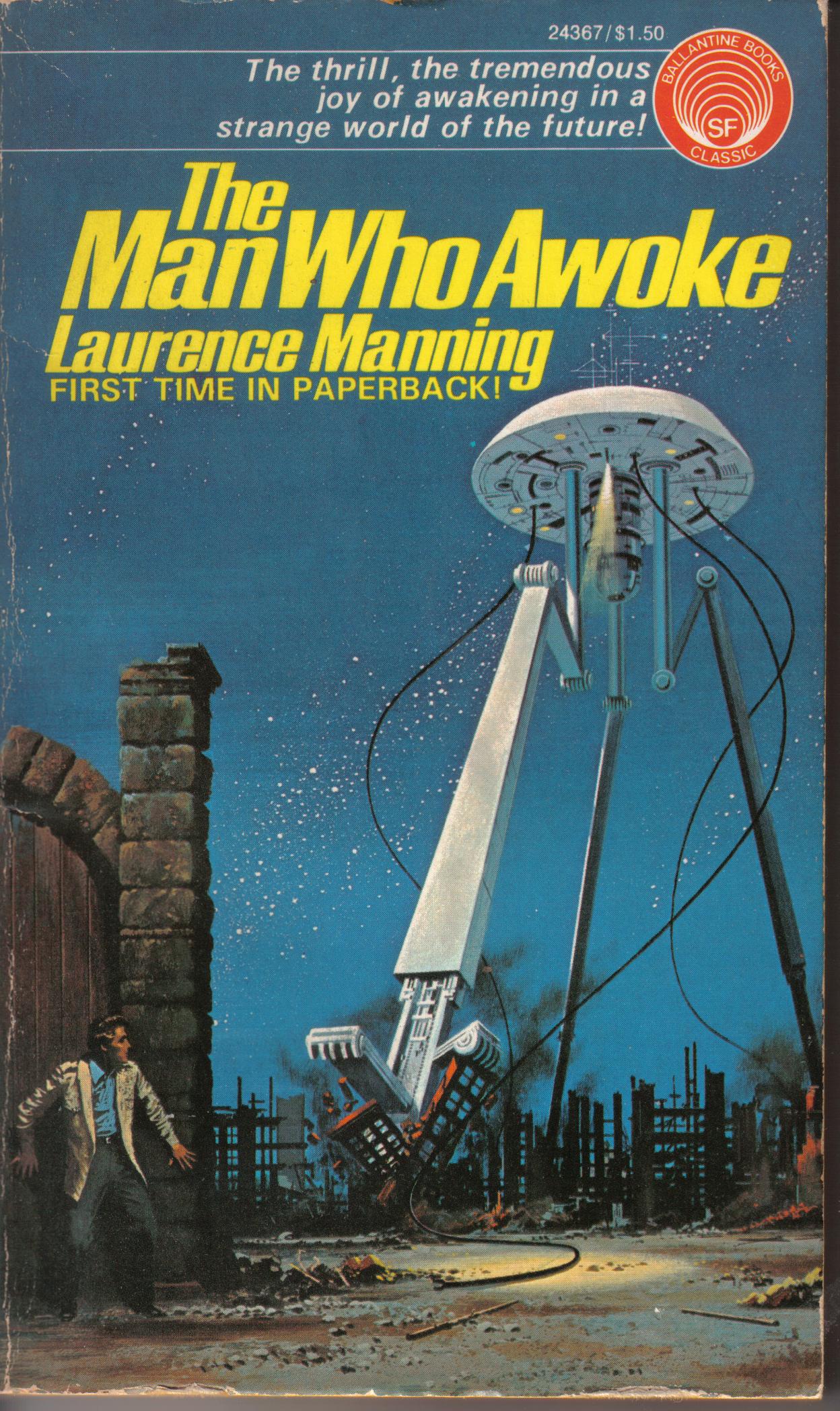
Man Who Awoke 1st edIn my recent review of Laurence Manning’s The Man Who Awoke, I ran a giveaway for a copy of the book, in which the winner would be determined by who best answered the question “Why is pulp era science fiction and fantasy still relevant today?”

I had intended to respond to the entries to generate some discussion, as well as posting a reminder. Then Murphy stopped by for an extended visit, and none of those things happened before the deadline.

However, we had two good entries. The first was from Anthony Simeone. Here’s an excerpt from his answer:

In genre fiction above all other forms of literature, writers act as living lenses, through which we can see the world in a different way. That is one of the great blessings of the passage of time and death: we get to see the world afresh with each passing year, and through each new person that walks the Earth. Fiction, the written word, are telepathic messages sent forward in time for us to experience and enjoy. Ultimately, they are voices from the void of the past, without which the years behind us would be tragically silent.

The other entry was from Daniel J. Davis. Here’s some of what he had to say.

Read More Read More