Browsed by
Category: Books

Birthday Reviews: Kit Reed’s “The Shop of Little Horrors”

Birthday Reviews: Kit Reed’s “The Shop of Little Horrors”

Dogs of Truth-small Dogs of Truth-back-small

Cover by Henry Sene Yee

Kit Reed was born Lillian Craig on June 7, 1932 and died on September 24, 2017.

Reed’s collection What Wolves Know and The Story Until Now were both nominated for the Shirley Jackson Award. Her novel Where was a finalist for the John W. Campbell Memorial Award. Her books Little Sisters of the Apocalypse and Weird Women, Wired Women were short listed for the James Tiptree Jr. Award and the story “Bride of Bigfoot,” which appeared in Weird Women, Wired Women also made the short list. Her short story “The Singing Marine” was a nominee for the World Fantasy Award. In 1958, she was nominated for a Hugo Award for Best New Author of 1958, a forerunner of the John W. Campbell Award.

“The Shop of Little Horrors” was original to Kit Reed’s 2005 collection Dogs of Truth. The story has never been reprinted.

In “The Shop of Little Horrors,” Kit Reed explores the life of Lynn and Martin Larkin, a couple of New Yorkers who have made the decision not to have children. Ten years into their marriage, they are free to live the life they want to, travel as they desire, and mock those around them who have decided to have children. “The Shop of Little Horrors” specifically looks at one Saturday when they are relaxing at a coffeeshop watching the harried parents with their children on a beautiful day.

Their calm is destroyed, however, when one particular child invades their space. Stanley bumps their table, causing their cappuccinos to spill all over them and, when they are distracted mopping up the mess, the juvenile delinquent grabs and eats Lynn’s doughnut while Stanley’s mother is oblivious to the destruction he has caused.

The perfect days turns into abject terror as they try to make their way home in a city crawling with children. A lunch in the Tavern on the Green helps reestablish their equilibrium until they find themselves face-to-face on their walk home with a woman pushing an enormous stroller that contains six children.

Read More Read More

Future Treasures: Space Pioneers, edited by Hank Davis and Christopher Ruocchio

Future Treasures: Space Pioneers, edited by Hank Davis and Christopher Ruocchio

Space Pioneers Hank Davis-smallIt’s been too long since we’ve checked in with Hank Davis, the mad genius editor at Baen behind the anthologies Things From Outer Space and In Space No One Can Hear You Scream. I figured he had to have something interesting cooking and, sure enough, when I asked him to comment, here’s what he told me.

Coming in December this year, looking for stockings to stuff, is Space Pioneers, a rough of whose cover is now on Baen.com, though the author lineup thereon may be modified…

After that, still in the works is Overruled!, an anthology of stories about courtrooms, lawyers, and other low-lifes. In the future beyond that will be an anthology of military sf stories involving time travel, whose working title is Time Troopers, but that may change. I was going to handle the Psychotechnic League stories by Poul Anderson, but was felled by health problems at a crucial juncture, so it’s in other hands. (The timing of those problems is also why the first volume of The Best of Gordon R. Dickson came out without my usual tedious introductions and notes, but I’ll try to give better value in the next volume).

I do hope that Space Pioneers does well, since I could do a *series* of anthologies on this theme without breaking sweat. My hat’s off (dangerous move for a bald geezer) to my co-ed, Christopher Ruocchio, who did much of the busy work (contracts, nudging agents, etc.) while I was still recovering, and who also talked me into using two Poul Anderson yarns, a suggestion I had absolutely no problem with (and I have a third in mind if there’s a Volume II). And that’s the current state of the pipeline. I should remind everyone that these will all be mass market paperbacks.

Sounds like a great line-up! Space Pioneers in particular looks like a terrific book, and a splendid addition to Hank’s catalog of top-notch anthologies. I’ll definitely be keeping an eye out for it, and making some more noise about it here as we get closer to the release date.

Read More Read More

Black Gate Book Club, Downbelow Station, First Discussion

Black Gate Book Club, Downbelow Station, First Discussion

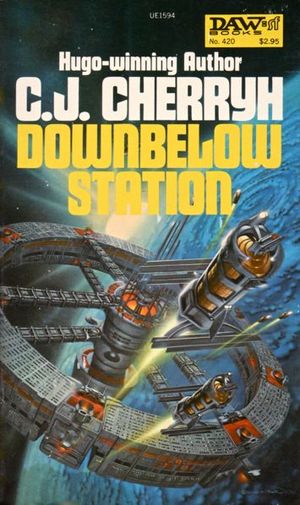
Downbelow Station-small Downbelow Station-back-small

Welcome to the very first post of the Black Gate Book Club!  What are we up to?  As Fletcher Vredenburgh said in his introduction to the Book Club:

The plan is to read Downbelow Station over the month of June and post a discussion of it each Monday afternoon. This time around, the Book Club participants will include Adrian Simmons, Charlene Brusso, Chris Hocking, and me. We’d love it if you’d read along with us and join in the conversation.

Of course, it is now Wednesday, not Monday, and Charlene had to bow out of this round because life intrudes. Never the less, Vredenburgh, Hocking and I soldiered on! Below is our exchange:

Read More Read More

New Treasures: The Rise of the Terran Federation, edited by John F. Carr

New Treasures: The Rise of the Terran Federation, edited by John F. Carr

The Rise of the Terran Federation-back-small The Rise of the Terran Federation-small

H. Beam Piper was one of my earliest discoveries, and he quickly became one of my favorite SF writers. I snapped up every book with his name on it in the mid-70s, all Ace paperback editions with gorgeous Michael Whelan covers.

Piper committed suicide a few months after I was born, in November 1964. But his work has endured, and as recently as 2011 John Scalzi published Fuzzy Nation, a retelling of Piper’s most famous novel Little Fuzzy. Last year editor John F. Carr assembled an anthology of a handful of Piper’s Federation and Paratime Police tales, and invited Wolfgang Diehr, David Johnson, and Jonathan Crocker to contribute fiction set in Piper’s universe. He added a pair of essays by John A. Anderson, The Early History of the Terran Federation and Chartered Companies of the Terran Federation, and his own preface, The Terro-human Future History, and the result was The Rise of the Terran Federation, published in hardcover by Pequod Press. Here’s the description.

The Rise of the Terran Federation is new collection of new and old stories chronicling the rise of H. Beam Piper’s Terran Federation. With story introductions and essays on the establishment of the Federation, this book is the ultimate overview of the beginning of Piper’s crowning creation, the Terro-Human Future History. This collection will include some of Piper’s early Federation stories, like “Edge of the Knife” and Omnilingual.”

This collection also contains new stories about the aftermath of the Third and Fourth World Wars, the Thorans and life on Baldur. The Rise of the Terran Federation is an essential work for fans of Piper’s future history and his unique view of what lies ahead for mankind.

There are precious few SF writers whose work has endured five decades. Piper didn’t live long enough to see it, but his stories have entertained three generations of SF fans, and I expect them to still be in print 50 years from today.

Read More Read More

Birthday Reviews: Margo Lanagan’s “The Proving of Smollett Standforth”

Birthday Reviews: Margo Lanagan’s “The Proving of Smollett Standforth”

Cover by Alamy.com
Cover by Alamy.com

Margo Lanagan was born on June 5, 1960.

Lanagan has won the World Fantasy Award in four separate categories. She won her first awards for her collection Black Juice, which included “Singing My Sister Down,” which won for Best Short Fiction. Her novel Tender Morsels tied with Jeffrey Ford’s The Shadow Year, and she won her most recent World Fantasy Award for the novella “Sea Hearts.” Black Juice and “Singing My Sister Down” also won the Ditmar Award, and the story earned the Aurealis Award and Golden Aurealis Award. Lanagan’s other Ditmar’s were for the short story “The Goosle” and the novels Tender Morsels and Sea Hearts. Lanagan has also received the Aurealis Award for her short stories “The Queen’s Notice,” “A Fine Magic,” “A Thousand Flowers,” “Bajazzle,” and “Significant Dust.” Her novel Sea Hearts won the Aurealis for Best Young Adult Novel and for Best Fantasy Novel.

Lanagan originally sold “The Proving of Smollett Standforth” to Jack Dann and Nick Gevers for their anthology Ghosts by Gaslight: Stories of Steampunk and Supernatural Suspense, which was published in 2011. It was was a finalist for the Aurealis Award for Best Fantrasy Short story and was reprinted the following year in Ghosts: Recent Hauntings, an anthology edited by Paula Guran.

“The Proving of Smollett Standforth” is the story of a timid young domestic servant, whose job in the house where he lives is to clean and polish shoes and boots. When he is not performing these duties, Smollett sleeps alone in a small attic room. Although the room only has a single door, Smollett is visited nightly by the spirit of a long-dead woman who comes in through a door which has been blocked off. Each night, she presses a beaded necklace on Smollett, which burns his chest when he puts it on, but he in unable, or unwilling, to fend her off.

His shyness means that he doesn’t feel he can confide about his nocturnal visitor to anyone else in the house and he just comes to live with it, although when the cook discovered the marks on his chest, she treats him with a greasy balm and is worried that he suffers from some disease. Smollett’s concerns come to a head when he receives a letter requesting that he get permission for his brother, Dravitt, to spend the night at Smollett’s master’s house while Dravitt is on his way through London for his own posting. Rather than seek help, Smollett decides it is time to take action against the apparition himself, rather than let Dravitt experience it.

Read More Read More

Visit a Post-Apocalyptic South in Christopher Rowe’s Telling the Map

Visit a Post-Apocalyptic South in Christopher Rowe’s Telling the Map

Telling the Map Christopher Rowe-small Telling the Map Christopher Rowe back-small

I use a lot of resources — blogs, reviews, online bookstores, and more — to help me identify the books I should pay attention to every month. Most of them focus on novels though, and more and more often I’m finding that podcasts are the most reliable way to discover everything else. Case in point: last week, while re-listening the Gary Wolfe and Jonathan Strahan’s 2017 end-of-the-year wrap-up for the Coode Street Podcast, I learned I’ve somehow overlooked Christopher Rowe’s Telling the Map, which both Gary and Jonathan selected as the best collection of the year. I ordered a copy immediately, and I hope to dig into it this week. Here’s what they said.

Gary Wolfe: These are terrific stories. It’s a kind of southern, post-apocalyptic south, a part of the country that we don’t see often represented often in fiction at all. They’re very interesting, subtle fictions, and there was a major new long story… I discovered things in it that I didn’t know about.

Jonathan Strahan: I think there were two great collections this year, absolute stone cold classics… My favorite collection of the year as well, because it seems like we are clones, is Telling the Map: Stories by Christoper Rowe from Small Beer. Rowe has a wonderful writing voice, this sort of southern Kentuckian kind of writing voice that he brings to his stories, and he has a very localized, community kind of storytelling. His stories are very intimate, and they deal with average-seeming people dealing with average-seeming experiences in extraordinary circumstances… The major new novella that’s in the book, “The Border State,” which is the sequel to “The Voluntary State,” is without a doubt one of the finest novellas of the year… I loved that book very much.

“The Voluntary State,” which appeared in Sci Fiction in May 2004, was nominated for the Sturgeon, Hugo, Locus, and Nebula awards for Best Novelette. Listen to the complete podcast — which is crammed with tons of great recs for best novel, novella, anthology, and non-fiction book of 2017 — here.

The Dread Lurking Beneath the Surface: The Planetfall Trilogy by Emma Newman

The Dread Lurking Beneath the Surface: The Planetfall Trilogy by Emma Newman

Planetfall Emma Newman-small After Atlas Emma Newman-small Before Mars Emma Newman-small

I read Emma Newman’s Tor.com novella Brother’s Ruin (March 2017) on a plane last year, and quite enjoyed it. It’s the tale of a young woman who uses her hidden — and considerable — powers to help her brother masquerade as a mage, in an alternate Victorian era Britain where the all-powerful Royal Society of the Esoteric Arts snaps up anyone with magical gifts. The setting was nicely thought-out and deserved a follow-up, and indeed there is at least one more novella (Weaver’s Lament, October 2017) in what’s now being called the Industrial Magic series.

All that has made me keenly interested in her science fiction trilogy, which began with Planetfall in 2015. The first book was nominated for the Locus Award for Best SF Novel, and The New York Times called it “Transcendent.” After Atlas (2016) was a Publishers Weekly Best Science Fiction/Fantasy Book of the Year, and was shortlisted for the Clarke Award. The third book, Before Mars, was published in April; the LA Times calls it “A psychological thriller wearing the cloak of a gripping sci-fi story.”

But what are they about? Mystery, murder, the power of myth, and more. Over at Tor.com Robert H. Bedford reviewed the first book, saying:

Planetfall is at once a fascinating character study through Ren’s first person narrative and a novel that examines how secrets, no matter how deeply buried they are, can be extremely damaging things… especially in a small colony in a seeming utopia. Ren spends much of her day as the colony’s printer, responsible for overseeing an advanced 3-D printer which is used to repair damaged items or create new items when necessary. Any items. Ren’s obsession with repairing things is a mask for trying to repair the damages left in the wake of Lee’s disappearance, and an attempt to bury her own guilt in the tragic events which transpired nearly two decades ago…

I was very much reminded of C.J. Cherryh, especially her first Foreigner novel… In other ways, I was reminded of Mary Doria Russell’s powerful novel The Sparrow, and its sequel Children of God, in the way that science and religion are at odds with each other and how they work together to drive parts of the plot.

Newman’s prose has a haunting effect that hints at dread lurking beneath the surface, waiting to rear its disturbing head. When this prose is conveyed through Ren’s voice it makes for a compulsive, powerful read that is difficult to set aside… Beautifully and heartbreakingly wrought, Planetfall is a genius novel that is far more than its exterior belies; a distressing, harrowing novel that left a deep mark on me. It isn’t an easy, cheerful read, but it is a captivating story that can be very aptly be described as a must read.

All three novels are still in print from Ace. Read Chapter One of Planetfall at Tor.com.

Sail Through Space in a Whale: Honor Among Thieves by Rachel Caine and Ann Aguirre

Sail Through Space in a Whale: Honor Among Thieves by Rachel Caine and Ann Aguirre

Honor-Among-Thieves-smallMore than anything, teenager Zara Cole wants to be free. That’s why she lives on the streets, snatching purses and thieving, rather than immigrating to Mars with her mother and sister. She can’t stand the thought of being trapped in a dome. When a rich girl waltzes through Zara’s seedy neighborhood without taking the most basic precautions, she can’t resist a slash and grab.

But the rich girl isn’t the easy mark Zara thought it she’d be. Sure, the girl herself does nothing but scream. But it turns out her daddy’s the cruel and ruthless crime boss Deluca, who sends a goon to kill Zara and recover his goods. It’s probably quite the surprise for the goon when he’s the one who ends up dead, instead.

Zara’s got blood on her hands, but she doesn’t feel guilty. Still, it’s not obvious how she’s going to hide from Deluca, now that she not only has what he wants, but also dispatched one of his men. The safest place she can think of is a jail-like rehabilitation facility called Camp Kuna. To get herself sent there, she sneaks back into her juvenile group home, where her official guardian helps her create the necessary scene of violence.

But even donning her orange jumpsuit and getting locked in a cell doesn’t keep Zara out of Deluca’s reach. The crime boss bribes a fellow inmate – the closest thing Zara has to a friend in Camp Kuna – to murder her. When Zara survives the strangulation attempt, she realizes nowhere is safe.

Rescue comes in the strange form of the alien species called Leviathan, who are living spaceships that look like whales. In exchange for reversing the effects of global warming, the aliens require humanity to offer a hundred volunteers to travel inside them every year. Called the “Honors” program, the chosen humans become celebrities, feted worldwide as the best and the brightest. Nobody knows what the Honors do during their year of service, but the aliens usually pick eminent scientists and musicians. Until recently, when they picked two military strategists.

This year, they pick Zara.

Read More Read More

Vintage Treasures: Particle Theory by Edward Bryant

Vintage Treasures: Particle Theory by Edward Bryant

Particle Theory-back-small Particle Theory-small

Cover by Richard Powers

Edward Bryant died last year, at the age of 71. He was widely acclaimed for his short fiction, and published some 121 stories between 1970 and 2017. He won back-to-back Nebulas, for “Stone” (1978) and “giANTS” (1979). Wikipedia notes that “By 1973, he had gained acclaim for stories with a conversational style that mask rather dark realities,” and that seems right to me. His produced a single novel, Phoenix Without Ashes (1975), co-written with Harlan Ellison. After his death Mad Cow Press published the tribute anthology Edward Bryant’s Sphere of Influence, with fiction by Connie Willis, Steve Rasnic Tem, Kevin J. Anderson, Lucy Taylor, Bruce Holland Rogers, and many others.

I knew Bryant chiefly as a book reviewer, and he was excellent, somehow blending both a discerning eye for fiction with an infectious enthusiasm for the genre. He published many hundreds of reviews — have a look at his entry at the Internet Science Fiction Database, and you’ll begin to appreciate just how deeply Bryant explored the fiction he loved. I was a regular reader of his book columns at Locus (1989-2006), Twilight Zone Magazine, (1987-89), and especially Cemetery Dance (1990-98).

Recently I’ve become more interested in reading his short stories, though. He published half a dozen collections, including Among the Dead and Other Events Leading Up to the Apocalypse (1973), Cinnabar (1976), and Predators and Other Stories (2014). But his major collection appears to be Particle Theory (Timescape Books, 1981), which includes both of his Nebula Award-winning tales, plus no less than five other Nebula nominees (the title story, “Strata,” “The Thermals of August,” “Shark,” “The Hibakusha Gallery”) and three Hugo nominees (“The Thermals of August,” “Stone,” and “giANTS”).

Read More Read More

Birthday Reviews: Lester del Rey’s “Fade-Out”

Birthday Reviews: Lester del Rey’s “Fade-Out”

Cover by John PIcacio
Cover by John Picacio

Lester del Rey was born on June 2, 1915 and died on May 10, 1993.

In 1972, he received the Skylark Award from NESFA. He and wife Judy-Lynn del Rey won the Milford Award in 1982 and del Rey won the coveted Balrog Award in 1985.  He was named a Grand Master by SFWA in 1991. Along with his wife, del Rey ran Del Rey Books, for which he was nominated for a Special World Fantasy Award four times. Four of his stories, “Into They Hands,” “Helen O’Loy,” “The Faithful,” and “Nerves” have been nominated for Retro-Hugos.

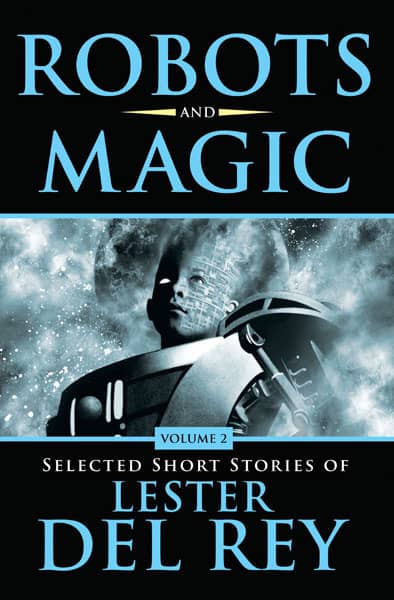
“Fade-Out” was originally published in Harry Warner’s fanzine Spaceways. When del Rey published The Early del Rey in 1975, he claimed that he remembered an early story that appeared in Spaceways, but could not remember the title. He relegated the story, which he no longer had, to the dust bin of history. When I was editing the two volume Selected Stories of Lester del Rey for NESFA Press, I came across the reference to “Fade-Out” and decided that, although the collections were not meant to be complete (about 1/3 of his short fiction was not included), I wouldn’t feel successful until I had tracked down the story and at least considered it for inclusion. It was reprinted in 2010 in Robots and Magic: Volume 2 of Selected Short Stories of Lester del Rey.

Jack Kirbey is an inventor who takes the Tibetan concoctions of his partner, Tse-Shan, and packages them for western consumption. Unfortunately, the two men have had only limited success, partly because they sold the rights to their first tonic, Tibetan Hair Invigorator, to an unscrupulous businessman, Burroughs. On the verge of being thrown out of their apartment and penniless, Kirbey begin experimenting with an invisibility potion that Tse-Shan told him about.

Invisible, Kirbey decides to play ghost and visit the businessman who took advantage of them, trying to set things right and make sure they will have all the money they need. Del Rey describes his trip from their apartment to the reseller and back. Unfortunately, the effects of the potion on Kirbey seem to follow the needs of the plot at any given moment. Generally, Kirbey is unable to touch anything. He can’t call for an elevator, open a door, are signal for a trolley to stop. At the same time, he needs to be careful he doesn’t bump anyone and has to avoid people sitting on him, so while his invisibility is intact, the commensurate incorporeality seems to come and go.

Read More Read More