Browsed by
Category: Blog Entry

By Crom: Arthurian Elements in the Conan Canon
By Crom: Arthurian Elements in the Conan Canon

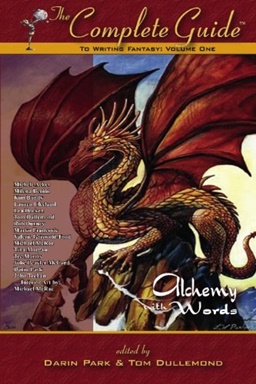
ConanArthurian_GuideCoverJohn Teehan, in The Complete Guide to Writing Fantasy: Volume One, challenges the reader to think of their favorite contemporary fantasy novels. And we’re talking Tolkien-onwards here, not just the past few years. Then he gives a list and says it would be difficult to think of a book that didn’t have any of the five themes on the list. He is making the point that the Arthurian legend, largely brought to popular culture by Thomas Malory, was an interweaving of those five themes. High fantasy epics like David Eddings’ Belgariad still follow this path.

I immediately thought about Robert E. Howard’s Conan tales and how they didn’t really emulate this pattern. Or so it seemed to me. My friend Deuce Richardson immediately pointed out two stories that did significantly incorporate these elements. So, I decided to go back to the very beginning and take a good look at “The Phoenix on the Sword”: then, do a less detailed survey of the following stories.

So, here we go!

Characteristic One – Commoner who is Really a King

Well…we’re definitely 0 for 1 right out of the gate. I think of Shea Ohmsford, who is a descendant of Jerle Shannara (Terry Brook’s Sword of Shannara) or Belgarion in Eddings’ previously mentioned Belgariad). They have the lineage of kings (or great sorcerers) in their blood. And they rise up to perform great deeds or rule kingdoms.
Read More Read More

Too Wide Sargasso Sea: Hammer’s The Lost Continent (1968)

Too Wide Sargasso Sea: Hammer’s The Lost Continent (1968)

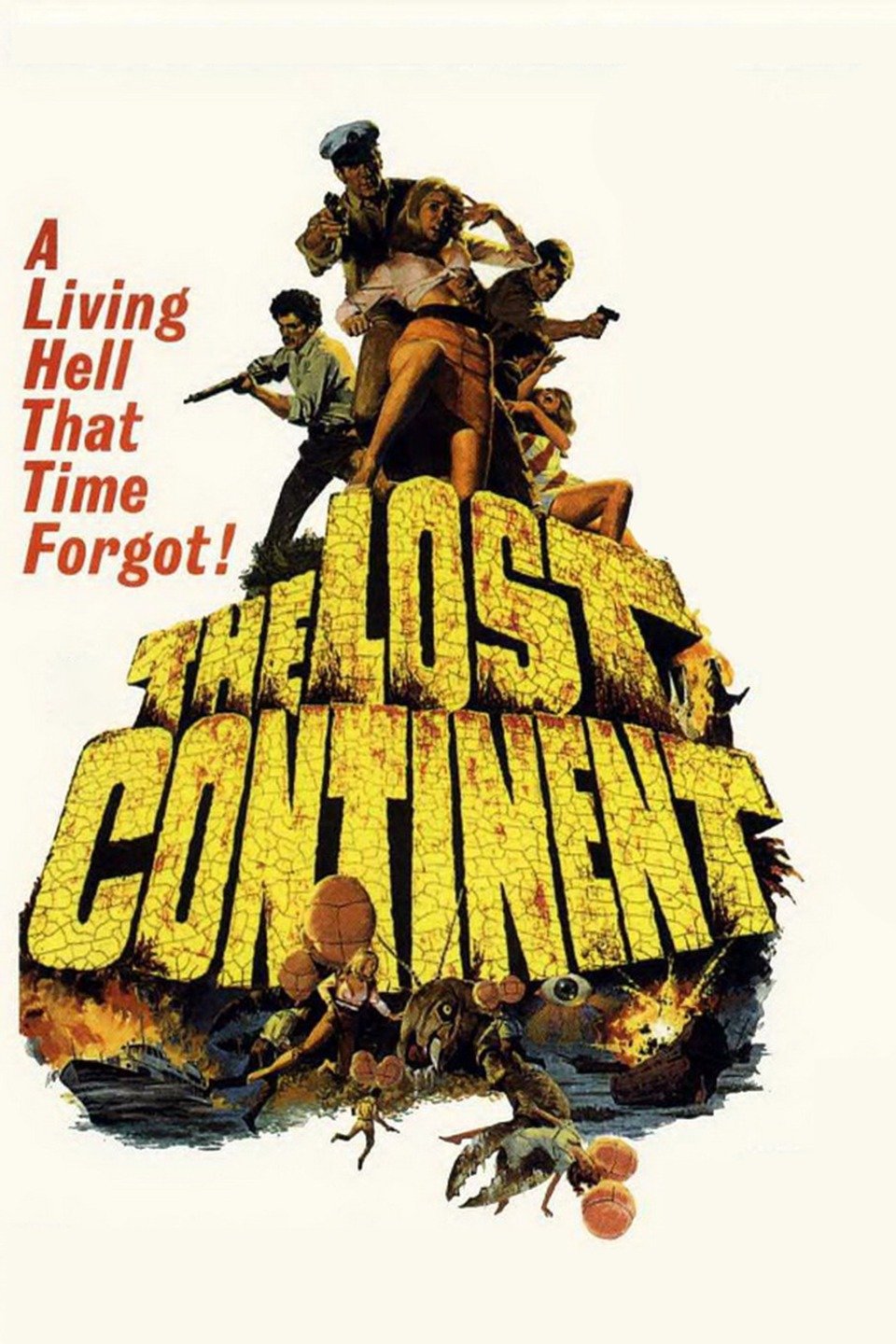
lost-continent-1968

Hammer Film Productions’ fantasy-adventure The Lost Continent is an adaptation of the works of William Hope Hodgson. Or it is to me, anyway. The credits say it’s based on the 1938 novel Uncharted Seas by Dennis Wheatley, but my eyes don’t lie: what Hammer put on screen is the nearest any movie has come to capturing the aura of Hodgson’s weird tales of the slimy terrors of the deep and the unknown horrors lurking in the Sargasso Sea.*

The Lost Continent arrived during the final phase of Hammer’s golden age. The company had moved out of its original studio at Bray and was now shooting at Pinewood and Elstree Studios. The feel of a unified family was starting to fray, and Hammer’s best in-house producers would soon depart. But producer Michael Carreras, son of studio head James Carreras, was still around and pushing Hammer to make larger-scale adventure films. Although Carreras was one of Hammer’s most prolific producers of horror movies — he produced Terence Fisher-directed classics like The Mummy, Dracula, and The Curse of the Werewolf — he never had any personal fondness for the Gothics. He saw lavish adventure and fantasy films like She (1965) and One Million Years B.C. (1966) as Hammer’s future. The Lost Continent was meant as an extension of the success of those movies, although it sometimes veered into horror.

Carreras was also an occasional director, and when The Lost Continent’s original director Leslie Norman (X the Unknown) fell sick early in production, Carreras stepped into the director’s chair. Carreras also wrote the screenplay under the pseudonym Michael Nash, the name of his gardener.

Read More Read More

The Robots of Mahlon Blaine

The Robots of Mahlon Blaine

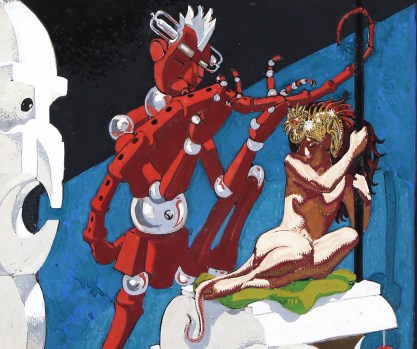
Mahlon Blaine, Cowering Nude With Robot detail

Mahlon Blaine was born in 1894 and was blind in one eye. People have been writing his biography since the 1920s and that’s about all they can verify. He provided the cover art, a faceless figure carrying a sword and spear, for Sir Hugh Clifford’s The Further Side of Silence. When asked for a few words about his life, he provided these:

Mahlon Blaine has illustrated these Malayan dramas with the magic of his own experience. A New England Quaker descended from staunch old New Bedford Whalers, Mahlon Blaine went to sea at fifteen and sailed before the mast in one of the last of the old wind-jammers. Then under steam he commuted from the Pacific Coast to the Atlantic, to the Mediterranean, to the Arctic to all of Kipling’s Seven Seas where a merchantman seeks cargo. It is such eastern ports as Macao, Port Said, Hongkong, Pearl Harbor, that have given him his gallery of wicked, twisted Oriental faces and the museums of the world that have been his art schools. He has sailed up the Congo to make a collection of African masks, rescued fellow countrymen from jails in Indo-China, and nosed into many a Malay river for strange cargo and shipped many a Malay crew. He thinks that Sir Hugh Clifford has an uncanny knowledge of native psychology and can substantiate many of the stories by his own experiences.

Not one word is true, except possibly for the last sentence and “he.”

Read More Read More

Witch World by Andre Norton

Witch World by Andre Norton

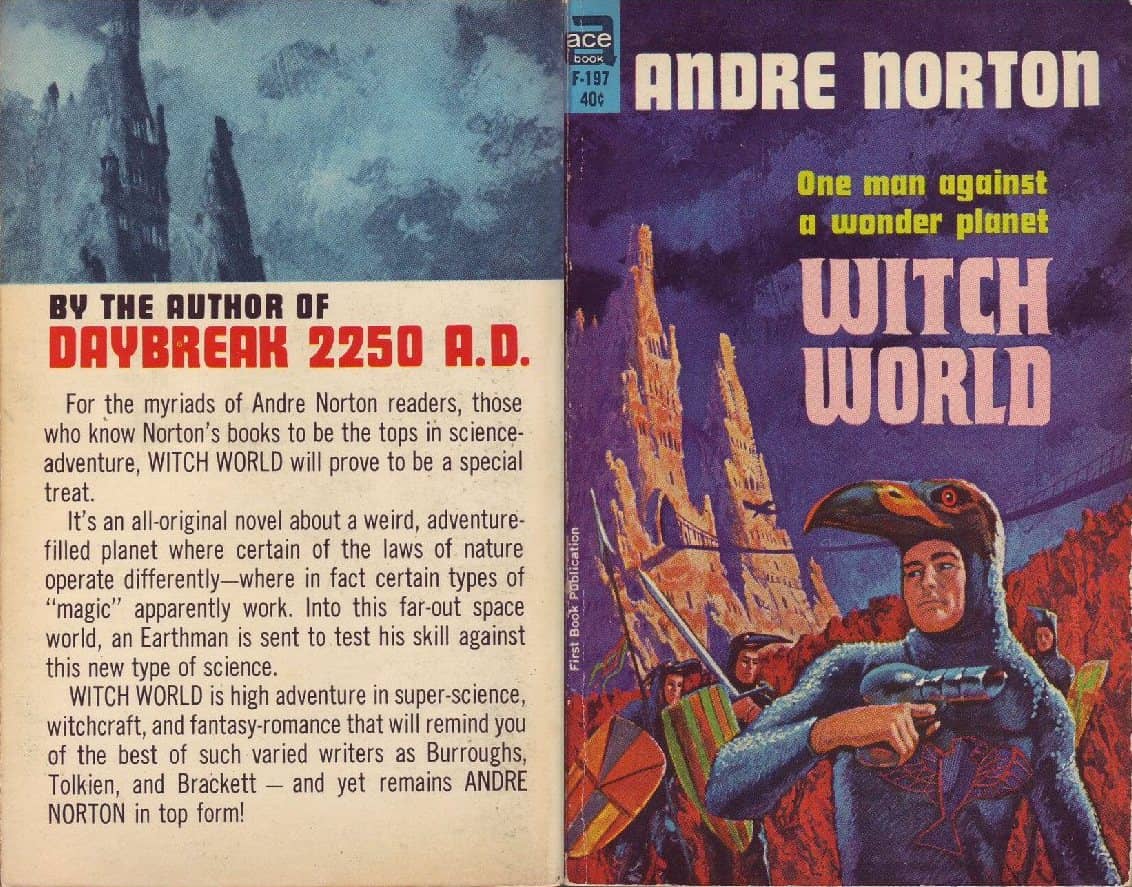
Witch World 1963-smallThis isn’t merely an excercise in cross-promotion (it is that, just not only that), but also a chance to redress a failing in my reviews of Andre Norton’s Witch World books. Neither here at Black Gate nor back at my own site, Stuff I Like, have I ever actually written about the first book in the series, Witch World. Now that I’m a “special guest” on the just released episode of the Appendix N Book Club podcast about the book, I believe I have a responsibility to write it up, too.

I’ve written a fair amount about Andre Norton’s classic Witch World series over the past six years. So far, I’ve read five of the Estcarp books, two of the High Hallack books, and two collections of short stories. While several of the books are less than stellar, overall the series is terrific.

Sadly, instead of being one of the salient series from sword & sorcery of the 1960s and 70s, it’s a half-forgotten afterthought. While I want to say that that’s a savage indictment of the nature of contemporary readers, really it’s the lamentable reality of the fate of the vast sum of popular fiction, no matter how objectively good it is or how much we love it. All a fan can do is put it out there that these are good books, still worth reading, and hope for the best.

Born in 1912, Alice Mary Norton worked as a teacher, a librarian, and finally a reader for Gnome Press before becoming a full-time writer in 1958. By then she’d already had a dozen books published, including such classics as Star Man’s Son, 2250 A.D. and Star Rangers. Based on their easy style and simpler characterizations, most of her early books would probably be classified as YA today. It was with 1963’s Witch World that Norton first wrote a full-fledged sword & sorcery book, steeped in pulp gloriousness.

The opening of Witch World is straight out of a Third Man-style film noir. Some years after the close of WWII, Simon Tregarth is a disgraced ex-US Army Lieutenant Colonel and desperate black marketeer on the run from his own associates. He’s just killed two of them, but the worst and most dangerous is still hunting for him.

Read More Read More

Tolkien’s Magic Sword: Anglachel

Tolkien’s Magic Sword: Anglachel

Turin_HurinI wrote a post here at Black Gate about Nauglamir, the necklace of the dwarves. Personally, I would love to see that tale as a separate novella (note to self: I’ve written Doyle and Stout – do not take on Tolkien…).

Today’s essay is about another item: a magic sword named Anglachel. It is really a minor element of the book, but the story of it weaves in and out of many other parts. That’s one of the true wonders of The Silmarillion. It’s a vibrant, interconnected history of Tolkien’s world. There are just SO many characters and stories throughout it.

I’m in that weird, small group which cites The Silmarillion as their favorite Middle Earth book. It is essentially a mythology and history of Tolkien’s world. While I love Robert E. Howard’s Hyboria, Tolkien set the fantasy standard for world building. The Silmarillion is really several long stories combined into one book.

John Ronald Ruel Tolkien, creator of Middle Earth, was a master storyteller. The Hobbit, with its tale of plucky hobbits and dwarves, a wizard, a magic ring and a dragon made what has been termed high fantasy appealing to a large audience. And The Lord of the Rings is an epic saga of good versus evil and of never giving up on what is right, no matter how daunting the odds.

Both The Hobbit and The Lord of the Rings included bits of Middle Earth history. Gimli sang ‘The Song of Durin’ as the fellowship travelled through Moria and Aragorn sang a song of Beren and Luthien early in his travels with the hobbits. It was the history of Middle Earth and events of the First Age that were always dear to Tolkien’s heart. He tried for decades to get The Silmarillion published and he constantly revised and added to his creation.

Of course, magic swords are one of the most popular tropes in fantasy (and role playing games). The appeal can probably trace its roots back to King Arthur’s legendary blade, Excalibur. Bilbo was given the elven dagger named Sting in The Hobbit. Aragorn’s Anduril (the reforged Narsil) is an important symbol in The Lord of the Rings, while Gandalf bore Glamdring (Hey Gary Gygax, who says wizards can’t use swords?), a sword that traced its lineage back to Turgon of Gondolin. As does its ‘mate,’ Orcrist, which found its way to Thorin as he sought to reclaim Erebor for Durin’s folk.

Read More Read More

Birthday Reviews: March Index

Birthday Reviews: March Index

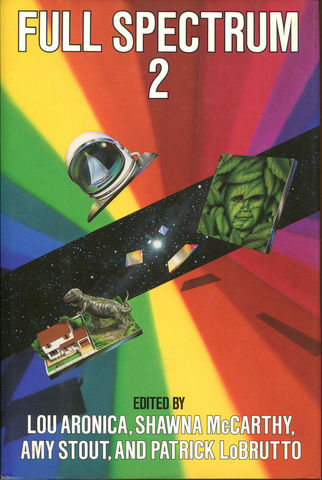
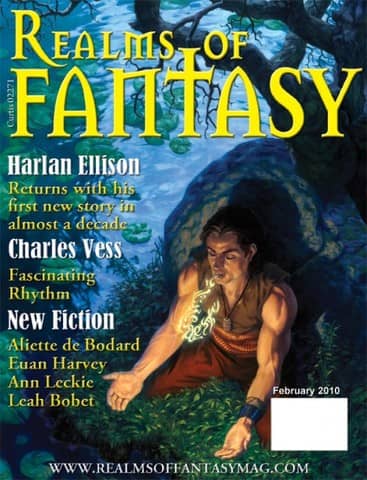
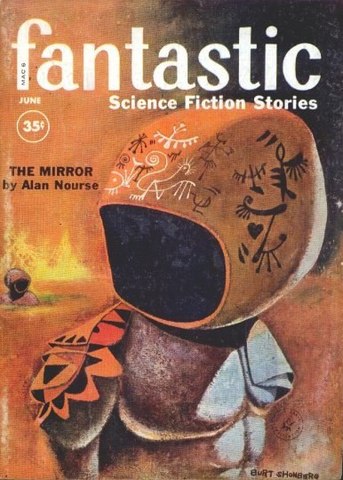
Full-Spectrum-2-smaller Realms-of-Fantasy-February-2010-smaller Fantastic-Science-Fiction-Stories-June-1960-smaller

January index
February index

At the one quarter mark in our journey through the year, here’s a look back at the birthday reviews that appeared at Black Gate in March.

March 1, Wyman Guin: “Trigger Tide
March 2, Ann Leckie: “The Unknown God
March 3, Arthur Machen: “The Coming of the Terror
March 4, Patricia Kennealy-Morrison: “The Last Voyage
March 5, Mike Resnick: “The Evening Line
March 6, William F. Nolan: “Starblood
March 7, Paul Preuss: “Rhea’s Time
March 8, No Birthday Review published.
March 9, Pat Murphy: “On a Hot Summer Night in a Place Far Away
March 10, Theodore Cogswell: “The Wall Around the World
March 11, F.M. Busby: “Tundra Moss
March 12, Harry Harrison: “The Mothballed Spaceship

Read More Read More

Is Pluto Still A Dog? Or, Pets In Genre Fiction

Is Pluto Still A Dog? Or, Pets In Genre Fiction

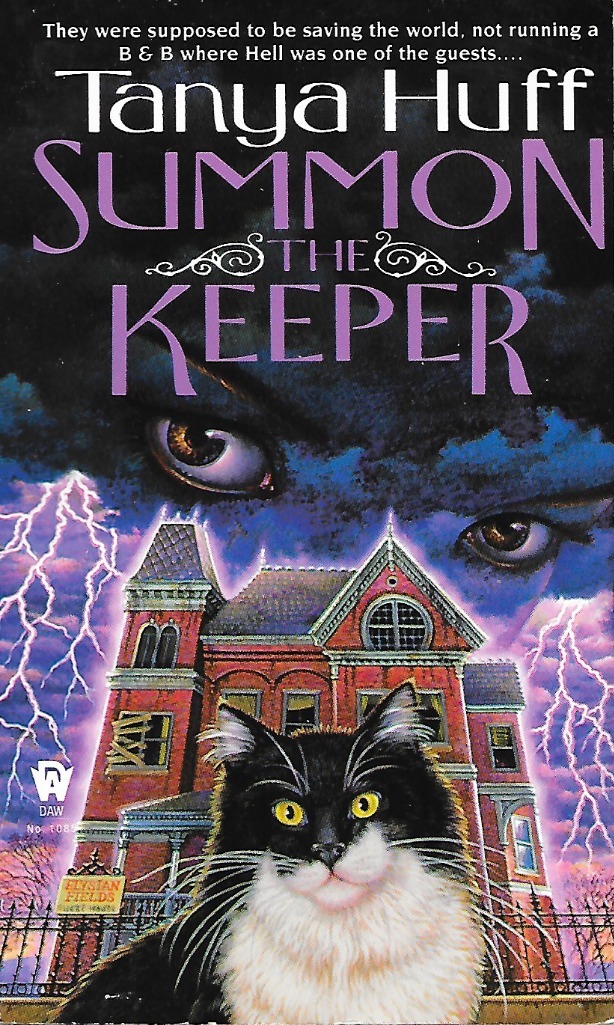
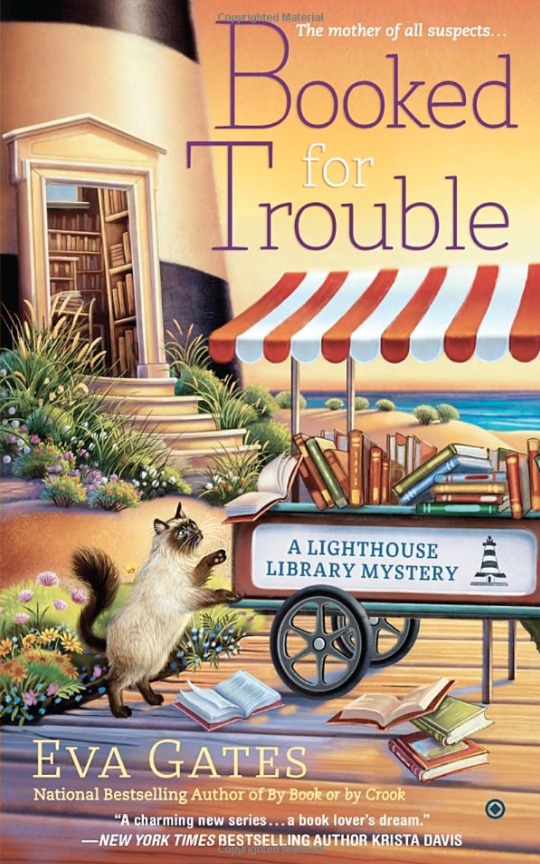
Summon the Keeper-small Booked for Trouble Eva Gates-small

There are a lot of animals in Fantasy. Plenty of horses, for example, and similar four-legged transportation. Then there are magical and mythological animals of all kinds – and some that are just plain madeupical.

What there isn’t much of in either SF or Fantasy fiction is pets. I find this significant – not the least because, next to their families, there’s probably nothing – or no one – more important to people than their pets. So are pets just too “real life” for SF and Fantasy fiction?

Now I’m not talking about works where one of the main characters is an animal, so, not Temeraire in Naomi Kovik’s novels. Not Ratty or Mole, or even Mr. Toad in Wind in the Willows.  I’m particularly not talking about cats who solve crimes – though it’s not at all unusual for protagonists of a cozy mystery to have either a dog or a cat as a pet. In fact, for a cozy, the presence of one or both is practically a requirement – check the cover art. One of the interesting things about dogs in mystery novels is that somewhere, in between all the sleuthing, the dog still has to be walked. You can’t get more real life than that.

Read More Read More

March Short Story Roundup: Part 1

March Short Story Roundup: Part 1

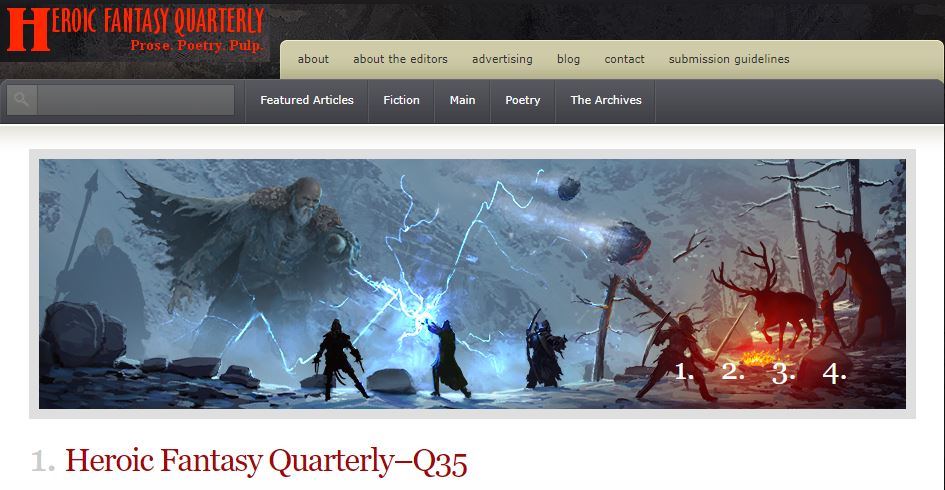
hfqIt was one of those months. By which I mean one where there were a lot of of new swords & sorcery stories. In addition to the regular two monthly stories from Swords and Sorcery Magazine, there were new issues of Cirsova and Heroic Fantasy Quarterly. Then, on top of all that, last Monday, what arrived at my door but the long waited-for first edition of the Howard Andrew Jones-edited and Appendix N-inspired Tales from the Magician’s Skull. Because there’s so much, I’m going to review HFQ and Tales this week and Cirsova and S&SM next week.

I don’t have much to say about Heroic Fantasy Quarterly (edited by Adrian Simmons and company) that I haven’t said time, and time again. It remains the best and most consistent source of new swords & sorcery fiction. If you aren’t reading it already, you are doing yourself a tremendous disservice. Issue #35, with magnificent banner art by Jereme Peabody, is no exception.

All right, I’m biased, but Raphael Ordoñez is one of my favorite writers working today, and I loved his new story, “White Rainbow and Brown Devil” in Issue #35. Not only is it a new story of “vagabond conquistador Francisco Carvajal y Lopez,” it’s got another of Ordoñez’s wonderful illustrations. In this tale of magic and danger, Francisco remains the same self-pitying, greedy but ultimately brave, hero he was introduced as in the first of his tales, “Heart of Tashyas.” He ended that tale in search of gold. This story opens with him frustrated and angry:

“Still no sign of them,” he growled, fingering the fishbone beads at his belt. “O Most Sweet Virgin, am I the victim of damnable perfidy yet again? With childlike trust have I followed Dacate’s word, seeking a modest recompense for all my sufferings in the painted canyons of the west. How many days has it been since I set out from the land of the Guequisales? Four? Five?” He raised the brown maul of his fist to heaven and shook it. “And where are these accursed canyons?”

Read More Read More

The Top 50 Black Gate Posts in February

The Top 50 Black Gate Posts in February

Godzilla-planet-of-monsters-poster-1

January sure was popular with readers. The most popular article at Black Gate last month was… our summary of the most popular articles at Black Gate the previous month. If that patterns hold, this will be the most popular article on the blog in March. To guarantee that, I’ve put a big picture of Godzilla at the top. You’re welcome.

Getting back to more regular fare, the second most popular post on the blog last month was Elizabeth Crowens’ epic interview with Buffy the Vampire Slayer author author Nancy Holder. Third on the list was a Vintage Treasures feature on Robert E. Howard’s Solomon Kane 1: Skulls in the Stars (which just proves Bob Byrne’s thesis that REH is a sure ticket into the Top Ten). Rounding out the Top Five were our look at a much more recent book, the new Looming Low anthology from Justin Steele and Sam Cowan, and my salute to a vanished book imprint, A Farewell to Roc Books.

As always, games were well represented in the Top Ten. Andrew Zimmerman Jones scored the #6 slot with his feature review of the new RPG Tales from the Loop, and M Harold Page entertained us with his report on I Love the Corps, which was good enough for #7. No Top Ten list would be complete without Ryan Harvey, and he made his appearance at #8 with the latest installment of The Complete Carpenter, this time featuring Big Trouble in Little China (1986). Wrapping things up was our look at Unbound Worlds on A Century of Sword and Planet, and the debut effort of new BG blogger David Neil Lee, with his review of Kong – Skull Island.

Read More Read More

Con Report: International Conference for the Fantastic in the Arts 2018

Con Report: International Conference for the Fantastic in the Arts 2018

INTERNATIONAL CONFERENCE ON THE FANTASTIC IN THE ARTS

My day job is being an academic here in Minneapolis, where I mainly teach philosophy and theology. So when I attempt to go to academic conferences I tend to go to cons related to either of those subjects. But a couple of years ago I went out on a limb, academically speaking, and sent a paper proposal to a literary conference.

Why? Well, I had a “literary” idea for a paper. Oh, and the conference was taking place in Orlando in the middle of winter. So my Minnesota-self was quite motivated to get there. Surprisingly I got my “philosophy” paper accepted to this conference and I was excited to attend, so excited that I ended up going again this year.

The con in question is the International Conference for the Fantastic in the Arts, ICFA for short, and it’s been going on now for almost forty years. ICFA is the official conference of, named aptly enough, the International Association for the Fantastic in the Arts. This organization was started in 1980 by literature professor Robert A. Collins (1929-2009) and like most small beginnings it has grown quite a bit but it still has a laid-back, workshop (though still professional) feel to it.

Read More Read More