Browsed by
Category: Blog Entry

The Lost Literature of J.R.R. Tolkien’s “The New Shadow”
The Lost Literature of J.R.R. Tolkien’s “The New Shadow”

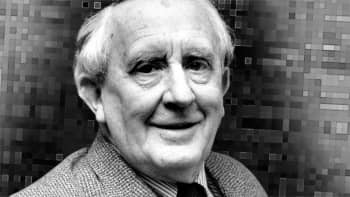
JRR TolkienRecently, game submissions opened for Coulee Con, a local gaming convention that takes place over one weekend every August. This year I’m offering a scenario based on Tolkien’s “The New Shadow,” which is an aborted sequel to The Lord of the Rings. Christopher Tolkien collected the fragment in 1996’s The Peoples of Middle-Earth.

It’s an interesting piece, obviously, not least because it was intended to become another book set in Middle-earth — a book from no less than the great Tolkien himself! The snippet is maddeningly short, however. Perhaps its brevity results from a malformed conception that precluded it from ever actually becoming anything. This is overstating my view: rather, I believe that Tolkien’s “New Shadow” promises to have been an immensely profound articulation, but (as The Silmarillion that Christopher Tolkien published after his father’s death, to an ambivalent reception from Middle-earth enthusiasts) it likely would have been so different a book from The Lord of the Rings as to be misunderstood by its waiting audience.

I think it’s important to establish that Tolkien was a practitioner of many genres. He earned his living as an academic and therefore published many critical essays. The two most valuable to us fantasy enthusiasts now are “Beowulf: The Monsters and the Critics” and “On Fairy Stories.” As a philologist he translated many epic poems into modern English; the two most visible to us are Beowulf and Sir Gawain and the Green Knight. He practiced poetry himself: many of Middle-earth’s early legends first were conceived in verse; he wrote the epic The Legend of Sigurd and Gudrun; obviously we must mention the many songs and poems in The Lord of the Rings itself. He wrote satirical comedy in “Farmer Giles of Ham,” faerie romance in “Smith of Wootton Major.” Most importantly, he wrote in the long folk/fairy tale mode with The Hobbit, the epic novel with The Lord of the Rings, and Classical epic with The Silmarillion — a terse, condensed style that, in my youth, had me telling my friends that it was the Bible of Middle-earth.

I have heard friends joke about The Silmarillion as the bestselling book that no one ever read (for the record, I have read it many times, of course). I don’t think that “The New Shadow” would have had the same reception, though the attention given it certainly would have been ambivalent. This is because a new book from Tolkien would have occasioned yet one more genre from him. This time, it would have been a thriller.

Read More Read More

The Golden Age of Science Fiction: David Langford

The Golden Age of Science Fiction: David Langford

David Langford
David Langford

The Fan Activity Achievement Awards (FAAN) were founded in 1976 by Moshe Feder and Arnie Katz. The award was presented annually from 1975 through 1980 and then became moribund until it was revived in 1994 and presented at Corflu, a convention for fanzine fans. Due to a change in the eligibility year, o awards were presented in 1996, but it has been presented annually since then. The Best Fan Writer Award was presented in the inaugural year to Don C. Thompson. From 1977-1979, Bob Shaw had a three year streak, which was broken in 1980 by David Langford, who won his only FAAN Award in 1980.

Considering David Langford as a fan writer from the perspective of 2019 is very different from his role in 1979. It has now been 10 years since his most recent Best Fan Hugo nomination and 12 years since the last time he won that award (although only 7 since he won his most recent Hugo Award for Best Related Work for The Encyclopedia of Science Fiction, Third Edition). In 1979, he hadn’t won any of the record-tying 29 Hugo Awards that have been voted to him.

Langford began publishing fiction in 1975 with the story “Heatwave” and his first book-length piece of fiction, An Account of a Meeting with Denizens of Another World, 1871 made its appearance in 1979.

From a fannish point of view, in August of 1979, Langford published the first issue of Ansible, which ran between 4 and 10 pages in quarto format until 1987. He ceased publication of it from 4 years before picking up again as a 2 page A4 newssheet in October 1991 and has been publishing it monthly since then.

Read More Read More

Signing In The Rain: Random Thoughts on Book Signing

Signing In The Rain: Random Thoughts on Book Signing

bakkaBack in the day, at least here in Canada, you could book multiple book signings in the big box stores – sometimes even more than one store in a given city, since they were comfortably far apart. And for a different experience, there were still a few independent bookstores around.

With box stores you were usually dealing with employees, while with the independents you dealt with owners, people who not only had a vested interest in your doing well, but were the people making the decisions. On the other hand, smaller store = less traffic.

Early on, I had some great experiences in box stores, but lately? If they still do this type of event at all, you’ll find the person who made the arrangements isn’t at work today, didn’t leave sufficient (or any) instructions, and only ordered copies of your most recent book, even though previous books (including earlier ones in the series) are still in print. The staff might be sincerely apologetic, and as helpful as possible – after all, they’re not the ones who dropped the ball – but that doesn’t conjure up any books.

Read More Read More

Telling a Clock What You Want to Eat

Telling a Clock What You Want to Eat

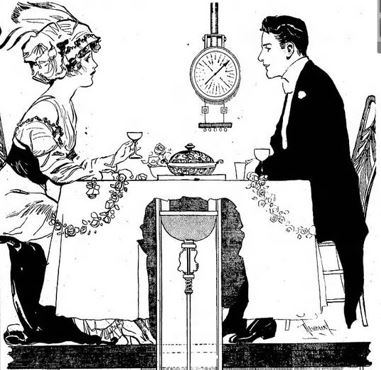
Telling a Clock illustration

Long before Karel Čapek introduced the word “robot” to the general vocabulary in his 1920 play R.U.R., people had a pretty good idea of what an “automaton” or a “mechanical man” did. They learned it from popular media. Short stories, newspaper articles, vaudeville acts, comic strips, and more toyed with the idea of humanoid mechanical servants.

Or non-humanoid one. It took a very long time for the concept of “robot” to coalesce around the human form. Not until after World War II did a robot automatically conjure an image of a mechanical human, and that was largely because a word was needed to separate robots from the computer brains that increasingly took the robot’s place in media.

Before WWII, in fact, robot was frequently applied to any automatic machine which functioned with constant human supervision. Before R.U.R. mechanical man or automaton did much the same.

When a completely automated hotel was proposed, in Paris in 1913, the natural way to explain its operation was to use on these terms.

[T]o get the highest efficiency at the lowest cost … can be effected … by the “mechanical man” in the hotel – the “man” who is prompt in action, above all, and is absolutely dependable, deft, noiseless and invisible.

Read More Read More

Hither Came Conan: Fred Adams on “The Black Stranger”

Hither Came Conan: Fred Adams on “The Black Stranger”

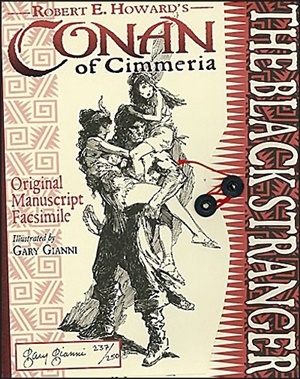
Gary Gianni
Gary Gianni

Welcome back to the latest installment of Hither Came Conan, where a leading Robert E. Howard expert examines one of the original Conan stories each week, highlighting what’s best. Fred Adams talks about “The Black Stranger.” Which was a story that Howard failed to get published, was rewritten without Conan, and still rejected. Fred takes a brand new look at the story. Read on!

Conan as Picaro in “The Black Stranger”

There are days when I ask myself whether Robert E. Howard didn’t sneak away for four years and earn a degree in English Letters when I encounter his facility with literary tropes and conventions. Many would suggest that the influence of the great western writers rubbed off on him from his omnivorous reading, others simply that he labored past mediocrity to instinctively hone his considerable skills at writing, recognizing what worked and what did not.

Whichever the case, he made good use of a variety of literary conventions and techniques, as David C. Smith elaborates in his Robert E. Howard: A Literary Biography. One that I have noticed specifically is his use of the picaresque mode of the novel. A good example is his experimentation with the form in the Conan story “The Black Stranger.”

Harmon and Holman’s A Handbook to Literature, Seventh Edition defines “Picaresque Novel” at great length:

“A chronicle, usually autobiographical, presenting the life story of a rascal of low degree engaged in menial tasks and making his living more through his wits than his industry. The picaresque novel tends to be episodic and structureless. The picaro, or central figure, through various pranks and predicaments and by his associations with people of varying degree, affords the author an opportunity for satire of the social classes. Romantic in the sense of being an adventure story, the picaresque novel nevertheless is strongly marked by realism in petty detail and by uninhibited expression.” (389)

To call Conan a “rascal of low degree” is mild at best, but to say that he lives “more through his wits than his industry” seems close to his nature. Conan is a barbarian with no social standing whatsoever who lives by his wits as a thief, a reaver, and a warrior. True to the form, he begins the story in a loincloth running for his life from a tribe of savages. By the time the tale ends, Conan has attained the kingly position of leader of the Red Brotherhood, and possessed of enough wealth that he gives a bag of rubies worth a fortune to Belesa saying, “What are a handful of gems to me, when all the loot of the southern seas will be mine for the grasping?”

Read More Read More

The Aesthetic of 1970s TV Sci-Fi

The Aesthetic of 1970s TV Sci-Fi

timthumb

I sometimes get overwhelmed by all the things on Netflix that I don’t want to watch, and yet, when I’m alone, I like to watch a bit of TV while eating. So lately I’ve been pulling out some old 1970s sci-fi. I watched a few episodes of my Battlestar Galactica boxed set. And surprisingly, I’ve been enjoying Logan’s Run the TV series. And it’s made me think about the way the 1970s TV sci-fi aesthetic stuck together.

tumblr_np7gk6ers81ux7qkao1_500

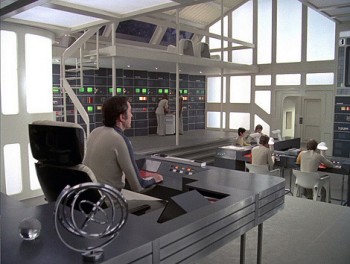
It’s more than just the computers that all look the same. The brightly-lit panels on everything ring futuristic to me, perhaps because I lived through the tail end of the 70s with an impressionable aesthetic palate. I’m curious — do you guys think that there’s a 1970s sci-fi TV “look and feel”?

Read More Read More

The Golden Age of Science Fiction: The 1973 Locus Award for Best Fanzine: Locus

The Golden Age of Science Fiction: The 1973 Locus Award for Best Fanzine: Locus

Locus magazine lot 3-small

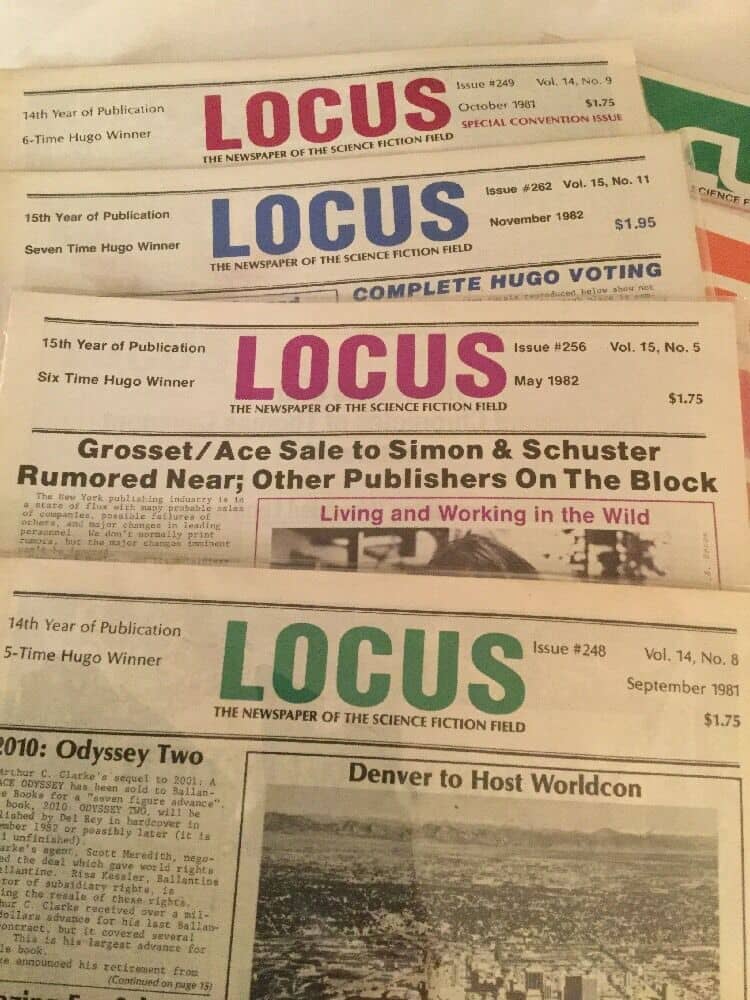
Steven Silver has been doing a series covering the award winners from his age 12 year, and Steven has credited me for (indirectly) suggesting this, when I quoted Peter Graham’s statement “The Golden Age of Science Fiction” is 12, in the “comment section” to the entry on 1973 in Jo Walton’s wonderful book An Informal History of the Hugos. You see, I was 12 in 1972, so the awards for 1973 were the awards for my personal Golden Age. And Steven suggested that much as he is covering awards for 1980, I might cover awards for 1973 here in Black Gate.

In discussing this award I must begin with the obvious disclaimer – I write a regular column for Locus, and have done so since 2002. As such I am, I freely acknowledge, prejudiced in favor of the magazine. And I remember the thrill it was, sitting in the audience at the Hugo ceremonies, to hear my name mentioned by Liza Groen Trombi, the current editor, when she accepted our final Hugo for Best Semiprozine in Chicago in 2012 (coincidentally the final Hugo that Locus would receive, as rules changes made us ineligible in that category.) (Side personal note – I was sitting with Alec Nevala-Lee at that award ceremony – and Alec this year is nominated for a Hugo for Best Related Book for his exceptional biography Astounding.)

Read More Read More

The Golden Age of Science Fiction: Anne McCaffrey

The Golden Age of Science Fiction: Anne McCaffrey

Anne McCaffrey
Anne McCaffrey

The Balrog Award, often referred to as the coveted Balrog Award, was created by Jonathan Bacon and first conceived in issue 10/11 of his Fantasy Crossroads fanzine in 1977 and actually announced in the final issue, where he also proposed the Smitty Awards for fantasy poetry. The awards were presented for the first time at Fool-Con II at the Johnson County Community College in Overland Park, Kansas on April 1, 1979. The awards were never taken particularly seriously, even by those who won. The final awards were presented in 1985. The Professional Achievement Award was presented each year of the Balrog’s existence, with ties occurring in 1979 and 1982.

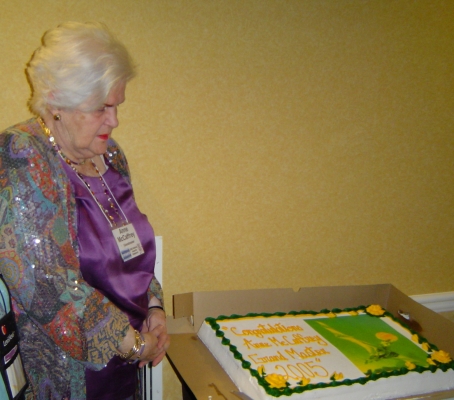
Anne McCaffrey was born on April 1, 1926.  Her first published short story was “Freedom of the Race,” which originally appeared in 1953 in the penultimate issue of Science Fiction Plus, Hugo Gernsback’s last magazine.  I included it in my anthology Wondrous Beginnings, which reprinted the first published short story by various science fiction authors. McCaffrey’s second story, “The Lady in the Tower,” didn’t appear until 1959.

Read More Read More

Let Me Outline It For You

Let Me Outline It For You

Block Writing the NovelTo outline or not to outline? Ah, the perennial question. The question that’s answered in every possible way by all writers’ guides. The kind of question that often comes up when a writer is being interviewed: are you an “outliner” or are you a “pantser,” as in, do you fly by the seat of your pants? Some writers swear by one, and some swear by the other.
Which basically means writers do a lot of swearing.

Pantsers like to grab the end of a thread they see trailing out a door and follow where it leads – with a bit of guidance here and tweaking there, sure, but basically letting the story evolve organically, on its own feet as it were.  This method has led to some of the best books ever, and when it works, it really works.

When it doesn’t, it doesn’t. I’ve had people tell me that they’ve gone as far as a couple of hundred pages before deciding the idea wasn’t going anywhere, and setting it aside. It takes a brave writer to do that.

Read More Read More

Nero Wolfe’s Brownstone: Play Ball – The Mets in ‘Please Pass the Guilt’

Nero Wolfe’s Brownstone: Play Ball – The Mets in ‘Please Pass the Guilt’

Koosman_Jerry

Archie Goodwin was a fan of America’s national pastime, and the Wolfe Corpus is full of baseball references. One story is even shades of the 1919 Black Sox scandal! In 2020, you’re going to see a lot of Nero Wolfe Wolfe here at Black Gate (assuming I don’t get canned before then). Since today is Opening Day, here’s a little Archie and baseball. Play ball!

Since the Nero Wolfe tales were all essentially set in the year that Rex Stout wrote them, we can answer the question I’m about to posit simply by looking at the publication date. Except, as I’ll show, it couldn’t have been 1973. So that approach is out.

Baseball references can be found throughout the Corpus. Archie was a Giants fan – at least he was until Horace Stoneham abandoned Coogan’s Bluff for sunny San Francisco — while Saul preferred his games at Ebbets Field in Brooklyn. There’s no indication of who Saul rooted for after Dem Bums relocated to Los Angeles, though it’s reasonable to assume that he, like Archie, followed the Mets, who played at the Polo Grounds until Shea Stadium was ready.

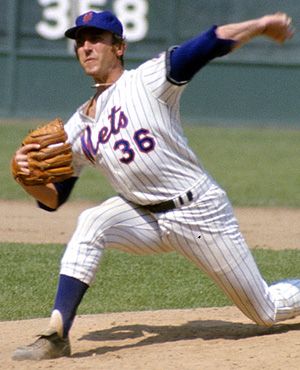
“This Won’t Kill You” took place at game seven of the World Series, with the Giants playing the Red Sox. All players were fictitious, however. In “Please Pass the Guilt” we get the real deal. Archie goes to visit a prospective client as the Mets are hosting the Pirates. Fortunately, she has the game on television, with Hall of Fame slugger Ralph Kiner calling the action.

Over the course of a couple innings, Archie mentions the actions of several Met players. From his comments, we’re going to reconstruct the two missing pieces of the lineup that day. Which of course first requires us to identify the year. Which poses a few questions but is no problem for a seasoned baseball investigator.

Read More Read More