Full disclosure: I am a woman, and so have a vested interest in how women are portrayed in all media, not even just the speculative. Since, however, the speculative is so able to better reflect the real world and imagine a better one, I’m going to talk about that for today.
I had been, at one point in my past, privy to a enormous internet argument about how terribly some male writers write women. The primary complaint of the defenders of bad writing of female characters was, and this is a literal quote, ” writing women is hard.”
Congratulations, random male internet commenter, you have accidentally his upon an immutable truth. Writing women is hard. Writing men is hard. Writing a compelling scene is hard. Writing plot is hard.
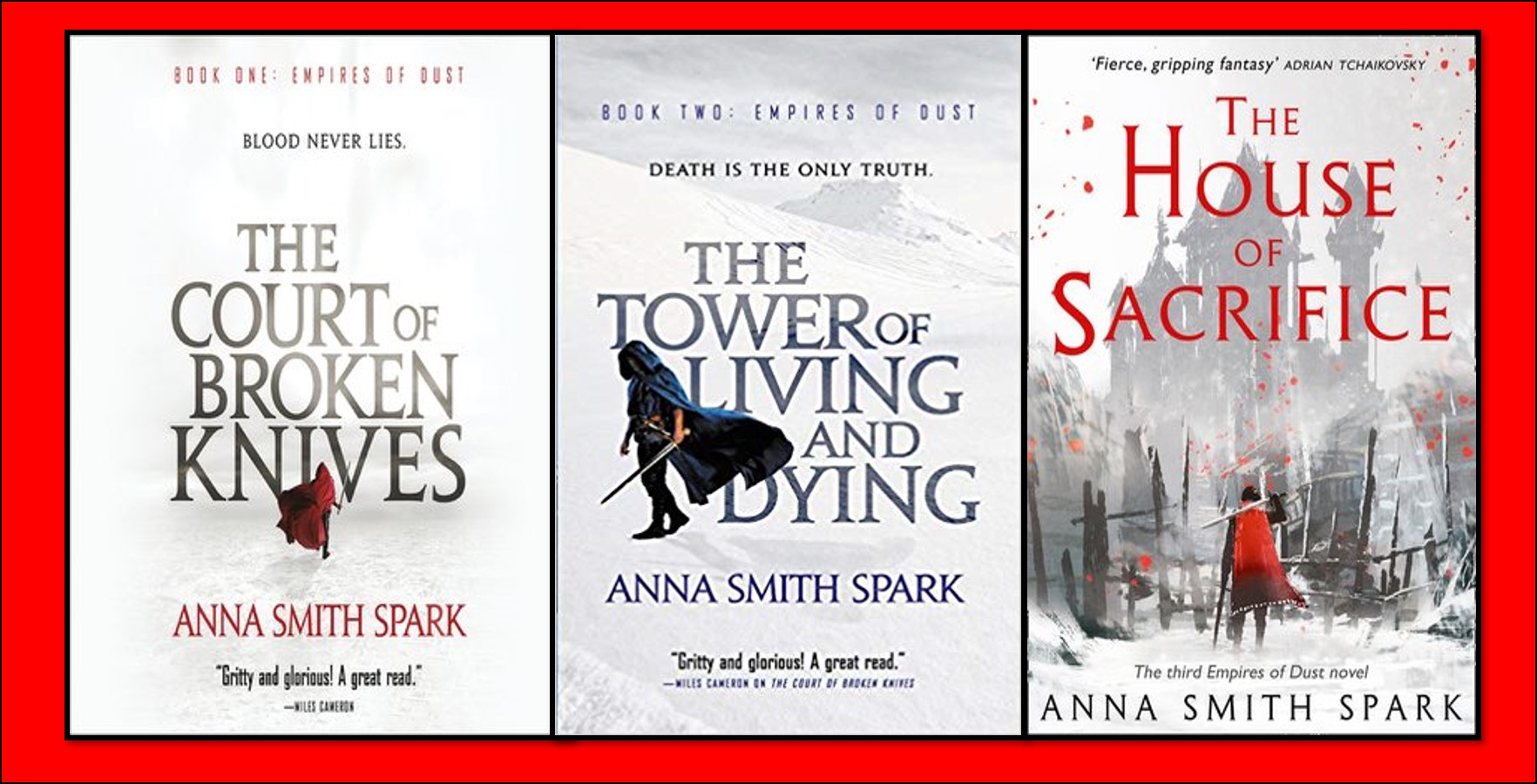
Anna Smith Spark is the author of the critically acclaimed Queen of Grimdark. The David Gemmell Awards shortlisted The Court of Broken Knives and The Tower of Living and Dying continued the Empires of Dust trilogy (Harper Voyager US/ Orbit US/Can). The finale, The House of Sacrifice, will be published August 2019. Anna lives in London, UK. She loves grimdark and epic fantasy and historical military fiction. Anna has a BA in Classics, an MA in history and a Ph.D. in English Literature. She has previously been published in the Fortean Times and the poetry website greatworks.org. Previous jobs include petty bureaucrat, English teacher and fetish model. Anna’s favorite authors and key influences are R. Scott Bakker, Steve Erikson, M. John Harrison, Ursula Le Guin, Mary Stewart and Mary Renault. She spent several years as an obsessive D&D player. She can often be spotted at sff conventions wearing very unusual shoes.
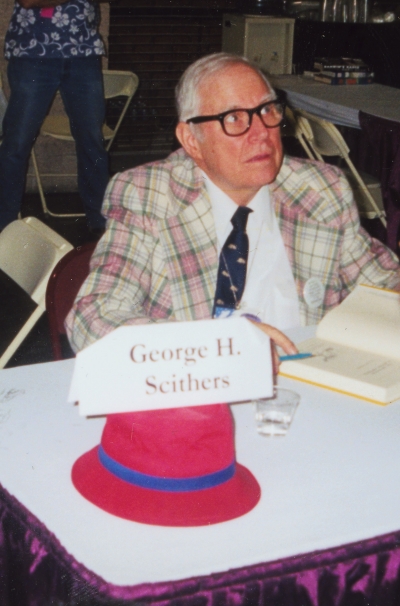
The Best Professional Editor category was not one of the original Hugo categories in 1953. It was introduced in 1973 as a replacement for the Best Magazine award, partly to recognize the name of the individual who was the driving force behind the magazines, but also, at least in theory, to open the award up to anthology editors, although an anthology editor wouldn’t win until 1985. For the first five years the award was presented, it was won by Ben Bova. In 2007, the award was split into Best Editor, Long Form and Best Editor, Short Form. Gardner Dozois won the Best Professional Editor Award fifteen times, including a six-year streak and a seven-year streak. George H. Scithers won the award for the first time in 1978, ending Ben Bova’s streak, and then for a second time in 1980.
George Scithers had a long career in science fiction, both professionally and in fandom. He began publishing articles in the fanzine Yandro in 1957 and in 1959, he began publishing his own ‘zine, Amra, which won Scithers his first two Hugo Awards (in 1964 and 1968). Amra, which was a Robert E. Howard specialty ‘zine, is also the ‘zine which coined the term “Sword and Sorcery.”
In 1963, Scithers chaired Discon I, the 21st World Science Fiction Convention. He wrote The Con-Committee Chairman’s Guide to provide guidance for future chairmen. For several years in the 60s, he also served as the Worldcon Parliamentarian.
Scithers founded Owlswick Press in 1973 and over the years published works by Roy Krenkel, L. Sprague de Camp, Jack Williamson, Barry B. Longyear, and others. The final two volumes published by Owlswick came out in 1991 and 1993 and were collections by Avram Davidson.
Sound familiar? Of course. In fact, in the very first episode I was reminded of two other shows I’ve enjoyed watching, Warehouse 13, and Timeless. I didn’t find this detracted, however, there were enough differences to give Minsterio some freshness.
The protagonists of Timeless, like Ministerio, are a team of a woman and two men. However, that’s only a by-product of their real job, which is to find and capture another time traveller who is trying to change the timeline. The Ministry also has its enemies but we don’t learn that until the third episode. The first couple of episodes set up the world, and the complications that the characters themselves bring to it.
This setup introduces what for me is a very typically Spanish element: bureaucracy. It’s been said that the Spanish invented bureaucracy, and I’m inclined to believe it, but I’m not going to elaborate on that here. Suffice to say that this is the ministry of time. This is a government office, run by government functionaries, as civil servants are called in Spain. Strangely (to me at least) this doesn’t slow down the action, but it does lend a certain Kafkaesque quality to it.
Madrid is a walkable town. Most of the city’s interesting barrios are clustered close together, and even if you have to take a quick trip on the bus or Metro, you’ll find that each barrio has all you need within an easy stroll. That makes Madrid feel a lot smaller than it is, because you can shop, dine, drink, work, and go to school all in the same barrio.
Several tour companies offer interesting walking tours of the city, focusing on Madrid’s history, nightlife, or culture. The latest addition is The Making of Madrid, which specializes in history. I recently took a tour of the working class barrio of Lavapiés, known for its left-leaning politics and large immigrant community.
I try to stay away from expounding on the popular cultural artifacts from other countries. Going back in time and explaining why American pop culture looks the way it does often ranges from difficult to impossible. Even the English, a culture separated from ours by a common language, has a past that is a semiotic mystery most of the time.
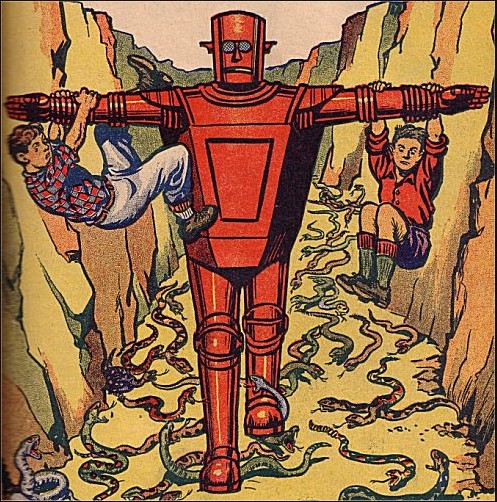
Take comic books. Americans invented them (depending on what you consider Italy’s Il Giornalino to be) and the English followed closely behind. The Dandy started in December 1937 and The Beano on July 30, 1938, meaning it will reach its 4000th issue this summer. (It’s been issued weekly except during WWII.) Both were part of the gigantic D. C. Thomson & Co. empire. By then Thompson already had a lock on the boys’ story paper market, those being the British equivalent of the boy’s story weeklies that proliferated in the U.S. during the late 19th century. (Those are now famed for introducing early robots like the Steam Man and the Electric Man, along with many other science-fictional inventions.) The story weeklies usually carried a complete short novel or a serialization of a longer one. The story papers also carried serializations, but those were short segments that appeared alongside complete short stories.
Thompson started Adventure in 1921 and added The Rover, The Wizard, The Skipper, and, in 1933, The Hotspur. (The internet tells me that the name comes from the noble warrior Sir Henry Percy, known as Sir Harry Hotspur, who is immortalized by an appearance in Shakespeare’s Henry IV. Exactly the sort of everybody-gets-it reference that trips me up when encountering other cultures.) These “Big Five” dominated the market and lasted for generations, eventually mostly being merged into one another as the market for story papers faded at the end of the 20th century.
The Black Gate staff loves the pulps. Science fiction, fantasy, weird menace, horror, hardboiled, adventure, westerns — the list goes on. So much that was long out of print has come back through the efforts of imprints like Mysterious Press, Altus Press, Black Dog, Crippin & Landru, Fedogan & Bremer, Haffner Press, and more.
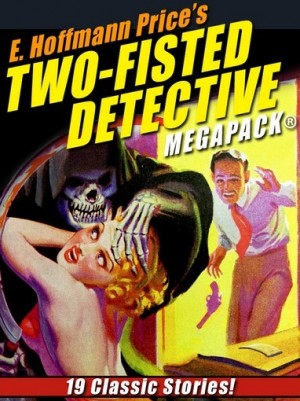
Coupled with the advent of ebooks, it’s a veritable gold mine for pulp fans. John Betancourt, founder of Wildside Press, has a line of ebooks under the MEGAPACK moniker. Covering all genres, they offer a plethora of pulp stories. Yes, many of the books are a mix of the wheat and the chaff, but there’s plenty of good reading to be had. At an affordable price. How affordable? Below is a list of MEGAPACKS selling for either 55 or 99 cents at Amazon. I’m not sure if that’s the regular price (I’ve paid a bit more in the past).
This is NOT a comprehensive list. I simply got tired of typing entries (and the word, ‘MEGAPACK’). But this gives you a feel for how many different collections there are. In multiple genres, as well. Look for an author, or field, you like and spend less than a buck a volume to pick up some stories (and even novels). I’m pretty sure you’ll find something that is more than worth your money!
The Ceourl Award was founded in 1980 to recognize Canadian Science Fiction and for the first two years was presented for Lifetime Achievement only. The original nickname for the award was based on the similarity of the award and the creature feature in A.E. can Vogt’s story “Black Destroyer.” The name was changed to the Casper Award in its second year. In the award’s third year, a category for Outstanding Work in English was added to the award, with additional awards added in subsequent years. In 1991, the popular award’s name was changed to the Aurora Award. The awards are administered by the Canadian Science Fiction and Fantasy Association (CSFFA) and are voted on by members of the annual Canadian National Convention. Although the Lifetime Achievement Award was presented annually from 1980-1983, only three additional awards have been presented, most recently in 2013 to Robert J. Sawyer. The first award was presented to A.E. van Vogt at Canvention 1 in Halifax, Nova Scotia on the weekend of March 7-9.
Alfred Vogt was born on April 26, 1912 in Edenburg, Manitoba, Canada. During the early years of his life, his family moved around Western Canada, never settling down long enough to have roots. The stock market crash of 1929 killed van Vogt’s chances of attending college and he began to work a series of odd jobs, including work as a farmhand, a truck driver, and for the Canadian census bureau. While working these jobs, he began to publish anonymously and pseudonymously in the “true confessions” genre.
Around 1930, he moved back to Winnipeg, where he continued to write pseudonymously, as well as selling advertising space in newspapers. During this time, he wrote radio dramas for the local station. He also began to play with his name, adding the middle name Elton and the van to become Alfred Elton van Vogt and eventually A.E. van Vogt.
Marshall McLuhan may have proclaimed the the medium is the message but robots transcended any one medium by the 1970s. Audiences found robots everywhere: in movies, on television, in comic books and strips, in cartoons, in toys, in print science fiction and increasingly in mainstream thrillers.
Martin Caidin created a sensation with his 1972 bestseller, Cyborg. Stalwart astronaut/test pilot Steve Austin emerges from a plane wreck with half his body damaged. Incredibly expensive – six million dollars worth! – mechanical parts with capabilities beyond those of flesh are grafted to replace his missing arm, eye, and legs, making him a bionic superman. (The term bionic was, in the poetic words of Philippe Goujon, “invented by Major Jack E. Steele of the aerospace medical division of the U. S. Air Force on an August evening in 1958” as a portmanteau of biology and electronics.) Less than a year after the book’s release, a made-for-television movie hit the airwaves. Two more movies begat The Six Million Dollar Man tv series which begat The Bionic Woman. Such are empires launched.
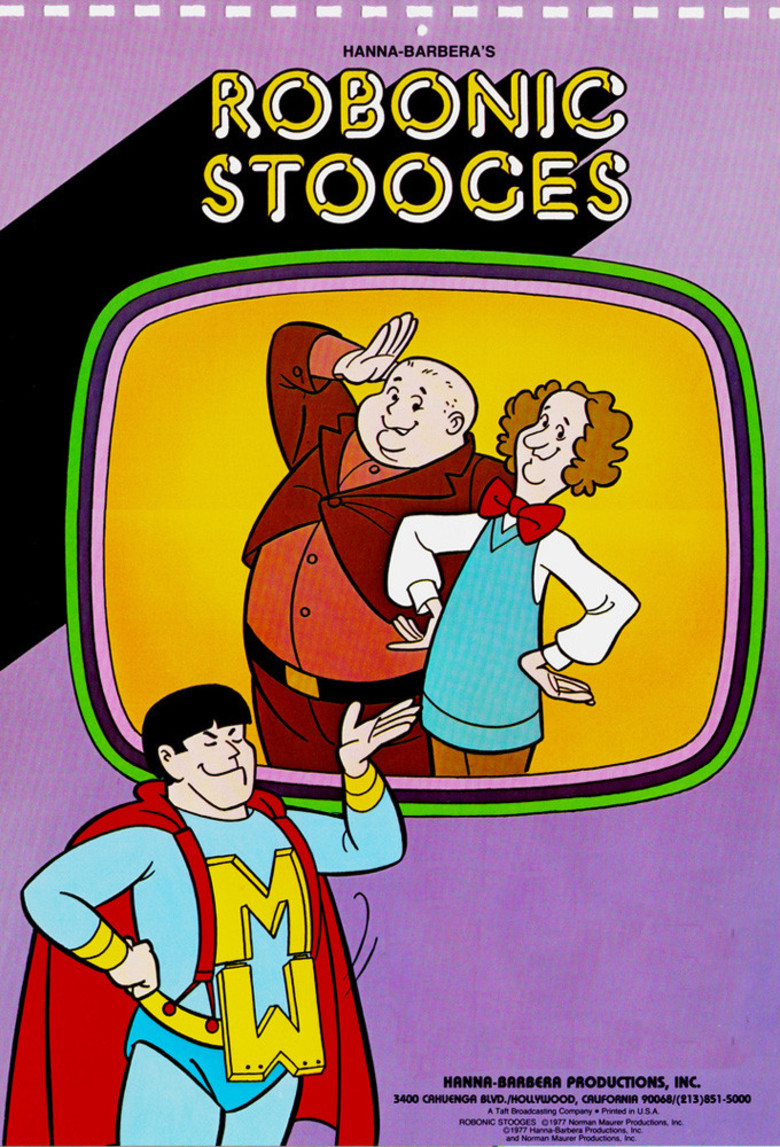
Robots almost always had been comic sidekicks or deadly menaces in popular media, rarely lead characters. The Six Million Dollar Man was the first to successfully plug that enormous hole on television, dodging the identification problem by making a human mechanical. (My Living Doll from 1964 starred an actual robot but got canceled partway though its first season.) With a formula for success in hand, other television creators took a crack at the magical potential audience draw of bionics. Such a cracked mind belonged to Norman Maurer, who lead audiences down a psychedelic rabbit hole toward the most mind-blowing mash-up of genres in popular culture’s dubious history.
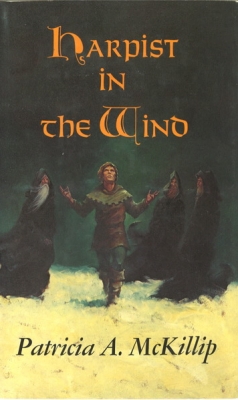
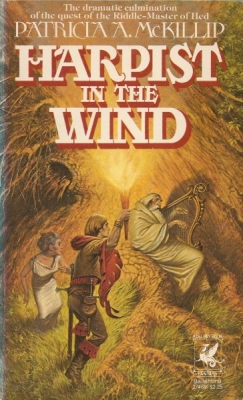
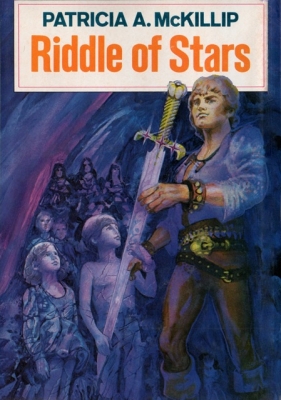
The Locus Awards were established in 1972 and presented by Locus Magazine based on a poll of its readers. In more recent years, the poll has been opened up to on-line readers, although subscribers’ votes have been given extra weight. At various times the award has been presented at Westercon and, more recently, at a weekend sponsored by Locus at the Science Fiction Museum (now MoPop) in Seattle. The Best Fantasy Novel Award dates back to 1978, when it was won by J.R.R. Tolkien’s The Silmarillion. The award was not presented in 1979, and when it was reinstituted in 1980, this time permanently, Patricia A. McKillip won the award for Harpist in the Wind. In 1980. The Locus Poll received 854 responses.
The 1980 award season seems to have been a good year for final books in trilogies. Just as Dragondrums, the final volume of Anne MCCaffrey’s Harper Hall trilogy received the coveted Balrog Award, the final volume of Patricia A. McKillip’s Riddle-Master trilogy, Harpist in the Wind, won the Locus Poll for Best Fantasy Novel. Apparently, it was also the award season for musically-oriented fantasy novels. One of the biggest differences between Dragondrums and Harpist in the Wind is also what makes McCaffrey’s novel easier to read on its own.