A Review of The Witches of Karres, by James H. Schmitz
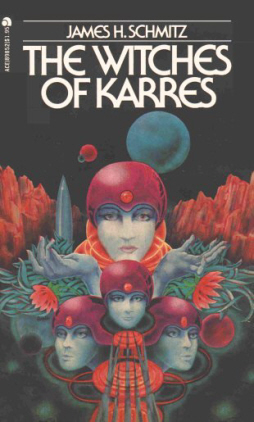 I decided to review The Witches of Karres mostly because I remember seeing some sequels, written by different authors, as James H. Schmitz died in 1981.
I’m not surprised; The Witches of Karres feels like it should have been a series all along. The setting seems designed for multiple adventures. The book itself is less a space opera than a space operetta — it never takes itself too seriously — but it’s still distinctly an adventure story, not a straight-up comedy.
Captain Pausert is a decent and friendly man, perhaps a touch too in love with his notion of himself as a square-jawed space adventurer. For instance, we find out quite early in the book that he faked a log entry about a desperate fight against pirates when he actually just spent a few hours blowing up asteroids — partly to test his ship’s guns, partly for the fun of it.
Still, he can’t resist helping someone in trouble, especially when that someone is an apparently helpless teenage slave girl. Despite the anti-slavery laws of his native planet, he’s quickly maneuvered into buying her, then her two younger sisters.
Pausert may be a bit bumbling at this point in the story, but he’s not quite stupid; he notices that the slave-owners are extremely eager to sell, and that there’s something slightly off about the three girls.

 I’m an old TSR module fan, and as such I’ve always been intrigued by how the concept of such media came into existence. For the most part they fall in series, kind of like writers follow Tolkien with the concept of connected books and characters in a trilogy. It makes perfect sense, especially if you’re trying to create an extended campaign with a gaming group that meets on a regular basis. Series modules facilitate that, and recently I had the opportunity to chat with one of the original designers of a TSR foundation adventure path, the L Series ‘Lendore Isles.’
 In one of my first posts here, I mentioned that I was hoping to figure out what it is, exactly, that I like about fantasy fiction; what it is I get from fantasy that I get nowhere else.
 Hallo again, Ye Faithful Paladins of the Black Gate!
 If you don’t understand the headline, you’re probably too young to remember Max Headroom, originally a British television movie that became a short-lived series for American broadcast (1987-1988) featuring a computer generated talking head–that would be Max–who later became a music video host, a “spokesperson” for New Coke (and if you don’t know what New Coke was, you’re really too young to care about this), and later brought out of retirement in the United Kingdom to explain the switch from analog to digital TV (this, you might remember). Though, today, any 12 year old with a cheap laptop could probably program a character like Max, back in the 1980s this was beyond the technical reach and budget constraints of broadcast television; Max was played by Canadian actor Matt Frewer outfitted in a latex get-up to make him appear pixalated.
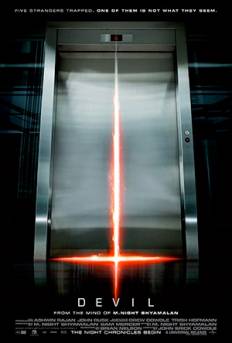 “For the love of God, not another one!”