Did you think the only problem with the 80s animated epic Heavy Metal was that there wasn’t enough nudity?
Do you enjoy old swashbucklers with Errol Flynn and Basil Rathbone crossing swords, musing that the only way the fight could be any more thrilling would be if they were both teenage girls? And naked?
Do you have a well-thumbed set of Luis Royo art books?
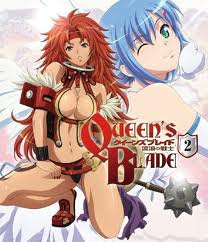
Then you’d probably enjoy the anime series Queen’s Blade. Or, as I like to style it, Bob Guccione’s Highlander. Finally in Blu-Ray!
Shiela Crerar, psychic investigator and adventuress, first burst into public view in the pages of The Blue Magazine in 1920 with “The Eyes of Doom”. The obscure creation of the intriguingly enigmatic Ella Scrymsour, Crerar battled ghosts, werewolves and gibbering ghouls of all types from May of 1920 to October of that same year, appearing in a grand total of six stories which vanished into the literary ether when The Blue Magazine folded not long after. Luckily for aficionados of occult sleuths, Ash Tree Press released a lovely collection in 2006, marking the first time these stories were collected or reprinted in any form.
Beginning with the aforementioned “The Eyes of Doom”, in which Crerar confronted the eponymous vengeful spirit, the series progressed with “The Death Vapour”, “The Room of Fear”, “The Phantom Isle”, “The Werewolf of Rannoch”, and “The Wraith of Fergus McGinty”. Unlike her masculine counterparts in the occult detective business, Crerar is a two-fisted phantom fighter, wading into supernatural situations with little more than guts, brains and a distinct lack of fear bolstered by harsh economic necessity. Not for her the remote recordings of Dr. Hesselius or the psychical solutions of John Silence. Instead she pounced willy-nilly on lycanthropes and luminescent manifestations, sinking her teeth into matters both mundane and malevolent with equal determination.
Say hello to Shiela Crerar, the Scottish terrier of the psychic set.
"Her Uncatchable Orbit" (Title from the Rhysling-nominated poem, "Red Engines," by Catherynne M. Valente.)
…And I as rich in having such a jewel
As twenty seas, if all their sand were pearl,
The water nectar, and the rocks pure gold.
William Shakespeare, Two Gentlemen of Verona
Now, I’m not saying that you all have to leap up and go right now to Ashley Full Stop Brown’s new Etsy site, Woodvine, but, you know, if there’s an anniversary or birthday or milestone to be celebrated (either your own or another’s), and you’re a fantastical sort of person (would you be reading this if you WEREN’T???), and you want a gift that is by its nature gorgeously handcrafted, thoughtful, and full of literary significance, travel no further than your browser!
I met Ashley… Let’s see… At WisCon. This year. At Cat Valente’s Fairyland Launch Party. Yes, that’s right.
If I recall aright (I should never write memoir, never), Ashley was wrapping keys in wire and jewels, which were later raffled off as pendants. And we all drooled for those jeweled keys. Oh, didn’t we just? (I did NOT win one, by the way. Alas.) We were having a little open mic that night, right after S.J. Tucker and the Traveling Fates gave us a faboosh concert. (Isn’t the word FABOOSH excellent? I have recently adopted it into my jargon.)
…You remember S.J. Tucker, don’t you? I did this whole long interview thingy with her, back in the Olden Days, before I was Black Gate’s FELL AND REVERED Blog Editrix.
I don’t precisely remember how I asked Ashley if she’d give me an interview for Black Gate Magazine. If people do cool things that have a fantasy bent, I immediately POUNCE! For your benefit, of course, DEAR READERS! Ahem. And ’cause I’m awful curious about PROCESS, you see.
It was at that party-cum-open mic I heard Elizabeth McClellan read her poem, “The Walking Man Goes Looking for the Sons of John: Six Cantos,” this amazing bluesy ghost poem in full Southern twang, recently published in Apex Magazine, Issue 24. Later, in the flurry of emails between Ashley and me, I learned that Ashley had created several pieces in honor of this poem.
It’s as if she takes the goosebumps we all get when reading or listening to something really extraordinary, and then transforms them into wearable art.
Great things come in small, lagomorphic packagesI have a confession to make.
Barnes and Noble and I are old friends. We go way back, went on some double dates back in the day, you know? So I try to stop in pretty frequently to see how the old boy’s doing. He’s such a welcoming host I usually don’t leave without a new book or two in hand, even though my To-Be-Read pile is starting to resemble a fortress made of paper bricks and dusty mortar.
My confession is that, when I’m deciding exactly which books are going to accompany me home, I look at all the usual factors: Blurb, cover art, quality of the first page or two, and any positive or negative vibes about book or author I’ve absorbed from the aether. But I also weigh the book, and surreptitiously pull out a tape measure to check how many inches separate the covers.
Apex Magazine is a monthly on-line publication of science fiction, fantasy and horror edited by Catherynne M. Valente. The current issue features three stories: “The Whispered Thing” by Zach Lynott, “The Tiger Hunter” by Rabbit Seagraves, “The Secret Protocols of the Elders of Zion” by Lavie Tidhar and, continuing with titles that all start with “The,” poetry by Saladin Ahmed, “The Djinn Prince in America: A Micropic in 9 Tracks.” Jason Sizemore’s non-fiction piece is “Five Genre Books that Raise Mind-numbing Philosophical Questions.”
Apex Magazine is sold online for $2.99; it’s also available in Kindle, Nook, and a downloadable format through Smashwords. Previous issues are available through their store. We last profiled Apex with Issue 23.
You can subscribe and get 12 issues for just $19.99.
[Stealth Edited by Editor to add: There is also poetry by Rhysling-nominated poet Elizabeth McClellan in Issue 27, entitled “Down Cycles.” The lady’s work is worth a look!]
The force is strong with this one, it seems. Yes, that’s my beloved son, taking his first steps toward a larger, more gamer-filled world, as he becomes a temporary apprentice to Lord Vader. (Don’t ask me why the Rebel Alliance officer is standing near them. It just doesn’t fit continuity!)
The second day of Gen Con was our family day, as I took my son and wife to the convention with me. This day is was lot more leisurely paced than yesterday, because we spent more time being selective and sitting down to demo games, because with a six-year-old, you really have to be a bit more picky. He’ll lose patience if you’re chatting up designers about setting specifics. He wants some action, and if he doesn’t get it, there will eventually be a meltdown. With summer ending, we’ve been in meltdown territory for the last couple of weeks anyway, so it was touch and go, but we found enough games for him to get up to speed on quickly that it kept him highly engaged.
One game that we found very interesting, though not particularly fantastic (in the narrative sense of being fantasy-driven) was Bears! from Fireside Games. This dice-based game aims to simulate a bear attack during a camping trip … so, you know, it teaches helpful life lessons, as well. Depending on different die combinations, the players are able to escape the rampaging bears by shooting them, running away, or sleeping contentedly in their tents. However, if there are more bears left over when this is all done, then those sleeping in tents get eaten and lose points instead of gaining them.
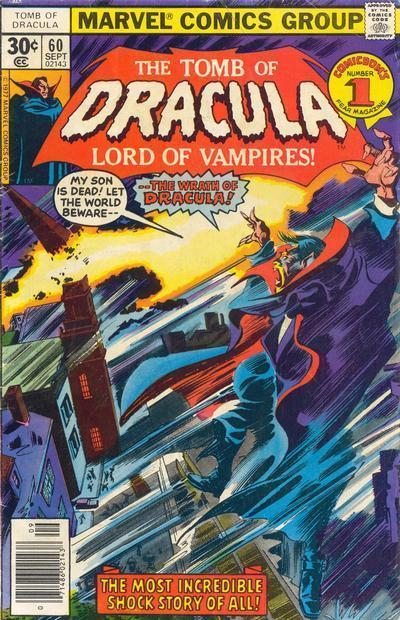
The Tomb of Dracula #59, “The Last Traitor” starts off with Quincy Harker, Frank Drake, Rachel Van Helsing, and Harold H. Harold feeling uneasy that Anton Lupeski has armed them with rifles and silver bullets as the group plots to assassinate Dracula at a feast in honor of his son’s birth to be held that weekend. Gene Colan’s depiction of Lupeski is eerily lifelike. The group is conflicted by their contempt for Lupeski and their desire to end Dracula’s reign of terror. Marv Wolfman gets in some nice digs about Freedom of Religion protecting Satanists as well as Christians with Lupeski saying that one day they will see whose God is stronger. We then switch to a brief domestic scene between Dracula and Domini as the vampire expresses his awareness that Lupeski seeks to undermine his power at the upcoming feast in his son’s honor. The vampire then sets out to hunt and picks as his victim an attractive night school teacher whom Dracula saves from an attempted rape by one of her students only to attack her himself. From there the action quickly shifts to the night of the feast in Janus’ honor. Lupeski, clad in his ceremonial mask and robes, proclaims the infant Janus the New Leader of the Dark Church just as Quincy, Rachel, Frank, and Harold burst in and the gunplay begins. Lupeski’s bloodlust gets the better of him and he brandishes a rifle as well and in the ensuing battle, Janus is inadvertently struck by a bullet and killed. Dracula is overcome with rage as he knocks Lupeski to the ground and crushes his face with his bare hands, killing the treacherous high priest. Domini turns in prayer to the portrait of Christ that hangs in the deconsecrated church and declares there are to be no more deaths. She orders Quincy, Rachel, Frank and Harold to depart quickly. She then informs Dracula that she acts on Christ’s commands and beseeches her husband to turn aside from his dark path and embrace her Savior. Dracula’s anger gives way to bewilderment as he transforms into a bat and flees from the church telling Domini he cannot do what she asks of him.
#60, “The Wrath of Dracula” is simply a stunning character study of an enraged lost soul in his darkest hour. Dracula drives Domini off and proceeds to destroy the deconsecrated church (with the exception of the painting of Christ that he is unable to touch). As his anger subsides, his grief turns to introspection as he recalls his cruelty to his first wife and his misogynistic behavior toward his female servants and finally his broken relationship with his daughter, Lilith. Overcome with emotion, he flies to the top of a building in downtown Boston in the midst of a terrible storm and declares that his entire life has been a lie that must finally end. Filled with all of the pain he and his family have endured, he swoops down to attack an attractive woman braving the rain far below only to check himself when confronted by her young son. Climbing atop a church tower in the heart of the storm, Dracula begs God to strike him down and end his suffering. When the lightning fails to kill him, he is once again enraged believing that God mocks him because he is already damned. Dracula vows to end God’s power over mankind and transforming into a bat, he flies off into the night. The issue ends with a brief epilogue showing Domini at Janus’ grave at dawn as she promises her son to find a means of resurrecting him.
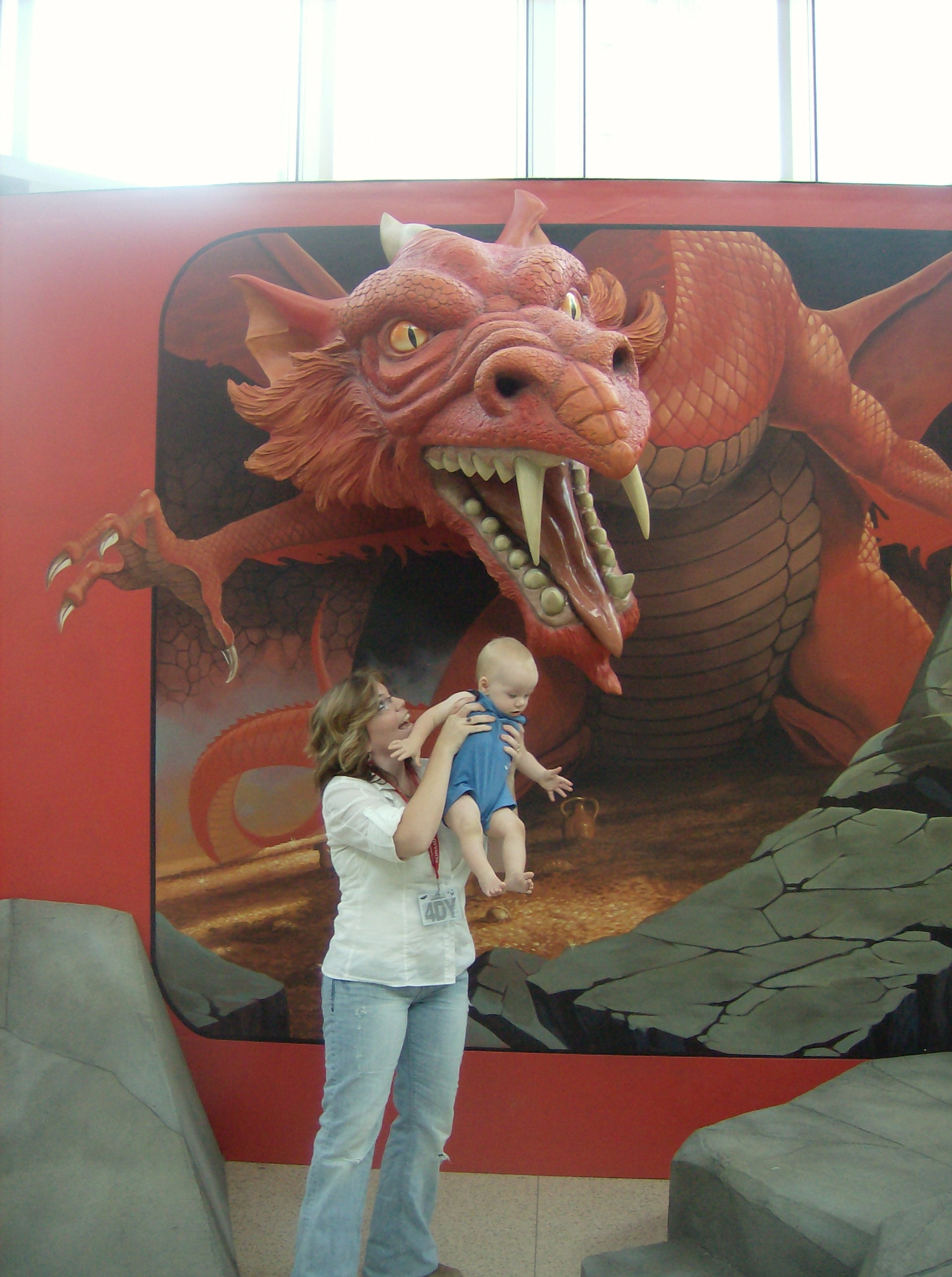
Did I say I was an unapologetic geek? My wife, Amber, offered our son to a dragon at GenCon!
It’s that time of the year again, when all the good little gamers gather in Indianapolis to explores the exhibitor’s booths and discover treasures, new and old. I speak, of course, of Gen Con Indianapolis, the “Best Four Days in Gaming.”
If you recall from last year’s report (see Gen Con 2010 Reflections if you don’t recall), I had a lot of fun last year, mostly because I now have a family to take and with whom I could share the experience.
They also prove useful bait for dragons. (Just kidding. No infants were harmed in the making of this blog!)
Today, however, was all about me. I trekked into Indianapolis to experience the first day of the convention on my own, basically blasting through the Exhibit Hall and trying to look at every booth to find if there was anything interesting for me to report back on. …
The options for your summer reading list are as copious as the Speedo bathing suits which have suddenly appeared on the rooftop sun deck of the Black Gate offices, but not nearly as difficult to speak about.
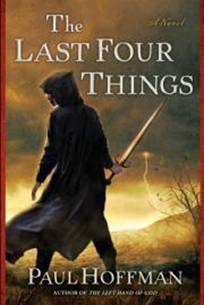
A couple weeks back I told you about Robert Browne’s The Paradise Prophesy, which hit store shelves on July 21st. This week British author Paul Hoffman brings us the second in The Left Hand of God trilogy, entitled The Last Four Things.
Hoffman’s first book set off a worldwide bidding frenzy among US publishers in 2008.The Left Hand of God (aka The Angel of Death) follows the story of Thomas Cale, a teenager imprisoned in The Sanctuary, a brutal institution that trains boys to become warriors, known as “Redeemers” in an imminent holy war.
Though the trilogy is set in an intriguingly ambiguous medieval realm with modern overtones, this isn’t entirely a fantasy world; much of it is based on Hoffman’s own experiences growing up in an extremist Catholic boarding school.
My student said, “It’s time I learned to proofread. Can we do that next?”
I nearly fell off my chair. He was right, of course, but it’s not a skill students usually ask to work on. “Sure. I’ll see what kinds of exercises I can find in my files at home…”
“No exercises! No fake documents. Please, don’t ask me to proofread something whose only purpose on this earth is to be proofread.” A very reasonable objection. “How about we proofread one of your manuscripts?”
 Did you think the only problem with the 80s animated epic Heavy Metal was that there wasn’t enough nudity?
 Shiela Crerar, psychic investigator and adventuress, first burst into public view in the pages of The Blue Magazine in 1920 with “The Eyes of Doom”. The obscure creation of the
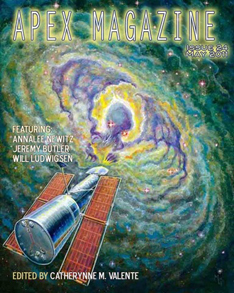

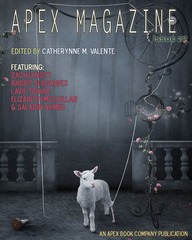 Apex Magazine is a monthly on-line publication of science fiction, fantasy and horror edited by Catherynne M. Valente. The current issue features three stories: “The Whispered Thing” by Zach Lynott, “The Tiger Hunter” by Rabbit Seagraves, “The Secret Protocols of the Elders of Zion” by Lavie Tidhar and, continuing with titles that all start with “The,” poetry by Saladin Ahmed, “The Djinn Prince in America: A Micropic in 9 Tracks.” Jason Sizemore’s non-fiction piece is “Five Genre Books that Raise Mind-numbing Philosophical Questions.”
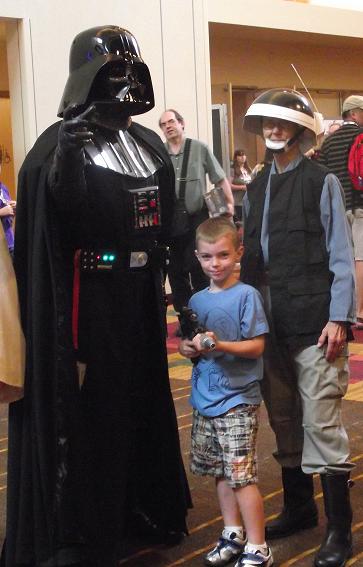 The force is strong with this one, it seems. Yes, that’s my beloved son, taking his first steps toward a larger, more gamer-filled world, as he becomes a temporary apprentice to Lord Vader. (Don’t ask me why the Rebel Alliance officer is standing near them. It just doesn’t fit continuity!)