Browsed by
Category: Blog Entry

Vintage Treasures: Feather Stroke by Sydney J. Van Scyoc

Vintage Treasures: Feather Stroke by Sydney J. Van Scyoc

Feather Stroke Sydney Van Scyoc-smallMy sister-in-law Mary Dechene passed away unexpectedly two weeks ago. She was 52, never married, and lived alone in a small apartment in Madison, Wisconsin. She was also a Black Gate reader and I’ll miss the letters she used to send me after she read each issue cover to cover.

Her funeral was Saturday. Afterwards came the sad duty of parceling out her belongings to various siblings, nieces, and nephews as the family packed up and cleaned out her apartment. Mary was a dedicated fantasy fan — really, it was all she read — and she left behind thousands of fantasy paperbacks dating from the late 80s and on, packed in dozens of boxes. I think many folks assumed I would want them, but I’m already pretty well stocked in fantasy paperbacks from that era and thought it made more sense for them to go to her sister Marty, so I gallantly waved away any claim to them.

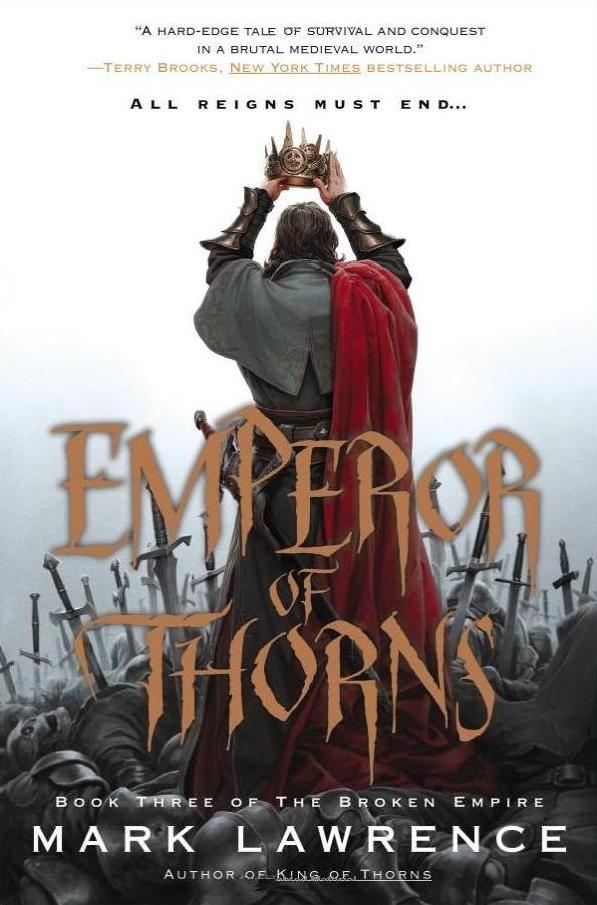
At least until I casually peeked in the first box. I discovered that Mary was surprisingly widely read, and in addition to a virtually complete collection of Terry Brooks, David Eddings, Mercedes Lackey, Robin Hobb, and other bestselling fantasy, she had several surprises. In fact, she had dozens of books I never even knew existed. And trust me when I tell you, that doesn’t happen to me very often.

In a matter of minutes, I was secluded in the garage, digging through box after box. While the rest of the family divided Mary’s jewelry and appliances, I was stacking hundreds of paperbacks in neat rows. In addition to being a completest, Mary was also a very careful reader — the books were in great shape. It really was a treasure trove, far more fantasy novels than I’d seen virtually anywhere. And I’ve been in some of the best book stores on the planet.

In the end, I made it through less than half the boxes. I felt a little guilty about pillaging Mary’s collection anyway, especially after her sister had already laid claim to it, but Marty didn’t seem to mind. I didn’t find anything really valuable, but I did fill a great many holes in my collection, and brought home one very nearly full box of Mary’s delightful collection. I settled back with the first one tonight —  Sydney J. Van Scyoc’s Feather Stroke, a standalone 1989 fantasy from Avon with a terrific Keith Parkinson cover.

Written on the first page, in her famously cramped script, are the words Mary Dechene. A reminder of where they came from. Thank you, Mary. We shared a passion for fantasy, and I’m glad fate brought us together for a short time. I’ll treasure these books, and they will always remind me of you. Rest in peace.

Exploring the Royal Army Museum, Brussels (Part 2)

Exploring the Royal Army Museum, Brussels (Part 2)

A view of the Colonial section.

In my last post, we looked at some of the medieval arms and armor at The Royal Museum of the Armed Forces and of Military History in Brussels, Belgium. The impressive medieval collection is only one part of this huge museum, which covers all periods of Belgian history. The Napoleonic and World War Two sections are extensive, but of most interest to me were the Colonial and World War One sections. You won’t find much about Belgian colonial wars outside of Belgium and the small nation had a unique role in the First World War.

Belgium may have been small, but it had colonies in Africa, China, and Guatemala, as well as economic interests in many other areas. The Colonial hall follows the history of Belgian military interventions in these regions.

Read More Read More

New Treasures: The Best Science Fiction and Fantasy of the Year Volume 8, edited by Jonathan Strahan

New Treasures: The Best Science Fiction and Fantasy of the Year Volume 8, edited by Jonathan Strahan

The Best Science Fiction and Fantasy of the Year Volume 8-smallHurrah!  The Best Science Fiction and Fantasy of the Year Volume 8 is in the house.

You’d think that after seven outstanding previous volumes, one more would be a slam dunk. But no. There was drama. The original publisher was in peril and no one knew if there would be an eighth. Well, maybe somebody knew, but it wasn’t me. And I’m the one with 9 column inches to fill every day.

At length, cooler heads prevailed and Volume 8 reappeared on the schedule from a new publisher, Solaris Books. It’s been redesigned so it looks slightly funky standing next to the uniform previous volumes, like a red-headed stepchild at a family reunion. But looks aren’t important to us here at Black Gatewhich explains our love for Paul Giamatti and five dollar haircuts.

Well, enough superficiality. What’s in the book?

28 stories by some of the best writers at work in the field today, including multiple Hugo and Nebula award nominees — such as “Selkie Stories are for Losers” by Sofia Samatar (Hugo and Nebula nominee), “The Truth of Fact, the Truth of Feeling,” by Ted Chiang (Hugo), and “The Ink Readers of Doi Saket,” by Thomas Olde Heuvelt (Hugo). See the complete table of contents in our previous article.

(And while we’re on the topic of Hugos, editor Strahan is on the ballot this year for Best Professional Editor, Short Form. You go, Jonathan! We’ve got ten bucks on you, buddy.)

Strahan’s Best of the Year volumes include both SF and fantasy, and year after year are some of the best values in the industry. If you’re not reading them, you’re missing out on some of the finest new writing in the field.

The Best Science Fiction and Fantasy of the Year Volume 8 was edited by Jonathan Strahan and published by Solaris on May 13, 2014. It is 614 pages, priced at $19.99 in paperback and $7.99 for the digital edition. We last covered Strahan’s The Best Science Fiction and Fantasy of the Year with Volume 7.

One of the Best Serials Ever Made: The Adventures of Captain Marvel, Chapter Two: The Guillotine

One of the Best Serials Ever Made: The Adventures of Captain Marvel, Chapter Two: The Guillotine

Captain Marvel Episode 2  Lobby card-smallHave you found your seats? Are you sufficiently equipped with licorice whips, popcorn, and Nehi Soda? Then let the lights dim and settle in for Republic Pictures’ 1941 serial, The Adventures of Captain Marvel. We opened last week with Curse of the Scorpion. Today, Chapter Two: “The Guillotine.”

Our chapter  opens with helpful title cards summarizing events for those who couldn’t scare up a dime last Saturday. “Rahman Bar – Attacks the camp of the Malcom Expedition in reprisal for the theft of the Golden Scorpion.” “Billy Batson – Radios for troops from Fort Mooltan.” “Malcolm – And the rest of the party try to escape with the lenses.” “Captain Marvel – Tries to warn them that the bridge across the gorge is mined.” There – all caught up. Now say the mystic word and be transformed!

We now get a quick two minutes from last week’s cliffhanger ending. We see Whitey and Betty stuck on the bridge as the dynamite explodes and the bridge collapses. The car tumbles into the river, taking the helpless occupants with it. Observing from a boulder where he has just landed, Captain Marvel executes a very nice high dive and, swimming to the not-quite-yet submerged station wagon, pulls the unconscious Whitey and Betty to the safety of the river bank.

By the way, as cliffhanger resolutions go, this is quite honest. All serials did some cheating in their cliffhangers (the looney Undersea Kingdom with Ray “Crash” Corrigan might be the worst offender in this regard), but The Adventures of Captain Marvel usually plays it fairly straight.

Read More Read More

Going Home

Going Home

PHBI’ve lived away from the house where I grew up since I went off to college at the age of 17. That was only a couple of years shy of three decades ago (yikes!). Since then, I’ve lived in three different cities, including one in another country. By any reasonable measure, I’ve spent more years living somewhere other than that house than I ever did under its roof. Yet, no matter how long it’s been since I last lived there, no matter how long it’s been since I last visited it, whenever I return, I’m home. Indeed, when I talk about my parents’ house and the city where it’s located, I reflexively use the term “home” for both, this despite the fact that I’ve now lived with my wife as long as I ever lived with my parents.

It’s a strange habit of mind, one I doubt is unique to me and that manifests itself in other ways. Since high school, for example, I’ve studied four different foreign languages. Just last week, I started learning a new one. Even though I attained a reasonable degree of literacy in all of them, I never gained significant verbal fluency, in large part because I never learned to think in another language. I am always thinking in English and mentally translating from it to whatever other language I am attempting to speak. In short, I continue to be an English speaker, even when I am trying to speak French or German.

Though Dungeons & Dragons was my first roleplaying game and a staple of my hobby for more than a decade, by the mid-90s, I’d largely stopped playing it. The reasons for my doing so are several and not very important. Shortly before Wizards of the Coast released its new edition – Third Edition or 3e – I was working as a writer at a games magazine and was given early access to the forthcoming rulebooks as background for an article I was tasked to write. I did not expect to like the new edition, let alone like it enough that I’d come back to D&D after a prolonged absence, but I did. I owe Wizards of the Coast a big debt of thanks for having helped me to fall in love with Dungeons & Dragons again.

Over the next six years or so, I played Third Edition intensely. I got to know the game and its rules very well, so well, in fact, that I started to find them ponderous to the point where they were getting in the way of the kind of tabletop experience I wanted. This led me to start to think seriously about what I liked in RPGs and how I could best get it. Ultimately, that thinking led me back, ironically, to the games I’d played in my youth, including the earliest editions of Dungeons & Dragons.

Read More Read More

The Shout of a Young Man Who Finds the World a Complicated Place: The Eternal Champion by Michael Moorcock

The Shout of a Young Man Who Finds the World a Complicated Place: The Eternal Champion by Michael Moorcock

oie_272267fTHTh1HnWhen I was a kid, all my friends read Michael Moorcock’s sprawling Eternal Champion series. Endlessly resurrected and reincarnated, the Eternal Champion exists to right the balance between Law and Chaos. According to Moorcock in the introduction to the 1994 edition of the novel, The Eternal Champion:

I use the ideas of Law and Chaos precisely because I am suspicious of simplistic notions of good and evil. In my multiverse, Law and Chaos are both legitimate ways of interpreting and defining experience. Ideally, the Cosmic Balance keeps both sides in equilibrium. By playing “the Game of Time”… the various participants maintain that equilibrium. When the scales tip too far toward Law we move toward rigid orthodoxy and social sterility, a form of decadence. When Chaos is uppermost we move too far towards undisciplined and destructive creativity.

Seemingly deep stuff for teenagers to be reading, but I think it was part of the series’ appeal. Teenagers are constantly pushing boundaries and trying to get a grip on right and wrong. I think many of them are as suspicious of supposedly “simplistic notions of good and evil” as Moorcock was. It appeared to be presenting a more nuanced way of looking at the world.

Most of the guys (and it was all guys) I knew who read swords & sorcery back in the 1970s and early ’80s were SF/F geeks, potheads, or metalheads and there was a lot of overlap amongst those groups. In my experience, gaming had a lot to do with bringing those tribes together and we all loved Moorcock’s stories and heroes.

Most preferred the morose albino, Elric, of doomed Melniboné. Dressed in black armor, wielding the evil soul-drinking sword Stormbringer, and riding a dragon — I totally get it. A few liked Dorian Hawkmoon von Koln and his adventures across post-apocalyptic Europe and America better. Personally, I did and still do enjoy the two trilogies about Corum Jhaelen Irsei, last of the Vadhagh. Steeped in Irish myth and a gloomy Celtic miasma, I think they’re the most intense and beautiful books in the series.

Read More Read More

Compiling The Big Book of Swashbuckling Adventure

Compiling The Big Book of Swashbuckling Adventure

The Big Book of Swashbuckling Adventure-smallGreetings, Black Gate readers! You may be familiar with my work as the game designer Lawrence Schick – possibly from role-playing material like the White Plume Mountain D&D scenario, video games such as Sword of the Samurai, or my recent work as Loremaster for The Elder Scrolls Online.

But I also write, edit, and translate historical fiction as Lawrence Ellsworth, and in that capacity I have a new title coming out from Pegasus Books, an anthology called The Big Book of Swashbuckling Adventure. Our friends at Black Gate asked me to write an article about compiling that anthology, and here it is.

I’ve been reading and collecting swashbuckling adventure fiction for many years – my whole life, really. A couple years ago, while in the middle of a long (and still uncompleted) translation project, it occurred to me that I probably knew enough about the subject to be able to compile a pretty interesting anthology. The more I thought about the idea, the better I liked it, so I sat down and starting making notes.

I decided the anthology had to meet four criteria. First, it would need to catch the attention of contemporary readers, which meant including recognizable, marquee names, of both characters and authors. Second, it would have to be attractive to mainstream publishers, which meant inexpensive to produce (works in the public domain), and couched in a familiar, saleable format – in this case, a “Big Book,” a fat collection of at least 200,000 words. Third, for variety I wanted a good mix of pirates, cavaliers, and outlaws – and they all had to be cracking good stories that would hold the attention of modern readers. Fourth, not just any stories would do – I wanted carefully hand-picked works that weren’t overly familiar and would re-introduce some of my favorite forgotten authors to the 21st century.

Read More Read More

The Weird of Oz Weighs In: Go Go Go Godzilla!

The Weird of Oz Weighs In: Go Go Go Godzilla!

“History shows again and again / How nature points up the folly of man / Go go go Godzilla!” — Blue Oyster Cult

photo-9Our intrepid reporter on the kaiju beat, Ryan Harvey, has done a masterful five-part chronicle of Godzilla’s 60-year film history for Black Gate. Last week, he topped it off with his review of the American re-launch of the venerable franchise, which you can (and should) read HERE. I’m not going to retread what he has covered, but I think the return of the King of Monsters is big enough to warrant two commentaries! I find myself in virtual agreement with Harvey’s review, so I’ll just be adding a few random observations. Here are some of my thoughts after seeing the film . . .

First, take a look at the marquee I snapped a pic of while in line to buy my ticket. See the third film from the bottom? God’s Not Dead — no indeed, and just underneath you’ll see that he’s back in 3-D!

Okay, some may take that little joke as sacrilege, but you know I couldn’t pass up that juxtaposition. I also find it interesting that the first two films are Spider-Man 2 and Captain America 2. This week you can add the new X-Men film to the line-up — jeez, Marvel is ruling at the box office. Seems like they are the box office. So this is where it may be amusing to note that Godzilla, too, was once part of the Marvel world.

Marvel Comics licensed that other big green goliath from Toho back in the ‘70s, but they didn’t just do a spin-off comic like with many other independently-owned franchises (G.I. Joe; Star Wars): no, they worked him right into Marvel continuity! He battled the likes of the Fantastic Four. S.H.I.E.L.D. was on his trail as he rampaged across the United States. Spider-Man even had a brush with the atomic-powered lizard! A couple years back, Brian Michael Bendis (the guy who pens, like, half the Marvel comics in recent years) made the wry observation that, although Marvel no longer has the license to the character, they never wrote him out of continuity. In other words, Bendis noted, Godzilla exists in the Marvel Universe to this day. So up there on the marquee with all those Marvel superheroes, he is in familiar company.

Read More Read More

Everything’s Coming up Aces: All the Covers of Galactic Derelict

Everything’s Coming up Aces: All the Covers of Galactic Derelict

Galactic Derelict 1961-big Galactic Derelict 1971-small Galactic Derelict 1978-small

Click any of the images to see the complete wrap-around covers.

Last week I wrote a brief Vintage Treasures article about Andre Norton’s classic SF adventure novel Galactic Derelict. Here’s what I said about the book’s printing history:

Galactic Derelict was published in 1959 by the World Publishing Company and has been reprinted in eight different editions over the last half-century. It first appeared in paperback from Ace Books in 1961. It is 192 pages in paperback, priced at 35 cents. The cover is by Ed Emshwiller. If I have a few moments this weekend, I may assemble some of the other covers to display them here.

Well, on this leisurely Memorial Day weekend, I finally have a few minutes to pull together half a dozen covers from the book’s five decades in print, and here they are.

Read More Read More

Sumerian Zombies, Chicago Vampires, and Stephen King: David C. Smith’s The Man Who Would Be King and Other Stories

Sumerian Zombies, Chicago Vampires, and Stephen King: David C. Smith’s The Man Who Would Be King and Other Stories

The Man Who Would Be King and Other Stories David C Smith-smallDavid C. Smith has been a friend to Black Gate almost as long as we’ve been around. I remember attending a World Fantasy Convention with Howard Andrew Jones many, many moons ago when we were both four years old (or thereabouts), when Howard dragged me excitedly to an autograph session to meet him. Dave was astoundingly gracious to two young sword & sorcery fans, entertaining us with tales of writing Red Sonja novels with Richard L. Tierney and the wild S&S publishing scene in the 1970s.

In person and on the page, Dave is a natural storyteller. We both live in Chicago and I’m honored that we’ve become friends over the past few years. We’ve published his fiction and non-fiction here at Black Gate — including an excerpt from his new noir thriller Dark Muse, and one of the most popular works of fiction we’ve ever posted: an excerpt from his supernatural pirate dark fantasy novel Waters of Darkness, written in collaboration with Joe Bonadonna

Dave and Joe co-wrote one of our most popular blog posts in 2012, “The Big Barbarian Theory,” and Dave followed it up with a classic article that still brings traffic to our site today, “New Pulp Fiction for Our New Hard Times.” Howard interviewed Dave for us in 2007, and Jill Elaine Hughes conducted a interview/career retrospective a few months later.

Dave’s latest book is a new collection of four new short stories, a novella, and more — including “The Man Who Would Be King,” the tale of a writer who resents Stephen King’s success, until an odd encounter with the most popular horror writer in America changes his life. The Man Who Would Be King and Other Stories also includes a story set in the universe of his popular novel Oron, a zombie tale, a sample chapter from The West Is Dying, author notes, and much more.

Read More Read More