Browsed by
Category: Blog Entry

Future Treasures: Fearsome Magics, edited by Jonathan Strahan
Future Treasures: Fearsome Magics, edited by Jonathan Strahan

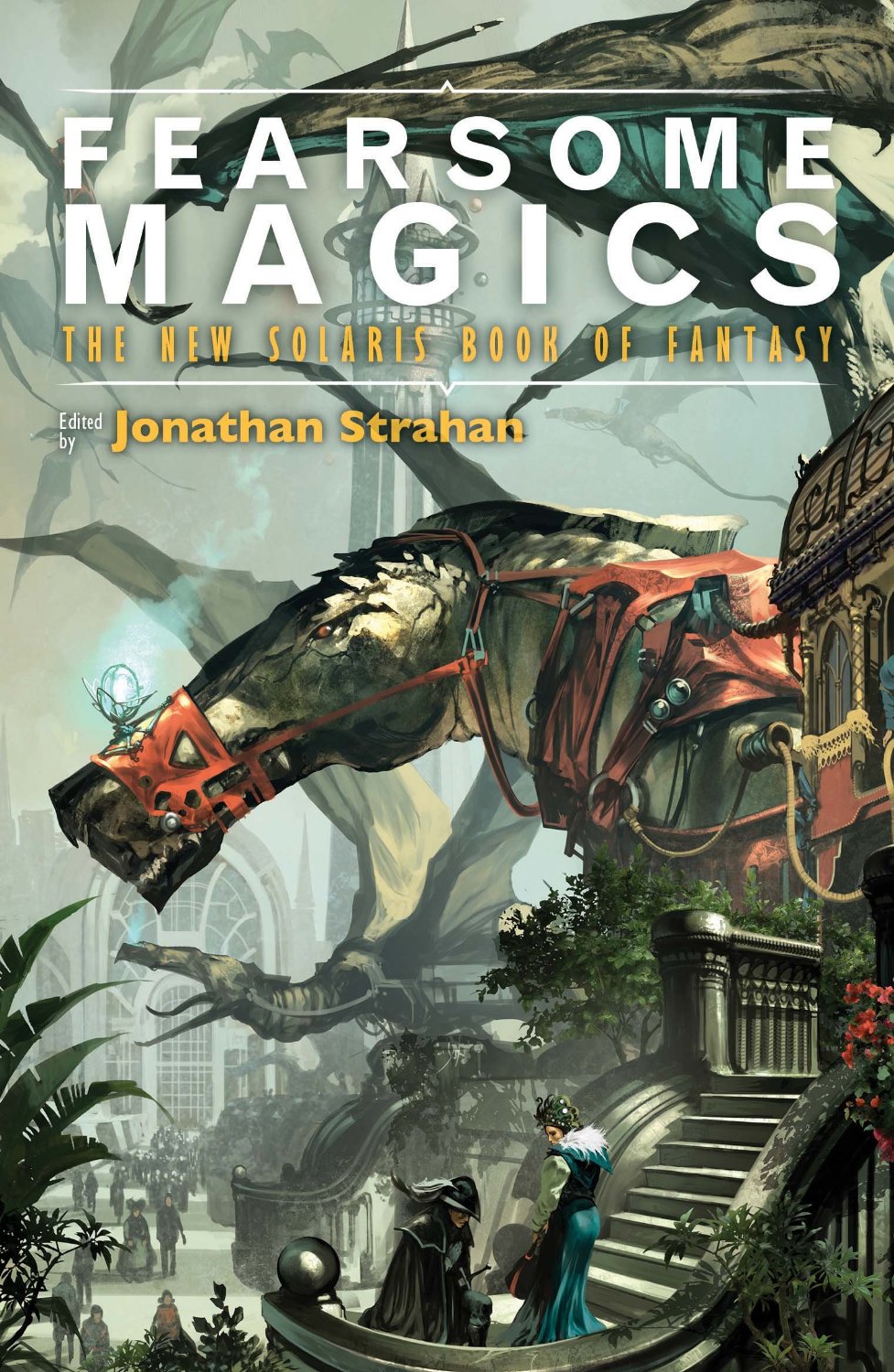
Fearsome Magics-smallSolaris Books continues to single-handedly fuel a renaissance in paperback anthologies, including two top notch science fiction anthology series: Ian Whates’s Solaris Rising, and  Jonathan Strahan’s  Reach for Infinity.

Next week sees the arrival of Jonathan Strahan’s Fearsome Magics, his second volume of original fantasy fiction from Solaris. Here’s what James McGlothlin said about the first, Fearsome Journeys:

Many of Fearsome Journeys’ stories fit squarely within the tradition of fantasy — which I love! For instance, many contain typical tropes such as magic, dragons, wizards, fighters, thieves, etc., as well as familiar plot angles like quests to recover treasure or kill some monster or dragon. However, as one would expect from this lineup, many are fairly experimental attempts to push the boundaries of what is, or should be, considered fantasy. Let me give a few highlights.

Glenn Cook provides another great tale of the Black Company, his popular fantasy military troop, with his story “Shaggy Dog Bridge.” Similar to Cook’s Black Company, Scott Lynch’s “The Effigy Engine” centers upon a group of (wizard) warriors called the Red Hats, who are battled-hardened cynics often attempting to just get by. This was a very interesting tale describing war contraptions that reminded me of medieval versions of the AT-AT Walkers from The Empire Strikes Back. Very cool!…

I can say — without any reservation — all of stories contained within Fearsome Journeys are extremely well-crafted… There’s no doubt that these are some of the best writers in the field today.

Here’s the book description.
Read More Read More

A Rogue’s Early Days: Yendi by Steven Brust

A Rogue’s Early Days: Yendi by Steven Brust

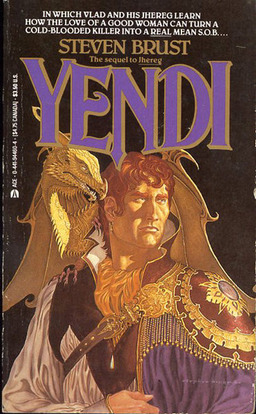
oie_28150EMzOHUFYSteven Brust has written that Yendi (1984), second in his ongoing series about gangster Vlad Taltosis his least favorite book. As it’s only the second of his novels I’ve read, I can’t tell you where it falls on a greater continuum of his work, but I can tell you it’s a pretty good book. Sure, the book is flawed, but the good bits far outweigh the bad. If this is the low point in the series, then I’m REALLY looking forward to the later volumes.

The first book in the series, Jhereg (read my review here), introduces Vlad Taltos, a human assassin in a magic-heavy world ruled by the Dragaerans (who are pretty much elves). In that book, Vlad finds himself forced into carrying out a complex assassination. Aided by his mini-dragon familiar, Loiosh, and several powerful and clever friends, he succeeds beyond his own expectations. It’s a blast and I’m grateful to Bill Ward for getting me to check it out.

Instead of taking the story forward, Brust goes back in time with Yendi. Here we learn how Vlad rose in the ranks of the mafia-like House Jhereg. By a combination of smarts, daring, and just enough violence, he secures a position in the gangland ecology of the Dragaeran Empire’s capital city, Adrilankha. By book’s end, he’s well on his way to becoming the successful racketeer we meet in the first book. Unfortunately for him, things happen between the beginning and end of Yendi that make for a lousy time for Vlad, but a fast-paced story for us.

The book begins with Vlad learning that another low-level boss, a Dragaeran named Laris, has opened a gaming parlor in his territory. When confronted, Laris is apologetic and presents a series of nearly believable excuses. After the meeting, Vlad informs his lieutenant, Kragar, that they have probably no more than two days to get ready for an all-out war. His intuition proves correct.

The war between Vlad and Laris is so violent that one of the five rulers of House Jhereg summons Vlad and tells him to handle his war with more subtlety, or else. Unfortunately, it’s too late to avoid the or else. Incensed by the steady string of fires and killings, the Dragaeran empress dispatches members of her Phoenix Guard to clamp down. There are curfews, restrictions on the size of gatherings, and all criminal operations are shut down.

Read More Read More

New D&D Monster Manual Unleashed on the World

New D&D Monster Manual Unleashed on the World

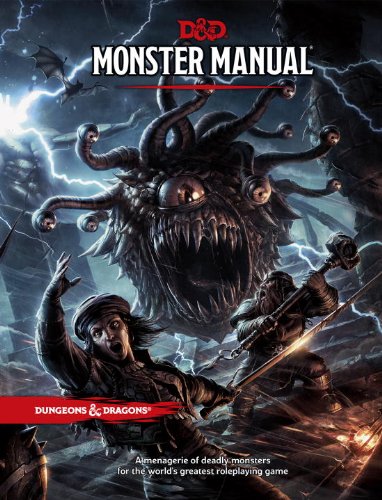
D&D Monster Manual Fifth EditionA fantasy roleplaying game is defined as much by the caliber of the villains and monsters as it is by the caliber of the players and heroes. Though Dungeons & Dragons has always been driven primarily by the imagination of the Dungeon Master and the players, the fact is that you can usually get only so far with just the Player’s Handbook (Amazon). It has the basic rules mechanics for playing the game, but lacks the array of exotic monsters necessary to populate – and threaten – the fantasy world that the characters are exploring.

With the arrival of the new 5th edition D&D Monster Manual (Amazon), that gap has now been alleviated. This book contains a beautifully-illustrated 350 pages of monsters, adversaries, and maybe even a few allies to introduce flawlessly into 5th edition games. The name really says it all; it is a manual full of monsters. There’s an appendix of “Miscellaneous Creatures” and one of “Nonplayer Characters” which are also useful, but there is one stand-out mechanic introduced that is worth mentioning in its own right, for those who might be wondering if the book is worth picking up.

Legendary Creatures

The manual contains a class of “Legendary Creatures” which “can take special actions outside their turns, and a few can exert power over their environments, causing extraordinary magical effects to occur in their vicinity.” In addition to these “legendary actions,” legendary creatures also sometimes come along with a lair, which gives the legendary creature ability to take extra “lair actions” and may have ambient powers, representing how the legendary creature’s power has physically warped the terrain of the lair.

Read More Read More

“Shardik, Shardik the Power Of God!”

“Shardik, Shardik the Power Of God!”

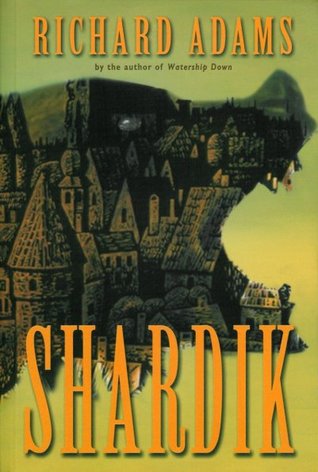
Shardik-smallMidway through Richard Adams’s doorstop of a book, Shardik (1974), I decided I had stumbled into the world’s longest parable.

Biblical parables are typically quite brief, but Adams pulls toward the opposite shore, reasoning that in thoroughness lies salvation. And why shouldn’t he? That tactic worked like gangbusters in his astounding debut, Watership Down (1972).

Shardik could indeed function as a serviceable doorstop, but to dismiss it out of hand would be a disservice to literature in general, and to fantasy novels in particular. Shardik is a brave, uncompromising examination of how “mere” mortals encounter and deify the exceptional, thus giving rise to portents, omens, prophecies, and ultimately continent-conquering religions.

In the case of Shardik, the talismanic inciting event takes the form of a gigantic bear, a bear of monstrous, prehistoric proportions, and this bear first flees a forest fire and then crashes, half-burned and exhausted, into a far-flung outpost of human civilization, Ortelga. Unfortunately – or not, depending on one’s point of view – the Ortelgans entertain a fervid belief that God’s manifestation on Earth will come in the form of a massive bear.

While Watership Down stayed locked within the heads of its rabbit characters, Shardik spends only a few pages at the outset inside the eponymous bear’s mind, just long enough to convince any alert reader that while Shardik may be a divine instrument, he is very much a bear, no more, no less, and will behave accordingly. After that, the story turns to Kelderek-Plays-With-Children, a hunter of simple tastes who first stumbles upon the injured, recovering bear-god.

Read More Read More

The Public Life of Sherlock Holmes: An Index (So Far)

The Public Life of Sherlock Holmes: An Index (So Far)

Index_Holmes
An awesome print by Tom Richmond of Holmes on screen over the years. I own print #7 of 450

Surprisingly, The Public Life of Sherlock Holmes has now made it to thirty posts. While I’m sure the dedicated reader types ‘Public Life of Sherlock Holmes’ in the search field to call up all the posts in the series, I said to myself (I talk to myself a lot),  “Bob, there’s got to be an easier way for someone to bask in the entirety of your writings so far.”

And there is! Below is an index with links to all the posts, followed by some topics likely to come.


Sherlock Holmes/Sir Arthur Conan Doyle

The Public Life of Sherlock Holmes – Introduction to the column (rather unoriginal title, eh?)

Lord of Misrule – Christopher Lee as the great detective

The Case of the Short Lived Sherlock – One of my favorite Holmes’, Ian Richardson

Creation to Death and Back – A good intro to Holmes, focusing on Doyle’s love-hate (minus the love) relationship with his most famous creation

Read More Read More

The Top 50 Black Gate Posts in August

The Top 50 Black Gate Posts in August

Guardians of the Galaxy poster-smallAh, August. We miss you already. The nights were warmer, the kids hadn’t started school, and Alice still hadn’t discovered those new paperback collections I tried to hide in the garage. It was a simpler time, a happier time. A time when I didn’t have to sleep on the couch.

Black Gate bloggers were busy in August, too. We posted 105 new articles last month, and our faithful servers in the back room worked overtime delivering 1.28 million pages views… a new record. That’s a page every two seconds, 24 hours a day. Don’t you people ever sleep?

The most popular article last month was Nick Ozment’s review of the blockbuster film The Guardians of the Galaxy. No surprise — it’s well on its way to becoming the biggest film of the year. It’s a terrific science fantasy that could well become this generation’s Star Wars.

Second on the list was Robert J Howe’s reminiscence of his time in various writer’s groups, Writer’s Workshops: Under the Black Flag. Third was Lou Anders’ article on his breakout middle grade fantasy Thrones & Bones: Why I Write What I Write How I Write it.

Fourth on the list was Matthew David Surridge’s report from the fabulous Montreal film festival, My Fantasia Festival, Day 10: Once Upon a Time in Shanghai and Jack and the Cuckoo-Clock Heart. Rounding out the Top Five was Connor Gormley’s feature review of Karl Edward Wagner’s sword & sorcery classic Dark Crusade.

For this month, I tried something a little different by also including the top Categories. The biggest surprise was that one of the top items on the list (at #4, higher than any of the categories except New Treasures and Books) was the RSS feed for our Tuesday blogger James Maliszewski. Way to bring in the crowds, James!

Read More Read More

Eugie Foster, December 30, 1971 – September 27, 2014

Eugie Foster, December 30, 1971 – September 27, 2014

Eugie FosterAuthor and editor Eugie Foster died of respiratory failure today at Emory University in Atlanta.

Eugie announced last October that she has been diagnosed with cancer, a “malignant, fast-growing tumor, around 6cm, in my sinuses and hard and soft palate regions.” She was undergoing aggressive treatments, including a stem cell transplant, which left her vulnerable to infections. In one of her last blog posts, on August 12, 2014, she wrote:

[One] opportunistic bacteria infection has taken up residence in my lower bowels and another one has set up shop in my stomach. Not only is food unpleasant to eat but it’s not doing anything enjoyable once it hits my GI Tract, including staying put. Waaaahhhh!!

They have me on lotso antibiotics and other meds to make this easier on me. I appreciate that but honestly, I just want to be unconscious. None of this is unexpected but it all sucks. Hurry up stem cells. Graft! Graft already!!

I first encountered Eugie when she took over Tangent Online after Dave Truesdale stepped down. Her own short stories were appearing in Interzone, Apex, Fantasy Magazine, Realms of Fantasy, and other places; her story “Sinner, Baker, Fabulist, Priest; Red Mask, Black Mask, Gentleman, Beast” won the 2009 Nebula Award. Jason Waltz introduced me to Eugie at Dragon*Con in 2010, at her busy press station where she produced the onsite newsletter, the Daily Dragon. I found her charming and highly articulate, filled with drive and energy, and seemingly unstoppable.

Her death was announced in a brief blog post by her husband, Matthew M. Foster. She was 42 years old.

September/October Magazine of Fantasy & Science Fiction now on Sale

September/October Magazine of Fantasy & Science Fiction now on Sale

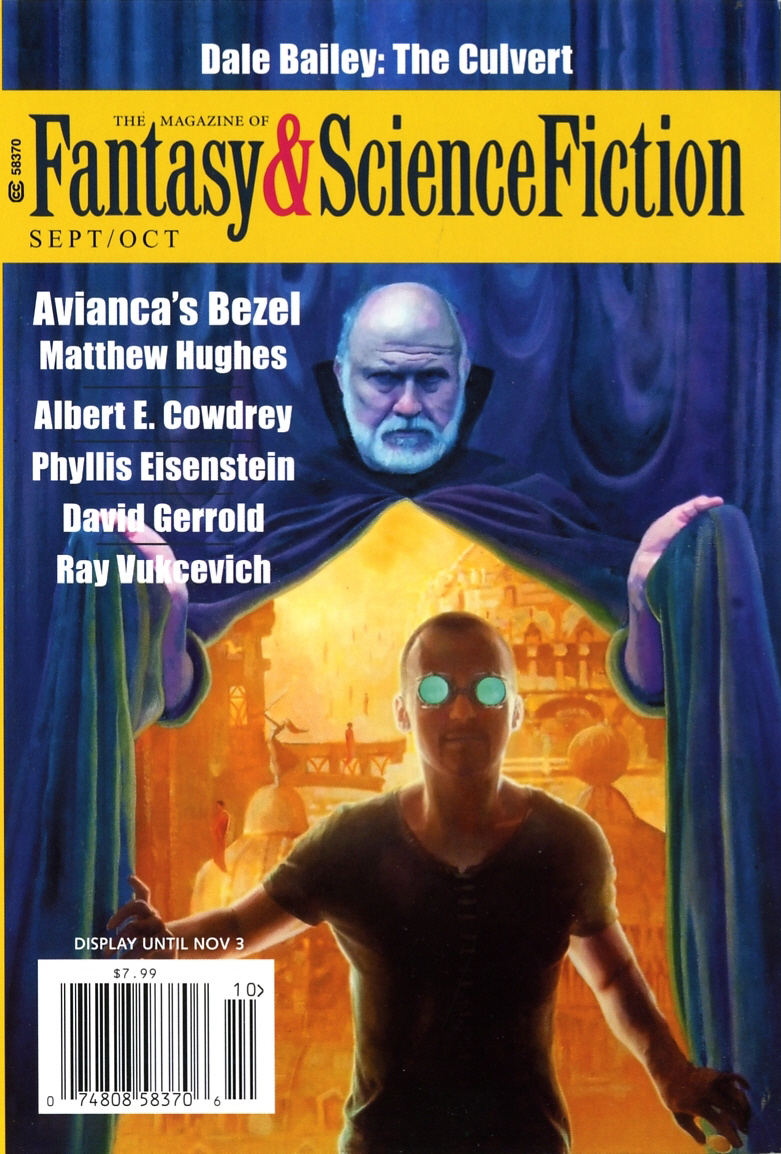
Magazine of Fantasy and Science Fiction Sept Oct 2014-smallI like this era of Internet magazine reviews. When I was growing up, back when computers communicated only through punched cards (or with the voice of Majel Barrett), I would read fabulous short story reviews in fanzines and such, and breathlessly race down to my local news stand to buy the magazine in question, only to have the bookseller look at me funny and say, “That issue sold out six months ago, son.”

Not today. Today, booksellers don’t even know what a magazine is. They still look at me funny though, but now it’s because I forgot to change out of pajama pants before leaving the house.

Also, the wonders of the Internet include short story reviews that appear before the magazine even goes on sale, which means me and my pajama pants can wander out to Barnes & Noble on a Saturday morning to pick up a copy of the September/October issue of The Magazine of Fantasy & Science Fiction, after reading this terrific Tangent Online review of “The Caravan To Nowhere,” a new Alaric story in the issue by my friend Phyllis Eisenstein:

Her stories have been nominated for Hugos and Nebulas and this reprint from Rogues, a recent anthology edited by Gardner Dozios and George R. R. Martin, shows why… Alaric, a wandering minstrel and recurring character in Eisenstein’s larger universe, joins a merchant on his journey to harvest a mysterious drug, Powder. The drug has made the merchant’s son an addict and part of Alaric’s job is looking out for the young man, who tends to wander and rant.

Read More Read More

The Series Series: Diviners by Libba Bray

The Series Series: Diviners by Libba Bray

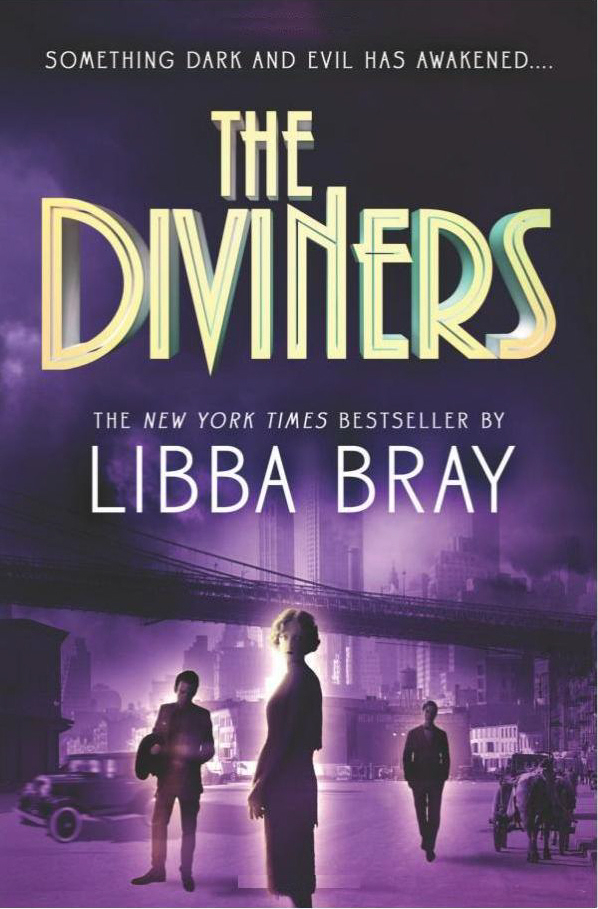
The Diviners Libba Bray-smallWhat does YA urban fantasy need to breathe fresh life into its tropes? Prohibition! Not your first guess, either, was it? Yet it works beautifully.

Libba Bray set The Diviners and the series it opens in 1926, in a New York where all the superstitions have just become true, and all the forms of charlatanry have just started working. Most people don’t know it yet and the ones who find that they have powers they never believed in are still isolated and afraid.

The novel opens with two party tricks gone wrong. In Manhattan, a debutante desperate to liven up her birthday bash breaks out a Ouija board and releases something nasty. In Ohio, a girl with a world-class attitude shows off her talent for psychometry and the touch of the town golden boy’s class ring reveals his secrets to her.

She flaunts what she knows. The boy’s family is rich and powerful. Pretty soon, Evie O’Neill’s parents have to send her out of town to the farthest available relative on the soonest available train. A train to New York City, perhaps the only place on Earth big enough for Evie’s personality.

These two unquiet spirits, one living and one dead, circle around one another, both growing in power and community, through six hundred pages of suspense punctuated with bursts of laughter.

One of the things that impressed me most about The Diviners is that it’s a book about the Roaring Twenties written for a generation of readers who have, for the most part, never seen a black-and-white movie.

Read More Read More

Is Size Important? Or, The Short Story Anthology Examined

Is Size Important? Or, The Short Story Anthology Examined

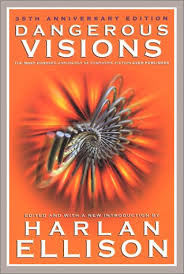
Ellison DangerousIt’s well known in the publishing industry that anthologies don’t sell well. It may be a fact , but it’s one I don’t really understand. I’ve been buying and reading anthologies my whole life and I’m at a loss to explain why others don’t enjoy them as much as I do.

Anthologies come in different flavours, of course. There’s your original anthologies versus your reprint anthologies. Then there’s your single-author collections versus your multi-author. Original anthologies can come in either multi-author or single-author, and . . . well, I think you can do the math for yourselves.

Probably the most famous multi-author anthology of original stories is Harlan Ellison’s Dangerous Visions (1967). A glance through the table of contents is like reading a Who’s Who of famous and celebrated SF writers – many of whom were novices at the time of publication. There’s Robert Bloch, Philip Jose Farmer, Philip K. Dick, Larry Niven, Fritz Leiber, as well as Theodore Sturgeon, RA Lafferty, Samuel R. Delany, Roger Zelazny . . . okay, you get the idea.

Dangerous Visions, and its follow-up, Again Dangerous Visions, are examples of a themed anthology. In this case, writers had to create not only a story of the future, but the story had to show a dangerous future. Physically dangerous, like Larry Niven’s “The Jigsaw Man” or spiritually dangerous, like Leiber’s “Gonna Roll the Bones” (my husband’s favourite story of all time).  Sometimes, the danger lay in the author’s pushing the envelope of what contemporary mores were, like Farmer’s “Riders of the Purple Sage” or Delany’s “Aye, and Gomorrah.”

Read More Read More