Browsed by
Category: Blog Entry

Microsoft Xbox One vs PS4 Pro

Microsoft Xbox One vs PS4 Pro

m-xboxonexps4pro

“War, war never changes.” It’s a quote that opens the Fallout series of video games, and is often used to describe the video game console business.

The console wars, it’s been called. Since the first video game console, the Magnavox Odyssey, many different companies have entered this war. Each competing for games enthusiasts time and money. Each promising to be the absolute best console to experience the joy of playing, and to increase player immersion in the game.

At this year’s E3 video game conference, Microsoft unveiled its newest video game console in its war with Sony. It’s a mid-cycle update to the Xbox One called the Xbox One X, positioned to compete with Sony’s mid-cycle update to its PS4, the PS4 Pro.

Read More Read More

Read To Me

Read To Me

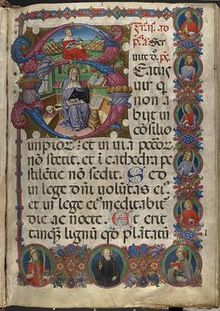
Illuminated pageIn case I haven’t mentioned it before, my brother owns the last independent bookstore in Kingston, Ontario. Which goes to explain why it’s was only this week that I bought a Kindle. For the first time in my life, I’m reading in a different way.

Reading, and its broader form story-telling, has been around as long as history, and it’s been changing and evolving all along, with new ideas and new technologies.

Some think the first stories were told by shepherds sitting around on hillsides watching sheep. As exciting as sheepherding can sometimes get (wolves anyone?) there’s considerably more leisure time in this occupation than there is in farming, or fishing. The shepherds would come down from the hillside and tell their stories to the people in the village, and the marketplace storyteller was born. Or so reasons this particular school of thought.

What happened to the marketplace storyteller? Well, memorizing all of Homer et al (in case there were requests) and learning how to recite them in an entertaining way is really hard work. Then you have to come up with your own, original stories, or really, you’re nobody. You have to put literally years into learning all you need to know, and then you have to sit somewhere telling stories and hoping that people will pay you for it. If you’re very good, someone may become your patron and keep you on retainer to tell stories for them and their guests.

Read More Read More

El Castillo de San Gabriel in Lanzarote, Canary Islands

El Castillo de San Gabriel in Lanzarote, Canary Islands

20170630_113454

The fort as seen while approaching along El Puente de Las Bolas,
“the Bridge of the Balls.” Cannonballs, that is.

As I mentioned my last post on Lanzarote’s Piracy Museum, Spain’s Canary Islands are dotted with historic forts. As a stopover on the way to and from the New World, these islands off the west coast of Africa naturally became a target for piracy. Every port had at least one fort to protect it.

Read More Read More

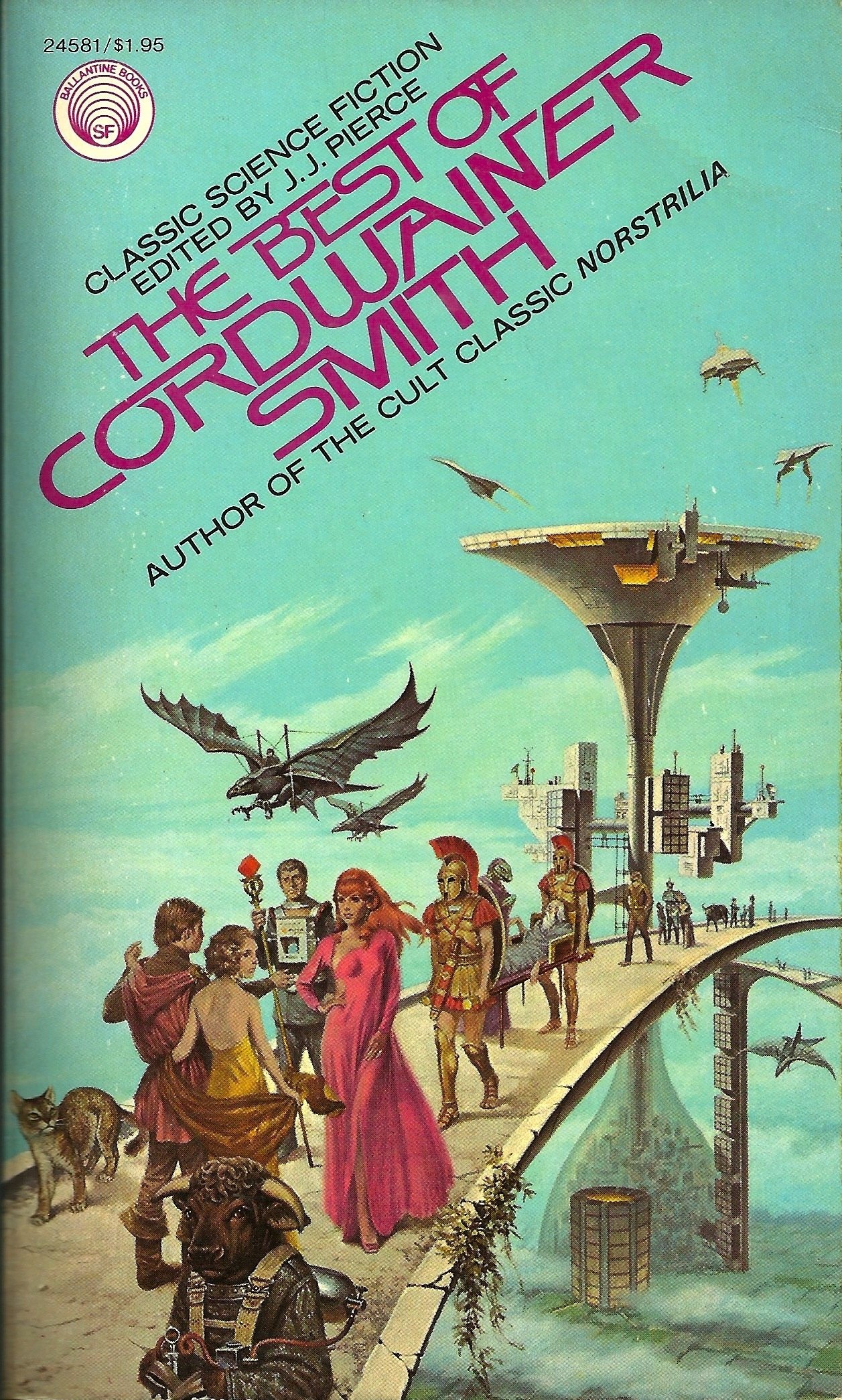
The Best of Cordwainer Smith, edited by J. J. Pierce

The Best of Cordwainer Smith, edited by J. J. Pierce

Do not read this story; turn the page quickly. The story may upset you. Anyhow, you probably know it already. It is a very disturbing story. Everyone knows it. 

from “The Crime and the Glory of Commander Suzdal”
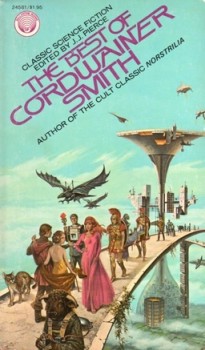
oie_18116595RsWNL8gWhere to begin with Paul Linebarger, aka Cordwainer Smith? Son of a lawyer with ties to the Chinese Revolution of 1911, and godson of Sun Yat-sen, Linebarger, before World War II, was a professor of Eastern Studies at Duke. During the war, he served in the US Army and helped set up the first psychological warfare unit, and became an advisor to Chinese president Chiang Kai-shek. After the war, he was recalled to service to advise the British during the Malayan Emergency, and American forces during the Korean War. Later, he would serve in various intelligence capacities, calling himself “visitor to small wars,” though he avoided Vietnam, thinking it was a bad situation all around. Somehow, between the year 1950 and his death in 1966, he found the time and energy to create one of the most original, complex, and strange science fiction universes.

As part of their “Best of” series, Ballantine published The Best of Cordwainer Smith in 1975, edited by J. J. Pierce. I picked it up in around 1984 at the Forbidden Planet in Manhattan, based on something I’d read recommending the story “Scanners Live in Vain.” Strange as I found it, “Scanners” was nothing compared to the mad, almost hallucinogenic stories that followed it. It contains twelve of of his most important stories, all set in the future history which he called the Instrumentality of Mankind. The Instrumentality is the group of supremely powerful humans who rule over humanity.

Cordwainer Smith (as I’ll call him from now on) first appeared in 1950 with the publication of the story “Scanners Live in Vain” (1950). Its frenetic start warns readers they are in for something strange.

Martel was angry. He did not even adjust his blood away from anger. He stamped across the room by judgment, not by sight. When he saw the table hit the floor, and could tell by the expression on Luci’s face that the table must have made a loud crash, he looked down to see if his leg was broken. It was not. Scanner to the core, he had to scan himself. The action was reflex and automatic. The inventory included his legs, abdomen, chestbox of instruments, hands, arms, face and back with the mirror. Only then did Martel go back to being angry. He talked with his voice, even though he knew that his wife hated its blare and preferred to have him write.

“I tell you, I must cranch. I have to cranch It’s my worry, isn’t it?”

Foremost from this opening is the word cranch. What can it possibly mean and why must Martel do it?

Read More Read More

The Top 50 Black Gate Posts in June

The Top 50 Black Gate Posts in June

Ellen Kushner and Delia Sherman 4 - Black Gate interview

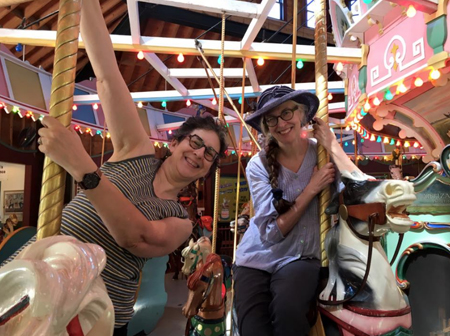
Ellen Kushner and Delia Sherman. Photo by Liz Duffy Adams

June was a big month for interviews at Black Gate. Our top articles were interviews, and our roving reporter Joe Bonadonna placed two in the Top Ten — a lengthy conversation with Author T.C. Rypel (the Gonji series) at #2, and a free-wheeling conversation with two editors of Heroic Fantasy Quarterly, Adrian Simmons and David Farney, at #8. And the #1 article for the month was Elizabeth Crowens’s enchanting conversation with the First Couple of Fantasy, Ellen Kushner and Delia Sherman.

Rounding out the Top Five for the month was our report on the ongoing back issue sale at Asimov’s Science Fiction and Analog magazine (still one of the best bargains in the industry), a Vintage Treasures piece on the 80s fantasy paperbacks of E. Hoffmann Price, and Nick Ozment’s think-piece “When Fantasy and Theology Collide: Some Thoughts on Satan.”

Read More Read More

Goth Chick News: Forget Virtual Reality, Let’s Do This

Goth Chick News: Forget Virtual Reality, Let’s Do This

Alien War

Some years ago while wandering around London in the evening, I had the very lucky pleasure of coming upon the grand opening of a new attraction called Alien War. Being an avid fan of the Alien franchise and having no idea what I was walking into, I allowed the realistically dressed interstellar marines manning the sidewalk outside, to convince me to check it out.

What I experienced for the next 20+ minutes would almost certainly require me to sign some sort of liability waver if it existed today; but it was such an unbelievable adrenaline rush that I queued up to do it twice more that night.

As I have nothing to compare it to in recent memory, I was happy to find several YouTube clips. Including the one below, which gives you an idea of what I’m talking about.

Read More Read More

Why isn’t Conan a Mary Sue?

Why isn’t Conan a Mary Sue?

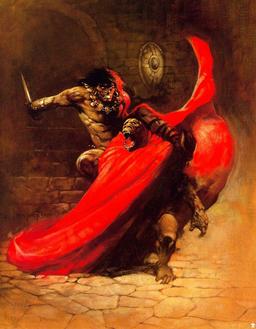
Conan Rogues in the House-smallHow is Conan not a Mary Sue?

The barbarian is pretty obviously Robert E Howard’s authorial self-projection into the Hyborian Age. Big, bellicose and amoral, but honourable and never mean. He’s mighty-thewed death on two legs, women fall into his arms, kingdoms fall at his feet. He male bonds when he falls into good company, and despite being a barbarian fish out of civilised water, he commands the loyalty of his men and the respect of those nobles worthy of respect.

He’s everything Robert E Howard was and wasn’t and might have been had the big Texan lived long enough to fight in WWII. (Imagine Howard as a veteran of Iwo Jima, and the great literature he would have written…)

Really, how is he not a Mary Sue? (He certainly fails a Mary Sue test)

And yet, Conan survived the oh-so-ironic later 20th century. One whiff of Thrud should consigned him to the company of Captain Future and Doc Savage: The emperor barbarian has no clothes on! He even weathered Terry Pratchett’s slash and burn through the genre.

Was it just that Howard invented Sword and Sorcery?

No. Conan’s literary longevity is more than just about being first with sandals on the ground.

Read More Read More

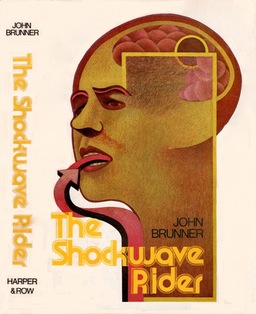
Disasterville U.S.A. :The Shockwave Rider by John Brunner

Disasterville U.S.A. :The Shockwave Rider by John Brunner

If there is such a phenomenon as absolute evil, it consists in treating another human being as a thing.

Nick Halflinger in The Shockwave Rider


oie_1023133dHcFYNm5Cyberpunk appeared as a description of a sub-genre in the early eighties. The word first appeared in print in 1983 as the title of a story by Bruce Bethke and it was quickly adopted to cover the works of near-future science fiction by William Gibson, Bruce Sterling, Pat Cadigan, and others. The general connection between books like Gibson’s Neuromancer (1984) and Neal Stephenson’s Snowcrash (1992) was the depiction of high technology mixed into a crumbling, corrupt society.

Cyberpunk as a named thing might date to only 1983 or so, but as a movement in science fiction its roots are deeper. For years prior to the appearance of Neuromancer, usually thought of as the first cyberpunk novel, sci-fi authors had been writing about the dangerous effects — on society and individuals — of computers, communications, cybernetics, and related fields. In the UK, J.G.Ballard, and in the US, Philip K. Dick, laid a lot of the groundwork for the genre in books featuring rebels, man-machine interfaces, often lots of psychoactive drugs, and a general dystopian atmosphere. It’s little wonder that Dick’s 1968 novel, Do Androids Dream of Electric Sheep?, should become the basis for the film Blade Runner, easily one of the first cyberpunk movies.

English author John Brunner (discussed at great length here at Black Gate) started his writing career creating fairly standard space opera. In the mid-sixties he began writing stories in more contemporary settings, such as the 1965 novel, The Squares of the City. In it, a traffic engineer is hired to work in the newly-built capital of a South American nation (echoes of Brasilia). While there he becomes a piece, quite literally, in game of chess being played between two of the country’s power brokers.

This move to contemporary and near-future sci-fi culminated in the appearance of Stand on Zanzibar in 1968. Its portrayal of a wildly over-populated Earth, conveyed in the snapshot style of Dos Passos’ USA Trilogy, won Brunner the Hugo award for best novel. It also marks the start of what’s been called his Catastrophe Quartet.

Read More Read More

Where Do You Get Yours?

Where Do You Get Yours?

NewtonThey say it’s the question most often asked of writers, but to be honest, no one has ever asked me where I got my ideas. Maybe I’ve been asked where a specific idea came from, but that was more of a “how did you think of that?”
Every idea comes from somewhere different. Harlan Ellison said he used to tell people he got his ideas from a post office box in . . . was it Peoria? Brooklyn? Sometimes how you got the idea isn’t very interesting, so you make up a good story to explain it when someone asks. Sometimes you can’t identify the somewhere until after the idea has been used. And sometimes you can’t identify it at all.

I’m fairly certain that Newton did start thinking about theories of gravity and motion by watching objects fall – though I’m not so sure about the part where the apple conked him on the head. Was he the object “at rest” when he came up with the laws that cover inertia? Did the equal-and-opposite-reaction stuff come from playing billiards? I don’t know. I know more about Berkeley than I do about Newton, and we all know where the Bishop got his ideas.

Read More Read More

Literary Wonder & Adventure Show: EPISODE 5: The Strand (Full Audio Drama)

Literary Wonder & Adventure Show: EPISODE 5: The Strand (Full Audio Drama)

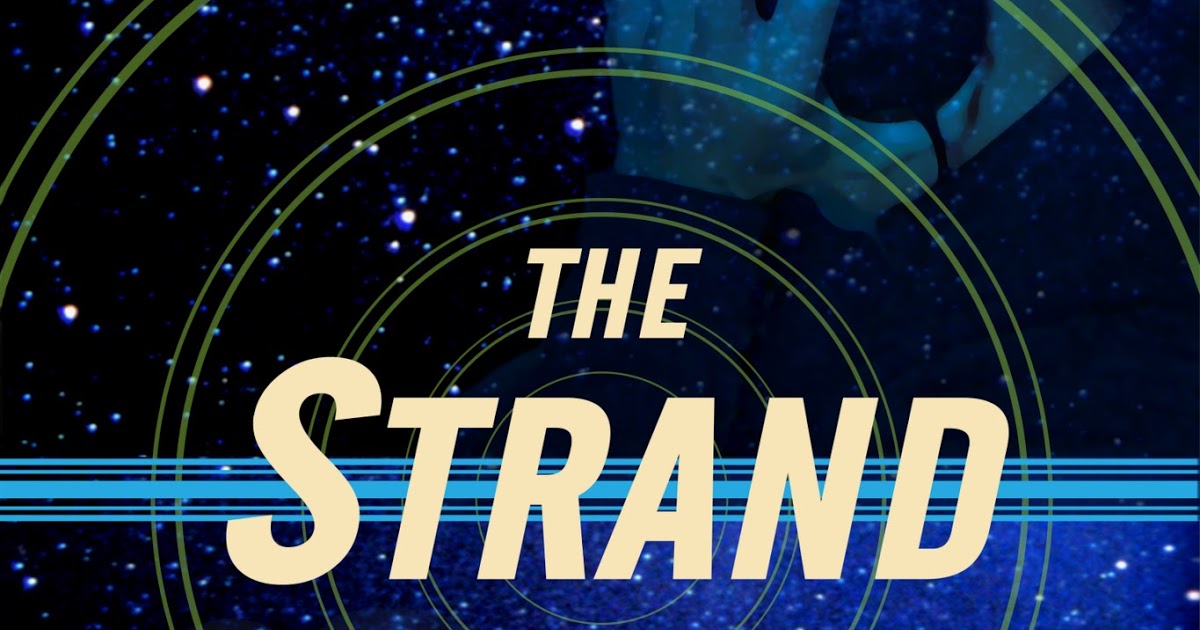
Literary Wonder & Adventure Show EPISODE 5 The Strand-small

I was three years old when Star Wars scorched movie screens with the force of a Death Star Superlaser. 2001: A Space Odyssey had already been out for almost a decade, Captain Kirk and Mr. Spock syndicated for twice the duration of their original mission. Sci-Fi, in other words, had already conquered both the big and small screens. Radio shows had been long superseded by new technology. Yet here I am in 2017, thoroughly enjoying the Literary Wonder & Adventure Show, a retro audio show streamed to me via a wireless router, via a cell phone tower shaped like a palm tree, and ultimately from the workstation of the talented Robert Zoltan.

His latest offering, “The Strand,” is short, compressed tale, which may have gone without a single commercial break back in the old days. Nonetheless, it contains all the ingredients of compelling drama — passionate characters, a setting bursting with possibilities, high stakes, and a very clever literary device which underpins it all.

The milieu of The Strand is only quickly sketched in, but it suggests a multiverse of planets, their populations going about their workaday existences ignorant of shadowy organizations doing battle to control the fate of them all. Agents of these organizations can travel between the dimensions. Yet agent Guy, the protagonist, is preoccupied with a more personal concern: in his travels, he met and fell in love with local girl Hope, and soon thereafter, they were forced apart into different planes. Now, Guy can only speak to Hope using a jury-rigged machine via a Strand — a wispy, elusive thread of electricity or astral energy or whatnot.

Read More Read More