Browsed by
Author: John ONeill

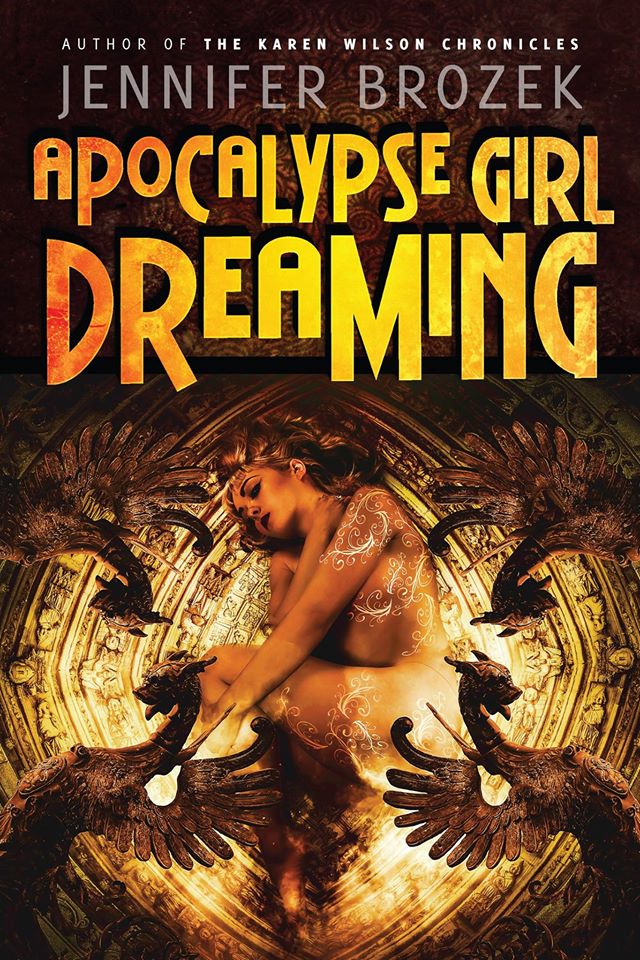
Future Treasures: Apocalypse Girl Dreaming by Jennifer Brozek
Future Treasures: Apocalypse Girl Dreaming by Jennifer Brozek

Apocalypse Girl Dreaming-smallYou know what’s marvelously satisfying? Watching writers who got their start in Black Gate going on to accomplish great things.

Jennifer Brozek began her professional writing career producing game reviews for Black Gate magazine a decade ago. I wish I could take credit for discovering her, but it was our games editor at the time, Don Bassingthwaite (who’s gone on to a stellar career of his own, with more than a dozen fantasy novels under his belt), who found and recruited her. Since then, Jennifer has written or co-written over half a dozen game titles, including the Fifth Edition Shadowrun rules, the Big Damn Heroes Handbook for the Serenity Role Playing Game, and the BattleTech novel The Nellus Academy Incident.

She’s also made a name for herself as an accomplished editor — with ten titles to her name, including the DAW anthology Human for a Day (co-edited with Martin H. Greenberg) and Grants Pass (with Amanda Pillar) — and author, of In a Gilded Light, The Lady of Seeking in the City of Waiting, and the Karen Wilson Chronicles, among others. Most recently, we reported here on her upcoming heroic fantasy anthology from Baen, Shattered Shields, co-edited with Bryan Thomas Schmidt.

As if that weren’t enough to keep her busy, Jennifer is also the author of some 50 short stories, and early next year sees the publication of her very first collection: Apocalypse Girl Dreaming, from Evil Girlfriend Media. Here’s the book description:

Evil Girlfriend Media is pleased to release the cover of Apocalypse Girl Dreaming, a short story collection, by Jennifer Brozek. This collection features dark speculative fiction ranging from tie-in stories in the Valdemar and Elemental Masters worlds, weird west horror to satirical science fiction to urban fantasy with a horrific bent.

A first collection is a pretty big milestone for an author and we think congratulations are in order. And maybe a cake.

Apocalypse Girl Dreaming will be published on January 16, 2015 in e-book and paperback format. No word yet on price or page count. The cover art is by Fernando Cortes, with graphic design by Matt Youngmark. Learn more at the Evil Girlfriend website.
Black Static #41 now on Sale

Black Static #41 now on Sale

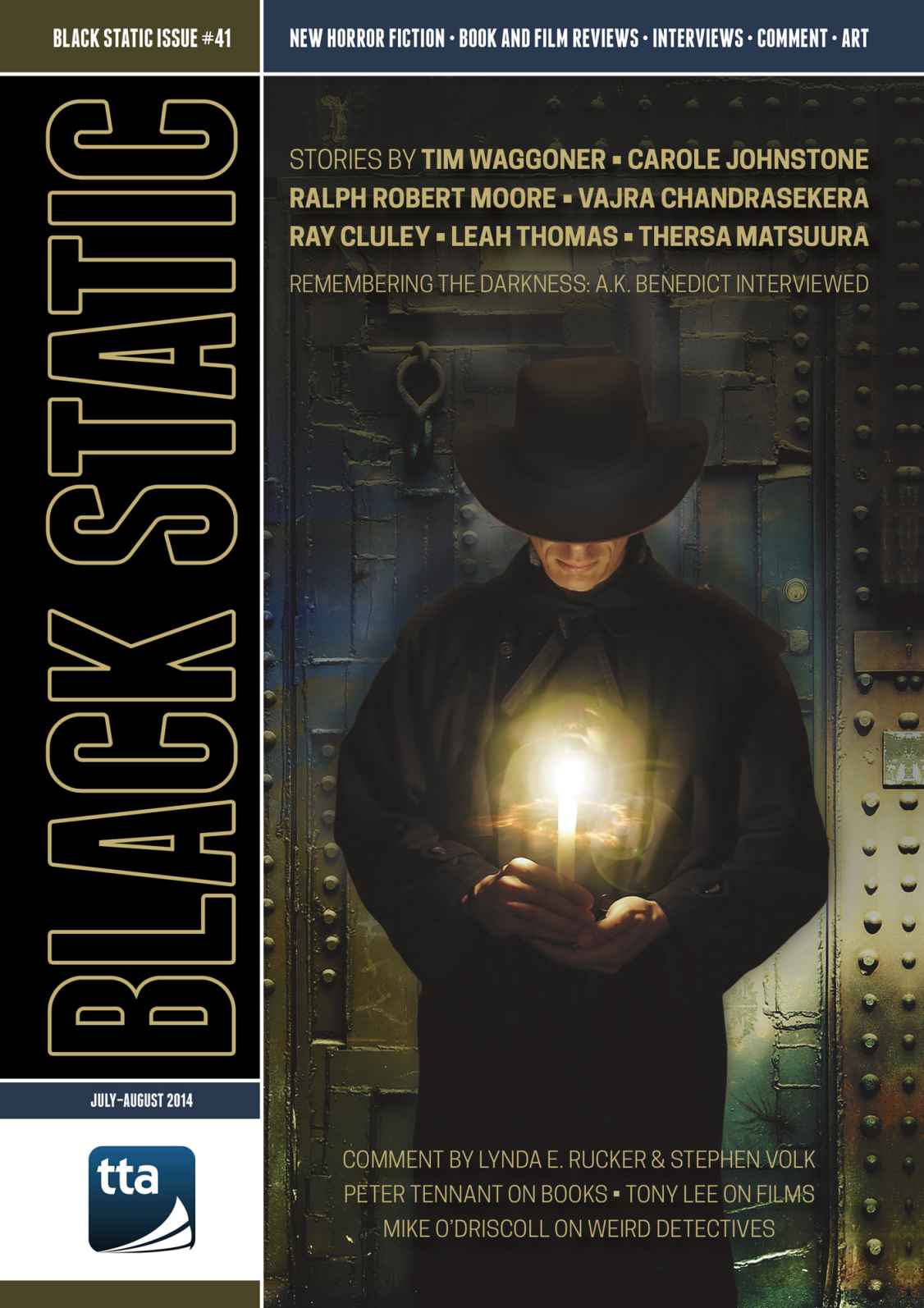
Black Static 41-smallLast month, I reported on the first issue of Black Static magazine I ever purchased, issue 40. I was very impressed.

Good thing, too, because I took a chance and bought issue #41 at the same time. I have no idea why two issues of the same magazine were simultaneously on the stands, but I’m glad they were.

On the magazine’s website is this friendly but blunt request:

Magazines like Black Static cannot survive without subscriptions and always needs more support than it gets. If you enjoy it please blog about it, review it, tell your friends, and encourage other people to subscribe. Thank you!

Truer words were never spoken. Magazines like Black Static are completely dependent on fans and readers to keep them alive. I hope this magazine survives for a good long time — but it won’t without reader support. In that spirit, I am very happy to shine a spotlight on Black Static here on the blog. If it sounds intriguing, I hope you’ll consider buying an issue next time you find yourself browsing the magazine rack.

Black Static is a British magazine of dark fantasy and horror, edited by Andy Cox. It used to be called The 3rd Alternative, until that magazine went on hiatus in 2005. It was acquired by TTA Press, the publishers of Interzone and Crimewave, and in 2007 it was relaunched as Black Static.

Read More Read More

Last Chance to Win a Copy of The Madness of Cthulhu, edited by S.T. Joshi

Last Chance to Win a Copy of The Madness of Cthulhu, edited by S.T. Joshi

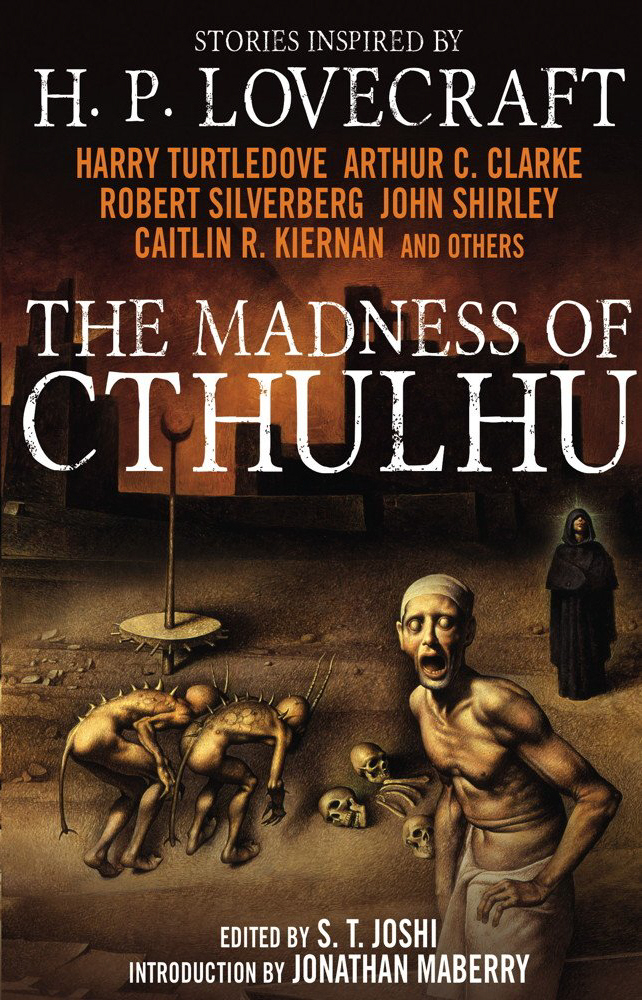
The Madness of Cthulhu-smallLast week, we told you that you had a chance to win one of two copies of S.T. Joshi’s major new horror anthology, The Madness of Cthulhu, Volume One, on sale this month from Titan Books.

How do you win? Just send an e-mail to john@blackgate.com with the subject “The Madness of Cthulhu” and a one-sentence review of your favorite H.P. Lovecraft story (don’t forget to identify the story). That’s it; that’s all that stands between you and a copy of one of the most exciting anthologies of the year. Two winners will be drawn at random from all qualifying entries and we’ll announce the winners here on the Black Gate blog. What could possibly be easier? But time is running out — the contest closes October 21st.

The Madness of Cthulhu collects fourteen original tales, and two reprints, inspired by Lovecraft’s horror masterpiece At the Mountains of Madness. This is the first of two volumes, with the second to be released Summer 2015. Here’s the book description:

Sixteen stories inspired by the 20th century’s great master of horror, H.P. Lovecraft, and his acknowledged masterpiece, At the Mountains of Madness, in which an expedition to the desolation of Antarctica discovers evidence of an ancient ruin built by horrific creatures at first thought long-dead, until death strikes the group. All but two of the stories are original to this edition, and those reprints are long-lost works by science fiction masters Arthur C. Clarke and Robert Silverberg.

No purchase necessary. Must be 12 or older. Decisions of the judges (capricious as they may be) are final. Not valid where prohibited by law. Eat your vegetables.

The Madness of Cthulhu, Volume One was published on October 7 by Titan Books. It is 304 pages, priced at $15.95 in trade paperback and $9.99 for the digital version.

New Treasures: Short Sharp Shocks 1: Amok! edited by Neil Baker

New Treasures: Short Sharp Shocks 1: Amok! edited by Neil Baker

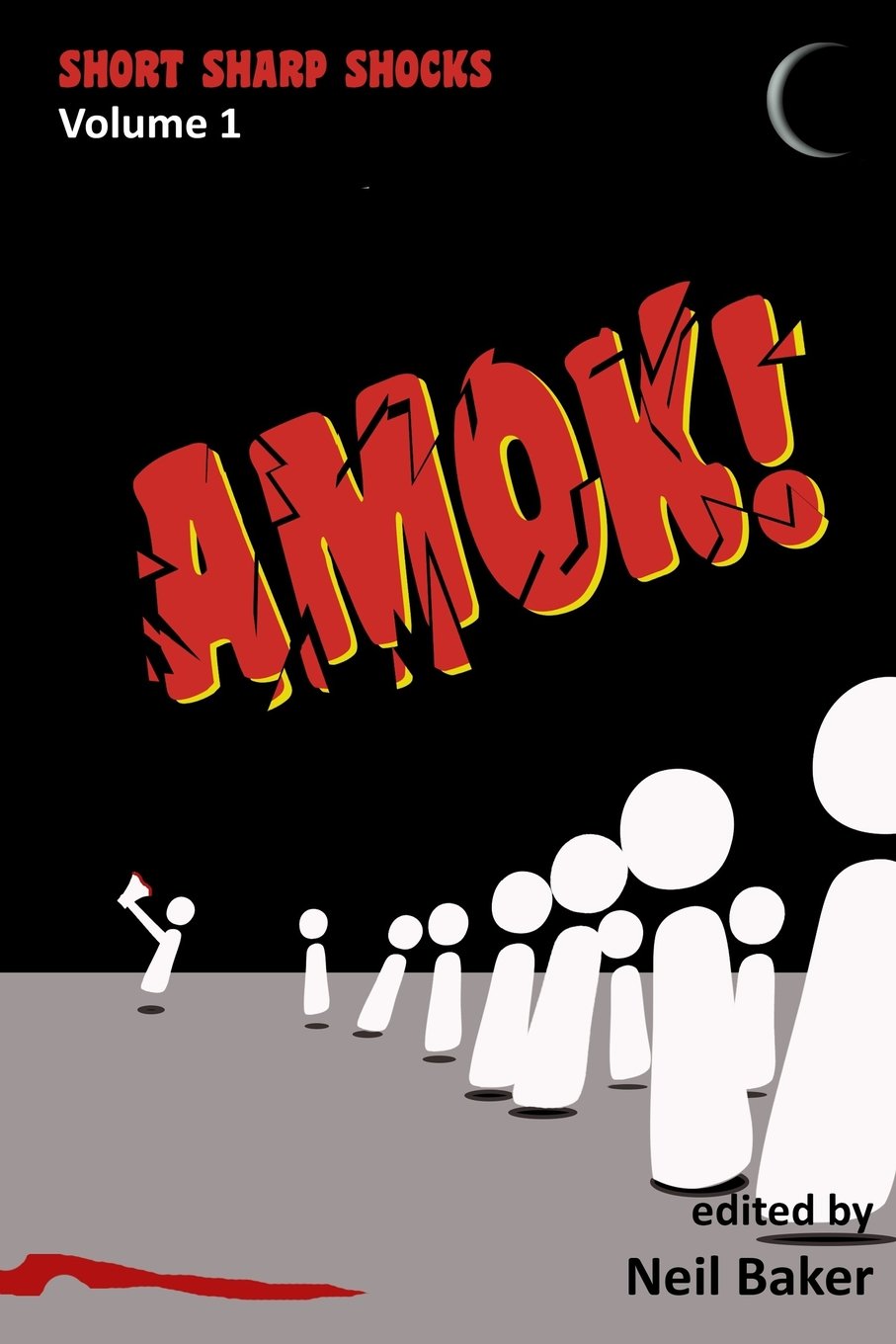
Short Sharp Shocks Amok!-smallThe fine folks at April Moon Books have really hit the ground running. Their first anthology, The Dark Rites of Cthulhu, appeared in March and was a major success — so much so that they’ve now launched an ambitious line of dark fantasy and horror books.

The first to arrive is Amok!, a collection of intense short fiction from multiple genres — mystery, thriller, dark fantasy, and outright horror — focusing on the modern boogeyman: the spree killer. Amok! is the first release in April Moon’s Short Sharp Shocks anthology series; the next, Stomping Grounds!, features monsters causing mayhem and misery. They will be followed by Ill-Considered Expeditions (“Pith helmets at the ready for some unfriendly welcomes!”), Spawn of the Ripper, a tribute to Hammer horror films, and The Stars at my Door, a collection of optimistic science fiction.

An unnerving anthology featuring tales of psychological decline and murderous frenzy!

Office workers snap and vengeful ghosts go on a murderous rampage; a giant, blood-crazed pig rubs shoulders with a monstrous alligator while kids experiment with runes and drugs and suffer the consequences.

Ghouls of every foul persuasion tear through the streets and would-be serial killers stalk every alley way in search of hapless victims. Dark magicks destroy cities and brings warriors back from the grave, and madness eats away at the minds of explorers both past and future. Criminals enjoy violent crime sprees while our uniformed protectors themselves fall under the spell of murderous intent.

Here then, are 26 stories spanning a multitude of genres and themes to both alarm and amuse you as events spiral rapidly out of control, and mankind, monsters and minds run terribly, catastrophically, AMOK!

Short Sharp Shocks 1: Amok! was edited by Neil Baker and published by April Moon Books on September 27, 2014. It is 244 pages, priced at $15.99 in trade paperback and $3.99 for the digital edition. The cover and interior illustrations are by Neil Baker. Order directly at the April Moon website.

Vintage Treasures: The Book of Paradox by Louise Cooper

Vintage Treasures: The Book of Paradox by Louise Cooper

The Book of Paradox Louise Cooper-smallWell, this is a surprise.

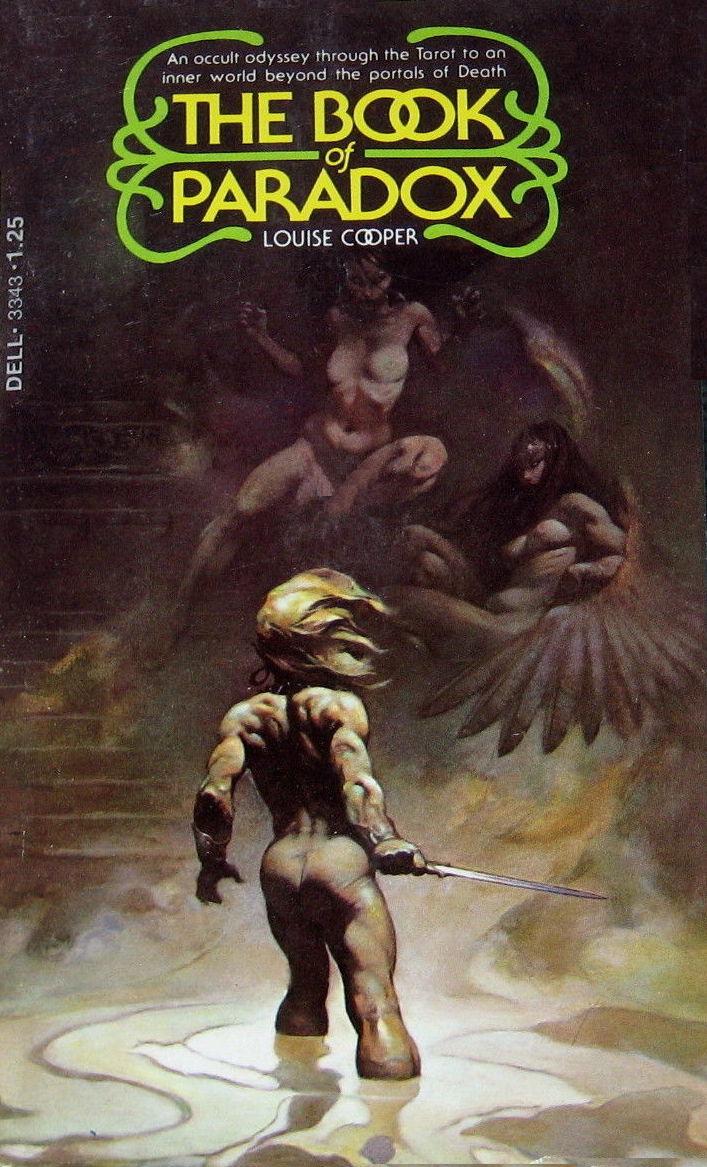
A few weeks back, I purchased a collection of vintage paperbacks on eBay for around 50 cents each (the same collection I found Orbit 3 in, which I wrote about on Wednesday.) You never know what you’re going to find in these things, and buried near the bottom of the box was a 1973 sword & sorcery paperback titled The Book of Paradox, with a typically alluring Frazetta cover. I was setting it aside when I caught the author’s name, in tiny print under the title: Louise Cooper.

Wait a minute. Louise Cooper, author of the 12-volume Time Master novels, and the Indigo series? I had no idea she wrote sword & sorcery.

Turns out The Book of Paradox was her first novel. Originally published in hardcover in 1973, when she was just 20 years old, it launched her career. She became a full-time writer in 1977, and in her 30-year career published more than eighty fantasy novels. Looks to me like Dell just had no idea how to categorize her in 1973, so they just threw her in with their S&S line. The book has a fairly typical cover blurb: “An occult odyssey through the Tarot to an inner world beyond the portals of death.” Here’s the back cover text:

A hypnotically fascinating Tarot adventure to a psychedelic nether realm of mysterious fantasy where lies are truths and truths have no meaning… where terror is real and reality is always questionable…and where a valiant hero must become The Fool to succeed on a perilous quest for love through changing worlds of eternal night.

Myth, mystery and magic abound in a mesmerizing novel of considerable imaginative talent.

Louise Cooper died of a brain hemorrhage at the age of 57 in 2009, leaving behind a rich legacy of much-loved fantasy. The Book of Paradox was published in paperback in February 1975 by Dell. It is 236 pages, with a cover price of $1.25. The cover is by Frank Frazetta. It has never been reprinted, and there is no digital edition.

Join the Struggle Against the Minions of Cthulhu in 17th Century England in Clockwork and Cthulhu

Join the Struggle Against the Minions of Cthulhu in 17th Century England in Clockwork and Cthulhu

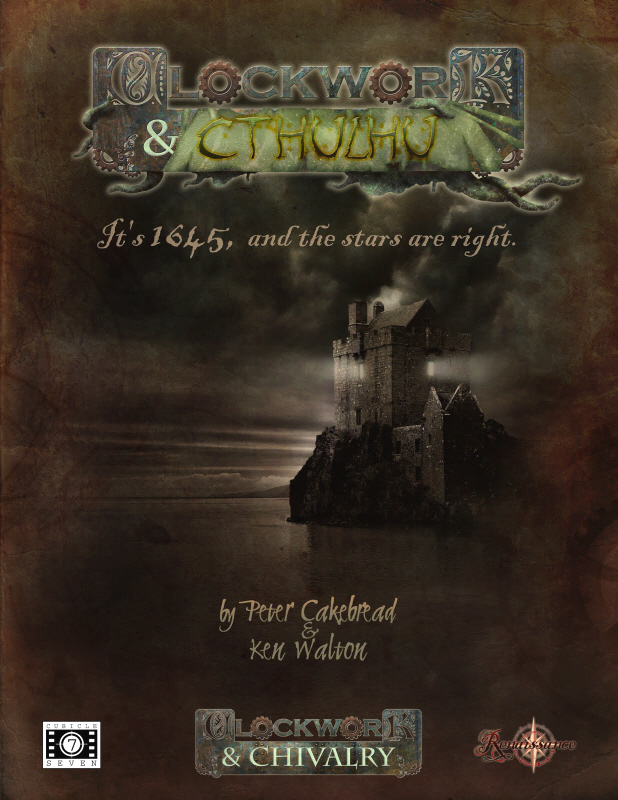
clockwork-cthulhu-smallTwo years ago, I wrote a brief New Treasures post about Clockwork and Cthulhu, an H.P. Lovecraft-inspired supplement for the 17th century alternate history fantasy setting Clockwork & Chivalry. A role playing game where giant clockwork war machines lumber across the land, witches whisper of the old gods and terrorize entire villages, and the Great Old Ones seek entry into our world while their corrupted servants covertly follow their eldritch agendas, was simply too much to resist.

I was enormously impressed with Cakebread and Walton’s creative backdrop for their game, an alternate 17th Century England where Royalists, led by Prince Rupert, attempt to restore an absolute monarch to the throne, and Parliamentarians, led by the Lord Protector Oliver Cromwell, defy the kingship and support the rights of parliament. Imagine my surprise when I discovered there actually was an English Civil War from 1642–1651. Apparently, history is not my strong suit.

A few weeks after the first article appeared, co-author Peter Cakebread graciously accepted my invitation and wrote a fascinating follow-up piece for us, “The English Civil War with Clockwork War Machines: an Introduction to Clockwork & Chivalry,” in which he filled in the details on his fascinating setting:

Clockwork & Chivalry is a RPG set in the time of the English Civil War. The English Civil War was fought between the Royalists (the Cavaliers) and Parliament (the Roundheads). We haven’t veered away from most of the real history, it’s simply too interesting, but we have added a couple of rather big twists – in our setting the Royalists use magick, and the Parliamentarians have giant clockwork war machines.

Who says role playing can’t be educational? Over the last few years, I’ve gotten a lot of enjoyment (and rewarding history lessons) out of Clockwork and Cthulhu, and in that time Cakebread and Walton have continued to produce top-notch supplements and games. Here’s a quick look at some of their related products.

Read More Read More

Devon Monk’s House Immortal is Based on her Black Gate Short Story “Stitchery”

Devon Monk’s House Immortal is Based on her Black Gate Short Story “Stitchery”

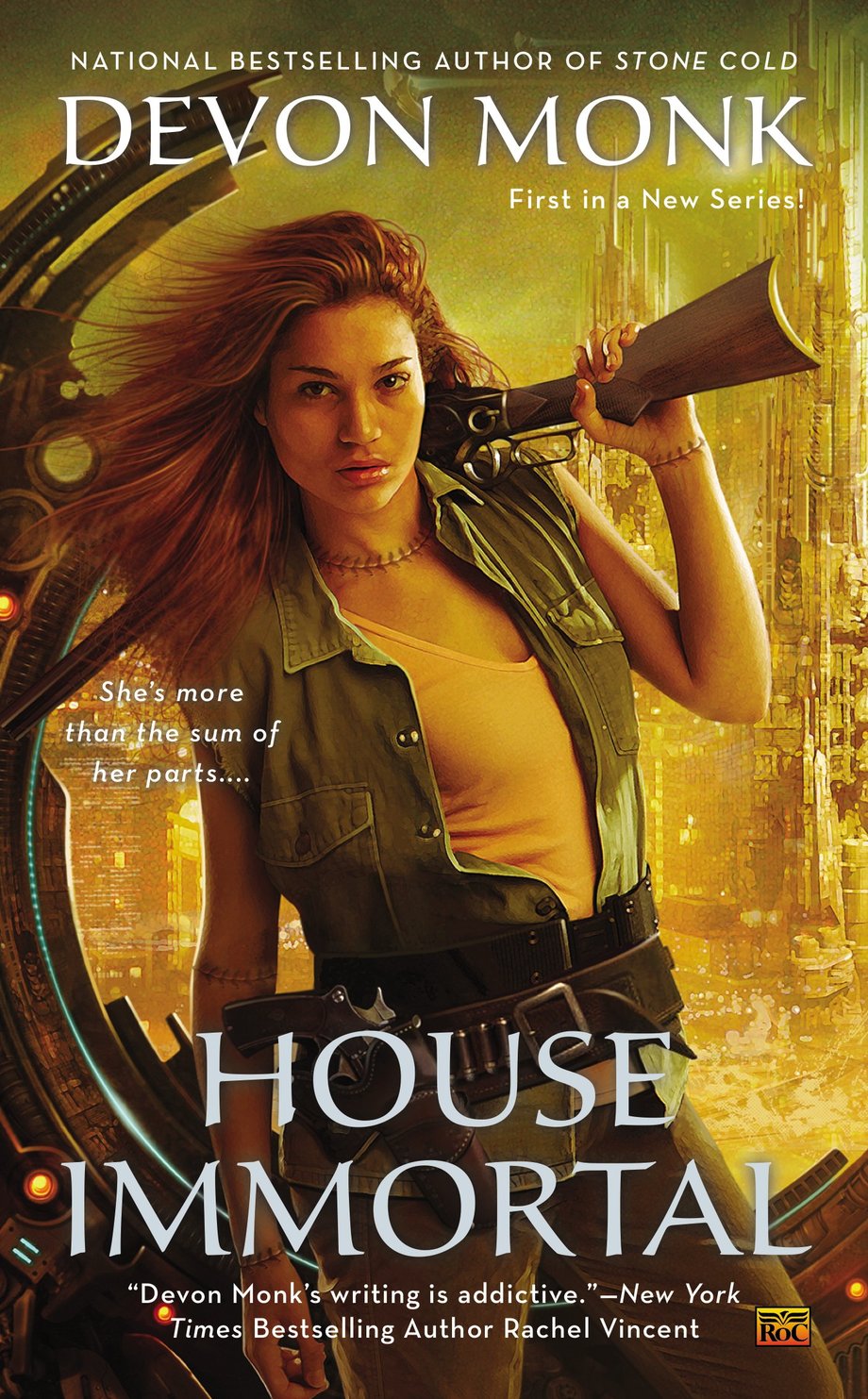
House Immortal Devon Monk-smallLast month, I reported on Devon Monk’s newest novel, House Immortal, the tale of Tilly Case, one of thirteen unfathomably strong creatures stitched together nearly a century ago, who finds herself tangled up in a deadly struggle between powerful Houses for dominion over death itself. One of the things I commented on in my article was the intriguing resemblance between House Immortal and the excellent short story I bought from Devon nearly 15 years ago, “Stitchery.” On her blog this week, Devon confirmed the connection.

[House Immortal] isn’t a “standard” urban fantasy, but more like a science-fiction-y urban fantasy. But even though it’s set in the future a bit, it still (I hope) reads like urban fantasy, with a strong female lead character, some butt kicking, some humor, some trouble that could spell out the end of a world or two, and a host of interesting people and places.

Publisher and Editor John O’Neill at Black Gate noted here, that it reminded him of “Stitchery” the first short story he bought from me for Black Gate. I’m so happy he noticed! The series is based off of that short story, (albeit loosely) and Matilda, Neds, and Grandma were all first introduced in that short.

Now, the novel went quite a different way than the short story, so I think of the short story as an alternate timeline Matilda may have lived, but not the timeline she is living in the trilogy.

If you want to check it out (“Stitchery” also was chosen for David Hartwell’s Year’s Best Fantasy #2) you can find it in Black Gate #2, or in my short story collection: A Cup of Normal.

I’m very proud to see Devon nurture the terrific story idea she had for “Stitchery” into something far more ambitious. Check out her complete comments on her blog here. House Immortal was published on September 2 by Roc Books. It is 351 pages, priced at $7.99 for both the paperback and digital versions. The cover artist is not credited. The second volume, Infinity Bell, is scheduled to be published on March 3, 2015.

New Treasures: Hawk by Steven Brust

New Treasures: Hawk by Steven Brust

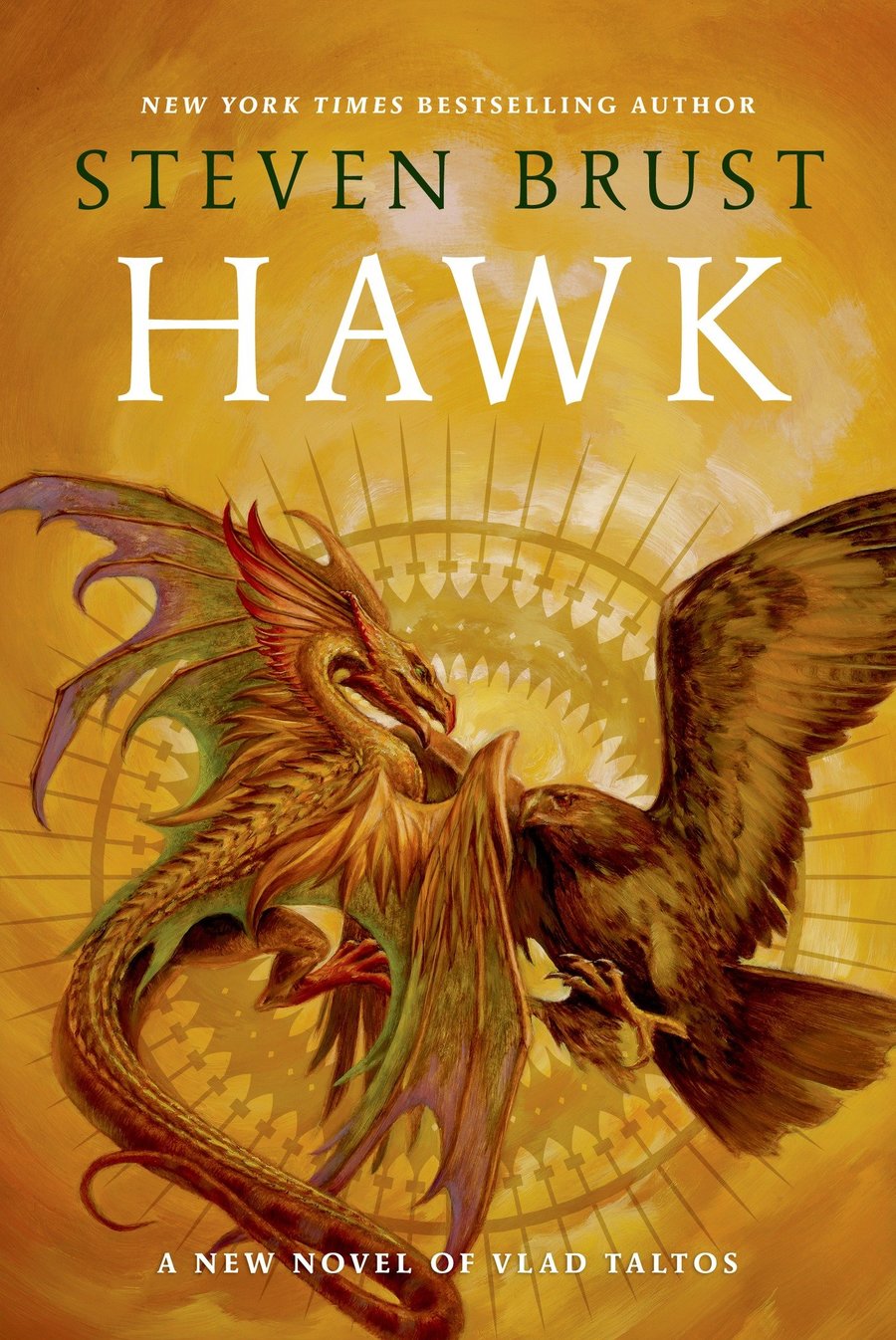
Hawk Steven Brust-smallI was surprised and delighted to receive a new book in the Vlad Taltos series from Steven Brust in the mail last week.

Hawk is the 14th novel in the adventure fantasy series that began with Jhereg (reviewed by Fletcher Vredenburgh here) way back in 1983. A total of 19 are planned; the last one was Tiassa (2011), and the next is Vallista. If you’re a newcomer to the series, I highly recommend The Book of Jhereg, a paperback omnibus collection of the first three novels (Jhereg, Yendi, and Teckla), which has been in print from Ace for over 15 years.

Vlad Taltos was an oppressed and underprivileged Easterner — that is, a human — living in Adrilankha, capital of the Dragaeran Empire. Life was hard. Worse, it was irritating. Then Vlad made a great discovery: Dragaerans would pay him to kill other Draegarans. Win-win!

The years of Vlad’s career as a crime boss and top assassin were cut short by a revolution, a divorce, and an attack of conscience (not necessarily in that order). In the midst of all that, he broke with the Jhereg, the Dragaeran house of organized crime. He’s been a marked man ever since. The Jhereg want to kill him. The Jhereg would love to kill him.

So Vlad’s been avoiding Adrilankha as much as possible. That hasn’t worked out too well. His life is there: his ex-wife Cawti, his son, and all his friends. One of those friends is his former assistant Kragar, who’s taken over Vlad’s old territory and criminal operations. Vlad will need Kragar’s help if he’s going to return to Adrilankha and deal with this mess.

It won’t be easy, and it certainly won’t be simple. Because there are no messes like the ones you make yourself.

Hawk was published by Tor Books on October 7. It is 320 pages, priced at $24.99 in hardcover ($11.99 for the digital edition). The cover is by Stephen Hickman. Read an excerpt at Tor.com.

The Fantasy Roots of Fan Fiction

The Fantasy Roots of Fan Fiction

Conan of the Isles-smallMy fifteen year-old daughter is a voracious reader. I thought I read a lot, but I’m not even in her league. She reads fairy tales, a great deal of YA fantasy, and a smattering of horror. Just a few days ago, she asked me where to find Stephen King in our library. I wonder if that means she’s finally going to stop re-reading The Hunger Games.

But mostly what she reads is fan fiction. I mean, a ton of fan fiction. She reads it online on her Kindle, curled up on her bed. Walking Dead fanfic, Buffy fanfic, Harry Potter fanfic, Fairy Tail fanfic… I know all this because every time she reads something she really likes, she comes bounding downstairs to breathlessly relate the details. Having trouble communicating with your teenage daughter? Here’s a tip: shut the hell up and listen when you’re drying dishes, or trapped with her on a long road trip. I think I can name every character on The Walking Dead, and I’m not sure I’ve ever seen an episode.

Anyway, the point is, my daughter treats fanfic with the same respect and enthusiasm as published fiction. It’s fully legitimate to her. There’s also a certain sense of ownership — her friends read fan fiction, but she doesn’t know any adult who does, so there’s a generational divide. Fanfic belongs to her generation, the way Dungeons and Dragons and Star Wars belonged to mine. Part of her love for fan fiction stems from the fact that her generation is the first to really discover it.

Except it’s not, of course. Not really. Yes, the explosive growth in the fan fiction community is relatively new, but the phenomenon is not. I’ve been thinking about this a lot recently, and it all stems from a comment Fletcher Vredenburgh made in his review of Lin Carter’s Kellory the Warlock:

Most of his fiction, rarely more than pastiches of his favorite authors (Howard, Burroughs, Lovecraft, and Dent), never garnered enough attention to be republished…  Most of the time, he was trying to create fun, quick reads that were recreations of his favorite writers. In a way, he was writing fan fiction; it’s just that he got his published.

I think this is fairly astute. I think Lin Carter might be more appreciated today if he were reassessed for what he truly was: an imaginative and extremely prolific fanfic writer. The same is true of many other writers, in fact, who are long out of print and in danger of being forgotten, including L. Sprague de Camp, Andrew J. Offutt, August Derleth, and even folks like Karl Edward Wagner.

Read More Read More

Vintage Treasures: Orbit 3, edited by Damon Knight

Vintage Treasures: Orbit 3, edited by Damon Knight

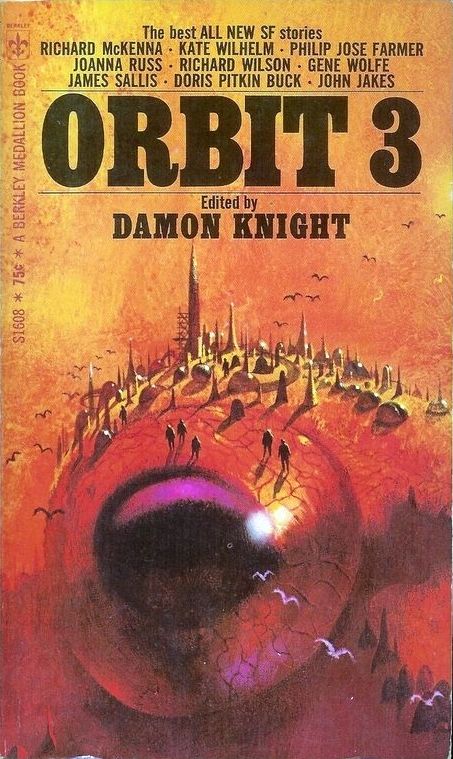
Orbit 3 Damon Knight-smallI enjoy reading vintage anthologies for pretty much the same reason I enjoy reading modern anthologies: they’re a great way to discover terrific new writers. Or in this case, terrific old writers.

Plus, they’re cheap. In any decent used bookstore, you can usually find at least one or two old SF anthologies priced less than a buck. (If you’re not sure what a “used book store” is, exactly, never mind. It’s even easier to find cheap anthologies on eBay, if that helps you.)

I admit I haven’t tried very many of Damon Knight’s Orbit volumes. But after making my way through most of the major SF anthologies of last century — The Hugo Winners, the Science Fiction Hall of Fame, Before the Golden Age, Dangerous Visions, the Carr and Wollheim’s Year’s Best volumes — I think I’m ready to branch out a bit.

While Orbit routinely showcased some of the finest science fiction and fantasy writers of the 20th Century — including folks like Gene Wolfe, R. A. Lafferty, Philip Jose Farmer, and Knight’s wife, Kate Wilhelm — it also had something of a reputation for being on the cutting edge of the controversial New Wave. It wasn’t at all unusual to find readers loudly deriding the sometimes plotless, experimental fiction within, or criticizing fiction they disliked in letters columns around the industry as “too much like that Orbit stuff.”

Nonetheless, the series was quite popular. It ran for 21 volumes (not including a huge Best of Orbit collection) from 1966 to 1976, and helped cement’s Knight’s reputation as one of the best editors in the field. He took a lot of chances with Orbit, both in the fiction he chose and the authors he championed, but over and over again it seemed to pay off. While most editors worked hard to attract big names, Knight seemed to think nothing of having three quarters (or more) of his table of contents staffed entirely with newcomers. It must have made it difficult to attract buyers, but it certainly kept the series constantly fresh.

Read More Read More