Richard Stark’s Parker, Part 5: Payback
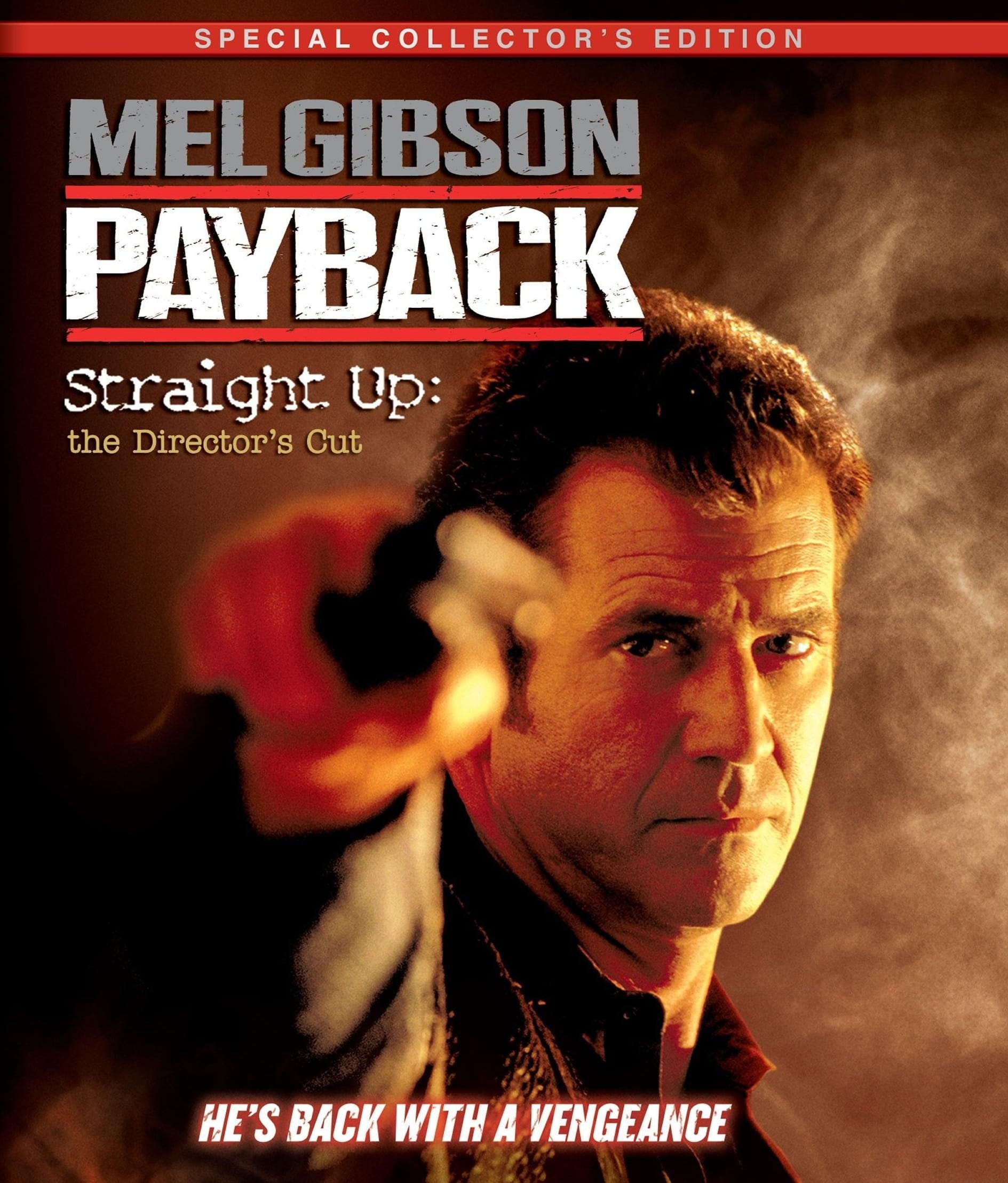
Payback: Theatrical Cut and Straight Up (The Director’s Cut)
1999 theatrical release; recut, direct-to-home-video DVD in 2006. Written by Brian Helgeland (with Terry Hayes) and directed by Brian Helgeland (with Paul Abascal).
What is it?
Brian Helgeland (A Knight’s Tale; Man on Fire; the script for LA Confidential) wrote and directed this adaptation of The Hunter, the first novel in the Parker series, starring Mel Gibson.
As the film was nearing completion, test audiences reportedly reacted poorly to the ending. And yeah, it’s pretty dark and violent and certainly not the triumphant conclusion many Gibson fans were probably expecting. Consequently, Gibson and the studio removed Helgeland from the film. They brought in Terry Hayes to rewrite the ending and added Kris Kristofferson as a new “final boss” villain.
 |
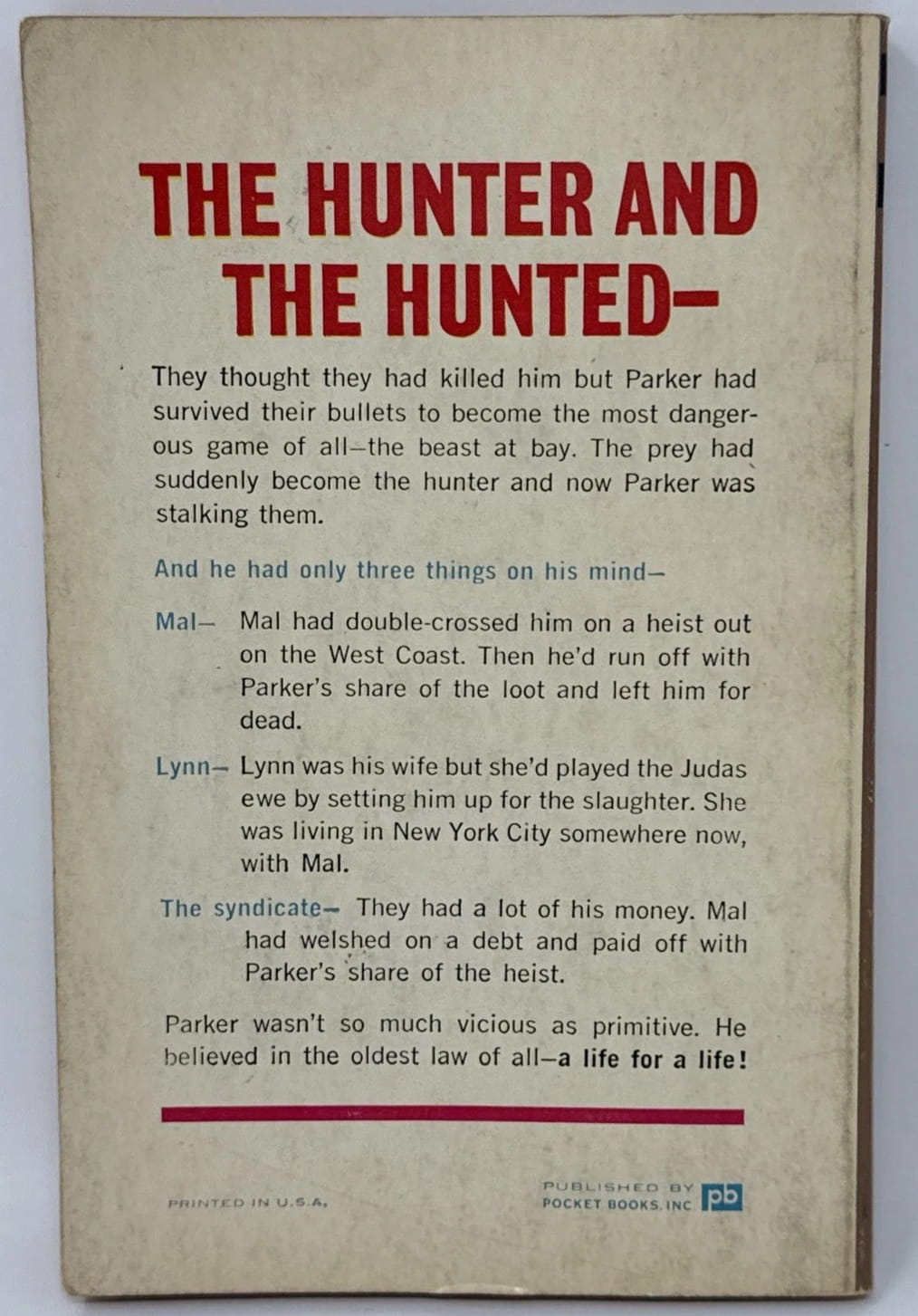 |
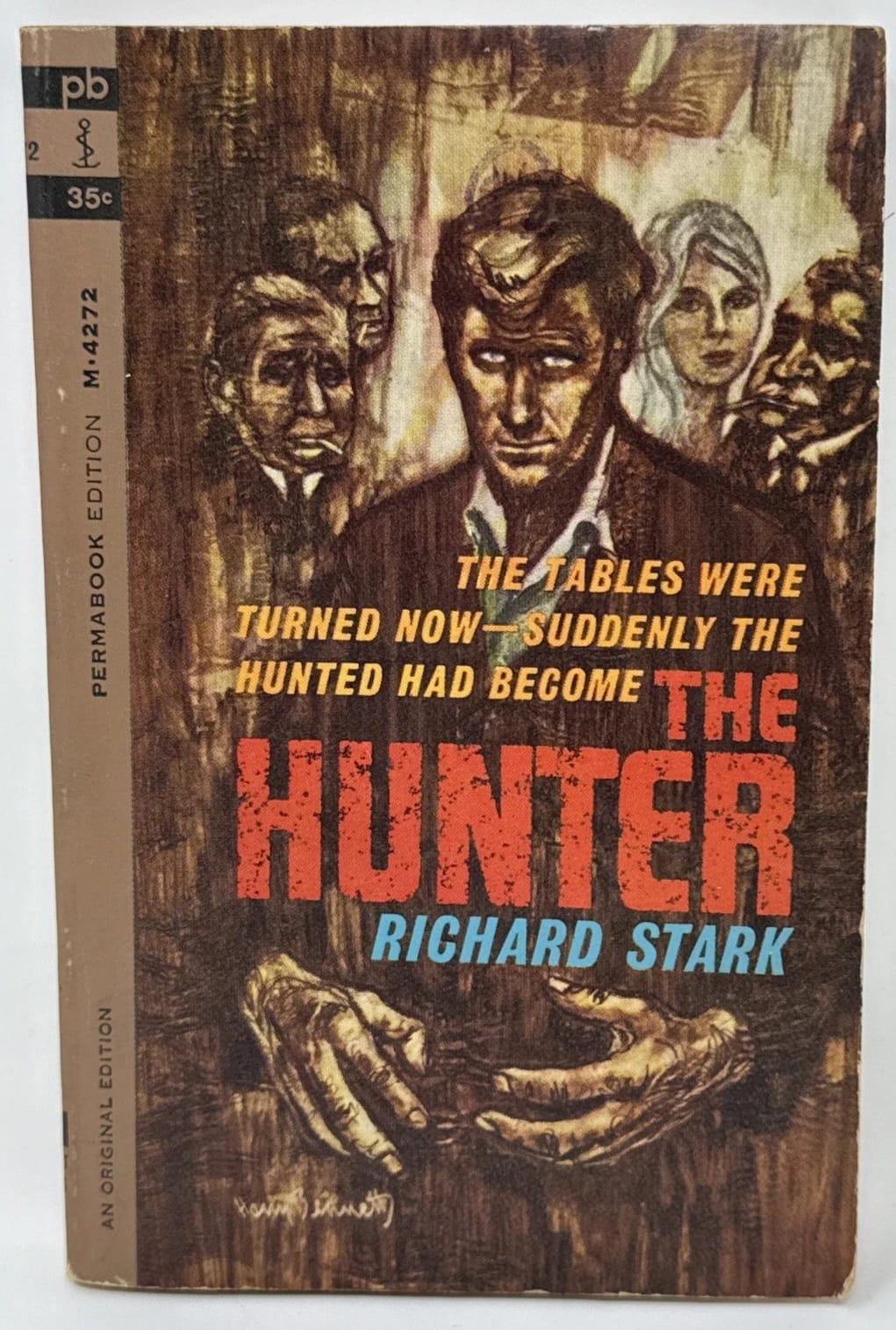
Parker’s first appearance: The Hunter (Pocket Books, 1962)
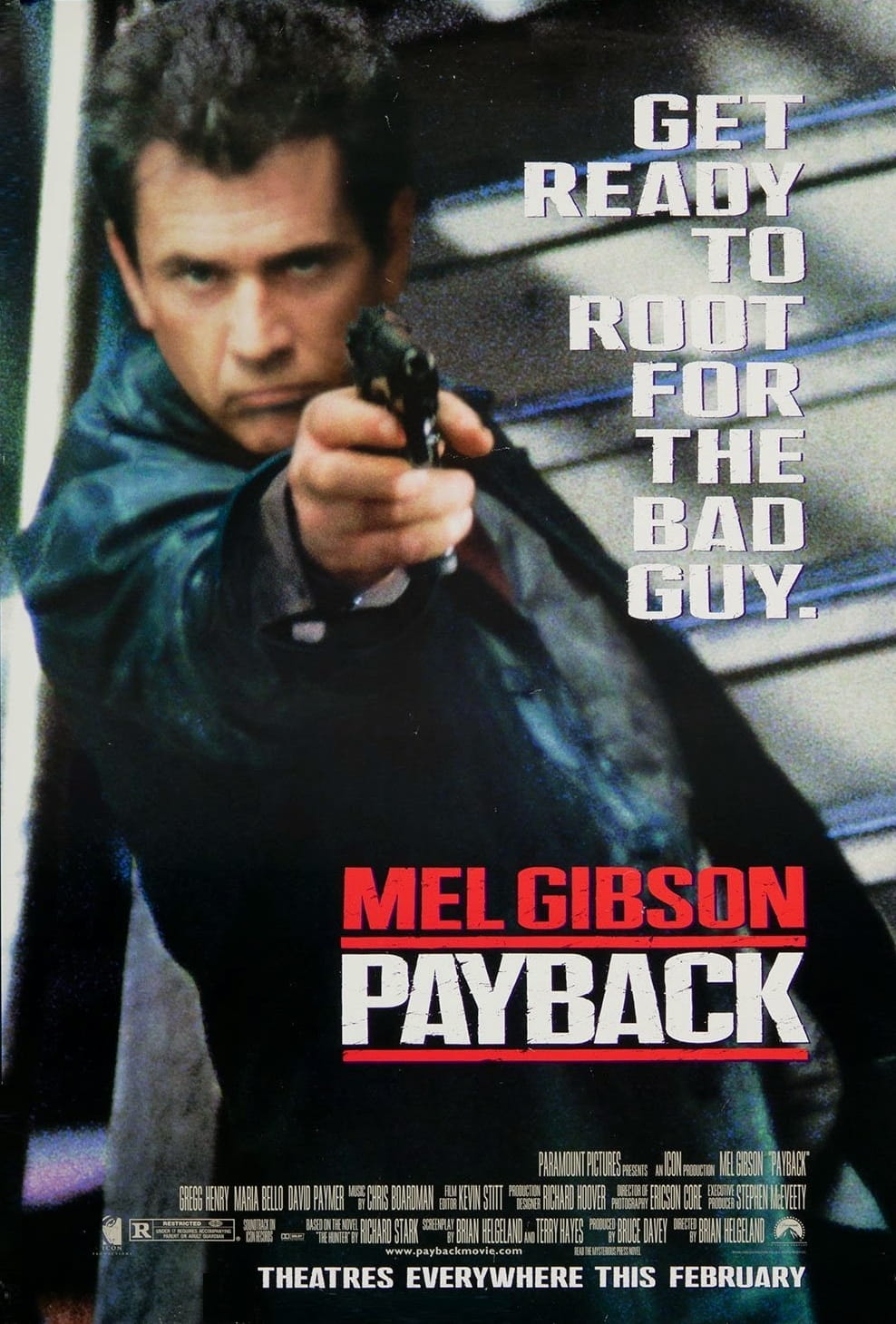
They also constructed a somewhat elaborate kidnapping storyline that veers wildly from the source material, as well as from the tone of the first two-thirds of the movie. Gibson and replacement director Paul Abascal also added a metallic blue tint to the film, giving it a sort of neo-noir look and feel. Ultimately they replaced over thirty percent of the movie. This version was released to theaters in 1999.
The resulting theatrical cut is entertaining, but the more action-oriented final act doesn’t really match with what comes before it. As with most Parker adaptations, taken on its own as a generic crime film, it’s pretty good. But it’s not really Parker and it’s not really The Hunter.
In 2006, Helgeland was allowed to assemble Payback Straight Up: The Director’s Cut, which restored his original ending and removed the blue tint. Released on DVD in 2006, this version hews much more closely to the source material. The Hunter is a dark novel, and that makes for a dark movie. Dark and violent. And with a fairly bleak ending. It’s also ten minutes shorter than the theatrical cut, since it lacks the boxing match, the kidnapped son, and all of Kristofferson’s scenes.
Both versions have their proponents and their naysayers. Both versions have virtues and flaws. Both versions kick ass. But the Director’s Cut is a more cohesive, consistent film, retaining the writer/director’s original vision in full.
Quick and Dirty Summary
Straight Up: The Director’s Cut sticks fairly close to the plot of The Hunter.
Porter (Gibson) tracks down his wife, Lynn, who is living alone in an apartment in New York, paid for by a mobster named Val Resnick (“Mal” in the book, and here colorfully played by Gregg Henry, the granddad in Guardians of the Galaxy).
Clearly there’s old, bad blood between them. Porter tries to get Lynn off her heroin addiction. Instead, she overdoses and dies.
We learn in a flashback that Porter, Lynn and Val Resnick together robbed some Asian gangsters, sometime in the past. Just after the robbery, Val and Lynn betrayed Porter. Lynn shot him and Val took Porter’s share of the money. They left him for dead.
He didn’t die.
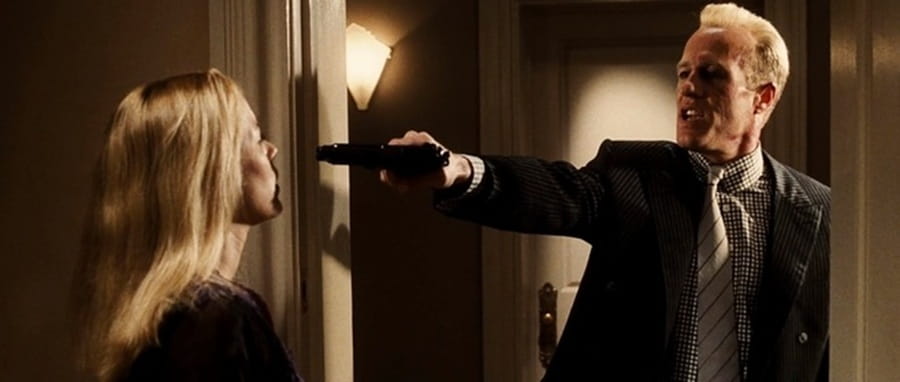
Now Porter is back, looking for revenge – and for his $70,000.
Val learns Porter is alive and looking for him. He panics and asks the Outfit (the name for an organized crime syndicate he works for) for help against Porter.
Eventually, with the help of an old flame, Porter starts making his way up the ladder of the Outfit.
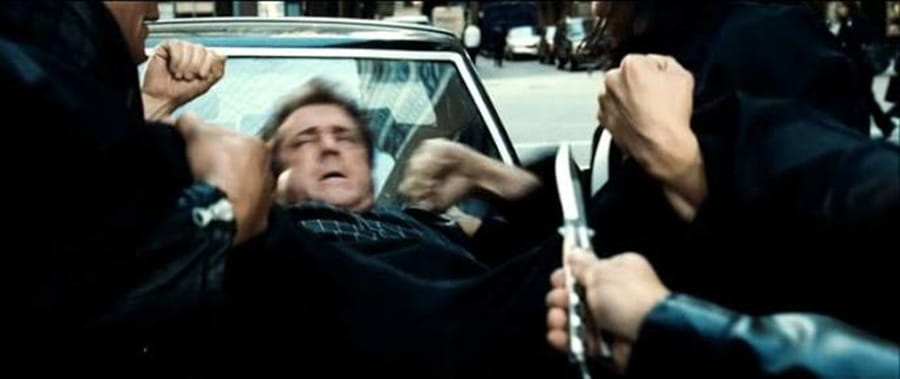
In a violent climax, the Outfit delivers his money, but also sends a wave of assassins after him. As bullets fly left and right, he has to fight his way out of a subway station with the loot.
Helgeland makes several minor changes to the story and characters, some of which help the story work better, and some of which leave book readers scratching their heads. For one example, in the movie, Porter‘s wife shoots him in the back and then willingly runs off with Val, because Val has tricked her into thinking Porter was unfaithful to her with another woman. In the book, Mal puts a gun to Lynn’s head and forces her to shoot Parker, entirely against her will. She regrets it, never takes to Mal and ultimately he abandons her.
In the theatrical cut, Porter and his old friend (a prostitute) work together on an elaborate plan to kidnap the teenaged son of the mob boss (Kristofferson) from a boxing match, and use him as leverage on the Outfit. There’s also an extreme torture scene and a rather large explosion.
The Objective
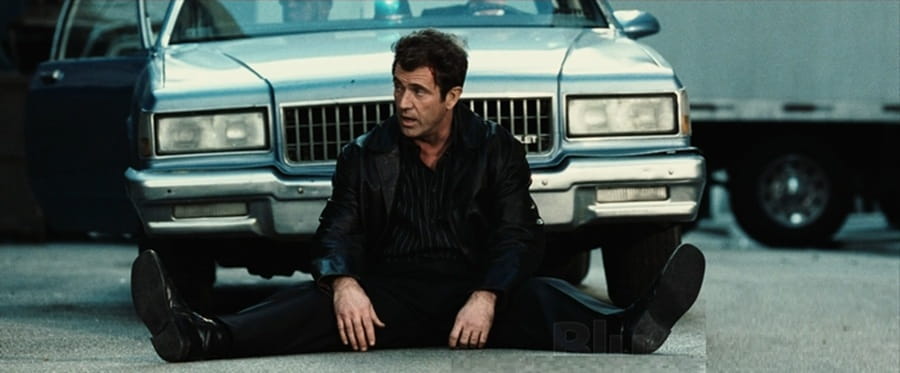
Porter wants his $70,000.
Not $130,000. You people aren’t listening.
The Adversary
Porter goes up against quite a variety of opponents in this film.
Of course there is Val Resnick. He does the same things he does in the book, for the most part, but he’s far more violent and sadistic and rotten as portrayed by Gregg Henry here. Mal in the book is just a sort of typical Sixties mobster.
The Outfit in the Director’s Cut is represented by William Devayne and James Coburn as Carter and Fairfax, the two New York mid-level managers of organized crime. One of the joys of both the novel and the movie is seeing Parker/Porter dealing with these smug, arrogant jerks. They are so sure they have him exactly where they want him and they are so surprised when a guy they take to be a street-level thug turns the tables on them every time. The top boss, Bronson, is played voice-only, over the telephone, by Sally Kellerman. In the theatrical cut, Bronson’s role in the story is expanded, and a menacing Kristofferson does an admirable job with it.
There’s Stegman and his taxi office employee, but they’re so lightweight as to barely warrant a mention.
And then there are at least two elements added entirely by Helgeland: two corrupt cops, so smarmy your skin crawls every time they’re on the screen, and a group of Asian gangsters.
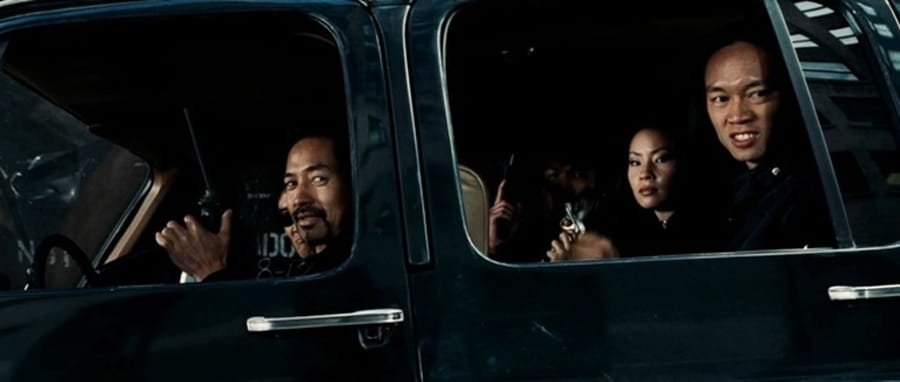
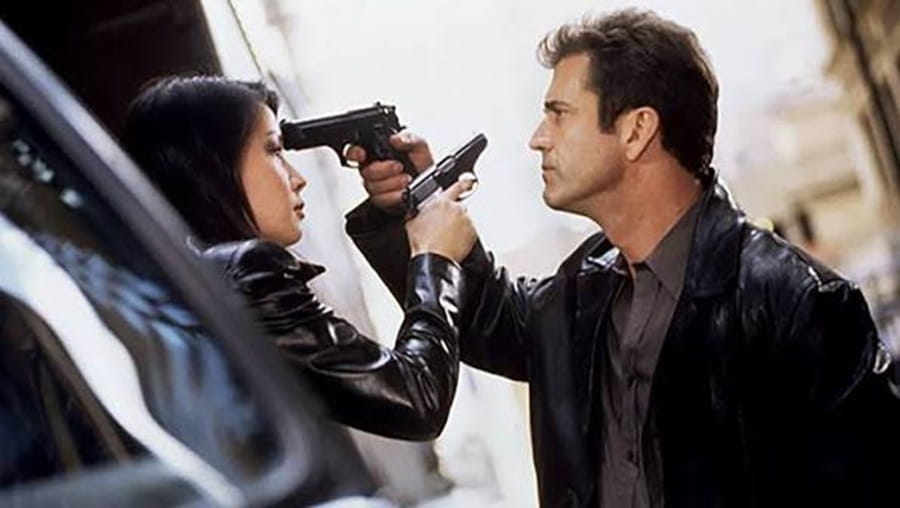
The Asian gangsters are led by a sadistic dominatrix named “Pearl,” played by Lucy Liu as a vastly different character from the meek prostitute in the book. She and Val are so amusing to see as they violently tear into each other and beat one another up, even Porter has to sit back and watch them carry on for a couple of minutes. And we can’t blame him.
The String
In the flashback to the original robbery that led to Porter’s money being stolen, we see that the string was limited to him, Val and Lynn. In the book, there were other guys involved, all of whom were murdered by Mal. The heist, which involved illegal guns, took place on an island far away. Helgeland tightens everything up here, shrinking the crime and the number of people involved to keep it simple.
Others of note
David Paymer is fantastic as Stegman, the taxi office manager/bookie who’s also running an illegal gambling operation (with cops as his customers!) and dealing drugs. “It’s a ride-along, Porter. Your piece of the pie just got smaller. But I’ll save you some of the crust!”
James Coburn gets a small part near the end as Fairfax, one of the mid-level Outfit bosses who’s called back from vacation early because of Porter’s activities. His outrage at his luggage being shot is worth the price of admission alone. “That’s just mean!”
How Parker is Parker here?
(With a 1 being he bakes cookies with Claire, and a 10 being Slayground):
I am awarding the theatrical cut 5 Parkers, and the Director’s Cut 6 Parkers.
Both versions get so much right, and even the things it gets wrong are still very entertaining.
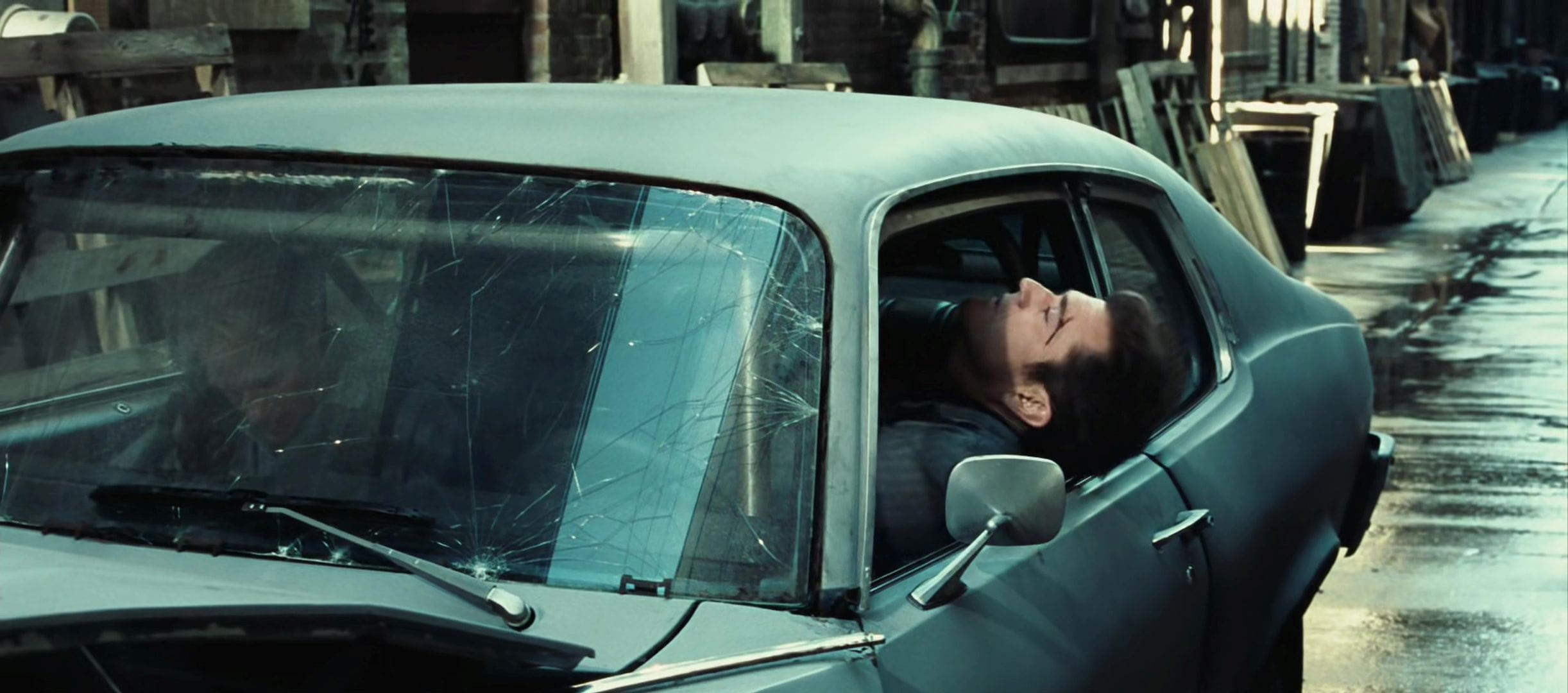
The opening scenes are straight out of the opening of the novel. Porter walks over the George Washington Bridge, then proceeds to write bad checks, trade in items at the pawn shop for cash and skip out on paying for dinner.
The main flaw is that Gibson’s “Porter” is not quite “Parker.” He’s somewhat goofy and seems downtrodden for much of the film. He lets himself get pushed around a lot here, though in service to some eventual goal. That’s just not Parker. But I will admit he’s still enjoyable to watch.
Other Notes
While Donald Westlake was still alive, he would never allow any movie studio to use the name “Parker” for a one-off movie. He kept hoping to sell the property for a series of films, and he held back the Parker name for such an occurrence, which sadly never happened.
Consequently, his name is altered to “Porter” in both versions of this movie.
After Westlake passed away, his estate allowed the use of the name “Parker” in the 2013 Jason Statham film. We shall discuss that one later.
Quote
“Hubba Hubba.” (Expression repeated by at least two characters throughout the film.)
Subjective Rating
Director’s Cut: 8/10. Theatrical Cut: 9/10.
Followed by
Parker (2013)
It’ll always be a little difficult to look at Mel Gibson with a handgun and not see Martin Riggs from “Lethal Weapon (I-IV).” That probably adds to the apparent goofiness.
“Typical Sixties mobster?” Huh. I read Mal as narcissistic, rotten, and significantly sadistic. Not as violent as Val, but a pretty darned ugly customer.
Looking back at that book, it is pretty remarkable the amount of psychological depth Westlake gives Mal. Certainly miles more than he gives Parker in that book.